5 Day Marangu Kilimanjaro Trekking Tour
The 5 Day Marangu Kilimanjaro Trekking Tour is the classic short summit itinerary on Mount Kilimanjaro's Marangu Route. It uses established mountain huts rather than tented camps and progresses from the rainforest at Marangu Gate through Mandara Hut, Horombo Hut and Kibo Hut before the summit attempt toward Gilman's Point and Uhuru Peak.
The route is famous for its straightforward trail structure and hut accommodation, but the five day schedule should not be mistaken for an easy climb. The main difficulty is altitude and the relatively fast progression from the lower forest to Kibo Hut before summit night.
Day 1 climbs through montane forest to Mandara Hut. Day 2 continues through heath and moorland to Horombo Hut. Day 3 crosses progressively drier terrain and the high Saddle toward Kibo Hut. Day 4 begins around midnight with the summit attempt toward Gilman's Point and, when conditions allow, Uhuru Peak before descending through Kibo to Horombo. Day 5 completes the descent through Mandara to Marangu Gate.
The summit is never guaranteed. Weather, altitude response, physical condition, trail conditions and professional guide judgment determine whether a climber should continue or descend.
5 Day Marangu Kilimanjaro Trekking Tour at a Glance
- Destination: Mount Kilimanjaro, Tanzania
- Route: Marangu Route
- Duration: 5 days / 4 mountain nights
- Accommodation: Mountain huts
- Day 1: Marangu Gate → Mandara Hut
- Day 2: Mandara Hut → Horombo Hut
- Day 3: Horombo Hut → Kibo Hut
- Day 4: Kibo Hut → Gilman's Point → possible Uhuru Peak → Kibo Hut → Horombo Hut
- Day 5: Horombo Hut → Mandara → Marangu Gate
- Highest objective: Uhuru Peak, 5,895 m
- Summit attempt: Yes
- Technical climbing: Not normally required
- Main challenge: Altitude and compressed acclimatization
What Is the 5 Day Marangu Kilimanjaro Trekking Tour?
The five day Marangu tour is one of the shortest standard itineraries that attempts the summit of Mount Kilimanjaro.
Unlike Machame, Lemosho, Rongai and other camping routes, Marangu uses permanent mountain huts for overnight accommodation.
The route approaches Kibo from the southeast and generally follows the same broad trail system during descent.
Why Choose the Marangu Route?
- Mountain hut accommodation
- No sleeping tents on the standard route
- Established trail
- Rainforest, moorland and alpine desert scenery
- Kibo and Mawenzi views when weather permits
- Direct summit approach from Kibo Hut
- Suitable for travellers who prefer huts to camping
- Classic Kilimanjaro climbing experience
Why the 5 Day Marangu Route Is Challenging
The trail itself does not normally require technical climbing, but the itinerary gains altitude relatively quickly.
There is no dedicated acclimatization day at Horombo before moving to Kibo Hut. This means the body has less time to adjust before summit night than on the six day Marangu version.
5 Day Marangu vs 6 Day Marangu
5 Day Marangu: Mandara → Horombo → Kibo → summit → Horombo → gate.
6 Day Marangu: Normally adds an extra acclimatization day around Horombo before continuing to Kibo.
Travellers who can add another day should consider the longer schedule because it provides additional acclimatization time before the summit push.
Complete 5 Day Marangu Kilimanjaro Trekking Tour Itinerary
Day 1 – Marangu Gate to Mandara Hut
Begin with the confirmed transfer to Marangu Gate, where the mountain team completes the applicable entry procedures and organizes trekking luggage.
After the guide briefing, begin walking through Kilimanjaro's montane rainforest.
The trail climbs gradually beneath tall trees through ferns, mosses, lichens and dense vegetation.
Natural surfaces can include soil, stones, roots, wooden steps, wet leaves and muddy sections depending on recent weather.
Black and white colobus monkeys, blue monkeys and forest birds can potentially be seen, although wildlife sightings are never guaranteed.
Maintain a steady pace and avoid unnecessary rushing even at this lower elevation.
Reach Mandara Hut, settle into the allocated sleeping area and change into warm dry clothing.
Have the confirmed evening meal and prepare for the longer walk toward Horombo the following morning.
Overnight: Mandara Hut.
Day 2 – Mandara Hut to Horombo Hut
Wake at Mandara, have breakfast and begin the longer ascent toward Horombo Hut.
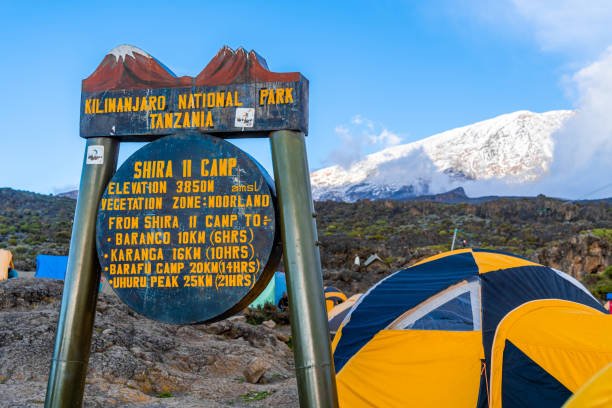
The dense forest gradually becomes lower as the route enters heath and moorland.
The changing landscape opens wider views of the surrounding mountain when cloud conditions permit.
Giant lobelias and groundsels can occur in suitable sections of the moorland environment.
Kibo and Mawenzi may become visible, but mountain views are always weather dependent.
As elevation increases, maintain a slow walking rhythm and communicate openly with the guide about headache, nausea, dizziness or unusual fatigue.
Reach Horombo Hut, settle in and spend the evening resting at higher altitude.
Eat well, hydrate appropriately and prepare for the next day's move through the Saddle toward Kibo Hut.
Overnight: Horombo Hut.
Day 3 – Horombo Hut to Kibo Hut
After breakfast, leave Horombo and continue into increasingly sparse vegetation.
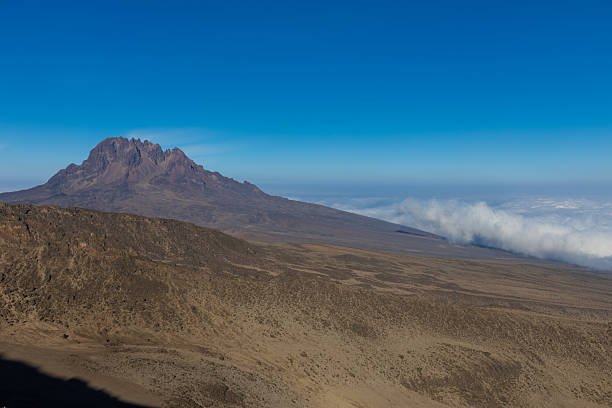
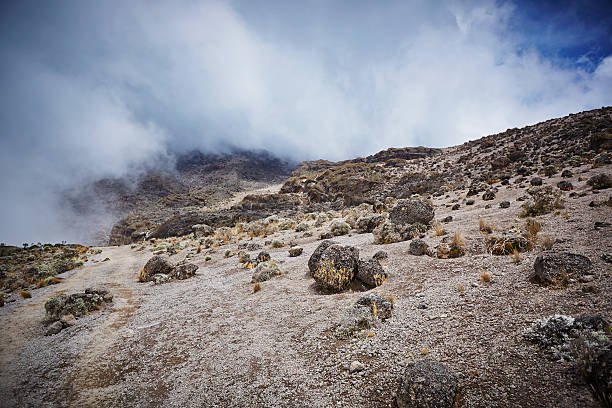
The route gradually enters alpine desert and crosses the broad high altitude Saddle between Mawenzi and Kibo.
Vegetation becomes very limited and the landscape feels dry, exposed and dramatically different from the rainforest of Day 1.
Kibo appears increasingly dominant ahead while Mawenzi rises behind or beside the route when visibility is clear.
This is an important day for conserving energy. Walk slowly, hydrate appropriately and avoid using extra energy unnecessarily.
Reach Kibo Hut in the afternoon and settle into the high mountain accommodation.
Eat according to the confirmed meal schedule, organize summit clothing, headlamp, gloves, water, snacks and essential personal equipment.
Rest as much as possible because the summit attempt normally begins around midnight or during the very early hours.
Overnight: Kibo Hut before the summit attempt.
Day 4 – Kibo Hut to Gilman's Point, Possible Uhuru Peak and Descent to Horombo Hut
Wake late at night or around midnight and prepare for the most demanding stage of the trek.
Dress in full summit layers, organize the headlamp and follow the guide onto the dark upper slopes of Kibo.
The trail climbs steeply over loose volcanic scree and switchbacks toward the crater rim.
Progress is deliberately slow. The combination of darkness, cold, altitude and repeated uphill steps makes this section physically and mentally demanding.
Continue toward Gilman's Point on the crater rim if participant condition and mountain conditions allow.
Reaching Gilman's Point is a major achievement, but climbers who remain strong enough and receive guide approval can continue around the crater rim toward Uhuru Peak.
The route between Gilman's Point and Uhuru Peak remains extremely high and can feel much harder than the relatively modest additional distance suggests.
If Uhuru Peak is safely reached, spend only an appropriate short period at the summit before beginning the descent.
Weather, wind, cold, altitude symptoms and participant condition can require turning around before Uhuru Peak. Summit achievement is never guaranteed.
Descend back toward Kibo Hut, rest briefly where appropriate, collect remaining equipment and continue down toward Horombo Hut.
This creates an exceptionally long mountain day combining the summit climb with a major descent.
Overnight: Horombo Hut.
Day 5 – Horombo Hut to Marangu Gate
After breakfast, begin the final descent from Horombo toward Mandara.
The landscape becomes progressively greener as the trek leaves the moorland and re enters the montane forest.
Continue through the Mandara area and follow the established trail toward Marangu Gate.
Although the final day is mostly downhill, tired legs and knees can make the descent physically demanding.
Trekking poles can be particularly useful on long downhill sections.
Reach Marangu Gate and complete the applicable exit procedures.
Where applicable, eligible summit certificates are processed according to the official procedures for the highest point successfully reached.
Meet the confirmed vehicle and transfer to Moshi, Arusha or another agreed destination.
Finish: Marangu Gate followed by the confirmed road transfer.
Marangu Route Mountain Huts
The hut system is the feature that most clearly distinguishes Marangu from Kilimanjaro's camping routes.
Mandara Hut
Mandara provides the first overnight after the rainforest ascent from Marangu Gate.
Horombo Hut
Horombo is used on both the ascent and descent. Climbers normally sleep here on Night 2 and again after the summit attempt on Night 4.
Kibo Hut
Kibo is the high mountain staging point before summit night. Climbers normally spend only a short period resting here before beginning the summit attempt.
Are the Huts Private?
No. Mandara, Horombo and Kibo are shared mountain facilities used by other authorized trekkers.
A private trek does not automatically mean a private hut, private sleeping room or exclusive toilet facility.
Do You Need a Sleeping Bag?
Yes. A suitable warm mountain sleeping bag is required even though Marangu uses huts.
Do You Need a Tent?
Not normally on the standard Marangu Route because overnight accommodation is in huts.
Marangu Rainforest Zone
- Tall montane trees
- Ferns and mosses
- Lichens
- Streams
- Mist and cloud
- Possible mud
- Possible colobus monkeys
- Possible blue monkeys
- Forest birdlife
Heath and Moorland Zone
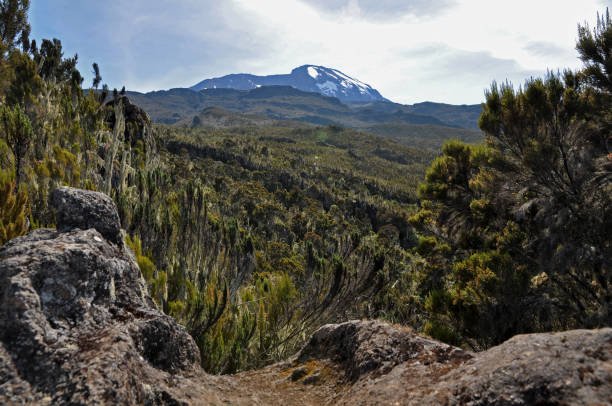
Above Mandara, the forest gradually opens into heath and moorland.
Lower vegetation, giant lobelias and groundsels can occur in suitable habitats while Kibo and Mawenzi can become visible during clear periods.
Alpine Desert and the Saddle
The terrain between Horombo and Kibo becomes much drier and more exposed.
The broad Saddle separating Mawenzi and Kibo creates one of the most dramatic landscapes of the Marangu Route.
Summit Zone
Above Kibo Hut, the route climbs over volcanic scree toward the crater rim.
Conditions can include extreme cold, strong wind, darkness, snow, ice or dry volcanic terrain depending on weather and season.
Gilman's Point
Gilman's Point is reached on the crater rim after the steep summit night ascent from Kibo Hut.
For some climbers, reaching the crater rim is the safe turnaround point. Continuing toward Uhuru Peak depends on participant condition and guide assessment.
Uhuru Peak
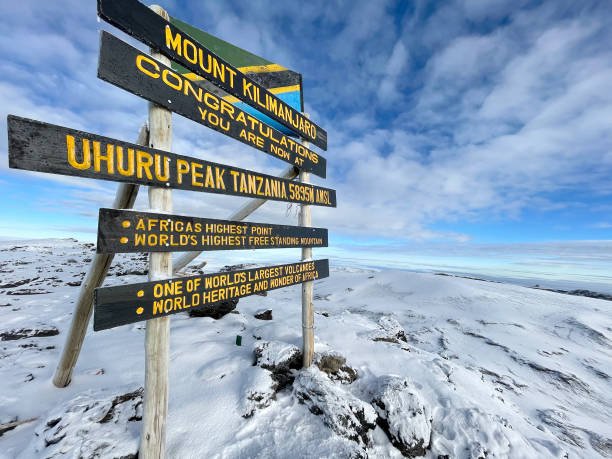
Uhuru Peak at 5,895 metres is the highest point on Mount Kilimanjaro and the ultimate objective of the standard summit itinerary.
No operator should guarantee that every climber will reach Uhuru Peak.
Why Summit Night Starts Around Midnight
The early departure provides many hours for the climb toward the crater rim and allows the team to begin descending from the summit zone later in the morning.
Exact departure time is determined by the professional guide and operational conditions.
How Hard Is Summit Night?
Summit night is normally the most demanding part of the five day Marangu trek.
Main Summit Night Challenges
- Very high altitude
- Cold temperatures
- Darkness
- Loose volcanic scree
- Long continuous ascent
- Limited sleep before departure
- Possible wind
- Mental fatigue
- Long descent after the summit attempt
Altitude and Acclimatization
Altitude is the central challenge of the five day Marangu itinerary.
Because the route moves from Horombo directly to Kibo on Day 3, there is no separate acclimatization day before summit night.
Is the 5 Day Marangu Route Too Short?
It is a recognized standard itinerary, but it is more compressed than the six day Marangu version.
Travellers who have schedule flexibility and prioritize acclimatization should consider adding another day.
Can Fit Climbers Still Struggle With Altitude?
Yes. Cardiovascular fitness does not guarantee altitude tolerance.
A very fit climber can develop significant symptoms while another participant may adapt differently.
Altitude Symptoms to Report
Climbers should promptly report unusual headache, nausea, vomiting, dizziness, unusual weakness, confusion, severe shortness of breath, loss of coordination or other concerning symptoms.
Can the Guide Stop a Summit Attempt?
Yes.
The professional guide can instruct a climber to descend when continuing is considered unsafe.
Does Reaching Kibo Guarantee the Summit?
No. Reaching Kibo means the climber has reached the summit staging hut, not that the summit is guaranteed.
Does Reaching Gilman's Point Guarantee Uhuru Peak?
No. The remaining crater rim section is still at extreme altitude and can be demanding.
Summit Success Is Never Guaranteed
A successful Kilimanjaro experience should be measured by safe mountain travel rather than by forcing a summit regardless of symptoms or conditions.
How Difficult Is the 5 Day Marangu Kilimanjaro Trek?
The route is nontechnical for standard trekkers, but the altitude profile makes the five day itinerary physically and mentally challenging.
Main Difficulty Factors
- Five consecutive mountain days
- Rapid elevation gain
- No dedicated acclimatization day
- High altitude alpine desert
- Cold summit night
- Steep scree above Kibo
- Very long Day 4
- Long final descent
Is the 5 Day Marangu Route Suitable for Beginners?
People without technical climbing experience can undertake Marangu, but beginners should understand that the five day itinerary is demanding because of altitude.
A longer route can be more appropriate for travellers who want additional acclimatization time.
Do You Need Technical Climbing Skills?
No specialist rope, rock or ice climbing skills are normally required for the standard Marangu ascent to Uhuru Peak.
Recommended Training
- Regular long walks
- Weekend hikes
- Hill walking
- Stair climbing
- Cardiovascular training
- Leg and core strengthening
- Walking with a daypack
- Practicing long uphill and downhill days
- Breaking in hiking boots before Tanzania
5 Day Marangu Kilimanjaro Packing List
Recommended Personal Equipment
- Broken in hiking boots
- Hiking socks
- Trekking trousers
- Thermal base layers
- Warm fleece or mid layer
- Insulated summit jacket
- Waterproof jacket
- Waterproof trousers
- Warm summit hat
- Sun hat
- Warm gloves
- Additional insulated gloves or mittens where appropriate
- Sunglasses
- Sunscreen
- Daypack
- Water bottles or hydration system
- Headlamp with spare batteries
- Suitable warm sleeping bag
- Personal medication
- Personal toiletries
- Trekking poles
- Gaiters where preferred
- Duffel bag according to luggage arrangement
- Phone or camera
- Power bank
- Waterproof bags for clothing and electronics
Why Summit Clothing Is Different
The summit attempt is much colder than the lower trekking days.
Climbers need a layering system that can handle cold, wind and possible snow or ice while still allowing movement.
Why a Headlamp Is Essential
The summit climb begins in darkness, making a reliable headlamp essential rather than optional.
Why Trekking Poles Are Useful
Poles can provide stability on uneven terrain and reduce some of the strain on tired legs during the long descent.
Can Equipment Be Rented?
Selected Kilimanjaro equipment can potentially be rented where available.
Rental items should be checked carefully for fit, condition and suitability before departure.
Common Rental Items
- Sleeping bag
- Trekking poles
- Gaiters
- Duffel bag
- Waterproof jacket
- Waterproof trousers
- Selected warm layers where available
What Does the Climber Carry?
Participants normally carry a personal daypack containing the items required while walking.
- Drinking water
- Rain protection
- Warm layers
- Trail snacks
- Sunscreen
- Sunglasses
- Personal medication
- Phone or camera
- Other essential daytime items
Porter Support and Mountain Luggage
The mountain team transports approved client luggage and operational equipment according to the confirmed package and applicable regulations.
Travellers should confirm their permitted duffel weight before the trek and avoid overpacking.
Does Every Climber Have a Personal Porter?
Not automatically. Crew organization is based on the total mountain load, group size and operating requirements.
Meals During the 5 Day Marangu Trek
Typical Mountain Meal Structure to Confirm
- Day 1 lunch and dinner
- Day 2 breakfast, lunch and dinner
- Day 3 breakfast, lunch and dinner
- Day 4 early summit snacks, breakfast after descent and later meals according to itinerary
- Day 5 breakfast and lunch or packed meal
- Hot drinks where included
Dietary Requirements
Vegetarian and other dietary requirements should be communicated before the climb.
Important food allergies should be explained clearly so the mountain kitchen can plan appropriately.
Drinking Water
The confirmed package should explain how drinking water is supplied or treated throughout the climb.
Participants should bring reusable bottles or an appropriate hydration system and protect water from freezing during summit night where necessary.
Charging Phones and Cameras
Reliable mountain electricity should not be assumed.
Carry a fully charged power bank and conserve battery by keeping devices warm and using them selectively.
Mobile Network and WiFi
Continuous network coverage and dependable WiFi should not be relied upon on Kilimanjaro.
Weather on the Marangu Route
- Warm or humid lower forest conditions
- Rain and mud
- Cloud and mist
- Strong sunshine at altitude
- Cold Horombo nights
- Very cold Kibo and summit conditions
- Wind
- Possible snow or ice near the summit
- Rapid changes in visibility
Private 5 Day Marangu Trek
A private departure can be organized around a solo traveller, couple, family or group of friends where confirmed.
Private means the guiding and trip logistics are organized around the booking party. It does not mean private huts, private trails or guaranteed exclusive facilities.
Group 5 Day Marangu Trek
Where compatible departures exist, travellers can potentially share selected guide and transport logistics with other climbers.
Group members can have different walking speeds and altitude responses, so professional guide management remains essential.
5 Day Marangu Trek for Solo Travellers
Solo travellers can choose a private departure or ask about compatible group joining availability.
5 Day Marangu Trek for Couples
Couples can undertake the climb privately or join a suitable shared departure according to preference and availability.
What Can Be Included?
Services to Confirm in Your 5 Day Marangu Package
- Applicable Kilimanjaro National Park charges
- Applicable hut charges
- Applicable rescue related park charges
- Professional mountain guide
- Assistant guide support where required
- Cook and porter support according to package
- Mandara Hut accommodation
- Horombo Hut accommodation
- Kibo Hut accommodation
- Mountain meals according to itinerary
- Drinking water according to package
- First aid and emergency mountain equipment according to operator setup
- Gate transportation where confirmed
- Return transfer where confirmed
- Summit certificate where officially earned
Possible Exclusions
- International flights
- Tanzania visa
- Personal travel and medical insurance
- Personal hiking clothing
- Hiking boots
- Sleeping bag rental unless included
- Trekking pole rental unless included
- Other rental equipment unless included
- Town hotels unless included
- Airport transfers unless included
- Tips where separate
- Personal expenses
- Safari unless included
- Zanzibar extension unless included
5 Day Marangu Kilimanjaro Trekking Tour Cost
The final price depends on current park tariffs, visitor category, number of climbers, four mountain nights, guide and crew requirements, meals, transport, equipment rental and any hotel or airport services added to the package.
Travellers should request a current written quotation rather than relying on a universal evergreen price.
Main Price Factors
- Current park tariffs
- Visitor category
- Four hut nights
- Number of climbers
- Private or group joining format
- Guide and crew requirements
- Gate transportation
- Mountain meals and drinking water
- Equipment rental
- Hotels where requested
- Airport transfers where requested
Hotel Before the Climb
A pre climb hotel night can provide valuable time for rest, briefing, equipment inspection and rental arrangements.
Hotel accommodation should only be considered included where clearly listed in the written quotation.
Hotel After the Climb
A post climb night can provide time for showering, recovery and preparation for safari, Zanzibar or onward travel.
Airport Transfers
Kilimanjaro International Airport pickup and drop off should only be treated as included when specifically confirmed.
Luggage Storage
Suitcases, safari bags and other items not required on Kilimanjaro can potentially be stored according to the confirmed hotel or operator arrangement.
Travel Insurance
Travellers should arrange suitable personal travel and medical insurance and verify that their policy covers the activities and elevations included in the climb.
5 Day Marangu Trek + Safari
The Marangu climb can be followed by a Northern Tanzania safari after suitable rest and recovery.
Tarangire National Park
Tarangire can provide a wildlife and savanna contrast after the mountain.
Ngorongoro Crater
Ngorongoro can be included in a short or extended post Kilimanjaro wildlife itinerary.
Serengeti National Park
Travellers with additional time can continue into a multi day Serengeti safari.
Lake Manyara National Park
Lake Manyara can also be incorporated according to the final safari plan.
5 Day Marangu Trek + Zanzibar
Zanzibar can be added after Kilimanjaro for travellers wanting an active mountain trip followed by beach relaxation.
Flights, hotels, transfers and island activities should only be treated as included when clearly shown in the combined package.
Who Is the 5 Day Marangu Trek Best For?
- Travellers who prefer huts to tents
- Climbers with limited mountain days
- Experienced hikers comfortable with a compressed itinerary
- Travellers who understand altitude risk
- Solo travellers
- Couples
- Friends
- Private climbing groups
- Group joining climbers where departures are available
Who Should Consider the 6 Day Marangu Route Instead?
Travellers who have an additional day available, are new to altitude or want more acclimatization time should seriously consider the six day Marangu itinerary.
Booking Checklist
Confirm Before Booking
- Travel dates
- Number of climbers
- Private or group joining arrangement
- Marangu Route confirmation
- Five mountain days / four mountain nights
- Mandara Hut Night 1
- Horombo Hut Nights 2 and 4
- Kibo Hut Night 3
- Summit attempt arrangement
- Professional guide team
- Park and hut fees
- Meals and drinking water
- Mountain luggage allowance
- Sleeping bag
- Rental gear
- Gate transfers
- Hotels if required
- Airport transfers if required
- Travel insurance responsibility
- Total package price
- Payment and cancellation conditions
Common 5 Day Marangu Mistakes
Avoid These Mistakes
- Assuming Marangu is easy because it has huts
- Underestimating the short acclimatization schedule
- Walking too quickly on the first days
- Hiding altitude symptoms
- Packing insufficient summit clothing
- Forgetting waterproof equipment
- Using untested hiking boots
- Failing to test the headlamp before summit night
- Assuming huts are heated like hotels
- Assuming huts are private
- Assuming reaching Gilman's Point guarantees Uhuru Peak
- Assuming summit success is guaranteed
- Underestimating the long Day 4 descent
- Booking a tight same day international flight after leaving the mountain
5 Day Marangu Kilimanjaro Trekking Tour FAQs
What is the 5 Day Marangu Kilimanjaro Trekking Tour?
It is a five day hut based Kilimanjaro summit itinerary using the Marangu Route.
Does the 5 day Marangu route attempt Uhuru Peak?
Yes. The standard itinerary attempts Uhuru Peak when participant condition and mountain conditions allow.
Is the summit guaranteed?
No. Summit success can never be guaranteed.
How many days are on the mountain?
Five days.
How many mountain nights are included?
Four mountain nights.
Where do we sleep on Night 1?
Mandara Hut.
Where do we sleep on Night 2?
Horombo Hut.
Where do we sleep on Night 3?
Kibo Hut before the summit attempt.
Where do we sleep on Night 4?
Horombo Hut after descending from the summit zone.
Do we sleep in tents?
Not normally. Marangu is Kilimanjaro's hut based route.
Are the huts private?
No. They are shared mountain facilities.
Do I need a sleeping bag?
Yes. A suitable warm mountain sleeping bag is required.
What happens on Day 1?
Climb from Marangu Gate through montane rainforest to Mandara Hut.
What happens on Day 2?
Continue through heath and moorland from Mandara Hut to Horombo Hut.
What happens on Day 3?
Cross increasingly dry high altitude terrain from Horombo to Kibo Hut and prepare for summit night.
What happens on Day 4?
Attempt Gilman's Point and, when safe, continue toward Uhuru Peak before descending through Kibo to Horombo Hut.
What happens on Day 5?
Descend from Horombo through Mandara to Marangu Gate.
Is there an acclimatization day?
No dedicated acclimatization day is included in the standard five day itinerary.
What is the main difference between 5 and 6 day Marangu?
The six day version normally adds an extra acclimatization day around Horombo before Kibo.
Is six days better for acclimatization?
The additional day provides more time at altitude before moving to Kibo and is generally preferable when schedules allow.
Does the route reach Gilman's Point?
Gilman's Point is a major objective on summit night, subject to participant condition and mountain conditions.
Does the route reach Stella Point?
The crater rim traverse toward Uhuru can pass through the higher rim area, but the precise summit progression remains subject to safety and conditions.
Does the route reach Uhuru Peak?
Uhuru Peak is the highest objective, but reaching it is never guaranteed.
How high is Uhuru Peak?
Uhuru Peak is 5,895 metres above sea level.
Is the Marangu Route technical?
No specialist technical climbing skills are normally required for the standard route.
Why is summit night difficult?
The combination of extreme altitude, cold, darkness, steep scree, limited sleep and a long descent makes it very demanding.
What time does summit night start?
It normally begins around midnight or during the very early hours, according to the professional guide's plan.
Can the guide make me turn around?
Yes. Safety decisions override summit goals.
Can fit climbers get altitude sickness?
Yes. Fitness does not guarantee altitude tolerance.
Should I hide a headache so I can keep climbing?
No. Symptoms should be reported honestly and promptly to the guide.
Can I see Kibo before summit night?
Potentially from open higher sections when weather permits.
Can I see Mawenzi?
Potentially from the moorland and Saddle when visibility is clear.
Are Kibo and Mawenzi views guaranteed?
No. Cloud can obscure mountain views.
Can we see glaciers?
Summit zone icefields can potentially be visible when conditions permit, but particular views should not be guaranteed.
Can we see colobus monkeys?
Possibly in the lower montane forest, although sightings are not guaranteed.
Can we see blue monkeys?
Possibly in suitable lower forest habitat.
Can we see giant lobelias?
They occur within suitable moorland habitats.
Can we see giant groundsels?
They also occur in suitable higher moorland areas.
Is the route suitable for first time climbers?
It can be undertaken without technical climbing experience, but first time altitude trekkers should carefully consider the compressed five day schedule.
Do I need to train?
Yes. Regular hiking, cardiovascular fitness and leg endurance preparation are strongly recommended.
Do I need hiking boots?
Suitable broken in hiking boots are strongly recommended.
Do I need waterproof clothing?
Yes. Rain and rapidly changing mountain conditions are possible.
Do I need a warm down or insulated jacket?
A suitable warm insulating layer is important for Kibo and summit night.
Do I need gloves?
Yes. Warm summit gloves are important.
Do I need a headlamp?
Yes. Summit night begins in darkness.
Are trekking poles useful?
Yes, particularly on scree and during the long descent.
Can I rent mountain equipment?
Selected items can potentially be rented where available.
Can I rent a sleeping bag?
Potentially, subject to current availability.
Can I rent trekking poles?
Potentially, subject to availability.
Are meals included?
Only according to the confirmed written package.
Can vegetarian meals be arranged?
Dietary requirements should be communicated before the climb.
Can food allergies be accommodated?
Important allergies should be communicated clearly in advance.
Is drinking water included?
The exact water arrangement should be shown in the confirmed package.
Are porters used?
Yes according to the operational luggage and group requirements.
Does every climber receive a personal porter?
Not automatically. Crew allocation is based on the overall mountain load.
Can I charge my phone in the huts?
Reliable charging should not be expected. Carry a power bank.
Is mountain WiFi reliable?
Reliable continuous connectivity should not be assumed.
Can the trek be private?
Yes where a private departure is arranged.
Does private mean private huts?
No. Hut facilities remain shared.
Can I join a group?
Potentially, where a compatible group departure is available.
Can solo travellers climb Marangu?
Yes with a licensed guided operation; unguided solo trekking is not the standard permitted format.
Can couples book privately?
Yes where a private arrangement is available.
Can the climb start from Moshi?
Yes where the confirmed package includes Moshi to Marangu Gate transportation.
Can it start from Arusha?
Potentially, with the additional road transportation reflected in the package.
Are hotels included?
Only when clearly listed in the quotation.
Are airport transfers included?
Only when specifically confirmed.
Can extra luggage be stored?
Storage can potentially be arranged according to available operator or hotel facilities.
Is travel insurance included?
Travellers should arrange appropriate personal travel and medical insurance unless explicitly stated otherwise.
Will I receive a summit certificate?
An official certificate is normally associated with the highest qualifying summit point successfully reached according to the applicable procedures.
Can I add a safari after the climb?
Yes. Tarangire, Ngorongoro, Serengeti, Lake Manyara and other Northern Tanzania safari options can be added.
Can I add Zanzibar?
Yes. Flights, hotels, transfers and activities should be confirmed separately unless included in a combined package.
Should I fly internationally on the same day I descend?
It is safer from a planning perspective to avoid very tight onward flight timing because mountain exit times can vary.
What makes Marangu different from Machame?
Marangu uses huts and follows a more direct out and back route structure, while Machame uses tented camps and a different summit approach and descent route.
What is the biggest disadvantage of the 5 day Marangu itinerary?
Its main limitation is the compressed acclimatization schedule before summit night.
What is the biggest advantage of Marangu?
For many travellers, the main advantage is hut accommodation instead of sleeping in tents.
What should I confirm before booking?
Confirm the dates, number of climbers, five day itinerary, Mandara, Horombo and Kibo hut nights, summit attempt, guide structure, park charges, meals, water, luggage support, rental equipment, transfers, hotels, airport services, insurance responsibility, total price and booking conditions.
So what is the complete 5 Day Marangu Kilimanjaro Trekking Tour?
The complete 5 Day Marangu Kilimanjaro Trekking Tour is a professionally guided hut based summit expedition following Kilimanjaro's classic Marangu Route from the lower rainforest to the summit zone of Kibo. Day 1 begins at Marangu Gate and climbs through lush montane forest toward Mandara Hut, where trekkers spend their first night. Day 2 continues above the forest into heath and moorland, with possible Kibo and Mawenzi views before reaching Horombo Hut. Day 3 moves higher through increasingly dry terrain and across the broad Saddle between Mawenzi and Kibo before arriving at Kibo Hut. After an early meal and limited rest, climbers prepare for the summit attempt. Day 4 begins around midnight or during the early hours and follows the steep volcanic scree above Kibo toward Gilman's Point on the crater rim. Climbers who remain strong enough and receive professional guide approval can continue toward Uhuru Peak at 5,895 metres. Reaching the summit is never guaranteed because altitude, weather, cold, wind and individual physical condition can require an earlier turnaround. After the highest safe point is reached, the team descends to Kibo Hut and continues farther down to Horombo Hut for the fourth mountain night. Day 5 completes the descent through moorland, Mandara and rainforest to Marangu Gate. Although the standard route does not normally require specialist technical climbing skills, the five day version is challenging because there is no dedicated acclimatization day before Kibo. Travellers with more time should consider the six day Marangu itinerary, which normally adds an extra day around Horombo. Depending on the written quotation, the package can include professional mountain guides, applicable national park and hut charges, cook and porter support, mountain meals, drinking water, safety equipment and gate transfers. Travellers should separately confirm sleeping bag rental, trekking poles, hotels, airport transfers, travel insurance, tips and optional safari or Zanzibar extensions. The defining features of the 5 Day Marangu Kilimanjaro Trekking Tour are therefore its classic hut based route, direct progression through Kilimanjaro's ecological zones, challenging summit night and opportunity to attempt Uhuru Peak within five mountain days while always placing safe guide decisions above summit achievement.
Plan Your 5 Day Marangu Kilimanjaro Trekking Tour
Climb through rainforest, moorland and alpine desert, stay in Mandara, Horombo and Kibo huts, and attempt Uhuru Peak on Kilimanjaro's classic Marangu Route.
Request Your 5 Day Marangu Trek

 Kilimanjaro Climb