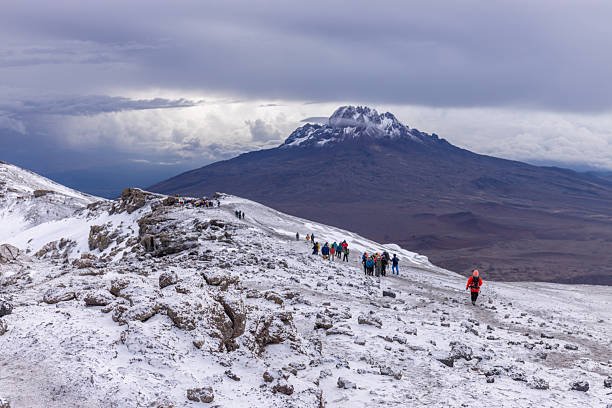
6 Day Marangu Route Summit Trek
The 6 Day Marangu Route Summit Trek is a six day Mount Kilimanjaro climb using the historic Marangu Route and its mountain hut accommodation.
The trek begins at Marangu Gate on the southeastern side of Kilimanjaro and follows a gradual trail through rainforest toward Mandara Hut.
The route then continues upward to Horombo Hut, where the six day itinerary includes an additional acclimatization day before climbers proceed toward Kibo Hut.
From Kibo, the summit attempt normally begins during the night and follows the high altitude trail toward Gilman’s Point on the crater rim.
Climbers who remain healthy enough to continue may proceed around the crater rim toward Uhuru Peak at approximately 5,895 metres above sea level.
After the summit section, the trek returns through Kibo toward Horombo Hut before completing the final descent to Marangu Gate on day six.
The additional Horombo acclimatization day distinguishes this itinerary from the faster 5 day Marangu Route and provides more time for the body to adjust before moving toward Kibo.
Even with an additional acclimatization day, reaching Uhuru Peak cannot be guaranteed because altitude affects every climber differently.
6 Day Marangu Route Summit Trek at a Glance
- Duration: 6 trekking days and 5 mountain nights.
- Route: Marangu Route.
- Starting point: Marangu Gate.
- Finishing point: Marangu Gate.
- Accommodation: Mountain huts.
- Summit objective: Uhuru Peak at approximately 5,895 metres.
- Day 1: Marangu Gate to Mandara Hut.
- Day 2: Mandara Hut to Horombo Hut.
- Day 3: Horombo acclimatization day.
- Day 4: Horombo Hut to Kibo Hut.
- Day 5: Kibo to Uhuru Peak and descent to Horombo Hut.
- Day 6: Horombo Hut to Marangu Gate.
Why Choose the 6 Day Marangu Route?
The Marangu Route is unique among the main Kilimanjaro routes because climbers stay in permanent mountain huts instead of tents.
The six day itinerary also includes a dedicated acclimatization day at Horombo, giving climbers more time at altitude before progressing toward Kibo Hut.
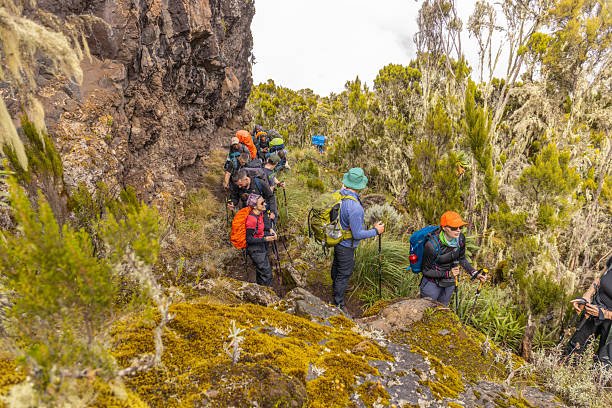
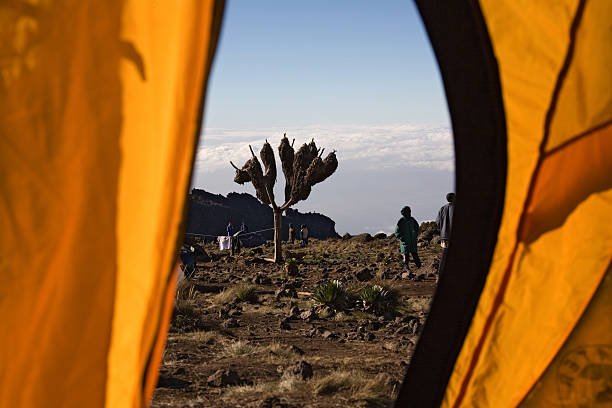
The trail provides a gradual transition from rainforest through open moorland and alpine desert before reaching the exposed summit environment.
Travellers who prefer hut accommodation and a clearly established mountain trail may find Marangu particularly suitable.
Main Marangu Route Highlights
- Marangu rainforest trekking
- Mandara Hut overnight
- Horombo Hut mountain views
- Dedicated Horombo acclimatization day
- Views toward Mawenzi
- High altitude saddle crossing
- Kibo Hut summit base
- Overnight summit ascent
- Gilman’s Point
- Uhuru Peak objective
- Hut accommodation throughout the mountain trek
- Professional mountain crew support
Detailed 6 Day Marangu Route Summit Trek Itinerary
DAY
01
MARANGU GATE – MANDARA HUT
Begin the Trek Through Kilimanjaro Rainforest
Your 6 Day Marangu Route Summit Trek begins with transportation toward Marangu Gate.
At the gate, your mountain team completes the required registration and entry procedures while porter loads and equipment are organised.
Once formalities are complete, begin walking through the lower mountain rainforest.
The trail climbs gradually beneath dense vegetation and can become wet or muddy after rainfall.
Day 1 Trekking Experience
- Arrive at Marangu Gate.
- Complete Kilimanjaro registration.
- Meet the mountain crew.
- Enter the rainforest zone.
- Follow the established Marangu trail.
- Reach Mandara Hut for the first night.
Guides encourage a steady walking rhythm from the first day because conserving energy becomes increasingly important at higher elevations.
After arriving at Mandara Hut, settle into the hut accommodation and prepare for the following day's climb toward Horombo.
Accommodation
Mandara Hut.
Meals
Meals according to the confirmed Kilimanjaro package.
Environment
Montane rainforest and humid lower mountain conditions.
DAY
02
MANDARA HUT – HOROMBO HUT
Trek Into Heath and Moorland
After breakfast, leave Mandara Hut and continue climbing toward Horombo Hut.
The dense rainforest gradually gives way to heath and moorland as elevation increases.
The more open landscape can provide views across the mountain when cloud and weather conditions allow.
Day 2 Highlights
- Leave Mandara Hut.
- Exit the dense rainforest.
- Enter heath and moorland vegetation.
- Gain significant altitude.
- Reach Horombo Hut.
As the air becomes thinner, climbers should maintain a slow pace and communicate any developing altitude symptoms to the guide.
Horombo will be your base for two nights, allowing an additional day for acclimatization before moving toward Kibo.
Accommodation
Horombo Hut.
Meals
Breakfast, lunch and dinner according to the confirmed package.
Environment
Heath, moorland and increasingly open mountain terrain.
DAY
03
HOROMBO ACCLIMATIZATION DAY
Altitude Adaptation at Horombo
Day three is the main additional acclimatization day that distinguishes the six day Marangu itinerary from the faster five day version.
Instead of immediately moving toward Kibo, climbers remain based at Horombo and complete an acclimatization walk into higher terrain.
The exact acclimatization route may be selected by the guide according to conditions and the team's health.
Acclimatization Day Objectives
- Spend an additional day at altitude.
- Walk higher during the day where appropriate.
- Return to Horombo for another overnight.
- Observe individual response to thinner air.
- Rest before continuing toward Kibo.
A common acclimatization walk travels toward the Mawenzi side of the route before returning to Horombo.
The purpose is not to exhaust climbers but to provide controlled exposure to higher elevation followed by recovery at the hut.
Headache, nausea, dizziness, poor coordination or worsening fatigue should always be reported immediately.
Accommodation
Second night at Horombo Hut.
Meals
Breakfast, lunch and dinner according to the confirmed package.
Main Focus
Additional altitude exposure, recovery and acclimatization.
DAY
04
HOROMBO HUT – KIBO HUT
Cross the High Altitude Saddle to Kibo
After breakfast, leave Horombo and continue toward Kibo Hut.
Vegetation becomes increasingly sparse as the route enters the alpine desert zone.
The trail eventually crosses the broad high altitude saddle between the Kibo and Mawenzi massifs.
Horombo to Kibo Highlights
- Leave Horombo after the acclimatization day.
- Enter increasingly dry alpine terrain.
- Cross the high altitude saddle.
- Continue toward Kibo Hut.
- Prepare for the overnight summit attempt.
Movement becomes slower at this altitude and climbers should avoid unnecessary effort.
On arrival at Kibo Hut, organise summit clothing, gloves, headlamp, water and other essential equipment.
Eat, hydrate and attempt to rest because the summit ascent normally begins late at night or shortly after midnight.
Accommodation
Kibo Hut.
Meals
Meals according to the confirmed mountain itinerary.
Preparation
Rest and prepare equipment for summit night.
DAY
05
KIBO – GILMAN’S POINT – UHURU PEAK – HOROMBO
Marangu Route Summit Attempt
Summit day is normally the longest and most demanding stage of the 6 Day Marangu Route Summit Trek.
Climbers wake during the night and prepare to leave Kibo Hut in cold and dark conditions.
The group begins climbing slowly toward the crater rim using headlamps.
Summit Night Priorities
- Follow the guide's slow pace.
- Wear suitable thermal and insulated layers.
- Protect hands, face and head from cold.
- Drink when practical.
- Report symptoms immediately.
- Avoid racing or unnecessary effort.
- Follow guide instructions if descent becomes necessary.
The first major objective is normally Gilman’s Point on the crater rim.
Reaching the crater rim is a significant achievement because the climb from Kibo is steep and completed at extreme altitude.
Climbers who remain in suitable condition may continue around the crater rim toward Uhuru Peak.
Uhuru Peak, at approximately 5,895 metres, is the highest point on Mount Kilimanjaro.
After the summit section, descend toward Kibo Hut for rest and then continue farther down toward Horombo Hut.
The combined summit climb and descent creates a long physical day, making careful pacing important even after leaving the summit area.
Summit Objective
Uhuru Peak at approximately 5,895 metres, subject to health and conditions.
Descent
Return through Kibo and continue toward Horombo Hut.
Accommodation
Horombo Hut.
DAY
06
HOROMBO HUT – MARANGU GATE
Final Descent to Marangu Gate
After breakfast, begin the final descent from Horombo toward Marangu Gate.
The trail returns through moorland before reaching Mandara and eventually re entering the rainforest.
Descending to lower elevation brings warmer and more humid conditions.
Final Day Experience
- Leave Horombo Hut.
- Descend through moorland.
- Pass the Mandara area.
- Re enter rainforest.
- Reach Marangu Gate.
- Complete mountain exit procedures.
- Receive the applicable certificate where eligible.
At Marangu Gate, the mountain trek officially ends after the required exit procedures.
Transportation then returns climbers toward Moshi or another destination stated in the confirmed itinerary.
Finish
Marangu Gate.
Meals
Breakfast and other meals according to the confirmed itinerary.
Transfer
Marangu Gate to the agreed final destination.
Marangu Route Experience
The Marangu Route follows an established trail on Kilimanjaro's southeastern side and uses the same general corridor for ascent and descent.
Its most distinctive feature is the use of permanent huts instead of camping tents.
The route moves progressively through rainforest, moorland, alpine desert and the high altitude summit environment.
Marangu Rainforest
The first and final sections of the route pass through Kilimanjaro's montane rainforest.
The environment can be humid and rainy, making waterproof trekking boots and rain protection important.
The forest contrasts strongly with the open and dry terrain encountered at higher elevations.
Mandara Hut
Mandara Hut provides the first overnight stop on the Marangu Route.
Located above Marangu Gate within the lower mountain environment, it allows climbers to rest before continuing toward Horombo.
The hut system means climbers do not need to sleep in tents during the standard Marangu climb.
Horombo Hut
Horombo is an important location on the six day Marangu itinerary.
Climbers normally spend two consecutive nights here before moving toward Kibo.
The additional night provides time for a dedicated acclimatization walk and recovery.
Horombo Acclimatization Day
The dedicated acclimatization day is one of the main advantages of choosing six days rather than five on Marangu.
Climbers can gain additional altitude during a controlled daytime walk and then return to Horombo to sleep at the same hut.
This additional exposure may support adaptation, although no itinerary can guarantee that a particular climber will acclimatize successfully.
Why the Acclimatization Day Matters
- Provides an additional day before Kibo.
- Allows controlled exposure to higher elevation.
- Provides more recovery time at Horombo.
- Allows guides additional time to observe climber condition.
- Creates a more gradual itinerary than the 5 day Marangu option.
Mawenzi Views
Horombo and the higher Marangu trail may provide impressive views toward Mawenzi when weather conditions are clear.
Mawenzi has a rugged profile that contrasts strongly with the broad Kibo summit massif.
Cloud can obscure mountain views, so specific scenery cannot be guaranteed on any particular day.
The Saddle
The route from Horombo toward Kibo crosses the broad alpine saddle between Mawenzi and Kibo.
Vegetation becomes sparse and the landscape increasingly dry and exposed.
The long open approach helps climbers appreciate the scale of the upper Kilimanjaro environment.
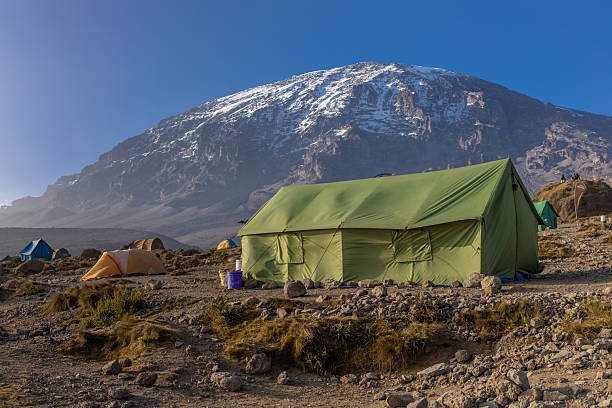
Kibo Hut
Kibo Hut is the final overnight base before the Marangu summit attempt.
The high altitude environment is cold, dry and exposed.
Climbers normally arrive during the afternoon, prepare summit equipment, eat and attempt to rest before departing during the night.
Gilman’s Point
Gilman’s Point is located on the crater rim and is the first major summit landmark reached on the standard Marangu ascent from Kibo.
The climb toward Gilman’s Point is steep, cold and completed at extreme altitude.
Reaching the crater rim requires patience and controlled pacing throughout the night.
Uhuru Peak
Uhuru Peak is approximately 5,895 metres above sea level and is the highest point on Mount Kilimanjaro.
Climbers who remain healthy enough after reaching the crater rim may continue toward Uhuru Peak.
The final section remains demanding because of extreme altitude, cold and accumulated fatigue.
Reaching Uhuru Peak should never take priority over climber safety.
Realistic Summit Expectations
- Altitude affects each climber differently.
- Strong fitness does not guarantee acclimatization.
- Summit night is extremely demanding.
- Weather can influence conditions.
- Guides may require descent for safety.
- Uhuru Peak cannot responsibly be guaranteed.
Altitude and Acclimatization
Altitude is one of the main challenges of the 6 Day Marangu Route Summit Trek.
As elevation increases, oxygen availability decreases and the body needs time to adapt.
Altitude symptoms may occur even in climbers who are physically fit and experienced hikers.
Helpful Acclimatization Practices
- Maintain a slow walking pace.
- Drink regularly.
- Eat where possible.
- Rest adequately.
- Use the acclimatization day responsibly.
- Attend daily health checks.
- Report symptoms honestly.
Professional Kilimanjaro Guides
Professional mountain guides accompany climbers throughout the Marangu Route.
The guide team manages route timing, trekking pace, altitude monitoring, summit planning and safety decisions.
Guide Responsibilities
- Daily route briefings
- Trekking pace management
- Altitude health monitoring
- Acclimatization planning
- Weather assessment
- Summit night organisation
- Emergency response decisions
- Descent decisions when necessary
Mountain Crew and Porter Support
The Marangu Route is supported by professional guides, a mountain cook and porters according to group size and mountain requirements.
Porters transport permitted climber luggage, food, cooking supplies and shared expedition equipment.
Climbers carry their own daypacks containing water, clothing, personal medication and items needed during the day's walk.
Hut Accommodation on the Marangu Route
Hut accommodation is one of the defining characteristics of the Marangu Route.
Climbers normally stay in shared mountain hut facilities at Mandara, Horombo and Kibo.
Facilities are basic and should not be compared with normal hotel accommodation.
Typical Marangu Hut Experience
- Shared mountain sleeping facilities
- Basic sleeping bunks or beds
- Mattress arrangements according to the hut setup
- Shared dining facilities where available
- Basic mountain sanitation facilities
- No tent setup required for climbers
Meals During the Marangu Trek
Mountain meals are prepared by the climbing crew throughout the trek according to the confirmed package.
Breakfast, lunch and dinner are normally provided during the mountain itinerary.
Appetite may decrease at altitude, but maintaining energy intake remains useful for continued trekking.
Dietary requirements should be communicated before departure so suitable arrangements can be requested where possible.
Drinking Water
Drinking water is provided and treated according to the confirmed mountain arrangements.
Climbers should carry reusable bottles or an appropriate hydration system.
Water containers should be protected from freezing during the summit stage.
Fitness for the 6 Day Marangu Route
The Marangu Route normally does not require technical climbing skills, but this should not be mistaken for an easy mountain trek.
The itinerary includes consecutive days of walking, substantial elevation gain, thin air and a long summit day.
Recommended Preparation
- Regular hiking
- Long endurance walks
- Hill training
- Stair training
- Cardiovascular conditioning
- Leg strength training
- Walking with a daypack
- Testing trekking boots before travel
What to Bring for the Marangu Route
- Waterproof trekking boots
- Warm insulated jacket
- Waterproof shell jacket
- Waterproof trousers
- Thermal base layers
- Warm fleece
- Trekking trousers
- Warm gloves
- Warm hat
- Sun hat
- Trekking socks
- Headlamp and spare batteries
- Trekking poles
- Sleeping bag suitable for mountain temperatures
- Daypack
- Reusable water bottles
- Sunglasses
- Sunscreen
- Personal medication
- Personal toiletries
Typical 6 Day Marangu Route Summit Trek Inclusions
- Applicable Kilimanjaro park arrangements stated in the confirmed package
- Transfer to Marangu Gate according to the confirmed itinerary
- Return transportation from Marangu Gate according to the itinerary
- Professional Kilimanjaro guide
- Assistant guides according to group requirements
- Mountain cook
- Porter support
- Mountain hut accommodation
- Mountain meals
- Drinking water arrangements
- First aid equipment
- Emergency oxygen according to the operator's safety arrangements
- Pulse oximeter monitoring
- Applicable summit certificate where eligible
Typical Marangu Route Exclusions
- International flights
- Tanzania visa
- Travel insurance
- Emergency evacuation insurance
- Personal trekking clothing
- Sleeping bag unless included or rented
- Personal medication
- Optional equipment rentals
- Personal expenses
- Alcoholic beverages
- Tips for guides, cooks and porters
- Services not listed in the confirmed package
6 Day Marangu Versus 5 Day Marangu
The main difference between the two itineraries is the additional acclimatization day included on the six day trek.
The five day Marangu itinerary normally progresses from Mandara to Horombo and then directly toward Kibo the following day.
The six day itinerary spends an additional night at Horombo and includes an acclimatization walk before the ascent to Kibo.
For climbers who can allocate an additional day, this provides more time for altitude adaptation before summit night.
6 Day Marangu Characteristics
- Six trekking days
- Five mountain nights
- Two nights at Horombo before Kibo
- Dedicated acclimatization day
- More gradual schedule than the 5 day version
- Hut accommodation
Private 6 Day Marangu Route Summit Trek
The trek can be arranged privately for solo travellers, couples, families, friends and organised groups.
A private trek provides a dedicated mountain guide team according to group size and applicable requirements.
Private arrangements do not remove the risks associated with altitude or guarantee summit success.
Group Marangu Route Trek
Group departures may be available when climbers have compatible dates and the same six day itinerary.
Group trekking allows participants to share the mountain experience with other travellers.
Exact group size and departure availability should be confirmed before booking.
Marangu Route for Solo Travellers
Solo travellers can book a private Marangu climb or request a compatible group departure.
A private solo trek normally costs more per person because guide and crew expenses are not shared among several climbers.
Best Time for the Marangu Route
Mount Kilimanjaro can be climbed during different periods of the year.
Drier seasons are often preferred because trails may be less wet, but mountain weather remains unpredictable throughout the year.
Rain, cloud, wind and freezing summit conditions can occur even during traditionally drier months.
Weather During the Trek
The route crosses several climate zones and conditions can change substantially with elevation.
Lower slopes may be warm and humid while Kibo and the summit area can be extremely cold.
Climbers should use a flexible layering system suitable for rain, wind, sun and freezing conditions.
Safety on the Marangu Route
Mountain safety depends on responsible pacing, appropriate equipment, honest symptom reporting and professional guide decisions.
Climbers should never hide altitude symptoms simply because they want to continue toward the summit.
Important Safety Principles
- Walk slowly at altitude.
- Use the acclimatization day responsibly.
- Attend daily health monitoring.
- Report symptoms immediately.
- Keep essential warm clothing accessible.
- Follow guide instructions.
- Accept descent when continuing becomes unsafe.
Travel Insurance
Climbers should arrange suitable travel and emergency insurance before travelling to Kilimanjaro.
The policy should be checked carefully for trekking, medical treatment and emergency evacuation at the required altitude.
Insurance is normally the traveller's responsibility unless specifically included in a confirmed package.
Equipment Rental
Selected mountain equipment can often be rented before the trek when arranged in advance.
Common Rental Items
- Sleeping bags
- Trekking poles
- Gaiters
- Duffel bags
- Warm jackets
- Selected waterproof clothing
- Other mountain equipment subject to availability
Daypack Essentials
Porters transport permitted expedition luggage while climbers carry their own daypacks.
The daypack should contain items required between huts because the porter transported bag may not be accessible during trekking.
- Drinking water
- Waterproof jacket
- Waterproof trousers
- Warm layer
- Sun protection
- Personal medication
- Snacks where appropriate
- Camera or phone
- Headlamp when required
- Gloves and warm hat at higher altitude
Responsible Kilimanjaro Trekking
Climbers should respect the mountain environment and follow all applicable park and guide instructions.
Waste should be managed responsibly and litter should never be deliberately left on the trail or around huts.
Respectful treatment of guides, cooks, porters and other climbers is also an important part of responsible mountain travel.
Important Information About the 6 Day Marangu Route Summit Trek
The 6 Day Marangu Route Summit Trek normally begins and ends at Marangu Gate.
The itinerary includes five mountain nights using hut accommodation.
The standard route uses Mandara Hut, Horombo Hut and Kibo Hut.
An additional acclimatization day is normally completed from Horombo before moving toward Kibo.
The summit attempt usually begins during the night from Kibo Hut.
The route normally reaches Gilman’s Point on the crater rim before continuing toward Uhuru Peak where health and conditions permit.
Altitude can affect any climber regardless of age, fitness or trekking experience.
Weather and mountain conditions can influence trekking pace and summit plans.
Professional guides may require descent when continuing is considered unsafe.
Reaching Uhuru Peak cannot be guaranteed.
Why Book This 6 Day Marangu Route Summit Trek?
The 6 Day Marangu Route Summit Trek combines permanent mountain hut accommodation with an additional acclimatization day and a structured ascent toward Kilimanjaro's highest point.
The journey includes rainforest, Mandara Hut, Horombo, acclimatization toward higher terrain, the alpine saddle, Kibo Hut, Gilman’s Point and the Uhuru Peak objective.
With professional guides, porter support, mountain meals, hut accommodation, drinking water and applicable Kilimanjaro arrangements organised according to the confirmed package, climbers can focus on steady trekking, acclimatization and the mountain experience.
Frequently Asked Questions
What is the 6 Day Marangu Route Summit Trek?
It is a six day Mount Kilimanjaro climb using the Marangu Route, hut accommodation and an additional acclimatization day at Horombo before the summit attempt.
Where does the Marangu Route start?
The standard trekking route begins at Marangu Gate.
Where does the route finish?
The standard itinerary descends back to Marangu Gate.
How many mountain nights are included?
The six day Marangu itinerary normally includes five mountain nights.
Do climbers sleep in tents?
No. The Marangu Route normally uses permanent mountain huts instead of camping tents.
Which huts are used?
The standard six day itinerary normally uses Mandara Hut, Horombo Hut and Kibo Hut.
Is there an acclimatization day?
Yes. The standard six day itinerary includes an additional day based at Horombo for acclimatization before continuing toward Kibo.
Why is the acclimatization day useful?
It provides additional time at altitude and allows climbers to complete a controlled higher elevation walk before returning to Horombo to rest.
When does summit night begin?
The summit attempt normally begins late at night or shortly after midnight from Kibo Hut depending on guide planning and mountain conditions.
What is Gilman’s Point?
Gilman’s Point is a crater rim point reached during the Marangu summit ascent from Kibo before climbers continue toward Uhuru Peak where conditions allow.
How high is Uhuru Peak?
Uhuru Peak is approximately 5,895 metres above sea level.
Is summit success guaranteed?
No. Summit success depends on acclimatization, health, weather, mountain conditions and guide safety decisions.
Is the 6 day Marangu Route difficult?
Yes. Although the route does not normally require technical climbing, it reaches extreme altitude and includes a long and demanding summit day.
Is 6 day Marangu different from 5 day Marangu?
Yes. The six day itinerary normally adds an extra Horombo acclimatization day before continuing toward Kibo.
Are professional guides included?
Professional Kilimanjaro guides are normally included according to the confirmed climbing package.
Are porters included?
Porter support is normally included according to group size and the applicable mountain arrangements.
Are meals included?
Mountain meals are normally prepared by the climbing crew according to the confirmed itinerary.
Can trekking equipment be rented?
Selected items such as sleeping bags, trekking poles, gaiters, duffel bags and mountain clothing may be available for rental when arranged in advance.
Can I climb Marangu privately?
Yes. Private six day Marangu treks can be organised for solo travellers, couples, families and groups.
How do I book the 6 Day Marangu Route Summit Trek?
Provide your preferred climbing dates, number of climbers, private or group preference and equipment requirements so availability, logistics and the final quotation can be confirmed.
Request Your 6 Day Marangu Route Summit Trek
Share your preferred Kilimanjaro dates, number of climbers and private or group preference to receive a personalised 6 Day Marangu Route Summit Trek with professional guides, hut accommodation, meals, porter support, acclimatization day and applicable mountain arrangements.
Book Your 6 Day Marangu Trek