6 Day Rongai Route Guided Trek
The 6 Day Rongai Route Guided Trek follows Mount Kilimanjaro's northern approach before joining the eastern side of the mountain near Kibo and descending through the Marangu Route after the summit.
Rongai is different from Machame and Lemosho because it approaches Kilimanjaro from the north, offering changing scenery, a quieter early section of trail and views toward Mawenzi and Kibo.
The six day itinerary passes Simba Camp, Kikelewa Camp, Mawenzi Tarn and Kibo Hut before the summit climb toward Gilman's Point and Uhuru Peak at 5,895 metres.
After reaching the summit area, trekkers descend toward Horombo Hut before completing the final walk to Marangu Gate.
6 Day Rongai Route Guided Trek at a Glance
- Day 1: Rongai Gate or Nalemoru Trailhead to Simba Camp
- Day 2: Simba Camp via Second Cave to Kikelewa Camp
- Day 3: Kikelewa Camp to Mawenzi Tarn
- Day 4: Mawenzi Tarn to Kibo Hut
- Day 5: Kibo Hut to Gilman's Point, Uhuru Peak and Horombo Hut
- Day 6: Horombo Hut to Marangu Gate
- Highest Point: Uhuru Peak, 5,895 metres
- Ascent: Northern Rongai Route
- Descent: Marangu Route
- Accommodation: Mountain tents during the Rongai ascent and Horombo Hut area according to the confirmed trek arrangement
Complete 6 Day Rongai Route Guided Trek Itinerary
DAY
01
RONGAI NORTHERN APPROACH
Rongai Gate to Simba Camp
The trek begins with a transfer toward the northern side of Mount Kilimanjaro and the Rongai entry area near Nalemoru.
After completing registration and preparing the mountain crew, begin walking through the lower vegetation zone on the northern slopes.
The first day is normally walked at a deliberately steady pace to help the body begin adapting to increasing altitude.
The landscape gradually changes as the trail gains elevation, moving from cultivated foothills and forest influenced vegetation toward more open mountain terrain.
Your professional Kilimanjaro guide controls the walking pace and monitors how the group is responding to the first day at altitude.
Arrive at Simba Camp for rest, dinner and the first night on Mount Kilimanjaro.
Day 1 Highlights
- Northern Kilimanjaro approach
- Rongai trail entrance
- First day of altitude adaptation
- Forest and open mountain vegetation
- Professional mountain guiding
- Arrival at Simba Camp
Start
Rongai Gate / Nalemoru Trailhead.
Overnight
Simba Camp.
Meals
According to the confirmed Kilimanjaro package.
DAY
02
SECOND CAVE AND KIKELEWA
Simba Camp to Kikelewa Camp
After breakfast, continue climbing across increasingly open terrain as the trail moves farther above the lower forest zone.
The route passes through the Second Cave area before continuing toward Kikelewa Camp.
Views become wider as vegetation becomes lower and the mountain environment becomes more exposed.
On clear days, trekkers may begin seeing dramatic perspectives of Kibo and the jagged Mawenzi massif.
Walking slowly is important because the altitude becomes increasingly noticeable despite the trail remaining manageable for prepared trekkers.
Your guide may conduct health observations and encourage regular hydration, eating and steady movement.
Arrive at Kikelewa Camp for dinner, rest and overnight accommodation.
Day 2 Highlights
- Second Cave area
- Open northern Kilimanjaro terrain
- Increasing altitude
- Possible Kibo views
- Possible Mawenzi views
- Arrival at Kikelewa Camp
DAY
03
MAWENZI
Kikelewa Camp to Mawenzi Tarn
After breakfast, continue climbing toward one of the most dramatic parts of the Rongai Route.
The trail rises toward Mawenzi, Kilimanjaro's rugged eastern volcanic peak.
Vegetation becomes increasingly sparse as the route enters a colder and more exposed high mountain environment.
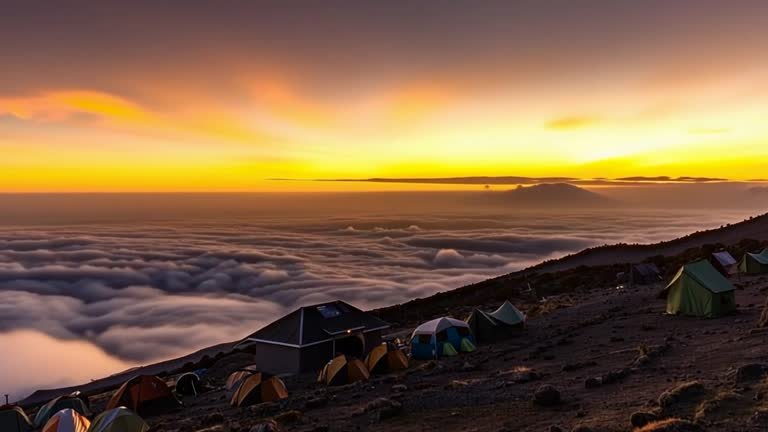
Mawenzi Tarn sits beneath the steep and jagged Mawenzi massif, creating one of the route's most distinctive camping environments.
The shorter walking schedule on this section can provide useful time for rest and adaptation before moving higher toward Kibo.
Your guide continues monitoring altitude response, appetite, hydration and general condition.
Spend the night at Mawenzi Tarn while preparing mentally and physically for the higher elevations ahead.
Day 3 Highlights
- Mawenzi massif scenery
- High mountain environment
- Sparse alpine vegetation
- Altitude adaptation
- Mawenzi Tarn campsite
- Preparation for higher altitude
DAY
04
ALPINE DESERT
Mawenzi Tarn to Kibo Hut
After breakfast, leave the dramatic Mawenzi environment and begin crossing the alpine desert toward Kibo.
This section provides a striking change in scenery as vegetation becomes extremely limited and the trail crosses a broad high altitude landscape between Mawenzi and Kibo.
The terrain can feel exposed, with strong sun during clear daytime conditions and considerably colder temperatures when cloud, wind or evening arrives.
Continue slowly toward Kibo Hut, the base used before the summit attempt.
After arriving, the priority is usually eating, hydrating, organising summit clothing and equipment, and resting as much as possible.
Your guide provides a summit briefing covering clothing, pace, trail conditions, hydration and safety procedures.
Trekkers normally rest during the evening because the summit climb generally begins around midnight or during the very early hours.
Day 4 Highlights
- Mawenzi to Kibo crossing
- Alpine desert terrain
- High altitude trekking
- Arrival at Kibo Hut
- Summit preparation
- Early rest before summit night
DAY
05
SUMMIT DAY
Kibo Hut to Gilman's Point, Uhuru Peak and Horombo Hut
Summit day normally begins around midnight or in the very early morning hours after a short period of rest at Kibo Hut.
Dress in warm summit layers, organise your headlamp and essential equipment, and begin climbing slowly behind the professional mountain guides.
This is normally the most physically demanding part of the 6 Day Rongai Route Guided Trek because of the cold, darkness, steep terrain and very high altitude.
The ascent continues gradually toward the crater rim and Gilman's Point.
Reaching Gilman's Point is a major achievement, but trekkers who remain strong and are considered fit to continue may proceed along the crater rim toward Uhuru Peak.
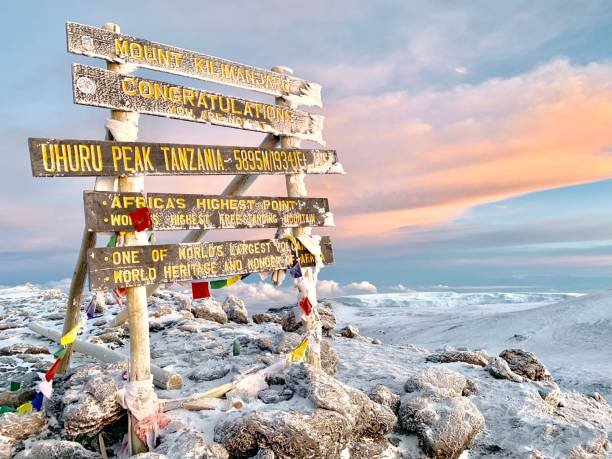
Uhuru Peak stands at 5,895 metres above sea level and is the highest point on Mount Kilimanjaro and the African continent.
Summit conditions can include strong wind, extreme cold, snow, ice and rapidly changing weather.
After reaching the highest appropriate point for your condition, begin descending back toward Kibo and continue lower toward Horombo Hut.
The long descent removes substantial altitude and usually provides a noticeably easier sleeping elevation after the summit effort.
Summit Safety Comes First
Reaching Uhuru Peak cannot be guaranteed. If your guide identifies concerning altitude symptoms, exhaustion or another safety issue, descending may become the priority. Guide instructions and health decisions always take precedence over summit goals.
Day 5 Highlights
- Midnight or early morning summit start
- High altitude climbing
- Gilman's Point
- Uhuru Peak at 5,895 metres when conditions allow
- Crater rim environment
- Long descent from high altitude
- Overnight near Horombo Hut
DAY
06
MARANGU DESCENT
Horombo Hut to Marangu Gate
After breakfast, begin the final descent through the Marangu side of Mount Kilimanjaro.
The trail gradually drops through moorland and then into increasingly lush vegetation as elevation decreases.
Descending into thicker forest creates a dramatic contrast with the alpine desert and summit environment experienced during the previous days.
Continue toward Marangu Gate where the mountain trek officially concludes after completing the required exit procedures.
Trekkers who meet the applicable summit criteria normally receive a Kilimanjaro summit certificate according to mountain authority procedures.
After finishing at the gate, continue by vehicle to the confirmed final destination according to the agreed package.
Day 6 Highlights
- Horombo descent
- Moorland vegetation
- Mountain rainforest
- Marangu Gate
- Completion of the Kilimanjaro trek
- Certificate procedure where applicable
- Transfer according to confirmed arrangement
Why Choose the 6 Day Rongai Route?
The Rongai Route is distinctive because it approaches Kilimanjaro from the northern side rather than beginning on the more commonly used southern and western approaches.
Trekkers experience views of both Mawenzi and Kibo while travelling through changing vegetation and high mountain landscapes.
The route later joins the eastern side of Kilimanjaro before descending through Marangu.
6 Day Rongai Route Highlights
- Northern Kilimanjaro approach
- Generally quieter early trail sections
- Simba Camp
- Second Cave area
- Kikelewa Camp
- Mawenzi Tarn
- Mawenzi massif views
- Alpine desert crossing
- Kibo Hut
- Gilman's Point
- Uhuru Peak at 5,895 metres
- Marangu descent route
Professional Guided Rongai Trek
A guided Kilimanjaro trek provides professional mountain leadership throughout the route.
Guides manage daily pacing, route decisions, health observations, camp schedules and summit strategy.
The mountain crew may also include assistant guides, porters and a cook according to group size and the confirmed climbing package.
Rongai Route Scenery
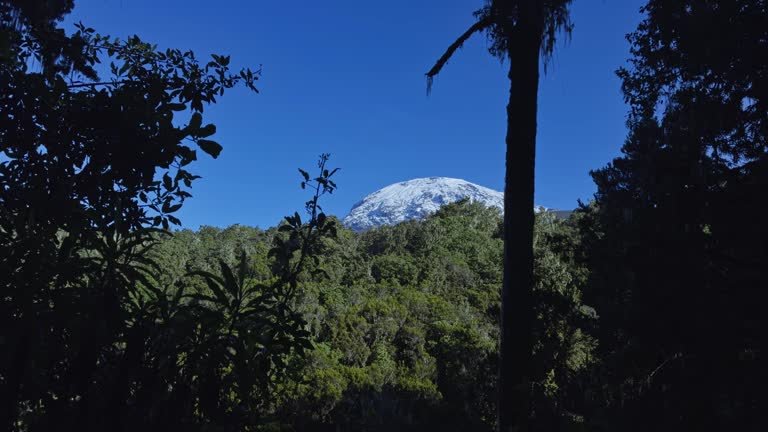
The Rongai Route passes through several ecological zones as elevation increases.
Lower vegetation gradually gives way to heath and moorland before the trek reaches sparse alpine terrain and eventually the high altitude summit environment.
The Mawenzi section is particularly distinctive because of the rugged volcanic scenery surrounding Mawenzi Tarn.
Rongai Route and Mawenzi Tarn
Mawenzi Tarn is one of the most memorable locations on the Rongai approach.
The camp sits beneath the steep and broken slopes of Mawenzi, creating a very different mountain atmosphere from the broad Kibo cone.
This section also provides important time at altitude before moving toward Kibo Hut.
Does Rongai Route Have the Barranco Wall?
No. The Rongai Route does not pass the Barranco Wall.
The route approaches Kilimanjaro from the north and reaches the summit through the Kibo side before descending through Marangu.
This makes its trail structure considerably different from the Machame and Lemosho routes.
Rongai Route Summit Approach
The summit climb normally begins from Kibo Hut around midnight or during the very early morning hours.
The ascent continues toward Gilman's Point on the crater rim before trekkers who are fit and safe to continue move toward Uhuru Peak.
The climb can be extremely demanding because of cold temperatures, darkness, steep terrain and the effects of very high altitude.
Uhuru Peak at 5,895 Metres
Uhuru Peak stands at 5,895 metres above sea level and is the highest point of Mount Kilimanjaro.
Reaching the summit requires physical endurance, careful pacing, suitable equipment and a safe response to altitude.
No Kilimanjaro operator or guide can guarantee that every trekker will reach Uhuru Peak.
Altitude and Acclimatisation
Altitude is one of the most important challenges on any Kilimanjaro route.
The body requires time to adapt as oxygen availability decreases with elevation.
Common mild altitude related symptoms can include headache, reduced appetite, fatigue and difficulty sleeping.
Symptoms should always be communicated to the professional mountain guide rather than hidden.
6 Day Rongai Route vs 7 Day Rongai Route
The six day itinerary is more compressed than the seven day Rongai Route.
The seven day version normally provides additional acclimatisation time, which can create a more gradual overall mountain schedule.
The six day option may suit trekkers who have limited time, but altitude remains a major consideration when choosing between itineraries.
Rongai Route vs Machame Route
Rongai and Machame approach Kilimanjaro from different sides of the mountain.
Rongai begins from the north and descends through Marangu, while Machame approaches from the southwest and passes through areas such as Shira, Lava Tower, Barranco and Barafu.
Rongai does not cross the Barranco Wall.
Rongai Route vs Lemosho Route
Lemosho begins on Kilimanjaro's western side and eventually connects with the southern circuit.
Rongai begins on the northern side and follows a distinct approach toward Mawenzi and Kibo.
Trekkers choosing between the routes should consider available days, preferred scenery, trail style and acclimatisation schedule.
Rongai Route vs Marangu Route
Rongai uses a northern ascent before descending through the Marangu Route.
Marangu itself approaches from the southeast and is known for its mountain hut accommodation.
Rongai normally uses camping during the ascent rather than following the full Marangu hut itinerary from the beginning.
Is the 6 Day Rongai Route Difficult?
The Rongai Route is a serious high altitude mountain trek.
Daily walking, cold conditions, changing terrain and altitude make the climb physically and mentally demanding even though technical climbing equipment is not normally required on the standard trekking route.
Summit night is usually the most challenging part of the climb.
Physical Preparation
Good preparation can make the trekking experience more manageable.
Useful training can include regular hiking, long walks, stair climbing, cardiovascular conditioning and leg endurance work.
Training with the daypack and footwear planned for Kilimanjaro can also help prepare the body for consecutive trekking days.
Walking Pace on Kilimanjaro
A slow and controlled walking pace is important on Kilimanjaro.
Mountain guides commonly encourage trekkers to move steadily rather than using excessive speed at lower elevations.
Slower pacing can help conserve energy and support the body's adjustment to increasing altitude.
Daily Health Monitoring
Professional guides may monitor trekkers throughout the route and ask about headache, nausea, appetite, energy, sleep and other altitude related symptoms.
Pulse oximeter checks may also be used as part of the guide team's overall assessment according to the confirmed climbing operation.
Numbers from a pulse oximeter should not be considered in isolation from physical symptoms and guide assessment.
Emergency Oxygen and First Aid
Emergency equipment may include first aid supplies, emergency oxygen and a pulse oximeter according to the confirmed Kilimanjaro package.
Emergency oxygen is a safety resource and should never be considered a way to avoid necessary descent when a serious altitude problem develops.
The professional mountain guide makes safety decisions based on the trekker's overall condition.
Weather on the Rongai Route
Kilimanjaro weather can change quickly at any time of year.
Trekkers may experience warm sunshine, rain, cloud, strong wind, freezing temperatures, snow or ice during the same expedition.
Appropriate layered clothing is therefore essential.
Cold Conditions on Summit Night
Summit night can be extremely cold, particularly before sunrise and during periods of strong wind.
Trekkers should be prepared with warm base layers, insulation, an outer shell, gloves, warm head protection and suitable footwear.
The exact clothing system should be selected according to personal needs and professional packing guidance.
Accommodation on the Rongai Route
Rongai normally uses mountain tents during the ascent.
The final descent passes through the Marangu side around Horombo before continuing to Marangu Gate.
The exact sleeping arrangement should be confirmed within the final package before departure.
Meals During the Trek
Mountain meals are prepared according to the confirmed trekking package.
The goal is to provide sufficient energy for consecutive hiking days and the summit attempt.
Trekkers should inform the operator of vegetarian or other dietary requirements before the climb whenever possible.
Drinking Water
Drinking water is normally provided and managed by the mountain crew according to the confirmed package.
Regular hydration is important throughout the climb, particularly as altitude increases.
Trekkers should follow the guide's recommendations regarding water intake and personal hydration management.
Porters and Mountain Crew
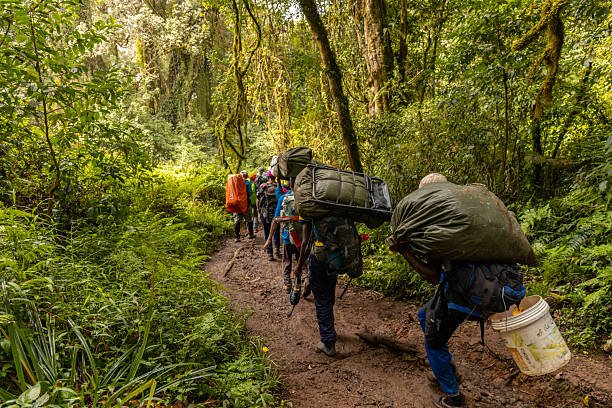
Porters carry communal expedition equipment and the trekker's permitted mountain duffel according to the confirmed baggage allowance.
Trekkers carry their own daypack containing water, rain protection, extra clothing and items needed during the hiking day.
Assistant guides, cooks and porters support the expedition according to group size and the confirmed crew structure.
What to Carry in Your Daypack
- Drinking water
- Rain jacket
- Warm layer
- Sun hat
- Sunglasses
- Sunscreen
- Personal snacks
- Personal medication
- Camera or phone
- Headlamp when required
- Gloves when conditions require them
- Other personal essentials needed before reaching camp
Recommended Kilimanjaro Equipment
- Broken in trekking boots
- Warm sleeping bag
- Waterproof jacket
- Waterproof trousers
- Base layers
- Insulating fleece or warm jacket
- Warm summit insulation
- Warm gloves
- Warm hat
- Sun hat
- Sunglasses
- Headlamp with spare power
- Trekking poles if preferred
- Daypack
- Duffel bag within the confirmed porter allowance
- Reusable water bottles or hydration system
Kilimanjaro Gear Rental
Selected trekking equipment may be available for rental depending on the operator's current stock.
Common rental items can include sleeping bags, trekking poles, gaiters, duffel bags and selected outer clothing.
Trekkers should confirm sizes, availability and rental charges before departure.
What Is Normally Included?
- Applicable Kilimanjaro park related charges according to the confirmed package
- Professional mountain guide
- Assistant guides according to group size
- Cook and porters according to crew requirements
- Mountain accommodation according to the confirmed package
- Meals during the trek according to the program
- Drinking water during the climb
- Mountain tents where required
- Dining equipment according to the confirmed operation
- First aid equipment
- Emergency oxygen according to the confirmed package
- Pulse oximeter according to the climbing operation
- Summit certificate according to applicable summit achievement and mountain authority procedures
Possible Exclusions
- International flights
- Tanzania visa
- Travel and mountain rescue insurance
- Personal trekking equipment
- Gear rental unless specifically included
- Tips for the mountain crew
- Personal expenses
- Pre climb accommodation unless included
- Post climb accommodation unless included
- Airport transfers unless specified
- Optional services not listed in the confirmed package
- Private portable toilet unless specifically included
Who Is the 6 Day Rongai Route Suitable For?
The route may suit trekkers who want a northern Kilimanjaro approach and prefer a route that differs from the more commonly selected Machame and Lemosho options.
It can also appeal to trekkers attracted by the scenery around Mawenzi and the contrast between the Rongai ascent and Marangu descent.
However, the six day schedule is still a demanding high altitude trek and should not be considered easy simply because it avoids the Barranco Wall.
Rongai Route for First Time High Altitude Trekkers
First time high altitude trekkers can attempt the Rongai Route with suitable preparation and professional guidance.
They should understand that fitness alone does not determine how the body responds to altitude.
Choosing the appropriate itinerary length, moving slowly and reporting symptoms to the guide are important parts of mountain safety.
Rongai Route for Solo Travellers
Solo travellers can complete the route privately or join a compatible scheduled group when available.
A group joining trek can provide shared mountain logistics, while a private climb offers a more personalised trekking arrangement.
Rongai Route for Couples and Friends
Couples and friends can trek together in a private group with a dedicated mountain crew according to the confirmed climbing arrangement.
Walking pace and safety decisions remain under the direction of the professional mountain guides.
6 Day Rongai Route Guided Trek Cost
The exact cost depends on group size, confirmed park related charges, crew structure, transport arrangements, accommodation before or after the mountain, rental equipment and other included services.
Private and group joining arrangements may have different pricing structures.
The final quotation should clearly show the climbing itinerary, inclusions, exclusions, payment terms and any optional services.
How to Compare Rongai Route Packages
Check Before Booking
- Is the itinerary genuinely six mountain days?
- Which camps are included?
- Does the route include Mawenzi Tarn?
- Does the summit climb start from Kibo Hut?
- Does the trek descend through Marangu?
- Are applicable park related charges included?
- Are professional mountain guides included?
- Are porters and a cook included?
- Are mountain meals included?
- Is drinking water included?
- Is emergency equipment provided?
- Is mountain transport included?
- Are hotels before and after the climb included or excluded?
- Are airport transfers included or excluded?
Best Time for the Rongai Route
Mount Kilimanjaro can be climbed during different periods of the year, but weather and trail conditions vary by season.
Clearer periods may provide wider mountain views, while wetter periods can bring more cloud, rainfall and slippery lower trail conditions.
High mountain weather remains unpredictable regardless of season, so trekkers should always carry appropriate waterproof and cold weather equipment.
Frequently Asked Questions
How many days is the Rongai Route trek?
This itinerary uses six mountain days from the Rongai northern approach to the final descent through Marangu Gate.
Where does the Rongai Route start?
The route starts on the northern side of Kilimanjaro through the Rongai or Nalemoru approach.
Where does the Rongai Route finish?
The standard Rongai climb descends through the Marangu side and finishes at Marangu Gate.
Does Rongai use the Barranco Wall?
No. Rongai approaches Kilimanjaro from the north and does not cross the Barranco Wall.
Does the route visit Mawenzi Tarn?
Yes. This six day itinerary includes the climb from Kikelewa Camp to Mawenzi Tarn before continuing toward Kibo Hut.
What is the highest point?
Uhuru Peak is the highest point of Mount Kilimanjaro at 5,895 metres above sea level.
Is reaching Uhuru Peak guaranteed?
No. Summit success depends on altitude response, fitness, health, weather, trail conditions and other factors. Safety decisions made by the professional guide take priority.
Is the Rongai Route technical?
The standard Rongai Route is generally a trekking route rather than a technical climbing route, but high altitude, cold weather and summit night make it physically demanding.
Where does summit night start?
The summit attempt normally begins from Kibo Hut around midnight or during the very early morning hours.
Is Gilman's Point part of the summit route?
Yes. The Rongai summit approach reaches the crater rim around Gilman's Point before continuing toward Uhuru Peak when the trekker's condition and circumstances allow.
Do I sleep in tents?
Rongai normally uses mountain tents during its ascent. The exact accommodation arrangement should be confirmed in the final climbing package.
Are meals provided?
Meals are normally prepared by the mountain crew according to the confirmed climbing package and itinerary.
Can vegetarian meals be arranged?
Vegetarian and other dietary requirements can normally be planned when communicated before the climb and confirmed with the operator.
Are porters used on the Rongai Route?
Yes. Porters normally support the expedition by carrying communal equipment and the trekker's permitted duffel according to the confirmed baggage allowance.
Can I rent Kilimanjaro equipment?
Selected equipment such as sleeping bags, trekking poles, gaiters and duffel bags may be available for rental depending on current stock and confirmed arrangements.
Which is better, 6 day or 7 day Rongai?
The seven day route normally provides additional acclimatisation time, while the six day itinerary offers a more compressed schedule. The appropriate option depends on available time, trekking experience and altitude considerations.
Do I need travel insurance?
Trekkers should arrange suitable travel insurance covering high altitude trekking, emergency medical treatment and evacuation according to the requirements of their chosen policy.
How do I get the exact 6 Day Rongai Route price?
Provide your preferred climbing dates, number of trekkers and whether you prefer a private or group arrangement. A detailed quotation can then be prepared showing the confirmed inclusions, exclusions and climbing services.
Plan Your 6 Day Rongai Route Guided Trek
Share your preferred trekking dates and number of climbers to receive a personalised 6 Day Rongai Route Guided Trek with professional mountain guiding, crew support, mountain services and complete package details.
Request Your Rongai Route Trek