Join scheduled Kilimanjaro group departures on Machame, Lemosho, Marangu, Rongai, Umbwe, and Northern Circuit routes with professional guides, porters, meals, park fees, airport transfers, and hotel accommodation.
Kilimanjaro Group Departures are scheduled shared climbing expeditions designed for solo travelers, couples, friends, and small groups who want to climb Mount Kilimanjaro with other international adventurers. Joining a confirmed departure allows climbers to share the mountain support team and operating costs while receiving professional guiding, meals, accommodation, safety monitoring, and complete logistical support. African Trek & Travel organizes scheduled Kilimanjaro group climbs on popular routes including Machame, Lemosho, Marangu, Rongai, Umbwe, and the Northern Circuit. Available itineraries normally range from five to nine mountain days depending on the selected route, acclimatization schedule, departure date, and confirmed climbing program. Each group expedition is supported by professional Kilimanjaro guides, assistant guides, porters, and a mountain cook. Packages normally include Kilimanjaro National Park fees, camping or mountain hut fees, rescue fees, meals, treated drinking water, tents on camping routes, transport to and from the mountain gates, airport transfers, and hotel accommodation before and after the climb according to the confirmed program. Kilimanjaro group departures are suitable for travelers seeking a more affordable and social way to climb Africa’s highest mountain. Participants should choose a route that matches their fitness, available time, trekking experience, and acclimatization requirements. Reaching Uhuru Peak is never guaranteed, and the mountain guide’s health and safety decisions must always be followed.
.jpg "kilimanjaro-group-departures")
Join scheduled Mount Kilimanjaro group climbs through Machame, Lemosho, Marangu, Rongai, Umbwe, and Northern Circuit routes with professional local guides and complete mountain support.
Kilimanjaro Group Departures are scheduled shared climbing programs for travelers who want to join other participants on a professionally organized Mount Kilimanjaro expedition.
Group climbs are suitable for solo travelers, couples, friends, students, and small travel groups. Participants share guides, assistant guides, porters, cooks, dining facilities, mountain transport, and other support services while following the same route and itinerary.
Joining a scheduled departure can be more affordable than arranging a private climb. It also gives climbers an opportunity to meet travelers from different countries and complete the mountain journey as a supportive team.
The seven-day Machame Route is one of the most popular Kilimanjaro group climbing options. It approaches the mountain from the south, passes through rainforest, crosses the Shira Plateau, visits Lava Tower, climbs Barranco Wall, and reaches the summit from Barafu Camp.
The additional acclimatization time compared with the six-day version makes it a preferred choice for many first-time high-altitude climbers.
The six-day Machame Route follows the same scenic southern trail but combines some stages into longer trekking days.
This option may suit experienced and well-prepared climbers who have limited time, although the faster schedule provides less acclimatization than the seven-day itinerary.
The eight-day Lemosho Route begins on Kilimanjaro’s western side and crosses the scenic Shira Plateau before joining the southern circuit.
Its gradual schedule, varied scenery, and additional acclimatization time make it one of the most recommended Kilimanjaro group climbing itineraries.
The seven-day Lemosho Route offers a shorter version of the western approach while still including Lava Tower, Barranco Wall, Karanga Camp, Barafu Camp, and the Uhuru Peak summit attempt.
Some trekking stages are longer than on the eight-day Lemosho itinerary.
The Marangu Route is the only main Kilimanjaro route that uses mountain huts instead of camping tents.
The six-day itinerary includes an additional acclimatization day and is generally recommended over the faster five-day schedule.
The Rongai Route approaches Kilimanjaro from the north near the Kenyan border. It normally has lower traffic during its early stages and offers a different perspective of the mountain.
The route normally descends through the Marangu side after the summit attempt.
The Umbwe Route is steep, direct, and physically demanding. It is generally more suitable for experienced trekkers who are comfortable with challenging terrain and faster altitude gain.
The seven-day version offers more acclimatization time than the six-day itinerary.
The Northern Circuit is Kilimanjaro’s longest standard route and provides an extended journey around the quieter northern slopes.
Its longer schedule offers strong acclimatization opportunities and is suitable for climbers who prefer a gradual approach with fewer crowds.
Climbers book a specific route and scheduled starting date. Participants normally meet at the hotel before the climb, attend a mountain briefing, complete equipment checks, and travel together to the selected Kilimanjaro gate.
On the mountain, the group follows one itinerary under the direction of the head guide. Meals, departure times, rest breaks, health checks, camp arrangements, and safety procedures are coordinated for the whole climbing team.
Each participant walks at a controlled pace, but the guides monitor individual health and may divide the group temporarily when climbers move at different speeds.
Group sizes vary according to the departure date, route, season, and number of confirmed participants.
The mountain support team normally includes a head guide, assistant guides, porters, and a mountain cook. The number of guides and porters depends on the number of climbers and the amount of group equipment.
Porters carry tents, food, cooking equipment, dining equipment, and the climbers’ main duffel bags within the permitted weight limits. Climbers carry their own daypacks.
Most Kilimanjaro group packages include one hotel night before the climb and one hotel night after the descent.
Climbers normally share a twin room unless a single room has been confirmed. A single-room supplement may apply to solo travelers who prefer private hotel accommodation.
Additional hotel nights can be arranged for travelers arriving early, resting after the climb, or continuing to a Tanzania safari.
Camping-route packages normally include four-season sleeping tents, a dining tent, tables, chairs, and other group camping equipment.
Climbers must bring or rent a suitable sleeping bag. Sleeping mattresses are normally provided on camping routes.
A mountain cook prepares breakfast, lunch, dinner, snacks, and hot drinks throughout the climb.
Meals may include porridge, eggs, bread, soup, rice, pasta, potatoes, vegetables, meat, fruit, and other energy-rich foods.
Vegetarian, vegan, halal, gluten-free, and other dietary requirements can be arranged with advance notice.
Water is collected from approved mountain sources and boiled or treated before use. Climbers should carry sufficient reusable bottles or a hydration bladder for each trekking day.
Altitude is the greatest challenge on Mount Kilimanjaro. Longer routes generally provide more time for the body to adjust to reduced oxygen levels.
Eight-day Lemosho, nine-day Northern Circuit, seven-day Machame, six-day Marangu, and seven-day Rongai normally provide stronger acclimatization schedules than shorter itineraries.
Good physical fitness does not prevent altitude sickness. Climbers must walk slowly, drink regularly, eat well, rest, and report symptoms immediately.
The mountain guides conduct regular health checks during the expedition. These may include oxygen-saturation readings, pulse checks, symptom questions, and observations of walking ability, appetite, sleep, and coordination.
Emergency oxygen may be carried for safety support, but it should not be used to allow an unwell climber to continue ascending.
The head guide may require a climber to stop ascending or descend when symptoms make further climbing unsafe.
Climbers should prepare with regular hiking, walking, stair climbing, running, cycling, swimming, strength training, and cardiovascular exercise.
Training with a daypack and completing consecutive hiking days can help prepare the body for the mountain schedule.
Preparation should begin several weeks or months before departure, depending on the climber’s current fitness level and trekking experience.
Rental equipment can be arranged for climbers who do not own all the required mountain gear.
Each climber’s main duffel bag must remain within the permitted porter weight limit.
Climbers carry their own water, rain gear, snacks, camera, personal medication, and clothing required during the trekking day.
Items carried by porters are normally unavailable until the next camp, so all essential daytime equipment must remain inside the climber’s daypack.
Every climber should have comprehensive travel insurance covering high-altitude trekking up to at least 6,000 metres.
The policy should include medical treatment, emergency evacuation, trip cancellation, interruption, delayed baggage, repatriation, and other relevant travel risks.
Climbers may be required to provide insurance details before starting the mountain expedition.
Group departures are suitable for adults in good general health who are prepared for multi-day trekking and high altitude.
Participants should be comfortable sharing schedules, dining facilities, support services, and some accommodation arrangements with other climbers.
Travelers who require a completely flexible pace, exclusive guide team, private toilet, private dining tent, or customized schedule may prefer a private Kilimanjaro climb.
All participants follow the confirmed route, schedule, camp plan, and departure date.
The group may include climbers with different ages, nationalities, fitness levels, walking speeds, and previous trekking experience.
Participants should remain patient, respectful, punctual, and supportive. The guides may adjust walking groups during the day to manage different speeds safely.
No tour operator can guarantee that every climber will reach Uhuru Peak.
Summit success depends on acclimatization, health, weather, fitness, pacing, nutrition, hydration, equipment, mental preparation, and each person’s response to altitude.
Safety always takes priority over reaching the summit. A climber may be required to stop or descend when the guides identify a serious health or safety concern.
Mount Kilimanjaro can be climbed throughout the year, but some periods generally offer more stable trekking conditions.
Many climbers add a Tanzania safari after descending from Mount Kilimanjaro.
Popular destinations include Tarangire National Park, Serengeti National Park, Ngorongoro Crater, Lake Manyara National Park, and cultural areas across Northern Tanzania.
Budget camping, group-joining, mid-range lodge, private, and luxury safari options can be arranged.
A Zanzibar beach holiday can be arranged after the mountain climb or Tanzania safari.
Possible experiences include Stone Town, spice farms, snorkeling, diving, island excursions, cultural tours, and relaxing at beach hotels.
Domestic flights and airport transfers can be added according to the confirmed itinerary.
African Trek & Travel provides experienced Kilimanjaro guides, professional mountain crews, quality camping equipment, freshly prepared meals, regular health monitoring, hotel arrangements, airport transfers, and local support.
Our team can arrange group departures, private climbs, equipment rental, Tanzania safaris, cultural tours, airport transfers, and Zanzibar extensions.
It is a scheduled climb where travelers join other participants and share mountain guides, porters, meals, transport, and support services.
Yes. Group departures are especially suitable for solo travelers who want to climb with other participants.
Available group routes may include Machame, Lemosho, Marangu, Rongai, Umbwe, and Northern Circuit.
Longer itineraries such as the eight-day Lemosho and nine-day Northern Circuit generally provide stronger acclimatization schedules.
Group size depends on the departure date, route, season, and number of confirmed climbers.
Two climbers normally share one tent on camping routes. A single tent may be arranged at an additional cost.
Most packages include one hotel night before and one hotel night after the climb, according to the confirmed itinerary.
Yes. Meals and treated drinking water are normally included throughout the mountain climb.
Yes. Vegetarian, vegan, halal, gluten-free, and other dietary needs can be arranged with advance notice.
No. Summit success depends on health, acclimatization, weather, fitness, pacing, equipment, and safety decisions.
Yes. Insurance should cover trekking up to at least 6,000 metres, medical treatment, emergency evacuation, cancellation, and repatriation.
Yes. Sleeping bags, trekking poles, jackets, boots, duffel bags, and other equipment may be rented subject to availability.
Yes. Group or private safaris and Zanzibar extensions can be arranged after the Kilimanjaro climb.
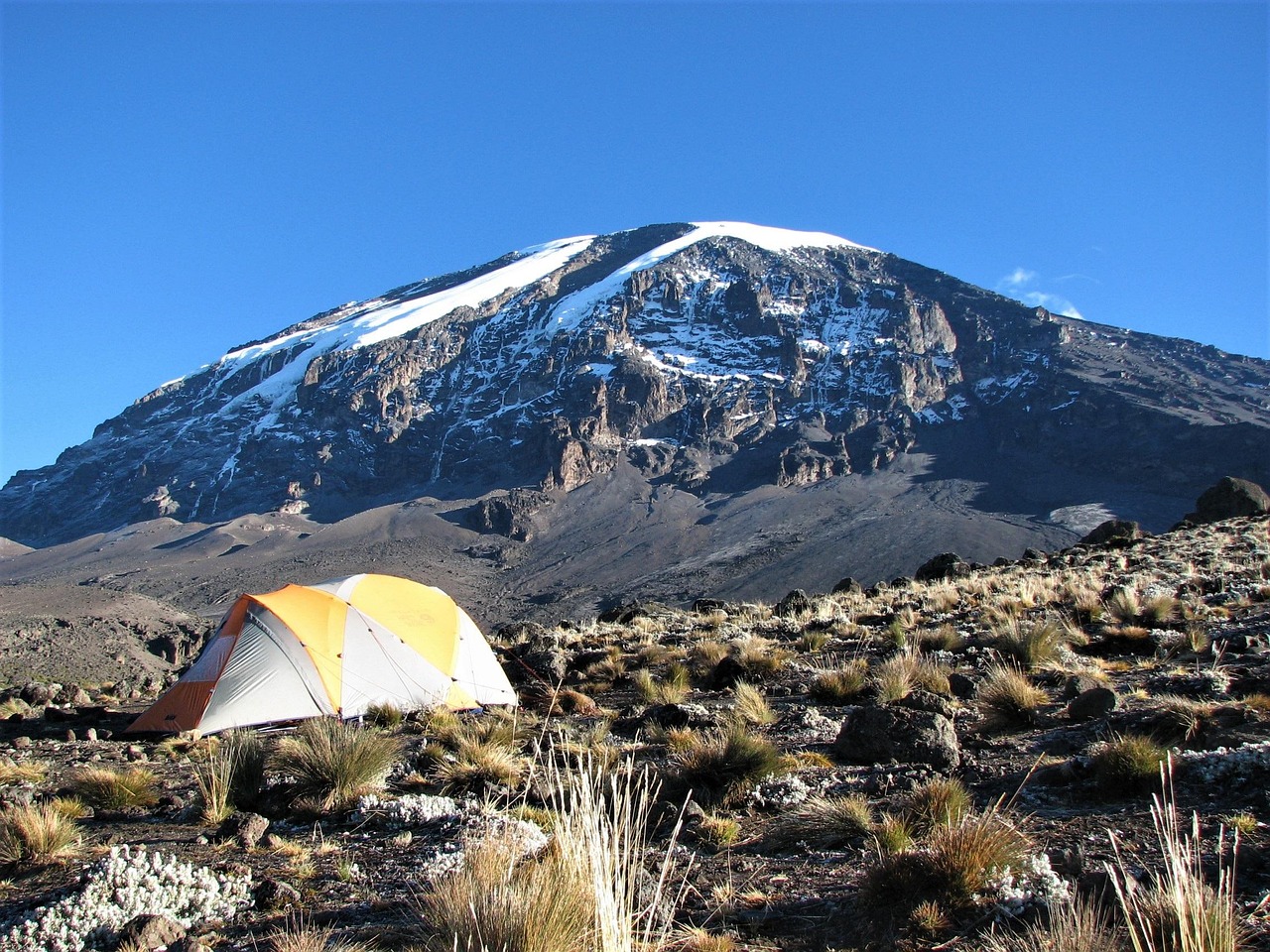
Image idea: A diverse group of climbers walking together on Mount Kilimanjaro, supported by images of mountain camps, Barranco Wall, local guides, porters, and a group celebration at Uhuru Peak.
SEO-friendly image alt text: Kilimanjaro Group Departures.
Choose your preferred route, join other climbers, and attempt Uhuru Peak with the professional mountain team at African Trek & Travel.
View Group Departure DatesAfrican Trek & Travel is a leading Tanzania tour operator in Moshi and Arusha for 2026–2027, specializing in Kilimanjaro treks, safaris, and tailor-made adventures. With deep local expertise and a strong commitment to safety and quality, we deliver unforgettable travel experiences across East Africa.
Discover popular Safaris, Serengeti Migration, Kilimanjaro Climbing & Zanzibar Beach Holidays. Plan your perfect adventure today!
 Popular
Experience the wildebeest migration across the vast Serengeti and Ngorongoro plains. Perfect for wildlife lovers and photography enthusiasts.
Book Now New
Climb Africa’s highest peak via scenic routes with expert guides and safe treks. Experience adventure with full support and accommodation included.
Book Now Popular
Relax in paradise with pristine white beaches, spice tours, and cultural charm. Ideal for families and honeymooners seeking luxury and tranquility.
Book Now




We collaborate with top tour operators to provide the best experiences for Kilimanjaro treks, safaris, and adventures.