1 Day Kilimanjaro Trail Hike
The 1 Day Kilimanjaro Trail Hike is a guided walking adventure on the lower Marangu Route that allows travellers to experience an authentic Mount Kilimanjaro trail without committing to a multi day summit climb.
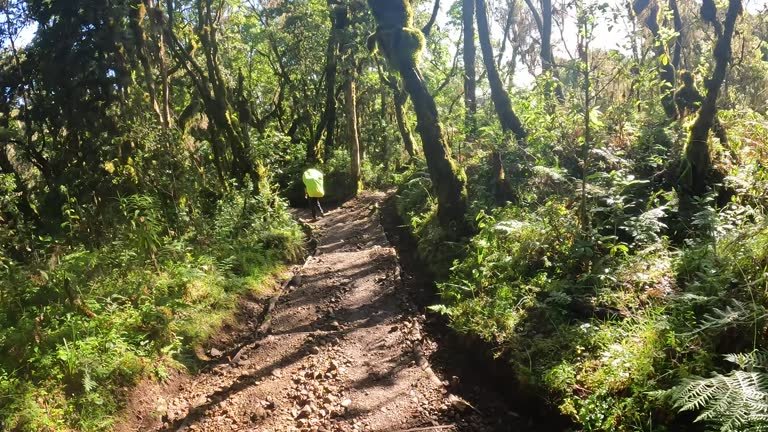
The hike begins at Marangu Gate and follows the established mountain path through Kilimanjaro's montane rainforest toward Mandara Hut. The emphasis is on the actual trail experience: steady climbing, natural forest surfaces, roots, steps, possible mud, changing vegetation, guide controlled pacing and the satisfaction of reaching a genuine station on one of Kilimanjaro's established routes.
When hikers reach Mandara with enough time and energy, an additional walk toward Maundi Crater can be considered before beginning the same day descent. Maundi remains optional because the complete return to Marangu Gate is more important than forcing an additional destination.
This itinerary does not attempt Uhuru Peak. It does not reach Horombo Hut, Kibo Hut, Gilman's Point or Kilimanjaro's high summit environment. Instead, it offers a realistic way to put hiking boots on the Kilimanjaro trail and spend one full day walking inside the national park.
1 Day Kilimanjaro Trail Hike at a Glance
- Mountain: Mount Kilimanjaro
- Route: Marangu Route
- Duration: 1 day
- Starting point: Marangu Gate
- Main objective: Mandara Hut area
- Optional extension: Maundi Crater
- Trail environment: Montane rainforest
- Trail type: Established mountain hiking trail
- Overnight: None
- Camping: None
- Technical climbing: Not normally required
- Summit attempt: No
- Return: Marangu Gate the same day
What Is a Kilimanjaro Trail Hike?
A Kilimanjaro trail hike means walking part of an established mountain route rather than simply viewing Kilimanjaro from the road, a hotel or a distant viewpoint.
The Marangu day hike allows visitors to step onto the same lower trail used by climbers beginning longer Marangu expeditions while turning around at a realistic point for a same day return.
Why Use the Marangu Route?
Marangu works particularly well for a one day trail experience because the lower route passes through substantial montane forest and reaches Mandara Hut before the higher mountain stages begin.
Mandara creates a clear destination without requiring hikers to continue into a multi day expedition.
Why Marangu Works for a Trail Hike
- Established Kilimanjaro route
- Official mountain gate
- Dense rainforest section
- Continuous hiking trail
- Mandara Hut as a realistic day objective
- Optional Maundi Crater extension
- No mountain overnight required
- Same route descent
The Trail Is the Experience
This itinerary differs from a simple nature walk because participants spend several hours progressing along an established mountain trail.
The route has a real hiking rhythm: climb, manage footing, adjust layers, stop for water, continue uphill, reach a defined mountain objective and complete the descent.
What the Trail Surface Can Be Like
- Packed earth
- Natural forest steps
- Exposed roots
- Wet soil
- Mud after rainfall
- Uneven stones
- Leaf covered sections
- Occasionally slippery ground
Is the Kilimanjaro Trail Paved?
No. Hikers should prepare for a natural mountain path rather than a city walkway.
Some developed areas can contain built steps or improved surfaces, but the overall hiking experience remains natural terrain.
This Is Not a One Day Summit Route
The Trail Hike Does Not Reach
- Horombo Hut in the standard day itinerary
- Kibo Hut
- Gilman's Point
- Stella Point
- Uhuru Peak
- Summit glaciers
- Extreme altitude
- Summit night
Complete 1 Day Kilimanjaro Trail Hike Itinerary
Stage 1: Transfer to Marangu Gate according to the confirmed pickup plan.
Stage 2: Complete applicable park entry procedures.
Stage 3: Begin hiking the established Marangu trail through montane forest.
Stage 4: Maintain a controlled uphill pace toward Mandara Hut.
Stage 5: Reach the Mandara area according to fitness, timing and conditions.
Stage 6: Rest and eat according to the confirmed meal plan.
Stage 7: Optional Maundi Crater extension when suitable.
Stage 8: Turn around and follow the established trail downhill.
Stage 9: Return to Marangu Gate and begin the confirmed transfer.
Arrival at Marangu Gate
Marangu Gate is the starting point of the trail section.
The guide and operator complete the applicable national park procedures before hikers begin moving uphill.
Pre Hike Trail Briefing
What the Guide Can Explain
- Planned Mandara objective
- Expected trail conditions
- Walking pace
- Rainforest conditions
- Water requirements
- Lunch arrangement
- Maundi Crater option
- Turnaround timing
- Downhill trail management
First Steps on the Marangu Trail
Leaving Marangu Gate is the point where the trip changes from road travel to actual Kilimanjaro hiking.
The route begins gaining elevation through the forest and establishes the rhythm that continues toward Mandara.
Why the First Hour Matters
Starting too quickly can make the later sections unnecessarily tiring.
A comfortable rhythm from the beginning is normally more useful than trying to prove fitness on the lower trail.
Trail Hiking Is Not a Race
The purpose is to experience the Kilimanjaro trail, reach an appropriate turnaround point and complete the full descent comfortably rather than reaching Mandara before every other hiker.
Montane Rainforest Trail
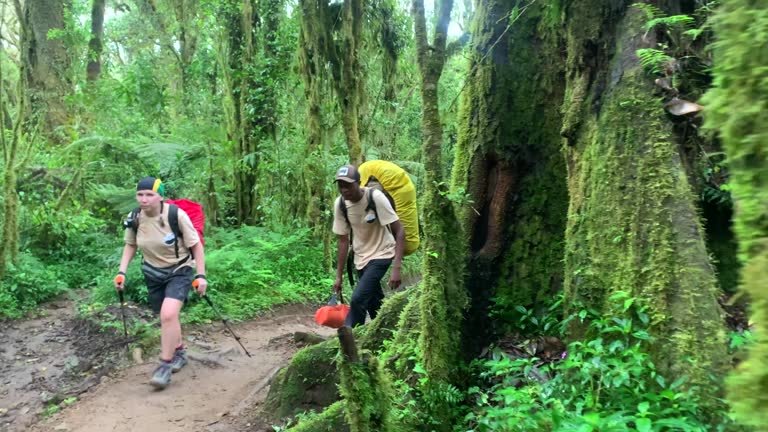
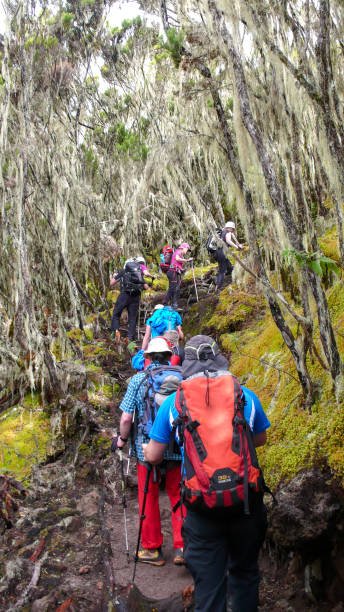
The Marangu trail climbs through Kilimanjaro's lower montane forest, where dense vegetation surrounds much of the walking route.
Trees, ferns, mosses and moist undergrowth create a very different environment from the open alpine scenery higher on Kilimanjaro.
Trail Roots
Tree roots can cross the walking line and create natural steps.
When roots are wet, hikers should place their feet carefully rather than assuming every surface has reliable grip.
Mud on the Trail
Mud is possible because Kilimanjaro's lower forest receives substantial moisture.
A trail can remain damp even when it is not raining during the hike itself.
Why Hiking Shoes Matter
Good grip and secure footwear become especially useful where the trail contains roots, mud and uneven ground.
Fashion trainers with smooth soles are generally less suitable than proper hiking footwear.
Waterproof Footwear
Water resistance can improve comfort in wet forest conditions, although no boot completely removes the need to place feet carefully.
Rain on the Kilimanjaro Trail
Hikers should carry rain protection even when the weather at the hotel or gate appears dry.
Mountain and forest conditions can change during the day.
Does Rain Close the Trail?
Not automatically.
The guide responds to actual weather and trail conditions. More serious conditions can still require an altered plan.
Trail Navigation
The hike follows the established Marangu Route rather than leaving the marked mountain trail to search for shortcuts.
Why Hikers Should Stay on the Trail
- Protects fragile vegetation
- Reduces unnecessary erosion
- Reduces navigation problems
- Keeps hikers within the authorized route
- Reduces disturbance to wildlife habitat
- Allows guides to manage the group effectively
Guide Position on the Trail
The guide controls the route and hiking rhythm rather than encouraging participants to move independently ahead.
This is particularly useful where trail conditions change or hikers have different natural walking speeds.
Can Faster Hikers Walk Ahead?
Participants should remain within the guide's operating plan rather than disappearing ahead on the trail.
What if You Are a Slow Hiker?
A slower sustainable pace can still work well on the day hike.
The important factor is whether enough time remains to reach the selected turnaround point and complete the descent safely.
Trail Rest Stops
Short stops can be used for drinking, adjusting clothing, taking photographs or simply recovering from continuous uphill movement.
Very long or excessively frequent stops can affect turnaround timing, so the guide balances rest with forward progress.
Possible Wildlife Along the Trail
The forest supports monkeys, birds and other wildlife, creating possible encounters while hikers progress toward Mandara.
No particular animal should be promised because wildlife moves freely.
Possible Colobus Monkey Sightings
Black and white colobus monkeys occur within Kilimanjaro's forest environment and may occasionally be seen from the trail.
Possible Blue Monkey Sightings
Blue monkeys may also be encountered, although sightings remain dependent on natural wildlife movement.
Do Not Leave the Trail for Wildlife
A wildlife sighting should not encourage hikers to enter vegetation or chase an animal for a photograph.
Changing Trail Environment
As elevation increases, the feel of the trail gradually changes.
The vegetation, temperature and openness of the route begin transitioning as hikers approach Mandara.
Approaching Mandara Hut
Mandara marks the first established hut station used by multi day climbers on the Marangu Route.
For one day hikers it provides an authentic destination rather than an arbitrary turnaround point in the forest.
Why Mandara Is the Main Trail Objective
- It lies on the established Marangu Route
- It is a real Kilimanjaro mountain station
- It can be reached through the lower trail within a realistic day itinerary
- It provides a natural rest point
- It allows sufficient time for a same day descent when the hike is properly managed
- Maundi Crater can potentially be explored beyond the hut area
Do Day Hikers Sleep at Mandara?
No. The one day trail hike uses Mandara as a daytime objective before returning to Marangu Gate.
Resting at Mandara
The Mandara area provides an opportunity to rest, drink and eat according to the confirmed meal arrangement.
The guide also uses this point to evaluate the group's remaining energy and available time.
Optional Maundi Crater Trail Extension
If the group reaches Mandara comfortably and conditions remain suitable, the trail experience can continue toward Maundi Crater.
This provides additional walking beyond the hut environment and can create a more varied one day itinerary.
Why Maundi Crater Is Optional
The Descent Takes Priority
- Morning gate procedures may take time
- Trail conditions can slow progress
- Individual pace varies
- Rain can create slippery ground
- A hiker may already be tired at Mandara
- Enough time must remain for the complete return
Maundi Crater Trail
The optional extension introduces hikers to a different landscape from the enclosed lower rainforest.
When visibility is good, the more open terrain can also provide broader views, although particular scenery should never be guaranteed.
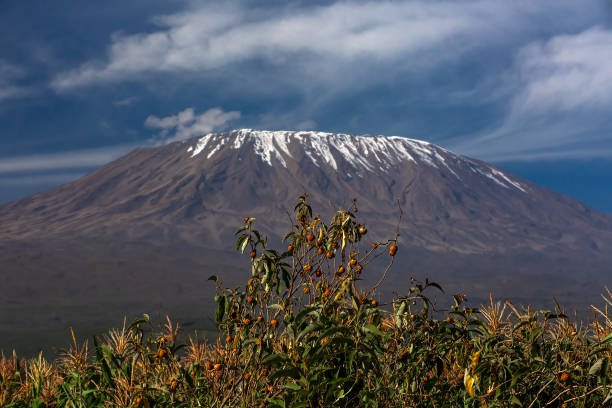
Can You See Kibo from the Trail?
Upper mountain views may appear when cloud conditions are favourable, especially from more open areas.
Kibo can also remain completely hidden behind cloud.
Can You See Mawenzi?
Possible views depend on weather, cloud and the exact position on the route.
Does the Trail Reach Snow?
No. This lower mountain itinerary remains far below Kilimanjaro's snow and glacier zone.
Does the Trail Reach Uhuru Peak?
No. Uhuru Peak at 5,895 metres requires a multi day summit climb.
Does It Reach Horombo Hut?
Not in the standard one day itinerary described here.
Mandara remains the primary trail objective.
Turning Around
Every successful one day trail itinerary depends on choosing the correct turnaround time.
The guide must preserve enough time for hikers to descend the same trail rather than treating the highest possible point as the only objective.
Why Turnaround Discipline Matters
If a group continues farther simply because everybody still feels energetic, the return can become unnecessarily rushed.
Good trail management considers the complete journey, not only the uphill section.
The Downhill Trail
The group follows the same general Marangu trail back through the forest toward the gate.
Although descending usually requires less cardiovascular effort, it creates different challenges for the legs and joints.
Why Downhill Can Feel Difficult
Repeated downhill steps place pressure on knees, thighs and feet.
Wet roots can also become more difficult when approached from above.
Trekking Poles on the Trail
Trekking poles can help with rhythm, balance and downhill movement.
They can be particularly useful when the trail is wet or muddy.
How to Use Trekking Poles
Poles should support natural movement rather than become something the hiker depends on for every step.
Practising before the trip can make them more useful.
Return to Marangu Gate
The hiking portion is completed once the group reaches Marangu Gate and finishes the applicable exit procedures.
The confirmed road transfer then continues toward Moshi, Marangu, Arusha or another arranged destination.
How Difficult Is the 1 Day Kilimanjaro Trail Hike?
This is substantially less demanding than a full Kilimanjaro summit climb, but it is still a genuine mountain hiking day.
Main Trail Challenges
- Several hours of walking
- Sustained ascent
- Natural steps
- Roots
- Possible mud
- Rain
- Humidity
- Uneven trail surface
- Complete downhill return
Is the Trail Hike Beginner Friendly?
Many reasonably active beginners can consider the hike because technical climbing is not normally involved.
Participants should still be comfortable spending several hours walking on natural uphill and downhill terrain.
Do You Need Mountain Experience?
Extensive mountain experience is not normally required.
Basic hiking fitness and suitable footwear are much more relevant for this one day itinerary.
Do You Need Technical Skills?
No specialist rope, rock or ice climbing skills are normally required for the Marangu Gate to Mandara trail.
Simple Training Before the Trail Hike
- Regular walking
- Longer weekend walks
- Hill walking
- Stair climbing
- Moderate cardiovascular exercise
- Walking in your planned hiking footwear
- Practising some downhill hiking
Altitude on the Trail
The hike gains elevation toward Mandara but remains far below the extreme altitude encountered during a Kilimanjaro summit expedition.
Hikers should still tell the guide if they feel unusually unwell.
Can the Guide Stop the Hike Early?
Yes. Health, weather, trail conditions or time can make an earlier turnaround appropriate.
Is Mandara Guaranteed?
Mandara is the planned main objective, but actual mountain conditions and guide judgment take priority.
Private 1 Day Kilimanjaro Trail Hike
A private trail hike can potentially be arranged for a solo traveller, couple, family or group of friends.
Private means the guiding arrangement is organized around the booking party. It does not mean exclusive use of the Marangu trail.
Solo Traveller Trail Hike
Solo travellers can request a private guided hike or join another suitable departure where available.
Couples
Couples can use the trail hike as a short Kilimanjaro experience without dedicating several days to summit climbing.
Families
Families should set the pace and turnaround point according to the least experienced hiker.
Children
Current park age requirements and individual walking ability should be checked before booking a child onto the hike.
Older Travellers
Walking fitness, balance, joint comfort and general health are more relevant than age alone.
1 Day Kilimanjaro Trail Hike Packing List
Recommended Trail Equipment
- Hiking boots or suitable hiking shoes
- Hiking socks
- Comfortable trekking trousers
- Breathable shirt
- Waterproof jacket
- Waterproof trousers where available
- Light warm layer
- Small daypack
- Sun hat
- Sunglasses
- Sun protection
- Drinking water
- Food or snacks according to package arrangement
- Personal medication
- Phone or camera
- Trekking poles if preferred
- Waterproof protection for electronics
What You Normally Do Not Need
- Expedition sleeping bag
- Mountain tent
- Sleeping mattress
- Large porter duffel
- Heavy summit clothing system
- Several days of trekking clothes
- Summit night equipment
Do You Need a Sleeping Bag?
No. The standard itinerary returns to the gate without an overnight.
Do You Need a Tent?
No.
Do You Need a Porter?
Most participants can carry their own small daypack.
Additional carrying assistance should be separately arranged where required.
How Heavy Should the Daypack Be?
Carry what you genuinely need for the day rather than filling the pack with unnecessary summit equipment.
Water, rain protection, a warm layer, food, personal medication and small personal items should remain easy to access.
Trail Weather
Possible Conditions
- Warm lower sections
- High humidity
- Cloud
- Mist
- Rain
- Cooler temperatures toward Mandara
- Wet roots
- Mud
- Rapidly changing visibility
Why Waterproof Layers Matter
Rain protection should remain accessible rather than packed somewhere that cannot be reached during the hike.
Do You Need a Heavy Winter Jacket?
Not normally for the standard lower Marangu day hike.
A comfortable layer system with rain protection is more relevant than summit expedition insulation.
Lunch on the Trail
A packed lunch can be provided where it forms part of the confirmed package.
Ask what food is supplied before departure rather than assuming every quotation uses the same meal arrangement.
Vegetarian Meals
Vegetarian and other dietary requirements should be communicated in advance.
Drinking Water
Carry enough personal water capacity for several hours of mountain walking and confirm the water arrangement in the package.
Trail Etiquette
Respect Kilimanjaro's Hiking Route
- Remain on the established trail
- Follow guide and ranger instructions
- Allow space for other hikers
- Do not leave rubbish
- Do not remove plants
- Do not feed wildlife
- Do not create unofficial shortcuts
- Avoid disturbing animals for photographs
Professional Guide
The guide manages navigation, pace, trail decisions and turnaround timing.
The guide also helps ensure that the day's ambition does not exceed the time available for a safe return.
Can You Hike the Trail Alone?
Kilimanjaro activities should be completed through the appropriate licensed guided arrangement rather than independent unguided trekking.
What Can Be Included in a 1 Day Kilimanjaro Trail Hike?
Services to Confirm
- Professional mountain guide
- Applicable Kilimanjaro day visitor charges
- Applicable government or rescue charges where required
- Transport to Marangu Gate where confirmed
- Guided Marangu trail hike
- Mandara Hut objective
- Maundi Crater extension where conditions permit
- Packed lunch where confirmed
- Drinking water where confirmed
- Return transportation where confirmed
Possible Exclusions
- International flights
- Visa expenses
- Travel insurance
- Personal hiking clothing
- Personal hiking footwear
- Rental equipment unless listed
- Hotels unless included
- Airport transfers unless included
- Tips where separate
- Personal expenses
- Safari unless included
- Zanzibar arrangements unless included
1 Day Kilimanjaro Trail Hike Cost Factors
The total price depends on the complete operating arrangement rather than only the distance walked.
Price Can Depend On
- Number of hikers
- Visitor category
- Current applicable park charges
- Private or shared arrangement
- Pickup location
- Vehicle requirements
- Lunch
- Drinking water
- Rental equipment
- Additional transportation
Compare Complete Packages
One advertised trail hike price may include transportation, guide, park charges, food and water while another may exclude several of those services.
A written quotation is therefore more useful than comparing only headline prices.
Kilimanjaro Trail Hike from Moshi
Moshi is a practical starting point because hikers can travel to Marangu Gate in the morning, complete the trail and return later the same day.
Trail Hike from Marangu
Travellers already staying near Marangu can use a shorter local transfer arrangement where available.
Trail Hike from Arusha
The itinerary can potentially start from Arusha, but more time is required for road transportation.
Kilimanjaro Trail Hike + Safari
A one day trail hike can fit easily into a wider Tanzania itinerary without requiring several days on the mountain.
Tarangire
Tarangire can be scheduled separately as a wildlife safari day.
Ngorongoro
Ngorongoro can be combined with the Kilimanjaro hike within a broader Northern Tanzania program.
Serengeti
Travellers with additional time can continue into a longer Serengeti safari after their Kilimanjaro trail experience.
Kilimanjaro Trail Hike + Zanzibar
The one day hike can also be added to a Tanzania holiday that includes Zanzibar for travellers who want some mountain hiking without a summit expedition.
Booking Checklist
Confirm Before Booking
- Exact hiking date
- Number of hikers
- Pickup point
- Pickup time
- Marangu Route confirmation
- Marangu Gate entry
- Professional guide
- Current applicable park charges
- Mandara Hut objective
- Maundi Crater option
- Lunch
- Drinking water
- Dietary requirements
- Rental equipment
- Return transportation
- Drop off point
- Current child age requirements where relevant
- Weather policy
- Cancellation conditions
- Total price
Common Kilimanjaro Trail Hike Mistakes
Avoid These Mistakes
- Thinking the trail reaches Uhuru Peak in one day
- Expecting Horombo on the standard itinerary
- Treating the trail like a paved walkway
- Wearing shoes with poor grip
- Leaving waterproof clothing behind
- Walking too quickly during the first hour
- Leaving the established trail
- Carrying too little water
- Ignoring turnaround timing
- Assuming Maundi Crater is guaranteed
- Expecting guaranteed summit views
- Expecting guaranteed wildlife sightings
- Underestimating downhill walking
- Carrying unnecessary expedition equipment
- Assuming all advertised prices include transfers and park charges
Mistake: Walking Too Fast
The trail is more enjoyable when hikers move at a sustainable rhythm rather than attempting to reach Mandara as quickly as possible.
Mistake: Underestimating Mud
Wet forest terrain can make otherwise simple sections more tiring and slippery.
Mistake: Creating Shortcuts
Leaving the established trail can damage vegetation and is unnecessary on a professionally guided day hike.
Mistake: Forgetting the Return Trail
Reaching Mandara or Maundi is only part of the day. The full downhill journey to Marangu Gate remains necessary.
1 Day Kilimanjaro Trail Hike FAQs
What is a 1 Day Kilimanjaro Trail Hike?
It is a guided same day hike along part of an established Kilimanjaro mountain route.
Which trail is used?
The itinerary described here uses the Marangu Route.
Where does the hike start?
Marangu Gate.
What is the main objective?
Mandara Hut.
Can the hike include Maundi Crater?
Yes where time, fitness, weather and guide judgment permit.
Is Maundi guaranteed?
No.
Is the trail mainly rainforest?
The Marangu Gate to Mandara section is primarily within the montane forest zone.
Is the trail paved?
No. It is a natural mountain trail.
Can the trail be muddy?
Yes, particularly after rainfall.
Are there roots on the trail?
Yes, natural forest roots can form part of the walking surface.
Is the trail steep?
The route contains sustained uphill walking but does not normally require technical climbing.
Does the trail reach Horombo?
Not on the standard one day itinerary.
Does it reach Kibo Hut?
No.
Does it reach Uhuru Peak?
No.
Does it reach glaciers?
No. The hike remains far below the glacier zone.
Is there an overnight?
No.
Do we camp?
No.
Is the hike suitable for beginners?
Many reasonably active beginners can consider it.
Do I need technical climbing experience?
No.
Do I need hiking boots?
Suitable hiking footwear with good grip is strongly recommended.
Can I use normal trainers?
Good hiking footwear is preferable because the trail can be muddy, rooted and slippery.
Do I need waterproof clothing?
Yes, rain protection is important.
Do I need trekking poles?
They are optional but can be useful for balance and descent.
Do I need a sleeping bag?
No.
Do I need a tent?
No.
Do I need a porter?
Not normally if you can carry a small personal daypack.
Do I need a guide?
The hike should operate through the appropriate licensed guided arrangement.
Can I hike independently?
Independent unguided trekking is not the normal permitted arrangement for Kilimanjaro climbing activities.
Can the guide change the turnaround point?
Yes. Weather, trail conditions, health and timing can require an earlier descent.
Is Mandara guaranteed?
It is the planned objective but should remain subject to actual conditions.
Can we see monkeys?
Possible wildlife sightings include forest primates, but nothing is guaranteed.
Can we see colobus monkeys?
They occur in Kilimanjaro's forest habitat, but sightings depend on natural wildlife movement.
Can we see birds?
The forest supports birdlife, but specific sightings cannot be guaranteed.
Can we see Kibo?
Potentially in clear conditions, but upper mountain views are not guaranteed.
What if it rains?
The hike may continue when conditions remain suitable, which is why waterproof equipment is important.
Can solo travellers book?
Yes through an appropriate private or shared arrangement where available.
Can couples book privately?
Yes where arranged.
Can families join?
Potentially, subject to current park requirements and individual hiking ability.
Can children hike the trail?
Current age requirements and the child's walking ability should be confirmed before booking.
Can older travellers participate?
Potentially, depending on walking fitness, balance, health and joint comfort.
Can the hike start from Moshi?
Yes where transport to Marangu Gate is arranged.
Can the hike start from Arusha?
Potentially, although the road transfer is longer.
Is lunch included?
Only where stated in the confirmed package.
Can vegetarian food be arranged?
Dietary requirements should be communicated before the hike.
Is drinking water included?
Confirm the exact water arrangement in the quotation.
Are park charges included?
Only where clearly listed.
Can hiking equipment be rented?
Potentially where suitable equipment is available.
Can I combine the hike with safari?
Yes as part of a wider Tanzania itinerary.
Can I combine it with Zanzibar?
Yes.
What makes this different from a Kilimanjaro forest trek?
A forest trek emphasizes vegetation, ecology and wildlife habitat. The trail hike places greater emphasis on the physical route itself: trail surface, uphill progress, pacing, navigation, footwear, natural steps, roots, turnaround management and the experience of following an authentic Kilimanjaro climbing trail toward Mandara.
What makes this different from a scenic hike?
A scenic hike emphasizes viewpoints, landscapes and photography. The trail hike focuses more strongly on the actual hiking experience and what it feels like to follow Kilimanjaro's Marangu Route for a full mountain day.
Why is proper footwear so important?
The lower Marangu Route is a natural forest trail that can contain mud, roots, uneven ground and slippery sections. Good footwear does not remove every challenge, but suitable grip and support can make the uphill and downhill stages considerably more comfortable.
Why does the guide control turnaround time?
A one day trek must include enough time for the entire descent. Continuing farther uphill can seem attractive when everybody feels strong, but the complete return remains part of the itinerary. The guide therefore considers pace, weather, trail conditions and remaining daylight before extending the hike.
What should I confirm before paying?
Confirm the Marangu Route, pickup location, guide, current park charges, Mandara objective, Maundi option, transportation, lunch, water, rental equipment, dietary requirements, return transfer, total price and booking conditions.
So what is the complete 1 Day Kilimanjaro Trail Hike?
The complete 1 Day Kilimanjaro Trail Hike is a guided lower mountain trekking experience built around walking an authentic section of the Marangu Route rather than attempting Kilimanjaro's summit. The day begins with the confirmed road transfer to Marangu Gate. After the applicable national park procedures, hikers meet the trail itself and begin climbing through the montane rainforest. The route is not a paved walkway. It can contain compact earth, natural steps, tree roots, wet soil, mud and uneven sections, particularly after rainfall. Good hiking footwear and accessible rain protection therefore become more important than expedition equipment designed for the summit. The guide establishes a comfortable pace from the beginning because the first objective is not speed but sustainable progress. Dense vegetation surrounds much of the lower trail, while possible wildlife such as monkeys and birds can sometimes be encountered. No sighting is guaranteed and hikers should remain on the designated route rather than leaving the trail for photographs. As elevation increases, the trail gradually changes and hikers approach Mandara Hut, the first established mountain station used by longer Marangu expeditions. For a day hiker, Mandara provides a meaningful Kilimanjaro objective that can normally be combined with enough remaining time for the descent when conditions are suitable. The group can rest, drink and eat according to the confirmed meal arrangement. If Mandara has been reached comfortably and sufficient time remains, the guide can consider extending the hike toward Maundi Crater. This additional trail section provides more walking and a transition toward a somewhat more open environment. Maundi remains optional because weather, hiking pace, mud, fatigue or delayed gate procedures can all reduce the available time. The complete descent always takes priority. The route does not continue toward Horombo, Kibo, Gilman's Point, Stella Point or Uhuru Peak and does not reach the summit glaciers. After reaching the day's appropriate turnaround point, hikers retrace the route downhill. The descent can be physically different from the ascent because repeated downhill steps place pressure on knees and thighs while wet roots require careful footing. Trekking poles can provide useful additional balance. The group eventually returns to Marangu Gate, completes the applicable exit procedure and begins the confirmed road transfer. Because there is no mountain overnight, a tent, expedition sleeping bag, sleeping mattress and large porter duffel are not normally required. A small daypack containing water, waterproof clothing, a light warm layer, sun protection, personal medication and food according to the package is much more appropriate. A professionally organized package can include the licensed guide arrangement, applicable park charges, gate transportation, packed lunch, drinking water and return transport where clearly confirmed in writing. Travellers should separately verify hotels, airport transfers, travel insurance, rental equipment and personal expenses. The defining attraction of the 1 Day Kilimanjaro Trail Hike is therefore straightforward: it gives travellers the experience of actually hiking a recognized Kilimanjaro mountain trail, following it through rainforest toward Mandara, potentially extending toward Maundi and completing a genuine same day mountain journey without pretending that a one day visit is a summit expedition.
Plan Your 1 Day Kilimanjaro Trail Hike
Step onto the Marangu Route, follow Kilimanjaro's rainforest trail toward Mandara Hut, explore toward Maundi Crater when conditions allow and complete the mountain descent in one guided hiking day.
Request Your Kilimanjaro Trail Hike

 Serengeti Safari