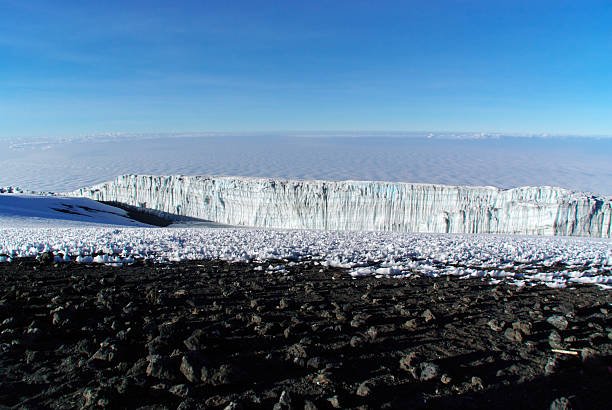
5 Day Kilimanjaro Camping Package
The 5 Day Kilimanjaro Camping Package is a compact tent based Mount Kilimanjaro summit expedition using the Umbwe Route, one of the mountain's steepest and most direct approaches.
This package is intentionally different from a five day Marangu climb. Marangu uses mountain huts, while a true camping package requires designated campsites, trekking tents and a complete camp based support system.
The five day camping sequence begins at Umbwe Gate, climbs through rainforest to Umbwe Cave Camp, continues rapidly to Barranco Camp, crosses the Barranco Wall and Karanga Valley on the way to Barafu Camp, attempts Uhuru Peak during the fourth trekking day and descends through Mweka Camp before finishing at Mweka Gate on Day 5.
This is not an itinerary that should be marketed as an easy shortcut. The route gains altitude quickly and compresses several major Kilimanjaro stages into a short mountain schedule.
Travellers interested primarily in a longer acclimatization profile should compare this package carefully with longer camping routes before booking.
5 Day Kilimanjaro Camping Package at a Glance
- Mountain: Mount Kilimanjaro
- Camping route: Umbwe Route
- Duration: 5 mountain days
- Mountain nights: 4
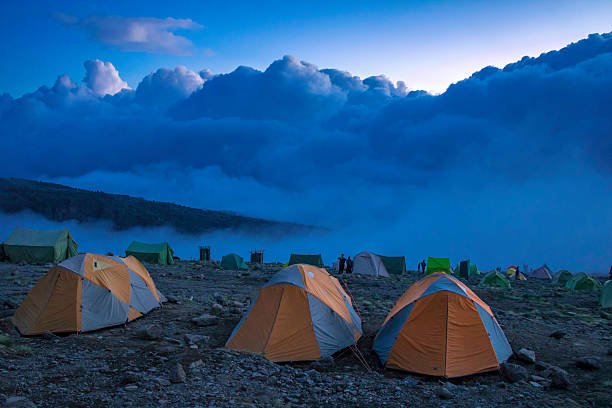
- Accommodation: Designated tented camps
- Night 1: Umbwe Cave Camp
- Night 2: Barranco Camp
- Night 3: Barafu Camp
- Night 4: Mweka Camp
- Summit approach: Barafu → Stella Point → possible Uhuru Peak
- Highest objective: Uhuru Peak, 5,895 m
- Descent route: Mweka Route
- Main challenge: Rapid altitude gain and compressed itinerary
- Best suited to: Strong, well prepared trekkers
- Summit guarantee: None
Why This 5 Day Package Uses Umbwe Instead of Marangu
A page specifically describing a Kilimanjaro camping package should not place travellers in Marangu's hut accommodation and then call the experience camping.
The Umbwe Route provides a genuine tent based itinerary using designated mountain camps before joining the southern summit circuit and descending through Mweka.
Why Not Use the Standard 5 Day Marangu Route?
Marangu is appropriate for a five day Kilimanjaro climb, trek or summit tour, but its standard mountain accommodation is hut based.
For travellers specifically searching for a 5 Day Kilimanjaro Camping Package, a tent based route provides a more accurate match to the search intent.
What Makes a Camping Package Different?
A Camping Expedition Can Require
- Sleeping tents
- Sleeping mats where confirmed
- Dining tent where included
- Tables and chairs where included
- Professional guides
- Assistant guides according to group size
- Cook and mountain crew
- Porters carrying operational camping equipment
- Mountain meals
- Drinking water logistics
- Camp setup and breakdown
- Summit preparation
Is the 5 Day Camping Package a Summit Trek?
Yes. The itinerary described on this page is structured as a full Kilimanjaro summit attempt rather than a short plateau or lower mountain camping experience.
The planned highest point is Uhuru Peak at 5,895 metres, reached only where the climber's condition and mountain circumstances permit.
Complete 5 Day Kilimanjaro Camping Itinerary
Five Day Umbwe Camping Route
Day 1: Umbwe Gate → rainforest → Umbwe Cave Camp.
Day 2: Umbwe Cave Camp → moorland → Barranco Camp.
Day 3: Barranco Camp → Barranco Wall → Karanga Valley → Barafu Camp.
Day 4: Barafu → Stella Point → possible Uhuru Peak → Barafu → Mweka Camp.
Day 5: Mweka Camp → rainforest → Mweka Gate.
Day 1 – Umbwe Gate to Umbwe Cave Camp
The camping expedition begins at Umbwe Gate after the required entry arrangements, equipment organization and porter preparations.
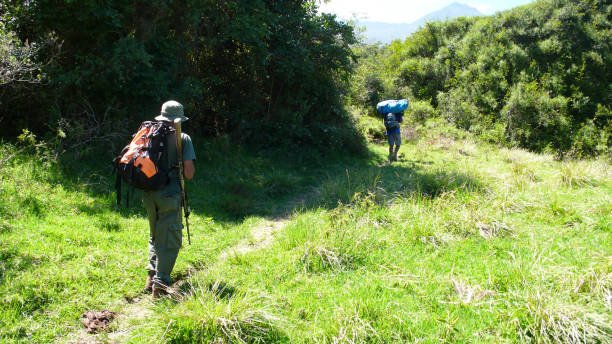
The trail enters dense montane rainforest and starts climbing almost immediately.
Day 1 Objective
Establish a controlled pace while climbing through the steep rainforest environment and reach the first tented campsite without wasting energy.
Umbwe Rainforest
The lower Umbwe trail can be steep, humid and enclosed by dense vegetation.
Rain can make roots and natural trail surfaces slippery, so waterproof clothing and suitable hiking boots should remain easily accessible.
Why Day 1 Feels Different From Marangu
Umbwe gains elevation aggressively and can feel physically demanding from the beginning rather than providing the more gradual character associated with some other approaches.
Wildlife
Wildlife may occasionally be seen or heard in the forest, but no particular sighting should be guaranteed.
Arrival at Umbwe Cave Camp
Umbwe Cave Camp, around the upper forest zone, becomes the first mountain campsite.
Instead of entering a hut, climbers settle into tents prepared according to the confirmed camping arrangement.
Night 1 – Your First Kilimanjaro Camping Night
Camp Routine at Umbwe
Change Into Dry Clothing
Avoid remaining unnecessarily wet after rainforest trekking.
Organize Your Tent
Keep nighttime necessities accessible rather than scattered throughout the duffel.
Prepare the Sleeping Bag
Allow insulation to loft properly before sleeping.
Eat
Maintain energy for the rapid altitude gain on Day 2.
Hydrate Appropriately
Follow the mountain team's hydration guidance.
Report Health Concerns
Altitude communication should begin from the first evening.
What Is the Sleeping Setup?
The exact tent type, number of occupants and sleeping mat arrangement should be confirmed in the quotation.
Never assume that “camping package” automatically means a single occupancy tent, thick mattress or included sleeping bag.
Day 2 – Umbwe Cave Camp to Barranco Camp
Day 2 continues rapidly upward as the route leaves the forest and enters more open heath and moorland.
The campsite objective is Barranco, positioned below the dramatic southern slopes of Kibo and the Barranco Wall.
Day 2 Objective
Reach Barranco slowly while recognizing that the second night is already being spent at substantially higher elevation than the first.
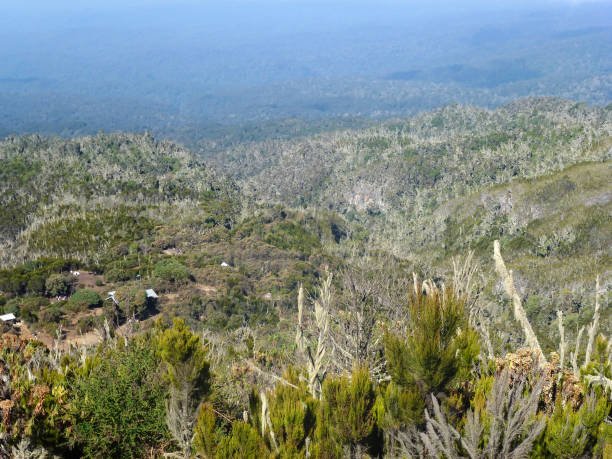
Rainforest to Moorland
Vegetation changes quickly as the narrow Umbwe approach climbs into more open mountain terrain.
Rapid Altitude Gain
The short five day format creates limited time for gradual acclimatization, making conservative pacing and honest symptom reporting particularly important.
Arrival at Barranco Camp
Barranco sits in one of Kilimanjaro's most recognizable high mountain landscapes beneath the Barranco Wall.
Views toward Kibo or surrounding features depend entirely on visibility and should not be guaranteed.
Altitude Awareness at Barranco
Tell Your Guide About Concerning Symptoms
- Worsening headache
- Persistent nausea
- Vomiting
- Dizziness
- Unusual weakness
- Poor coordination
- Confusion
- Unusual breathing difficulty
- Rapidly worsening condition
Does Excellent Fitness Prevent Altitude Problems?
No. Strong fitness helps with steep terrain and long trekking days but does not guarantee successful acclimatization.
Night 2 – Barranco Camp
The second camping night is important because the following day combines the Barranco Wall, Karanga Valley and continued ascent toward Barafu.
- Eat even if appetite is reduced
- Hydrate appropriately
- Prepare layers for colder terrain
- Check feet
- Report altitude concerns
- Keep rain gear ready
- Prepare for the Barranco Wall
- Rest
Day 3 – Barranco Camp to Barafu Camp
Day 3 is a major stage of the compressed five day camping package.
The route leaves Barranco, negotiates the Barranco Wall, continues through the Karanga landscape and ultimately climbs into the alpine environment of Barafu.
Day 3 Objective
Complete the long transition from Barranco to Barafu while preserving enough energy for the summit attempt that begins during the coming night.
The Barranco Wall
The Barranco Wall is a steep mountain feature that requires careful movement and can involve using the hands for balance on some sections.
It should be approached patiently and according to guide instructions rather than treated as a race.
Is the Barranco Wall Technical Rock Climbing?
The standard trekking line is generally treated as a hiking and scrambling section rather than technical rock climbing requiring ordinary rope climbing skills.
Conditions and individual confidence can still make it challenging.
Barranco Wall to Karanga Valley
After completing the wall, the route continues across ridges and valleys toward the Karanga area.
Does the 5 Day Package Sleep at Karanga?
Not in the compressed itinerary described here.
Karanga is passed through on the way toward Barafu rather than being used as an additional overnight camp.
Why Skipping a Karanga Night Matters
Removing an overnight stage makes the itinerary shorter but also reduces the amount of time spent progressively adapting before summit night.
This is one of the reasons travellers should compare five days with longer Kilimanjaro camping programs.
Karanga to Barafu Camp
The environment becomes increasingly barren as the group approaches Barafu, the final summit base.
Vegetation becomes limited and the terrain takes on a stark alpine character.
Arrival at Barafu Camp
Barafu sits at approximately 4,600 to 4,700 metres and serves as the summit camp.
The group must now transition quickly from a demanding trekking day into summit preparation.
Barafu Is Not a Normal Camping Evening
The objective is to eat, hydrate, prepare every piece of summit equipment and rest as much as possible before waking during the night for the highest stage of the climb.
Night 3 – Barafu Summit Camp
Barafu is the third tented overnight location, although the actual period available for sleep can be short.
Prepare Summit Equipment Before Sleeping
- Base layers
- Warm mid layers
- Insulated jacket
- Weather resistant shell
- Warm lower body layers
- Warm socks
- Warm hat
- Warm gloves
- Headlamp
- Reliable batteries
- Trekking poles
- Water according to the summit plan
- Energy snacks
- Personal medication
Can You Sleep Well at Barafu?
Some climbers sleep lightly because of altitude, cold and anticipation.
Quiet rest remains useful even where deep sleep is difficult.
Day 4 – Barafu Camp to Stella Point
The fourth day begins during the night according to the professional guide's summit schedule.
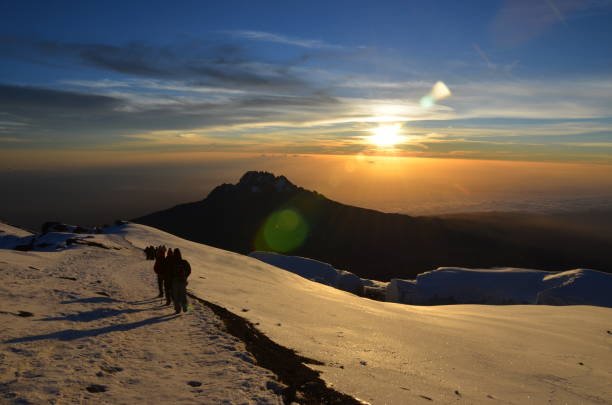
Climbers leave Barafu under headlamps and begin the demanding ascent toward the crater rim.
Summit Day Objective
Attempt Stella Point and continue toward Uhuru Peak only where health, altitude response, energy, weather, timing and professional guide judgment permit.
Why Summit Night Is Difficult
- Extreme altitude
- Cold conditions
- Darkness
- Limited sleep
- Rapid altitude progression during the previous days
- Accumulated fatigue
- Long descent after the highest point
Why the Summit Pace Is Slow
At extreme altitude, moving slowly helps conserve limited energy and allows guides to observe each climber's condition.
Stella Point
Stella Point is an important crater rim milestone on the southern summit approach used from Barafu.
Reaching the crater rim is a major achievement, but the guide must still determine whether continuing toward Uhuru Peak is appropriate.
Stella Point to Uhuru Peak
Climbers who remain in suitable condition can potentially continue around the crater rim toward Uhuru Peak at 5,895 metres.
Although the character of the trail changes, the climber remains at extreme altitude and has already spent many hours ascending.
Uhuru Peak – 5,895 Metres
Uhuru Peak is the intended highest point of the five day camping package.
The Summit Is Never Guaranteed
The itinerary provides an organized summit attempt, not a guaranteed arrival at Uhuru Peak. A professional guide can require descent at any stage when altitude, illness, exhaustion, weather, timing or another mountain concern makes further ascent inappropriate.
Is Sunrise at Uhuru Guaranteed?
No. Pace and mountain conditions determine where each participant is when sunrise occurs.
Are Glacier Views Guaranteed?
No. Visibility can change rapidly with weather and cloud.
How Long Can You Stay at Uhuru Peak?
The summit stop should remain appropriate to conditions because climbers are still at extreme altitude and face a substantial descent.
Summit to Barafu Camp
After reaching the highest safe point, the group descends toward Barafu.
The loose upper terrain can place significant strain on tired legs.
Barafu to Mweka Camp
The day does not finish when climbers return to Barafu.
After appropriate rest and reorganization, the expedition normally continues much farther down the mountain toward Mweka Camp.
The Full Summit Stage Can Include
- Wake during the night
- Leave Barafu under headlamps
- Climb toward Stella Point
- Potentially continue to Uhuru Peak
- Descend back toward Barafu
- Rest briefly where appropriate
- Continue the descent to Mweka Camp
Night 4 – Mweka Camp
Mweka provides the final tented night after the summit stage.
The significant loss of altitude can feel relieving after the summit zone, although fatigue can be substantial.
Post Summit Camping Routine
At Mweka Camp
Change Into Dry Clothes
Remove damp summit and descent layers where possible.
Eat
Replace energy after the long summit stage.
Hydrate
Continue appropriate fluid intake.
Check Feet
The final rainforest descent still remains.
Sleep
Allow the body to recover before Day 5.
Day 5 – Mweka Camp to Mweka Gate
The final day completes the expedition through increasingly lush lower mountain vegetation toward Mweka Gate.
Day 5 Objective
Complete the full mountain descent safely, finish at Mweka Gate and transition from the camping expedition back to road transportation.
Why the Mweka Descent Can Be Slippery
Rainforest conditions can create mud, wet roots and slippery trail surfaces.
The descent should not be underestimated simply because the summit is already behind the group.
Arrival at Mweka Gate
The mountain portion of the package finishes at Mweka Gate after the applicable exit procedures.
Return transportation then follows according to the confirmed booking.
Why Five Day Umbwe Is a Serious Itinerary
The route reaches high altitude quickly and compresses major southern circuit stages into very few days.
Travellers should therefore avoid choosing it merely because the title contains fewer days.
Who Should Consider the 5 Day Camping Package?
- Strong trekkers
- Travellers comfortable with steep terrain
- People prepared for tent camping
- Travellers who understand the compressed altitude profile
- People prepared for long summit and descent stages
- Trekkers willing to follow conservative professional guide decisions
Who Should Compare a Longer Route?
Beginners, travellers with little hiking background and anyone prioritizing more acclimatization time should seriously compare longer Kilimanjaro itineraries before selecting this compressed five day option.
Five Day Camping vs Six or Seven Day Camping
The Important Difference Is Time at Altitude
5 Day Camping: Highly compressed progression with fewer nights available before summit night.
Longer Camping Itinerary: Can provide additional intermediate stages and more time for acclimatization depending on the chosen route.
Camping Equipment Included in the Package
A camping package should clearly explain what mountain equipment the operator supplies.
Camp Equipment to Confirm
- Sleeping tents
- Tent occupancy
- Sleeping mats
- Dining tent where included
- Tables where included
- Chairs where included
- Cooking equipment
- Kitchen equipment
- Water handling equipment
- Crew camping equipment
Is the Sleeping Bag Included?
Do not assume it is included simply because the package contains tents.
The sleeping bag should appear explicitly in the written inclusions or rental list.
Is a Sleeping Mat Included?
Confirm the specific package. A tent and a sleeping mat are separate pieces of equipment.
Is a Private Tent Included?
Not automatically.
Standard tent occupancy and any single tent supplement or private tent arrangement should be confirmed before booking.
Does Private Trek Mean Private Campsite?
No. A private booking can have its own climbing party and tents while still using designated campsites shared with other expeditions.
Private Portable Toilet
A private portable toilet should be separately confirmed where requested.
Neither “private trek” nor “camping package” automatically guarantees one.
Dining Tent
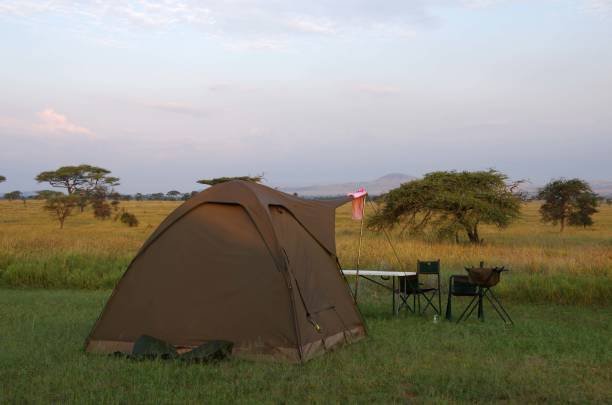
Where included, a dining tent gives the group a sheltered area for meals and briefings.
Its presence should be confirmed in the equipment inclusions.
Camp Tables and Chairs
Tables and chairs are useful camp comforts but should only be treated as included when confirmed in the package.
Who Sets Up the Tents?
In a supported Kilimanjaro expedition, the mountain crew typically manages operational camp equipment according to the package structure.
Travellers should still take responsibility for keeping their own sleeping tent organized and protecting personal equipment from moisture.
Porters on a Camping Route
Camping routes require substantial porter logistics because tents, dining equipment, food, cooking equipment and other operational supplies must move between camps.
Personal Porter Luggage
The traveller's porter luggage allowance should be confirmed before packing.
Do not assume every item brought to Tanzania can be transported onto the mountain.
What Goes in the Daypack?
- Water
- Rain jacket
- Waterproof trousers
- Warm layer
- Hat and gloves where needed
- Sun protection
- Sunglasses
- Personal medication
- Snacks
- Small valuables
- Phone or camera
Mountain Meals in a Camping Package
Food is an important logistical part of tent based Kilimanjaro climbing.
Meals need to be planned, carried and prepared as the expedition moves from camp to camp.
Dietary Requirements
Vegetarian, allergy related or other dietary requirements should be communicated before the climb and confirmed with the operator.
Drinking Water
The exact mountain drinking water arrangement should be explained before departure.
Climbers should also know the personal carrying capacity required each day.
Can You Buy Bottled Water at Every Camp?
Do not organize your hydration plan around guaranteed retail availability at mountain camps.
Professional Guide Support
The guide manages pacing, route progression, altitude communication and summit decisions.
This role becomes especially important on a compressed itinerary such as five day Umbwe.
Assistant Guides
The number of assistant guides depends on the confirmed group structure and operational requirements.
Can the Guide Stop the Summit Attempt?
Yes. Health and mountain safety take priority over completing the advertised itinerary.
Can the Itinerary Be Changed?
Operational adjustments can be required because of health, weather, trail conditions or other mountain concerns.
A five day booking is not permission to continue mechanically regardless of conditions.
Weather During the Camping Package
- Humid rainforest conditions
- Rain and mud
- Strong sunshine
- Moorland wind
- Cold Barranco nights
- Exposed alpine conditions
- Very cold summit night
- Possible snow or ice depending on current conditions
- Rapidly changing cloud and visibility
Camping in Rain
Rain is part of mountain travel and can affect both the trail and campsite experience.
Personal clothing and equipment should be packed inside waterproof inner bags even when the outer duffel is described as water resistant.
Camping in Cold Conditions
Temperatures fall as the route climbs higher, making sleeping bag quality, dry base layers and nighttime clothing increasingly important.
Complete Personal Packing List
Essential Personal Equipment
- Hiking boots
- Hiking socks
- Base layers
- Hiking shirts
- Trekking trousers
- Warm mid layers
- Insulated summit jacket
- Waterproof jacket
- Waterproof trousers
- Warm hat
- Sun hat
- Warm gloves
- Daypack
- Duffel bag according to the porter arrangement
- Suitable sleeping bag
- Headlamp
- Reliable batteries
- Trekking poles
- Water carrying system
- Sunglasses
- Sun protection
- Personal medication
- Personal toiletries
- Power bank
- Waterproof inner bags
Can Equipment Be Rented?
Potentially where suitable mountain rental equipment is available.
Common Rental Items
- Sleeping bag
- Duffel bag
- Trekking poles
- Gaiters
- Insulated jacket
- Waterproof jacket
- Waterproof trousers
Should You Rent Hiking Boots?
Boot fit is highly personal. Appropriate boots that have already been tested during training are generally preferable where possible.
Can You Charge a Phone at Camp?
Do not depend on reliable electrical charging at mountain camps.
Carry sufficient charged power bank capacity for the full itinerary.
Is WiFi Available at the Camps?
Do not treat uninterrupted mobile connectivity or WiFi as a guaranteed camping service.
Private 5 Day Kilimanjaro Camping Package
The camping trek can be organized privately where a private departure is confirmed.
Private refers to the booked climbing party and operational arrangement, not exclusive use of campsites or the mountain.
Group Joining Camping Package
A group joining departure can be possible where a compatible scheduled itinerary exists.
Because five day Umbwe is a demanding route, travellers should confirm exactly which route and itinerary a group departure is using rather than assuming that all five day Kilimanjaro groups are identical.
Solo Traveller Camping Package
A solo traveller can potentially join an appropriate group or book privately depending on available departures and the quotation.
Couples
Couples can book a private camping departure where arranged, but tent occupancy should be confirmed before the climb.
Is This Package Beginner Friendly?
The compressed five day Umbwe structure should not be marketed as a straightforward beginner itinerary.
First time high altitude climbers should carefully compare longer routes with more acclimatization time.
Training for the 5 Day Camping Trek
- Regular cardiovascular exercise
- Long hill hikes
- Steep ascent practice
- Stair climbing
- Training with a daypack
- Consecutive hiking days
- Long downhill walking
- Trekking pole practice
- Testing hiking boots
Moshi Logistics Before the Camping Trek
Moshi can serve as a practical preparation base before travelling toward Umbwe Gate.
A pre climb stay can provide time for briefing, equipment checks, rental arrangements and separating mountain luggage from items not required during the expedition.
Pre Climb Briefing
The briefing should make the compressed nature of the route clear before the group begins.
Briefing Topics
- Five day Umbwe itinerary
- Steep Day 1 and Day 2 progression
- Barranco Wall
- Barranco to Barafu stage
- Altitude symptoms
- Summit night
- Turnaround decisions
- Tent occupancy
- Sleeping mat and sleeping bag
- Porter luggage limit
- Daypack contents
- Rental equipment
- Weather protection
Luggage Storage
Non mountain luggage can remain at an appropriate confirmed storage location rather than being carried through the camping expedition.
Airport Transfers
Airport pickup and drop off should be confirmed separately from transfers between Moshi and the mountain gates.
Return From Mweka Gate
After finishing Day 5, the group travels from Mweka Gate toward the destination specified in the package.
Should You Fly Immediately After Day 5?
Avoid an unnecessarily tight onward flight.
The final rainforest descent, gate procedures and road transportation must all be completed first.
What Can Be Included in the 5 Day Kilimanjaro Camping Package?
Core Package Items to Confirm
- Professional mountain guide
- Assistant guides according to group requirements
- Cook
- Porters and mountain crew
- Applicable compulsory mountain charges
- Applicable camping charges
- Sleeping tents
- Sleeping mats where confirmed
- Dining tent where confirmed
- Tables and chairs where confirmed
- Mountain meals
- Drinking water arrangements
- Umbwe Gate transfer where confirmed
- Mweka Gate return transfer where confirmed
- First aid and safety equipment where confirmed
- Guided summit attempt
Possible Exclusions
- International flights
- Domestic flights unless included
- Visa expenses
- Travel insurance
- Personal clothing
- Sleeping bag unless included
- Rental equipment unless included
- Single occupancy tent unless included
- Private portable toilet unless included
- Pre climb hotel unless included
- Post climb hotel unless included
- Airport transfers unless included
- Tips where separate
- Personal expenses
- Safari unless included
- Zanzibar extension unless included
What Determines the Camping Package Cost?
- Visitor category
- Number of climbers
- Private or group joining format
- Guide and crew structure
- Camping equipment
- Tent occupancy
- Transfers
- Hotel nights
- Rental gear
- Optional services
Why Camping Routes Require More Equipment Logistics
The expedition must move its temporary accommodation between camps rather than relying on a fixed hut sleeping system.
That affects porter numbers, equipment volume and daily camp operations.
Does Camping Mean the Package Should Be Cheaper Than Marangu?
Not automatically.
The two routes use different accommodation and crew logistics, so price should be compared through actual inclusions rather than assumptions about tents being cheaper than huts.
Camping Package + Safari
After completing the Mweka descent, travellers can continue into a Northern Tanzania safari according to their wider itinerary.
Tarangire After Kilimanjaro
Tarangire can provide a compact wildlife extension after the climb.
Ngorongoro After Kilimanjaro
Ngorongoro can form part of a short or longer Northern Tanzania safari.
Serengeti After Kilimanjaro
Travellers with additional days can continue toward Serengeti after recovering from the mountain.
Camping Package + Zanzibar
Zanzibar can be added after Kilimanjaro or after a combined mountain and safari program.
5 Day Kilimanjaro Camping Package Booking Checklist
Confirm Before Paying
- Exact departure date
- Umbwe Route confirmation
- Exactly five mountain days
- Number of climbers
- Private or group joining arrangement
- Lead guide
- Assistant guide structure
- Porter and crew structure
- Umbwe Cave Camp
- Barranco Camp
- Barranco Wall stage
- Karanga transit
- Barafu Camp
- Summit attempt
- Stella Point objective
- Uhuru Peak objective
- Mweka Camp
- Mweka Gate finish
- Applicable compulsory mountain charges
- Applicable camping charges
- Sleeping tents
- Tent occupancy
- Sleeping mat
- Sleeping bag
- Dining tent
- Tables and chairs
- Mountain meals
- Drinking water
- Luggage allowance
- Rental equipment
- Private portable toilet if requested
- Umbwe Gate transfer
- Mweka Gate return transfer
- Pre climb hotel
- Post climb hotel
- Airport pickup
- Airport drop off
- Travel insurance responsibility
- Tips guidance
- Total package price
- Deposit
- Remaining balance
- Cancellation terms
- Rescheduling terms
Common Kilimanjaro Camping Package Mistakes
Avoid These Mistakes
- Assuming every five day Kilimanjaro climb is Marangu
- Calling Marangu a camping package
- Assuming five day Umbwe is easy because it is short
- Ignoring rapid altitude gain
- Not comparing longer acclimatization options
- Assuming the sleeping bag is included
- Assuming a sleeping mat is included
- Assuming single tent occupancy
- Assuming a private trek includes a private campsite
- Assuming a private toilet is automatic
- Packing insufficient waterproof protection
- Underestimating the Barranco to Barafu stage
- Arriving at Barafu exhausted
- Using an unreliable headlamp
- Ignoring altitude symptoms
- Assuming Stella Point guarantees Uhuru
- Underestimating the summit descent
- Underestimating wet Mweka rainforest terrain
- Booking a tight flight immediately after Day 5
Mistake: Choosing Five Days Only Because It Is Shorter
A shorter itinerary is not automatically easier. Reducing the number of mountain days also reduces the time available before the summit attempt.
Mistake: Thinking Camping Means Sleeping Bag Included
The operator may provide tents while the sleeping bag remains a personal or rental item. Confirm each component separately.
Mistake: Assuming Barafu Is the End of Day 3's Challenge
Reaching Barafu is only the end of the daytime hike. The summit attempt begins only several hours later.
Mistake: Thinking Summit Day Ends at Uhuru
After the summit attempt, climbers still need to descend through Barafu and continue toward Mweka Camp.
5 Day Kilimanjaro Camping Package FAQs
Which route does this 5 Day Kilimanjaro Camping Package use?
The package described here uses the Umbwe Route because it provides a genuine tent based five day summit structure.
Why not Marangu?
Marangu uses mountain huts rather than the designated tent camping structure described on this page.
Is Umbwe a camping route?
Yes, the route uses designated tented camps.
How many nights are spent camping?
Four mountain nights in the five day itinerary described here.
Where is Night 1?
Umbwe Cave Camp.
Where is Night 2?
Barranco Camp.
Where is Night 3?
Barafu Camp.
Where is Night 4?
Mweka Camp.
Where does the climb begin?
Umbwe Gate.
Where does it finish?
Mweka Gate in the itinerary described here.
Is it a summit package?
Yes. It includes an intended summit attempt from Barafu.
Which crater rim point is used?
The Barafu summit approach reaches toward Stella Point.
How high is Uhuru Peak?
5,895 metres.
Is Uhuru Peak guaranteed?
No.
Does reaching Stella Point guarantee Uhuru?
No.
Can the guide stop my summit attempt?
Yes whenever health or another mountain safety issue requires descent.
Is the five day Umbwe route easy?
No. It is a very compressed and demanding itinerary.
Is it beginner friendly?
It should not be presented as an easy beginner option.
Why is acclimatization challenging?
The route gains altitude quickly and provides relatively few mountain days before summit night.
Should I compare longer routes?
Yes if more acclimatization time is an important priority.
Do we cross the Barranco Wall?
Yes in the itinerary described here.
Do we sleep at Karanga?
Not in this compressed five day version. The route continues toward Barafu.
Is the Barranco Wall technical climbing?
The standard trekking line is generally a scrambling and hiking section rather than technical rock climbing.
Are sleeping tents included?
They should be explicitly confirmed in a camping package.
Is a sleeping bag included?
Not automatically.
Is a sleeping mat included?
Confirm the specific package.
Do I get my own tent?
Only where single occupancy or private tent use has been confirmed.
Does private mean private campsite?
No.
Is a dining tent included?
Only where stated in the package.
Are tables and chairs included?
Only where confirmed.
Is a private portable toilet included?
Not automatically.
Are guides included?
Professional guiding should form part of the confirmed mountain operation.
Are porters included?
Confirm porter and crew services in the written quotation.
Is a cook included?
Confirm the camp catering structure in the package.
Are meals included?
Only meals specified in the quotation should be treated as included.
Is drinking water included?
Confirm the exact mountain water arrangement.
Can vegetarian food be requested?
Dietary requirements should be communicated and confirmed before the climb.
Can I rent a sleeping bag?
Potentially where suitable rental equipment is available.
Can I rent trekking poles?
Potentially where available.
Can I charge my phone?
Do not depend on mountain charging. Carry a power bank.
Is WiFi guaranteed?
No.
Can the package be private?
Yes where a private departure is confirmed.
Can solo travellers join?
Potentially through an appropriate private or group joining arrangement.
Can couples have a private camping trek?
Yes where arranged.
Does a private climb guarantee a private tent?
No. Tent occupancy should be confirmed independently.
Can the trip start from Moshi?
Yes where transportation to Umbwe Gate is arranged.
Can it start from Arusha?
Potentially where the longer road transfer is arranged.
Are airport transfers included?
Not automatically.
Are hotels included?
Not automatically.
Can I store extra luggage?
Potentially where a storage arrangement has been confirmed.
Can I add safari afterward?
Yes.
Can I add Tarangire?
Yes.
Can I add Ngorongoro?
Yes.
Can I add Serengeti?
Yes.
Can I add Zanzibar?
Yes as part of a wider Tanzania itinerary.
Should I book an international flight immediately after Day 5?
Avoid an unnecessarily tight connection because the final descent, gate procedures and road transfer must happen first.
Why does this package use Umbwe rather than a five day Machame itinerary?
The purpose of this page is to provide a genuine five day tent based product without presenting an unusually compressed variation of another route as though it were the normal schedule. Umbwe has an established short and direct camping format, although its rapid altitude progression means it should be approached carefully and compared with longer routes.
What should I check about the tents before booking?
Ask whether sleeping tents are provided, how many people normally share each tent, whether single occupancy is available, whether a sleeping mat is included and whether a sleeping bag forms part of the package or must be rented separately. Also confirm whether a dining tent, tables and chairs are provided.
Why does a camping route need a larger support operation?
A tent based expedition must transport accommodation and operational equipment between camps. Sleeping tents, cooking equipment, food, dining equipment and other supplies move with the expedition, so porter and camp logistics are a significant part of the package.
What is the biggest challenge of a five day camping itinerary?
The main concern is not sleeping in a tent. It is the combination of steep terrain and limited acclimatization time. The route progresses quickly from Umbwe Gate to Barranco, moves from Barranco all the way to Barafu on Day 3 and begins the summit attempt only several hours later.
Why should I compare this package with longer Kilimanjaro routes?
A longer itinerary can provide additional intermediate stages and more time for the body to adapt to elevation. Travellers should therefore compare route profile and acclimatization time instead of assuming that the package with the fewest days is automatically the best choice.
So what is the complete 5 Day Kilimanjaro Camping Package?
The complete 5 Day Kilimanjaro Camping Package is a genuine tent based summit expedition built around the steep and direct Umbwe Route rather than the hut based Marangu Route. Day 1 begins at Umbwe Gate and immediately climbs through dense montane rainforest toward Umbwe Cave Camp. The trail can be steep, humid, rooted and slippery after rain. At camp, climbers settle into their confirmed sleeping tents, organize sleeping bags and mats, eat, hydrate and prepare for another major altitude gain. Day 2 leaves the forest and climbs through increasingly open heath and moorland toward Barranco Camp at roughly 3,900 metres. The rapid progression makes honest altitude communication essential. Strong physical fitness does not guarantee acclimatization. Barranco provides the second camping night beneath one of Kilimanjaro's most recognizable high mountain landscapes. Day 3 begins with the Barranco Wall. The standard trekking line involves steep hiking and scrambling before the trail continues across ridges and valleys toward Karanga. In this compressed five day itinerary, Karanga is not used as an additional overnight stop. The group continues toward Barafu Camp at approximately 4,600 to 4,700 metres. This makes Day 3 a particularly important stage because climbers must complete substantial trekking and still preserve enough energy for the summit departure that follows only several hours later. At Barafu, the team prepares warm summit clothing, gloves, headlamps, water, snacks, trekking poles and personal medication and attempts to rest. Day 4 begins during the night. Climbers leave Barafu under headlamps and ascend toward Stella Point on Kilimanjaro's crater rim. Extreme altitude, cold, darkness, fatigue and the rapid progression of the preceding days combine to make this a serious summit attempt. Participants who remain in suitable condition may continue from Stella Point toward Uhuru Peak at 5,895 metres. The summit is never guaranteed. The professional guide can stop further ascent whenever altitude symptoms, illness, exhaustion, weather, timing or another safety concern requires descent. After the highest safe point, climbers return toward Barafu and then continue significantly farther down the mountain to Mweka Camp. This means summit day continues long after the summit photographs have been taken. Mweka provides the fourth and final camping night. Day 5 descends through increasingly lush vegetation and rainforest toward Mweka Gate. Mud, roots and wet terrain can make the final descent slippery even though breathing becomes easier at lower altitude. The camping operation supporting these five days can include professional guides, assistant guides according to group requirements, cook, porters, applicable compulsory park and camping charges, sleeping tents, sleeping mats where confirmed, dining tent, tables and chairs where confirmed, mountain meals, drinking water arrangements, first aid and safety equipment and gate transportation according to the written quotation. Travellers should independently confirm the sleeping bag, tent occupancy, rental equipment and private portable toilet rather than assuming they are automatically included. Private climbing does not create a private campsite, and a private booking does not automatically create single tent occupancy. The five day Umbwe camping format is also not an itinerary that should be sold as an easy route for beginners. Its defining characteristic is compression: steep rainforest on Day 1, rapid ascent to Barranco on Day 2, Barranco Wall and continued travel to Barafu on Day 3, summit attempt and major descent on Day 4 and final Mweka descent on Day 5. Travellers who prioritize more acclimatization time should compare it carefully with longer Kilimanjaro camping programs. For a traveller specifically seeking a short, challenging and fully supported tent based Kilimanjaro experience, however, the 5 Day Kilimanjaro Camping Package provides a clear journey from Umbwe Gate through high mountain camps to an attempted summit and complete descent through Mweka.
Plan Your 5 Day Kilimanjaro Camping Package
Experience a genuine tent based Kilimanjaro expedition from Umbwe Gate through Barranco and Barafu, with professional mountain support and an overnight summit attempt toward Stella Point and Uhuru Peak.
Request Your Kilimanjaro Camping Package