5 Day Kilimanjaro Tour from Moshi
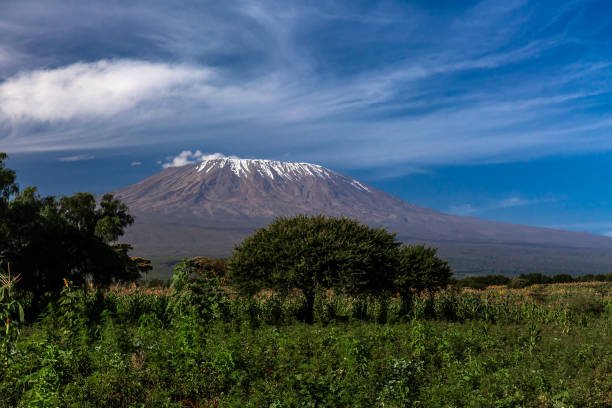
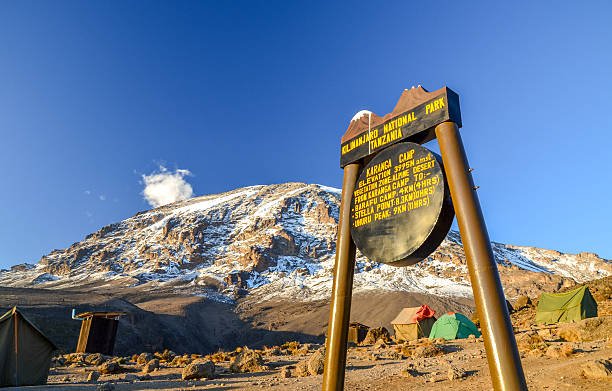
The 5 Day Kilimanjaro Tour from Moshi combines convenient town based logistics with a complete Marangu Route summit expedition. Moshi serves as the practical starting and finishing base, while the mountain journey itself follows Marangu Gate through Mandara Hut, Horombo Hut and Kibo Hut before an overnight summit attempt toward Gilman's Point and potentially Uhuru Peak.
For travellers already staying in Moshi, the trip can begin with a pre climb briefing and equipment review before the morning drive to Marangu Gate. After five mountain days, the group descends through Horombo and Mandara and returns to Marangu Gate, where the road transfer back toward Moshi begins.
This makes the itinerary particularly convenient for travellers who want to use Moshi as their Kilimanjaro base, store their non mountain luggage, prepare equipment before departure and return to the same town after the climb.
The five day Marangu itinerary is nevertheless demanding. The schedule normally progresses from Mandara to Horombo and directly to Kibo without a separate standard acclimatization day before summit night.
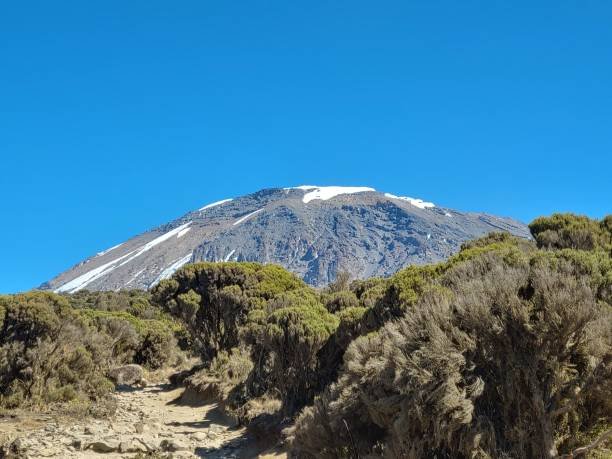
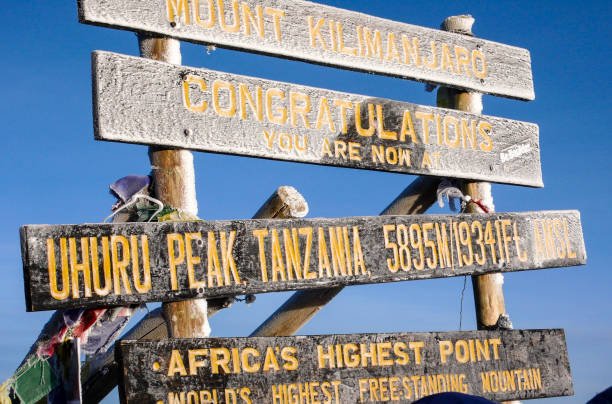
Uhuru Peak at 5,895 metres is the intended summit objective, but the tour should always be understood as a guided summit attempt rather than a guaranteed result.
5 Day Kilimanjaro Tour from Moshi at a Glance
- Starting base: Moshi
- Mountain: Mount Kilimanjaro
- Route: Marangu Route
- Mountain duration: 5 days
- Mountain nights: 4
- Accommodation: Mountain huts
- Day 1: Moshi → Marangu Gate → Mandara Hut
- Day 2: Mandara Hut → Horombo Hut
- Day 3: Horombo Hut → Kibo Hut
- Day 4: Kibo → Gilman's Point → possible Uhuru Peak → Horombo
- Day 5: Horombo → Marangu Gate → Moshi
- Highest objective: Uhuru Peak, 5,895 m
- Primary challenge: Altitude and summit night
- Return base: Moshi where confirmed
Why Start a Kilimanjaro Tour from Moshi?
Moshi is positioned close to the southern side of Mount Kilimanjaro and is widely used as a staging town for climbs.
Beginning from Moshi gives travellers time to organize equipment, sleep before the trek, meet the mountain team and travel to Marangu Gate without needing to begin the morning from a much more distant location.
Advantages of a Moshi Based Kilimanjaro Tour
- Practical access to Kilimanjaro
- Convenient location for pre climb briefing
- Opportunity to check equipment before departure
- Rental equipment can be organized where available
- Non mountain luggage can potentially remain at the hotel or arranged storage location
- Straightforward morning transfer toward Marangu Gate
- Convenient return point after Day 5
- Easy connection with post climb safari arrangements
Arriving in Moshi Before the Climb
Whenever possible, travellers should arrive in Moshi before the morning the climb begins.
This creates time to recover from international travel, meet the mountain team, check equipment and solve missing gear problems before departure.
Should You Arrive in Tanzania on the Same Morning as Day 1?
This is normally less convenient than arriving earlier because international flight delays, lost baggage or equipment problems can interfere with the mountain departure.
A pre climb night in Moshi creates a useful logistical buffer.
Pre Climb Briefing in Moshi
The briefing is the transition between ordinary travel and the mountain expedition.
What to Review During the Moshi Briefing
Route
Understand the complete five day sequence from Marangu Gate through Mandara, Horombo, Kibo and summit night.
Altitude
Understand that five days provides a relatively rapid progression to extreme elevation.
Mountain Pace
Discuss why slow and controlled walking begins from Day 1 rather than only at high altitude.
Boots
Confirm that hiking boots fit correctly and have already been tested where possible.
Waterproof Clothing
Make sure both upper and lower body rain protection is available.
Warm Summit Layers
Review insulation for Kibo and summit night.
Sleeping Bag
Confirm whether the climber is bringing one or using rental equipment.
Headlamp
Check the headlamp and batteries before leaving Moshi.
Trekking Poles
Confirm that poles operate correctly and are adjusted to a suitable length.
Duffel and Daypack
Separate porter luggage from equipment needed while walking.
Equipment Check Before Leaving Moshi
An equipment check is valuable because Moshi is the last practical place to solve many gear problems before entering the mountain.
Check Before Day 1
- Hiking boots fit correctly
- Sleeping bag is suitable
- Waterproof jacket is available
- Waterproof trousers are available
- Warm summit jacket is suitable
- Gloves and warm hat are packed
- Headlamp works
- Batteries are charged or replaced
- Trekking poles work correctly
- Water carrying capacity is sufficient
- Personal medication is accessible
- Power bank is charged
Luggage Storage in Moshi
Travellers normally do not need to carry every suitcase, airport outfit or safari item onto Kilimanjaro.
Where storage is available through the confirmed accommodation or operator arrangement, non mountain luggage can remain securely in Moshi until the climb is completed.
What Should Go on the Mountain?
Mountain luggage should contain the clothing, sleeping equipment and personal items required for five days rather than the traveller's entire Tanzania suitcase.
What Should Stay in Moshi?
Items not needed on Kilimanjaro can include safari specific clothing, unnecessary shoes, large suitcases, beach clothing and other equipment intended only for later stages of the Tanzania trip.
5 Day Kilimanjaro Tour from Moshi Itinerary
Complete Day by Day Plan
Day 1: Moshi → Marangu Gate → Mandara Hut.
Day 2: Mandara Hut → Horombo Hut.
Day 3: Horombo Hut → Kibo Hut.
Day 4: Kibo → Gilman's Point → possible Uhuru Peak → Kibo → Horombo.
Day 5: Horombo → Marangu Gate → return toward Moshi.
Day 1 – Moshi to Marangu Gate
The first day begins with collection from the confirmed Moshi location and a road transfer toward Marangu Gate.
Travellers should already be dressed for trekking or have the required hiking clothing easily accessible rather than buried inside stored luggage.
Morning Preparation in Moshi
Before entering the vehicle, confirm that passports or required documents, personal medication, rain protection, water bottles, daypack and other essential items are present.
Drive Toward Marangu
The journey leaves Moshi and approaches the eastern side of Kilimanjaro toward Marangu Gate.
Arrival at Marangu Gate
The mountain team completes the applicable entry arrangements and organizes porter luggage before the trek begins.
Day 1 – Marangu Gate to Mandara Hut
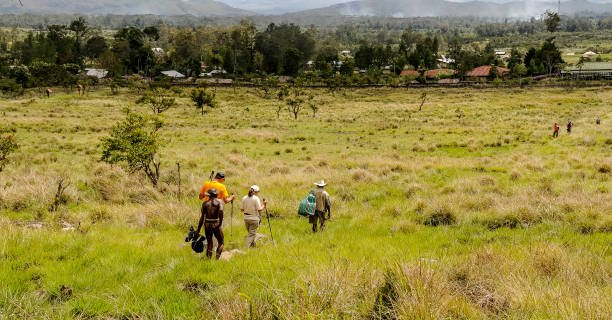
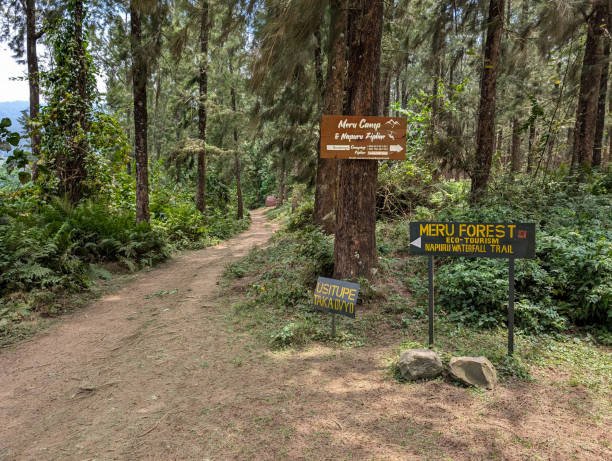
The hiking section begins in Kilimanjaro's montane rainforest.
The route climbs steadily toward Mandara Hut at approximately 2,700 metres.
Day 1 Goal
Move from Moshi into the mountain environment smoothly, establish a conservative walking pace and reach Mandara without unnecessarily exhausting the body.
Rainforest Trail
The lower trail can be humid and wet. Mud, roots, stones and natural steps can make some sections slippery.
Rain Gear
Waterproof clothing should remain inside the daypack rather than in porter luggage because weather can change during the walk.
Possible Wildlife
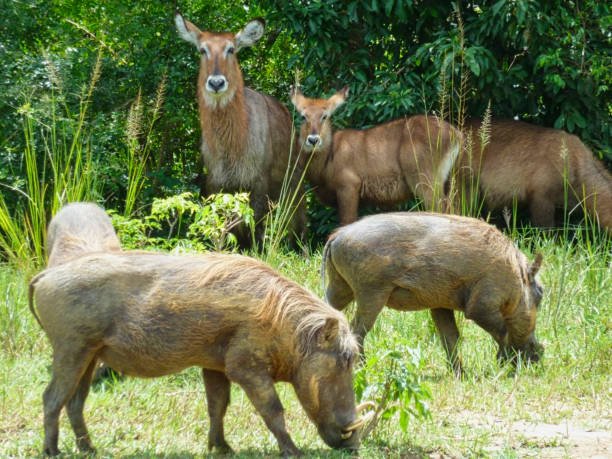
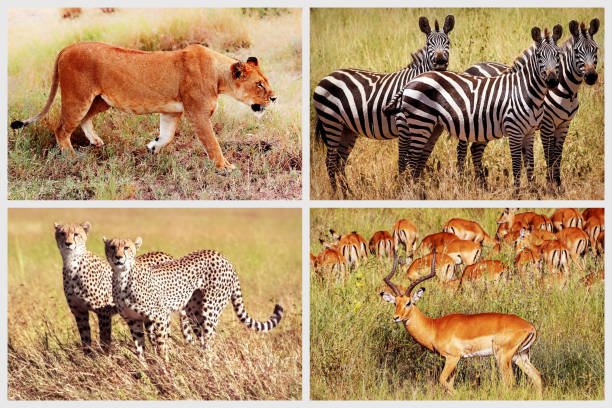
Animals or birds may occasionally be encountered or heard in the lower forest, but no sighting can be guaranteed.
Pole Pole From the Beginning
The easiest time to establish a sustainable pace is before the route becomes difficult.
Walking quickly because Day 1 feels comfortable does not provide an advantage for summit night.
Night 1 – Mandara Hut
- Change into dry clothing
- Organize sleeping equipment
- Eat according to the meal plan
- Hydrate appropriately
- Check feet and boots
- Report health concerns
- Prepare the next day's clothing
- Rest
Optional Maundi Crater Area
Where time, fitness, weather and professional guide judgment permit, a short additional walk around Mandara or the Maundi Crater area may be possible.
It should remain optional because recovery has greater importance on a short summit schedule.
Day 2 – Mandara Hut to Horombo Hut
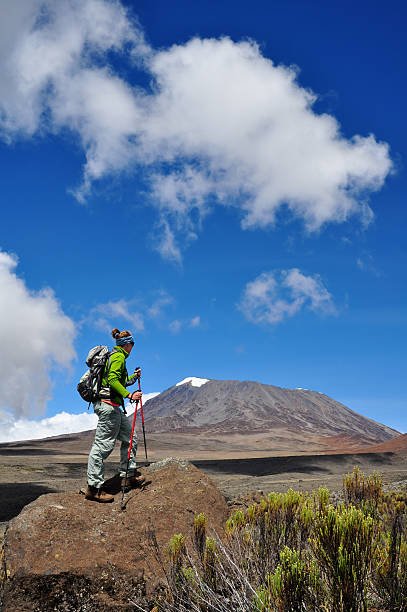
Day 2 leaves the rainforest and climbs through heath and open moorland toward Horombo Hut at approximately 3,700 metres.
Day 2 Goal
Reach Horombo with energy remaining and begin paying closer attention to altitude response as the route approaches significantly higher elevation.
Rainforest to Heath
Vegetation gradually becomes shorter and the landscape opens as the route leaves the dense forest zone.
Heath and Moorland
The route becomes more exposed to sunshine, wind and rapidly changing cloud.
Possible Kibo and Mawenzi Views
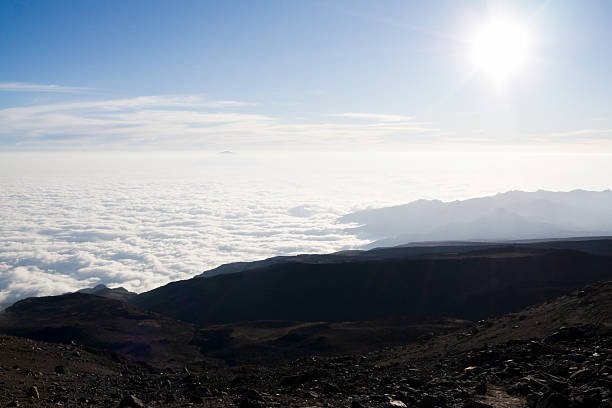
Clear weather may reveal impressive views toward Kibo and Mawenzi, but mountain visibility should never be promised.
Arrival at Horombo Hut
Horombo is an important point on the five day itinerary because the group has now reached approximately 3,700 metres and is scheduled to continue toward Kibo the following morning.
Altitude Awareness at Horombo
Tell the Guide About Concerning Symptoms
- Worsening headache
- Nausea
- Vomiting
- Dizziness
- Unusual weakness
- Poor coordination
- Confusion
- Unusual breathing difficulty
- Any rapidly worsening condition
Why Fitness Does Not Eliminate Altitude Risk
A climber can arrive in excellent physical condition and still experience difficulty with altitude.
Cardiovascular fitness helps with hiking effort, but acclimatization is a separate physiological process.
Night 2 – Horombo Hut
Horombo Evening Priorities
Eat
Maintain energy for the high altitude approach to Kibo.
Hydrate
Continue appropriate water intake according to mountain guidance.
Stay Warm
Temperatures can fall quickly after walking stops.
Report Symptoms
Do not hide problems simply because the summit is approaching.
Check Summit Equipment
Resolve equipment problems before reaching Kibo where possible.
Rest
The two hardest stages of the climb are approaching.
Why the 5 Day Tour Has Limited Acclimatization Time
The standard itinerary proceeds from Horombo to Kibo on Day 3 instead of spending another dedicated acclimatization day around Horombo.
This creates a faster altitude progression than the longer Marangu alternative.
Day 3 – Horombo Hut to Kibo Hut
Day 3 leaves Horombo and enters increasingly barren high altitude terrain.
Vegetation becomes sparse as the route approaches the broad saddle between Kibo and Mawenzi.
Day 3 Goal
Reach Kibo slowly and conserve as much energy as possible because the summit ascent begins only several hours later.
Alpine Desert
The landscape becomes drier, colder and more volcanic as climbers move beyond the moorland.
Kibo Mawenzi Saddle
The route crosses broad open high ground between the two major volcanic peaks.
Why Walking Feels Harder
At higher elevation, the same physical effort can feel substantially more demanding.
Why You Should Not Race to Kibo
Arriving first has little value. Reaching Kibo with enough remaining energy to prepare for the summit is much more important.
Arrival at Kibo Hut
Kibo Hut at approximately 4,700 metres is the final base before the summit ascent.
Climbers now have only limited time to eat, organize equipment and rest.
Preparing for Summit Night at Kibo
Prepare Before Sleeping
- Base layers
- Warm middle layers
- Insulated summit jacket
- Weather resistant outer layer
- Warm hat
- Warm gloves
- Headlamp
- Reliable batteries
- Water according to the summit plan
- Snacks
- Trekking poles
- Personal medication
Summit Briefing
The guide should explain the summit departure time, expected pace, clothing strategy, break system, altitude communication and turnaround procedures.
Can You Sleep Well at Kibo?
Some climbers sleep only lightly because of altitude, cold and anticipation.
Rest remains useful even when deep sleep is limited.
Day 4 – Kibo Hut to Gilman's Point
The fourth mountain day begins during the night according to the guide's summit plan.
Climbers leave Kibo under headlamps and begin the demanding ascent toward the crater rim.
Summit Night Goal
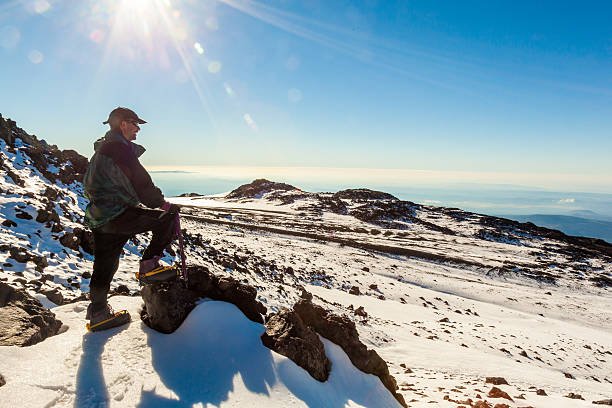
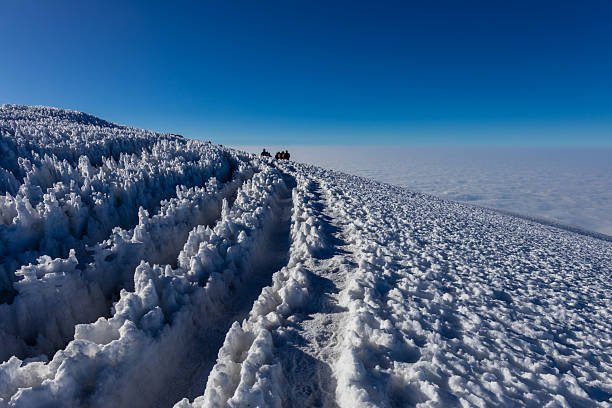
Attempt Gilman's Point and continue toward Uhuru Peak only where altitude response, health, weather, energy, timing and professional guide judgment make further ascent appropriate.
Why Summit Night Is Difficult
- Extreme altitude
- Cold conditions
- Darkness
- Limited sleep
- Accumulated fatigue
- Steep upper mountain terrain
- Long descent afterward
Why the Summit Pace Is Slow
Slow movement helps preserve energy at extreme altitude and allows guides to observe climber condition more closely.
Gilman's Point
Gilman's Point is a major crater rim milestone on the Marangu summit route.
Reaching it is a significant achievement, but it does not automatically mean every climber should continue farther.
Does Gilman's Point Guarantee Uhuru Peak?
No.
The guide must consider each climber's condition before the potential continuation toward Uhuru.
Gilman's Point to Uhuru Peak
Climbers who remain in suitable condition may continue around the summit area toward Uhuru Peak.
The final section still takes place at extreme altitude after many hours of climbing.
Uhuru Peak – 5,895 Metres
Uhuru Peak is the planned highest point of the five day tour.
The Summit Is Never Guaranteed
The guide can require descent below Gilman's Point, at the crater rim or while continuing toward Uhuru whenever altitude, illness, exhaustion, weather, timing or another safety concern makes further ascent inappropriate.
Is Sunrise at Uhuru Guaranteed?
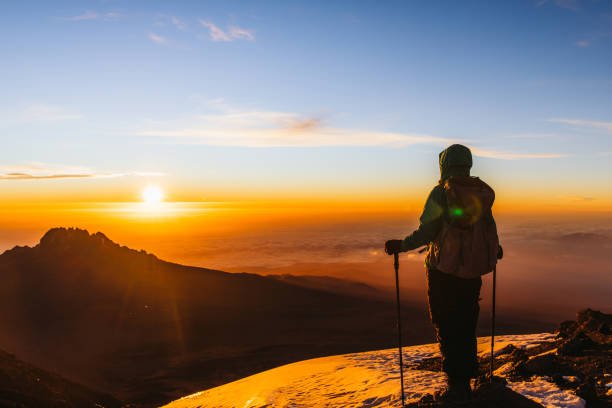
No. Individual pace and mountain conditions determine where sunrise is experienced.
Are Clear Summit Views Guaranteed?
No. Cloud and rapidly changing weather can affect visibility.
The Summit Is Not the End of Day 4
After reaching the highest safe point, climbers still have to descend to Kibo and then continue much farther down toward Horombo.
Summit Descent to Kibo
Descending can be faster than climbing, but tired legs and loose terrain demand continued concentration.
Kibo to Horombo
After reaching Kibo and resting briefly where appropriate, the group continues down to Horombo for the final mountain night.
A Complete Summit Day Can Include
- Wake during the night
- Leave Kibo under headlamps
- Climb toward Gilman's Point
- Potentially continue to Uhuru Peak
- Descend from the crater rim
- Return to Kibo
- Rest briefly where appropriate
- Continue to Horombo Hut
Night 4 – Horombo Hut
Horombo provides the final mountain night after the longest and highest stage of the expedition.
Climbers should focus on food, hydration, dry clothing, foot care and sleep.
Day 5 – Horombo Hut to Marangu Gate
The final trekking day descends through moorland, heath and rainforest.
Day 5 Goal
Complete the mountain safely and return to Marangu Gate before beginning the road journey back toward Moshi.
Why the Final Descent Is Still Demanding
Breathing often becomes easier as elevation decreases, but the previous summit stage can leave legs, knees and feet tired.
Wet rainforest terrain can also become slippery.
Arrival at Marangu Gate
The trekking section finishes after the group reaches the gate and completes the applicable mountain exit arrangements.
Day 5 – Return From Marangu Gate to Moshi
Where the package includes the return transfer, the vehicle meets the group after the mountain and travels back toward Moshi.
This final road stage is one of the main logistical advantages of using Moshi as both the starting and ending base.
What Happens When You Return to Moshi?
Post Climb Moshi Routine
Return to the Confirmed Hotel
Check in where post climb accommodation is included or independently arranged.
Collect Stored Luggage
Reunite mountain equipment with luggage left in Moshi where storage was arranged.
Return Rental Equipment
Use the agreed procedure for sleeping bags, poles, duffels or other rented items.
Shower and Recover
Allow time for basic recovery after five mountain days.
Prepare for the Next Stage
Reorganize for safari, Zanzibar, airport transfer or onward travel.
Should You Book a Flight Immediately After Returning to Moshi?
Avoid an unnecessarily tight flight on the evening of Day 5.
The final descent can vary in duration, and the group still needs to complete gate procedures and drive from Marangu toward Moshi or the airport.
Better Post Climb Flight Planning
Where possible, build a reasonable buffer between the scheduled end of the mountain and an important international departure.
This also provides time to shower, collect luggage and respond to delays caused by weather, trail pace or road conditions.
Moshi Hotel Before and After Kilimanjaro
Some Kilimanjaro packages include accommodation before and after the trek, while others contain only the mountain program.
The number of hotel nights, room basis and included meals should be confirmed rather than assumed.
Is the Pre Climb Hotel Part of the Five Mountain Days?
Normally no. A “5 Day Kilimanjaro Tour” commonly refers to five mountain days unless the package explicitly counts arrival or hotel days differently.
Is the Post Climb Hotel Included?
Only where the written package confirms it.
Airport to Moshi Before the Tour
Travellers arriving through Kilimanjaro International Airport can continue by road toward Moshi according to their confirmed airport transfer arrangement.
Does the Kilimanjaro Package Automatically Include Airport Pickup?
No. Airport pickup should be confirmed separately from the Moshi to Marangu Gate transfer.
Does It Automatically Include Airport Drop Off?
No. Arrival and departure transfers should each appear clearly in the final quotation where included.
5 Day vs 6 Day Marangu from Moshi
Both itineraries can use Moshi as the starting base, but the mountain schedules differ.
Five Day vs Six Day Marangu
5 Day: Moshi → Mandara → Horombo → Kibo → summit attempt → Horombo → Moshi.
6 Day: Commonly adds additional time around Horombo before progressing to Kibo, providing more acclimatization time.
Should You Choose Five Days Just Because You Have Limited Time?
Trip duration matters, but altitude strategy should also be considered.
A traveller with flexibility should compare the acclimatization differences before deciding solely from the number of days available.
Difficulty of the 5 Day Kilimanjaro Tour
Main Challenges
- Five consecutive mountain days
- Rapid altitude progression
- No separate standard acclimatization day
- Cold conditions higher on the mountain
- Night trekking
- Extreme summit altitude
- Limited sleep before summit
- Long summit day
- Long final descent
Can Beginners Join?
Some first time high altitude climbers attempt the five day Marangu Route, but the itinerary should not be described as easy.
Physical preparation, realistic expectations and willingness to follow professional guide decisions are important.
Training Before Arriving in Moshi
- Regular cardiovascular exercise
- Long walks
- Hill hiking
- Stair climbing
- Training with a daypack
- Consecutive hiking days
- Long downhill practice
- Trekking pole practice
- Testing hiking boots well before Tanzania
Do You Need Technical Climbing Skills?
The standard Marangu summit route is primarily high altitude trekking rather than technical rock climbing.
The challenge comes from altitude, endurance, cold and summit night rather than ordinary technical climbing moves.
5 Day Kilimanjaro Tour Packing List
Important Personal Equipment
- Hiking boots
- Hiking socks
- Base layers
- Trekking trousers
- Hiking shirts
- Warm mid layers
- Insulated jacket
- Waterproof jacket
- Waterproof trousers
- Warm hat
- Sun hat
- Warm gloves
- Daypack
- Duffel or porter bag according to arrangement
- Suitable sleeping bag
- Headlamp
- Reliable batteries
- Trekking poles
- Water carrying system
- Sunglasses
- Sun protection
- Personal medication
- Personal toiletries
- Power bank
- Waterproof internal packing
Rental Equipment in Moshi
One advantage of completing the equipment check before departure is that missing gear can potentially be rented in Moshi where appropriate equipment is available.
Common Rental Items
- Sleeping bag
- Duffel bag
- Trekking poles
- Gaiters
- Insulated jacket
- Waterproof jacket
- Waterproof trousers
Should You Arrive in Moshi Without Hiking Boots?
It is better to use boots that have already been tested wherever possible because fit problems can cause serious discomfort over five consecutive mountain days.
Do You Need a Tent?
Not normally for the standard Marangu itinerary because mountain accommodation uses huts.
Do You Need a Sleeping Bag?
Yes. Hut accommodation does not remove the need for suitable sleeping insulation.
Can You Charge Electronics on the Mountain?
Do not depend on reliable mountain charging. Arrive in Moshi with power banks fully charged.
Is WiFi Reliable on Kilimanjaro?
Do not plan the expedition around continuous mobile or internet connectivity.
Weather From Moshi to the Summit
One of the defining characteristics of Kilimanjaro is the dramatic change in environment as elevation increases.
- Warm conditions around Moshi and the lower mountain
- Humid rainforest
- Rain and mud
- Open moorland sunshine
- Increasing wind
- Cold Horombo evenings
- Dry alpine terrain near Kibo
- Very cold summit night
- Possible snow or ice depending on conditions
- Rapid visibility changes
Professional Guide and Mountain Crew
The mountain team joins the logistical chain that begins in Moshi and continues until the group returns from Marangu Gate.
Mountain Team Roles
- Lead guide: Mountain leadership, pacing and major safety decisions
- Assistant guides: Additional support according to the confirmed group structure
- Cook: Mountain meal preparation where included
- Porters: Carry confirmed expedition luggage and operational supplies
Can the Guide Change the Daily Plan?
Yes when health, weather, trail conditions or another mountain concern requires an adjustment.
The intended itinerary should never override a necessary professional safety decision.
What Can Be Included in a 5 Day Kilimanjaro Tour from Moshi?
Core Services to Confirm
- Moshi pickup where confirmed
- Transfer from Moshi to Marangu Gate
- Professional licensed mountain guide
- Assistant guides according to group structure
- Porters and mountain crew
- Applicable compulsory mountain charges
- Mandara Hut accommodation
- Horombo Hut accommodation
- Kibo Hut accommodation
- Mountain meals according to the package
- Drinking water arrangement
- First aid and mountain safety equipment where confirmed
- Guided summit attempt
- Return transport from Marangu Gate
- Return to Moshi where confirmed
Possible Exclusions
- International flights
- Domestic flights unless included
- Visa expenses
- Travel insurance
- Personal trekking clothing
- Sleeping bag unless included
- Rental equipment unless included
- Pre climb Moshi hotel unless included
- Post climb Moshi hotel unless included
- Airport pickup unless included
- Airport drop off unless included
- Private portable toilet unless included
- Tips where separate
- Personal expenses
- Safari unless included
- Zanzibar extension unless included
Does “Tour from Moshi” Automatically Mean Hotels Are Included?
No. “From Moshi” can simply describe the departure point.
The final quotation should specify whether pre climb and post climb accommodation are part of the package.
Does It Mean Airport Transfers Are Included?
No. Airport transfers and the Moshi to Marangu Gate transfer are different transport services.
Does It Mean All Rental Equipment Is Included?
No. Each rental item should be confirmed separately unless the quotation explicitly includes a complete equipment package.
Can the Tour Be Private?
Yes where a private arrangement is confirmed.
Does Private Mean Private Hut Accommodation?
No. Mountain huts and common facilities can remain shared with other climbers.
Can the Tour Be Group Joining?
Potentially where a compatible five day Marangu departure is available.
Can Solo Travellers Start from Moshi?
Yes through an appropriate private or group joining arrangement.
Can Couples Book Privately?
Yes where a private departure is arranged.
5 Day Kilimanjaro Tour from Moshi + Safari
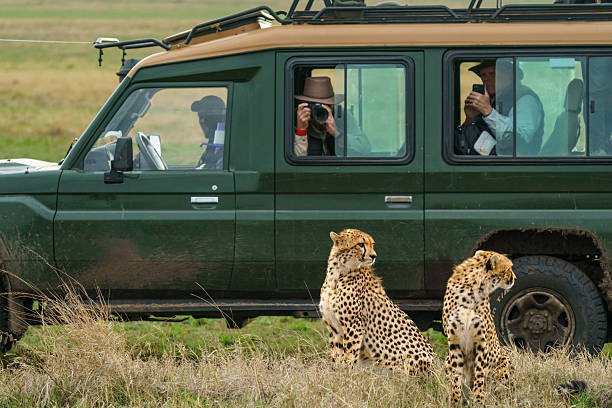
Moshi can also work as a practical transition point between Kilimanjaro and a Northern Tanzania safari.
Kilimanjaro + Tarangire
Tarangire can provide a compact post climb wildlife extension.
Kilimanjaro + Ngorongoro
Travellers can continue toward Ngorongoro as part of a short or longer safari itinerary.
Kilimanjaro + Serengeti
Those with more time can travel onward toward Serengeti after completing and recovering from the climb.
5 Day Kilimanjaro Tour from Moshi + Zanzibar
Zanzibar can follow Kilimanjaro directly or be added after a Northern Tanzania safari.
Flight and transfer timing should allow enough recovery and logistical margin after the mountain.
Can You Begin Safari the Morning After Returning to Moshi?
Potentially, but travellers should consider how they feel after summit day and the full Day 5 descent.
A demanding safari transfer immediately after Kilimanjaro may feel very different from the same journey after additional rest.
5 Day Kilimanjaro Tour from Moshi Booking Checklist
Confirm Before Booking
- Arrival date in Moshi
- Pre climb hotel
- Pre climb briefing time
- Equipment check
- Rental equipment requirements
- Luggage storage arrangement
- Exact mountain departure date
- Moshi pickup location
- Marangu Gate transfer
- 5 day Marangu Route confirmation
- Private or group joining format
- Lead guide
- Assistant guide structure
- Porter and crew arrangement
- Applicable compulsory mountain charges
- Mandara Hut night
- Horombo Hut night
- Kibo Hut night
- Summit night arrangement
- Gilman's Point objective
- Uhuru Peak objective
- Horombo night after summit
- Day 5 descent
- Meals
- Drinking water
- Safety equipment
- Sleeping bag arrangement
- Luggage allowance
- Return transfer from Marangu Gate
- Return destination in Moshi
- Post climb hotel
- Airport pickup where applicable
- Airport drop off where applicable
- Travel insurance responsibility
- Tips guidance
- Total package price
- Deposit
- Remaining balance
- Cancellation conditions
- Rescheduling conditions
Common Mistakes When Booking from Moshi
Avoid These Mistakes
- Arriving in Moshi too late for a useful briefing
- Leaving equipment problems until Day 1 morning
- Packing every suitcase onto the mountain
- Assuming the Moshi hotel is included
- Assuming airport pickup is included
- Assuming airport drop off is included
- Assuming rental equipment is included
- Walking too quickly on Day 1
- Ignoring altitude symptoms at Horombo
- Racing toward Kibo
- Packing inadequate summit clothing
- Using an unreliable headlamp
- Assuming Gilman's Point guarantees Uhuru
- Ignoring a professional turnaround decision
- Underestimating the summit descent
- Underestimating Day 5
- Booking an unnecessarily tight flight after returning from the mountain
Mistake: Arriving in Moshi Without Enough Time to Check Equipment
The pre climb period is useful precisely because missing or unsuitable gear can still be identified before travelling to Marangu Gate.
Mistake: Assuming Moshi Is Day 1 of the Mountain
The five mountain days begin when the Kilimanjaro trekking itinerary starts. A hotel night in Moshi can sit outside those five mountain days unless the package says otherwise.
Mistake: Booking a Same Evening International Flight
The exact return time to Moshi cannot be treated like a fixed train timetable. Mountain pace, gate procedures and road conditions can all influence timing.
5 Day Kilimanjaro Tour from Moshi FAQs
Can a 5 Day Kilimanjaro climb start from Moshi?
Yes. Moshi is a practical base for transferring to Marangu Gate.
Which route is used?
The standard five day summit itinerary described here uses the Marangu Route.
Is Moshi inside Kilimanjaro National Park?
No. Moshi is the town base used before travelling toward the mountain gate.
Where does the hiking actually begin?
At Marangu Gate after the applicable entry arrangements.
Can I be collected from my Moshi hotel?
Potentially where hotel pickup is confirmed in your package.
Does the package automatically include a Moshi hotel?
No.
Should I stay in Moshi before the climb?
A pre climb stay is useful for rest, briefing and equipment preparation.
Can I arrive in Moshi late the night before?
Potentially, but briefing and equipment arrangements should be planned carefully.
Can I leave luggage in Moshi?
Potentially where luggage storage has been confirmed with the hotel or operator.
Do I need to carry my suitcase up Kilimanjaro?
No. Only mountain appropriate luggage should travel onto the trek.
Can I rent equipment in Moshi?
Potentially where suitable rental equipment is available.
Is the Moshi to Marangu Gate transfer included?
Only where confirmed in the quotation.
Does Marangu use tents?
The standard route uses mountain huts.
Where do we sleep on Night 1?
Mandara Hut.
Where do we sleep on Night 2?
Horombo Hut.
Where do we sleep before the summit?
Kibo Hut.
Where do we sleep after summit day?
Horombo Hut.
Do I need a sleeping bag?
Yes. Confirm whether it is included or rented separately.
Is the five day route a summit tour?
Yes. It includes a planned summit attempt toward Gilman's Point and potentially Uhuru Peak.
How high is Uhuru Peak?
5,895 metres.
Is Uhuru guaranteed?
No.
Does reaching Gilman's Point guarantee Uhuru?
No.
Can the guide turn me around?
Yes whenever health or another mountain safety concern requires descent.
Does the five day route include an acclimatization day?
Not normally in the standard itinerary.
Would six days provide more acclimatization time?
Six day Marangu commonly adds more time around Horombo before proceeding toward Kibo.
Is the five day tour easy?
No.
Can beginners attempt it?
Some do, but preparation and realistic altitude expectations are important.
Do I need technical climbing experience?
The standard Marangu summit route is primarily high altitude trekking.
What is the hardest day?
For many climbers, summit day is the hardest because of extreme altitude, cold, darkness and the long descent afterward.
When does summit night start?
Commonly during the night or around midnight according to the professional guide's plan.
Do I need a headlamp?
Yes.
Are trekking poles useful?
Yes, particularly for the long descents.
Can I charge my phone on Kilimanjaro?
Do not rely on dependable mountain charging. Carry a power bank.
Is mountain internet reliable?
Do not rely on continuous connectivity.
Are guides included?
Professional guiding should be confirmed in the mountain package.
Are porters included?
Only where porter services are listed in the quotation.
Are mountain meals included?
Only meals stated in the confirmed itinerary should be treated as included.
Is drinking water included?
Confirm the exact mountain water arrangement.
Is airport pickup included?
Not automatically.
Is airport drop off included?
Not automatically.
Can the tour be private?
Yes where arranged.
Does private mean private huts?
No.
Can solo travellers join a group?
Potentially where a compatible group departure exists.
Do we return to Moshi on Day 5?
Where the package includes the return transfer, the group travels from Marangu Gate back toward Moshi after completing the descent.
Can I fly the same evening?
Avoid an unnecessarily tight flight because the actual finish time can vary.
Can I start safari after returning to Moshi?
Yes, subject to the wider itinerary and appropriate recovery time.
Can I add Tarangire?
Yes.
Can I add Ngorongoro?
Yes.
Can I add Serengeti?
Yes.
Can I continue to Zanzibar?
Yes as part of a wider Tanzania itinerary.
Why is Moshi useful before a Kilimanjaro climb?
Moshi provides a practical location for sleeping before the trek, meeting the mountain team, reviewing the itinerary, checking equipment, organizing rental gear and separating mountain luggage from items not required on Kilimanjaro. It also creates a convenient road base for the transfer toward Marangu Gate.
Why should I return to Moshi before an important onward flight?
Day 5 still includes a substantial mountain descent before the group reaches Marangu Gate. Gate procedures and road transportation then follow. Returning to Moshi with sufficient time before an international departure provides more flexibility than relying on a very tight same day connection.
Why should I complete my equipment check in Moshi rather than at Marangu Gate?
Moshi provides a much better opportunity to identify missing clothing, sleeping equipment or trekking accessories while solutions may still be available. Once the climb begins, replacing unsuitable boots, inadequate summit layers or missing equipment becomes significantly more difficult.
What makes this tour different from simply booking five days on Kilimanjaro?
The Moshi based structure includes the logistical journey surrounding the mountain itself. The traveller prepares in Moshi, transfers to Marangu Gate, completes the five day summit program and returns toward Moshi afterward. This creates a clear operational flow from town preparation to mountain expedition and back to the travel base.
So what is the complete 5 Day Kilimanjaro Tour from Moshi?
The complete 5 Day Kilimanjaro Tour from Moshi is a Moshi based Marangu Route summit expedition that begins before the first trekking step. Travellers normally arrive in Moshi, settle into their confirmed accommodation and meet the mountain team for a pre climb briefing. The route, altitude progression, guide instructions, porter luggage, waterproof clothing, sleeping bag, summit layers, gloves, trekking poles and headlamp can all be reviewed before departure. Any non mountain luggage can remain in Moshi where a storage arrangement has been confirmed. On Day 1, the group is collected from the agreed Moshi location and driven toward Marangu Gate. After the required mountain procedures, climbers enter montane rainforest and trek toward Mandara Hut at approximately 2,700 metres. The trail can be wet, muddy and rooted, and the first objective is to establish a sustainable pace rather than walk quickly because the elevation feels comfortable. After reaching Mandara, climbers eat, organize equipment, hydrate and rest. Where time, weather, fitness and guide judgment permit, limited additional exploration around Mandara or the Maundi Crater area may be possible. Day 2 leaves the rainforest and climbs through heath and open moorland toward Horombo Hut at approximately 3,700 metres. The mountain becomes more exposed and possible views toward Kibo and Mawenzi depend on weather. Horombo is an important altitude checkpoint because the five day itinerary normally does not include another dedicated acclimatization day. Climbers should therefore communicate headache, nausea, dizziness, unusual weakness or other concerning symptoms honestly. Day 3 climbs from Horombo through progressively barren alpine terrain toward Kibo Hut at approximately 4,700 metres. The broad Kibo Mawenzi Saddle creates one of the route's most distinctive landscapes, but the higher altitude can make walking increasingly difficult. The group should reach Kibo slowly and conserve energy because summit night begins only several hours later. At Kibo, climbers eat, prepare their warmest clothing, organize headlamps, gloves, trekking poles, water, snacks and personal medication and attempt to rest. Day 4 begins during the night. The group leaves Kibo under headlamps and climbs gradually toward the crater rim. Extreme altitude, darkness, cold and accumulated fatigue make this the most demanding part of the expedition for many people. Where health and mountain conditions permit, climbers reach Gilman's Point. Those who remain suitable may continue toward Uhuru Peak at 5,895 metres. The summit is never guaranteed, and the professional guide can stop further ascent whenever altitude, illness, exhaustion, weather, timing or another safety concern requires descent. After reaching the highest safe point, climbers descend to Kibo and continue much farther down to Horombo for the fourth mountain night. Day 5 completes the long descent through moorland, heath, the Mandara area and montane rainforest. Tired knees and legs can make this stage challenging even though the altitude is decreasing. The trek finishes at Marangu Gate, where the applicable exit arrangements are completed. Where return transportation is included, the group then travels by road back toward Moshi. Travellers can collect stored luggage, return rental equipment, shower, recover and prepare for an airport transfer, safari or Zanzibar extension. A complete package can include Moshi to Marangu Gate transportation, professional guides, assistant guides according to group requirements, porters, mountain crew, applicable compulsory mountain charges, hut accommodation, meals, drinking water arrangements, safety equipment and return transportation according to the written quotation. Pre climb and post climb hotels, airport transfers, rental gear, travel insurance and tips should be confirmed individually rather than assumed. The defining advantage of the 5 Day Kilimanjaro Tour from Moshi is the complete logistical flow: prepare in Moshi, travel to Marangu Gate, climb through Mandara, Horombo and Kibo, attempt Kilimanjaro's summit, descend safely and return to the same convenient Tanzanian mountain base.
Start Your 5 Day Kilimanjaro Tour from Moshi
Prepare in Moshi, travel to Marangu Gate and follow the classic hut route through Mandara, Horombo and Kibo before an overnight summit attempt toward Gilman's Point and Uhuru Peak.
Book Your 5 Day Kilimanjaro Tour from Moshi