6 Day Rongai Kilimanjaro Climb via the Northern Route
The 6 Day Rongai Kilimanjaro Climb approaches Mount Kilimanjaro from the northern side of the mountain, close to the Tanzania and Kenya border region.
The route is known for a quieter trail, open wilderness landscapes and a gradual approach toward Mawenzi before joining the upper mountain route toward Kibo.
The summit attempt normally begins from Kibo during the night and climbs toward Gilman's Point before continuing toward Uhuru Peak at 5,895 metres when participant condition and mountain conditions allow.
6 Day Rongai Kilimanjaro Climb at a Glance
- Route: Rongai Route
- Duration: 6 trekking days and 5 mountain nights
- Approach: Northern side of Mount Kilimanjaro
- Starting point: Rongai / Nalemoru Gate area
- Night 1: Simba Camp
- Night 2: Kikelewa Camp area
- Night 3: Mawenzi Tarn Camp
- Night 4: Kibo area
- Night 5: Horombo area after summit attempt
- Crater rim point: Gilman's Point at approximately 5,685 m
- Summit objective: Uhuru Peak at 5,895 m
- Descent: Marangu side of Kilimanjaro
Why Choose the Rongai Route?
The Rongai Route is the main Kilimanjaro approach from the northern side of the mountain.
Compared with routes approaching from the south, the early stages can feel quieter and more remote, with broad views across northern Kilimanjaro and toward the Kenyan plains when visibility is good.
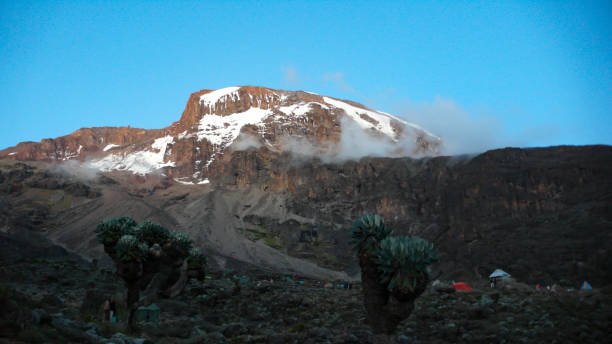
The route also provides impressive scenery around Mawenzi, Kilimanjaro's rugged secondary volcanic peak.
After reaching the upper mountain near Kibo, climbers attempt the summit and later descend using the Marangu side, creating a traverse rather than returning along the same northern approach.
Rongai Route Highlights
- Northern Kilimanjaro approach
- Generally quieter early trail
- Open wilderness scenery
- Simba Camp
- Second Cave area
- Kikelewa landscape
- Mawenzi Tarn scenery
- Kibo summit base
- Gilman's Point
- Uhuru Peak attempt
- Descent through the Marangu side
6 Day Rongai Kilimanjaro Climb Itinerary
DAY
01
NORTHERN APPROACH
Moshi to Rongai Gate and Simba Camp
The 6 Day Rongai Kilimanjaro Climb normally begins with a transfer from Moshi around the mountain toward the northern Kilimanjaro entrance.
After completing the required Kilimanjaro National Park registration and mountain preparations, begin trekking from the Rongai or Nalemoru Gate area.
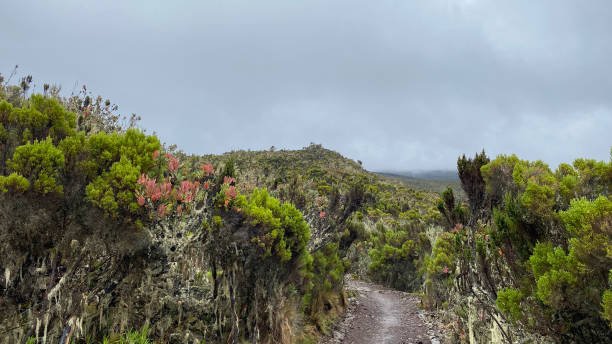
The trail climbs through cultivated lower slopes and forest before gradually opening into heath and more expansive northern mountain scenery.
The northern environment can feel quieter than Kilimanjaro's busier southern approaches.
Walk slowly while your guide establishes the pace that will be used throughout the higher stages of the climb.
Reach Simba Camp at approximately 2,600 metres for the first mountain night.
Day 1 Highlights
- Transfer around Kilimanjaro's northern side
- Rongai Gate registration
- Quieter northern trail
- Forest and heath landscapes
- Introduction to mountain pace
- Simba Camp overnight
Accommodation
Simba Camp at approximately 2,600 m.
Meals
Lunch and dinner during the mountain program.
Terrain
Lower northern slopes, forest and heath with a gradual first day ascent.
DAY
02
SECOND CAVE & KIKELEWA
Simba Camp to Second Cave and Kikelewa Camp
After breakfast, leave Simba Camp and continue higher through increasingly open heath and moorland.
The trail normally reaches the Second Cave area during the day's trek, providing a useful intermediate stage before continuing toward Kikelewa.
On clear days, the northern side can provide broad views toward the Kenyan plains and impressive perspectives of Kibo.
After Second Cave, continue across more remote terrain toward the Kikelewa area.
The landscape becomes more rugged as the route gradually approaches Mawenzi.
Reach Kikelewa Camp at roughly 3,600 metres for the second mountain night.
Day 2 Highlights
- Open northern moorland
- Second Cave area
- Possible Kibo views
- Possible views toward Kenya
- Remote mountain terrain
- Kikelewa Camp overnight
Accommodation
Kikelewa Camp area at roughly 3,600 m.
Meals
Breakfast, lunch and dinner.
Route
Simba Camp → Second Cave area → Kikelewa Camp.
DAY
03
MAWENZI APPROACH
Kikelewa Camp to Mawenzi Tarn
Day 3 continues toward one of the most dramatic parts of the Rongai Route.
Leave Kikelewa and climb toward the rugged slopes surrounding Mawenzi.
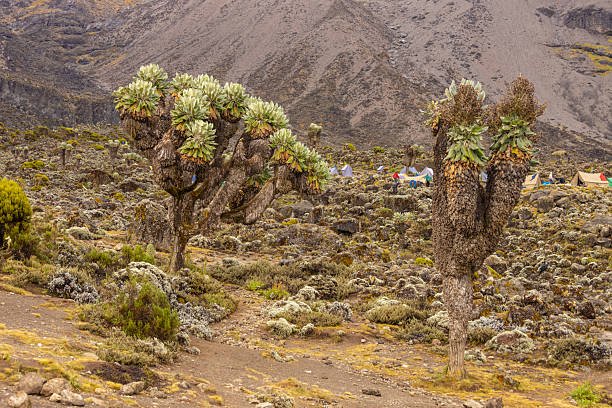
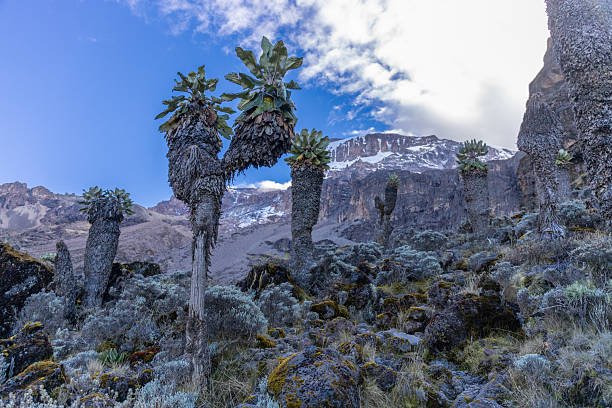
The vegetation becomes increasingly sparse while the landscape becomes more alpine and exposed.
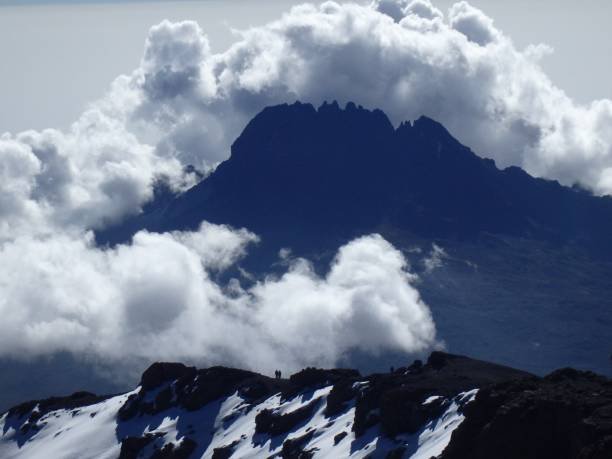
Mawenzi's jagged volcanic profile dominates the scenery as the route approaches Mawenzi Tarn.
Reach the Mawenzi Tarn Camp area at approximately 4,300 metres.
Depending on arrival time, weather and participant condition, your guide may incorporate a gentle additional acclimatisation walk before returning to camp.
Important Altitude Stage
Mawenzi Tarn places climbers above 4,000 metres before the route continues toward Kibo. A controlled pace, regular hydration and honest communication about altitude symptoms are important at this stage.
Day 3 Highlights
- Higher altitude ascent
- Increasingly alpine scenery
- Dramatic Mawenzi views
- Mawenzi Tarn landscape
- Possible additional acclimatisation walk
- Overnight above 4,000 m
Accommodation
Mawenzi Tarn Camp area at approximately 4,300 m.
Meals
Breakfast, lunch and dinner.
Terrain
High alpine environment beneath the rugged slopes of Mawenzi.
DAY
04
THE SADDLE TO KIBO
Mawenzi Tarn to Kibo
After breakfast, leave Mawenzi Tarn and begin traversing the high alpine terrain between Mawenzi and Kibo.
The landscape becomes increasingly barren, with very little vegetation across the broad volcanic saddle.
This section provides impressive contrasts between the jagged Mawenzi peak and the broad summit cone of Kibo.
Walk slowly and conserve energy as the route approaches approximately 4,700 metres.
Arrive in the Kibo area and prepare for the overnight summit attempt.
Eat, hydrate, organise warm clothing, gloves, headlamp and water, and rest as much as possible before departure.
Day 4 Highlights
- Departure from Mawenzi Tarn
- Crossing the high saddle
- Views between Mawenzi and Kibo
- Alpine desert terrain
- Arrival in the Kibo area
- Summit preparation and briefing
Accommodation
Kibo area at approximately 4,700 m according to the confirmed mountain arrangement.
Meals
Breakfast, lunch and dinner before summit preparation.
Route
Mawenzi Tarn → high saddle → Kibo summit base.
DAY
05
SUMMIT DAY
Kibo to Gilman's Point, Uhuru Peak and Horombo
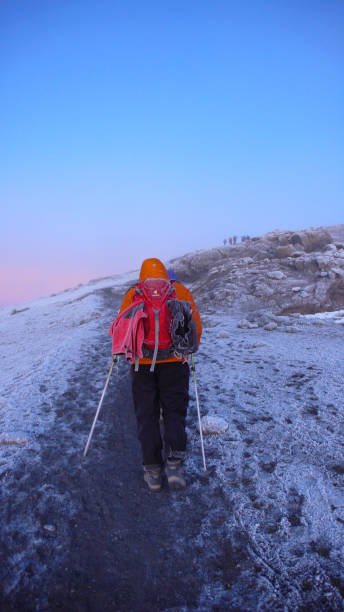
The summit attempt normally begins during the night after a limited period of rest in the Kibo area.
Climbers dress in warm summit layers, prepare headlamps and begin ascending slowly through steep volcanic terrain.
Darkness, freezing temperatures, fatigue and extreme altitude combine to make this the most demanding stage of the Rongai climb.
The first major summit objective is Gilman's Point at approximately 5,685 metres on Kilimanjaro's crater rim.
Climbers who reach Gilman's Point in suitable condition may continue around the crater rim toward Uhuru Peak at 5,895 metres.
The final section remains difficult because it is completed at extreme altitude after the steep overnight ascent.
After reaching the highest safe point, descend through the Kibo area and continue down the Marangu side toward Horombo.
Summit Safety
The Rongai itinerary includes an attempt to reach Uhuru Peak but cannot guarantee summit success. Altitude symptoms, exhaustion, weather or other safety concerns may require an earlier turnaround, and professional guide decisions should always be followed.
Day 5 Highlights
- Overnight summit departure
- Steep volcanic terrain
- Gilman's Point at approximately 5,685 m
- Uhuru Peak attempt at 5,895 m
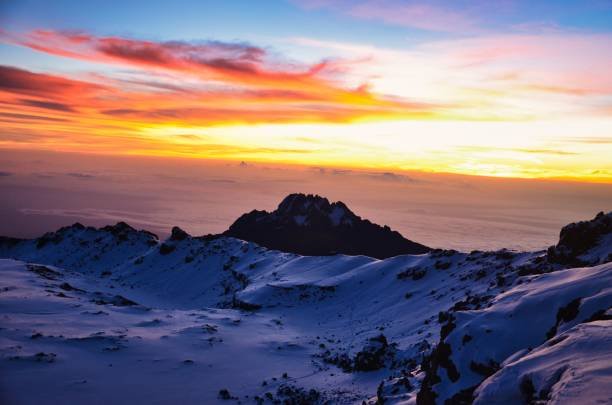
- Possible sunrise around the crater rim
- Long descent from Kibo
- Horombo overnight
Accommodation
Horombo area after the summit attempt.
Highest Objective
Uhuru Peak at 5,895 m when safely reached.
Summit Stage
A very long overnight ascent and descent depending on pace, altitude response, weather and turnaround point.
DAY
06
MARANGU DESCENT
Horombo to Marangu Gate and Moshi
After breakfast, begin the final descent through Kilimanjaro's eastern and southeastern landscapes.
Walk downhill through open moorland toward the Mandara area before entering the lower rainforest.
The descent is long, and legs can remain tired after summit day.
Trekking poles may help reduce strain on the knees and provide better stability on wet or uneven trail sections.
Reach Marangu Gate and complete the required Kilimanjaro National Park exit procedures.
Meet your return vehicle and travel to Moshi after completing the six day Rongai Kilimanjaro climb.
Day 6 Highlights
- Breakfast at Horombo
- Moorland descent
- Mandara area
- Rainforest descent
- Marangu Gate arrival
- Completion of the Rongai traverse
- Return to Moshi
Accommodation
Return to Moshi after completing the climb.
Meals
Breakfast and lunch during the mountain program.
Descent
Horombo → Mandara area → Marangu Gate.
What Makes Rongai Different from Other Kilimanjaro Routes?
The Rongai Route begins on the northern side of Kilimanjaro rather than approaching from the south or west.
This gives travellers a different perspective of the mountain and creates a more complete traverse because the descent finishes on the Marangu side.
The early trail often feels more remote, while the middle stages provide impressive views toward Mawenzi.
The route ultimately joins the upper Kibo summit approach used from the eastern side of the mountain.
Northern Kilimanjaro Scenery
The northern side of Kilimanjaro has a different character from the wetter southern slopes.
The landscape gradually opens after the lower forest and provides broad heath and moorland views.
When visibility is good, trekkers may see across the northern plains and toward Kenya.
As elevation increases, Mawenzi and Kibo become the dominant mountain features.
Simba Camp
Simba Camp is the first overnight stage of the Rongai Route.
It provides a relatively gentle introduction to the northern side before the itinerary begins gaining more significant elevation.
The following day leads through Second Cave toward the higher Kikelewa area.
Second Cave on the Rongai Route
Second Cave is an important landmark during the ascent from Simba toward Kikelewa.
The surrounding terrain is more open than the lower forest, with increasingly expansive views when weather conditions allow.
On the six day itinerary, the route normally continues beyond this area toward Kikelewa rather than using Second Cave as a separate overnight stop.
Kikelewa Camp
Kikelewa marks the transition toward the more dramatic Mawenzi side of the Rongai Route.
The landscape becomes increasingly rugged and remote as the climb moves higher.
This stage also places climbers at an elevation where altitude effects can become more noticeable.
Mawenzi Tarn Experience
Mawenzi Tarn is one of the major scenic highlights of the Rongai Route.
The camp sits beneath the rugged slopes of Mawenzi and provides a dramatic contrast to the broader slopes of Kibo.
Its elevation above 4,000 metres also makes it an important acclimatisation stage before the traverse toward Kibo.
Mawenzi Is a Major Part of the Rongai Experience
Rongai gives climbers a close perspective of Mawenzi's jagged volcanic landscape before they cross the saddle toward Kibo. This makes the route visually different from many Kilimanjaro approaches.
Crossing the Saddle Between Mawenzi and Kibo
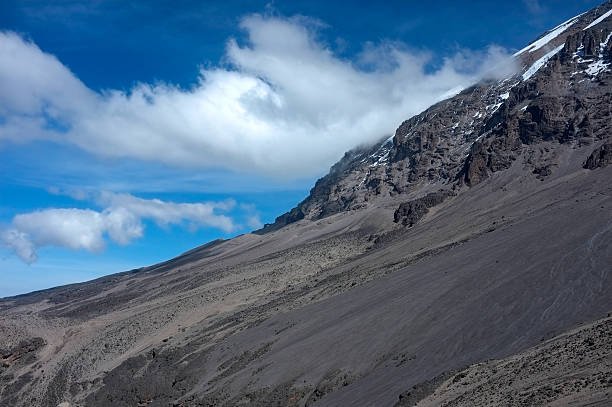
The traverse from Mawenzi toward Kibo crosses a broad, high altitude volcanic landscape.
Vegetation becomes extremely sparse and the environment feels exposed and remote.
Mawenzi rises dramatically on one side while the smoother summit cone of Kibo dominates the route ahead.
Although the terrain can appear relatively gentle in places, the elevation makes a slow pace important.
Kibo Summit Base
The Kibo area is the final staging point before the Rongai summit attempt.
At approximately 4,700 metres, the environment is cold, dry and exposed.
Climbers normally spend only a limited period resting before the overnight ascent begins.
Warm clothing, headlamp, water, gloves and other summit equipment should be prepared before attempting to sleep.
Gilman's Point on the Rongai Route
Gilman's Point at approximately 5,685 metres is the main crater rim objective approached during the standard Rongai summit ascent.
Reaching the crater rim requires a long and steep overnight climb from Kibo.
Climbers who arrive at Gilman's Point in suitable condition may continue toward Uhuru Peak.
Uhuru Peak at 5,895 Metres
Uhuru Peak is the highest point on Mount Kilimanjaro and the principal summit objective of the climb.
The route continues around the crater rim from Gilman's Point when climbers remain healthy enough to proceed.
Even though parts of the crater rim can feel less steep than the ascent below, the extreme altitude makes progress demanding.
Reaching Uhuru Peak can never be guaranteed.
Summit Goal, Safe Descent
Uhuru Peak is the goal, but a successful Kilimanjaro climb must also include a safe return. Professional guide assessment should determine whether continuing higher remains appropriate for each participant.
How Difficult Is the 6 Day Rongai Kilimanjaro Climb?
The Rongai Route is primarily a high altitude trek and normally does not require technical mountaineering skills.
The physical challenge comes from consecutive trekking days, increasing elevation, cold upper mountain conditions and the long summit ascent and descent.
The six day itinerary is relatively compact, making good preparation and careful pacing important.
Regular hiking, cardiovascular training and leg strengthening can help travellers prepare for the physical workload.
Altitude and Acclimatisation on Rongai
The Rongai Route gains elevation progressively through Simba, Kikelewa and Mawenzi before reaching Kibo.
Mawenzi Tarn provides valuable time above 4,000 metres before the route continues across the saddle.
However, altitude sickness remains possible and cannot be prevented simply by being physically fit.
Climbers should report headache, nausea, dizziness, unusual weakness, confusion or coordination problems to their guide immediately.
Altitude Response Is Individual
Two climbers following the same Rongai itinerary may react very differently to elevation. Walking slowly, conserving energy and communicating honestly with your guide remain important throughout the climb.
6 Day vs 7 Day Rongai Route
6 Day Rongai: Uses a compact northern itinerary, commonly combining Second Cave and the progression toward Kikelewa within the same trekking day.
7 Day Rongai: Can provide an additional mountain day and a more gradual progression depending on the exact itinerary used.
The extra time of a longer itinerary can provide additional opportunity for acclimatisation before summit night.
Travellers with schedule flexibility should consider altitude adjustment when choosing the duration rather than basing the decision only on trip length or price.
Rongai vs Machame Route
The Rongai and Machame Routes provide very different Kilimanjaro experiences.
Rongai approaches from the quieter northern side and features Mawenzi Tarn, the high saddle and a Marangu descent.
Machame approaches from the south and includes Shira Plateau, Lava Tower, Barranco Wall, Karanga and Barafu.
Travellers interested in a quieter northern approach may prefer Rongai, while those prioritising the dramatic southern circuit can consider Machame.
Rongai vs Marangu Route
Both routes use the eastern summit approach toward Gilman's Point, but their lower and middle stages are different.
Marangu ascends and descends mainly on the southeastern side and uses permanent huts.
Rongai approaches from the north, normally uses camping during much of the ascent and later joins the Marangu side for the summit descent.
This makes Rongai particularly attractive to travellers wanting a more varied traverse across Kilimanjaro.
Is the 6 Day Rongai Route Suitable for Beginners?
Fit and well prepared beginners can consider the six day Rongai Route.
The trail normally does not require technical climbing experience and many sections use straightforward trekking terrain.
However, the summit stage and high altitude remain demanding.
First time high altitude travellers with enough time can also consider a longer itinerary for additional acclimatisation.
Who Is the 6 Day Rongai Kilimanjaro Climb Best For?
- Fit and active travellers
- Travellers wanting a quieter Kilimanjaro approach
- Adventure travellers
- Regular hikers
- Well prepared first time climbers
- Travellers interested in Mawenzi scenery
- People who enjoy mountain camping
- Solo travellers joining suitable departures
- Couples and friends
- Private trekking groups
Accommodation on the Rongai Route
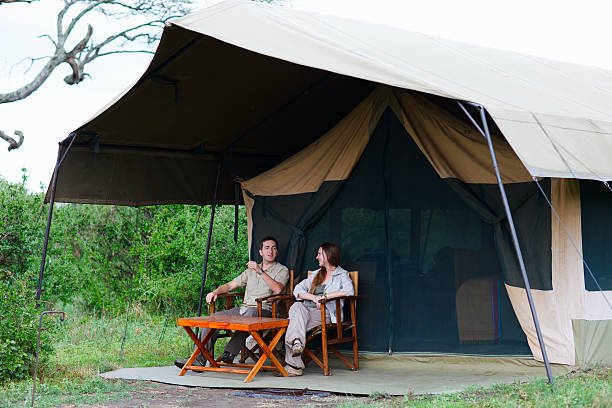
The northern ascent normally involves mountain camping at established locations such as Simba, Kikelewa and Mawenzi Tarn.
As the route joins the eastern side near Kibo and later descends through Marangu, accommodation arrangements can include established mountain facilities according to the confirmed itinerary.
Travellers should check the exact camping and hut arrangement included in their package before departure.
A warm sleeping bag remains essential throughout the climb.
Professional Kilimanjaro Guides
Professional mountain guides lead the Rongai climb from the northern approach through the summit attempt and final Marangu descent.
They manage daily pacing, route timing, participant monitoring, altitude decisions and summit procedures.
Their role becomes especially important once climbers move above 4,000 metres and approach Kibo.
Participants should communicate symptoms honestly throughout the itinerary.
Private 6 Day Rongai Kilimanjaro Climb
The Rongai Route can be organised privately for solo travellers, couples, friends or suitable groups.
A private departure allows the mountain team to focus on one travelling party and provides greater control over group composition.
The altitude and physical challenge remain unchanged, so private service does not guarantee summit success.
Group 6 Day Rongai Kilimanjaro Climb
Travellers can also join a scheduled group departure when suitable Rongai dates are available.
A group climb can be attractive to solo travellers and people who enjoy sharing the expedition with other participants.
Group members may still walk at different speeds and respond differently to altitude, particularly on summit night.
What to Pack for the 6 Day Rongai Kilimanjaro Climb
- Waterproof trekking boots
- Waterproof jacket and trousers
- Warm insulated summit jacket
- Thermal base layers
- Fleece and insulating layers
- Trekking trousers
- Warm summit hat
- Sun hat
- Warm gloves
- Hiking socks
- Daypack
- Warm sleeping bag
- Headlamp with spare batteries
- Sunglasses and sunscreen
- Reusable water bottles or hydration system
- Trekking poles
- Personal medication
- Duffel bag according to the confirmed climbing arrangement
Typical 6 Day Rongai Kilimanjaro Climb Inclusions
- Kilimanjaro National Park charges stated in the confirmed package
- Professional Kilimanjaro mountain guides
- Mountain support crew as specified
- Mountain accommodation stated in the confirmed itinerary
- Camping equipment stated in the confirmed package
- Mountain meals as specified
- Drinking water during the climb
- Transfer from Moshi to the Rongai starting point
- Marangu Gate to Moshi return transfer
- Mountain support services stated in the confirmed package
Typical 6 Day Rongai Kilimanjaro Climb Exclusions
- International flights
- Tanzania visa fees
- Travel and medical insurance
- Guide and crew tips
- Personal trekking equipment unless specified
- Equipment rental unless included
- Personal expenses
- Hotel accommodation unless stated
- Airport transfers unless included
- Safari extensions unless included
- Zanzibar extensions unless included
Best Time for the Rongai Route
Mount Kilimanjaro can be climbed during much of the year, with January to early March and approximately June through October commonly selected periods.
The Rongai Route's northern position can appeal to travellers interested in a comparatively drier side of the mountain, although rainfall and changing mountain weather remain possible throughout the year.
December is also popular for Christmas and New Year summit departures.
Regardless of the travel month, climbers should prepare for sunshine, rain, wind and freezing summit temperatures.
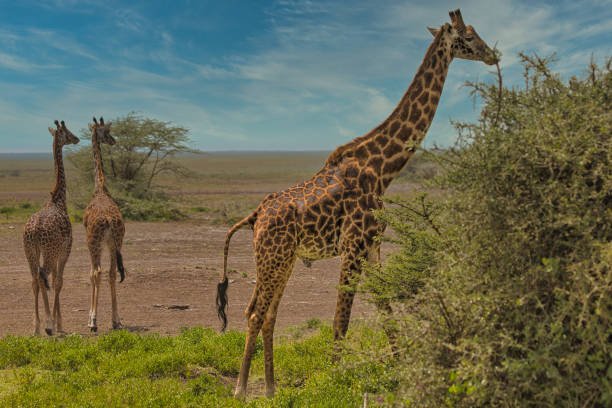
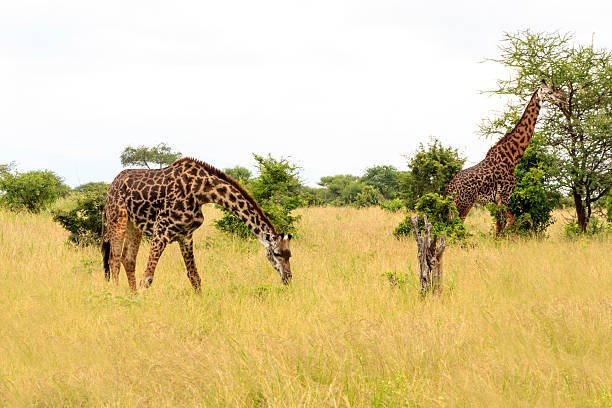
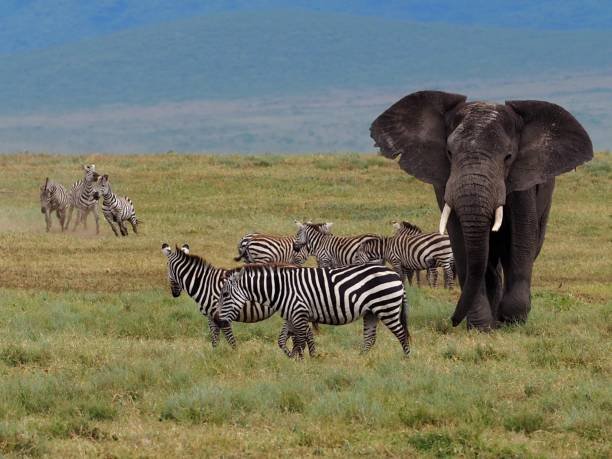
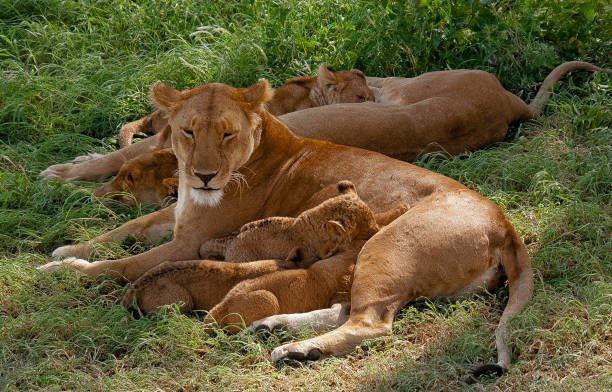
Combine Rongai with a Tanzania Safari
After descending through Marangu Gate and returning to Moshi, travellers can continue with a northern Tanzania wildlife safari.
Popular destinations include Tarangire National Park, Ngorongoro Crater, Serengeti National Park and Lake Manyara.
A Zanzibar extension can also be added after the Kilimanjaro and safari experience.
Frequently Asked Questions
What is the 6 Day Rongai Kilimanjaro Climb?
It is a six day Mount Kilimanjaro summit itinerary approaching from the northern Rongai side before joining the Kibo summit route and descending through Marangu.
Where does the Rongai Route start?
The route begins on the northern side of Mount Kilimanjaro in the Rongai or Nalemoru Gate area.
Where does the Rongai Route finish?
After the summit attempt, climbers normally descend on the Marangu side and finish at Marangu Gate.
Is Rongai quieter than other Kilimanjaro routes?
The northern approach is often chosen by travellers looking for a quieter early climbing experience, although actual trail traffic varies by season and departure date.
Does the route visit Mawenzi Tarn?
Yes. Mawenzi Tarn is a major scenic and altitude stage on the standard six day Rongai itinerary.
Does the six day Rongai Route attempt Uhuru Peak?
Yes. The itinerary includes an overnight summit attempt through Gilman's Point toward Uhuru Peak at 5,895 metres.
What is Gilman's Point?
Gilman's Point is a crater rim point at approximately 5,685 metres reached during the standard summit ascent from the Kibo side.
Does Rongai use camps or huts?
Much of the northern ascent uses mountain camping, while the route joins established facilities around the Kibo and Marangu side according to the confirmed itinerary.
Is the Rongai Route good for acclimatisation?
The route progresses through several altitude stages and includes time around Mawenzi before Kibo, but altitude sickness remains possible on any Kilimanjaro route.
Is the 6 day Rongai Route suitable for beginners?
Fit and well prepared beginners can consider it, although first time high altitude climbers with additional time may prefer a longer itinerary for more acclimatisation.
Is the Rongai Route technical?
The standard Rongai climb is primarily a high altitude trek and normally does not require technical mountaineering skills.
Can I add a safari after the Rongai climb?
Yes. After returning to Moshi, travellers can continue to Tarangire, Ngorongoro Crater, Serengeti, Lake Manyara or Zanzibar.
Plan Your 6 Day Rongai Kilimanjaro Climb
Share your preferred climbing date, number of travellers and whether you prefer a private or group departure to receive your personalised 6 Day Rongai Kilimanjaro Climb itinerary, inclusions, exclusions and complete quotation.
Plan Your Rongai Kilimanjaro Climb