6 Day Rongai Kilimanjaro Trekking Tour
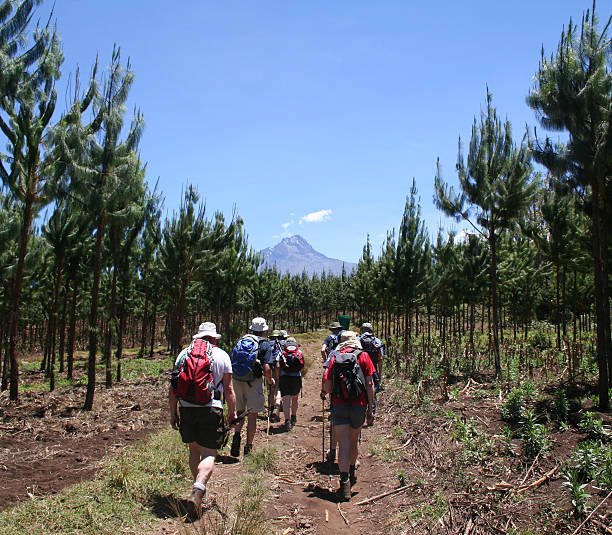
The 6 Day Rongai Kilimanjaro Trekking Tour is a six day camping climb approaching Mount Kilimanjaro from its northern side before crossing the high mountain toward Kibo and descending through the Marangu Route.
The journey begins from the Rongai or Nalemoru entrance area and follows a progressively rising trail toward Simba Camp.
The route then continues through the Second Cave and Kikelewa areas before reaching Mawenzi Tarn beneath the rugged Mawenzi massif.
From Mawenzi, climbers cross the exposed high altitude saddle toward the Kibo summit base.
The summit attempt normally begins during the night, climbing toward Gilman’s Point on the crater rim before continuing toward Uhuru Peak where health and conditions allow.
After the summit section, climbers descend on the southeastern side of Kilimanjaro toward the Horombo area and finally Marangu Gate.
The combination of a northern ascent and southeastern descent allows climbers to experience different sides of the mountain during one trek.
Professional guides manage trekking pace, altitude monitoring, summit planning and safety throughout the tour.
Reaching Uhuru Peak remains an objective rather than a guarantee because altitude response, weather and individual health can affect every Kilimanjaro climb.
6 Day Rongai Kilimanjaro Trekking Tour at a Glance
- Duration: 6 trekking days and 5 mountain nights.
- Route: Rongai Route.
- Approach: Northern side of Mount Kilimanjaro.
- Starting area: Rongai or Nalemoru entrance.
- Finishing point: Marangu Gate.
- Accommodation: Mountain camping according to the confirmed Rongai arrangements.
- Summit objective: Uhuru Peak at approximately 5,895 metres.
- Day 1: Rongai entrance to Simba Camp.
- Day 2: Simba Camp via Second Cave toward Kikelewa Camp.
- Day 3: Kikelewa to Mawenzi Tarn.
- Day 4: Mawenzi Tarn to Kibo summit base.
- Day 5: Kibo to Uhuru Peak and descent toward Horombo.
- Day 6: Horombo area to Marangu Gate.
Why Choose the 6 Day Rongai Kilimanjaro Trekking Tour?
The Rongai Route provides a different approach to Kilimanjaro from routes beginning on the southern and western sides of the mountain.
The itinerary progresses through the northern slopes before reaching the striking Mawenzi region and crossing the high saddle toward Kibo.
The descent follows a different side of Kilimanjaro toward Marangu, creating a varied point to point mountain journey.
The six day itinerary also includes a night near Mawenzi before the approach to Kibo, providing an important period at higher elevation before summit night.
Main Rongai Route Highlights
- Northern Kilimanjaro approach
- Simba Camp
- Second Cave area
- Kikelewa Camp
- Mawenzi mountain scenery
- Mawenzi Tarn overnight
- High altitude saddle crossing
- Kibo summit base
- Overnight summit attempt
- Gilman’s Point
- Uhuru Peak objective
- Descent toward Horombo and Marangu Gate
Detailed 6 Day Rongai Kilimanjaro Trekking Tour Itinerary
DAY
01
RONGAI ENTRANCE – SIMBA CAMP
Begin the Northern Kilimanjaro Trek
Your 6 Day Rongai Kilimanjaro Trekking Tour begins with transportation toward the northern side of Mount Kilimanjaro.
After reaching the Rongai or Nalemoru entrance area, the climbing team completes the required registration and park procedures.
Porter loads and expedition equipment are organised while climbers prepare their daypacks.
The trek then begins through the lower northern mountain environment toward Simba Camp.
Day 1 Trekking Experience
- Travel toward the Rongai entrance.
- Complete Kilimanjaro registration.
- Meet the mountain crew.
- Begin the northern route.
- Walk through changing lower mountain vegetation.
- Reach Simba Camp for the first overnight.
The first day allows climbers to establish a steady mountain walking rhythm before the route moves into higher elevations.
Guides normally encourage slow movement from the beginning rather than waiting until altitude becomes noticeable.
On arrival at Simba Camp, the crew prepares the campsite, meals and drinking water arrangements.
Accommodation
Mountain tent at Simba Camp.
Meals
Meals according to the confirmed trekking package.
Route
Northern Kilimanjaro approach toward Simba Camp.
DAY
02
SIMBA CAMP – SECOND CAVE – KIKELEWA CAMP
Trek Deeper Into the Northern Slopes
After breakfast, leave Simba Camp and continue gaining altitude across increasingly open terrain.
The day's route moves toward the Second Cave area before continuing toward Kikelewa.
Vegetation becomes lower as the trek moves away from the lower mountain environment.
Day 2 Highlights
- Leave Simba Camp.
- Gain additional elevation.
- Pass through the Second Cave area.
- Experience increasingly open landscapes.
- Continue toward Kikelewa.
- Camp at higher elevation.
As altitude increases, climbers should maintain a controlled pace even when the trail feels comfortable.
Your guide continues observing the group and encourages regular communication about headache, nausea, unusual fatigue or other symptoms.
After reaching Kikelewa, rest while the crew prepares camp and the evening meal.
Accommodation
Mountain tent at Kikelewa Camp.
Meals
Breakfast, lunch and dinner according to the confirmed package.
Main Route
Simba Camp through Second Cave toward Kikelewa.
DAY
03
KIKELEWA – MAWENZI TARN
Climb Toward Mawenzi
After breakfast, continue climbing from Kikelewa toward the dramatic Mawenzi section of Mount Kilimanjaro.
The route gains meaningful elevation while the terrain becomes increasingly alpine and exposed.
Mawenzi's rugged volcanic profile becomes increasingly prominent as climbers approach the Tarn area.
Mawenzi Day Highlights
- Leave Kikelewa Camp.
- Gain substantial elevation.
- Enter increasingly alpine terrain.
- Approach the Mawenzi massif.
- Reach the Mawenzi Tarn area.
- Use the afternoon for rest or controlled acclimatization activity where appropriate.
The shorter trekking section compared with summit day gives climbers time to rest after arriving near Mawenzi.
Where conditions and health allow, your guide may include a controlled acclimatization walk before returning to camp.
The purpose is to gain additional altitude exposure without exhausting climbers before the approach toward Kibo.
Accommodation
Mountain tent in the Mawenzi Tarn area.
Meals
Breakfast, lunch and dinner according to the confirmed itinerary.
Main Focus
Higher altitude exposure, Mawenzi scenery and summit preparation.
DAY
04
MAWENZI TARN – KIBO SUMMIT BASE
Cross the High Altitude Saddle
After breakfast, leave the Mawenzi area and begin crossing the high altitude saddle separating Mawenzi from the main Kibo massif.
The landscape becomes increasingly open, dry and exposed with very limited vegetation.
This stage gives climbers impressive perspectives of the two major high mountain formations while moving toward summit base.
Mawenzi to Kibo Highlights
- Leave the Mawenzi Tarn area.
- Cross exposed alpine desert.
- Travel across the high altitude saddle.
- Approach the Kibo massif.
- Reach the summit base area.
- Prepare for the overnight summit attempt.
At this altitude, even an apparently gentle trail may require considerable effort.
The guide therefore maintains a slow and controlled pace.
After reaching Kibo summit base, organise summit clothing, headlamp, gloves, water and other essential equipment.
Eat, hydrate and attempt to rest before the summit climb begins during the night.
Accommodation
Mountain camping arrangement in the Kibo summit base area according to the confirmed itinerary.
Meals
Meals according to the confirmed climbing package.
Preparation
Rest and organise equipment for summit night.
DAY
05
KIBO – GILMAN’S POINT – UHURU PEAK – HOROMBO
Rongai Route Summit Attempt
Day five is normally the longest and most demanding stage of the 6 Day Rongai Kilimanjaro Trekking Tour.
Climbers wake during the night and prepare for the summit ascent in cold and dark conditions.
Using headlamps, the group begins climbing slowly above the Kibo area toward the crater rim.
Summit Night Priorities
- Follow the guide's pace.
- Use appropriate summit layers.
- Keep hands, head and face protected from cold.
- Drink when conditions allow.
- Report symptoms immediately.
- Avoid racing other climbers.
- Accept descent when continuing becomes unsafe.
The first major summit objective is normally Gilman’s Point on the crater rim.
The ascent is steep and completed at extreme altitude, making slow movement particularly important.
Climbers who remain healthy enough to continue may proceed around the crater rim toward Uhuru Peak.
Uhuru Peak stands at approximately 5,895 metres above sea level and represents the highest point on Mount Kilimanjaro.
Time at the summit is normally limited by altitude, weather, cold and the need to begin the descent.
After the summit section, descend toward Kibo before continuing farther down on the Marangu side toward the Horombo area.
The combination of the overnight ascent and long descent makes this a physically demanding day.
Summit Objective
Uhuru Peak, subject to health, acclimatization and mountain conditions.
Descent
Return through Kibo and continue toward the Horombo area.
Accommodation
Mountain overnight arrangement in the Horombo area according to the confirmed package.
DAY
06
HOROMBO – MARANGU GATE
Final Descent Through the Marangu Side
After breakfast, begin the final descent toward Marangu Gate.
The trail travels downward through moorland before eventually returning to the thicker rainforest environment.
As elevation decreases, temperatures generally become warmer and the vegetation becomes denser.
Final Day Experience
- Leave the Horombo area.
- Descend through moorland.
- Continue into rainforest.
- Reach Marangu Gate.
- Complete mountain exit procedures.
- Receive the applicable summit certificate where eligible.
- Transfer toward Moshi or another agreed destination.
The change from the northern ascent to the Marangu descent provides a different landscape during the final stages of the tour.
At Marangu Gate, the trekking section of your six day Rongai journey officially ends.
Finish
Marangu Gate.
Meals
Breakfast and other meals according to the confirmed arrangement.
Transfer
Marangu Gate to the agreed final destination.
Rongai Route Northern Approach
The Rongai Route approaches Kilimanjaro from the northern side of the mountain.
This distinguishes it geographically from Machame, Lemosho and several other popular ascent routes beginning farther south or west.
The northern approach eventually moves toward Mawenzi and Kibo before joining the summit corridor used from the eastern side of the mountain.
Simba Camp
Simba Camp is normally the first overnight destination on the six day Rongai itinerary.
Reaching the camp provides the first opportunity to settle into the rhythm of mountain camping and prepare for the higher stages ahead.
Temperatures normally become cooler after sunset, making warm camp clothing useful even before reaching extreme altitude.
Second Cave
The Second Cave area forms part of the route between Simba and the higher northern camps.
Passing through this section gives climbers another opportunity to observe how the landscape changes as altitude increases.
The guide continues controlling the walking pace even when climbers still feel strong.
Kikelewa Camp
Kikelewa provides an intermediate high altitude stop before the route climbs toward Mawenzi.
The environment is considerably more open than the lower parts of Kilimanjaro.
Climbers should expect cooler nights and increasingly noticeable effects from altitude.
Mawenzi Tarn
Mawenzi Tarn is one of the most distinctive locations on the Rongai Route.
The camp lies beneath the rugged slopes of Mawenzi, Kilimanjaro's second major high mountain massif.
Its position provides an important higher altitude overnight before climbers move across the saddle toward Kibo.
Mawenzi Tarn Experience
- Higher altitude mountain camp
- Dramatic Mawenzi scenery
- Opportunity for additional altitude exposure
- Time to rest before crossing the saddle
- Important stage before Kibo summit base
Mawenzi Mountain Scenery
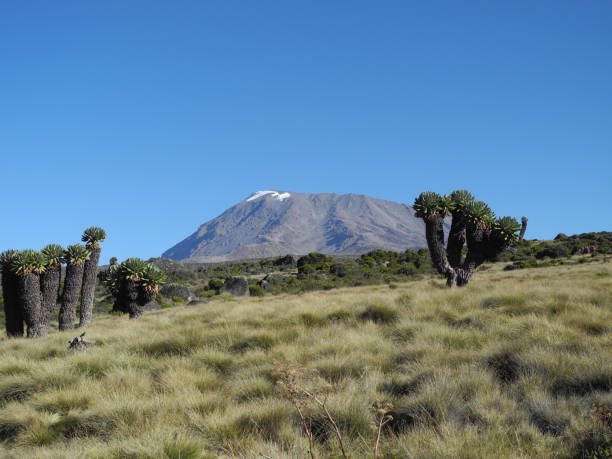
Mawenzi has a rugged volcanic profile that looks very different from the broader Kibo summit massif.
The Rongai Route provides close views of this section of Kilimanjaro when cloud and weather conditions allow.
The high mountain scenery can change rapidly as clouds move across the terrain.
Crossing the Kilimanjaro Saddle
The saddle between Mawenzi and Kibo is a broad, exposed high altitude landscape.
Vegetation becomes extremely limited as climbers cross toward the summit base.
Although parts of the terrain appear gradual, the elevation means that walking can feel considerably harder than at lower camps.
Kibo Summit Base
The Kibo area is the final base before the summit attempt.
Climbers normally reach the area during the afternoon, eat and organise their equipment before attempting to rest.
The environment is cold, exposed and located at high altitude.
The guide conducts a summit briefing and checks that important clothing and equipment are ready before departure.
Gilman’s Point
Gilman’s Point is located on the crater rim and forms the first major summit objective from the Kibo side.
Reaching it requires a prolonged ascent through cold and very thin air.
The section should be approached slowly and according to guide instructions.
Uhuru Peak
Uhuru Peak stands at approximately 5,895 metres above sea level and is the highest point on Mount Kilimanjaro.
Climbers who reach the crater rim in suitable health may continue toward Uhuru where conditions permit.
The final section remains demanding because it is completed at extreme altitude after several hours of climbing.
Reaching Uhuru Peak should never take priority over climber safety.
Realistic Summit Expectations
- Altitude affects every climber differently.
- Physical fitness does not guarantee acclimatization.
- Cold and wind may increase difficulty.
- Weather can influence summit conditions.
- Guides may require descent for safety.
- Uhuru Peak cannot responsibly be guaranteed.
Altitude and Acclimatization
Altitude is one of the primary challenges of the 6 Day Rongai Kilimanjaro Trekking Tour.
As elevation increases, available oxygen decreases and the body requires time to adapt.
Climbers may experience headache, reduced appetite, disturbed sleep or fatigue as the route progresses.
More serious or worsening symptoms require immediate attention from the guide.
Helpful Acclimatization Practices
- Walk slowly.
- Avoid racing other climbers.
- Drink regularly.
- Eat where possible.
- Rest properly at camp.
- Attend health checks.
- Report symptoms honestly.
Daily Health Monitoring
Professional mountain guides monitor climber condition throughout the six day trek.
Health observations may include discussion of symptoms, general physical condition and pulse oximeter readings according to the operator's safety procedures.
No individual reading replaces assessment of symptoms and the climber's overall condition.
The guide may recommend slower movement, additional observation or descent when safety requires it.
Professional Rongai Route Guides
Professional Kilimanjaro guides lead the trek from the northern starting area through the summit attempt and final descent.
The guide team controls the pace, organises daily departures, monitors altitude response and coordinates the summit plan.
Mountain Guide Responsibilities
- Daily trekking briefings
- Route navigation
- Trekking pace management
- Altitude health observations
- Camp coordination
- Weather assessment
- Summit night planning
- Emergency response decisions
- Descent decisions when necessary
Porters and Mountain Crew
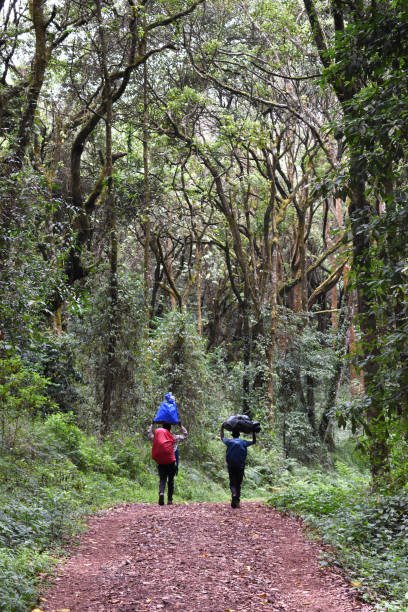
The Rongai Route is a supported Kilimanjaro camping trek.
Porters transport shared mountain equipment, camping supplies, food and permitted climber luggage between overnight locations.
A mountain cook prepares meals while the guide team focuses on climbers, route timing and safety.
Crew numbers depend on the number of climbers and applicable mountain requirements.
Camping on the Rongai Route
The Rongai Route normally uses camping arrangements rather than the hut based accommodation associated with a standard Marangu ascent.
Climbers sleep in mountain tents at designated camps throughout the northern ascent.
Typical Camping Arrangements
- Mountain sleeping tents
- Sleeping mattress
- Dining arrangements according to the package
- Cooking equipment
- Mountain meals
- Crew camping arrangements
Meals During the Rongai Trek
Meals are prepared by the mountain cook during the trek according to the confirmed package.
Breakfast, lunch and dinner are normally provided during the mountain itinerary, although exact meal timing depends on each day's route.
Appetite can decrease as altitude increases, making it important to eat where reasonably possible.
Dietary requirements should be provided before departure so suitable arrangements can be requested.
Drinking Water
Drinking water is collected and treated according to the confirmed mountain arrangements.
Climbers should carry suitable reusable bottles or a hydration system in their daypack.
Regular hydration supports normal physical function but does not guarantee protection from altitude sickness.
Fitness for the 6 Day Rongai Route
The Rongai Route is normally undertaken as a trekking route rather than a technical mountaineering climb.
However, the itinerary includes consecutive mountain days, significant altitude gain and an extremely demanding summit stage.
Good hiking fitness and endurance preparation are therefore important.
Recommended Physical Preparation
- Regular hiking
- Long endurance walks
- Hill training
- Stair training
- Cardiovascular exercise
- Leg strength training
- Walking with a daypack
- Using trekking boots before travelling
What to Bring for the Rongai Route
- Waterproof trekking boots
- Warm insulated jacket
- Waterproof shell jacket
- Waterproof trousers
- Thermal base layers
- Warm fleece
- Trekking trousers
- Warm gloves
- Warm hat
- Sun hat
- Trekking socks
- Headlamp
- Spare batteries
- Trekking poles
- Suitable sleeping bag
- Daypack
- Reusable water bottles
- Sunglasses
- Sunscreen
- Personal medication
- Personal toiletries
Typical 6 Day Rongai Kilimanjaro Trekking Tour Inclusions
- Applicable Kilimanjaro park arrangements stated in the package
- Transfer toward the Rongai starting area according to the itinerary
- Return transport from Marangu Gate according to the itinerary
- Professional Kilimanjaro guide
- Assistant guides according to group requirements
- Mountain cook
- Porter support
- Mountain camping tents
- Sleeping mattress
- Dining arrangements according to the package
- Mountain meals
- Drinking water arrangements
- First aid equipment
- Emergency oxygen according to the operator's mountain safety arrangements
- Pulse oximeter health monitoring
- Applicable summit certificate where eligible
Typical Rongai Route Exclusions
- International flights
- Tanzania visa
- Travel insurance
- Emergency evacuation insurance
- Personal trekking equipment
- Sleeping bag unless included or rented
- Personal medication
- Optional equipment rental
- Personal expenses
- Alcoholic beverages
- Tips for guides, cooks and porters
- Services not specifically listed in the confirmed quotation
Private 6 Day Rongai Kilimanjaro Trekking Tour
The Rongai Route can be arranged privately for solo travellers, couples, families, friends or larger groups.
A private trek gives the confirmed travelling party its own guide and support arrangements according to group size.
The mountain trail, park regulations and altitude challenges remain the same regardless of whether the trek is private or shared.
Group Rongai Kilimanjaro Trek
Group departures may be available when other climbers have compatible dates and the same route itinerary.
A group trek allows travellers to share the Kilimanjaro experience and selected operational costs.
Availability and group size should be confirmed before booking.
Rongai Route for Solo Travellers
Solo travellers can climb the Rongai Route privately or request a compatible group departure.
A private solo climb normally costs more per person because mountain guide and crew expenses are not divided among several climbers.
Rongai Route for Couples
Couples can reserve the six day Rongai itinerary privately with a mountain team organised around their booking.
This allows the guide to focus on the pace and health of two climbers throughout the route.
6 Day Rongai Versus 5 Day Rongai
Longer Rongai itineraries provide additional time on the mountain before summit night.
The six day version normally includes the Mawenzi Tarn stage before crossing toward Kibo.
This creates additional altitude exposure and mountain time compared with more compressed schedules.
Additional time can support acclimatization planning but cannot guarantee summit success.
Rongai Route Versus Marangu Route
Rongai and Marangu approach the upper mountain from different directions.
Rongai begins on the northern side and later descends through the Marangu side after the summit attempt.
A standard Marangu climb approaches and descends through the southeastern corridor.
Rongai primarily uses camping arrangements, while standard Marangu climbs are associated with the park's mountain hut system.
Rongai Route Versus Machame Route
The Rongai and Machame routes approach Kilimanjaro from different sides and use different camp sequences.
Machame approaches from the south and includes locations such as Shira, Lava Tower, Barranco and Barafu.
Rongai approaches from the north and includes Simba, Kikelewa, Mawenzi and Kibo before descending toward Marangu.
Both routes reach extreme altitude and require suitable preparation.
Best Time for the Rongai Route
Mount Kilimanjaro can be climbed during different periods of the year.
Weather varies with season and elevation, and no month can guarantee dry or clear mountain conditions.
Travellers should prepare for rain, cold, strong sun and freezing summit conditions regardless of their chosen dates.
Weather on the Rongai Route
Conditions change substantially as the route gains elevation.
Lower sections may be comparatively mild while Mawenzi, Kibo and the summit area can become very cold and exposed.
Cloud, rain, wind and temperature changes can occur quickly on Mount Kilimanjaro.
Cold Weather on Summit Night
Summit night normally takes place during the coldest part of the trekking schedule.
Climbers should use thermal base layers, insulation, wind protection, warm gloves and appropriate head protection.
Summit clothing should be tested before arriving in Tanzania rather than used for the first time on the mountain.
Safety on the Rongai Route
Mountain safety depends on preparation, responsible pacing, professional guide decisions and honest symptom reporting.
Climbers should never hide worsening altitude symptoms in an attempt to remain with the group or reach the summit.
Important Kilimanjaro Safety Principles
- Walk slowly at altitude.
- Attend daily health monitoring.
- Report symptoms early.
- Keep warm and waterproof clothing accessible.
- Follow guide instructions.
- Avoid competing with faster climbers.
- Accept descent when continuing becomes unsafe.
Travel Insurance
Climbers should arrange suitable travel insurance before beginning the Rongai trek.
The policy should be reviewed carefully for trekking, medical treatment and emergency evacuation at the required Kilimanjaro altitude.
Insurance arrangements remain the traveller's responsibility unless specifically stated otherwise in the confirmed package.
Equipment Rental
Selected mountain equipment may be available for rental before the trek.
Common Rental Items
- Sleeping bags
- Trekking poles
- Gaiters
- Duffel bags
- Warm jackets
- Selected waterproof clothing
- Other mountain equipment subject to availability
Porter Luggage
Porters transport permitted climber luggage and shared expedition equipment between mountain camps.
Climbers carry their own daypacks during the day's trek.
The porter transported duffel must remain within the applicable mountain weight allowance.
Daypack Essentials
- Drinking water
- Waterproof jacket
- Waterproof trousers
- Warm layer
- Sun protection
- Personal medication
- Snacks where appropriate
- Camera or phone
- Headlamp when required
- Warm gloves and hat at higher altitude
Responsible Rongai Route Trekking
The mountain environment should be treated responsibly throughout the trek.
Climbers should follow park rules, remain on authorised routes and avoid leaving waste behind.
Respect for guides, cooks, porters, park staff and other mountain visitors is an important part of responsible Kilimanjaro travel.
Important Information About the 6 Day Rongai Kilimanjaro Trekking Tour
The 6 Day Rongai Kilimanjaro Trekking Tour approaches Kilimanjaro from the northern side and normally finishes at Marangu Gate.
The itinerary includes six trekking days and five mountain nights.
The standard six day route travels through Simba, Kikelewa, Mawenzi Tarn and the Kibo summit base before the summit attempt.
The trail may pass through or near the Second Cave area during the journey toward Kikelewa.
The summit ascent normally begins during the night from the Kibo area.
Climbers generally aim for Gilman’s Point before continuing toward Uhuru Peak where health and conditions allow.
After the summit attempt, the route descends through the Marangu side toward Horombo and Marangu Gate.
Altitude can affect any climber regardless of fitness, age or previous trekking experience.
Weather can influence visibility, trail conditions and summit plans.
The professional mountain guide may require descent when continuing is considered unsafe.
Reaching Uhuru Peak cannot be guaranteed.
Why Book This 6 Day Rongai Kilimanjaro Trekking Tour?
The 6 Day Rongai Kilimanjaro Trekking Tour provides a distinctive northern approach to Mount Kilimanjaro before crossing toward Kibo and descending through a different side of the mountain.
The itinerary combines Simba Camp, Second Cave, Kikelewa, Mawenzi Tarn, the high altitude saddle, Kibo summit base, Gilman’s Point and the Uhuru Peak objective within six trekking days.
With professional mountain guides, porter support, camping arrangements, meals, drinking water and applicable Kilimanjaro logistics organised according to the confirmed package, climbers can focus on steady trekking, altitude adaptation and the changing mountain environment.
Frequently Asked Questions
What is the 6 Day Rongai Kilimanjaro Trekking Tour?
It is a six day Kilimanjaro camping trek that approaches from the northern side, climbs toward Kibo and descends through the Marangu side after the summit attempt.
Where does the Rongai Route start?
The route begins from the northern Kilimanjaro entrance commonly associated with the Rongai or Nalemoru area.
Where does the Rongai Route finish?
The standard Rongai descent finishes at Marangu Gate.
How many nights are spent on the mountain?
The standard six day itinerary includes five mountain nights.
Does Rongai use tents?
The Rongai Route is normally operated as a camping route with mountain tents and designated camps according to the confirmed itinerary.
Which camps are used on the six day Rongai Route?
The itinerary normally includes Simba, Kikelewa, Mawenzi Tarn and the Kibo summit base before descending toward the Horombo area.
Does the route visit Second Cave?
The six day route commonly passes through or near the Second Cave area while travelling from Simba toward Kikelewa.
Do we stay near Mawenzi?
Yes. The six day itinerary normally includes an overnight in the Mawenzi Tarn area before crossing the saddle toward Kibo.
When does the summit attempt begin?
The summit ascent normally begins during the night from the Kibo summit base area according to guide planning and conditions.
What is Gilman’s Point?
Gilman’s Point is a point on the crater rim reached during the summit ascent from the Kibo side before continuing toward Uhuru Peak where conditions allow.
How high is Uhuru Peak?
Uhuru Peak is approximately 5,895 metres above sea level.
Is summit success guaranteed?
No. Summit success depends on acclimatization, health, weather, mountain conditions and professional guide safety decisions.
Is the Rongai Route difficult?
The route does not normally require technical climbing skills, but reaching extreme altitude and completing summit night make it a demanding mountain trek.
Does Rongai descend the same way it climbs?
No. The route approaches from the north and normally descends through the Marangu side toward Marangu Gate.
Are professional guides included?
Professional Kilimanjaro guides are normally included according to the confirmed trekking package.
Are porters included?
Porter support is normally included according to group size and applicable mountain arrangements.
Are meals included?
Mountain meals are normally prepared by the climbing crew according to the confirmed itinerary.
Is drinking water provided?
Drinking water arrangements are normally included during the mountain trek according to the confirmed package.
Can mountain equipment be rented?
Selected items such as sleeping bags, trekking poles, gaiters, duffel bags and mountain clothing may be available for rental when arranged before departure.
Can the Rongai Route be booked privately?
Yes. Private Rongai climbs can be organised for solo travellers, couples, families, friends and groups.
How do I book the 6 Day Rongai Kilimanjaro Trekking Tour?
Provide your preferred climbing dates, number of climbers, private or group preference and equipment requirements so availability, mountain logistics and the final quotation can be confirmed.
Request Your 6 Day Rongai Kilimanjaro Trekking Tour
Share your preferred Kilimanjaro dates, number of climbers and private or group preference to receive a personalised 6 Day Rongai Kilimanjaro Trekking Tour with professional guides, mountain camping, Mawenzi Tarn, porter support, meals and applicable Kilimanjaro arrangements.
Book Your Rongai Kilimanjaro Trek