Airport Security Rules in Tanzania 2026-2027
Airport Security Rules in Tanzania 2026-2027 require passengers, cabin baggage and checked baggage to meet aviation security requirements before travelling on domestic or international flights.
Security procedures can include document checks, passenger screening, X-ray examination of baggage, metal detectors and additional inspection when required.
Travellers should prepare before arriving at the airport because prohibited or incorrectly packed items can delay screening and may need to be surrendered, repacked or removed from the journey.
Airline baggage rules can also differ from general airport security requirements, so passengers should check both.
Tanzania Airport Security at a Glance
- Passenger screening: Required before entering secure departure areas
- Cabin baggage: Subject to X-ray and security inspection
- Liquids: Usually limited to containers of 100 ml or less in cabin baggage
- Power banks: Carry in hand luggage rather than normal checked baggage
- Sharp and dangerous items: Restricted or prohibited
- Identification: Keep passport or accepted travel identification available
- Airline rules: May add further restrictions
What Happens at Airport Security in Tanzania?
Passengers normally pass through security screening before accessing restricted departure areas.
Hand luggage is screened separately using X-ray equipment, while passengers may pass through a metal detector or other screening technology.
Airport security personnel can request additional inspection when an item requires clarification.
Passengers should cooperate with instructions and allow enough time before boarding.
Which Tanzania Airports Use Security Screening?
Aviation security applies across Tanzania's commercial airport system.
This includes major international gateways and domestic airports.
Travellers should therefore expect security procedures whether they are departing from a large international terminal or connecting through a smaller domestic airport.
Julius Nyerere International Airport Security
Julius Nyerere International Airport in Dar es Salaam is Tanzania's largest international gateway and handles significant domestic and international passenger traffic.
Passengers should allow sufficient time for check-in, baggage procedures, security screening and immigration when travelling internationally.
Carry-on baggage must meet security requirements before entering the departure area.
Kilimanjaro International Airport Security
Kilimanjaro International Airport serves travellers visiting Moshi, Arusha, Mount Kilimanjaro and the northern Tanzania safari circuit.
International and domestic passengers should prepare cabin luggage before arriving at security.
Kilimanjaro climbers should pay particular attention to trekking equipment, batteries and sharp items when repacking mountain bags for a flight.
Zanzibar Airport Security
Travellers departing Zanzibar should also expect standard aviation security procedures.
Passengers leaving beach holidays often carry sunscreen, cosmetics, liquids and souvenirs, so cabin-bag restrictions should be checked before arriving at the airport.
Items that do not meet cabin-security rules may need to be moved into checked luggage if permitted.
Liquids in Hand Luggage in Tanzania
Liquids, gels, creams and pastes carried through passenger security are generally restricted to small containers.
Individual containers should normally be no larger than 100 ml.
They should be organized together in a transparent resealable bag for screening.
Items Treated as Liquids Can Include
- Shampoo
- Shower gel
- Toothpaste
- Creams
- Lotions
- Sun cream
- Perfume
- Liquid cosmetics
- Some aerosol toiletries
The 100 ml Liquid Rule Explained
The limit applies to the capacity of the container rather than the amount of liquid remaining inside it.
For example, a 200 ml bottle containing only a small amount may still be unsuitable for cabin security because the container itself exceeds the permitted size.
Use travel-sized containers when possible.
Transparent Bag for Airport Liquids
Small liquid containers should be kept together in a transparent resealable bag where required.
At Julius Nyerere International Airport, published passenger guidance specifies a transparent resealable airtight bag with a maximum size around 20 cm by 20 cm.
Keeping liquids organized before entering the security line can make screening faster.
Can You Carry Drinking Water Through Security?
A normal full bottle of water can exceed cabin liquid restrictions.
Travellers should follow the airport's current instructions at the security checkpoint.
Empty reusable bottles may be easier to travel with when permitted, allowing passengers to refill them after screening where facilities are available.
Medicines and Liquids
Passengers carrying medically necessary liquids should check the latest airline and airport requirements before travel.
Keep prescription information or supporting medical documentation where appropriate.
Do not transfer critical medication into an unlabelled container simply to save luggage space.
Baby Food and Infant Liquids
Passengers travelling with infants may require baby food, milk or other essential liquids.
Requirements can differ from standard passenger liquids, so families should confirm current procedures with the airline or airport if carrying quantities greater than normal cabin restrictions.
Power Banks at Tanzania Airports
Power banks use lithium batteries and should normally travel in cabin baggage rather than ordinary checked luggage.
This is especially relevant for tourists because power banks are commonly carried on safari and Kilimanjaro trips.
Check the capacity before flying because larger batteries may require airline approval or may not be accepted.
Lithium Battery Planning
- Keep power banks in cabin baggage
- Protect spare battery terminals
- Check battery capacity
- Ask the airline about larger batteries
- Do not pack damaged batteries
Lithium Battery Limits
Standard consumer spare lithium batteries are generally accepted in cabin baggage within established aviation limits.
Batteries around 100 Wh or below are the most straightforward category.
Batteries between approximately 100 Wh and 160 Wh can require airline approval.
Higher-capacity batteries may be prohibited from normal passenger baggage.
Camera Batteries
Safari travellers often carry several camera batteries.
Spare lithium camera batteries should generally remain in hand luggage, with terminals protected against short circuits.
Keep them organized rather than loose among metal objects.
Drone Batteries
Drones can create two separate travel issues: aviation rules for the drone itself and dangerous-goods rules for lithium batteries.
Do not assume that carrying a drone into Tanzania automatically gives permission to operate it.
Travellers should check current drone authorization requirements separately and follow airline battery restrictions.
Laptops and Tablets
Laptops, tablets and other personal electronics are generally allowed but remain subject to security screening.
Security staff may ask passengers to remove larger electronics from their bags for separate screening.
Pack devices where they can be reached easily.
Mobile Phones at Security
Mobile phones are normal passenger items.
Passengers may be asked to place them in a tray with other personal belongings during screening.
Keep the phone charged because digital boarding information or booking details may be stored on it.
Sharp Objects in Cabin Luggage
Objects capable of causing injury can be restricted from cabin baggage.
This is particularly important for hikers and climbers carrying knives, larger scissors, tools or specialized equipment.
Items that are permitted in checked baggage should be packed there securely rather than carried through passenger screening.
Kilimanjaro Trekking Poles on Flights
Trekking poles can create problems in cabin baggage because of their size and pointed ends.
Kilimanjaro climbers should plan to place trekking poles in checked luggage when required by their airline.
Protect the tips so they do not damage the bag or other equipment.
Camping Equipment
Some outdoor equipment requires special attention before flying.
Camping fuel and other highly flammable materials should not be packed as normal passenger luggage.
Climbers renting equipment in Tanzania can avoid travelling internationally with certain restricted camping items.
Kilimanjaro Gear to Check Before Flying
- Trekking poles
- Pocket knives
- Multitools
- Large scissors
- Camping fuel
- Power banks
- Spare lithium batteries
- Aerosols
Matches and Lighters
Rules concerning matches and lighters are specific and can differ depending on the item.
Passengers should not pack fuel containers, camping fuel or similar flammable materials in ordinary luggage.
Check the operating airline's dangerous-goods guidance if travelling with any ignition-related item.
Flammable Liquids and Aerosols
Highly flammable substances are restricted or prohibited from passenger aircraft.
This can include fuels, paint products and other dangerous chemicals.
Ordinary toiletries may be permitted within applicable size and quantity limits, but dangerous industrial or camping products should not be treated as ordinary luggage.
Firearms and Ammunition
Firearms cannot be carried casually through passenger security in cabin baggage.
Transport of firearms and ammunition requires strict legal, airline and security procedures, including appropriate authorization and declaration.
Travellers requiring legitimate transport of controlled equipment should contact the airline and relevant authorities well before departure.
Dangerous Goods on Tanzania Flights
Aviation rules classify certain substances and equipment as dangerous goods because they can create fire, explosion, chemical or other safety risks during flight.
Some dangerous goods are completely prohibited, while others can travel only under specific conditions.
When unsure, passengers should ask the airline before packing the item.
Hand Luggage Size
Airport security and airline baggage allowances are related but separate.
Julius Nyerere International Airport's passenger guidance refers to hand luggage not exceeding approximately 56 cm by 45 cm by 25 cm, while also advising passengers to confirm requirements with their airline.
An airline may impose smaller dimensions or a lower weight limit.
Domestic Airline Cabin Baggage
Travellers connecting to smaller domestic aircraft should pay particularly close attention to baggage allowances.
A bag accepted on a large international aircraft may exceed the size or weight permitted on a small domestic service.
This is common on safari itineraries involving smaller aircraft.
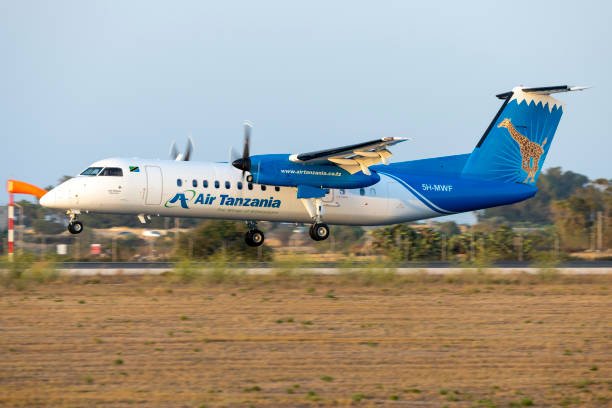
Safari Bush Flight Security and Baggage
Safari aircraft can have substantially different baggage requirements from major international airlines.
Soft-sided bags may be preferred or required, and weight limitations can be strict.
Security requirements still apply even though the aircraft and airstrip may be much smaller.
Checked Baggage Screening
Checked bags are also subject to security procedures.
Do not assume that an item prohibited from cabin baggage can automatically be placed in a checked suitcase.
Some dangerous goods are prohibited from both cabin and checked baggage.
Keep Valuables in Hand Luggage
Passports, money, important documents, essential medication, electronics and other valuable personal items are generally better kept with the passenger rather than placed in checked luggage where permitted.
Power banks and spare lithium batteries also belong in cabin luggage under standard aviation safety rules.
Passport and Travel Documents
International passengers should keep their passport readily accessible throughout airport procedures.
Travellers should also keep boarding information and any other required travel documents available.
Do not pack your passport in checked luggage.
Domestic Flight Identification
Passengers travelling domestically should carry accepted identification consistent with the airline's booking requirements.
International visitors can keep their passport available as their primary travel identification.
Airport Security After Safari
Safari travellers should reorganize luggage before reaching the airport.
Camera batteries, charging equipment, souvenirs and liquids can accumulate during a long safari.
Check all bags rather than assuming they remain packed correctly from the international arrival flight.
Airport Security After Kilimanjaro
Kilimanjaro climbers should completely review their gear after descending.
Items carried on the mountain may not be suitable for cabin baggage.
Move trekking poles, sharp tools and other restricted equipment to the correct baggage category before leaving the hotel.
Airport Security After Zanzibar
Zanzibar travellers often carry cosmetics, sunscreen, perfume, spices and souvenirs.
Recheck liquid sizes before packing cabin bags.
Keep fragile souvenirs protected and confirm airline requirements for unusual items.
Food in Hand Luggage
Solid snacks are generally simpler for air travel than liquids or semi-liquid foods.
However, customs and agricultural restrictions at the destination country may apply even when an item passes airport security.
Airport security permission and customs import permission are not the same thing.
Spices from Zanzibar
Many travellers buy packaged spices in Zanzibar.
Security screening may permit many dry packaged products, but the passenger must also follow the customs and agricultural rules of the destination country.
Keep commercially packaged products clearly labelled when possible.
Souvenirs and Carved Items
Check wooden carvings, decorative objects and souvenirs for sharp components before packing them into cabin baggage.
Larger items may also exceed airline cabin dimensions.
Travellers should consider both aviation security and destination customs rules.
Security Screening for International Departures
International travellers generally have more airport procedures than domestic passengers because immigration and international-document requirements are added to normal airline and security processes.
Arriving early reduces stress and gives passengers time to resolve unexpected baggage issues.
Security Screening for Domestic Flights
Domestic passengers still undergo aviation security screening.
Do not assume that a short flight between Tanzanian cities avoids normal restricted-item rules.
This also applies to passengers connecting toward Zanzibar or safari destinations.
Connecting International to Domestic Flights
A passenger arriving internationally and transferring to a domestic service may need to complete immigration, collect baggage and pass through further airport procedures depending on the itinerary and ticketing arrangement.
Leave enough connection time rather than assuming baggage and security will transfer automatically.
Dar es Salaam Domestic Connections
Dar es Salaam is a major connecting point for flights to destinations such as Zanzibar, Mwanza, Dodoma, Kigoma and southern Tanzania.
Passengers should confirm the correct terminal and allow adequate transfer time.
International Connections at Kilimanjaro Airport
Kilimanjaro travellers often connect between international flights and domestic or safari travel.
Before arriving at the airport after a climb, ensure mountain equipment has been reorganized to meet airline security and baggage requirements.
Do You Remove Shoes at Tanzania Airport Security?
Security procedures can vary depending on the screening point and circumstances.
Passengers should follow instructions given by airport security personnel rather than assuming procedures will be identical to airports in Europe, North America or another country.
Do You Remove Laptops from Your Bag?
Security officers may request laptops and other larger electronics to be screened separately.
Pack electronics where they are easy to remove rather than underneath all clothing and travel equipment.
Physical Security Checks
Additional physical screening may be performed where required.
This can include inspection of baggage or further passenger checks after initial screening.
Remain calm and follow security instructions.
How Early Should You Arrive at a Tanzania Airport?
Required check-in times vary between airlines, airports and domestic or international flights.
Passengers should follow the operating airline's recommended arrival time.
International travellers normally need more time because of document checks, baggage, security and immigration.
Why Arriving Early Matters
Airport security itself may move quickly, but traffic, check-in lines and baggage issues can add unexpected delays.
This is especially relevant in Dar es Salaam, where road traffic can significantly affect airport transfer time.
Common Mistake: Packing a Large Liquid in Cabin Baggage
Travellers sometimes pack full-size shampoo, lotion or sunscreen in hand luggage.
Prepare a separate toiletries bag before leaving the hotel and move oversized items to checked luggage when permitted.
Common Mistake: Putting Power Banks in Checked Baggage
Power banks contain lithium batteries and should normally remain in cabin baggage.
Keep them accessible and confirm the battery capacity if travelling with a large unit.
Common Mistake: Forgetting Trekking Poles
Kilimanjaro climbers often finish the trek and leave their poles attached to a daypack.
Review all climbing gear before flying and transfer items that cannot go through cabin security to the appropriate checked luggage.
Common Mistake: Treating Safari Flights Like International Flights
A large suitcase accepted on an international flight may not fit a small safari aircraft.
Security rules, baggage weight and aircraft-storage restrictions all need to be considered.
Common Mistake: Arriving with Camping Fuel
Fuel and other highly flammable camping products should not be packed as normal passenger baggage.
Climbers can arrange appropriate equipment locally rather than attempting to transport prohibited fuel by air.
Common Mistake: Following Only the Airport Rules
Your airline may have stricter baggage limitations than the general airport-security requirement.
Always check both sets of rules before packing.
Tanzania Airport Security Packing Checklist 2026-2027
Before Leaving for the Airport
- Check your passport or travel identification
- Check airline baggage allowance
- Move oversized liquids out of hand luggage
- Keep cabin liquids in small containers
- Keep power banks in hand luggage
- Protect spare battery terminals
- Move sharp trekking equipment to checked baggage where permitted
- Remove prohibited fuels and dangerous goods
- Keep electronics easy to access
- Arrive early enough for screening
Frequently Asked Questions About Airport Security Rules in Tanzania
Do airports in Tanzania have security screening?
Yes. Passengers and baggage are subject to aviation security screening before accessing restricted departure areas.
Can I carry liquids through Tanzania airport security?
Small liquids are generally permitted in cabin baggage when individual containers are 100 ml or less and packed according to current security requirements.
Can I carry a power bank on a Tanzania flight?
Power banks are generally carried in hand luggage rather than ordinary checked baggage, subject to lithium-battery capacity restrictions.
Can spare camera batteries go in checked baggage?
Spare lithium batteries should normally be carried in cabin baggage with terminals protected against short circuits.
Can trekking poles go in cabin baggage?
Trekking poles can be restricted from cabin baggage because of their shape and pointed ends. Climbers should check airline requirements and plan to place them in checked luggage when required.
Can I carry camping fuel after climbing Kilimanjaro?
Flammable camping fuel should not be packed as normal passenger baggage. Remove prohibited fuel before travelling to the airport.
Are laptops allowed through airport security?
Yes. Laptops and tablets can be carried subject to screening, and security personnel may ask passengers to remove larger electronics from their bags.
Can I carry sunscreen in my hand luggage?
Yes, provided it meets cabin liquid limits. Larger sunscreen containers should normally be packed in checked baggage if the airline permits them.
Can I carry perfume in cabin baggage?
Small perfume containers can generally be carried when they meet the applicable liquid limits and are packed correctly.
Can tourists fly with a drone in Tanzania?
Travelling with drone equipment and legally operating a drone are separate issues. Travellers should check current Tanzania drone authorization requirements as well as airline rules for lithium batteries.
Are domestic flights subject to airport security?
Yes. Domestic passengers and their baggage are also subject to aviation security requirements.
Are safari flight baggage rules different?
They can be significantly different because smaller aircraft may have stricter weight, size and bag-type restrictions.
Should I keep my passport in checked baggage?
No. Keep your passport and essential travel documents with you and readily accessible during airport procedures.
Do airport security rules change?
Yes. Security regulations, airline procedures and dangerous-goods requirements can be updated, so passengers should confirm current requirements close to departure.
What are the most important Airport Security Rules in Tanzania for 2026-2027?
Prepare cabin liquids in containers of 100 ml or less, keep power banks and spare lithium batteries in hand luggage, remove prohibited dangerous goods, pack trekking poles and sharp equipment appropriately, carry valid identification and follow both airport-security and airline-specific baggage instructions.
Prepare for Your Tanzania Flight 2026-2027
Pack correctly before leaving your hotel, keep travel documents accessible and coordinate your Tanzania flights, airport transfers, safari, Kilimanjaro climb or Zanzibar holiday around current airline and airport requirements.
Plan Your Tanzania Trip


 Serengeti Safari