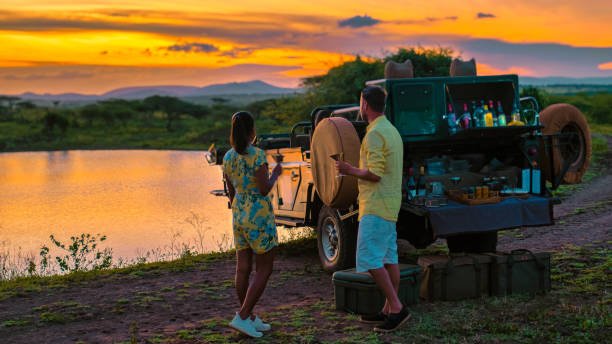
Serengeti Migration Safari June July
A Serengeti Migration Safari June July explores an exciting transitional period of the Great Migration as wildebeest and zebra move through different parts of Tanzania's Serengeti ecosystem.
June and July can provide very different migration experiences compared with the January and February calving season or the later August and September northern Serengeti period.
During June, migration focused safaris can concentrate more heavily on western Serengeti, the Grumeti area and surrounding plains according to the actual location of the herds.
As July progresses, migration activity may extend farther north as wildebeest and zebra continue following suitable grazing and water.
The exact movement varies naturally, making flexible game drive planning and appropriate accommodation location particularly important.
June July Migration Safari at a Glance
- Travel months: June and July.
- Main experience: Seasonal Great Migration movement.
- June focus: Western Serengeti and Grumeti region according to herd location.
- July focus: Transition from western and central areas toward more northern Serengeti regions according to conditions.
- Wildlife: Wildebeest, zebra, lions, cheetahs, leopards, elephants, giraffes, buffalo and hyenas.
- Season: Beginning and development of the main dry season.
- Accommodation: Camping, tented camps or lodges.
- Safari style: Private or group joining.
Why Visit Serengeti in June and July?
June and July are particularly interesting because the migration is in transition.
The landscape begins becoming drier after the wetter months, wildlife movement responds to changing grazing conditions and enormous herds may travel through western, central and eventually more northern parts of Serengeti.
These months can therefore suit travellers who want to experience movement rather than concentrating only on one seasonal migration destination.
Resident wildlife also remains an important part of the safari, making June and July excellent for general Serengeti game viewing as well as wildebeest migration.
June July Safari Highlights
- Large wildebeest migration herds
- Zebra travelling with the migration
- Western Serengeti wildlife
- Grumeti River landscapes
- Dry season predator opportunities
- Changing seasonal scenery
- Excellent wildlife photography
- Possibility of combining several Serengeti regions
Serengeti Migration Safari in June
June can be an excellent month for travellers interested in western Serengeti migration activity.
As conditions become progressively drier, wildebeest and zebra continue moving through the ecosystem in search of suitable grass and water.
Depending on the year, migration concentrations can be found across western and central areas, including landscapes associated with the Grumeti system.
The migration is not one single compact herd. Different groups can be separated by substantial distances, which makes experienced guiding important.
Western Serengeti in June
Western Serengeti provides a different landscape from the open southern short grass plains.
Riverine habitat, woodland and grassland create varied wildlife environments while migration groups continue their seasonal journey.
Travellers can search for wildebeest and zebra while also observing resident predators and other wildlife using the western ecosystem.
Grumeti River Migration Safari
The Grumeti River and surrounding western Serengeti landscapes can become important during this stage of migration movement.
Wildebeest may gather near river systems or move through surrounding plains depending on grass and water conditions.
River related migration activity remains natural and unpredictable.
A safari should therefore explore the wider western Serengeti rather than waiting only at one river location.
Are Grumeti River Crossings Guaranteed?
No.
Wildlife does not cross rivers according to a fixed timetable.
Migration groups may approach a river, remain nearby, move away or use a different location.
The broader experience of seeing large herds moving through western Serengeti should therefore be considered just as important as witnessing a particular crossing.
Serengeti Migration Safari in July
July can represent another important transition as migration groups continue moving through the ecosystem.
Some wildebeest may remain within western or central areas, while others can progress farther north depending on rainfall, grazing and water availability.
This makes July especially suitable for flexible itineraries that can combine more than one Serengeti region.
Travellers should avoid assuming that every July safari automatically requires accommodation at the extreme north of the park.
June vs July Serengeti Migration
June
June can place greater emphasis on western Serengeti, the Grumeti area and migration movement away from wetter season landscapes.
July
July can provide a wider transition between western, central and more northern migration areas as herds continue responding to changing seasonal conditions.
Where Is the Migration in June?
Seasonal planning commonly focuses June migration safaris on western Serengeti and the wider Grumeti region.
However, wildlife movement can differ between years.
Rainfall during preceding months affects grass growth and can influence how quickly different groups move through the ecosystem.
Travellers should therefore use seasonal migration patterns as a planning guide rather than expecting one exact location.
Where Is the Migration in July?
July is often more transitional.
Some migration herds can be farther north while other groups remain in western or central Serengeti.
The best accommodation and game drive region depend on exact travel dates and the movement of the herds that year.
A flexible safari itinerary provides a stronger experience than forcing all July travellers into one predetermined location.
Great Migration Beyond River Crossings
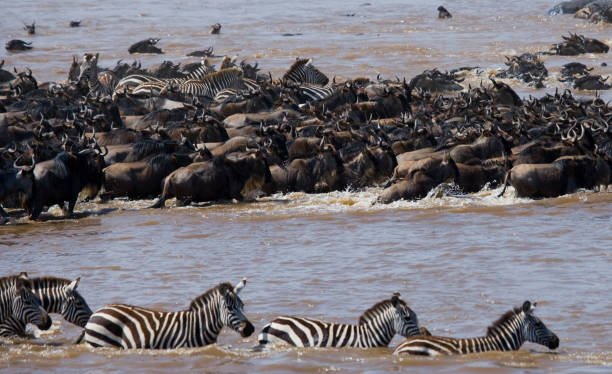
The Serengeti Great Migration is much larger than a river crossing.
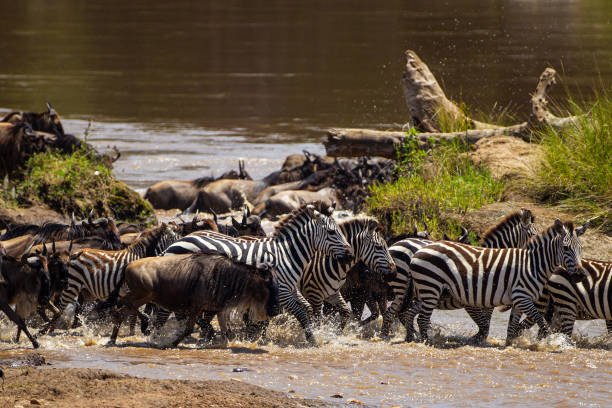
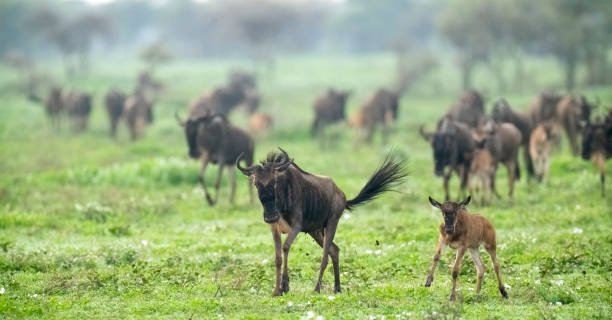
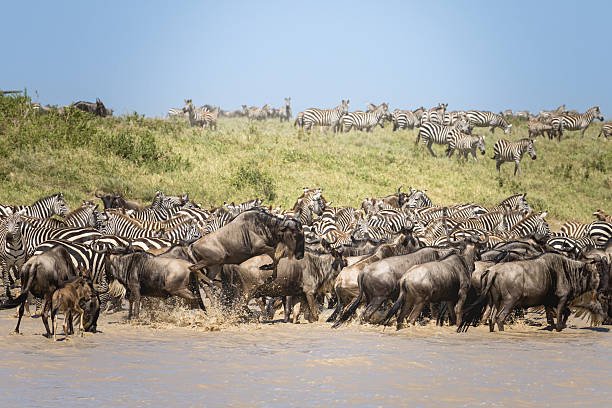
One of the most impressive June and July experiences can simply be watching huge wildebeest and zebra herds travel across open landscapes.
Animals may form long lines, gather across grazing areas or spread widely across different habitats.
Predators can also take advantage of prey concentrations as the herds move through the ecosystem.
Wildebeest Migration Herds
Wildebeest are the dominant visual feature of the migration, but the herds do not behave as one single group.
Different concentrations can move at different speeds and take different routes according to local conditions.
This explains why two travellers visiting Serengeti during the same week can experience different migration scenes.
Zebra During June July Migration
Zebra commonly travel within the wider migration system.
Mixed herds of wildebeest and zebra can create excellent wildlife photography opportunities.
The animals use grassland resources differently, allowing them to occupy the same broader ecosystem during seasonal movement.
Lions During June and July
Lions live in Serengeti throughout the year and can be encountered during both June and July.
Large concentrations of prey can create interesting predator viewing opportunities.
Lions may be seen resting, walking, interacting within prides or watching grazing animals.
Hunting behaviour remains completely natural and cannot be guaranteed.
Cheetahs During Migration Season
Cheetahs may be found in suitable open landscapes throughout Serengeti.
Their visibility depends on habitat, vegetation and the actual game drive area.
Morning and late afternoon drives can provide excellent opportunities to search for these predators.
Leopards in Serengeti
Leopards inhabit suitable woodland and riverine environments but are naturally more difficult to locate.
Western and central Serengeti can provide suitable leopard habitat.
An experienced driver guide, patience and sufficient safari time improve opportunities without creating unrealistic expectations.
Hyenas and the Migration
Hyenas are an important part of the Serengeti ecosystem.
They are effective hunters as well as scavengers and may use areas where migrating prey is abundant.
Observing hyenas, lions and other predators provides greater understanding of how the migration affects the wider ecosystem.
Other Wildlife June July
- Elephants
- Giraffes
- Buffalo
- Hippos
- Gazelles
- Warthogs
- Jackals
- Lions
- Cheetahs
- Leopards
- Hyenas
- Numerous bird species
Central Serengeti June July
Central Serengeti remains valuable during both months even when major migration concentrations are farther west or north.
The region supports resident wildlife throughout the year and provides strong opportunities for predators, elephants, giraffes, buffalo and other animals.
Central Serengeti also acts as a practical link between southern, western and northern safari regions.
Western and Central Serengeti Combination
Combining western and central Serengeti can be especially useful during June.
Travellers can search for migration movement in western areas while retaining time for resident wildlife in central Serengeti.
This reduces dependence on finding the main herds in one precise location.
Central and Northern Serengeti in July
A July itinerary can combine central Serengeti with more northern wildlife areas when migration conditions support that route.
The additional geographic flexibility can be particularly useful later in the month.
Enough safari days should be allowed because Serengeti covers a vast area and long transfers reduce game drive time.
Is Mara River Crossing Possible in June July?
Migration movement can reach different northern areas at different times, but travellers should not build a June or early July safari around a guaranteed Mara River crossing.
The farther north the main herds have travelled, the more relevant northern Serengeti becomes.
The correct region should therefore be chosen according to the actual travel date and seasonal conditions.
Crossings remain unpredictable even when herds are present near the river.
Responsible Migration Viewing
Migration wildlife should be observed without blocking or pressuring animals.
Vehicles should remain on approved routes and follow protected area rules.
Wildlife photography should never require a guide to interfere with herd movement or predator behaviour.
Responsible Serengeti Safari
- Allow migrating wildlife to move naturally.
- Do not block herd movement.
- Do not pressure animals toward rivers.
- Remain inside approved safari arrangements.
- Follow your driver's wildlife viewing instructions.
- Respect other safari vehicles.
- Never guarantee natural wildlife behaviour.
June July Wildlife Photography
June and July provide excellent opportunities for wildlife photography.
Landscapes gradually transition from greener seasonal conditions toward the golden tones associated with the dry season.
Large moving herds, predators, rivers, woodland and wide grasslands provide a diverse range of subjects.
Morning and late afternoon light can be particularly attractive.
Migration Photography Tips
- Bring a useful zoom lens for distant wildlife.
- Use wider compositions to show the scale of herds.
- Carry spare batteries.
- Carry enough memory cards.
- Keep lens cleaning equipment available for dust.
- Use a protective camera bag.
- Keep equipment accessible during game drives.
Full Day Migration Game Drive
A full day game drive gives the driver guide greater freedom to follow current wildlife information.
Migration concentrations can be far from the lodge or campsite, so carrying a packed lunch can reduce unnecessary return travel.
This format is particularly useful for migration focused travellers and photographers.
Morning Game Drive
Morning game drives can provide cooler temperatures and excellent light.
Predators may also be more active before the day becomes warmer.
A fleece or light jacket is useful because early morning driving can feel cold during June and July.
June July Weather
June and July are part of the transition into and development of the Serengeti dry season.
Rain generally becomes less dominant, while mornings and evenings can feel cool.
Daytime conditions may become warm under direct sunshine.
Layered clothing remains the most practical choice.
What to Wear in June July
- Light safari shirts
- Comfortable trousers
- Warm fleece
- Light jacket
- Sun hat
- Sunglasses
- Sunscreen
- Comfortable closed footwear
- Light rain protection
Private Serengeti Migration Safari
A private safari gives your booking party its own safari vehicle and professional driver guide.
This is particularly useful during a transitional migration period because the daily plan can respond to current herd information.
Photographers, couples and families can also spend longer at sightings that interest them when conditions allow.
Group Joining Migration Safari
A group joining safari can reduce costs by sharing the vehicle and guide.
Travellers should confirm exactly which Serengeti region the departure visits.
A standard central Serengeti itinerary may not automatically reach western migration areas in June or northern areas later in July.
Camping Safari June July
Camping provides an adventurous and affordable way to experience the migration.
June and July can be suitable for camping as conditions become drier, although nights can feel cool.
The package should clearly explain campsite arrangements, tents, sleeping equipment and meals.
Tented Camp Migration Safari
Tented camps combine an immersive safari atmosphere with greater comfort than traditional camping.
Seasonal camps can be particularly useful because accommodation may be positioned according to seasonal wildlife movements.
Depending on the property, tents can include proper beds, private bathrooms and dining facilities.
Serengeti Lodge Safari June July
Lodges provide permanent accommodation and comfortable facilities after wildlife game drives.
Location is important during migration season because travelling long distances from your lodge to the main wildlife area reduces game drive time.
Travellers should compare geographic location as carefully as room category.
Fly In Serengeti Migration Safari
Domestic flights can reduce road transfer time when the safari concentrates on a specific Serengeti region.
Air access can also be combined with road travel in the opposite direction.
When flying on smaller safari aircraft, confirm luggage restrictions before travel.
Road Migration Safari
A road safari is particularly useful for travellers wanting to combine Serengeti with Ngorongoro, Tarangire or Lake Manyara.
The route can also follow the changing Serengeti landscapes from central areas toward western or northern migration regions.
Enough days should be allowed to avoid turning most of the safari into transfer time.
Serengeti and Ngorongoro June July
Ngorongoro Crater can be combined with a June or July migration safari.
The crater provides a contrasting wildlife environment before or after Serengeti.
Four or more safari days make the combination more practical, while additional days allow greater migration flexibility.
Serengeti and Tarangire June July
Tarangire becomes increasingly interesting as dry season conditions develop.
Adding Tarangire provides elephants, baobab landscapes and another northern Tanzania ecosystem.
The itinerary should include additional days rather than reducing important Serengeti migration time.
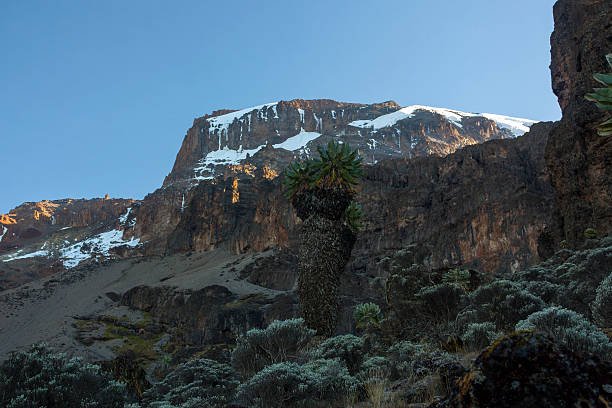
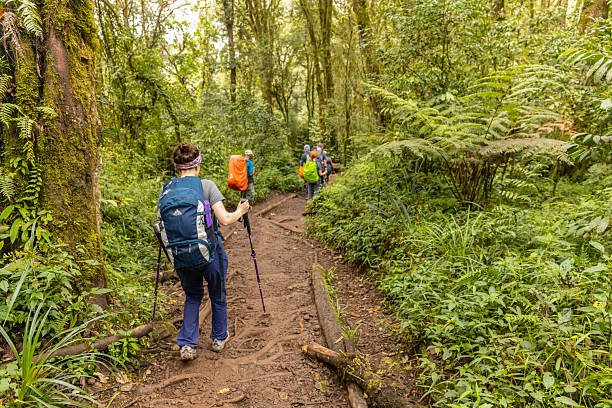
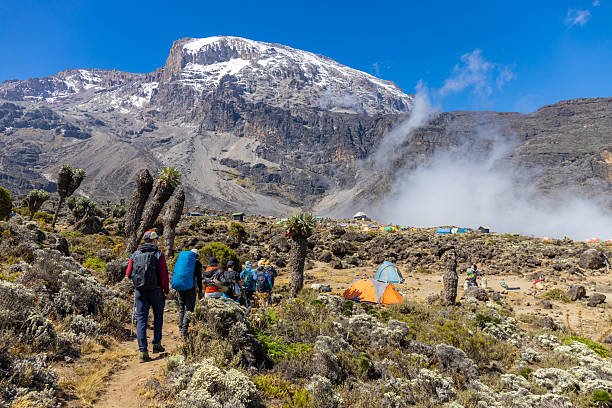
Kilimanjaro and Serengeti Migration Safari
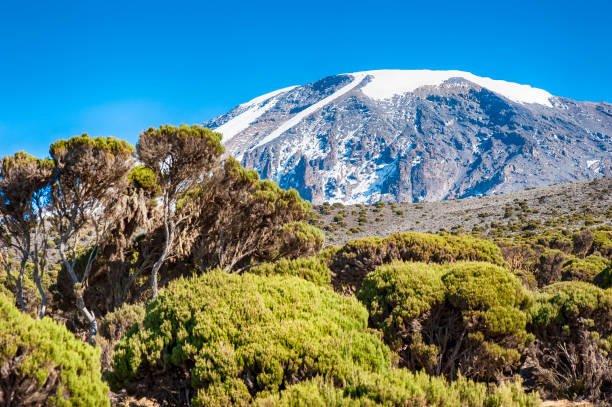
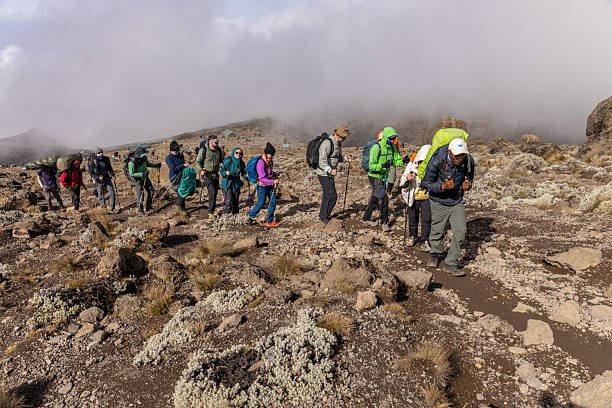
A June or July Serengeti safari can be combined with climbing Mount Kilimanjaro.
After completing the mountain, travellers can recover in Moshi and begin the safari according to the planned route.
Mountain equipment not required on safari can often remain at an agreed luggage storage location.
Serengeti and Zanzibar
Zanzibar can be added after the migration safari for travellers wanting a wildlife and beach holiday.
Domestic flights can be coordinated according to the final safari location and available schedule.
4 Day Serengeti Migration Safari June July
A four day itinerary can provide a focused Serengeti experience when travel logistics are planned efficiently.
Sample 4 Day Itinerary
Day 1: Moshi or Arusha to Serengeti
Travel into Serengeti and begin game viewing according to the seasonal location of wildlife and arrival time.
Day 2: Migration Focused Game Drive
Spend a full day searching western, central or transitional migration areas according to current herd conditions.
Day 3: Serengeti Wildlife Safari
Continue following migration information while also searching for resident predators and general wildlife.
Day 4: Morning Wildlife and Return
Enjoy additional game viewing before the planned road or flight departure.
5 Day Serengeti Migration Safari
Five days provides more flexibility to include different Serengeti regions or Ngorongoro.
Sample 5 Day Itinerary
Day 1: Moshi or Arusha to Serengeti
Travel toward the first Serengeti wildlife area and enjoy afternoon game viewing when time permits.
Day 2: Full Day Migration Safari
Search for wildebeest, zebra and predators according to the seasonal location of the herds.
Day 3: Additional Serengeti Migration Game Drive
Explore another productive wildlife area or continue following the strongest migration concentrations.
Day 4: Serengeti to Ngorongoro Area
Enjoy wildlife viewing before travelling toward the Ngorongoro highlands when included.
Day 5: Ngorongoro Crater and Return
Explore Ngorongoro Crater before returning toward Arusha or Moshi.
6 Day June July Migration Safari
Six days provides additional flexibility for central, western or more northern Serengeti areas depending on the exact travel date.
Multiple nights in Serengeti allow the driver guide to respond more effectively to current wildlife movement.
This duration is particularly useful for photographers and travellers who prefer less rushing between destinations.
7 Day Serengeti Migration and Ngorongoro Safari
A seven day safari can combine several Serengeti regions with Ngorongoro Crater while maintaining substantial wildlife viewing time.
June departures can place greater emphasis on western migration landscapes, while later July itineraries can adapt farther north when natural movement supports that plan.
Safari from Moshi
A Serengeti Migration Safari June July can begin from a confirmed Moshi hotel.
This is convenient for travellers staying near Kilimanjaro or combining safari with a mountain climb.
Longer Serengeti itineraries are recommended when targeting distant western or northern areas by road.
Safari from Arusha
Arusha is another major starting point for the northern circuit.
The safari can continue through Ngorongoro toward central and western Serengeti or use domestic flights according to the selected itinerary.
Typical Migration Safari Inclusions
Your Safari Package Can Include
- Pickup according to the confirmed itinerary
- Safari adapted 4x4 vehicle for road based packages
- Professional safari driver guide
- Serengeti wildlife game drives
- Migration focused game drives according to seasonal conditions
- Accommodation according to the selected package
- Meals according to itinerary
- Drinking water according to safari arrangements
- Applicable protected area fees when stated
- Road transfers included in the confirmed safari
Typical Exclusions
- International flights
- Visa expenses unless stated
- Travel insurance
- Personal expenses
- Alcoholic and selected additional drinks unless stated
- Domestic flights unless specifically listed
- Additional hotels outside the confirmed itinerary
- Optional activities not listed in the package
- Driver guide gratuities unless specifically included
Frequently Asked Questions About Serengeti Migration Safari June July
Is June a good month for Serengeti migration?
Yes. June can be an excellent month for migration focused travel, particularly when herds are using western and central Serengeti areas.
Is July good for the Great Migration?
Yes. July can provide excellent migration viewing as different herds continue moving through western, central and more northern areas according to seasonal conditions.
Where is the migration in June?
Western Serengeti and the wider Grumeti area are commonly considered for June migration planning, but exact herd locations vary naturally.
Where is the migration in July?
July is transitional, and herds may be distributed between western, central and increasingly northern Serengeti areas depending on rainfall and grazing.
Can I see the Grumeti River migration?
The western Serengeti and Grumeti region can be an important June migration area when seasonal herd movement aligns.
Are Grumeti crossings guaranteed?
No. River related wildlife movement is natural and cannot be guaranteed for a particular day.
Can I see a Mara River crossing in July?
It may be possible during suitable migration conditions, particularly as herds progress north, but a Mara River crossing cannot be guaranteed.
Which is better for migration, June or July?
Both provide different stages of the migration. June often places greater emphasis on western Serengeti, while July can provide a broader transition toward northern areas.
Can I see large wildebeest herds?
Yes. Large migration concentrations can be encountered when the itinerary matches the seasonal location of the herds.
Can I see zebra with the migration?
Yes. Zebra frequently share migration landscapes with wildebeest and can form part of large mixed herds.
Can I see lions?
Yes. Lions live throughout Serengeti and may be encountered during June and July game drives, although individual sightings cannot be guaranteed.
Can I see cheetahs?
Cheetahs occur in suitable Serengeti habitats and may be encountered during migration game drives.
Can I see leopards?
Leopards occur within Serengeti but are naturally elusive and should never be guaranteed.
Are June and July dry season?
These months fall within the broader Serengeti dry season, although local weather conditions can still vary.
Is Serengeti cold in June July?
Early mornings and evenings can feel cool, so carrying a warm fleece or jacket is recommended.
Is June July good for photography?
Yes. Migration herds, predators, changing seasonal landscapes and open grasslands create excellent photography opportunities.
How many days should I spend in Serengeti?
Several game drive days provide more flexibility because the migration can be distributed across different Serengeti regions.
Is four days enough?
Four days can provide a focused migration safari, while five to seven days creates more flexibility for multiple regions and Ngorongoro.
Can I combine western and central Serengeti?
Yes. This can be particularly useful for June migration itineraries because it combines seasonal herd searching with excellent resident wildlife.
Can I combine central and northern Serengeti in July?
Yes. This can provide greater flexibility during the July transition when migration groups may progressively move north.
Can Ngorongoro Crater be added?
Yes. Ngorongoro can be combined with a June or July Serengeti safari when enough travel days are available.
Can Tarangire be added?
Yes. Tarangire can provide elephants, baobab landscapes and additional dry season wildlife variety.
Can I start from Moshi?
Yes. A road or combined road and flight safari can begin from a confirmed Moshi hotel.
Can I start from Arusha?
Yes. Arusha is another major starting point for Serengeti migration safaris.
Can I book a private safari?
Yes. A private safari provides greater flexibility to follow seasonal wildlife and spend more time at preferred sightings.
Can I join a group safari?
Yes. Group joining options can be available when scheduled departures match your dates and intended Serengeti region.
Can I choose camping?
Yes. Camping can provide an adventurous and more budget focused migration safari.
Are tented camps available?
Yes. Tented camps can provide comfortable accommodation close to important wildlife areas according to the itinerary.
Can I stay in lodges?
Yes. Lodge accommodation can be selected according to location, availability, comfort preference and budget.
Can I fly into Serengeti?
Domestic flights can be incorporated according to the target Serengeti region and confirmed travel schedule.
Can I combine Kilimanjaro with this safari?
Yes. The migration safari can be arranged before or after climbing Kilimanjaro according to your travel dates.
Can Zanzibar be added after safari?
Yes. Zanzibar can be added using suitable domestic flight and transfer arrangements.
How do I book a Serengeti Migration Safari June July?
Provide your June or July travel dates, number of travellers, preferred safari duration and accommodation style, then confirm whether you want a private or group joining safari and whether Ngorongoro, Tarangire, Kilimanjaro or Zanzibar should be included.
Plan Your Serengeti Migration Safari June July
Experience the Great Migration during its June and July transition with professional wildlife game drives and an itinerary designed around western Serengeti, Grumeti, central Serengeti and the changing seasonal movement of wildebeest and zebra.
Plan Your June July Migration Safari

 Kilimanjaro Climb