Ndutu Safari January February
An Ndutu Safari January February focuses on the southern Serengeti ecosystem during the period when seasonal rains transform the short grass plains and large numbers of migrating wildebeest, zebra and other grazing animals can gather across the region.
January and February provide a very different Serengeti experience from the dry season migration months. Instead of concentrating on northern river crossings, these months focus on green plains, pregnant wildebeest, newborn calves, large grazing herds and predators using the same seasonal ecosystem.
February receives particular attention for wildebeest calving, while January can already provide impressive migration concentrations, fresh landscapes and early calving activity.
The animals do not remain in one fixed location. Rainfall, fresh grass and water availability influence where the largest herds move, making flexibility an important part of any successful Ndutu safari.
Ndutu January February Safari at a Glance
- Travel period: January and February.
- Main area: Ndutu and southern Serengeti short grass plains.
- Main wildlife: Wildebeest, zebra, gazelles and seasonal migration herds.
- Calving: Particularly important during February.
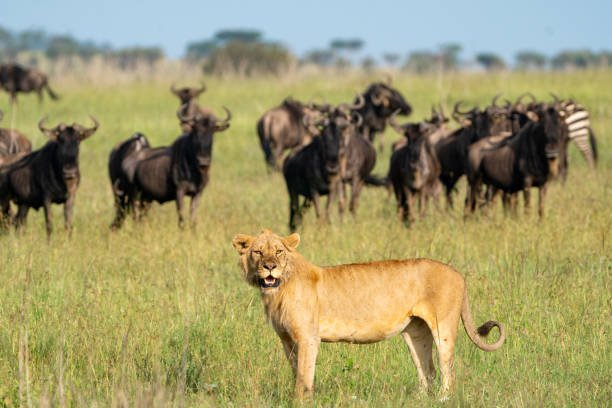
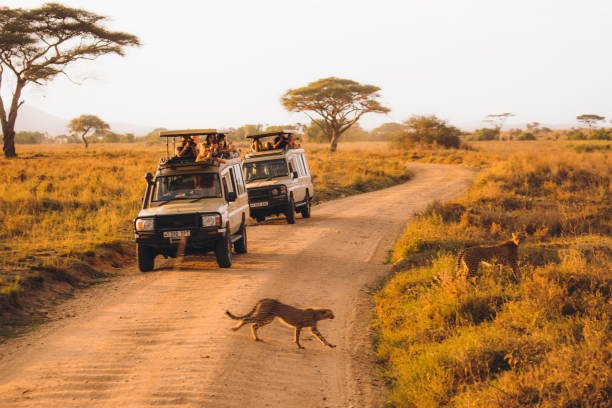
- Predators: Lions, cheetahs, hyenas and other carnivores may be encountered.
- Scenery: Green plains, seasonal wetlands and dramatic skies.
- Starting point: Moshi or Arusha.
- Accommodation: Camping, tented camps or lodges.
Why Visit Ndutu in January and February?
January and February place travellers in the southern migration ecosystem during a period of rapid seasonal change.
Fresh grass attracts grazing animals, pregnant wildebeest move through the southern plains and increasing numbers of calves become part of the landscape as the season progresses.
Large herbivore concentrations also support predators, giving travellers opportunities to observe complete predator and prey relationships rather than only seeing migration herds.
January and February Safari Highlights
- Large wildebeest herds
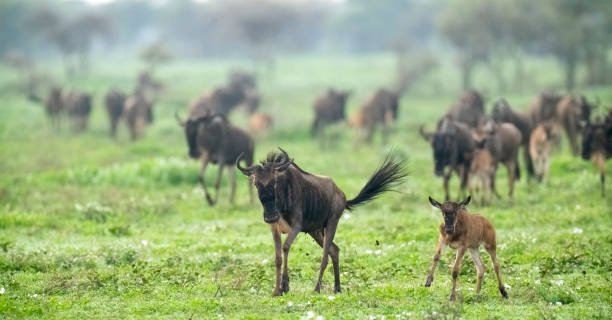
- Newborn wildebeest calves
- Zebra and gazelle concentrations
- Lion viewing opportunities
- Cheetah habitat
- Hyena activity
- Green short grass plains
- Excellent wildlife photography
- Easy Ngorongoro combination
Ndutu Safari in January
January is an excellent month for travellers interested in the beginning of the main southern Serengeti calving period.
Seasonal rainfall can produce fresh grazing across the short grass plains, encouraging wildebeest and zebra to gather throughout suitable areas.
Pregnant wildebeest may dominate some herds, while early calves can already be present.
The exact location of the largest concentrations changes according to recent rainfall, so the daily game drive should be flexible rather than restricted to one predetermined point.
Why Choose January?
January can suit travellers who want green landscapes, migration herds and early calving activity while experiencing the southern plains before the central February calving period.
The combination of fresh grass and dramatic skies can also produce excellent photographic conditions.
Predator opportunities can already be strong because lions, cheetahs and hyenas use the same productive ecosystem.
Ndutu Safari in February
February is particularly famous for wildebeest calving in the southern Serengeti ecosystem.
Travellers may encounter large numbers of mothers with young calves spread across the open plains.
The presence of vulnerable newborn animals can also increase opportunities to observe predator activity.
A February safari should still be planned around a broad wildlife area rather than one single location because large herds continue to move according to natural conditions.
Why February Is Popular
- Wildebeest calving
- Newborn calves
- Large migration herds
- Predator activity
- Green photography backgrounds
- Open short grass plains
- Excellent full day game drive opportunities
January vs February Ndutu Safari
Both months can provide rewarding wildlife experiences, but the character of the safari can differ.
January can feature large arriving or established migration herds, fresh seasonal grass and increasing numbers of calves.
February places a stronger emphasis on the central calving period, newborn animals and predator activity around herd concentrations.
Because nature does not follow an exact calendar, there can be substantial overlap between the two months.
January
Large southern migration herds, early calves, green scenery and strong wildlife photography opportunities.
February
Intensive calving focus, many young wildebeest when conditions align and increased interest in predator activity.
Where Is Ndutu?
Ndutu lies within the wider southern Serengeti ecosystem and the Ngorongoro Conservation Area landscape.
Its seasonal grasslands, woodland and lake environments provide habitat for both resident and migratory wildlife.
The area is particularly important during the early year migration period because the surrounding short grass plains become productive after rainfall.
Southern Serengeti Short Grass Plains
The southern short grass plains form the core landscape associated with calving season.
Fresh vegetation supports pregnant and lactating wildebeest and creates large areas of seasonal grazing.
The relatively open terrain can provide excellent visibility for game drives and photography.
Wildebeest Calving Experience
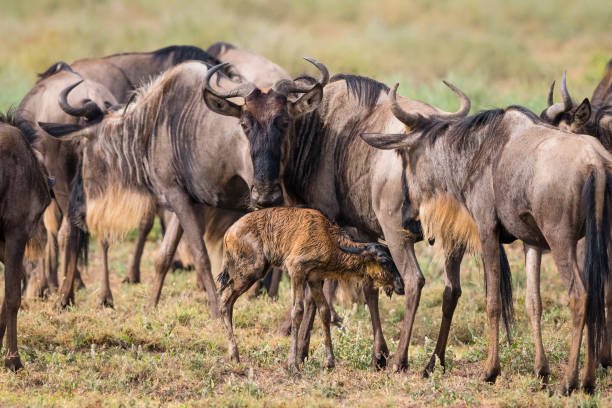
The main attraction of a February focused Ndutu safari is the possibility of seeing large numbers of wildebeest mothers and calves.
Newborn calves must become mobile quickly so they can remain with their mothers and the moving herd.
Travellers may see calves feeding, resting, running or moving through large groups of adults.
Every encounter should be observed respectfully without pressuring or disturbing the animals.
Can You See a Wildebeest Giving Birth?
It is possible, but it cannot be promised.
Thousands of animals are spread across a large landscape and individual births occur naturally.
A guide may encounter a birth by chance, but the safari should not be marketed as though a birth can be scheduled for a particular game drive.
Predators in January and February
The concentration of herbivores makes southern Serengeti and Ndutu particularly interesting for predator observation.
Lions, cheetahs and hyenas may all use areas where prey animals are abundant.
Predator sightings and hunts remain unpredictable.
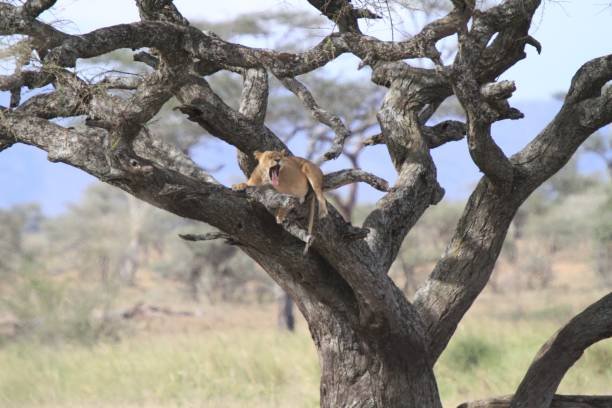
Lions in Ndutu
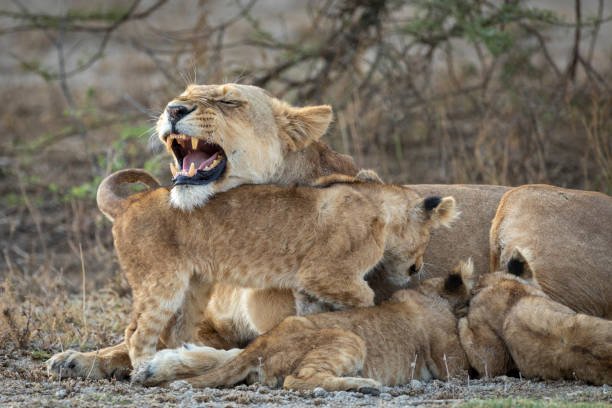
Lions may be found resting near herd concentrations, travelling across the plains or using vegetation for shade.
Early morning and late afternoon can be particularly interesting periods because temperatures are cooler.
The guide will search suitable habitat while respecting wildlife viewing rules.
Cheetahs in Ndutu
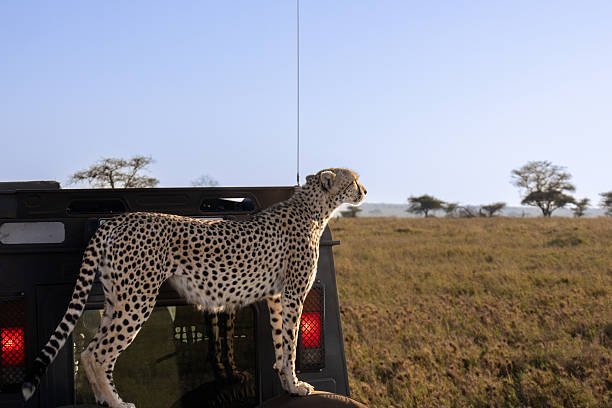
The open plains around Ndutu provide suitable habitat for cheetahs.
Short grass gives these predators excellent visibility across the landscape.
Travellers may see cheetahs resting, scanning for prey or moving across open country.
Hyenas During Calving Season
Hyenas play an important role in the ecosystem as both capable predators and scavengers.
They may be encountered around wildebeest herds and other areas with abundant wildlife.
Observing hyena behaviour can be one of the most interesting parts of a calving season safari.
Other Wildlife in Ndutu
- Wildebeest
- Zebra
- Gazelles
- Lions
- Cheetahs
- Hyenas
- Jackals
- Giraffes in suitable habitat
- Warthogs
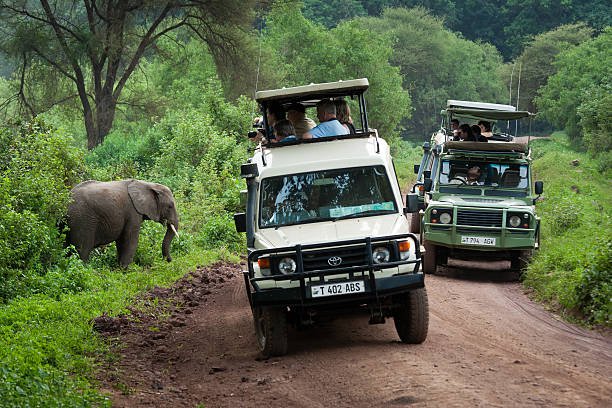
- Elephants in parts of the wider ecosystem
- Numerous bird species
Zebra and Wildebeest Migration
Zebra are an important part of the wider Serengeti migration ecosystem.
Large groups may be observed alongside wildebeest across the short grass plains.
Mixed herds create impressive landscapes and can provide excellent wide angle photography opportunities.
Ndutu Green Season
January and February fall within the green season.
Fresh vegetation creates colourful plains and seasonal rain can produce dramatic skies.
The appearance is very different from the dry, golden landscapes seen during July, August and September.
Rain in January and February
Rain can occur during both months.
This should not automatically be viewed as a disadvantage because seasonal rainfall is part of the ecological process that creates the fresh grazing supporting the migration.
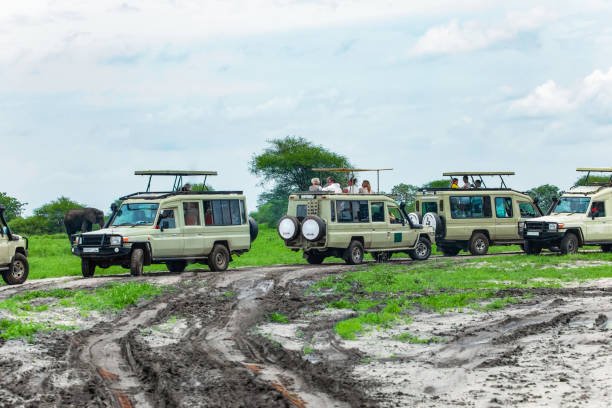
Heavy showers can occasionally affect road conditions, so a capable 4x4 vehicle and experienced driver guide are important.
Green Season Safari Expectations
- Fresh green grass
- Seasonal showers
- Changing road conditions
- Dramatic cloud formations
- Productive grazing areas
- Strong birdlife opportunities
- Excellent wildlife photography
Photography in January February
Ndutu is particularly attractive to photographers during these months.
The combination of green grass, newborn calves, large herds and predators creates many different subjects.
Morning and late afternoon light can produce warm, soft conditions, while storm clouds can create dramatic backgrounds during the day.
Photography Subjects
- Newborn wildebeest calves
- Mother and calf interactions
- Wildebeest migration herds
- Zebra
- Lions
- Cheetahs
- Hyenas
- Green plains
- Seasonal storms
- Birdlife
Full Day Ndutu Game Drive
A full day game drive can be especially valuable because migration herds may be distributed across a large area.
The driver guide can explore according to current wildlife information rather than needing to remain close to accommodation.
A packed lunch can be carried according to the package, allowing more wildlife viewing time.
Morning Game Drive
Morning game drives can provide cooler temperatures, soft photography light and active predators.
Carry a warm layer because the first part of the morning can feel cool in an open roof safari vehicle.
Afternoon Game Drive
Afternoon wildlife viewing provides another opportunity as temperatures begin to fall.
Animals may move between grazing areas, water and resting places as conditions change during the day.
Ndutu vs Central Serengeti
For a January or February safari focused specifically on calving, Ndutu and southern Serengeti should receive significant itinerary time.
Central Serengeti remains valuable for resident wildlife, predators, kopjes and riverine habitat but should not replace the southern seasonal area when calving is the main objective.
Longer safaris can combine both regions effectively.
Ndutu and Ngorongoro Crater
Ngorongoro Crater is one of the most natural additions to an Ndutu safari.
Travellers can combine the seasonal southern migration experience with a completely different crater ecosystem.
The route works particularly well on four, five or six day itineraries.
3 Day Ndutu Safari January February
A three day safari can work for travellers with limited time, although it should focus strongly on the seasonal wildlife area.
Sample 3 Day Itinerary
Day 1: Moshi or Arusha to Ndutu
Travel toward the southern Serengeti ecosystem and begin wildlife viewing according to arrival time before continuing to your accommodation.
Day 2: Full Day Ndutu Safari
Explore the short grass plains searching for wildebeest, calves, zebra, lions, cheetahs, hyenas and other seasonal wildlife.
Day 3: Morning Ndutu Wildlife and Return
Enjoy additional game viewing before beginning the agreed return or onward transfer.
4 Day Ndutu and Ngorongoro Safari
Four days allows more wildlife viewing and creates a practical combination with Ngorongoro Crater.
Sample 4 Day Itinerary
Day 1: Moshi or Arusha to Ndutu
Travel into the southern migration area and begin an afternoon game drive according to arrival time.
Day 2: Full Day Ndutu Calving Safari
Search for migration herds, mothers, newborn calves, lions, cheetahs, hyenas and other wildlife across suitable seasonal areas.
Day 3: Ndutu to Ngorongoro
Enjoy further wildlife viewing before travelling toward the Ngorongoro highlands.
Day 4: Ngorongoro Crater and Return
Descend into Ngorongoro Crater for wildlife viewing before returning toward Arusha or Moshi.
5 Day Ndutu Safari January February
Five days provides more flexibility and additional time to follow wildlife conditions.
Sample 5 Day Itinerary
Day 1: Moshi or Arusha to Ndutu.
Day 2: Full day Ndutu wildlife and calving safari.
Day 3: Additional southern Serengeti and Ndutu game drive.
Day 4: Morning wildlife viewing followed by transfer toward Ngorongoro.
Day 5: Ngorongoro Crater safari and return.
6 Day Ndutu Calving Safari
A six day trip provides greater flexibility for wildlife enthusiasts and photographers.
Several nights can be spent in Ndutu before extending to central Serengeti and Ngorongoro Crater.
This reduces the need to move accommodation every day and allows the safari plan to respond to current wildlife movement.
Private Ndutu Safari
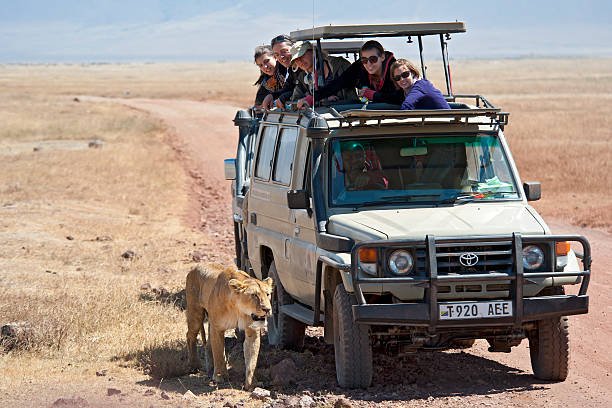
A private safari provides your booking party with its own 4x4 vehicle and professional driver guide.
This is particularly useful for wildlife photographers because the group can remain longer at interesting sightings when conditions and protected area rules allow.
Families and couples can also benefit from a more flexible daily schedule.
Group Joining Ndutu Safari
A group joining safari allows travellers to share major vehicle and guiding costs.
Before booking, confirm that the route genuinely spends sufficient time in Ndutu or southern Serengeti during January and February.
A standard central Serengeti departure is not automatically a calving safari.
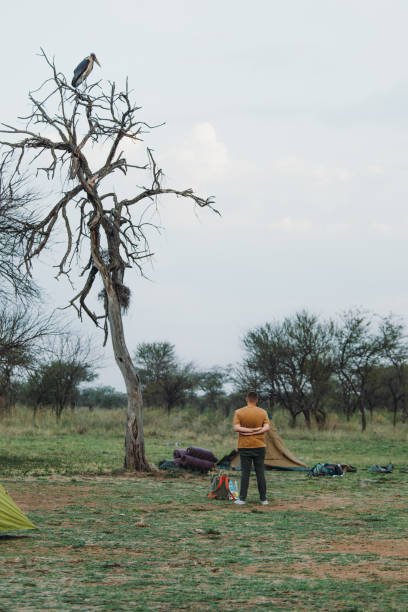
Ndutu Camping Safari
Camping offers a more adventurous and budget conscious safari style.
The package should clearly state the campsite, tent arrangement, sleeping equipment, meals and other camping facilities.
Waterproofing is particularly useful during green season travel.
Seasonal Tented Camp Safari
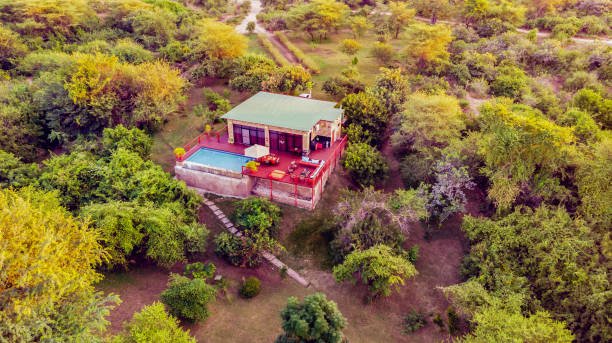
Seasonal tented camps are particularly suitable for migration focused travel because they can position guests close to important seasonal wildlife areas.
Depending on the camp, tents can include comfortable beds, private bathrooms and dining facilities.
Popular properties can become limited during February, making advance reservations useful.
Ndutu Lodge Safari
Lodge accommodation provides permanent rooms and additional comfort.
When selecting a lodge, consider both room quality and driving distance to the expected wildlife area.
A well located property can preserve more time for wildlife viewing.
Luxury Ndutu Safari
A premium safari can combine private transportation, high quality seasonal accommodation and extended game drive flexibility.
Domestic flight arrangements can also be considered for travellers wanting to reduce long road transfers.
Safari from Moshi
An Ndutu Safari January February can begin from Moshi.
This is convenient for travellers staying near Mount Kilimanjaro or continuing directly from a mountain trek.
Because Ndutu involves a substantial road journey, the first day's schedule should be planned carefully.
Safari from Arusha
Arusha is another major starting point for Ndutu and Ngorongoro itineraries.
Road travel allows the safari to incorporate other northern circuit destinations before or after the calving plains.
Safari After Kilimanjaro
January and February Ndutu safaris can be combined with a Kilimanjaro climb.
After descending the mountain, travellers can recover in Moshi, reorganise luggage and then begin their wildlife safari.
Mountain equipment that is not required for safari can often remain at an agreed storage location.
Add Tarangire
Tarangire can be added for baobab landscapes, elephants and additional wildlife diversity.
Allow additional time rather than reducing the number of days spent in the seasonal calving area.
Add Lake Manyara
Lake Manyara adds forest, lake, birdlife and Rift Valley scenery to the safari.
It can be incorporated on the road route toward the Ngorongoro highlands when the itinerary allows.
Add Zanzibar
Zanzibar can be included after the safari for travellers wanting a wildlife and beach holiday.
Domestic flights and airport transfers can be planned according to the final safari destination.
What to Pack for Ndutu in January February
- Comfortable safari clothing
- Warm fleece
- Light rain jacket
- Comfortable trousers
- Sun hat
- Sunglasses
- Sunscreen
- Comfortable closed shoes
- Camera equipment
- Binoculars
- Personal medication
- Power bank
- Small day bag
Typical Ndutu Safari Inclusions
Your Package Can Include
- Pickup from confirmed Moshi or Arusha accommodation
- Safari adapted 4x4 vehicle
- Professional driver guide
- Ndutu and southern Serengeti game drives according to itinerary
- Accommodation according to package
- Meals according to itinerary
- Drinking water according to the safari arrangement
- Applicable protected area charges when stated
- Road transfers included in the confirmed itinerary
- Ngorongoro Crater game drive when included
Typical Exclusions
- International flights
- Visa expenses unless stated
- Travel insurance
- Personal expenses
- Alcoholic and selected additional drinks unless stated
- Domestic flights unless stated
- Optional activities not listed in the package
- Additional hotel nights unless stated
- Driver guide gratuities unless specifically included
Frequently Asked Questions About Ndutu Safari January February
Is January a good time for Ndutu?
Yes. January can provide green plains, large migration herds, pregnant wildebeest and increasing calving activity.
Is February a good time for Ndutu?
Yes. February is particularly popular for wildebeest calving, newborn calves and predator opportunities.
Which is better, January or February?
Both can be rewarding. January can provide large migration herds and early calving activity, while February generally places greater emphasis on newborn wildebeest and the core calving period.
When does wildebeest calving happen?
The main southern Serengeti calving period runs broadly through January to March, with February particularly important.
Can I see newborn calves in January?
Yes. Calves can already be present in January depending on seasonal conditions and herd movement.
Can I see newborn calves in February?
Yes. February is particularly associated with large numbers of wildebeest calves when seasonal conditions align.
Can I witness a wildebeest birth?
It is possible by chance, but an individual birth cannot be scheduled or guaranteed.
Are lions common during calving season?
Lions use the wider ecosystem throughout the year and may be encountered around seasonal concentrations of prey.
Can I see cheetahs in Ndutu?
Yes. The open short grass plains provide suitable cheetah habitat, although individual sightings remain unpredictable.
Can I see hyenas?
Yes. Hyenas are important predators and scavengers within the southern Serengeti ecosystem.
Are hunts guaranteed?
No. Predator hunting behaviour is natural and cannot be guaranteed during any game drive.
Does it rain in January and February?
Seasonal showers can occur and help create the fresh green grass that supports migrating herds.
Will rain stop the safari?
Not automatically. Game drives continue according to road and weather conditions, although heavy rain can make some routes more difficult.
Is Ndutu good for photography?
Yes. Green landscapes, wildebeest calves, predators and large migration herds can provide excellent photography opportunities.
How many days should I spend in Ndutu?
Several game drive days are useful because migration herds can move throughout the wider seasonal area.
Is three days enough?
Three days is possible, while four to six days provides more wildlife time and easier combinations with Ngorongoro or central Serengeti.
Can I combine Ndutu with Ngorongoro Crater?
Yes. Ngorongoro Crater is one of the most practical additions to an Ndutu safari.
Can I add central Serengeti?
Yes. Central Serengeti can provide additional resident wildlife and predator viewing when enough days are available.
Can Tarangire be added?
Yes. Tarangire can add elephants, baobab landscapes and another northern Tanzania wildlife environment.
Can Lake Manyara be added?
Yes. Lake Manyara can add forest, birdlife and Rift Valley scenery to a longer itinerary.
Can I start from Moshi?
Yes. Pickup can be arranged from a confirmed Moshi hotel according to the safari package.
Can I start from Arusha?
Yes. Arusha is another common starting point for Ndutu and Ngorongoro road safaris.
Can I book a private safari?
Yes. Private safaris provide your party with its own safari vehicle and professional driver guide.
Can I join a group safari?
Yes. Group joining options can be available when scheduled departures match your dates and visit the correct seasonal area.
Can I choose camping?
Yes. Camping is available for travellers wanting a more adventurous and budget focused safari.
Are seasonal tented camps available?
Yes. Seasonal tented camps can position travellers conveniently for migration focused wildlife viewing.
Can I stay in lodges?
Yes. Lodge accommodation can be selected according to location, availability, comfort preference and budget.
Can families visit Ndutu?
Yes. Family itineraries can be adjusted around children's ages, preferred game drive duration and accommodation needs.
Can solo travellers join?
Yes. Solo travellers can request a private safari or join a suitable scheduled departure.
Can I visit after Kilimanjaro?
Yes. Ndutu can be added after a Kilimanjaro climb, with a recovery night in Moshi often useful before safari departure.
Can Zanzibar be added afterwards?
Yes. Zanzibar can be added after the safari using suitable domestic flight and transfer arrangements.
How do I book an Ndutu Safari January February?
Provide your January or February travel dates, number of travellers, preferred safari duration and accommodation style, then confirm whether you want a private or group joining safari and whether Ngorongoro, central Serengeti, Tarangire, Kilimanjaro or Zanzibar should be added.
Plan Your Ndutu Safari in January or February
Experience the green southern Serengeti and Ndutu plains with professional wildlife game drives focused on wildebeest migration herds, newborn calves, predators and the remarkable January and February calving season.
Plan Your Ndutu Safari

 Serengeti Safari