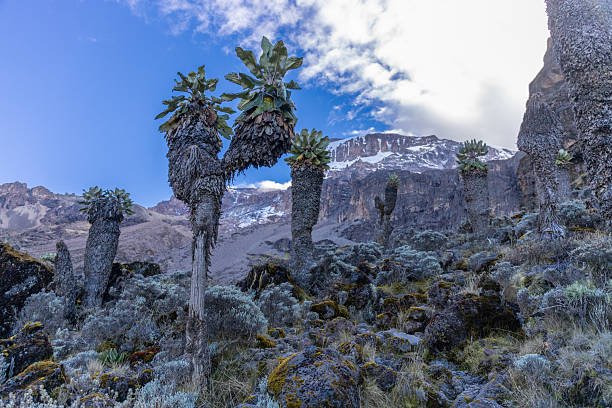
6 Day Kilimanjaro Climb from Moshi
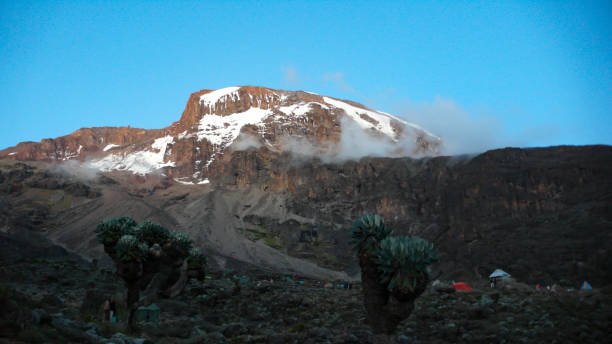
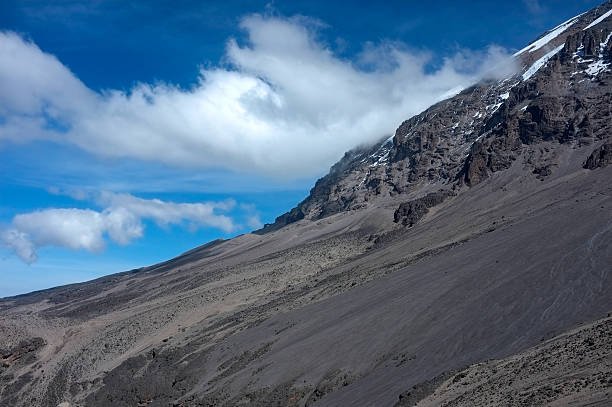
The 6 Day Kilimanjaro Climb from Moshi is a complete Machame Route summit adventure combining practical pre climb preparation in Moshi with six consecutive mountain days through rainforest, Shira Plateau, Lava Tower, Barranco, Karanga, Barafu and the high summit zone of Mount Kilimanjaro.
Moshi works naturally as the operational base for this itinerary. Climbers can arrive before the trek, meet the mountain team, review equipment, organize rental items, separate expedition luggage from belongings that will remain behind and prepare for the road transfer to Machame Gate.
Once the mountain expedition begins, the itinerary follows the classic six day Machame structure. Day 1 climbs from Machame Gate to Machame Camp. Day 2 reaches the Shira Plateau. Day 3 climbs toward Lava Tower before descending to Barranco. Day 4 crosses the Barranco Wall, continues through Karanga Valley and reaches Barafu. Day 5 begins during the night with the summit attempt through Stella Point toward possible Uhuru Peak at 5,895 metres before descending to Mweka Camp. Day 6 finishes at Mweka Gate before the confirmed road journey back toward Moshi.
This page focuses not only on the mountain trail but on the complete Moshi based climbing experience: arriving before the expedition, briefing, luggage storage, equipment checks, gate transfers, six mountain days, return logistics, post climb accommodation and sensible onward travel planning.
Uhuru Peak is the intended highest objective but is never guaranteed. Altitude, illness, exhaustion, weather, trail conditions, timing and professional guide judgment can all require an itinerary change or descent before the planned summit.
6 Day Kilimanjaro Climb from Moshi at a Glance
- Mountain: Mount Kilimanjaro
- Preparation base: Moshi
- Route: Machame Route
- Mountain duration: 6 days
- Mountain nights: 5
- Starting gate: Machame Gate
- Finish gate: Mweka Gate
- Accommodation: Tented mountain camps
- Night 1: Machame Camp
- Night 2: Shira Camp
- Night 3: Barranco Camp
- Night 4: Barafu Camp
- Night 5: Mweka Camp
- Acclimatization feature: Lava Tower high point followed by lower Barranco night
- Major route feature: Barranco Wall
- Summit camp: Barafu
- Crater rim objective: Stella Point
- Highest objective: Uhuru Peak, 5,895 m
- Return base: Moshi where arranged
- Summit guarantee: No
Why Start a Kilimanjaro Climb from Moshi?
Moshi is one of the most practical towns for organizing a Kilimanjaro expedition because it provides a convenient base for mountain preparation, briefing, equipment organization and road access to the gates.
Starting from Moshi does not mean the six climbing days begin inside the town itself. The mountain itinerary begins after the road transfer to Machame Gate. Moshi acts as the pre climb and often post climb base.
Why Moshi Is Useful Before Kilimanjaro
- Pre climb hotel options
- Mountain briefing
- Equipment inspection
- Rental equipment organization
- Luggage separation
- Food and personal supply purchases
- Road transfer to Machame Gate
- Practical return point after Mweka Gate
- Safari and Zanzibar connection planning
Arrival in Moshi Before the Climb
Where possible, arriving in Moshi before Day 1 gives climbers time to settle, recover from travel, attend the expedition briefing and resolve equipment issues before entering Kilimanjaro National Park.
The exact hotel arrangement depends on the package. A pre climb hotel should only be treated as included when specifically stated in the confirmed quotation.
Pre Climb Briefing in Moshi
The briefing is an important operational stage rather than a simple welcome meeting.
Topics to Review Before Leaving Moshi
- Complete six day Machame itinerary
- Machame Gate transfer
- Camp sequence
- Daily walking rhythm
- Lava Tower altitude stage
- Barranco Wall
- Karanga transit
- Barafu summit preparation
- Altitude symptoms
- Summit turnaround authority
- Tent arrangement
- Sleeping equipment
- Porter luggage allowance
- Daypack equipment
- Rental equipment
- Mweka Gate return logistics
- Post climb hotel arrangements
Equipment Check in Moshi
An equipment check before entering the mountain helps identify missing or unsuitable items while there is still time to solve the problem.
The focus should be on function rather than fashion. Clothing and equipment need to work through rainforest moisture, open moorland, cold high camps, wind and summit night.
Common Items to Check Before Departure
- Hiking boots
- Hiking socks
- Thermal layers
- Warm middle layers
- Insulated summit jacket
- Waterproof jacket
- Waterproof trousers
- Warm hat
- Warm gloves
- Daypack
- Duffel bag
- Sleeping bag
- Headlamp
- Spare or reliable batteries
- Trekking poles
- Water carrying system
- Sunglasses
- Sun protection
- Personal medication
- Power bank
Rental Equipment in Moshi
Where rental equipment is available, Moshi is the appropriate place to inspect and organize it before the mountain transfer.
Rental items should be confirmed in advance rather than assumed to be included in the base climbing package.
Common Rental Items
- Sleeping bag
- Duffel bag
- Trekking poles
- Gaiters
- Warm jacket
- Waterproof jacket
- Waterproof trousers
Luggage Storage in Moshi
Travellers should not carry their entire international suitcase onto Kilimanjaro.
Safari clothing, city clothing, additional shoes and other items not required during the six mountain days can remain at an agreed storage location where luggage storage has been confirmed.
What Goes to the Mountain?
Mountain belongings are normally separated between porter luggage and the climber's daypack according to the confirmed expedition arrangements.
What Stays in Your Daypack?
Carry What You May Need While Walking
- Water
- Rain jacket
- Waterproof trousers
- Warm layer
- Hat and gloves where needed
- Sunglasses
- Sun protection
- Personal medication
- Energy snacks
- Phone or camera
- Small valuables
Moshi to Machame Gate Transfer
On Day 1, the climber leaves Moshi by road for Machame Gate according to the confirmed pickup arrangement.
Travel time can vary with the exact hotel location, road traffic and operating conditions, so the morning schedule should follow the mountain team's plan rather than a rigid self arranged timetable.
What Happens at Machame Gate?
The expedition team completes the applicable entry procedures and organizes crew and luggage before the climbing party enters the trail.
The mountain journey itself begins after these procedures rather than immediately when the vehicle leaves Moshi.
Complete 6 Day Kilimanjaro Climb from Moshi Itinerary
Six Mountain Days
Day 1: Moshi → Machame Gate → Machame Camp.
Day 2: Machame Camp → Shira Camp.
Day 3: Shira Camp → Lava Tower → Barranco Camp.
Day 4: Barranco Camp → Barranco Wall → Karanga Valley → Barafu Camp.
Day 5: Barafu → Stella Point → possible Uhuru Peak → Barafu → Mweka Camp.
Day 6: Mweka Camp → Mweka Gate → return toward Moshi where arranged.
Day 1 – Moshi to Machame Gate to Machame Camp
The first day begins with the agreed pickup in Moshi and road transfer toward Machame Gate.
After the applicable gate procedures, the walking route enters Kilimanjaro's montane rainforest and climbs steadily toward Machame Camp around the 3,000 metre zone.
Day 1 Objective
Transition smoothly from Moshi logistics into mountain mode, establish a slow walking rhythm and reach Machame Camp without unnecessarily exhausting yourself on the first day.
Rainforest Conditions
The lower mountain can be humid and wet. Rain can create mud, slippery roots and uneven natural surfaces.
Keep Waterproof Clothing Accessible
Rain protection belongs in the daypack rather than in porter luggage because weather can change before the next camp is reached.
Why You Should Not Walk Fast on Day 1
Climbers often feel strongest on the lower mountain. This can create a temptation to walk faster than necessary.
Kilimanjaro rewards consistent energy management, not early speed.
Possible Wildlife
Birds and other wildlife may occasionally be encountered in the forest, but no specific wildlife sighting should be guaranteed.
Night 1 – Machame Camp
First Mountain Evening
Change Into Dry Clothing
Rainforest moisture can leave walking clothing damp.
Organize Your Tent
Place nighttime and morning essentials where they can be found easily.
Prepare the Sleeping Bag
Set up your sleeping insulation before temperatures fall.
Eat and Hydrate
Begin recovery immediately rather than waiting until the following morning.
Check Your Feet
Address any developing friction or blisters early.
Rest
Five mountain days still remain.
Day 2 – Machame Camp to Shira Camp
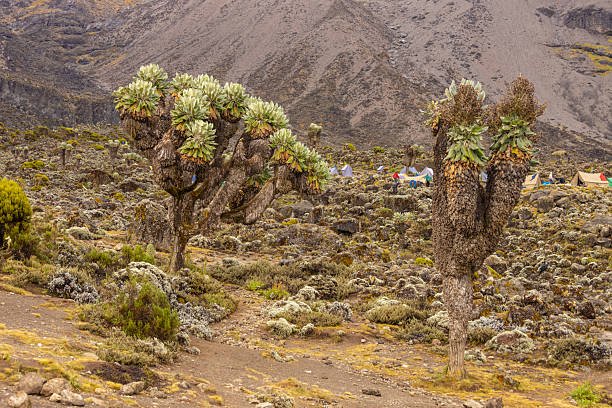
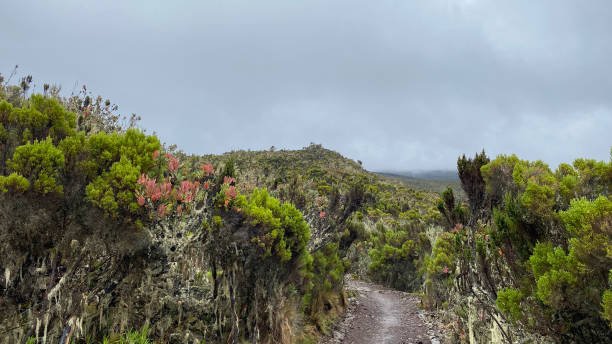
Day 2 climbs out of the forest and moves into increasingly open heath and moorland toward the Shira Plateau.
The trail becomes more exposed while vegetation becomes shorter and the volcanic character of the mountain becomes increasingly visible.
Day 2 Objective
Continue gaining altitude gradually and reach Shira with enough energy for the important Lava Tower stage the following day.
Leaving the Rainforest
The transition into heath and moorland is one of the first major environmental changes of the Machame Route.
Shira Plateau
The Shira Plateau forms part of Kilimanjaro's volcanic landscape and gives the route a much more open high mountain character.
Possible Kibo Views
Clear weather can provide impressive views toward the upper mountain, but cloud can appear quickly and visibility cannot be guaranteed.
Sun and Wind
Open terrain means stronger exposure to sunshine and wind. Sunglasses, sun protection and accessible layers become increasingly useful.
Night 2 – Shira Camp
- Eat according to the mountain meal plan
- Hydrate appropriately
- Wear warm layers after sunset
- Check feet and boots
- Report altitude concerns honestly
- Prepare waterproof gear
- Prepare for Lava Tower
- Rest
Day 3 – Shira Camp to Lava Tower to Barranco Camp
Day 3 is one of the most important altitude stages of the six day Machame itinerary.
Rather than simply climbing to the next sleeping camp, the route rises toward Lava Tower at approximately 4,600 metres before descending to Barranco Camp around the 3,900 metre zone.
Day 3 Objective
Gain substantial daytime elevation without rushing, observe how your body responds and then descend to a lower sleeping altitude at Barranco.
Climbing Toward Lava Tower
The environment becomes increasingly barren as the route climbs into higher volcanic terrain.
Walking can feel slower even when the gradient itself is manageable because the body is now working at significantly higher altitude.
What Is Lava Tower?
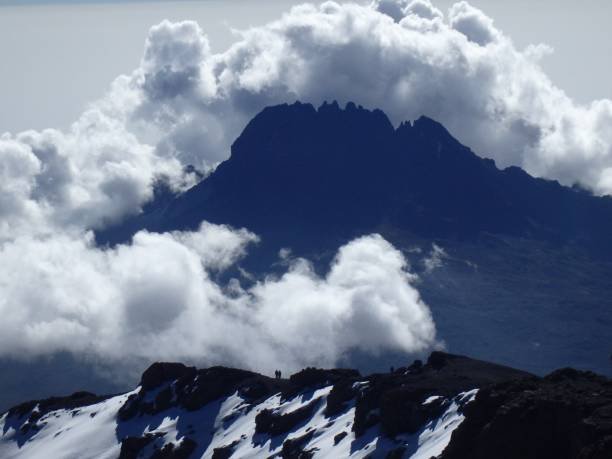
Lava Tower is a prominent volcanic landmark on Kilimanjaro's southern trail network and an important high point within the Machame itinerary.
Why Lava Tower Matters
Its importance comes from altitude as much as scenery. Climbers experience an elevation similar to later high camps and then descend before sleeping.
Does Lava Tower Guarantee Acclimatization?
No. It provides valuable altitude exposure, but individual response remains unpredictable.
Altitude Symptoms Must Be Reported
Communicate Clearly With Your Guide
- Worsening headache
- Persistent nausea
- Vomiting
- Dizziness
- Unusual weakness
- Poor coordination
- Confusion
- Unusual shortness of breath
- Any rapidly worsening condition
Lava Tower to Barranco
After reaching the higher section, the route descends toward Barranco Valley.
Dropping elevation can make some climbers feel more comfortable, but the full mountain day remains substantial.
Barranco Camp
Barranco provides one of the most distinctive camps on the Machame Route and lies beneath the dramatic Barranco Wall.
Clear upper mountain views are possible but remain dependent on weather and visibility.
Night 3 – Barranco Camp
Barranco Evening Priorities
Recover From Lava Tower
Eat, hydrate and allow the body to recover from the high altitude stage.
Discuss Your Condition
Honest communication is important before climbing higher.
Prepare for Barranco Wall
Organize gloves, layers and your daypack before morning.
Protect Your Energy
Day 4 continues all the way to Barafu in this six day itinerary.
Day 4 – Barranco Camp to Barafu Camp
Day 4 is a major difference between the six day Machame schedule and a common seven day version.
Climbers cross the Barranco Wall, continue through Karanga Valley and then proceed to Barafu rather than using Karanga as a separate overnight camp.
Day 4 Objective
Complete the southern circuit stage carefully and arrive at Barafu with enough strength remaining for the summit attempt beginning only several hours later.
Barranco Wall
The Barranco Wall appears steep and dramatic from camp.
The established route combines steep trekking with scrambling, and hands may be used for balance on certain sections.
Is Barranco Wall Technical Rock Climbing?
The normal trekking line is generally treated as hiking and scrambling rather than conventional technical climbing requiring routine rope techniques.
Do You Need Rock Climbing Experience?
Specialist rock climbing experience is not normally required for the standard Machame Route.
Why You Should Not Race on Barranco Wall
Careful movement and safe spacing matter more than speed, particularly when several expedition groups are using the route.
Barranco Wall to Karanga Valley
After the wall, the trail continues through high ridges, descents and climbs toward Karanga.
Completing the Barranco Wall therefore does not mean the day's physical work is finished.
Karanga on the 6 Day Machame Route
In this six day itinerary, Karanga is normally a transit stage rather than the fourth overnight camp.
The group continues toward Barafu during the same day.
Karanga to Barafu
The trail becomes increasingly barren as the expedition approaches summit base.
Vegetation becomes sparse and the high alpine environment dominates the landscape.
Arrival at Barafu Camp
Barafu lies around the 4,600 to 4,700 metre zone and is the final camp before the summit attempt.
The objective after arriving is to eat, hydrate, prepare equipment, communicate health concerns and rest rather than expend additional energy unnecessarily.
Summit Equipment Check at Barafu
- Thermal base layers
- Warm middle layers
- Insulated jacket
- Weather resistant outer shell
- Warm lower body layers
- Warm socks
- Warm hat
- Warm gloves
- Suitable hiking boots
- Headlamp
- Reliable batteries
- Water
- Energy snacks
- Trekking poles
- Personal medication
Why Day 4 Requires Energy Management
The six day itinerary combines Barranco Wall, Karanga and Barafu into one mountain day.
Climbers who use unnecessary energy early in the day may feel the consequences several hours later when summit night begins.
Night 4 – Barafu Camp
Barafu is technically the fourth mountain night, although the rest period is normally shorter than a full night's sleep.
Altitude, cold and anticipation can also make deep sleep difficult for some climbers.
Day 5 – Barafu to Stella Point and Uhuru Peak Attempt
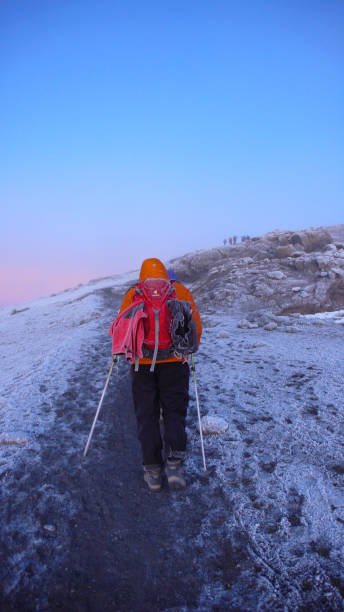
The fifth day begins during the night according to the professional guide's summit plan.
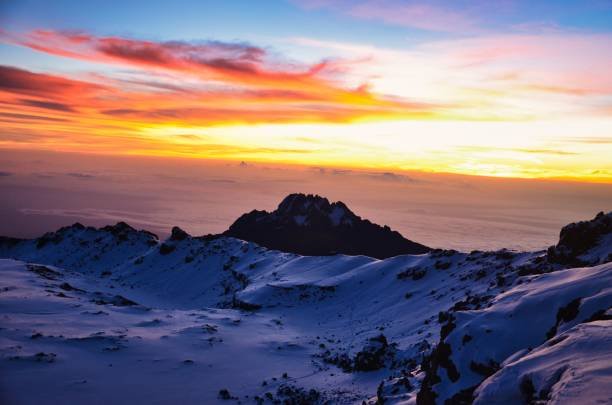
Climbers leave Barafu under headlamps and begin the slow ascent toward Stella Point on Kilimanjaro's crater rim.
Summit Objective
Attempt Stella Point and continue toward Uhuru Peak only while individual health, altitude response, energy, weather, timing and professional guide judgment support further ascent.
Why Summit Night Is Difficult
- Extreme altitude
- Cold temperatures
- Darkness
- Limited sleep
- Accumulated fatigue
- Slow high altitude progress
- Several previous mountain days
- A major descent still remaining
Barafu to Stella Point
This is the steep high altitude stage of the Machame summit attempt.
Movement often becomes extremely slow compared with hiking at lower elevation.
Why Pole Pole Matters
The objective is controlled progress, not speed. Walking slowly helps conserve energy and allows the guide to monitor individual condition.
Stella Point
Stella Point is an important crater rim milestone on the Machame summit approach.
Reaching Stella Point is a major achievement, but it does not automatically mean every climber should continue toward Uhuru.
Stella Point to Uhuru Peak
Climbers who remain in suitable condition may continue along the summit area toward Uhuru Peak at 5,895 metres.
The continuation occurs at extreme altitude after several hours of climbing.
Uhuru Peak – 5,895 Metres
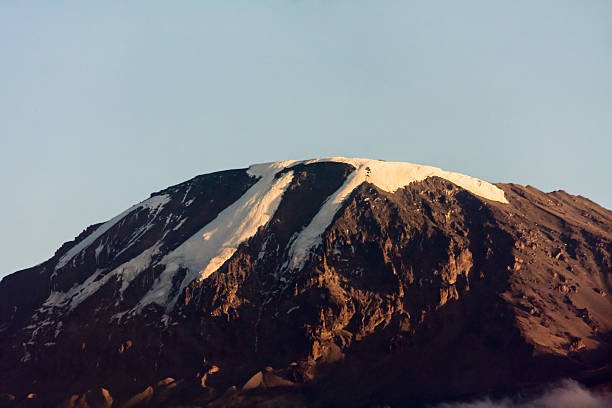
Uhuru Peak is the planned highest objective of the 6 Day Kilimanjaro Climb from Moshi.
Summit Success Is Never Guaranteed
Every participant receives a professionally organized summit attempt rather than a guarantee of reaching Uhuru Peak. A guide can require descent whenever altitude, illness, exhaustion, weather, timing or another mountain safety concern makes further ascent inappropriate.
Does Stella Point Guarantee Uhuru?
No. A climber must remain in suitable physical condition to continue through the summit zone.
Is Sunrise at Uhuru Guaranteed?
No. Pace varies between climbers, so sunrise may occur below Stella Point, around the crater rim or elsewhere on the summit trail.
Are Clear Summit Views Guaranteed?
No. Cloud and high mountain weather can change rapidly.
The Summit Is Not the Finish Line
After reaching the highest safe point, climbers still need to descend toward Barafu and continue significantly farther down to Mweka Camp.
Summit Descent to Barafu
Descending can be faster than climbing but places considerable stress on fatigued legs.
Trekking poles can become particularly helpful on loose or prolonged downhill terrain.
Barafu to Mweka Camp
After returning to Barafu and taking an appropriate break, climbers continue farther down the mountain toward Mweka.
The Full Summit Day Can Include
- Wake during the night
- Summit clothing preparation
- Departure from Barafu
- Slow ascent toward Stella Point
- Possible continuation to Uhuru Peak
- Descent toward Barafu
- Recovery break where appropriate
- Long descent toward Mweka Camp
Night 5 – Mweka Camp
Mweka provides the fifth and final mountain night.
The lower altitude can feel more comfortable after summit night, but physical fatigue may be substantial.
Mweka Recovery Priorities
Change Into Dry Clothing
Replace damp summit and descent layers where possible.
Eat
Begin restoring energy after summit day.
Hydrate
Continue appropriate fluid intake.
Check Feet and Knees
One more substantial downhill stage remains.
Sleep
The body has completed the hardest stage but has not yet finished the mountain.
Day 6 – Mweka Camp to Mweka Gate and Return to Moshi
The final mountain day descends through increasingly lush vegetation and eventually returns to rainforest.
Day 6 Objective
Complete the final descent safely, reach Mweka Gate, finish the applicable exit procedures and begin the confirmed road journey back toward Moshi.
Why Day 6 Is Still Demanding
The altitude is substantially lower, but muscles have already completed summit night and five previous mountain stages.
Mud, wet roots and repeated downhill movement can make the final trail physically demanding.
Arrival at Mweka Gate
The climbing portion of the expedition finishes only when the group reaches Mweka Gate and completes the applicable exit process.
The road transfer toward Moshi then begins according to the booked transportation arrangement.
Mweka Gate to Moshi
Returning to Moshi after six mountain days gives climbers the opportunity to shower, recover, reorganize stored luggage and prepare for the next stage of their Tanzania journey.
The exact drop off point should be agreed before the expedition, particularly when the traveller's post climb hotel differs from the pre climb accommodation.
Post Climb Hotel in Moshi
A post climb hotel night can be highly practical, but it should only be considered part of the package where specifically confirmed.
The evening can be used for recovery, repacking, meals, laundry arrangements and preparation for safari, Zanzibar or an international departure.
Should You Fly Immediately After Day 6?
Avoid an unnecessarily tight flight schedule.
The final trekking time, gate procedures, road conditions and transfer back toward Moshi can all vary. A reasonable buffer also gives the body time to recover after summit night.
Airport Transfers Before and After the Climb
Airport transportation should be confirmed independently from the gate transfers unless the package clearly states otherwise.
Do not assume that a Moshi based Kilimanjaro package automatically includes both airport pickup and airport drop off.
6 Day Machame Altitude Profile
How the Mountain Progresses
Machame Camp: First substantial sleeping elevation.
Shira: Higher plateau night.
Lava Tower: High daytime exposure around 4,600 m.
Barranco: Lower sleeping elevation after Lava Tower.
Barafu: Return to approximately 4,600 to 4,700 m before summit night.
Stella Point and Uhuru: Extreme summit altitude.
Mweka: Major descent before the final gate day.
Is Six Day Machame Good for Acclimatization?
The route includes useful altitude variation, especially the climb toward Lava Tower followed by descent to Barranco.
However, individual altitude response remains unpredictable, and six days is more compressed than longer Machame options.
6 Day vs 7 Day Machame from Moshi
6 Day Machame
Normally crosses Barranco Wall, travels through Karanga and continues to Barafu within one mountain day.
7 Day Machame
Commonly uses Karanga as an additional overnight camp before moving to Barafu the following day.
Who May Prefer Six Days?
Well prepared travellers with limited time who understand the longer Barranco to Barafu stage may consider six day Machame.
Who Should Compare Seven Days?
Travellers prioritizing an additional mountain night, a separate Karanga overnight or more time before summit camp should compare the seven day version.
How Difficult Is the 6 Day Kilimanjaro Climb from Moshi?
Main Challenges
- Six consecutive mountain days
- Increasing altitude
- Rainforest mud and roots
- Lava Tower altitude exposure
- Barranco Wall scrambling
- Barranco to Barafu in one day
- Cold high camps
- Limited sleep before summit
- Nighttime summit ascent
- Extreme altitude
- Long summit descent
- Final Mweka rainforest descent
Does Machame Require Technical Climbing?
The standard Machame Route is primarily high altitude trekking rather than conventional technical mountaineering.
Barranco Wall contains scrambling, but the central challenges are altitude, endurance, cold, changing weather and cumulative fatigue.
Can Beginners Climb Kilimanjaro in Six Days?
Some first time high altitude climbers use six day Machame, but the itinerary should never be described as easy simply because technical climbing skills are normally unnecessary.
Physical preparation, appropriate equipment and realistic understanding of altitude remain important.
Training Before Arriving in Moshi
- Regular cardiovascular training
- Long outdoor walks
- Hill hiking
- Stair climbing
- Leg strength training
- Walking with a daypack
- Back to back hiking days
- Long downhill practice
- Trekking pole practice
- Testing hiking boots before travelling
Why Downhill Training Matters
A Kilimanjaro summit attempt contains a major descent, followed by another downhill trekking day to Mweka Gate.
Preparing only for uphill walking leaves a major part of the expedition untrained.
Why Fitness Does Not Guarantee Summit Success
Physical fitness can make trail effort more manageable but cannot guarantee successful altitude adaptation.
Very fit climbers can still develop altitude symptoms and should therefore follow the same conservative pacing principles as everyone else.
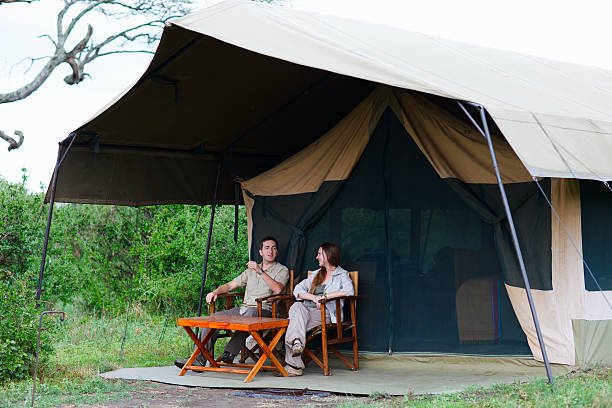
Camping Accommodation on Machame
Machame uses designated tented camps throughout the six day itinerary.
Five Mountain Nights
- Night 1: Machame Camp
- Night 2: Shira Camp
- Night 3: Barranco Camp
- Night 4: Barafu Camp
- Night 5: Mweka Camp
Sleeping Tent
The package should clearly confirm tent occupancy and whether the arrangement is shared or single.
Does Private Climb Mean Private Tent?
Not automatically. Private booking status and single tent occupancy are separate arrangements.
Does Private Mean Private Campsite?
No. Kilimanjaro camps can be used by multiple expeditions.
Sleeping Mat or Mattress
Confirm whether the mountain package provides a sleeping mat or mattress.
Sleeping Bag
A suitable sleeping bag is essential for cold mountain nights. Confirm whether it is personally supplied, included or available as rental equipment.
Dining Tent
A supported camping package can include a dining tent for meals and briefings where confirmed.
Private Portable Toilet
A private portable toilet should only be considered included where specifically stated in the booking.
Professional Mountain Guide
The mountain guide is responsible for considerably more than navigation.
Professional guiding includes pace management, daily route decisions, climber observation, summit planning, health communication and determining when descent is necessary.
Assistant Guides
Assistant guide requirements depend on the group structure.
This becomes especially important on summit night if members of the same party need to move separately.
Porters and Mountain Crew
Crew Functions Can Include
- Lead guide
- Assistant guide support according to group structure
- Cook
- Porters
- Camp movement
- Meal preparation
- Confirmed client luggage transport
- Operational mountain equipment transport
Mountain Meals
Food supports the body through six consecutive mountain days and should be considered part of the climbing logistics rather than an afterthought.
Only the meals specified in the written package should be treated as included.
Vegetarian and Dietary Requirements
Dietary requirements should be communicated before arriving at the mountain and confirmed with the operator.
Drinking Water
The operator should explain how mountain drinking water is handled and how much carrying capacity each climber needs.
Can You Charge Your Phone on Kilimanjaro?
Do not depend on reliable electrical charging at mountain camps.
Charge devices before leaving Moshi and carry a suitable power bank for the mountain.
Is WiFi Reliable on Kilimanjaro?
Do not organize essential communication around guaranteed mountain WiFi or continuous mobile coverage.
Private 6 Day Kilimanjaro Climb from Moshi
A private departure can be organized around a solo traveller, couple, family, friends or another defined booking party.
Private does not mean exclusive mountain trails or private campsites unless such a service has specifically been confirmed.
Group Joining Kilimanjaro Climb from Moshi
Group joining can be possible where a suitable scheduled six day Machame departure has availability.
Confirm the exact start date, camp sequence and group structure before making payment.
Solo Travellers Starting from Moshi
Solo travellers can potentially join an existing group or request a private climb depending on dates and availability.
Couples Starting from Moshi
Couples can join a scheduled group or organize a private expedition according to their preferred travel style.
Weather Across the Six Day Climb
- Warm lower mountain conditions
- Humid rainforest
- Rain and mud
- Strong sunshine on open terrain
- Wind around exposed sections
- Cold high mountain camps
- Dry alpine conditions
- Very cold summit conditions
- Possible snow or ice depending on conditions
- Rapid changes in visibility
What Can Be Included in a 6 Day Kilimanjaro Climb from Moshi?
Core Services to Confirm
- Professional licensed mountain guide
- Assistant guides according to group requirements
- Cook and supporting crew
- Porters
- Applicable compulsory mountain charges
- Applicable camping charges
- Sleeping tents
- Sleeping mats where confirmed
- Dining tent where confirmed
- Tables and chairs where confirmed
- Mountain meals
- Drinking water arrangements
- Moshi to Machame Gate transportation where confirmed
- Mweka Gate to Moshi transportation where confirmed
- First aid and mountain safety equipment where confirmed
- Guided summit attempt
Possible Package Exclusions
- International flights
- Domestic flights unless included
- Visa expenses
- Travel insurance
- Personal trekking clothing
- Sleeping bag unless included
- Rental equipment unless included
- Single tent unless confirmed
- Private portable toilet unless confirmed
- Pre climb Moshi hotel unless included
- Post climb Moshi hotel unless included
- Airport transfers unless included
- Tips where separate
- Personal expenses
- Safari unless included
- Zanzibar extension unless included
Cost Factors for a Kilimanjaro Climb from Moshi
There is no single universal price for every six day Machame climb because quotations can contain different services.
Price Can Depend On
- Number of climbers
- Visitor category
- Private or group joining arrangement
- Guide structure
- Crew requirements
- Current compulsory mountain charges
- Camping equipment
- Tent occupancy
- Pre and post climb hotels
- Airport transfers
- Rental equipment
- Optional services
Why Moshi Package Prices Can Look Different
One quotation may contain only mountain services and gate transport, while another can include Moshi hotel nights, airport transfers, equipment rental or additional private services.
Compare complete inclusions rather than headline prices alone.
Kilimanjaro from Moshi + Safari
Returning to Moshi creates a practical transition into a Northern Tanzania safari after an appropriate recovery period.
Kilimanjaro + Tarangire
Tarangire can provide a compact wildlife extension for travellers with limited post climb time.
Kilimanjaro + Ngorongoro
Ngorongoro can form part of a short or longer safari itinerary after Kilimanjaro.
Kilimanjaro + Serengeti
Travellers with additional time can continue from the Kilimanjaro region toward Serengeti as part of a multi day safari.
Kilimanjaro from Moshi + Zanzibar
Zanzibar can follow the mountain directly or be added after a safari.
Flight and transfer timing should allow enough margin after the mountain rather than depending on an unnecessarily tight same day connection.
6 Day Kilimanjaro Climb from Moshi Booking Checklist
Confirm Before Paying
- Exact arrival date in Moshi
- Exact climbing departure date
- Six mountain days
- Machame Route confirmation
- Number of climbers
- Private or group joining arrangement
- Pre climb briefing
- Equipment check
- Rental equipment
- Luggage storage
- Moshi pickup location
- Machame Gate transfer
- Machame Camp
- Shira Camp
- Lava Tower stage
- Barranco Camp
- Barranco Wall
- Karanga transit
- Barafu Camp
- Stella Point objective
- Uhuru Peak objective
- Mweka Camp
- Mweka Gate finish
- Return transfer to Moshi
- Lead guide
- Assistant guide structure
- Porters and crew
- Applicable compulsory mountain charges
- Applicable camping charges
- Sleeping tents
- Tent occupancy
- Sleeping mat
- Sleeping bag arrangement
- Dining tent where applicable
- Mountain meals
- Drinking water arrangement
- Porter luggage allowance
- Private portable toilet if requested
- Pre climb Moshi hotel
- Post climb Moshi hotel
- Airport pickup
- Airport drop off
- Travel insurance responsibility
- Tips guidance
- Total package price
- Deposit
- Balance payment
- Cancellation conditions
- Rescheduling conditions
Common Mistakes When Climbing Kilimanjaro from Moshi
Avoid These Planning and Climbing Mistakes
- Arriving too late to resolve equipment problems
- Skipping the pre climb briefing
- Taking unnecessary luggage onto the mountain
- Assuming every rental item is included
- Walking too quickly on Day 1
- Packing waterproof clothing with porter luggage
- Underestimating Shira altitude
- Treating Lava Tower as a race
- Hiding altitude symptoms
- Believing strong fitness guarantees acclimatization
- Racing on Barranco Wall
- Assuming Karanga is an overnight camp on this six day itinerary
- Underestimating Barranco to Barafu
- Arriving at Barafu unnecessarily exhausted
- Packing inadequate summit clothing
- Using an unreliable headlamp
- Assuming Stella Point guarantees Uhuru
- Ignoring guide turnaround instructions
- Thinking summit day ends at Uhuru
- Underestimating the descent to Mweka
- Assuming airport transfers are automatically included
- Assuming both Moshi hotel nights are automatically included
- Booking an unnecessarily tight flight after Day 6
Mistake: Arriving in Moshi Without Time for Equipment Checks
Discovering a missing waterproof layer, unsuitable sleeping bag or uncomfortable boots immediately before the gate transfer creates avoidable stress.
Mistake: Confusing Moshi Departure With the Start of Mountain Walking
The morning begins with road transportation and gate procedures. Walking starts only after the expedition has been processed and organized at Machame Gate.
Mistake: Assuming Return Time to Moshi Is Fixed
Day 6 depends on walking pace, trail conditions, gate procedures and road transportation. Avoid building an important onward connection around an exact return minute.
Mistake: Treating Moshi as Only a Pickup Point
Moshi can be an important part of expedition preparation and recovery. Briefing, equipment checks, storage and post climb organization can all take place there.
6 Day Kilimanjaro Climb from Moshi FAQs
Which route does this six day climb use?
The itinerary described here uses the Machame Route.
Does the climb literally start in Moshi?
The operating day can begin with pickup in Moshi, but mountain walking starts from Machame Gate after the applicable entry procedures.
Why stay in Moshi before the climb?
Moshi provides a practical base for briefing, equipment inspection, rental arrangements, luggage storage and rest before Day 1.
Is a Moshi hotel automatically included?
No. Only hotel nights listed in the confirmed quotation should be treated as included.
Can equipment be checked in Moshi?
Yes, where a pre climb equipment check has been arranged.
Can equipment be rented in Moshi?
Potentially where suitable rental equipment is available and arranged.
Can I store my suitcase in Moshi?
Potentially where luggage storage has been confirmed.
Which gate do we drive to?
Machame Gate.
Where does the climb finish?
Mweka Gate in the standard itinerary described here.
Do we return to Machame Gate?
No. The normal Machame summit itinerary descends through Mweka.
Can transport return us to Moshi?
Yes where the Mweka Gate to Moshi transfer is included or arranged.
How many mountain days are there?
Six.
How many mountain nights are there?
Five.
Does Machame use huts?
No. The route uses designated tented camps.
Where is Night 1?
Machame Camp.
Where is Night 2?
Shira Camp.
Where is Night 3?
Barranco Camp.
Where is Night 4?
Barafu Camp.
Where is Night 5?
Mweka Camp.
Does the route include Lava Tower?
Yes in the six day itinerary described here.
Why is Lava Tower important?
It provides substantial daytime altitude exposure before the route descends to Barranco.
Do we cross Barranco Wall?
Yes.
Is Barranco Wall technical climbing?
The standard line is generally trekking and scrambling rather than conventional technical rock climbing.
Do we sleep at Karanga?
Not in the six day itinerary described here.
Where does summit night begin?
Barafu Camp.
Which crater rim point do we approach?
Stella Point.
How high is Uhuru Peak?
5,895 metres.
Is the summit guaranteed?
No.
Does Stella Point guarantee Uhuru?
No.
Can my guide stop my summit attempt?
Yes whenever health, altitude, weather, exhaustion or another mountain concern requires descent.
Is six day Machame easy?
No. It remains a demanding high altitude expedition.
Can beginners climb?
Some first time climbers use the route, but proper preparation and realistic expectations are important.
Do I need technical climbing experience?
Not normally for the standard Machame Route.
Which day is hardest?
For many climbers, summit day is the most demanding because it combines extreme altitude, cold, darkness and a long descent.
Why is Day 4 demanding?
The six day structure crosses Barranco Wall, passes through Karanga and continues to Barafu before summit night.
Do I need a sleeping bag?
Yes. Confirm whether it is included or available for rental.
Is a sleeping mat included?
Only where confirmed.
Do I get my own tent?
Only where single tent occupancy has been specifically confirmed.
Does private climbing mean private campsites?
No.
Can I request a private portable toilet?
Potentially where available and specifically arranged.
Are guides included?
Professional guiding should be clearly listed in the confirmed mountain package.
Are porters included?
Confirm the porter and crew structure in the written quotation.
Are mountain meals included?
Only meals listed in the confirmed package should be considered included.
Is drinking water included?
Confirm the exact mountain water arrangement.
Can vegetarian meals be arranged?
Dietary requirements should be communicated and confirmed before departure.
Can I charge my phone?
Do not depend on mountain charging. Charge devices in Moshi and carry a suitable power bank.
Is WiFi guaranteed on Kilimanjaro?
No.
Can I book privately from Moshi?
Yes where a private departure is arranged.
Can I join a group in Moshi?
Potentially where a compatible scheduled six day departure is available.
Can solo travellers join?
Yes through private or group joining arrangements.
Can couples book privately?
Yes where arranged.
Is airport pickup automatically included?
No. Confirm it separately.
Is airport drop off automatically included?
No. Confirm it separately.
Is a pre climb hotel included?
Only where the quotation states it.
Is a post climb hotel included?
Only where specifically confirmed.
Can I add a safari after returning to Moshi?
Yes.
Can I add Tarangire?
Yes.
Can I add Ngorongoro?
Yes.
Can I add Serengeti?
Yes.
Can Zanzibar be added after the climb?
Yes as part of a wider Tanzania itinerary.
Should I fly immediately after returning from Mweka Gate?
Avoid an unnecessarily tight flight because walking time, gate procedures and road transportation can vary.
Why is Moshi useful compared with travelling directly to the gate?
Using Moshi as a base allows climbers to separate international travel from the start of the expedition. There is time for briefing, checking boots and summit clothing, organizing rental equipment, separating porter luggage, storing items not needed on the mountain and confirming transportation. This reduces the number of unresolved practical issues arriving at Machame Gate.
What makes the six day Machame itinerary different from seven days?
The key structural difference is normally the stage after Barranco. In the six day itinerary, climbers cross Barranco Wall, travel through Karanga and continue to Barafu on the same day. A common seven day itinerary sleeps at Karanga before moving to Barafu the following day.
Why is returning to Moshi useful after the climb?
Returning to Moshi provides a practical place to recover, shower, collect stored luggage, change out of expedition clothing and reorganize before safari, Zanzibar or international travel. Travellers should nevertheless confirm whether post climb accommodation and the exact Mweka Gate transfer are part of their package.
What should I compare when choosing a Kilimanjaro package from Moshi?
Compare the exact route and number of mountain days, professional guide structure, crew, current compulsory mountain charges, camping equipment, tent occupancy, sleeping mat, meals, drinking water, Moshi to Machame transfer, Mweka to Moshi transfer, hotel nights, airport transfers, luggage storage, rental equipment and optional services. A lower headline price does not necessarily mean a lower complete travel cost.
So what is the complete 6 Day Kilimanjaro Climb from Moshi?
The complete 6 Day Kilimanjaro Climb from Moshi is a Machame Route summit expedition built around Moshi as the practical preparation and return base. Before entering the mountain, travellers can arrive in Moshi, recover from their journey, meet the climbing team, review the six day itinerary, inspect equipment, organize rental gear and separate mountain luggage from suitcases or safari belongings that will remain behind. On Day 1 the group leaves the agreed Moshi pickup point and travels by road toward Machame Gate. After the applicable entry procedures and crew organization, the actual trekking begins through Kilimanjaro's humid montane rainforest. Mud, roots and uneven natural surfaces can make the lower trail slippery, so waterproof protection and appropriate hiking boots should be accessible from the start. Climbers should establish a slow mountain rhythm rather than using the lower elevation to walk unnecessarily fast. Machame Camp provides the first tented night. Day 2 climbs out of the rainforest and enters heath and open moorland toward the Shira Plateau. Vegetation becomes shorter, exposure to sun and wind increases and possible views toward Kibo depend on current weather. Shira provides the second mountain night. Day 3 is one of the route's most important altitude stages. The trail climbs toward Lava Tower at approximately 4,600 metres before descending to Barranco Camp around 3,900 metres. This provides significant high altitude exposure followed by a lower sleeping elevation, but it never guarantees successful acclimatization. Climbers should communicate headache, nausea, dizziness, unusual weakness or other concerning symptoms rather than hiding them. Barranco becomes the third mountain camp beneath the dramatic Barranco Wall. Day 4 begins by climbing the wall through steep trekking and scrambling. Hands can be used for balance on certain sections, but the standard route is not normally conventional technical rock climbing. The route continues through ridges and valleys toward Karanga. On this six day itinerary, Karanga is normally a transit stage rather than an overnight stop. Climbers continue into increasingly barren alpine terrain toward Barafu around 4,600 to 4,700 metres. This creates a substantial pre summit day, making energy conservation especially important. At Barafu, climbers eat, hydrate, communicate how they feel, organize thermal clothing, insulation, waterproof layers, gloves, headlamp, water, snacks and trekking poles and attempt to rest. Day 5 begins during the night. The group leaves Barafu under headlamps and climbs slowly through cold and extreme altitude toward Stella Point. Reaching Stella Point is a major achievement but does not automatically mean every participant should continue. Climbers remaining in suitable condition may proceed around the high summit area toward Uhuru Peak at 5,895 metres. Uhuru is the intended highest objective rather than a guaranteed result. The professional guide can require descent whenever altitude, illness, exhaustion, weather, timing or another safety concern makes further ascent inappropriate. After reaching the highest safe point, climbers descend to Barafu and then continue considerably farther down toward Mweka Camp. Summit day therefore includes both the highest climb and one of the longest descents of the expedition. Mweka provides the fifth and final mountain night. Day 6 follows the descending trail through increasingly lush vegetation and rainforest to Mweka Gate. Lower elevation makes breathing easier, but fatigue, mud and prolonged downhill walking can still challenge the legs. After reaching the gate and completing the applicable exit process, the confirmed vehicle transfer begins toward Moshi. Back in Moshi, climbers can collect stored luggage, shower, recover and prepare for the next stage of their Tanzania journey. A professionally organized package can include guides, assistant guides according to group requirements, cook, porters, compulsory mountain and camping charges, sleeping tents, mats where confirmed, dining equipment where confirmed, meals, drinking water arrangements, first aid and safety equipment, Moshi to Machame transportation and Mweka Gate return transportation according to the written quotation. Travellers should separately verify hotel nights, airport transfers, sleeping bag rental, tent occupancy, private toilet, insurance and optional services. The defining strength of the 6 Day Kilimanjaro Climb from Moshi is therefore the complete journey rather than only the six days on the trail: preparation in Moshi, transfer to Machame Gate, rainforest, Shira Plateau, Lava Tower, Barranco, Karanga, Barafu, the summit attempt through Stella Point toward Uhuru Peak, the Mweka descent and the return to Moshi for recovery and onward travel.
Plan Your 6 Day Kilimanjaro Climb from Moshi
Prepare in Moshi, transfer to Machame Gate and climb through rainforest, Shira Plateau, Lava Tower, Barranco and Barafu before the summit attempt and complete Mweka descent.
Request Your 6 Day Kilimanjaro Climb