Kilimanjaro Porter Weight Limit
The Kilimanjaro Porter Weight Limit is an important part of preparing for a Mount Kilimanjaro climb because travellers cannot bring unlimited luggage for the mountain crew to carry.
For African Trek & Travel climbs, climbers should prepare a main mountain duffel weighing no more than 15 kg per person.
This is the bag transported between camps by the porter team. Climbers separately carry their own daypacks containing the items needed while walking.
The climber's 15 kg duffel allowance should not be confused with the total load handled by an individual porter. Porter loads also need to account for expedition equipment, food, tents and other mountain supplies depending on the assigned load.
Respecting luggage limits protects porter welfare, keeps the expedition organised and reduces the risk of having to remove unnecessary items before starting the trek.
Kilimanjaro Weight Limits at a Glance
- Climber main duffel: Maximum 15 kg for African Trek & Travel climbs.
- Climber daypack: Carried personally during each trekking day.
- Porter welfare: Loads must remain within responsible mountain limits.
- Duffel type: Soft, strong and preferably waterproof or internally lined.
- Recommended capacity: Approximately 70 to 100 litres depending on packing style.
- Extra luggage: Leave unnecessary travel items at the hotel or agreed storage location.
- Excess mountain luggage: Must be repacked or may require additional porter arrangements.
What Is the Kilimanjaro Porter Weight Limit?
There are two different weight figures that travellers often confuse.
The first is the amount of personal mountain luggage that a climber is permitted to give to the porter team.
For our Kilimanjaro climbs, this is a maximum of 15 kg per climber.
The second is the total working load allocated to an individual porter. That load may include client luggage or shared expedition equipment depending on how the mountain crew distributes supplies.
Because of this distinction, a traveller should never assume that a porter can simply take an additional heavy suitcase because there appears to be unused space.
15 kg Client Duffel vs Porter Load
Client duffel allowance: The personal mountain luggage transported for one climber.
Porter load: The working load allocated to a porter, which may include client luggage or expedition equipment.
Your responsibility: Keep your personal portered mountain luggage within the confirmed 15 kg allowance.
Why Is the Weight Limit Important?
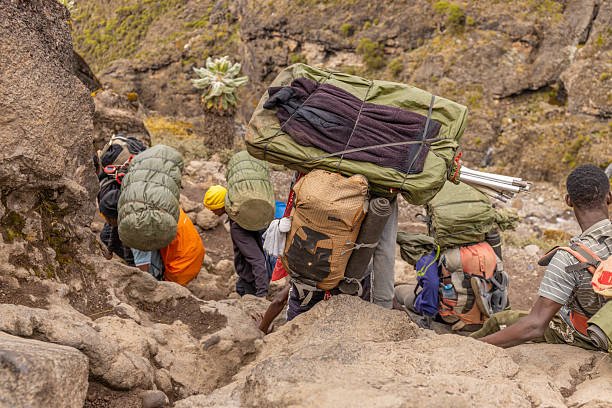
Kilimanjaro porters work on steep, uneven trails at increasing altitude while carrying the equipment required to operate a multi day mountain expedition.
Unnecessary excess weight creates additional physical strain and can compromise responsible porter treatment.
The luggage limit is therefore not simply an inconvenience for travellers. It is part of running an organised climb in a way that respects the mountain crew.
Good packing also makes logistics easier because the crew can distribute loads properly before departure.
Why Climbers Are Limited to 15 kg
The 15 kg climber allowance creates space within the wider mountain logistics for each porter to carry a manageable assigned load.
The climber's duffel may contain clothing, sleeping equipment, toiletries and other items needed at camp.
Expedition crews must also transport tents, food, cooking equipment, medical supplies and other shared mountain equipment.
Keeping individual duffels controlled prevents personal luggage from taking an unreasonable share of the expedition's carrying capacity.
What Does the Porter Carry?
Porters are responsible for transporting much of the expedition infrastructure between mountain camps.
Mountain Loads Can Include
- Climber duffel bags
- Sleeping tents on camping routes
- Dining or kitchen equipment according to the expedition
- Food supplies
- Cooking equipment
- Mountain mattresses
- Medical and group equipment
- Other approved expedition supplies
What Does the Climber Carry?
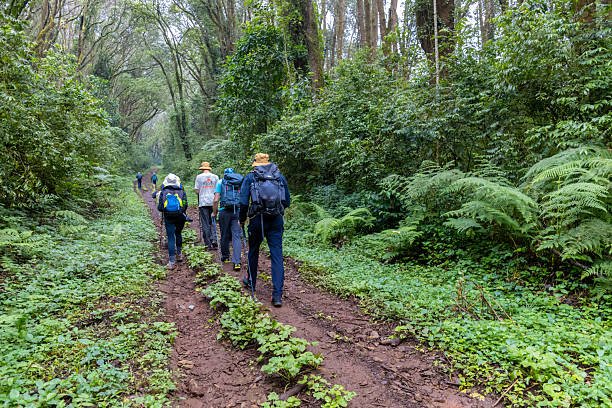
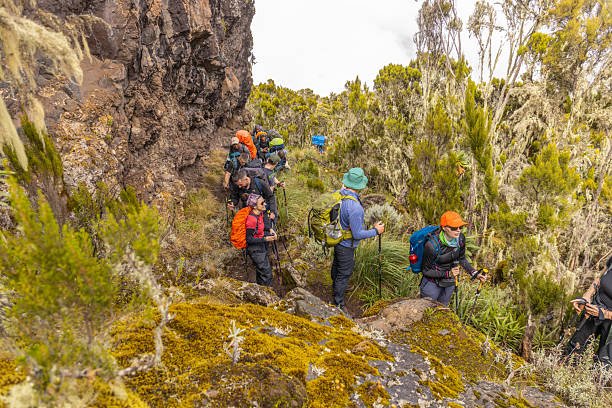
Even though the porter team transports your main duffel, you still carry your own daypack while trekking.
You normally do not see your portered duffel while walking because the porter team may move independently toward the next camp.
Everything you might need during the trekking day should therefore remain in your daypack.
What to Carry in Your Kilimanjaro Daypack
- Drinking water
- Waterproof jacket
- Waterproof trousers when weather requires them
- Warm layer
- Warm hat
- Gloves when required
- Sunglasses
- Sunscreen
- Personal snacks
- Personal medication
- Phone or camera if desired
- Small personal essentials
How Heavy Should Your Daypack Be?
There is no benefit in making your daypack unnecessarily heavy.
The goal is to carry everything required between camps while keeping the pack comfortable enough for several hours of trekking.
Water will normally account for a significant portion of the weight at the start of the day.
Clothing, snacks, sun protection and personal items should be selected carefully rather than filling the daypack with items that could remain in the main duffel.
Does the Sleeping Bag Count Toward the 15 kg?
Your packing arrangement should be confirmed before departure because the handling of rented and personal sleeping equipment can depend on the package.
As a safe planning method, keep the total personal equipment being transported for you as light as possible and avoid assuming that bulky sleeping equipment automatically receives an unlimited separate allowance.
If you rent a sleeping bag, confirm how it will be packed and transported during your pre climb equipment check.
What Size Duffel Bag Should You Bring?
A soft mountain duffel is usually easier for the porter team to handle than a hard suitcase.
Approximately 70 to 100 litres can work well depending on the size of your clothing and sleeping equipment.
A larger duffel does not increase the allowed weight. Even a 100 litre bag must remain within the confirmed kilogram limit.
A Good Kilimanjaro Duffel Should Be
- Strong
- Soft sided
- Easy to close securely
- Clearly labelled
- Protected from rain
- Easy for the mountain crew to handle
Is a 70 Litre Duffel Enough?
A 70 litre duffel can be sufficient for a carefully packed Kilimanjaro climb.
The important issue is not only volume but also the weight and bulk of your equipment.
Travellers using compact technical clothing and rented sleeping equipment can often pack effectively into a smaller bag.
Is a 100 Litre Duffel Suitable?
A 100 litre soft duffel provides additional packing space and can be convenient for bulky warm clothing.
However, the 15 kg personal luggage limit still applies.
The additional volume should therefore be used for organisation rather than bringing unnecessary equipment.
Can I Use a Suitcase on Kilimanjaro?
A hard suitcase is not the preferred mountain luggage system.
Bring a soft duffel for the items travelling onto Kilimanjaro and leave your main travel suitcase at the hotel or other agreed storage location.
This also allows you to keep safari, Zanzibar and normal travel clothing away from the mountain expedition.
Can I Leave Extra Luggage in Moshi?
Yes, luggage that is not required for Kilimanjaro can normally remain at the hotel or agreed secure storage location according to your booking arrangements.
This is especially useful for travellers continuing to safari or Zanzibar after the mountain.
Only bring the clothing and equipment genuinely required for the climb.
What Happens If My Duffel Is Over 15 kg?
An overweight duffel should be reorganised before the mountain departure.
Nonessential equipment can be removed and stored in town.
If additional essential equipment genuinely needs to travel onto the mountain, extra porter logistics may need to be arranged rather than simply overloading an existing porter.
If Your Duffel Is Too Heavy
- Remove normal travel clothing not needed on Kilimanjaro.
- Remove duplicate clothing.
- Reduce excessive toiletries.
- Leave unnecessary electronics behind.
- Use lightweight technical layers.
- Move only appropriate trekking items into your daypack.
- Discuss additional porter arrangements if essential equipment still creates excess weight.
Are Bags Weighed Before the Climb?
Mountain luggage should be checked before departure so that overloaded bags can be identified and corrected before the expedition progresses onto the trail.
A pre climb equipment check is also an opportunity to remove unnecessary items and confirm that important warm or waterproof equipment has not been forgotten.
Travellers should weigh their bags at home before flying to Tanzania whenever possible.
Why You Should Weigh Your Duffel Before Flying
Waiting until the mountain departure morning to discover that your duffel is several kilograms overweight creates unnecessary stress.
A simple luggage scale allows you to test the complete mountain packing list before leaving home.
Aim to stay comfortably below the maximum rather than packing exactly to the final gram because small differences between scales can occur.
How to Pack Under 15 kg for Kilimanjaro
Efficient Kilimanjaro packing is based on layering rather than bringing large quantities of clothing.
You do not need a completely different outfit for every day of the trek.
Many technical layers can be reused, particularly outer insulation and waterproof clothing.
Save Weight by Packing Smart
- Use lightweight thermal layers.
- Avoid duplicate heavy jackets.
- Bring only required trekking trousers.
- Use small travel size toiletries.
- Avoid unnecessary books and heavy electronics.
- Leave normal city clothing at the hotel.
- Share suitable items with a travel partner where practical.
- Rent selected bulky gear when appropriate.
What Should Go in the Portered Duffel?
- Sleeping bag or confirmed sleeping equipment
- Spare thermal layers
- Warm summit clothing not required during the current trekking day
- Additional trekking socks
- Camp clothing
- Personal toiletries
- Additional gloves or cold weather accessories
- Other personal equipment only needed after arriving at camp
What Should Never Be Buried in the Duffel?
Items you may need while trekking should remain in the daypack because the porter carrying your duffel may be far ahead of you.
Keep These in Your Daypack
- Rain jacket
- Water
- Personal medication
- Sunscreen
- Sunglasses
- Snacks
- Warm layer
- Gloves when conditions require them
- Sun hat or warm hat according to conditions
Waterproofing Your Duffel
Even when the duffel itself is described as waterproof, important equipment should be protected internally.
Heavy mountain rain can penetrate zips and seams, especially during prolonged exposure.
A strong internal liner or several dry bags can provide additional protection.
Your sleeping bag and summit clothing should receive particular attention because arriving at camp with wet insulation can create serious discomfort.
Use Dry Bags to Organise Weight
Small dry bags or packing sacks can help divide equipment into categories.
This also makes it easier to find clothing inside the tent without emptying the entire duffel every evening.
A simple system can separate sleeping clothing, trekking layers, summit clothing, toiletries and electronic equipment.
Machame Route Porter Weight Limit
Machame is a camping route, meaning the porter team must transport tents and other camping equipment in addition to personal climber luggage.
For African Trek & Travel climbs, each climber should keep the personal mountain duffel within the 15 kg allowance.
The climber carries a separate daypack while walking.
Lemosho Route Porter Weight Limit
Lemosho also uses a supported camping system.
Your personal portered duffel should remain within the confirmed 15 kg allowance even on longer seven or eight day itineraries.
A longer climb does not mean you should bring substantially more clothing for every additional day.
Northern Circuit Porter Weight Limit
Northern Circuit itineraries can involve additional mountain days, making careful packing especially important.
Climbers should still respect the confirmed personal luggage allowance rather than increasing their duffel simply because the route is longer.
Technical layers can be reused and organised efficiently throughout the trek.
Rongai Route Porter Weight Limit
Rongai uses camping during the ascent, so the same principles of controlled personal luggage and responsible porter loading apply.
Keep unnecessary safari or normal travel clothing outside the mountain duffel.
Marangu Route Porter Weight Limit
Marangu uses permanent mountain huts rather than carrying sleeping tents for climbers.
However, porters are still required for personal mountain luggage, food and other expedition supplies.
The use of huts should therefore not be treated as permission to bring unlimited personal baggage.
5 Day vs 8 Day Climb: Do I Get More Luggage?
Not necessarily.
A longer itinerary requires additional expedition food and logistics, so climbers should continue packing within the confirmed personal allowance.
The solution for a longer route is efficient clothing rotation, not bringing an entirely separate outfit for every mountain day.
Can I Pay a Porter to Carry More Than the Limit?
An existing porter should not simply be overloaded because a traveller is willing to pay more.
If genuinely necessary equipment creates additional weight, the responsible solution is to discuss whether extra porter support can be organised within the expedition.
Porter welfare should take priority over convenience.
Can I Hire a Personal Porter?
Additional porter support can sometimes be arranged when there is a genuine need for extra assistance or approved equipment.
The request should be discussed in advance so the crew size and mountain logistics can be prepared correctly.
Hiring additional support should not be used as an excuse to bring unnecessary luxury luggage onto the mountain.
Porter Welfare on Kilimanjaro
Porters make Kilimanjaro expeditions possible by moving essential supplies between camps in difficult mountain conditions.
Responsible operators should manage loads carefully in addition to providing appropriate food, shelter, working arrangements and mountain equipment for the crew.
Travellers contribute to responsible trekking by following luggage restrictions rather than asking individual porters to take extra items privately.
Responsible Climbers Can Help by
- Respecting the 15 kg personal duffel allowance
- Avoiding unnecessary equipment
- Never privately asking a porter to carry an extra overloaded bag
- Allowing the guide team to organise porter loads properly
- Packing before travel instead of repacking at the trailhead
- Following operator luggage instructions
Does Group Size Affect the Number of Porters?
Yes. The crew size changes according to the number of climbers, route, mountain days and equipment required.
A larger group needs additional tents, food, cooking supplies and other expedition equipment.
The guide team organises the appropriate crew rather than assigning one porter to carry every item belonging to one climber.
Does a Private Climb Change the Weight Limit?
No. Booking a private expedition does not mean travellers can overload the mountain crew.
The same responsible luggage principles apply whether you are climbing privately or joining a scheduled group.
Additional equipment should be discussed before departure so extra logistics can be arranged if necessary.
Does Group Joining Change the Weight Limit?
No. Each group participant should pack according to the same confirmed personal luggage allowance.
Joining a larger expedition does not create unlimited porter capacity for individual travellers.
Can I Rent Gear to Reduce Airline Luggage?
Yes. Renting selected equipment in Tanzania can reduce the amount of bulky mountain gear you need to carry internationally.
Possible Rental Equipment
- Sleeping bags
- Trekking poles
- Gaiters
- Warm jackets
- Selected waterproof clothing
- Other trekking equipment according to current availability
Pre Climb Equipment Check
A pre climb equipment check is one of the best opportunities to confirm that your gear is appropriate and your mountain luggage is manageable.
Your guide can review important clothing and equipment and identify unnecessary items before travelling to the trailhead.
If rental equipment is required, it should be confirmed before mountain departure whenever possible.
Common Kilimanjaro Overpacking Mistakes
Avoid Packing Too Much
- Too many cotton T shirts
- A different heavy outfit for every day
- Multiple bulky jackets serving the same purpose
- Full size toiletries
- Large quantities of unnecessary snacks
- Heavy books
- Multiple cameras and unnecessary electronics
- Safari clothing inside the mountain duffel
- Zanzibar clothing inside the mountain duffel
- Hard suitcases instead of a suitable mountain duffel
Sample Lightweight Kilimanjaro Packing Strategy
Start with the essential insulation and waterproof equipment because these items affect safety and comfort.
Then add enough trekking clothing for rotation without bringing unnecessary duplicates.
Finish with small personal and hygiene items, weighing the bag before adding optional equipment.
If the duffel is already near the maximum before your sleeping equipment has been added, reduce optional clothing rather than hoping the crew will accept the excess.
Frequently Asked Questions About the Kilimanjaro Porter Weight Limit
What is the Kilimanjaro Porter Weight Limit for my luggage?
For African Trek & Travel climbs, prepare a maximum of 15 kg of personal luggage in the main portered mountain duffel.
Is 15 kg the same as the porter's total load?
No. The 15 kg figure refers to the climber's personal portered duffel allowance. The mountain crew also transports expedition supplies and equipment under separate load management.
How many pounds is 15 kg?
Fifteen kilograms is approximately 33 pounds.
Do I carry the 15 kg bag myself?
No. The approved mountain duffel is transported according to the porter arrangement while you carry your own daypack.
What do I carry personally?
You carry a daypack containing water, waterproof clothing, warm layers, snacks, sun protection, medication and other items needed during the trekking day.
Does my daypack count inside the 15 kg?
The daypack is carried personally while trekking and is separate from the main duffel transported by the porter team.
What size duffel should I use?
A soft duffel of approximately 70 to 100 litres can work well, but it must still remain within the permitted weight allowance.
Can I bring a 100 litre duffel?
Yes. A 100 litre duffel is suitable when packed responsibly, but the larger volume does not increase the permitted weight.
Is a 70 litre duffel acceptable?
Yes. A 70 litre soft duffel can work for climbers who pack efficiently.
Can I take a suitcase onto Kilimanjaro?
A soft duffel is preferable for mountain use. Normal travel suitcases can remain at the hotel or agreed storage location.
Can I leave extra luggage in Moshi?
Yes. Non mountain luggage can normally be stored according to your confirmed hotel or operator arrangement.
What happens if my bag is over 15 kg?
You should remove unnecessary items or discuss additional porter arrangements if genuinely essential equipment creates excess weight.
Can I simply pay my porter to carry an overweight bag?
An existing porter should not be overloaded. Additional necessary weight should be discussed with the operator so responsible crew arrangements can be made.
Can I hire an additional porter?
Additional porter support can sometimes be arranged when genuinely needed and should preferably be requested before mountain departure.
Are bags weighed before climbing?
Mountain luggage can be checked before departure so the crew can organise loads and identify excess personal equipment.
Should I weigh my bag at home?
Yes. Weighing your complete mountain duffel before travelling makes last minute repacking less likely.
Does my sleeping bag count?
Confirm the exact packing arrangement before departure, particularly if using rented sleeping equipment, and keep your overall personal mountain luggage as light as practical.
Can I rent a sleeping bag?
Yes. Sleeping bag rental can be arranged according to available sizes and stock.
Can I rent trekking poles?
Yes. Trekking poles can often be rented according to availability.
Is the weight limit different on Machame?
For African Trek & Travel climbs, climbers should keep the personal portered mountain duffel within the 15 kg allowance on Machame.
Is the weight limit different on Lemosho?
The same 15 kg personal duffel planning limit should be followed for African Trek & Travel Lemosho climbs.
Can I bring more luggage on an eight day route?
A longer itinerary does not mean unlimited personal baggage. Pack efficiently and reuse technical layers rather than adding a complete outfit for every day.
Does a private climb allow more luggage?
No. Private expedition status does not justify overloading porters. Any additional essential luggage needs appropriate crew arrangements.
Does group joining reduce my luggage allowance?
Each climber should follow the same confirmed personal mountain luggage limit regardless of whether the departure is private or group joining.
Why is porter welfare connected to my packing?
Every unnecessary kilogram must ultimately be transported by the mountain crew, so responsible packing directly helps reduce avoidable porter loads.
Should I waterproof my duffel?
Yes. Use a waterproof liner or dry bags to protect sleeping equipment, summit clothing and other important items.
Do porters carry my daypack?
Climbers normally carry their own daypacks. Additional assistance should only be arranged through the guide team when appropriate rather than assumed in advance.
What should I leave out of my mountain duffel?
Leave behind safari clothing, beach clothing, unnecessary electronics, large toiletries and normal travel items that are not required during the Kilimanjaro climb.
How do I prepare for the Kilimanjaro Porter Weight Limit?
Use a soft mountain duffel, pack only essential trekking equipment, waterproof important items, weigh the completed bag before travelling and keep your personal portered luggage within the confirmed 15 kg allowance.
Prepare Your Kilimanjaro Luggage Correctly
Pack your Kilimanjaro duffel within the 15 kg personal luggage allowance, keep daily essentials in your daypack and help us maintain responsible porter loads throughout your mountain expedition.
Plan Your Kilimanjaro Climb

 Kilimanjaro Climb