7 Day Machame Route Kilimanjaro 2026-2027
The 7 Day Machame Route Kilimanjaro is a scenic seven-day camping climb that passes through Machame Camp, Shira Camp, Lava Tower, Barranco Wall, Karanga and Barafu before the final ascent to Uhuru Peak at 5,895 metres.
The seven day version is one of the strongest Machame itineraries because it allows more time for acclimatization than the six day option.
It is popular among first-time Kilimanjaro climbers because the route combines varied landscapes, gradual altitude exposure and several famous mountain landmarks.
Despite its popularity, Machame remains physically demanding because of the high altitude and long summit day.
7 Day Machame Route at a Glance
- Route: Machame Route
- Mountain days: 7 days
- Highest point: Uhuru Peak, 5,895 metres
- Starting gate: Machame Gate
- Descent route: Mweka Route
- Accommodation: Camping tents
- Major highlights: Shira, Lava Tower, Barranco Wall, Karanga, Barafu and Uhuru Peak
- Best for: Climbers wanting a scenic seven-day itinerary with good acclimatization
Why Choose the 7 Day Machame Route?
Machame is one of Kilimanjaro's most established and scenic trekking routes.
The seven-day itinerary offers an important advantage over the shorter six-day version because it spreads the climb across more time.
This additional day can help reduce unnecessary physical pressure and improve acclimatization opportunities before reaching Barafu Camp.
The route also includes several of Kilimanjaro's most famous features, making it highly rewarding for photographers and adventure travellers.
Why Climbers Choose 7 Day Machame
- Seven mountain days
- Better acclimatization opportunity than 6 Day Machame
- Excellent scenery
- Lava Tower acclimatization
- Barranco Wall experience
- Popular group joining option
- Convenient access from Moshi
7 Day Machame Route Itinerary
The exact walking times and camp arrangements can vary according to pace, trail conditions and operator logistics, but the standard seven day Machame itinerary generally follows Machame Gate, Machame Camp, Shira Camp, Barranco Camp, Karanga Camp, Barafu Camp, Uhuru Peak and Mweka Camp before exiting through Mweka Gate.
Day 1 – Machame Gate to Machame Camp
The climb begins with a road transfer from Moshi toward Machame Gate on the southwestern side of Kilimanjaro.
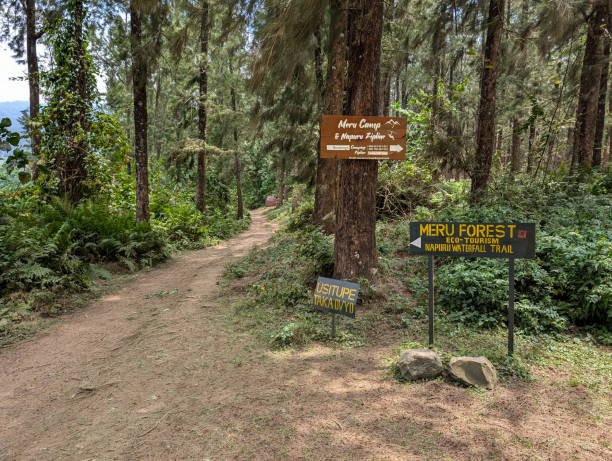
After registration and final preparations, climbers enter the montane rainforest.
The trail climbs steadily through dense vegetation toward Machame Camp.
Depending on weather, sections of the forest trail can become wet or muddy.
Day 1 Highlights
- Machame Gate registration
- Rainforest trekking
- First mountain camp
- Introduction to the guide and crew routine
- Gradual start to the Kilimanjaro expedition
Day 2 – Machame Camp to Shira Camp
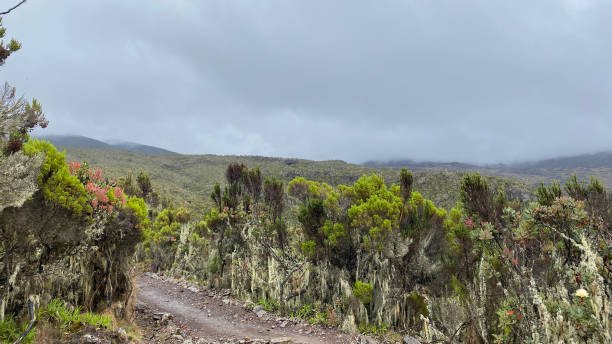
Day two leaves the rainforest and enters heath and moorland.
The vegetation becomes shorter as altitude increases and the landscape opens dramatically.
When conditions are clear, climbers may begin seeing broader views of Kilimanjaro and the surrounding terrain.
The day's destination is the Shira area, which lies on the remains of an ancient volcanic plateau.
Shira Plateau on the Machame Route
Shira is one of Kilimanjaro's major volcanic formations and a memorable part of the route.
The open landscape contrasts strongly with the rainforest experienced on day one.
Temperatures can fall quickly after sunset, so warm clothing becomes increasingly important.
Day 3 – Shira Camp to Lava Tower and Barranco Camp
Day three is one of the most important acclimatization stages of the Machame Route.
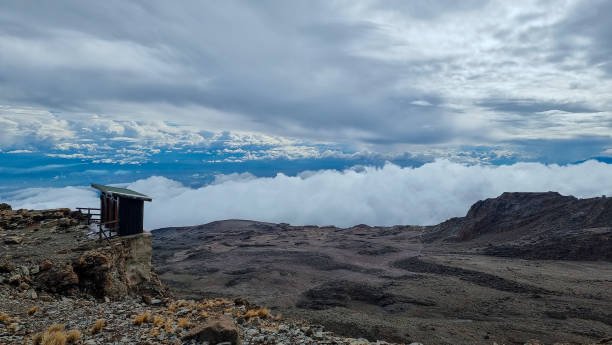
Climbers ascend through increasingly barren alpine terrain toward Lava Tower at approximately 4,600 metres.
After reaching the higher point, the route descends toward Barranco Camp at a lower sleeping elevation.
This creates the classic pattern of gaining altitude during the day before sleeping lower.
Why Lava Tower Is Important
- High-altitude exposure
- Important acclimatization point
- Dramatic alpine scenery
- Opportunity for guides to observe altitude response
- Higher daytime altitude followed by lower sleeping elevation
Barranco Camp
Barranco Camp sits beneath the famous Barranco Wall and is one of the most impressive camp locations on Kilimanjaro.
The descent from Lava Tower can help some climbers feel better after exposure to the higher altitude.
The evening also provides an opportunity to recover before tackling Barranco Wall the following morning.
Day 4 – Barranco Camp to Karanga Camp
The day begins by climbing Barranco Wall.
Although the wall looks intimidating from below, it is generally a non-technical scramble.
Climbers occasionally use their hands for balance, and guides assist through tighter sections.
After reaching the top of the wall, the trail continues across varied terrain before descending and climbing again toward Karanga Camp.
Barranco Wall Tips
- Follow the guide carefully
- Use hands when necessary
- Keep a steady pace
- Do not rush past other climbers
- Store trekking poles temporarily if needed
- Focus on each step rather than looking too far ahead
Is Barranco Wall Dangerous?
For standard trekking conditions, Barranco Wall is generally manageable with professional guide support.
It is steep and exposed in places but does not normally require technical ropes or climbing equipment.
Many climbers who are initially worried about the wall later describe it as one of the highlights of the route.
Day 5 – Karanga Camp to Barafu Camp
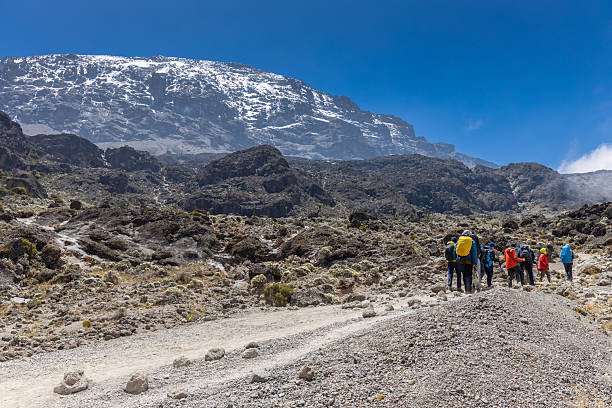
From Karanga, climbers continue through dry alpine terrain toward Barafu Camp.
This is the final high camp before summit night.
The walking day is intentionally shorter than summit day, giving climbers time to eat, organize equipment and rest.
The guide explains the summit plan and checks each climber's condition.
Prepare at Barafu Camp
- Prepare thermal layers
- Check insulated jacket
- Organize warm gloves
- Check headlamp and batteries
- Prepare water bottles
- Eat adequately
- Attend the summit briefing
- Rest as much as possible
Day 6 – Barafu Camp to Uhuru Peak and Mweka Camp
Summit day normally begins around midnight or in the early morning hours.
Climbers leave Barafu in darkness and begin a slow ascent across steep volcanic terrain.
The pace is intentionally controlled because of the altitude and long duration of the day.
The first major summit objective is Stella Point on the crater rim.
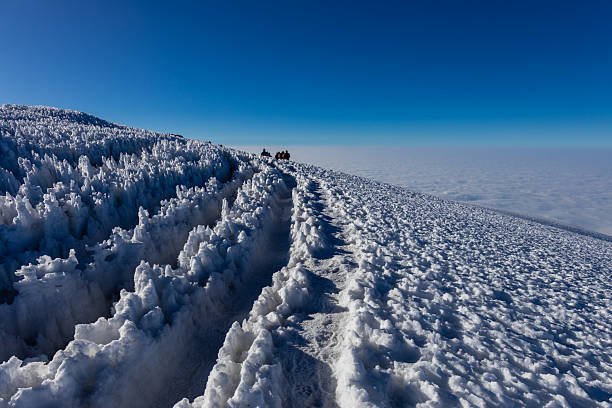
Climbers who remain in suitable condition then continue toward Uhuru Peak at 5,895 metres.
Barafu Camp to Stella Point
This is usually the hardest section of summit night.
Climbers ascend through darkness, cold temperatures and thin air for several hours.
Progress can feel slow, but steady movement is more important than speed.
Guides monitor the group closely and may provide individual support where necessary.
Stella Point to Uhuru Peak
After reaching Stella Point, the steepest part of the climb is largely complete.
However, the final section toward Uhuru Peak remains challenging because climbers are at extreme altitude.
The trail follows the crater rim until reaching the highest point in Africa.
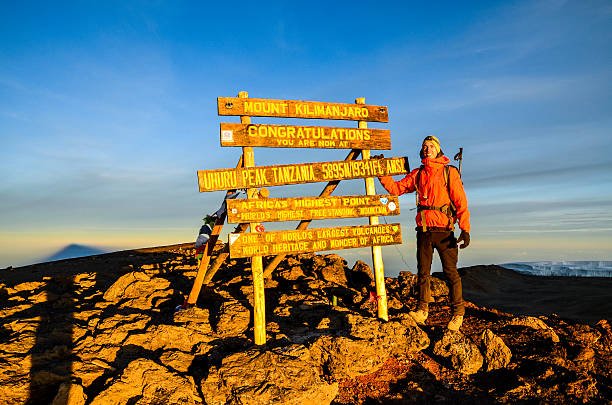
Uhuru Peak at 5,895 Metres
Uhuru Peak is the highest point on Mount Kilimanjaro and the highest point on the African continent.
Climbers normally spend a limited amount of time at the summit for photographs before beginning the descent.
Because the elevation is extremely high, the mountain team normally avoids unnecessary delays at the top.
Descending from the Summit
The descent initially returns toward Barafu Camp.
After a short rest and meal, climbers continue substantially lower toward Mweka Camp.
This makes summit day extremely long.
Trekking poles can be especially useful because tired legs must manage several hours of downhill walking.
Summit Day Challenges
- Very high altitude
- Cold temperatures
- Long nighttime ascent
- Loose volcanic terrain
- Physical and mental fatigue
- Long descent after reaching the summit
Day 7 – Mweka Camp to Mweka Gate
The final trekking day descends through rainforest toward Mweka Gate.
The atmosphere becomes warmer and more humid as elevation decreases.
After completing the park exit procedures, climbers normally meet their transfer vehicle and return to Moshi.
The crew tipping ceremony may take place before or after leaving the mountain according to the operator's arrangement.
Machame Route Summit Certificate
Climbers who reach recognized summit points are normally eligible for a Kilimanjaro certificate after the expedition.
The exact certificate depends on the highest summit point achieved.
Your guide or operator explains the process after leaving the mountain.
How Difficult Is the 7 Day Machame Route?
The seven day Machame Route is challenging but does not normally require technical mountaineering skills.
The main difficulty comes from altitude, cumulative fatigue, Barranco Wall and summit night.
Seven days makes the itinerary more manageable than the six day version because there is more time for altitude adaptation.
Main Machame Challenges
- High altitude
- Seven consecutive mountain days
- Cold summit conditions
- Barranco Wall
- Long summit night
- Major descent after the summit
Can Beginners Climb 7 Day Machame?
Yes. Many first-time high-altitude trekkers successfully choose the seven day Machame itinerary.
Beginners should train consistently before departure and arrive with properly tested equipment.
The seven day schedule is generally preferable to six days for climbers without previous altitude experience.
7 Day Machame vs 6 Day Machame
The main advantage of seven days is additional acclimatization time.
The six day itinerary compresses the route into a faster schedule.
For climbers whose travel dates allow it, the extra day is usually worth considering.
6 Day vs 7 Day Machame
- 6 Day Machame: Faster itinerary
- 6 Day Machame: Less mountain time
- 7 Day Machame: More acclimatization time
- 7 Day Machame: More gradual overall schedule
- Recommended for many beginners: 7 days
7 Day Machame vs 7 Day Lemosho
Both are strong seven day Kilimanjaro itineraries.
Lemosho begins farther west and includes a broader crossing of Shira Plateau.
Machame provides a more direct southwestern approach.
Lemosho can feel quieter during the early days, while Machame is often easier to access and has many group joining departures.
7 Day Machame vs 8 Day Lemosho
Eight Day Lemosho provides one additional mountain day and usually a more gradual acclimatization schedule.
Seven Day Machame saves one day while still providing good altitude exposure.
If acclimatization is the main priority and the extra day is available, 8 Day Lemosho is often worth considering.
If total trip duration needs to be shorter, 7 Day Machame remains an excellent option.
Acclimatization on the 7 Day Machame Route
The route includes several important altitude stages.
One of the most significant is the ascent to Lava Tower followed by descent toward Barranco Camp.
This higher daytime exposure combined with lower sleeping elevation supports acclimatization.
Seven days also provides a more gradual schedule than the shorter Machame itinerary.
Altitude Sickness on Machame
Altitude sickness can affect any climber regardless of fitness.
Possible symptoms include headache, nausea, dizziness, unusual fatigue and reduced appetite.
Climbers should report symptoms honestly to their guides.
Worsening or serious altitude illness may require stopping the ascent or descending.
Altitude Safety Tips
- Walk slowly
- Stay appropriately hydrated
- Eat regular meals
- Rest at camp
- Report headaches and nausea
- Attend health checks
- Follow guide safety decisions
7 Day Machame Summit Success
Seven days gives climbers a stronger opportunity to acclimatize compared with shorter versions of the same route.
However, there is no guaranteed summit success rate for every climber.
Individual response to altitude, weather, health, training and other factors can influence whether a person reaches Uhuru Peak.
Responsible guides should always prioritize health over summit statistics.
How Fit Do You Need to Be?
You do not need to be a professional athlete, but you should have good walking endurance.
Climbers need to manage several hours of trekking on consecutive days.
Summit day is substantially longer and harder than normal trail days.
Strong physical preparation reduces unnecessary fatigue and makes the overall trek more enjoyable.
Training for 7 Day Machame
Many climbers benefit from approximately eight to twelve weeks of structured preparation.
People starting from a lower fitness level can begin earlier.
Hiking is particularly valuable because it closely matches the activity performed on Kilimanjaro.
Useful Machame Training
- Long hikes
- Hill walking
- Stair climbing
- Inclined treadmill walking
- Cardiovascular exercise
- Squats and lunges
- Step ups
- Back-to-back hiking days
Best Time for 7 Day Machame Route
Machame can be climbed throughout the year.
January to February and June through October are commonly preferred because conditions are generally drier.
March through May and November can bring more rain.
Climbers should still carry full waterproof equipment regardless of the season.
Weather on the Machame Route
The route passes through several climate zones.
The rainforest can be warm, humid and wet.
Shira becomes cooler and more open, while the alpine desert around Lava Tower and Barafu can be dry and windy.
Summit night can be well below freezing.
What to Pack for 7 Day Machame
Your equipment needs to cover everything from warm rainforest conditions to freezing summit weather.
Essential Machame Gear
- Broken-in trekking boots
- Warm sleeping bag
- Thermal base layers
- Warm mid layers
- Insulated jacket
- Waterproof jacket
- Waterproof trousers
- Warm gloves or mittens
- Warm hat or balaclava
- Sun hat
- Sunglasses
- Headlamp and spare batteries
- Trekking poles
- Daypack
- Duffel bag
Can You Rent Machame Gear in Moshi?
Yes. Climbers can normally rent selected Kilimanjaro equipment in Moshi before departure.
Common items include sleeping bags, trekking poles, duffel bags, gaiters and selected warm clothing.
Complete your equipment check before travelling to Machame Gate.
Accommodation on Machame Route
Machame is a camping route.
Climbers sleep in mountain tents at designated camps throughout the trek.
The main camping equipment is transported and organized by the mountain crew.
A quality sleeping bag remains important because nighttime temperatures fall as altitude increases.
Meals on the Machame Route
A mountain cook prepares meals throughout the expedition.
Meals are intended to provide sufficient energy for the repeated trekking days.
Appetite may decrease at altitude, but climbers should still try to eat regularly.
Bringing a small supply of familiar personal snacks can also be useful.
Drinking Water on Machame
The mountain team organizes water according to the expedition's procedures.
Climbers carry drinking water inside their personal daypack.
During summit night, insulated water bottles can be especially useful because exposed hydration tubes may freeze.
What Do You Carry in Your Daypack?
Porters transport the main duffel bag, while climbers carry items required during the trekking day.
Typical Daypack Items
- Water
- Snacks
- Waterproof jacket
- Waterproof trousers
- Warm layer
- Sunscreen
- Sunglasses
- Sun hat
- Personal medication
- Camera or phone
Porters on the 7 Day Machame Route
The mountain crew generally includes the lead guide, assistant guides according to group size, cooks and porters.
Porters transport tents, food, kitchen equipment and climbers' main duffel bags between camps.
The exact crew size depends on the number of climbers and expedition requirements.
Tipping on 7 Day Machame
Mountain crew gratuities are normally given after the expedition.
The amount depends on the final crew size and operator recommendations.
For a seven day climb, the gratuity calculation generally reflects seven mountain working days.
Confirm your current tipping guidance before departure.
Safety on the Machame Route
Altitude is the main health challenge on the route.
Professional guides should monitor climbers throughout the climb and make conservative safety decisions.
Typical Kilimanjaro Safety Support
- Professional mountain guides
- Assistant guides
- Daily health monitoring
- Pulse oximeter checks where used
- First aid equipment
- Emergency oxygen
- Emergency descent procedures
- Summit support where required
What Is Usually Included in a 7 Day Machame Package?
Package inclusions vary between companies, but complete Kilimanjaro packages generally cover the major mountain logistics.
Typical Inclusions
- Professional guides
- Assistant guides according to group size
- Porters and mountain cook
- National park fees
- Camping fees
- Mountain tents
- Dining equipment according to package
- Meals during the climb
- Mountain drinking water
- Emergency oxygen
- First aid equipment
- Transfers to and from the mountain gates
- Hotel accommodation when stated
- Airport transfers when stated
- Summit certificate
Typical 7 Day Machame Exclusions
- International flights
- Visa expenses
- Travel insurance
- Personal trekking gear unless stated
- Rental gear unless included
- Crew gratuities
- Personal expenses
- Alcoholic drinks
- Safari or Zanzibar extensions unless stated
Who Should Choose 7 Day Machame?
The seven day Machame Route is excellent for climbers wanting a balance between acclimatization and total trip length.
It suits beginners who train properly, experienced hikers, couples, friends, solo group joiners and private groups.
Travellers with another day available and an even stronger focus on acclimatization may compare it with 8 Day Lemosho.
7 Day Machame for Solo Travellers
Machame is an excellent route for solo travellers because scheduled group departures are common.
Joining a group can lower some per-person expedition costs while also providing a social climbing experience.
Solo travellers can also request a private Machame expedition.
7 Day Machame for Couples
Couples can choose between private and group arrangements.
A private climb provides more control over departure dates and group environment.
The daily walking pace should still follow safe acclimatization principles rather than being rushed.
7 Day Machame for Private Groups
Private groups can choose their preferred start date and travel together with their own mountain team.
The crew size is adjusted according to the final number of climbers.
This works well for friends, families, clubs and organizations.
Arriving Before the Machame Climb
Arriving in Tanzania at least one day before the climb is recommended.
This gives you time to recover from travel, meet the guide and complete the pre-climb equipment inspection.
It also creates additional flexibility if checked baggage or international flights are delayed.
Pre-Climb Gear Check in Moshi
Your guide should inspect your main mountain equipment before departure.
This normally includes boots, sleeping bag, waterproof layers, warm summit clothing, gloves, trekking poles and headlamp.
Missing equipment can often be rented in Moshi.
Machame Route From Moshi
Moshi is one of the most convenient bases for climbing Machame because the town is located relatively close to the southwestern Kilimanjaro trailheads.
Climbers normally stay in Moshi before departure and return to town after descending through Mweka Gate.
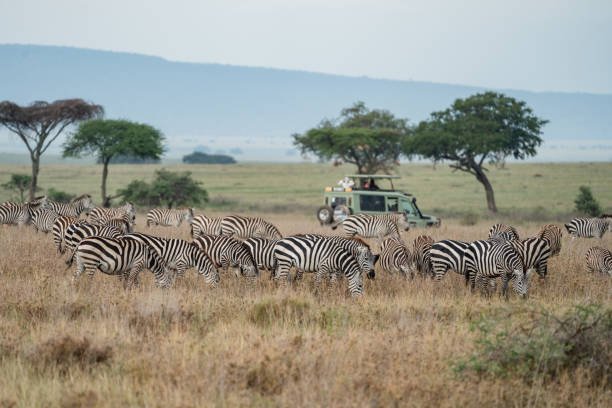
7 Day Machame With Tanzania Safari
A Tanzania safari can be added immediately after Kilimanjaro.
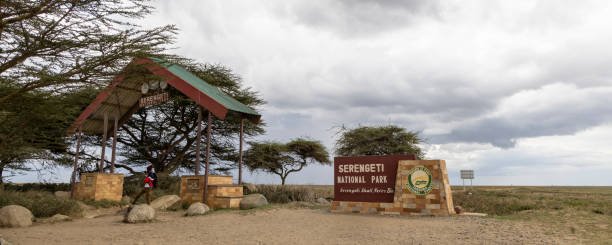
Popular extensions include Tarangire National Park, Ngorongoro Crater, Lake Manyara and Serengeti National Park.
Many climbers enjoy completing the mountain first and then relaxing during a wildlife safari.
Popular Post-Climb Safari Options
- 2 Day Tarangire and Ngorongoro Safari
- 3 Day Tanzania Safari
- 4 Day Serengeti and Ngorongoro Safari
- 5 Day Northern Circuit Safari
7 Day Machame With Zanzibar
Zanzibar can be added after the mountain for beach relaxation.
Climbers may fly to Zanzibar after returning to Moshi or combine Kilimanjaro, safari and Zanzibar in one longer Tanzania holiday.
How Many Total Days Do You Need?
The climbing itinerary itself is seven days.
However, travellers should also allow time for arrival, pre-climb briefing and at least one night after the trek.
A Kilimanjaro-only journey therefore commonly requires around nine to ten total days in Tanzania depending on flight schedules.
Is 7 Day Machame Worth It?
Yes, for many climbers it is one of the best balances between route duration and acclimatization.
It includes the major scenic highlights of Kilimanjaro's southern circuit without requiring eight mountain days.
Compared with 6 Day Machame, the extra day is especially valuable for climbers who want a more gradual schedule.
Why Book 7 Day Machame Route Kilimanjaro 2026-2027?
The route combines rainforest, Shira Plateau, Lava Tower, Barranco Wall, Karanga, Barafu and the final ascent toward Uhuru Peak in a well-balanced seven-day expedition.
It is especially attractive for travellers who want a highly scenic route with good acclimatization but do not have enough time for an eight-day climb.
For many first-time Kilimanjaro trekkers, Seven Day Machame is significantly preferable to choosing the fastest itinerary simply to reduce cost or travel time.
Frequently Asked Questions About 7 Day Machame Route Kilimanjaro
Is 7 days enough for Machame Route?
Yes. Seven days is one of the strongest Machame itineraries because it provides more acclimatization time than the six day version.
Can beginners climb 7 Day Machame?
Yes. Fit beginners can climb Seven Day Machame with proper training, equipment, slow pacing and professional guide support.
Is 7 Day Machame difficult?
It is physically demanding because of altitude, repeated trekking days, Barranco Wall and summit night, but standard sections are normally non-technical.
Is 7 Day Machame better than 6 Day Machame?
For most first-time high-altitude climbers, seven days is preferable because the extra day creates more time for acclimatization.
Does Machame include Lava Tower?
Yes. The standard route normally ascends toward Lava Tower before descending to Barranco Camp.
Does Machame include Barranco Wall?
Yes. Climbers normally ascend Barranco Wall before continuing toward Karanga Camp.
Is Barranco Wall technical?
No. It is normally a non-technical scrambling section where climbers occasionally use their hands for balance.
Where does Machame summit night begin?
The summit attempt normally begins from Barafu Camp and continues toward Stella Point and Uhuru Peak.
What is the highest point on Machame Route?
The highest point is Uhuru Peak at 5,895 metres above sea level.
Which is better, 7 Day Machame or 7 Day Lemosho?
Both are excellent. Lemosho offers a quieter western beginning and broader Shira Plateau approach, while Machame is more direct and often has many scheduled group departures.
Which is better, 7 Day Machame or 8 Day Lemosho?
Eight Day Lemosho provides one additional day for acclimatization, while Seven Day Machame is excellent for travellers who want a slightly shorter itinerary.
What is the best time to climb Machame?
January to February and June through October are popular because they generally offer relatively drier conditions.
Do you camp on Machame Route?
Yes. Machame is a camping route and climbers sleep in mountain tents throughout the expedition.
Can I rent gear in Moshi before Machame?
Yes. Sleeping bags, trekking poles, duffel bags, gaiters and selected mountain clothing can commonly be rented before departure.
Do I need trekking poles on Machame?
They are not compulsory but are highly useful for balance and reducing strain during long descents.
Can solo travellers join Machame groups?
Yes. Machame is one of the most popular routes for solo travellers joining scheduled Kilimanjaro groups.
Can I combine Machame with safari?
Yes. Tarangire, Ngorongoro, Serengeti and Lake Manyara safari extensions can be added after the climb.
Can I visit Zanzibar after Machame?
Yes. Zanzibar can be added after Kilimanjaro directly or after completing a Tanzania safari.
Who should choose the 7 Day Machame Route Kilimanjaro 2026-2027?
Choose Seven Day Machame if you want a scenic and well-established Kilimanjaro route with good acclimatization, major highlights such as Lava Tower and Barranco Wall, and one fewer mountain day than an eight day itinerary.
Book Your 7 Day Machame Route Kilimanjaro 2026-2027
Climb Kilimanjaro through rainforest, Shira Plateau, Lava Tower, Barranco Wall, Karanga and Barafu before the final journey to Stella Point and Uhuru Peak at 5,895 metres. Choose the seven day itinerary for more acclimatization time than the shorter Machame option.
Book 7 Day Machame Route

 Day Tour