Kilimanjaro Climb for First Time Hikers
The Kilimanjaro Climb for First Time Hikers is designed for travellers who dream of reaching Africa's highest mountain but have little or no previous high altitude trekking experience.
You do not need to be a technical mountaineer to attempt the standard Kilimanjaro trekking routes. However, you do need realistic physical preparation, suitable clothing, appropriate equipment, enough trekking days for acclimatization and a willingness to follow your mountain guide's advice.
Many first time hikers choose Kilimanjaro because the standard trekking routes do not normally require ropes, ice climbing or technical mountaineering skills. The main challenge is instead the combination of several consecutive walking days, changing weather, cold summit conditions and increasing altitude.
A professionally organised package can include guides, porters, a mountain cook, meals, camping or hut accommodation, health monitoring, emergency oxygen, mountain transfers and pre climb preparation in Moshi.
First Time Kilimanjaro Climb at a Glance
- Mountain: Mount Kilimanjaro.
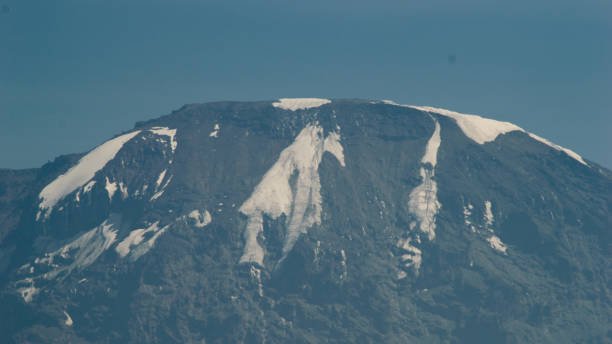
- Highest point: Uhuru Peak at approximately 5,895 metres.
- Technical climbing: Not normally required on standard trekking routes.
- Popular beginner choices: Machame, Lemosho and Marangu.
- Accommodation: Camping on most routes and huts on Marangu.
- Mountain support: Professional guides, porters and cook.
- Safety support: Regular health checks, pulse oximeter monitoring and emergency oxygen.
- Main base: Moshi, Tanzania.
- Possible extensions: Safari, cultural tours and Zanzibar.
Can a First Time Hiker Climb Kilimanjaro?
Yes. Many people attempt Kilimanjaro without previous mountaineering experience.
The standard routes are trekking routes rather than technical climbing routes, so the main requirements are endurance, preparation, suitable equipment and the ability to walk slowly for several consecutive days.
However, Kilimanjaro should not be underestimated. The summit reaches nearly 5,900 metres, and altitude can affect experienced athletes as well as people completing their first major trek.
A beginner friendly approach therefore means choosing enough days, training before travel, listening carefully to the guide and avoiding pressure to walk too quickly.
What First Time Hikers Should Expect
- Several consecutive trekking days
- Changing temperatures and weather
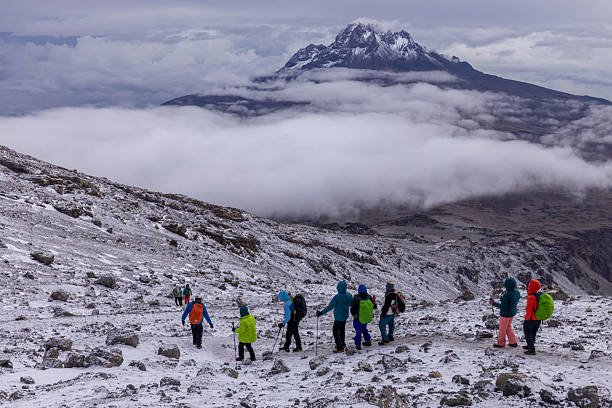
- Rainforest, moorland and alpine terrain
- Camping on most routes
- Slow walking at increasing altitude
- Early mornings and structured camp routines
- A long and demanding summit attempt
- Daily communication with the mountain guide
- A strong focus on acclimatization and safety
Do You Need Previous Mountain Experience?
Previous hiking experience is useful but does not need to involve technical climbing.
If you have never completed a multi day trek, your preparation should include progressively longer walks so your feet, legs and body become familiar with spending many hours hiking.
Training on hills is useful where available, but even travellers living in flat areas can improve endurance through long walks, stair training, cardiovascular exercise and strength work.
Best Kilimanjaro Routes for First Time Hikers
There is no single route that is automatically correct for every beginner. The most suitable option depends on available days, accommodation preference, fitness, budget and how much time you want for acclimatization.
| Route |
Common Duration |
Accommodation |
First Time Hiker Consideration |
| Machame |
6 or 7 days |
Camping |
Popular scenic route; 7 day schedule is less compressed |
| Lemosho |
7 or 8 days |
Camping |
Longer western approach with additional time on the mountain |
| Marangu |
5 or 6 days |
Mountain huts |
Useful for hikers who prefer huts; longer schedule provides extra acclimatization time |
| Rongai |
Multi day itinerary |
Camping |
Northern approach with a different mountain experience |
| Northern Circuit |
Longer itinerary |
Camping |
Suitable when additional trekking days are available |
7 Day Machame for First Time Hikers
The 7 Day Machame Route can be a strong option for first time hikers who want a scenic route and enough time for an additional overnight before the summit stage.
The route begins through rainforest before reaching the Shira area and continuing toward Lava Tower.
After descending toward Barranco, climbers tackle the famous Barranco Wall and continue toward Karanga and Barafu.
The extra day compared with the 6 day version makes the itinerary less compressed and gives the body additional time at altitude before summit night.
6 Day Machame for First Time Hikers
The 6 Day Machame Route follows much of the same terrain but is more compressed.
From Barranco, the itinerary usually continues through the Karanga area toward Barafu without an overnight at Karanga.
First time hikers with limited days can consider this route, but they should understand that a shorter schedule provides less time for gradual altitude adaptation.
8 Day Lemosho for First Time Hikers
The 8 Day Lemosho Route is suitable for first time hikers who can dedicate additional time to the mountain.
It approaches from western Kilimanjaro, crosses the Shira landscape and later joins the southern circuit.
The extended schedule allows climbers to spend more time progressing gradually through increasing elevations before summit night.
For beginners who are not restricted to a short holiday, this type of longer itinerary can reduce the pressure to rush the mountain experience.
7 Day Lemosho for Beginners
A 7 Day Lemosho climb provides another western approach option for travellers who want a multi day camping experience.
The route can include Shira, Lava Tower, Barranco, Karanga and Barafu before the summit attempt.
First time hikers should still prepare thoroughly because even a longer route remains physically demanding.
6 Day Marangu for First Time Hikers
Marangu is different from the main camping routes because trekkers sleep in mountain huts.
This can appeal to first time hikers who are uncomfortable with sleeping in tents for several nights.
The 6 day schedule includes additional time compared with the shorter Marangu itinerary and can provide a more gradual experience.
Hut accommodation does not make the mountain easy, and the same altitude concerns apply near Kibo and the summit.
A Good Beginner Kilimanjaro Strategy
- Choose enough trekking days.
- Train before travelling.
- Bring proper waterproof and warm clothing.
- Walk slowly from the first day.
- Drink regularly.
- Eat even when appetite decreases.
- Report symptoms honestly.
- Listen to your guide.
- Treat the summit as a goal, not a guarantee.
How Fit Do You Need to Be?
You do not need elite athletic fitness, but you should be comfortable walking for several hours and repeating that effort over several consecutive days.
The summit day is significantly longer and more demanding than a normal hiking day, so training should focus on endurance and consistency rather than only speed.
Being extremely fit does not eliminate altitude risk. A strong runner can still experience altitude symptoms while a slower walker may acclimatize well.
Training for Your First Kilimanjaro Climb
Begin training well before departure rather than relying on a few difficult workouts immediately before travelling.
Regular walking and hiking should form the foundation of preparation because Kilimanjaro is primarily a walking challenge.
Useful Training for First Time Hikers
- Regular long walks
- Weekend hiking
- Hill walking
- Stair training
- Cardiovascular exercise
- Leg strength exercises
- Core strengthening
- Walking with your daypack
- Back to back walking days where practical
Practice Walking Slowly
Many first time hikers assume faster walking demonstrates better fitness. Kilimanjaro requires a different mindset.
Your guide may deliberately keep the pace slower than you normally walk at home because conserving energy and allowing time for acclimatization are important as elevation increases.
The familiar Kilimanjaro approach of walking slowly should begin early rather than only when you feel tired at high altitude.
Altitude for First Time Hikers
Altitude is often the biggest unknown for travellers who have never trekked above 3,000 or 4,000 metres.
You cannot accurately predict your response from fitness alone.
The safest approach is to use a sensible itinerary, ascend gradually and communicate symptoms honestly.
Common mild symptoms can include headache, reduced appetite, fatigue or difficulty sleeping, but worsening or serious symptoms require guide assessment and may require descent.
Daily Health Checks
Our mountain procedures include regular health monitoring throughout the trek.
Your guide can ask about headache, nausea, appetite, sleep, energy, walking ability and other symptoms.
Pulse oximeter readings can provide additional information but should be considered together with symptoms and overall condition rather than treated as a single pass or fail number.
First Time Hiker Safety Support
- Professional Kilimanjaro guides
- Controlled trekking pace
- Regular health assessments
- Pulse oximeter monitoring
- Emergency oxygen
- First aid equipment
- Altitude symptom awareness
- Descent support when necessary
Emergency Oxygen
Emergency oxygen is carried as part of our mountain safety equipment.
It is intended for emergency support rather than as a method for pushing an unwell climber toward the summit.
If descent becomes necessary because of altitude related illness or another medical concern, safety takes priority over continuing upward.
What Is Camp Life Like?
First time hikers often worry about camp life more than the actual walking.
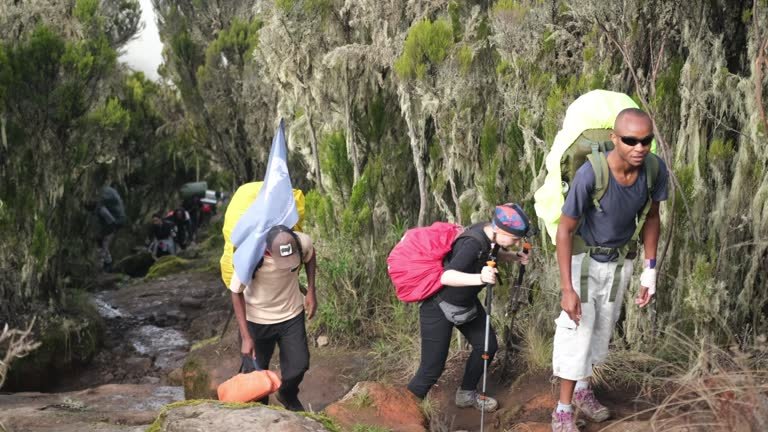
On camping routes, your porters transport the shared equipment and prepare the main camp setup while you hike with your daypack.
When you arrive, you can change into warm and dry clothing, organise your sleeping area, eat, complete the health check and rest.
Camp life is simple, but having the mountain crew manage the main logistics allows you to focus on recovery for the next day.
Sleeping in a Tent for the First Time
If you have little camping experience, practise sleeping in your sleeping bag before travelling if possible.
On Kilimanjaro, nights become colder as elevation increases, making a suitable sleeping bag and warm nighttime clothing important.
Sleeping mattresses are provided as part of our standard camping arrangements.
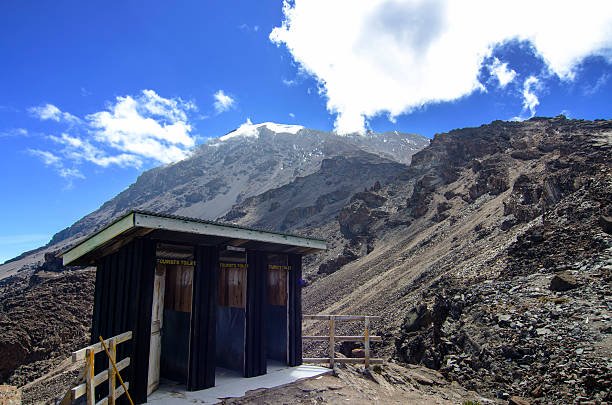
Private Portable Toilet
A private portable toilet can be added to suitable camping routes.
First time campers sometimes prefer this option for additional convenience during the mountain trek.
It should be specifically requested and confirmed because it is not automatically included in every package.
Mountain Meals for Beginners
A mountain cook prepares meals during the trek according to the route and confirmed package.
Breakfast, lunch and dinner help provide energy for repeated trekking days.
Some hikers experience reduced appetite at altitude, but eating remains important.
Vegetarian and other dietary requirements should be communicated before the climb.
Drinking Water
Your mountain program includes drinking water arrangements according to the route.
You should carry enough capacity in your daypack and follow the guide's instructions for refilling.
Hydration supports normal trekking performance but does not guarantee protection from altitude illness.
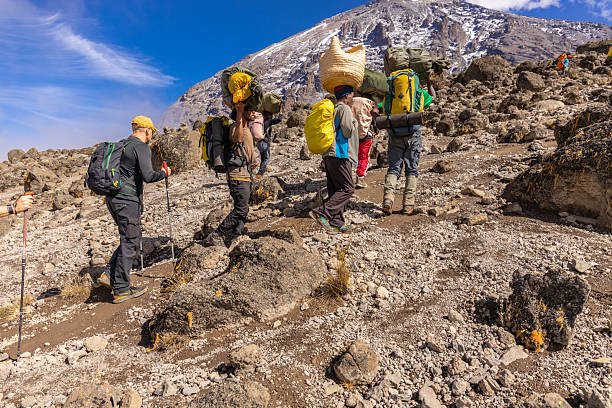
What Do Porters Carry?
Porters transport shared mountain equipment and permitted client duffel luggage between camps.
Our standard porter carried allowance for personal client duffel luggage is up to approximately 15 kg per climber.
Your main suitcase and items not needed on Kilimanjaro can normally remain stored in Moshi according to the hotel and operator arrangements.
What Do You Carry Yourself?
You carry your own daypack while trekking.
- Drinking water
- Rain jacket
- Waterproof trousers
- Warm layer
- Gloves
- Warm hat
- Sun hat
- Sunglasses
- Sunscreen
- Personal snacks
- Personal medication
- Phone or camera
- Headlamp when required
What Gear Does a First Time Hiker Need?
You need equipment suitable for rain, sun, cold and high altitude conditions.
A layering system is more practical than relying on one extremely heavy jacket because temperatures change throughout the trek.
Essential Kilimanjaro Gear
- Well broken in hiking boots
- Trekking socks
- Base layers
- Warm mid layers
- Insulated jacket
- Waterproof jacket
- Waterproof trousers
- Warm summit layers
- Warm gloves or mittens
- Warm hat
- Sun hat
- Headlamp and spare batteries
- Trekking poles
- Sunglasses
- Sunscreen
- Daypack
- Warm sleeping bag where required
Gear Rental in Moshi
First time hikers do not necessarily need to purchase every specialist item.
Selected trekking equipment can be rented in Moshi subject to size and availability.
Possible rental items include sleeping bags, trekking poles and gaiters, while other available items should be specifically confirmed before arrival.
Pre Climb Gear Check
Your mountain guide can review your equipment before departure.
This is particularly valuable for first time hikers who may not know whether they have enough warm layers or suitable rain protection.
If something important is missing, rental or replacement options can be discussed before travelling to the mountain gate.
Do Not Wear New Hiking Boots on Kilimanjaro
Your boots should already be comfortable before you travel.
Use them during training hikes so you know how they fit after several hours of walking.
New boots worn for the first time on Kilimanjaro can increase the risk of blisters and foot discomfort.
Trekking Poles for Beginners
Trekking poles can improve balance and reduce some strain during long downhill sections.
If you have never used poles before, practise with them during training walks rather than learning for the first time on summit descent.
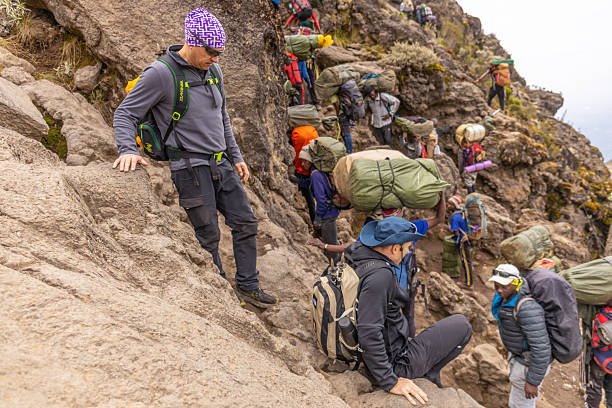
What Is Barranco Wall Like for First Time Hikers?
The Barranco Wall is part of the Machame and Lemosho southern circuit and can look intimidating when viewed from camp.
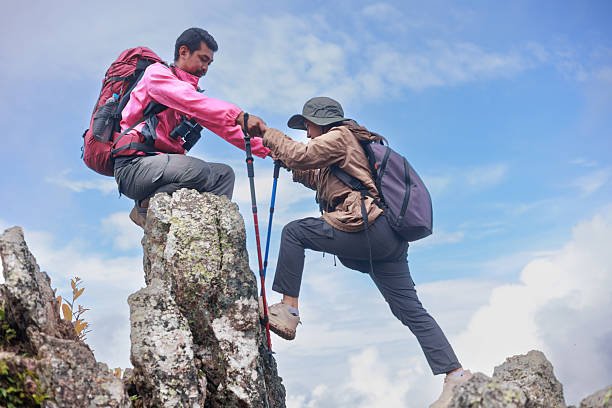
It involves steep hiking and sections where climbers may use their hands for balance, but it is generally approached as a guided trekking obstacle rather than a technical rock climbing section.
Follow the guide carefully, move patiently and avoid rushing because other climbing groups may also be on the route.
What Is Summit Night Really Like?
Summit night is often the hardest part of a first Kilimanjaro experience.
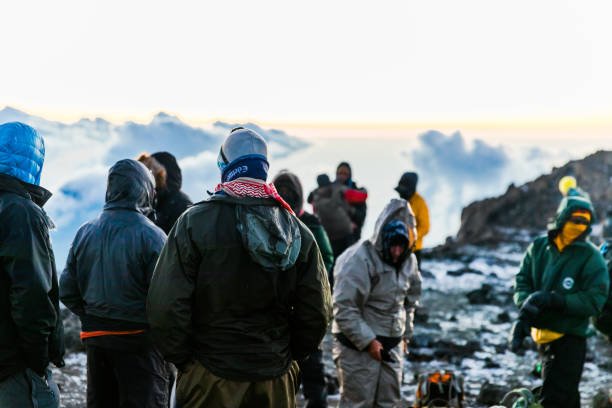
You normally leave the high camp during the night and walk slowly upward for several hours in cold and darkness.
The combination of altitude, fatigue and cold can make progress feel much harder than an ordinary hike.
The guide sets the pace and monitors each climber throughout the ascent.
Summit Night Clothing
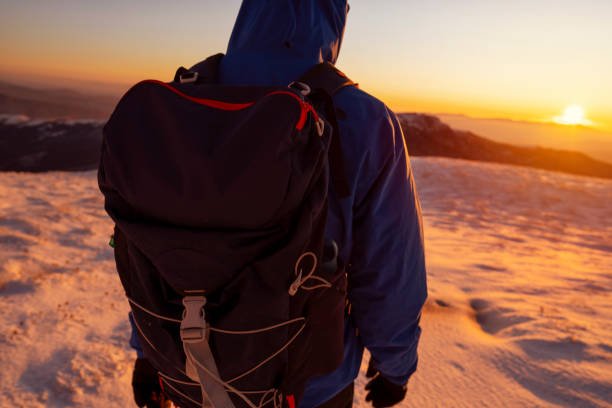
Prepare your warmest layers before sleeping at summit camp.
You may use multiple layers on your upper and lower body along with warm socks, gloves, a hat, headlamp and weather protection.
Keep essential equipment organised so you are not searching through bags shortly before departure.
Do You Have to Reach the Summit?
No. The summit is the goal, but it is never guaranteed and it should not override health and safety decisions.
Some climbers turn back because of altitude symptoms, exhaustion, weather or other concerns.
A successful mountain experience is not only about reaching Uhuru Peak; returning safely is always essential.
Mental Preparation for First Time Hikers
Mental preparation is useful because Kilimanjaro requires patience.
You may experience rain, basic camp conditions, poor sleep, cold mornings and moments when the summit feels far away.
Focus on one trekking day at a time rather than thinking continuously about the final summit.
Follow your guide's pace and avoid comparing yourself with faster climbers.
Your First Day on Kilimanjaro
The first trekking day usually begins with transport from Moshi to the appropriate mountain gate.
After registration and crew preparations, you begin walking through the lower mountain environment toward the first camp or hut.
Use this day to become comfortable with your daypack, trekking poles and guide's walking pace.
A Typical Trekking Day
- Wake at the scheduled camp time.
- Pack your personal equipment.
- Eat breakfast.
- Prepare your daypack and water.
- Begin trekking slowly with your guide.
- Stop for rest and lunch according to the route.
- Continue to the next camp.
- Change into dry and warm clothing.
- Rest and hydrate.
- Complete your health assessment.
- Eat dinner.
- Receive the next day's briefing and sleep.
Private Kilimanjaro Climb for First Time Hikers
A private climb can be useful for beginners who prefer a smaller team and a departure date arranged around their own travel plans.
The mountain schedule still follows the selected route, but the expedition is organised specifically for the booked traveller or group.
Group Joining Kilimanjaro for Beginners
First time hikers can also join a scheduled Kilimanjaro departure.
This provides an opportunity to meet other climbers and share the experience with a wider group.
Every climber is still assessed individually because altitude affects people differently.
Solo First Time Hikers
Solo travellers can join a group or arrange a private climb.
You are supported by the mountain crew throughout the trek, so travelling to Tanzania alone does not mean hiking Kilimanjaro alone.
First Time Hikers Travelling as a Couple
Couples can share the mountain experience while following their own physical responses to altitude.
One partner should never feel pressure to continue simply because the other feels stronger.
Airport Pickup and Moshi Hotel
Kilimanjaro International Airport pickup can be included according to your selected package.
A pre climb hotel night in Moshi provides time to rest after your flight, meet the guide, complete the briefing and check equipment before the trek.
Pre Climb Briefing for Beginners
The pre climb briefing is especially useful when Kilimanjaro is your first major trek.
Your guide explains the route, daily camp routine, luggage system, meals, altitude considerations, summit plan and safety procedures.
Ask questions during the briefing rather than worrying that a basic question is too simple.
Charging Phones on Kilimanjaro
Reliable electrical charging should not be expected at mountain camps.
Bring a suitable power bank for your phone, camera or watch and protect batteries from cold conditions where practical.
Safari after Your First Kilimanjaro Climb
A Tanzania safari is a relaxing contrast after several days of mountain trekking.
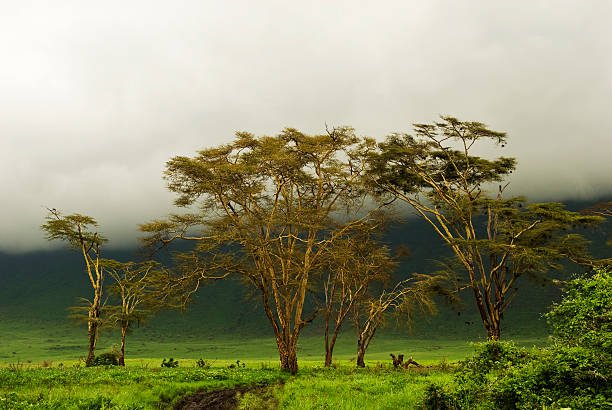
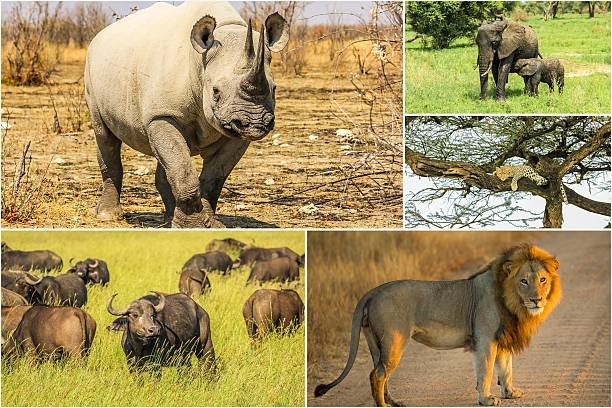
After returning to Moshi, travellers can continue to Tarangire, Ngorongoro, Lake Manyara or Serengeti according to available time.
Popular Post Kilimanjaro Safari Options
- 2 days: Tarangire and Ngorongoro.
- 3 days: Tarangire, Ngorongoro and Lake Manyara.
- 4 days: Tarangire, Serengeti and Ngorongoro.
- 5 days: Tarangire, Serengeti, Ngorongoro and Lake Manyara.
- Longer safari: Additional Serengeti days, Lake Eyasi or cultural experiences.
Zanzibar after Kilimanjaro
Zanzibar can be added after the climb or after a combined Kilimanjaro and safari itinerary.
This allows first time hikers to complete the demanding adventure portion first and then spend additional time on the Indian Ocean coast.
Typical Kilimanjaro Package Inclusions for First Time Hikers
- Professional Kilimanjaro guides
- Mountain cook
- Porters according to group size
- Kilimanjaro fees listed in the confirmed quotation
- Camping or hut accommodation according to route
- Sleeping mattresses on camping routes
- Mountain meals
- Drinking water arrangements
- Emergency oxygen
- Pulse oximeter monitoring
- Regular health assessments
- First aid equipment
- Pre climb briefing
- Equipment check
- Mountain gate transportation where included
- Moshi hotel accommodation where listed
- Airport transfers where listed
Typical Package Exclusions
- International flights
- Tanzania visa
- Travel and medical insurance
- Personal trekking clothing and equipment unless listed
- Sleeping bag unless included or rented
- Gear rental unless specifically included
- Private portable toilet unless included
- Extra hotel nights not stated in the package
- Tips and gratuities
- Personal expenses
- Safari or Zanzibar unless specifically booked
Kilimanjaro Climb for First Time Hikers Price Factors
The cost depends on the route, number of trekking days, group size, private or group joining arrangement and additional services.
What Affects the Package Price?
- Selected Kilimanjaro route
- Number of trekking days
- Number of climbers
- Private or group joining climb
- Mountain fees and crew
- Hotel nights in Moshi
- Airport transfers
- Gear rental
- Private portable toilet
- Safari extension
- Zanzibar extension
Why Book Kilimanjaro as Your First Major Hike?
The Kilimanjaro Climb for First Time Hikers offers the opportunity to experience one of the world's great trekking objectives without requiring standard route climbers to become technical mountaineers first.
You walk through changing ecological zones, learn how your body responds to altitude and experience several days of expedition style trekking supported by a professional mountain crew.
Good preparation matters more than pretending the mountain is easy. A realistic route, suitable equipment, slow pace, honest communication and experienced guides can help make your first major mountain experience safer and more enjoyable.
Frequently Asked Questions
Can a complete beginner climb Kilimanjaro?
Many first time hikers attempt Kilimanjaro successfully, but preparation, an appropriate route, suitable equipment and responsible altitude management are essential.
Do I need technical climbing experience?
Technical mountaineering experience is not normally required on the standard Kilimanjaro trekking routes.
Do I need previous hiking experience?
Previous hiking is helpful, but first time trekkers can prepare through regular walking, hill training, stair work and progressively longer hikes before travel.
Which route is suitable for a first time hiker?
Machame, Lemosho and Marangu can all be considered. The most suitable route depends on your available days, accommodation preference and desired acclimatization schedule.
Is 7 Day Machame suitable for beginners?
It can be a suitable option for prepared first time hikers and provides an additional mountain day compared with the 6 day version.
Is 8 Day Lemosho suitable for beginners?
Yes. It provides a longer mountain itinerary and additional time for gradual altitude exposure before summit night.
Is Marangu easier because it has huts?
Huts can make overnight accommodation more familiar, but Marangu still involves high altitude trekking and a demanding summit attempt.
How fit should I be?
You should be able to walk for several hours and repeat that effort over consecutive days. Elite athletic fitness is not required.
How should I train?
Regular walking, hiking, hills, stairs, cardiovascular exercise and strength work can help prepare your body for the trek.
Should I train with a backpack?
Yes. Training with the daypack you plan to use can help you become comfortable with the load and strap adjustments.
Do porters carry my luggage?
Porters carry permitted client duffel luggage and shared mountain equipment while you carry your own daypack.
What is the porter luggage allowance?
Our standard client duffel allowance for porter carried luggage is up to approximately 15 kg per climber.
Do I have to camp?
Machame, Lemosho, Rongai and Northern Circuit use camping. Marangu is available for travellers who prefer mountain huts.
Are tents provided?
Sleeping tents are provided on our standard camping route arrangements.
Are mattresses provided?
Yes. Sleeping mattresses are provided on our standard camping arrangements.
Can I rent a sleeping bag?
Yes. Sleeping bags can be rented subject to size and availability.
Can I rent trekking poles?
Yes. Trekking poles can be rented subject to availability and can be particularly useful during long descents.
Should I bring my own hiking boots?
Bringing well fitted, broken in hiking boots is strongly preferable because footwear comfort is important over several consecutive days.
Is Barranco Wall technical climbing?
It is generally treated as a steep guided trekking section where hands may be used for balance rather than as a technical climbing route.
Is summit night difficult?
Yes. It is normally the most demanding part of the trek because of altitude, cold, darkness and the length of the walking day.
Is summit success guaranteed?
No. Reaching Uhuru Peak depends on acclimatization, individual health, weather, mountain conditions and guide assessment.
Can fit beginners get altitude sickness?
Yes. Physical fitness does not make a climber immune to altitude related illness.
Do you perform health checks?
Yes. Our mountain procedures include regular symptom assessments and pulse oximeter monitoring.
Is emergency oxygen carried?
Yes. Emergency oxygen is carried as part of our mountain safety equipment.
Can oxygen help me continue if I am sick?
Emergency oxygen is a safety resource, not a way to keep ascending when descent is required because of altitude illness.
Are meals included?
Mountain meals are included when stated in your confirmed climbing package.
Can vegetarian meals be prepared?
Yes. Vegetarian and other dietary requirements should be communicated before the trek.
Can solo first time hikers join a group?
Yes. Solo travellers can join selected scheduled Kilimanjaro departures or arrange a private climb.
Can airport pickup be included?
Yes. Kilimanjaro International Airport pickup and transfer to Moshi can be added according to your package.
Can Moshi hotels be included?
Yes. Pre and post climb hotel nights can be included according to the selected package.
Can I add a safari after my first Kilimanjaro climb?
Yes. Tarangire, Ngorongoro, Lake Manyara and Serengeti can be added according to the number of safari days available.
Can I add Zanzibar?
Yes. Zanzibar can be added after Kilimanjaro or after a combined mountain and safari itinerary.
Should I choose a private or group climb?
Both can work for first time hikers. Private climbs provide greater scheduling flexibility, while group departures provide a more social mountain experience.
Can the package be customised?
Yes. Route, number of trekking days, hotel nights, airport transfers, gear rental, private toilet, safari and Zanzibar can all be customised according to availability.
How do I book a Kilimanjaro Climb for First Time Hikers?
Provide your travel dates, number of travellers, previous hiking experience and available mountain days. Tell us whether you prefer Machame, Lemosho, Marangu or another route and whether you need airport pickup, hotels, equipment rental, a private toilet, safari or Zanzibar so the itinerary can be prepared around your experience and schedule.
Plan Your First Kilimanjaro Climb
Take on Mount Kilimanjaro with a professionally guided route, practical preparation advice, mountain crew support, health monitoring and an itinerary designed to help first time hikers understand every stage of the adventure.
Request Your First Kilimanjaro Climb

 Kilimanjaro Climb