Kilimanjaro Trek with Rescue Support
The Kilimanjaro Trek with Rescue Support is designed for travellers who want a professionally organised Mount Kilimanjaro climb with clear mountain safety procedures, regular health monitoring and emergency evacuation planning.
Mount Kilimanjaro is a non technical trekking mountain on its standard routes, but its high altitude, rapidly changing weather and demanding summit conditions mean every climber should take mountain safety seriously.
Professional guides monitor climbers throughout the trek, communicate with the support crew and make decisions based on individual condition, route circumstances and mountain safety.
Rescue support is not a guarantee that every emergency can be resolved in the same way. The response depends on the climber's condition, location, weather, terrain, available communication and the most appropriate method of descent or evacuation.
Kilimanjaro Trek with Rescue Support at a Glance
- Main experience: Mount Kilimanjaro trekking.
- Safety focus: Health monitoring and emergency response planning.
- Guide support: Professional mountain guides throughout the climb.
- Possible equipment: First aid kit, pulse oximeter, emergency oxygen and stretcher support according to the confirmed operation.
- Popular routes: Lemosho, Machame, Marangu and Rongai.
- Other options: Northern Circuit and Umbwe.
- Tour styles: Private and group joining climbs.
- Additional services: Hotels, transfers, equipment rental, private toilet, safari and Zanzibar extensions.
What Does Rescue Support Mean on Kilimanjaro?
Rescue support refers to the systems used to identify problems early, stabilise a climber where appropriate and organise descent or evacuation when continuing upward is no longer considered safe.
The first priority is prevention through suitable route planning, controlled walking pace, hydration, nutrition, acclimatization awareness and regular communication with the guide team.
If a climber develops concerning symptoms or suffers an injury, the guide assesses the situation and determines the appropriate response.
This may involve rest and monitoring, assisted descent, immediate descent, stretcher evacuation or coordination with external emergency services depending on the circumstances.
Possible Elements of Kilimanjaro Rescue Support
- Professional mountain guides
- Daily health monitoring
- Pulse oximeter checks where used
- First aid equipment
- Emergency supplemental oxygen where carried
- Assisted descent
- Stretcher evacuation when required
- Communication with the mountain base team
- Coordination with park or external rescue services when appropriate
- Transfer toward medical care when required
Professional Kilimanjaro Mountain Guides
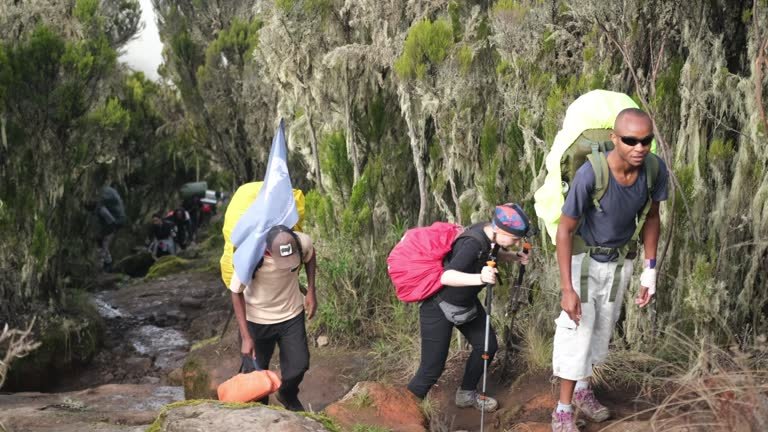
Professional guides are the first line of mountain safety during a Kilimanjaro trek.
They spend each trekking day with the climbers and are able to observe changes in walking pace, behaviour, appetite, coordination, energy and overall condition.
Guides also manage route timing, camp departures, summit preparation and decisions about whether a climber should continue or descend.
Travellers should follow guide instructions even when they personally feel determined to continue upward.
Daily Health Checks on Kilimanjaro
Daily health monitoring helps guides identify possible problems before they become more serious.
Health checks can include discussing headaches, nausea, appetite, hydration, sleep, dizziness, unusual fatigue and general wellbeing.
Climbers should answer honestly and report symptoms rather than hiding them because they are worried about delaying their group.
Information Climbers Should Share With Their Guide
- Headache
- Nausea or vomiting
- Loss of appetite
- Unusual weakness
- Dizziness
- Difficulty walking normally
- Unusual shortness of breath
- Chest discomfort
- Confusion or abnormal behaviour
- Any injury or unexpected physical problem
Pulse Oximeter Monitoring
A pulse oximeter may be used as part of daily health checks to provide additional information about the climber's condition.
The reading should not be interpreted on its own.
Guides consider symptoms, behaviour, walking ability, breathing, overall appearance and other information together when deciding whether the climber is responding appropriately to altitude.
No single oxygen saturation number should be treated as a universal rule for whether every climber can safely continue.
Emergency Oxygen on Kilimanjaro
Emergency supplemental oxygen can form part of the mountain safety equipment carried on a Kilimanjaro trek.
It is intended for emergency support and stabilization when appropriate, not as a method for helping a poorly acclimatized climber continue climbing higher.
When serious altitude illness is suspected, descent remains a critical part of the emergency response.
First Aid Support on Kilimanjaro
The mountain team can carry a first aid kit for basic emergency response during the trek.
The exact contents depend on the confirmed climbing operation and should not be considered a replacement for hospital level medical treatment.
The purpose of mountain first aid is to manage appropriate immediate problems and support evacuation when professional medical care is required.
Altitude Sickness and Rescue Support
Altitude illness is one of the main safety concerns on Mount Kilimanjaro because the summit reaches a very high elevation.
People respond differently to altitude regardless of age, fitness or previous athletic experience.
Symptoms should be reported early so the guide can monitor changes and act appropriately.
Trying to hide worsening symptoms can increase risk and make evacuation more difficult later.
Why Descent Is Important
If altitude related symptoms become severe or continue to worsen, descending to a lower elevation can become the most important safety response.
The mountain guide determines how quickly the climber needs to descend and what assistance is required.
The decision to descend should not be viewed as failure. Protecting health takes priority over reaching the summit.
Safety Before Summit
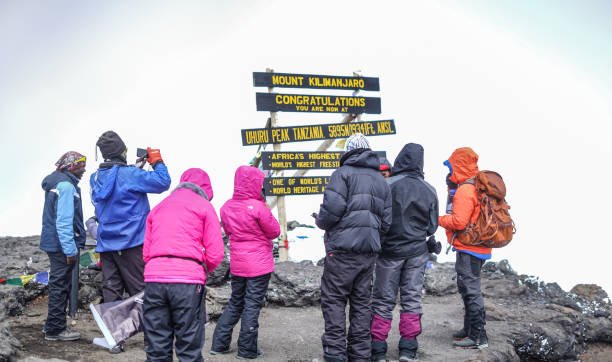
Uhuru Peak is an important goal, but it should never take priority over a climber's health.
- Report symptoms honestly.
- Follow guide instructions.
- Do not pressure another climber to continue.
- Accept descent when the guide determines it is necessary.
- Remember that the mountain can be attempted again.
Assisted Descent on Kilimanjaro
A climber who is still able to walk may descend with guide support.
The exact arrangement depends on the condition of the climber, route, location and number of guides available.
On group climbs, the guide team can organise responsibilities so the affected climber receives appropriate support while the remaining group is managed safely.
Stretcher Evacuation on Kilimanjaro
If a climber cannot safely walk, stretcher evacuation may become necessary.
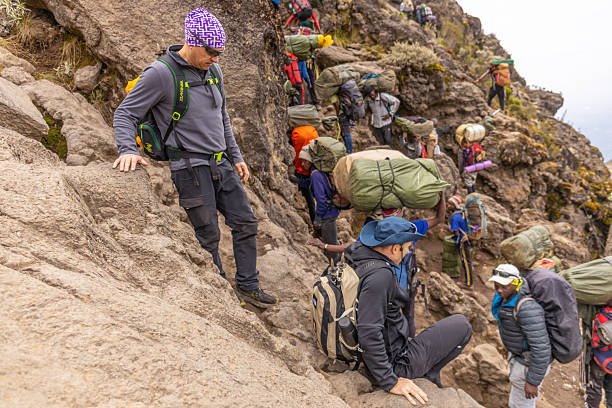
Mountain stretchers are designed to help move an injured or unwell climber down suitable sections of the route toward a location where further transport can be arranged.
The terrain can be steep, rocky or wet, so evacuation requires experienced handling and coordination.
The method used depends on route location, trail conditions and the specific emergency.
Helicopter Evacuation and External Rescue Services
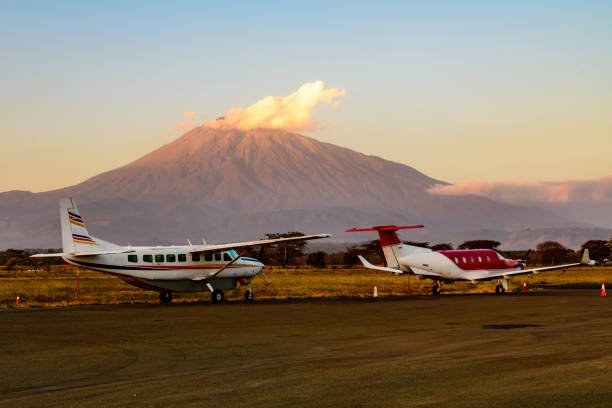
Helicopter evacuation may be considered in some Kilimanjaro emergencies when an appropriate service is operating and conditions allow.
Helicopter response should never be treated as guaranteed because aviation operations can depend on weather, visibility, daylight, aircraft availability, pickup location and other operational factors.
For this reason, guided descent and ground evacuation planning remain important even when aerial evacuation services may be available.
Travellers should also verify their insurance coverage for high altitude trekking and emergency evacuation before arriving in Tanzania.
Travel Insurance for Kilimanjaro Rescue
Travellers should arrange insurance suitable for the altitude and activities included in their Kilimanjaro trip.
Do not assume that a standard holiday insurance policy automatically covers trekking close to Kilimanjaro's summit elevation.
Before travelling, ask the insurer specifically about high altitude trekking, emergency medical treatment, evacuation and repatriation.
Insurance Questions to Check Before Kilimanjaro
- What maximum trekking altitude is covered?
- Is emergency evacuation covered?
- Is helicopter evacuation covered if medically necessary and available?
- Are hospital expenses covered?
- Is medical repatriation covered?
- What emergency contact procedure does the insurer require?
- Does the insurer require pre authorization for certain evacuation services?
Communication During an Emergency
Communication is an important part of mountain rescue planning.
The guide team can communicate with the operator's base operation and relevant mountain personnel according to available systems and route conditions.
The base team can then help coordinate transport, medical arrangements or external rescue support where required.
What Happens After a Mountain Evacuation?
The next step depends on the climber's condition.
Some people may simply require rest at a lower altitude, while others may require assessment or treatment at an appropriate medical facility.
Transport arrangements should be made according to the seriousness of the situation and advice from those managing the emergency.
Rescue Support on the Lemosho Route
Lemosho is a popular western approach to Kilimanjaro and can be organised with comprehensive guide and rescue planning.
The route crosses the Shira Plateau before continuing toward Lava Tower, Barranco, Karanga and Barafu.
Guides monitor climbers throughout the itinerary and can initiate descent when required.
7 Day Lemosho with Rescue Support
A seven day Lemosho itinerary provides several stages of altitude exposure before the summit attempt.
Daily health monitoring and communication with the guide team remain important throughout all seven mountain days.
8 Day Lemosho with Rescue Support
An eight day Lemosho climb provides an additional mountain day and can offer a more gradual overall schedule.
Rescue procedures remain available throughout the climb according to the group's confirmed safety arrangements.
Rescue Support on the Machame Route
Machame is another popular Kilimanjaro camping route.
Guides monitor climbers while the route progresses through Shira, Lava Tower, Barranco, Karanga and Barafu.
Both six day and seven day Machame itineraries should include clear procedures for illness, injury and emergency descent.
Rescue Support on the Marangu Route
Marangu uses mountain huts rather than tents, but the principles of health monitoring and emergency descent remain important.
Guides should assess climbers throughout the trek and coordinate evacuation when continuing is no longer considered safe.
Rescue Support on the Rongai Route
Rongai approaches Kilimanjaro from the northern side and can also be organised with professional mountain rescue planning.
Because route location affects descent logistics, climbers should follow guide instructions carefully if an evacuation becomes necessary.
Northern Circuit Rescue Support
The Northern Circuit involves more mountain days and travels around less direct parts of Kilimanjaro.
Health monitoring, communication and clear emergency procedures are therefore important throughout the longer itinerary.
Umbwe Route Rescue Support
Umbwe follows a steeper and more direct approach than many other routes.
Travellers considering Umbwe should discuss acclimatization, previous trekking experience and emergency procedures carefully before choosing the route.
Private Kilimanjaro Trek with Rescue Support
A private climb provides a dedicated mountain operation for an individual, couple, family or private group.
The guide team can focus directly on the booked party while following the same principles of pacing, health monitoring and emergency response.
Group Joining Kilimanjaro Trek with Rescue Support
Group joining climbers also receive mountain safety support according to the confirmed climbing operation.
Different climbers may respond to altitude differently, so the guide team must manage individuals rather than assuming everyone in the group can continue at the same pace.
If one person needs to descend, arrangements can be made according to guide staffing, the climber's condition and the circumstances on the mountain.
Guide to Climber Ratio and Rescue Planning
Having enough qualified guide support is important because a mountain group can separate if one climber requires descent while others remain able to continue.
The exact guide arrangement depends on group size and the climbing operation.
Travellers can ask about planned guide support before booking their trek.
Rescue Support on Summit Night
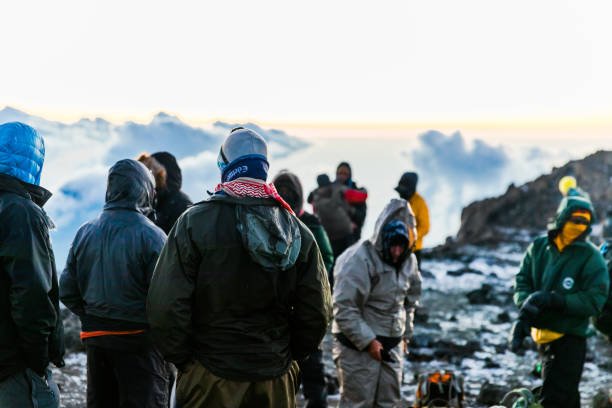
Summit night requires particularly careful guide observation because climbers are operating at high altitude, often in darkness and cold temperatures.
The summit team may organise climbers according to pace and condition when appropriate.
If a climber shows significant deterioration, the guide can stop the ascent and begin descent.
A climber should never continue upward simply because friends or other group members are still climbing.
Summit Night Safety Priorities
- Stay close to the guide team.
- Report new symptoms immediately.
- Maintain a slow controlled pace.
- Keep warm clothing accessible.
- Drink according to the guide's recommendations and conditions.
- Accept a turnaround decision when required.
Cold Weather and Emergency Preparation
Cold, wind and wet conditions can increase the difficulty of managing an injured or unwell climber.
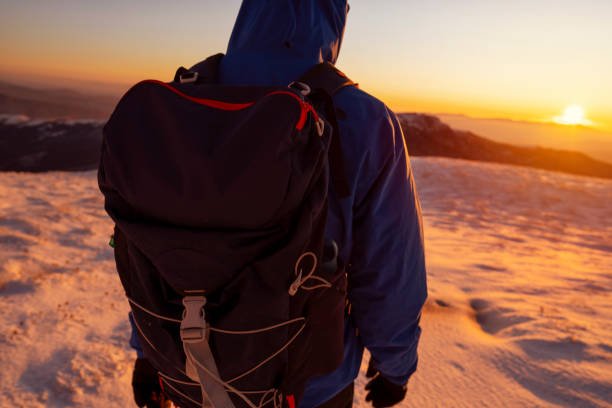
Proper waterproof clothing, warm insulation and dry spare layers are therefore part of safety preparation, not simply comfort.
Climbers should keep essential layers accessible in their daypack rather than packing everything in the porter carried duffel.
What to Carry in Your Daypack for Safety
- Water
- Waterproof jacket
- Waterproof trousers when required
- Warm insulating layer
- Warm hat
- Gloves
- Sun protection
- Personal snacks
- Personal medication
- Headlamp when required
- Other items recommended by the guide
Personal Medication
Travellers should bring sufficient supplies of any regularly required personal medication.
Important medicines should remain accessible rather than being packed where they cannot be reached during the trekking day.
Climbers with relevant medical histories should discuss their suitability for high altitude trekking with an appropriate healthcare professional before travelling.
Training Before Kilimanjaro
Physical preparation can reduce general fatigue and help climbers manage repeated trekking days.
Useful preparation can include regular hiking, cardiovascular exercise, hill walking, stair training and leg strengthening.
However, physical fitness does not guarantee successful acclimatization and does not remove the need for mountain safety procedures.
Choosing a Longer Kilimanjaro Route
Route duration is an important consideration when planning a Kilimanjaro climb.
Longer itineraries can provide additional time for gradual altitude exposure before the summit attempt.
Travellers should choose a route based on available days, previous trekking experience and appropriate acclimatization planning rather than selecting only the shortest option.
Hotel Accommodation Before Kilimanjaro
A hotel night before the climb provides time for rest, mountain briefing and equipment checks.
This is also a useful opportunity to review emergency contact information, insurance details and personal medical information before departure.
Hotel Accommodation After an Early Descent
If a climber returns from the mountain earlier than planned, accommodation can be arranged according to availability and the circumstances of the evacuation.
Any additional accommodation, transport or medical expenses should be handled according to the confirmed booking terms and applicable insurance coverage.
Emergency Contact Information
Travellers should provide accurate emergency contact information before starting the trek.
They should also carry insurance policy details and know how their insurer expects emergency assistance to be initiated.
Keeping this information accessible can reduce delays if outside assistance becomes necessary.
Kilimanjaro Trek with Rescue Support and Hotel Included
The rescue support package can be combined with accommodation before and after the mountain.
The pre climb hotel night provides time for briefing and equipment checks, while the post climb hotel gives climbers time to recover before onward travel.
Kilimanjaro Trek with Rescue Support and Private Toilet
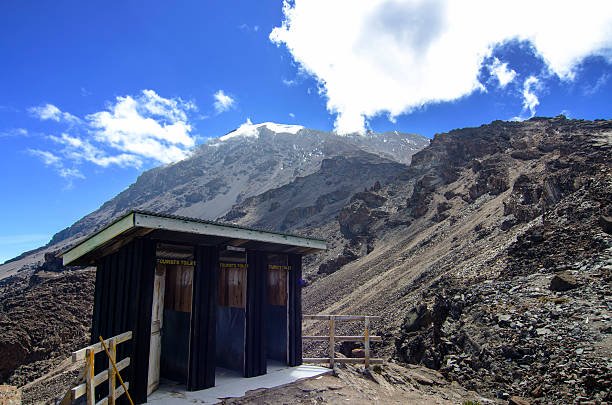
Travellers wanting additional camp comfort can add a private portable toilet on suitable camping routes.
This service is separate from rescue equipment and should be confirmed individually within the package.
Kilimanjaro Trek with Rescue Support and Gear Rental
Selected trekking equipment can be rented in Moshi before departure according to availability.
Possible rentals can include sleeping bags, trekking poles, gaiters and selected clothing.
Rental equipment should be checked during the pre climb briefing.
Kilimanjaro Trek with Rescue Support and Safari
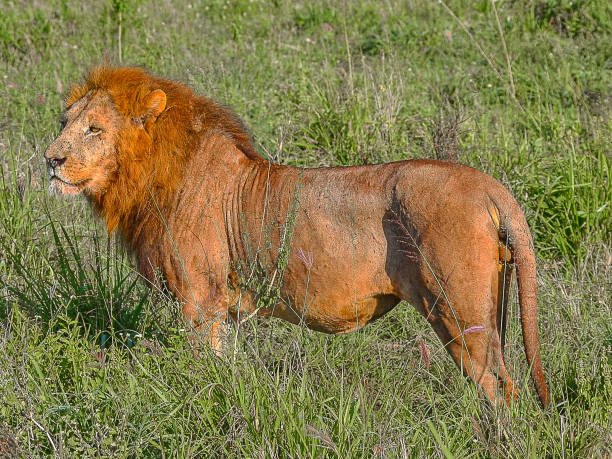
A northern Tanzania wildlife safari can be added after the Kilimanjaro trek.
Possible destinations include Tarangire, Lake Manyara, Ngorongoro and Serengeti according to the number of additional travel days available.
If the climber has experienced significant illness or injury on the mountain, onward travel plans should be reconsidered according to recovery and appropriate medical advice.
Kilimanjaro Trek with Rescue Support and Zanzibar
Zanzibar can be added after the trek as a beach extension.
The complete itinerary can include post climb accommodation and onward flights after appropriate recovery.
Typical Kilimanjaro Trek with Rescue Support Inclusions
- Professional Kilimanjaro mountain guides
- Assistant guides according to the climbing operation
- Mountain cook and porters according to route and group size
- Mountain tents or huts according to route
- Mountain meals according to the confirmed program
- Regular guide health monitoring
- First aid equipment according to the confirmed operation
- Emergency oxygen when specifically included or carried
- Pulse oximeter monitoring where used
- Ground evacuation coordination when required
- Applicable Kilimanjaro fees when stated
- Trailhead and exit gate transfers
- Hotel accommodation and airport transfers when stated
Typical Package Exclusions
- International flights
- Tanzania visa
- Travel insurance
- Personal medical expenses
- Evacuation services not specifically covered by the package or insurance
- Personal trekking equipment unless stated
- Equipment rental unless stated
- Additional hotel accommodation unless stated
- Personal expenses
- Optional safari or cultural activities
- Tips for the mountain crew
Kilimanjaro Rescue Support Cost Factors
The overall package cost depends on the selected route, number of mountain days, group size and included safety and travel services.
Main Cost Factors
- Selected Kilimanjaro route
- Number of mountain days
- Number of climbers
- Private or group joining arrangement
- Guide and support crew requirements
- Mountain safety equipment
- Hotel accommodation
- Airport transfers
- Equipment rental
- Private toilet or other optional services
- Safari or Zanzibar extensions
Responsible Kilimanjaro Safety
Responsible Mountain Guidelines
- Follow mountain guide instructions.
- Walk at a controlled pace.
- Report symptoms honestly.
- Respect applicable mountain regulations.
- Stay on permitted trails.
- Respect guides, cooks and porters.
- Do not pressure sick climbers to continue.
- Prioritize safe descent when necessary.
Important Information About Kilimanjaro Rescue Support
The Kilimanjaro Trek with Rescue Support provides structured emergency planning but should never be interpreted as a guarantee that a specific evacuation method will always be available.
Ground evacuation, assisted descent and external rescue options depend on the climber's location, physical condition, route, weather, available personnel and operational circumstances.
Helicopter evacuation, where available, can also depend on aviation conditions and should not replace a suitable ground rescue plan.
Travellers should confirm their insurance coverage, emergency contacts and the specific rescue equipment carried by their climbing operator before departure.
Frequently Asked Questions About Kilimanjaro Trek with Rescue Support
Does Kilimanjaro have rescue support?
Kilimanjaro climbs can include guide led emergency procedures, assisted descent, stretcher evacuation and coordination with park or external rescue services according to the situation and confirmed climbing operation.
Do guides carry first aid equipment?
First aid equipment can form part of the mountain safety kit according to the confirmed operator's procedures.
Is emergency oxygen available?
Emergency oxygen can be carried as part of the mountain safety equipment when included in the climbing operation.
Is emergency oxygen used to help me keep climbing?
It should not be treated as a substitute for acclimatization or used simply to allow an unwell climber to continue upward. When serious altitude problems develop, descent may be required.
Do guides use pulse oximeters?
Pulse oximeters can be used as part of daily health monitoring, but readings should be considered together with symptoms and overall condition.
What happens if I get altitude sickness?
Tell your guide immediately. The guide can assess your condition and decide whether monitoring, rest, assisted descent or more urgent evacuation is appropriate.
What happens if I cannot walk?
A stretcher or another suitable evacuation method may be required depending on your condition, route and location.
Are stretchers available on Kilimanjaro?
Stretcher support can form part of Kilimanjaro evacuation planning for climbers unable to descend safely on foot.
Can I be evacuated by helicopter?
Helicopter evacuation may be possible in some situations when an appropriate service is operating and conditions allow, but it should never be treated as guaranteed.
Does weather affect helicopter rescue?
Yes. Aviation response can depend on weather, visibility, daylight, landing or pickup conditions and aircraft availability.
Do I need travel insurance?
Travellers should arrange insurance suitable for high altitude trekking and should specifically check emergency evacuation and medical coverage before travelling.
Does normal travel insurance cover Kilimanjaro?
Coverage varies between policies, so travellers should verify the maximum trekking altitude and evacuation terms directly with their insurer.
Should my insurance cover trekking to 6,000 metres?
Travellers should choose a policy whose altitude limit clearly covers the full elevation of the planned Kilimanjaro trek and should verify the wording directly with the insurer.
Can one climber descend while the group continues?
It may be possible when guide staffing, the climber's condition and mountain circumstances allow safe support for both the descending climber and remaining group.
What if I become sick on summit night?
Tell your guide immediately. If continuing is considered unsafe, the guide can stop your summit attempt and begin descent.
Can my guide force me to descend?
The guide is responsible for mountain safety decisions and may determine that descent is necessary when continuing creates unacceptable risk.
Does being very fit prevent altitude sickness?
No. Physical fitness is valuable for trekking endurance but does not guarantee that a person will acclimatize successfully.
Is Lemosho available with rescue support?
Yes. Lemosho climbs can include professional health monitoring and emergency response planning throughout the route.
Is Machame available with rescue support?
Yes. Six day and seven day Machame climbs can be organised with appropriate mountain safety procedures.
Does Marangu have rescue support?
Professional guide monitoring and emergency descent planning remain important on Marangu despite the route using huts instead of tents.
Can solo travellers book this package?
Yes. Solo travellers can join a scheduled group or arrange a private Kilimanjaro trek.
Can couples book privately?
Yes. Couples can arrange a private climb with rescue support procedures incorporated into the mountain operation.
Can families and groups book?
Yes. Private group arrangements can be organised with guide and safety support planned according to group size.
Are hotel nights included?
Hotel accommodation can be included when stated in the confirmed package or added separately.
Are airport transfers included?
Airport transfers can be included or arranged separately according to the selected climbing package.
Can I rent trekking equipment?
Selected equipment such as sleeping bags, trekking poles and gaiters can often be rented in Moshi according to availability.
Can I add a private toilet?
Yes. A private portable toilet can be added to suitable camping routes when arranged in advance.
Can I add a safari after Kilimanjaro?
Yes. Tarangire, Lake Manyara, Ngorongoro and Serengeti can be included according to available travel days and your condition after the climb.
Can I add Zanzibar?
Yes. Zanzibar can be added after Kilimanjaro with suitable transfer and flight arrangements.
Does rescue support guarantee my safety?
No mountain activity can be made risk free. Rescue support improves emergency preparedness, but weather, altitude, terrain and individual medical conditions can still create serious risks.
How do I book a Kilimanjaro Trek with Rescue Support?
Provide your preferred climbing dates, route, number of travellers and private or group joining preference, and request clear details about guide qualifications, health monitoring, emergency equipment, evacuation procedures and insurance requirements.
Book Your Kilimanjaro Trek with Rescue Support
Share your climbing dates, preferred Kilimanjaro route and number of travellers to plan a Kilimanjaro Trek with Rescue Support, professional mountain guides, health monitoring, emergency preparation and optional hotel, transfer and safari services.
Plan Your Kilimanjaro Trek with Rescue Support

 Kilimanjaro Climb