January Ndutu Safari 2026-2027
A January Ndutu Safari 2026-2027 is ideal for travellers who want to experience the Great Migration during the green season, when wildebeest and zebra herds gather across the southern Serengeti ecosystem and the calving period begins to build.
January can provide large herd concentrations, pregnant wildebeest, newborn calves, lions, cheetahs and hyenas, all set against fresh green plains and dramatic skies.
It is also a strong month for photography because the landscape is more colourful than the main dry season and wildlife activity can be intense.
The exact position of the herds changes according to rainfall, so January itineraries should remain flexible and use current wildlife information rather than depend on one fixed location.
January Ndutu Safari at a Glance
- Main region: Ndutu and Southern Serengeti
- Main highlight: Great Migration herds and early calving
- Landscape: Green short grass plains
- Wildlife: Wildebeest, zebra, lions, cheetahs and hyenas
- Photography: Excellent green season conditions
- Safari style: Private or group joining
- Popular combination: Ndutu + Central Serengeti + Ngorongoro
- Recommended stay: Several nights in the southern migration area
Is January a Good Time for Ndutu Safari?
Yes. January is an excellent time for an Ndutu safari because the Great Migration is generally concentrated across the southern Serengeti ecosystem during suitable seasonal conditions.
Fresh grazing attracts large wildebeest and zebra herds, and calving activity can already be increasing, especially later in the month.
Predators follow the herds, making January particularly interesting for travellers who want more than general plains game.
The month also offers beautiful green landscapes and dramatic skies that are highly attractive for photographers.
Why Choose Ndutu in January?
- Large Great Migration herd concentrations
- Increasing wildebeest calving activity
- Excellent lion and cheetah opportunities
- Green landscapes and dramatic skies
- Strong wildlife photography
- Easy combination with Ngorongoro and Central Serengeti
- Good choice before the best known February peak
Where Is the Great Migration in January?
During January, the main Great Migration focus is generally the wider southern Serengeti ecosystem, including Ndutu and surrounding short grass plains.
The herds may spread across a broad area rather than remaining in one exact location.
Rainfall determines where the freshest grazing develops, and wildebeest move quickly in response to those conditions.
This makes a professional guide and flexible game drive plan essential for finding the strongest wildlife concentrations.
January Great Migration in Ndutu
January is part of the southern migration phase, when wildebeest and zebra use the nutrient rich short grass plains before and during the main calving period.
Travellers may encounter large herds stretching across open landscapes, smaller family groups and predators moving near prey concentrations.
The exact scale of the herds around Ndutu changes throughout the month and from year to year.
Early January Ndutu Safari
Early January can provide excellent wildlife when the migration has reached suitable southern grazing areas.
Large wildebeest and zebra concentrations may already be present, while some calving activity can begin.
Travellers should understand that early January is generally more about the developing calving season than the absolute peak of newborn activity.
Mid January Ndutu Safari
Mid January can provide a strong balance between large migration herds, increasing calving and predator activity.
As more pregnant females gather across the southern plains, the safari can become increasingly dynamic.
This period is particularly attractive for travellers who want strong Great Migration wildlife before February's best known calving focus.
Late January Ndutu Safari
Late January can be one of the strongest parts of the month for travellers interested in early calving activity.
More newborn wildebeest may be visible, while predator opportunities can increase around concentrated herds.
Late January is therefore an excellent alternative for travellers who cannot visit during February.
Can You See Wildebeest Calves in January?
Yes. Wildebeest calves can be seen during January, particularly as the month develops.
However, travellers should not expect every part of Ndutu to contain large numbers of newborn animals at the same time.
The concentration of calving activity depends on herd location and seasonal conditions.
Those seeking the strongest possible focus specifically on calving often choose February, but January can still be excellent.
January vs February Ndutu Safari
January and February are both excellent, but they provide slightly different experiences.
January offers large herds, green scenery and increasing calving activity, while February usually provides the strongest concentration of newborn wildebeest.
Travellers who prioritize births above everything else may prefer February, while January is excellent for combining migration, predators and green season photography.
January vs February Ndutu Safari
| Feature |
January |
February |
| Migration herds |
Excellent |
Excellent |
| Calving |
Increasing |
Main focus |
| Predators |
Very good |
Excellent |
| Photography |
Excellent green season |
Excellent wildlife action |
January vs March Ndutu Safari
January generally represents the beginning of stronger calving activity, while March is more transitional as many calves are already older and the herds can begin responding to changing grazing conditions.
January is therefore stronger for travellers who want the buildup toward the peak calving period, while March can be excellent for broader migration behavior.
Wildlife in Ndutu in January
January offers much more than wildebeest alone.
Travellers may encounter zebra, gazelles, lions, cheetahs, hyenas, jackals, giraffes, elephants and many bird species depending on the location.
The abundance of plains game makes the region particularly attractive for predators.
Wildlife You May See in January
- Wildebeest
- Wildebeest calves
- Zebra
- Lions
- Cheetahs
- Hyenas
- Jackals
- Gazelles
- Giraffes
- Elephants
- Birdlife
Lions in Ndutu in January
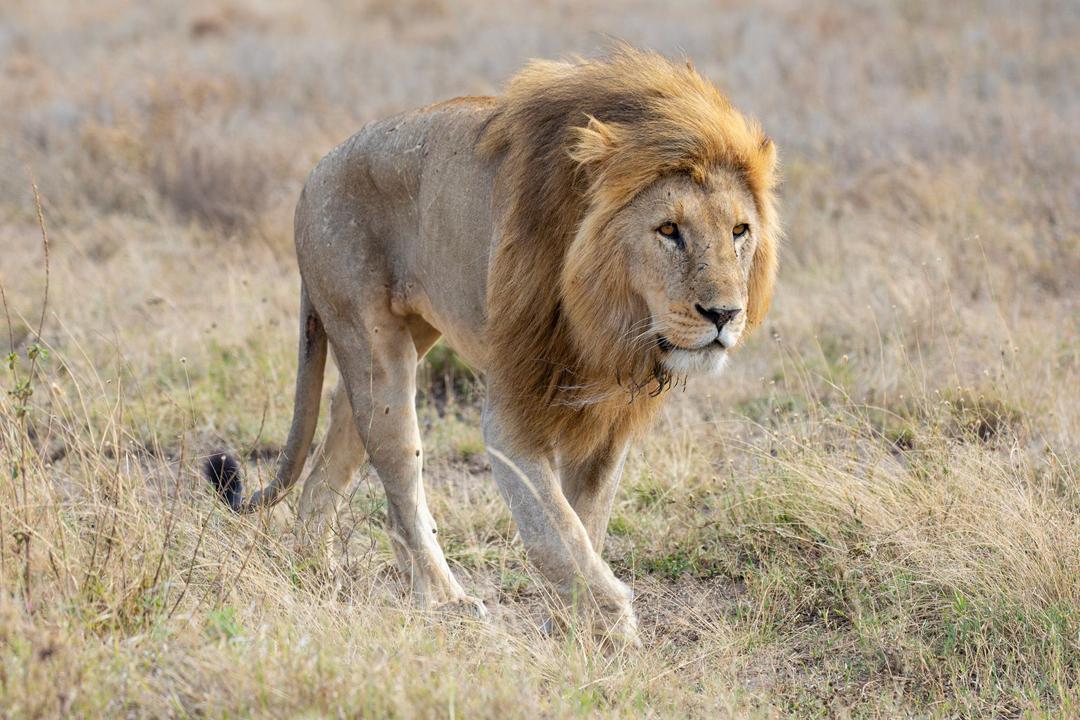
Lions are a major attraction during January because the migration brings large prey concentrations into the southern ecosystem.
Travellers may see prides resting, stalking, feeding or moving across open areas.
Morning and late afternoon game drives can be especially productive because temperatures are cooler and predators may be more active.
Cheetahs in Ndutu in January
Ndutu is one of the strongest areas for travellers interested in cheetahs during the early year.
Open plains provide excellent visibility and suitable hunting habitat.
The presence of gazelles and increasing numbers of young wildebeest can create good predator opportunities, although hunts can never be guaranteed.
Hyenas in Ndutu in January
Hyenas can be highly active around migration herds and are an important part of the ecosystem.
Travellers may observe them hunting, scavenging or interacting with lions and other predators.
These encounters can provide some of the most interesting wildlife behavior of a January safari.
January Ndutu Photography Safari
January is excellent for photography because green grass, dark rain clouds, soft light and large wildlife concentrations create dramatic images.
The landscape can feel very different from the dry season, with richer colours and atmospheric skies.
Photographers can focus on wildebeest herds, predators, newborn animals, environmental portraits and wide migration landscapes.
A private vehicle provides greater flexibility for waiting at productive sightings and positioning for light where regulations allow.
January Weather in Ndutu
January falls within the greener season, so travellers should expect warm conditions with the possibility of showers.
Rain is an important part of the ecosystem because it creates the fresh grazing that attracts migration herds southward.
Showers can also produce dramatic skies and excellent photography conditions.
Some tracks can become muddy after heavier rain, which is why suitable 4x4 vehicles are important.
Does Rain Ruin an Ndutu Safari in January?
No. Rain is part of the reason January wildlife can be so productive.
Showers are often intermittent rather than preventing wildlife viewing for the entire day.
The fresh grass created by seasonal rain is directly connected with wildebeest movement into the southern plains.
Travellers should simply bring suitable light rain protection and keep the itinerary flexible.
Is January Crowded in Ndutu?
January can attract many migration focused visitors, especially later in the month as the calving season develops.
However, herd distribution across broad plains can help spread vehicles between different wildlife areas.
Private guiding also allows travellers to explore beyond the busiest sightings when productive wildlife is found elsewhere.
Private January Ndutu Safari
A private safari is one of the strongest ways to explore Ndutu in January.
Your vehicle and guide can follow current herd information instead of adhering to a fixed group route.
This is particularly valuable because wildlife distribution can change quickly after rainfall.
Private travel is ideal for photographers, families, couples and travellers who want maximum flexibility.
Group Joining January Ndutu Safari
Group joining safaris can reduce the per person price by sharing the vehicle and guide.
Travellers should confirm that the departure is specifically designed to include Ndutu and southern migration areas.
A standard Central Serengeti group tour may not dedicate enough time to the January migration zone.
Budget January Ndutu Safari
Budget travellers can use camping, shared vehicles or simpler tented accommodation.
Accommodation location remains important because staying too far from the current migration area can lead to long daily transfers.
Choosing a simple camp in a strong location can provide better safari value than a more comfortable property far from the herds.
Mid Range January Ndutu Safari
Mid range tented camps are popular because they offer private facilities and comfortable accommodation while keeping travellers reasonably close to wildlife areas.
This is a strong option for couples, families and small groups wanting comfort without the highest luxury costs.
Luxury January Ndutu Safari
Luxury safaris can include premium seasonal camps, private vehicles and domestic flights.
This allows travellers to reduce transfer time while maximizing wildlife viewing.
A luxury Ndutu trip can also combine easily with high end Ngorongoro accommodation and Zanzibar.
Where to Stay in Ndutu in January
The best accommodation depends on current herd distribution, budget and the wider safari route.
Seasonal tented camps can be particularly useful because they operate with migration movement in mind.
Travellers should choose accommodation that reduces unnecessary daily driving and keeps them close to likely wildlife areas.
Seasonal Camps in Ndutu in January
Seasonal migration camps provide an immersive safari atmosphere and can place travellers close to the southern Great Migration.
They range from simpler tented accommodation to premium luxury camps.
January availability should be checked early when travel dates fall close to the developing calving peak.
January Ndutu and Central Serengeti Safari
Combining Ndutu with Central Serengeti is an excellent strategy in January.
Ndutu provides the seasonal migration focus, while Central Serengeti adds dependable resident wildlife including lions, leopards and elephants.
This combination also adds flexibility if the migration herds are spread farther north or south than expected.
January Ndutu and Ngorongoro Safari
Ndutu and Ngorongoro form one of the strongest January safari combinations in northern Tanzania.
Travellers can experience migration wildlife across the southern plains and then explore the Ngorongoro Crater ecosystem.
Four to six or more days can provide a comfortable route depending on the starting point.
January Ndutu, Serengeti and Ngorongoro Safari
A longer itinerary can combine Ndutu, Central Serengeti and Ngorongoro for excellent wildlife variety.
This provides seasonal migration herds, strong resident predators and the crater experience within one northern Tanzania journey.
Five to seven or more days works especially well.
January Ndutu Safari from Arusha
Arusha is one of the main starting points for road based Ndutu safaris.
The itinerary can continue through the highlands toward Ngorongoro and the southern Serengeti ecosystem.
Travellers with additional days can then continue into Central Serengeti before returning toward Arusha.
January Ndutu Safari from Moshi
Travellers staying in Moshi can begin an Ndutu safari after Kilimanjaro or as a separate wildlife holiday.
The road route normally passes through Arusha before reaching Ngorongoro and the Ndutu ecosystem.
A well paced itinerary is particularly useful for travellers arriving directly from a mountain climb.
January Ndutu Safari from Zanzibar
Travellers staying in Zanzibar can use domestic flights to connect with the northern Tanzania safari circuit.
This reduces long overland travel and can make a three to five day January migration safari more practical.
After the safari, travellers can return to Zanzibar or finish in Arusha or Kilimanjaro.
3 Day January Ndutu Safari
A three day Ndutu safari can work when the itinerary remains focused on the southern migration area.
Travellers should avoid adding too many distant parks because transfer time can quickly reduce useful game drive hours.
A flight in or out can help maximize safari time on a short itinerary.
4 Day January Ndutu Safari
Four days provides more flexibility for migration viewing and can include Ngorongoro.
This is a practical option for travellers who want a focused early year safari without a long itinerary.
5 Day January Ndutu Safari
Five days allows several Ndutu game drives and enough time to add Central Serengeti or Ngorongoro.
The additional days give guides more flexibility if migration herds move across a broader area.
6 Day January Ndutu Safari
A six day itinerary can combine Ndutu, Central Serengeti and Ngorongoro comfortably.
This gives travellers seasonal migration activity, predators and a broader northern Tanzania wildlife experience.
7 Day January Ndutu Safari
Seven days is excellent for travellers who want several full wildlife days and a slower pace.
The safari can combine Ndutu, Central Serengeti, Ngorongoro and another destination such as Tarangire when practical.
Suggested January Ndutu Safari Strategy
- Spend several nights near Ndutu migration areas
- Use current herd reports during the safari
- Choose late January if early calving is a major priority
- Combine Central Serengeti for reliable resident wildlife
- Add Ngorongoro when enough days are available
- Use a private vehicle for maximum flexibility
January Ndutu Safari for Families
January can be excellent for families because large herds and predator activity keep game drives interesting for children.
A private vehicle allows parents to control game drive length, meal breaks and departure times.
Family friendly accommodation should be selected according to children's ages and room arrangements.
January Ndutu Safari for Couples
Couples can combine private game drives with comfortable tented accommodation and a relaxing Zanzibar extension.
Green season landscapes and migration wildlife make January especially attractive for honeymooners and anniversary trips.
Hot Air Balloon Safari in Ndutu in January
A hot air balloon safari can sometimes be added during the early year migration season when operations are available.
The aerial perspective can reveal broad green plains and large wildlife concentrations.
Specific herd locations cannot be guaranteed beneath the balloon because both wildlife and flight direction remain natural and variable.
What to Pack for Ndutu in January
January Ndutu Packing List
- Lightweight neutral safari clothing
- Warm layer for early morning game drives
- Light rain jacket
- Comfortable closed shoes
- Sun hat
- Sunglasses
- Sunscreen
- Binoculars
- Camera and telephoto lens
- Spare batteries and memory cards
- Personal medication
- Travel documents and insurance details
What Is Included in a January Ndutu Safari?
Typical January Ndutu Safari Inclusions
- Professional safari driver guide
- 4x4 safari vehicle
- Applicable park and conservation fees according to itinerary
- Accommodation according to package
- Meals according to itinerary
- Drinking water during safari
- Migration focused game drives
- Transfers between safari areas
- Other destination fees when included
- Hotel or airport transfers when specified
Typical January Ndutu Safari Exclusions
- International flights
- Visa expenses
- Travel insurance
- Guide gratuities
- Personal expenses
- Alcoholic drinks unless specified
- Hot air balloon safari unless included
- Domestic flights unless specified
- Extra hotel nights
- Optional activities not listed in the itinerary
January Ndutu Safari Cost 2026-2027
The cost of a January Ndutu safari depends on safari duration, accommodation category, number of travellers and whether the vehicle is private or shared.
Seasonal migration camps can vary significantly in price, while domestic flights and luxury accommodation increase the overall package cost.
Private safaris usually cost more but offer much greater flexibility for following changing herd locations.
Travellers should compare accommodation location, number of game drives and included fees rather than choosing only the cheapest advertised package.
How Many Nights Are Best in Ndutu in January?
Two nights can provide an introduction, but three to four nights is stronger for travellers whose main objective is Great Migration and early calving activity.
Wildlife distribution can change quickly, so additional days provide more opportunities to find large herds and observe different predator behavior.
Photographers may prefer even longer stays.
When Should I Book a January Ndutu Safari?
Booking early is recommended, especially for late January travel when demand increases toward the main calving season.
Well positioned migration camps, family rooms, private vehicles and domestic flights can become limited.
Early booking also gives travellers more choice of properties close to expected wildlife areas.
Planning a January Ndutu Safari 2026-2027
Start with your exact January travel dates and decide whether Great Migration herds, early calving, predators or photography are the main priority.
Next, choose accommodation close to the southern migration zone and allow several game drives in Ndutu.
Add Central Serengeti or Ngorongoro when enough days are available, and use a private vehicle if maximum flexibility is important.
The strongest January safari follows current herd movement and rainfall conditions rather than relying on one fixed annual migration map.
Frequently Asked Questions About January Ndutu Safari
Is January a good time to visit Ndutu?
Yes. January can provide large migration herds, green landscapes, increasing calving activity and excellent predator opportunities.
Can I see wildebeest calves in January?
Yes. Calving can already be underway during January and generally becomes increasingly important as the month develops.
Is late January better than early January?
Late January can be stronger if early calving is the main priority, while early January can still provide excellent migration herds and green season wildlife.
Where is the Great Migration in January?
The main focus is generally the southern Serengeti ecosystem, including Ndutu and surrounding short grass plains, depending on rainfall.
Can I see lions in Ndutu in January?
Yes. Large prey concentrations can create excellent lion opportunities throughout January.
Can I see cheetahs in January?
Yes. Ndutu's open plains provide excellent cheetah habitat, particularly when prey concentrations are strong.
Does it rain in Ndutu in January?
Showers are possible, but rainfall helps create the fresh grazing that attracts Great Migration herds into the southern plains.
Is January good for photography?
Yes. Green landscapes, dramatic skies, large herds and predator opportunities make January excellent for wildlife photography.
How many nights should I stay in Ndutu in January?
Three to four nights is a strong choice for migration focused travellers, while photographers may prefer longer stays.
Should I combine Ndutu and Central Serengeti?
Yes. Ndutu provides seasonal migration wildlife while Central Serengeti adds dependable resident predators and broader game viewing.
Can I combine Ndutu and Ngorongoro?
Yes. Ndutu and Ngorongoro are one of the strongest January wildlife combinations in northern Tanzania.
Can I fly from Zanzibar for a January Ndutu safari?
Yes. Domestic flights can connect Zanzibar with the northern Tanzania safari circuit and reduce travel time on short itineraries.
Is January good for families?
Yes. Large visible herds and predators can make January very engaging for children, especially with a flexible private vehicle.
Should I choose January or February?
Choose January for green landscapes, large herds and increasing calving; choose February if the strongest possible focus on newborn wildebeest is your main priority.
Should I book January accommodation early?
Yes. Well positioned camps can be in strong demand as the calving season develops toward late January and February.
How do I book a January Ndutu Safari 2026-2027?
Provide your January travel dates, number of travellers, safari duration, starting point and preferred accommodation level. The itinerary can then be designed around Ndutu, southern Serengeti, current migration movement and optional Central Serengeti, Ngorongoro or Zanzibar extensions.
Plan Your January Ndutu Safari 2026-2027
Experience the Great Migration across the green Ndutu and southern Serengeti plains in January, with large wildebeest herds, increasing calving activity, predators and flexible private game drives.
Plan Your January Ndutu Safari


 African Tour