STEP
01
01
ARRIVAL
Arrive in Moshi
Arrive in Moshi and settle into your accommodation before the climb.
Airport pickup can be included according to the confirmed package.

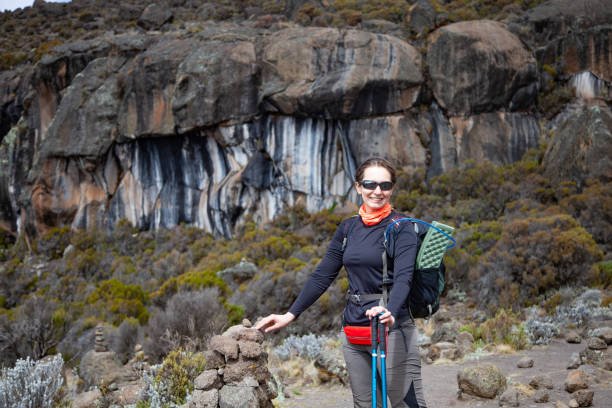
Climb Kilimanjaro with a local guide and professional mountain crew. Choose Machame, Lemosho, Marangu and other routes with full trekking support from Moshi.
A Kilimanjaro Climb with Local Guide gives travellers professional mountain support from experienced guides who work directly within the Kilimanjaro trekking environment. Climbers can choose routes such as Machame, Lemosho, Marangu, Rongai, Northern Circuit and Umbwe, with private or group joining options according to travel dates and preferred itinerary.
Local Kilimanjaro guides help manage trekking pace, route logistics, altitude monitoring, mountain briefings and summit preparation while coordinating porters, cooks and other crew members. Packages can also include park fees, camping or hut accommodation, mountain meals, transfers from Moshi, rescue arrangements and equipment support.
A Kilimanjaro climb with a local guide can be arranged for solo travellers, couples, families and groups and can be combined with hotels, airport transfers, cultural experiences, northern Tanzania safari or Zanzibar. The route and number of days can be selected according to trekking experience, available time and acclimatization needs.
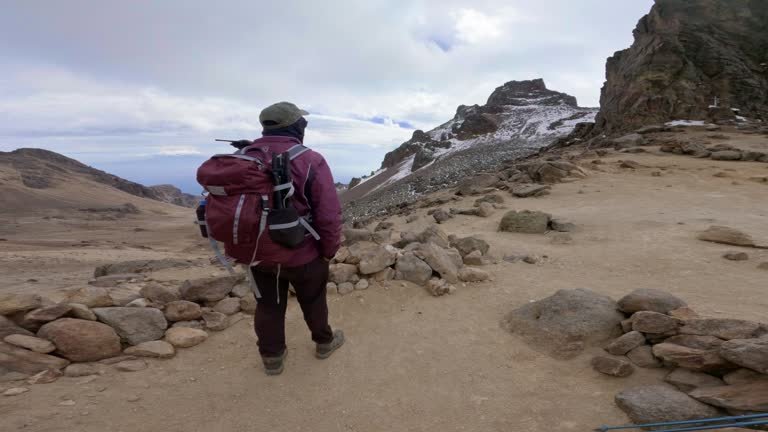
A Kilimanjaro Climb with Local Guide gives travellers professional support from a mountain guide who understands Kilimanjaro's routes, camps, altitude zones and daily trekking routines.
Local guides work closely with climbers throughout the expedition, helping manage pace, monitor wellbeing, provide route information and coordinate the wider mountain crew.
Climbers can choose several established Kilimanjaro routes including Machame, Lemosho, Marangu, Rongai, Northern Circuit and Umbwe.
The climb can be arranged privately or through selected group joining departures depending on travel dates and preferred route.
Most expeditions begin from Moshi, where travellers can complete a pre climb briefing, equipment check and final preparation before travelling to the mountain gate.
A local guide provides direct mountain knowledge and practical support throughout the expedition.
Kilimanjaro changes significantly between the lower forest, moorland, alpine desert and high summit areas, and a guide helps climbers understand what to expect each day.
The guide also manages trekking pace and coordinates the team so that climbers can focus on walking, hydration, rest and acclimatization.
Local guides can also answer questions about the mountain, route logistics and the wider Kilimanjaro region.
The mountain guide leads the expedition from the starting gate until the final descent.
The guide manages the day's pace, explains the route and communicates with the mountain team throughout the trek.
Climbers should follow guide instructions, especially at high altitude and during summit night.
Local mountain guides work repeatedly on Kilimanjaro and become familiar with the practical differences between routes.
They understand the location of camps, trail sections, common weather patterns and the changing conditions climbers can experience as they gain altitude.
Each expedition is still different, and guides adjust their approach according to current circumstances and the wellbeing of the climbing group.
The Machame Route is one of Kilimanjaro's widely used camping routes.
It can be arranged over 6 or 7 days and passes through rainforest, moorland and higher mountain environments.
A local guide helps manage the pace and daily progression through the route's camps and altitude zones.
The 7 day option provides an additional day compared with the shorter 6 day itinerary.
A 6 day Machame climb offers a shorter version of the route.
Because the itinerary is more compressed, acclimatization should be considered carefully when deciding whether this duration is appropriate.
The guide manages daily pacing and monitors the climber's condition as altitude increases.
The 7 day Machame itinerary provides more time on the mountain than the 6 day version.
This can offer additional opportunity for gradual altitude exposure while retaining the same general camping route.
It can be arranged privately or through selected group joining departures.
Lemosho approaches Mount Kilimanjaro from the western side and provides a longer mountain experience.
Seven day and 8 day itineraries can be arranged according to the selected program.
The route crosses forest and high altitude landscapes before joining sections used by other southern routes higher on the mountain.
Machame can suit travellers looking for a popular 6 day or 7 day camping route.
Lemosho can suit travellers who prefer a longer western approach with 7 day or 8 day options and more time on the mountain.
The Marangu Route is distinctive because climbers sleep in mountain huts rather than tents.
Five day and 6 day itineraries can be arranged, with the longer version providing additional time for acclimatization.
A local guide coordinates the route, hut schedule and daily trekking program.
The Rongai Route approaches Kilimanjaro from the northern side.
It requires a longer road transfer from Moshi compared with several southern routes.
A local guide company can coordinate the transfer and complete mountain expedition.
The Northern Circuit provides one of the longer trekking programs on Kilimanjaro.
It can appeal to travellers who want an extended mountain experience and have additional time available.
The guide manages the longer route sequence and supports climbers throughout the journey.
Umbwe is a more direct and demanding Kilimanjaro route.
Its faster altitude gain makes acclimatization particularly important.
Travellers considering Umbwe should discuss the itinerary with their guide and compare it with longer route options.
A private climb can be arranged specifically for one traveller or one private group.
This option provides greater flexibility with departure date and keeps the climbing party limited to the people within one booking.
Solo travellers, couples, families and groups of friends can all arrange private climbs.
The local guide and mountain crew are assigned according to the number of climbers and route requirements.
Travellers can also join scheduled Kilimanjaro departures led by local guides.
Group joining climbs allow solo travellers, couples or small parties to share the expedition with other climbers.
The route, departure date and number of trekking days are fixed according to the scheduled group.
Availability should be confirmed before international flights are booked.
Solo travellers can choose a private climb or join an available scheduled group.
A private expedition offers greater date flexibility, while a group joining tour provides a social trekking environment.
A local guide can help explain the differences before the traveller confirms the route.
Couples can climb privately or join an existing group.
A private climb can provide a more personal mountain experience, while group joining allows couples to trek with other travellers.
Hotel and tent arrangements can be coordinated according to the selected package.
Families and groups of friends can arrange a private expedition.
The route should be chosen according to available time, age, preparation and trekking experience.
The guide team size increases according to the number of climbers and operational requirements.
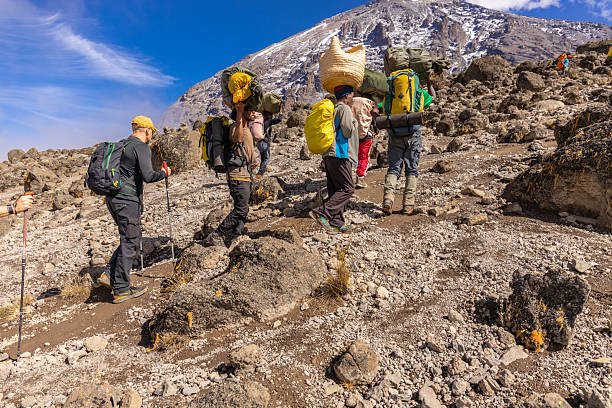
Porters support the expedition by carrying group equipment and permitted climber luggage.
Climbers normally carry a smaller daypack containing water, clothing layers and personal items required while walking.
The number of porters depends on the route, number of climbers and expedition equipment.
Camping expeditions normally include a cook who prepares meals throughout the trek.
Meals are coordinated according to the daily mountain schedule.
Travellers should communicate dietary requirements before departure.
Meals provide energy for consecutive trekking days and are an important part of mountain logistics.
Vegetarian meals can normally be arranged when requested in advance.
Other dietary requirements and food allergies should be communicated before the climb so appropriate arrangements can be reviewed.
Machame, Lemosho, Rongai, Northern Circuit and Umbwe normally use camping accommodation.
The mountain crew transports tents and group camping equipment between designated campsites.
Climbers should use a sleeping bag suitable for cold high altitude conditions.
Travellers who prefer additional privacy can ask whether a single tent can be arranged.
Availability and any extra charge should be confirmed before the mountain departure.
Climbers choosing Marangu stay in huts instead of tents.
The guide manages the route and hut schedule according to the planned itinerary.
Warm clothing and suitable sleeping equipment remain important despite the hut accommodation.
Altitude is one of the most important considerations on Mount Kilimanjaro.
A local guide helps maintain a controlled pace and monitors how climbers are responding as elevation increases.
Longer routes can provide additional time for gradual altitude exposure compared with more compressed itineraries.
No route or guide can guarantee reaching Uhuru Peak because each climber responds differently to high altitude.
A slow, controlled trekking pace is a familiar part of Kilimanjaro climbing and helps climbers manage energy as they gain altitude.
Your local guide manages the pace according to route conditions, altitude and the wellbeing of the group.
Guides can perform regular health checks throughout the trek.
Climbers should communicate headaches, nausea, unusual fatigue, dizziness, breathing problems or other symptoms honestly.
Monitoring equipment may support assessment where used, but guide decisions consider symptoms and the climber's overall condition rather than one isolated measurement.
The guide is responsible for making important decisions when a climber's condition changes.
This may include slowing down, resting, stopping the ascent or descending depending on the circumstances.
Climbers should not hide symptoms simply because they want to continue with friends or reach the summit.
The expedition should have clear procedures for responding to emergencies.
Depending on the situation, guides may coordinate assisted descent or other available rescue procedures.
Travellers should carry appropriate travel and medical insurance covering high altitude trekking.
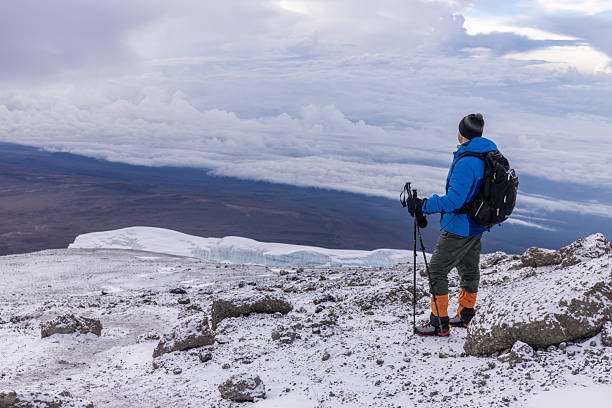
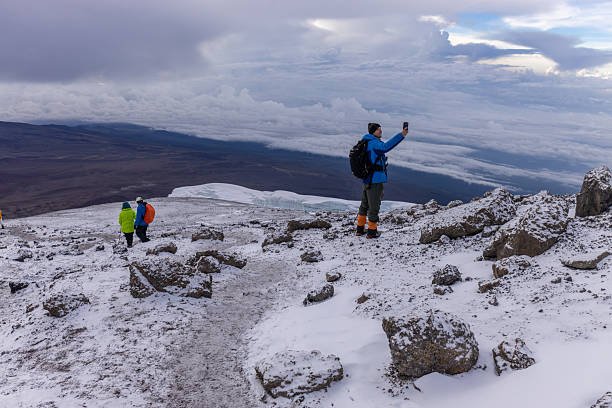
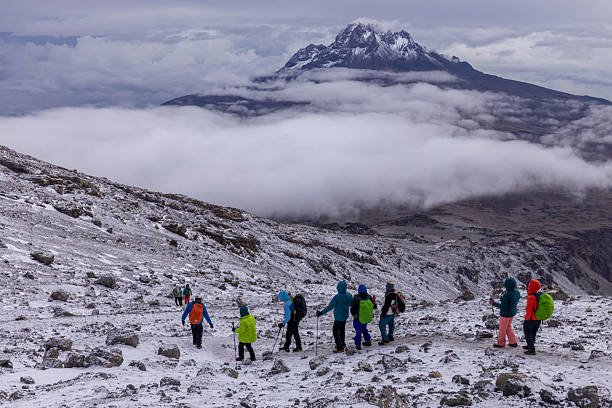
Summit night is generally the most challenging part of a Kilimanjaro climb.
The final ascent usually begins during the night or very early morning according to the route and high camp.
The local guide manages pacing, clothing checks, breaks and climber monitoring during the ascent.
The team may provide additional support according to the number of climbers and expedition staffing.
Reaching Uhuru Peak is the goal for many climbers, but the local guide must prioritize safe decision making throughout summit night.
A climber may need to turn around if health, weather or other mountain circumstances make continuing unsafe.
Before leaving Moshi, climbers meet the guide for a detailed briefing.
The guide can explain the route, daily hiking program, altitude considerations, meals, camp procedures and summit plan.
The briefing also provides an opportunity to discuss dietary requirements, medication and other important information.
A local guide can review the climber's equipment before departure.
This helps identify missing or unsuitable items before the team travels to the mountain gate.
Selected equipment can be rented in Moshi according to availability and size.
Climbers normally use a duffel bag for equipment carried by porters and a smaller daypack for personal items required during the walk.
The porter luggage allowance should be confirmed before the expedition.
Extra travel luggage not needed on the mountain can usually remain in Moshi according to the confirmed storage arrangement.
Standard Kilimanjaro trekking routes generally do not require technical mountaineering skills, but good physical preparation remains important.
Training can include walking, hiking, stair climbing, cardiovascular exercise and strength work.
Longer hikes with a daypack can help prepare for consecutive mountain days.
Physical fitness is useful, but it does not guarantee how the body will respond to altitude.
A hotel stay in Moshi before the climb gives travellers time to recover from international travel and prepare for the mountain.
The guide can meet climbers at the hotel or another agreed location for the briefing and equipment check.
Additional hotel nights can be arranged according to arrival time and travel plans.
After descending from the mountain, travellers can return to Moshi for a post climb hotel night.
This allows time to shower, rest and reorganize before continuing to safari, Zanzibar or the airport.
Airport transfers can be arranged between Kilimanjaro International Airport and Moshi.
Pickup can be coordinated according to confirmed flight details.
Departure transfers can also be arranged after the climb or following additional Tanzania activities.
Arrive in Moshi and settle into your accommodation before the climb.
Airport pickup can be included according to the confirmed package.
Meet your guide and discuss the selected route, daily program and mountain procedures.
Ask questions about altitude, meals, weather and summit preparation.
Review your trekking clothing and equipment with the guide.
Arrange any required rental equipment before travelling to the mountain.
Travel with the mountain team from Moshi to the starting gate.
Complete the required mountain entry procedures and begin trekking with your local guide.
After completing the expedition, descend to the appropriate exit gate.
Return to Moshi or continue according to your safari or onward travel arrangements.
After descending from Kilimanjaro, travellers can continue directly into northern Tanzania safari.
A local team can coordinate the transition from Moshi toward Tarangire, Lake Manyara, Ngorongoro and Serengeti.
The safari can be short or extended according to available travel time.
Tarangire can be added after the mountain for travellers wanting a shorter safari extension.
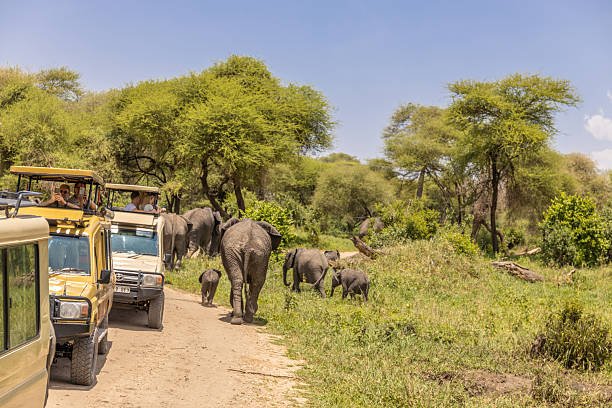
Possible wildlife sightings include elephants, giraffes, zebras, buffalo, antelopes and other naturally occurring wildlife.
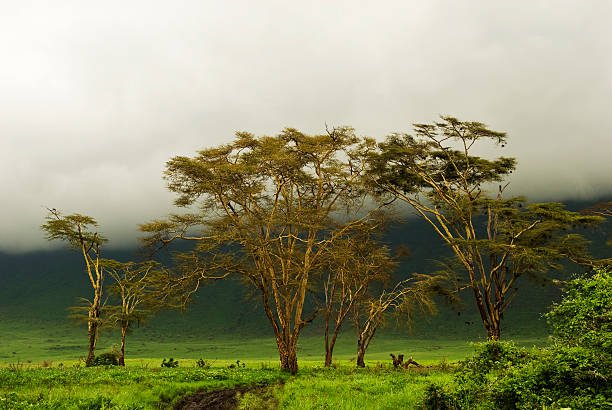
Ngorongoro can also be combined with Kilimanjaro.
A crater game drive provides a different landscape and wildlife experience after several days of mountain trekking.
Travellers with more time can continue into Serengeti National Park.
The safari can also include other northern Tanzania parks according to the selected itinerary.
Zanzibar can be added after the mountain or after a combined Kilimanjaro and safari journey.
This creates a wider Tanzania itinerary including mountain trekking, wildlife and coastal relaxation.
Begin with a locally guided Kilimanjaro climb, continue into northern Tanzania safari and finish with Zanzibar according to your available travel days.
The itinerary can be coordinated around international flight dates and preferred activity levels.
Travellers with extra time in Moshi can add local cultural experiences before or after the mountain.
These activities can provide a wider understanding of the communities living around Kilimanjaro.
Kilimanjaro packages can look similar at first, but important details can differ between operators and itineraries.
Travellers should review the route, number of days, crew support, accommodation, meals, transfers and safety procedures before comparing the final price.
A knowledgeable local guide and properly organized crew are important parts of the mountain experience.
Travellers should respect the mountain environment, professional guides and crew members throughout the expedition.
A Kilimanjaro Climb with Local Guide provides professional mountain leadership and direct local support throughout the trekking expedition.
Travellers can choose from several Kilimanjaro routes and arrange private or group joining climbs supported by guides, porters, cooks and organized mountain logistics.
The climb can also be combined with Moshi hotels, airport transfers, equipment rental, cultural activities, northern Tanzania safari and Zanzibar.
Yes. Kilimanjaro climbs are led by professional mountain guides who manage route leadership, pacing and expedition safety.
Routes can include Machame, Lemosho, Marangu, Rongai, Northern Circuit and Umbwe.
Yes. Private Kilimanjaro climbs can be arranged for solo travellers, couples, families and groups.
Yes. Scheduled group joining departures can be available on selected routes and dates.
The guide leads the route, manages pace, monitors climber condition, coordinates the crew and makes mountain safety decisions.
Porter support is normally included according to the route, package and number of climbers.
Camping expeditions normally include a mountain cook who prepares meals throughout the trek.
Mountain meals are normally included according to the confirmed package.
Yes. Vegetarian meals can normally be arranged when requested before departure.
Yes. Selected equipment can normally be rented in Moshi according to size and availability.
Yes. Pre climb and post climb hotel nights in Moshi can be included according to the selected package.
Yes. Transfers between Kilimanjaro International Airport and Moshi can be arranged according to confirmed flight details.
No. Summit success depends on acclimatization, health, weather, physical condition and mountain safety decisions.
The guide assesses your condition and may recommend rest, stopping the ascent or descending according to symptoms and safety considerations.
Many first time high altitude trekkers attempt Kilimanjaro, but physical preparation, suitable equipment and a realistic route choice remain important.
The appropriate number of days depends on the route, available time and acclimatization plan. Longer routes can provide additional time for gradual altitude exposure.
Yes. Tarangire, Lake Manyara, Ngorongoro and Serengeti can be added according to your preferred safari itinerary.
Yes. Zanzibar can be added after Kilimanjaro or after a combined climb and safari itinerary.
Yes. Coffee, cooking, village and market experiences can be arranged before or after the mountain according to available time.
Yes. Route, number of days, private or group joining style, hotels, transfers, equipment rental, safari and additional Tanzania activities can be arranged according to the confirmed itinerary.
Climb Mount Kilimanjaro with professional local guide support, organized mountain logistics and route options for private or group joining expeditions.
Choose your route, number of days and departure style, then add Moshi hotels, airport transfers, safari or Zanzibar to complete your Tanzania journey.
Plan Your Kilimanjaro ClimbAfrican Trek & Travel is a leading Tanzania tour operator in Moshi and Arusha for 2026–2027, specializing in Kilimanjaro treks, safaris, and tailor-made adventures. With deep local expertise and a strong commitment to safety and quality, we deliver unforgettable travel experiences across East Africa.
Discover popular Safaris, Serengeti Migration, Kilimanjaro Climbing & Zanzibar Beach Holidays. Plan your perfect adventure today!
 Popular
Experience the wildebeest migration across the vast Serengeti and Ngorongoro plains. Perfect for wildlife lovers and photography enthusiasts.
Book Now New
Climb Africa’s highest peak via scenic routes with expert guides and safe treks. Experience adventure with full support and accommodation included.
Book Now Popular
Relax in paradise with pristine white beaches, spice tours, and cultural charm. Ideal for families and honeymooners seeking luxury and tranquility.
Book Now




We collaborate with top tour operators to provide the best experiences for Kilimanjaro treks, safaris, and adventures.