
Book a Kilimanjaro Trek for Experienced Hikers with challenging routes, professional guides, altitude support, mountain camping and flexible private climbs.
The Kilimanjaro Trek for Experienced Hikers is designed for travellers with strong hiking backgrounds who want a demanding high altitude trekking experience supported by professional mountain guides and a complete Kilimanjaro crew.
Experienced hikers can choose routes such as Lemosho, Machame, Northern Circuit, Rongai or the steeper Umbwe Route, with the final choice based on available trekking days, previous mountain experience, altitude exposure and preferred route style.
Even experienced trekkers must approach Kilimanjaro carefully because physical fitness does not guarantee acclimatization. Packages can include guides, porters, cooks, mountain meals, health monitoring, emergency support, hotel nights, transfers, rental equipment and optional safari extensions.
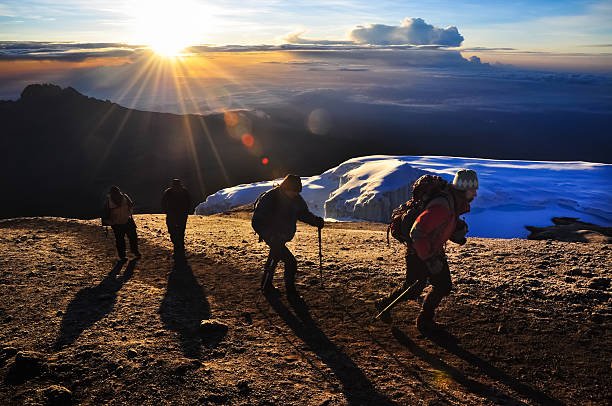
The Kilimanjaro Trek for Experienced Hikers offers strong walkers and regular trekkers the opportunity to tackle Mount Kilimanjaro through routes that provide long trekking days, changing terrain and significant altitude exposure.
Previous hiking experience can make the physical demands of the mountain easier to manage, particularly when climbers are accustomed to consecutive trekking days, carrying a daypack and walking on uneven trails.
However, Kilimanjaro presents a challenge that cannot be solved by fitness alone. The summit reaches very high altitude, and experienced hikers must still respect acclimatization, mountain pacing, hydration, nutrition and guide instructions.
Route selection should therefore consider not only physical ability but also available trekking days, previous altitude experience and the desired style of mountain journey.
An experienced hiker does not necessarily need technical climbing skills for the standard Kilimanjaro routes.
Experience can include regular long distance hiking, multi day trekking, mountain walking, backpacking or previous journeys at moderate or high altitude.
Travellers who are comfortable walking for several hours on consecutive days may find the physical rhythm of Kilimanjaro more familiar than first time trekkers.
Strong cardiovascular fitness does not automatically protect a climber from altitude related problems.
A very experienced trekker can still respond poorly to rapid altitude gain, while a slower walker may acclimatize well.
For this reason, experienced hikers should avoid choosing the shortest itinerary simply because they are physically strong.
Additional mountain days can provide more time for gradual altitude exposure and better overall pacing.
Experienced hikers have several route choices depending on whether they prefer a longer scenic journey, a busy classic trail, a quieter northern approach or a steeper challenge.
The best route should balance physical interest with adequate altitude adaptation.
Lemosho combines varied scenery, multiple ecological zones and a gradual approach across the western side of Kilimanjaro.
The route crosses the Shira Plateau before continuing through the southern circuit toward Lava Tower, Barranco, Karanga and Barafu.
Experienced hikers may appreciate the changing terrain while still benefiting from a route that can be spread over seven or eight days.
The seven day version provides a balanced itinerary for strong hikers who still want several days for altitude adaptation.
The eight day version provides an additional mountain day and may be preferred by experienced trekkers who understand that longer does not necessarily mean easier, but can provide a more gradual overall schedule.
Machame is a classic camping route with varied terrain and several notable trekking stages.
The route passes through forest, moorland and alpine environments before reaching Barranco, Karanga and Barafu.
Experienced hikers may enjoy the active route profile and the well known Barranco Wall section.
The six day itinerary is more compressed and should not be selected solely because the traveller is physically fit.
Altitude adaptation remains a separate consideration from hiking strength.
The seven day itinerary provides an additional day and can suit experienced hikers looking for a more gradual schedule.
The Northern Circuit is a longer route that travels around the northern side of Kilimanjaro before approaching the summit area.
It can suit experienced trekkers who enjoy longer expeditions, quieter trail sections and several consecutive mountain days.
The route also provides time to experience more of Kilimanjaro rather than focusing only on reaching the summit quickly.
Umbwe is known for a steeper and more direct approach during its early stages.
It can be attractive to experienced hikers looking for a physically demanding route, but the faster altitude gain requires careful itinerary planning.
Experienced hiking ability alone should not be used as a reason to ignore acclimatization considerations.
Travellers interested in Umbwe should discuss their previous trekking experience and route schedule carefully with the mountain team.
Rongai approaches Kilimanjaro from the northern side and offers a different trekking experience from Lemosho or Machame.
Experienced hikers may choose Rongai because of its route direction, landscape and overall itinerary style.
Marangu uses mountain huts rather than tents.
The trail may appear straightforward compared with some camping routes, but the altitude challenge remains significant.
Experienced hikers should still focus on pacing and adequate route duration rather than assuming strong fitness guarantees a successful climb.
The Barranco Wall is one of the memorable sections on routes that pass through Barranco Camp.
It involves steep walking and occasional use of the hands for balance, but it is not generally treated as technical rock climbing on standard guided itineraries.
Experienced hikers may find the terrain enjoyable, but every climber should move carefully and follow guide instructions.
Kilimanjaro involves repeated walking days rather than one isolated hard hike.
Experienced hikers often have an advantage because they understand how to manage energy, hydration and foot care over several consecutive days.
The challenge increases as elevation rises and recovery between days becomes more important.
Summit night is very different from a normal daytime hiking stage.
Climbers usually begin in darkness and cold conditions and move slowly toward the summit area at very high altitude.
Even experienced hikers may find that their normal walking speed becomes much slower.
Trying to maintain a fast low altitude hiking pace can be counterproductive.
Regular hikers may already have a strong aerobic base, but Kilimanjaro preparation should still include sustained walking and recovery between repeated training days.
Training should focus on endurance rather than only speed.
Experienced hikers often understand that mountain days do not always go according to expectation.
Cold, wind, rain, poor sleep and altitude can make an otherwise manageable trekking day feel much harder.
Mental preparation includes accepting slow progress and being willing to change plans when health or mountain conditions require it.
Previous altitude experience can help travellers understand how their body has responded in the past, but it does not guarantee the same response on Kilimanjaro.
Every high altitude trip is different, and factors such as rate of ascent, sleep, hydration, illness and individual condition can influence the outcome.
Experienced hikers still benefit from professional local guides who understand Kilimanjaro's routes, camps, weather patterns and emergency procedures.
The guide team manages pacing, daily timing, health monitoring, summit strategy and descent decisions.
Previous trekking experience should support cooperation with the guide team rather than replace it.
Altitude monitoring remains important regardless of hiking experience.
Guides can discuss headaches, nausea, appetite, hydration, sleep, dizziness, walking coordination and general condition.
Pulse oximeter readings may also be used where available, but no single measurement should be treated as the only basis for deciding whether a climber can safely continue.
A professional Kilimanjaro operation should have procedures for illness, injury and emergency descent.
Rescue support can include guide assessment, first aid, emergency oxygen where carried, assisted descent and evacuation coordination according to the situation.
Travellers should also arrange suitable insurance for high altitude trekking and emergency evacuation.
A private trek can suit experienced hikers who prefer their own departure date and climbing party.
It can be organised for solo travellers, couples, friends or trekking clubs.
Private status does not mean the hiking pace should be accelerated beyond what is appropriate for acclimatization.
Experienced hikers can also join small group departures.
This provides a social mountain experience while still allowing the guide team to monitor individuals throughout the route.
Different hiking abilities should be expected even among experienced trekkers.
Solo hikers can book a private Kilimanjaro trek or join a scheduled group departure.
A group joining climb can provide companionship while spreading the overall mountain operation across several travellers.
Walking clubs and trekking groups can organise private departures based on their preferred route and travel dates.
Group members should still be assessed individually because fitness and altitude response can differ significantly.
A Kilimanjaro expedition can include lead guides, assistant guides, cooks and porters according to the selected route and final group size.
Porters transport permitted duffel luggage and group equipment while hikers carry personal daypacks.
Experienced trekkers accustomed to carrying full backpacks should still follow the local mountain luggage system used for the climb.
Your daypack should contain the items needed during the trekking day rather than unnecessary extra weight.