Stage 1: Arrival in Moshi
Arrive in Moshi and settle into your hotel according to the selected package.
Meet the local operations team and prepare for the mountain briefing.

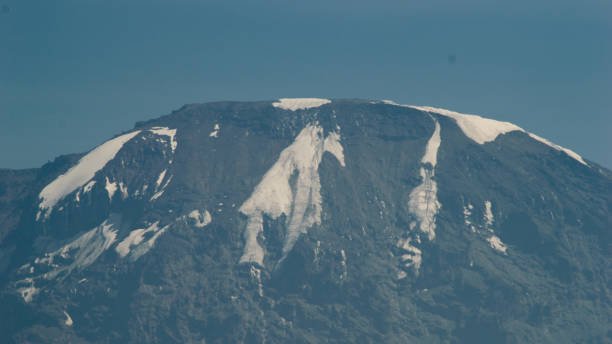
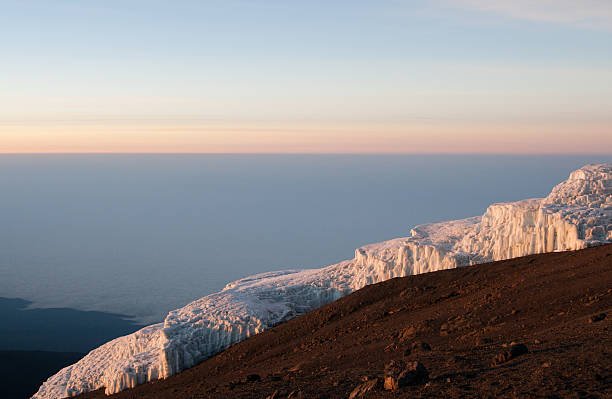
Climb Kilimanjaro with a local operator for expert guides, direct Moshi support, flexible routes, mountain crew, safety planning and Tanzania safari extensions.
A Kilimanjaro Climb with Local Operator gives travellers direct access to Tanzanian mountain expertise, professional guides and locally managed trekking support from the Kilimanjaro region. Climbers can choose Machame, Lemosho, Marangu, Rongai, Northern Circuit, Umbwe and other suitable itineraries according to their available days and trekking preferences.
Local operators can organise pre climb briefings, mountain guides, porters, cooks, park arrangements, meals, tents or huts according to the route, Moshi accommodation, airport transfers and equipment support. Working directly with a local team also makes it easier to coordinate route changes, safari extensions and cultural activities within Tanzania.
A Kilimanjaro climb with a local operator can be arranged privately or as a group joining departure for solo travellers, couples, families and groups, with safari, Zanzibar and cultural experiences added before or after the mountain.
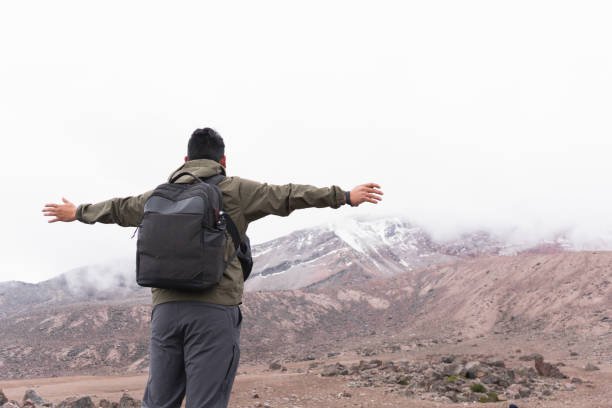
A Kilimanjaro Climb with Local Operator allows travellers to organise their Mount Kilimanjaro expedition directly with a Tanzania based trekking company.
Local operators work within the Kilimanjaro region and coordinate mountain logistics including professional guides, porters, cooks, transport, park arrangements, meals and camping support.
For travellers staying in Moshi, direct communication with a local operator can make it easier to organise pre climb briefings, equipment checks, rental items, hotel arrangements and airport transfers.
Climbers can choose from established Kilimanjaro routes including Machame, Lemosho, Marangu, Rongai, Northern Circuit and Umbwe.
The mountain itinerary can also be connected directly with Tanzania safari, cultural tours or Zanzibar after the climb.
Working with a local Kilimanjaro operator means the company organising the expedition is based close to the mountain and works directly with the guiding and support teams.
This can make communication about route logistics, airport transfers, hotels, equipment and last minute preparations more straightforward.
A locally based operator can also help travellers connect the climb with safari or cultural experiences without needing to coordinate several unrelated providers.
The most important consideration is still choosing a professional operator with experienced mountain guides, clear inclusions and responsible operating practices.
Professional local mountain guides are central to every Kilimanjaro expedition.
They lead climbers along the selected route, provide daily briefings and manage the mountain schedule.
Guides also monitor climbers throughout the expedition and communicate with assistant guides and the wider crew.
Because they regularly work on Kilimanjaro, local guides can provide practical information about camps, trail conditions, changing weather and daily trekking routines.
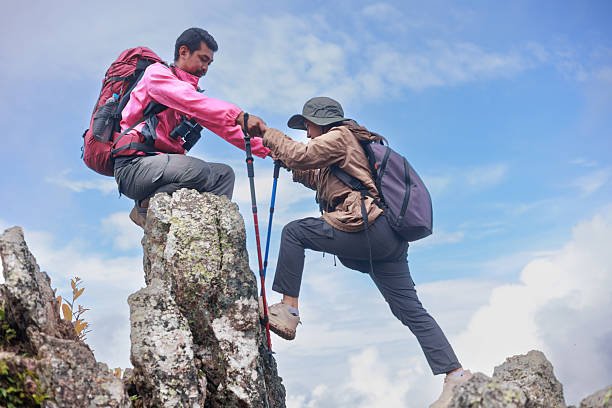
Assistant guides can support larger groups and help manage climbers who naturally move at different speeds.
They can also provide additional support during demanding mountain sections and the summit stage according to the expedition setup.
The exact guide ratio depends on group size and operator arrangements.
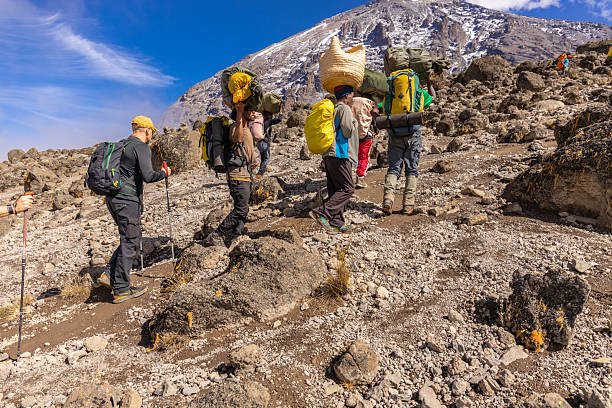
Porters carry expedition equipment, food and supplies between camps.
Climbers normally carry a daypack containing the items they need while walking.
The main trekking duffel is carried separately according to the applicable luggage limit and expedition arrangements.
Travellers should respect porter luggage rules and avoid bringing unnecessary mountain equipment.
Camping routes normally include a cook responsible for preparing meals throughout the expedition.
Breakfast, lunch and dinner can be provided according to the confirmed itinerary.
Mountain food is planned to support climbers during several consecutive days of trekking.
Dietary requirements should be communicated before arrival so suitable arrangements can be considered.
A local operator can explain the practical differences between Kilimanjaro routes before travellers choose their itinerary.
Some climbers prioritise the number of days, while others focus on scenery, camping style, route approach or available departure dates.
The appropriate route should match the traveller's overall trekking plan rather than simply following the most familiar name.
Machame is one of Kilimanjaro's well known camping routes.
It begins on the southern side of the mountain and passes through changing vegetation zones before reaching the higher altitude sections.
Local operators commonly organise Machame as a 6 day or 7 day climb.
Travellers can choose a private departure or join an available group.
Lemosho approaches Mount Kilimanjaro from the western side.
It is popular with travellers interested in a longer mountain itinerary and varied trekking scenery.
Common local operator packages include 7 day and 8 day Lemosho climbs.
Private and group joining departures can be arranged according to available dates.
Marangu is the main Kilimanjaro route using mountain huts instead of camping tents.
It approaches the mountain from the southeastern side.
Local operators can organise Marangu over different durations, commonly including 5 day and 6 day itineraries.
Travellers who prefer hut accommodation can discuss this route during their pre booking consultation.
Rongai begins on the northern side of Kilimanjaro.
Its starting point requires different road logistics from Moshi compared with southern routes.
A local operator can organise transport, crew and mountain arrangements according to the selected itinerary.
The Northern Circuit is a longer route that explores a broader section of Mount Kilimanjaro.
It approaches from the western side before continuing around the northern slopes.
This route can suit travellers who have more time available for their climb.
Umbwe follows a steeper initial approach than many other Kilimanjaro routes.
It is generally more demanding and should be selected carefully.
Travellers interested in Umbwe should discuss their trekking background, route duration and overall acclimatisation strategy before booking.
A private climb is organised specifically for the traveller or travel party.
It can suit solo climbers, couples, families, groups of friends and larger organised teams.
Private departures provide flexibility with starting dates and make it easier to coordinate hotels, airport transfers and safari plans.
Travellers who do not need a private expedition can join a scheduled local group departure.
This option can be useful for solo travellers who want to meet other climbers.
The route, departure date and number of trekking days are fixed for each group.
Available group size and confirmed participants should be checked before booking.
Solo travellers can choose between private and group joining expeditions.
A local operator can provide information about upcoming group dates or arrange a private mountain departure.
Solo travellers can also add a shared or private safari after the climb.
Couples can arrange a private Kilimanjaro expedition or join an existing group.
Local hotel arrangements, private airport transfers and post climb safari can be organised as part of the overall itinerary.
Private departures can provide flexibility for families and organised groups.
The operator can coordinate mountain crew numbers, hotels and transportation according to group size.
The route and trekking duration should be selected based on the experience and profile of all participants.
Moshi is a practical place to stay before starting Kilimanjaro.
Travellers can rest after their journey, meet the operator and complete the final mountain preparations.
Arriving before the climbing date also provides time to solve equipment or luggage issues.
The briefing allows climbers to meet their guide and review the entire mountain plan.
The guide can explain the route, camp schedule, meals, porter luggage arrangements, health monitoring and summit strategy.
Travellers should ask any remaining questions before leaving Moshi.
Climbers should complete a full gear check before travelling to the mountain.
The local guide can identify important missing items and explain what will be needed at different altitudes.
Boots, waterproof layers, warm summit clothing and sleeping equipment should be checked carefully.
Selected equipment may be available to rent locally.
Rental can be helpful for travellers who do not own every specialised mountain item.
Availability and sizing should be confirmed before departure.
The local operator can arrange vehicle transport from Moshi to the starting point of the selected route.
Driving time varies according to the trailhead.
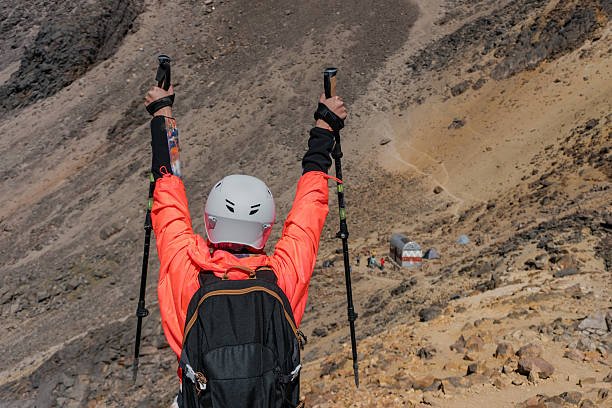
After park entry procedures, climbers meet the full mountain crew and begin trekking.
Machame, Lemosho, Rongai, Northern Circuit and Umbwe normally use campsites.
The local mountain team manages group camping logistics according to the confirmed package.
Climbers use tents while crew members transport group equipment between camps.
The Marangu Route uses mountain huts rather than tents.
Travellers interested in hut accommodation can discuss Marangu with their local operator.
Warm sleeping equipment is still necessary because temperatures can become very cold at higher elevations.
Altitude is one of the main challenges of Mount Kilimanjaro.
A local operator can explain how different route durations and profiles affect the overall ascent schedule.
Climbers should walk slowly, stay hydrated, eat properly and communicate symptoms with their guides.
Even physically fit travellers can experience altitude problems, so fitness should not be treated as protection against altitude illness.
Mountain guides may conduct regular health checks according to expedition procedures.
Climbers should report headaches, dizziness, nausea, unusual fatigue or other symptoms honestly.
Guides may change the trekking plan or recommend descent when required for safety.
Before the summit attempt, the guide provides a detailed briefing and helps climbers prepare their equipment.
Warm layers, gloves, a headlamp, water and other essential items should be organised before resting.
The departure time varies according to route, camp location and mountain plan.
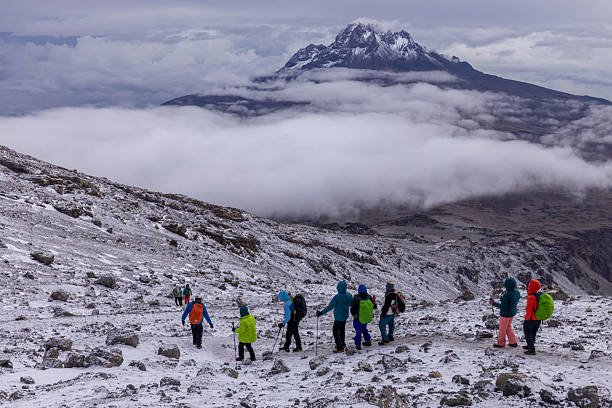
The summit stage is physically demanding because of altitude, cold and the length of the climb.
Guides manage pace and monitor climbers throughout the ascent.
Different participants may move at different speeds, and additional guide support can be used according to the expedition structure.
Health and safety must remain more important than reaching the summit.
Arrive in Moshi and settle into your hotel according to the selected package.
Meet the local operations team and prepare for the mountain briefing.
Meet your mountain guide, review the itinerary and check personal trekking equipment.
Arrange rental gear where required and available.
Travel from Moshi to the selected Kilimanjaro trailhead with the local mountain team.
Complete park entry procedures and begin the trek.
Follow the selected route through Kilimanjaro's changing mountain landscapes.
Your local guide manages the daily trekking schedule, pacing and briefings.
Prepare for the final ascent and begin according to the route and guide's summit plan.
Continue according to health, conditions and safety instructions.
Finish the mountain descent and meet the transfer vehicle at the route's finishing gate.
Return to Moshi for rest or continue with the next stage of your Tanzania journey.
A local operator can arrange accommodation in Moshi before mountain departure.
The hotel provides time to rest after travel and complete the pre climb preparation.
The number of included nights depends on the selected package.
Returning to Moshi after the trek provides an opportunity to shower, rest and reorganise luggage.
Travellers can stay overnight or continue to safari depending on their schedule.
Airport pickup and drop off can be arranged according to the selected package.
Travellers should provide accurate flight details in advance so transport can be coordinated.
The same local operations team can then manage the transfer between the airport, Moshi hotel and Kilimanjaro departure.
International travel luggage that is not required on Kilimanjaro can often remain in Moshi during the climb.
The local operator or hotel can explain the available storage arrangements.
Climbers should take only the mountain equipment needed for the expedition.
One advantage of booking locally is the ability to coordinate the mountain and safari through the same Tanzania based team.
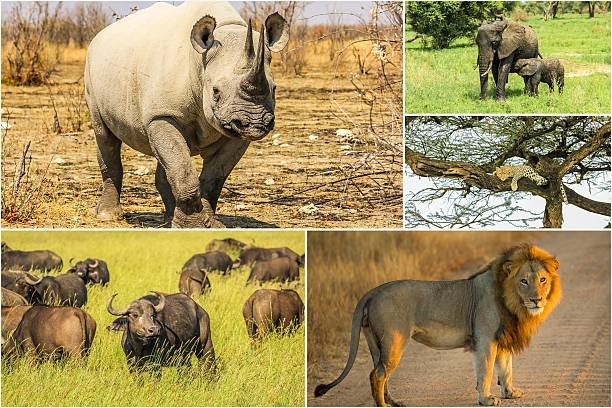
After descending from Kilimanjaro, travellers can continue into the northern safari circuit.
The safari can be private or group joining according to dates and preference.
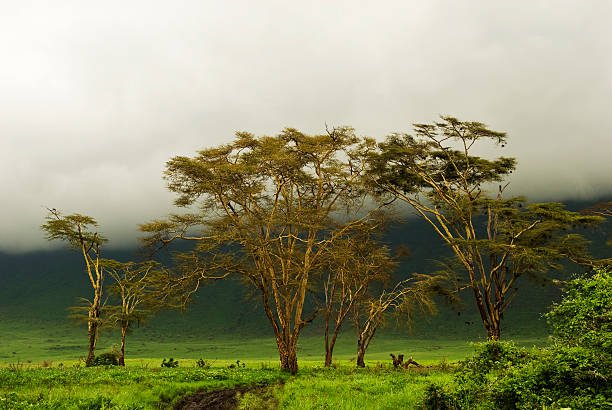
Travellers with limited safari time can add Ngorongoro after completing Kilimanjaro.
Transport and accommodation can be coordinated directly from Moshi according to the selected safari itinerary.
A longer post climb safari can continue to Serengeti National Park.
Tarangire, Lake Manyara or Ngorongoro can also be incorporated depending on the number of days available.
Zanzibar can be added after the climb or after a combined Kilimanjaro and safari journey.
A local Tanzania operator can help coordinate the mainland itinerary before the traveller continues to the islands.
Cultural activities around the Kilimanjaro region can be added before or after the trek.
Possible experiences include coffee farms, traditional food, local markets, Chagga villages and community walking tours.
These activities allow travellers to experience more of the region beyond the mountain trail.
Travellers should compare more than the final price when selecting a Kilimanjaro company.
It is important to understand what is included, which route is being offered, how many trekking days are planned and what mountain support is provided.
Travellers should also ask about guide experience, crew organisation, equipment, emergency procedures, payment terms and hotel arrangements.
Travellers should prepare for several consecutive days of mountain trekking.
Regular hiking, long walks, hill training and stairs can help develop endurance.
Climbers can also train with a loaded daypack to become comfortable carrying personal items.
Fitness helps with the physical work of trekking but does not prevent altitude related problems.
Kilimanjaro can involve cold temperatures, tiredness, basic mountain accommodation and long walking days.
Climbers should prepare mentally for slow progress and changing conditions.
Following the guide's pace and concentrating on each stage of the climb can make the expedition more manageable.
Booking locally can support guides, porters, cooks, drivers and other tourism workers within Tanzania.
Responsible operations should also respect national park rules, mountain crew welfare and environmental protection.
Travellers can contribute by respecting the crew, following luggage rules and keeping waste off the mountain.
A Kilimanjaro Climb with Local Operator provides direct access to locally based mountain expertise and Tanzania travel support.
Travellers can organise the route, guides, crew, hotels, transfers and mountain preparation through one local team.
The same itinerary can then continue into safari, cultural experiences or Zanzibar for a complete Tanzania journey.
Yes. Travellers can arrange their Kilimanjaro expedition directly with a Tanzania based operator that manages local mountain services.
Machame, Lemosho, Marangu, Rongai, Northern Circuit and Umbwe can all be organised according to the selected itinerary.
Yes. Private climbs can be arranged for solo travellers, couples, families and groups.
Yes. Scheduled group joining departures can be available on selected routes and dates.
Yes. Solo travellers can book a private climb or reserve a place in an available group departure.
A complete climbing package can include professional guides and assistant guides according to group size and expedition arrangements.
Porter support is normally part of a full Kilimanjaro expedition where listed in the confirmed package.
Mountain meals are normally included when specified within the confirmed climbing package.
Vegetarian meals can often be arranged when dietary requirements are communicated before the climb.
Selected trekking equipment can often be rented locally subject to availability and suitable sizing.
Yes. Moshi accommodation can be included or arranged separately according to the package.
Yes. Kilimanjaro airport transfers can be included or added according to the travel plan.
Extra luggage can often be stored according to hotel or operator arrangements while the traveller is on the mountain.
Yes. Tarangire, Lake Manyara, Ngorongoro, Serengeti and other safari destinations can be added after the climb.
Yes. Zanzibar can be added after Kilimanjaro or after a combined mountain and safari itinerary.
Yes. Coffee farms, Chagga villages, traditional food, local markets and other cultural tours can be added around the Kilimanjaro climb.
Yes. Route, trekking duration, hotels, transfers, private or group option, safari and other Tanzania travel arrangements can be adapted according to the confirmed package.
Work directly with a Tanzania based Kilimanjaro team for route planning, professional guides, mountain crew, Moshi support and complete trekking logistics.
Choose your preferred route, number of trekking days, private or group joining option and safari extension to create your Tanzania mountain adventure.
Plan Your Local Kilimanjaro ClimbAfrican Trek & Travel is a leading Tanzania tour operator in Moshi and Arusha for 2026–2027, specializing in Kilimanjaro treks, safaris, and tailor-made adventures. With deep local expertise and a strong commitment to safety and quality, we deliver unforgettable travel experiences across East Africa.
Discover popular Safaris, Serengeti Migration, Kilimanjaro Climbing & Zanzibar Beach Holidays. Plan your perfect adventure today!
 Popular
Experience the wildebeest migration across the vast Serengeti and Ngorongoro plains. Perfect for wildlife lovers and photography enthusiasts.
Book Now New
Climb Africa’s highest peak via scenic routes with expert guides and safe treks. Experience adventure with full support and accommodation included.
Book Now Popular
Relax in paradise with pristine white beaches, spice tours, and cultural charm. Ideal for families and honeymooners seeking luxury and tranquility.
Book Now




We collaborate with top tour operators to provide the best experiences for Kilimanjaro treks, safaris, and adventures.