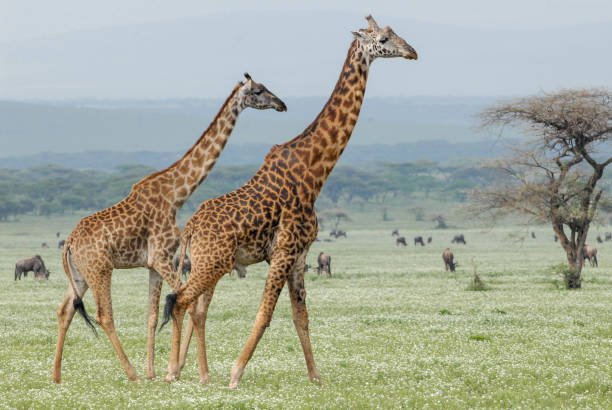
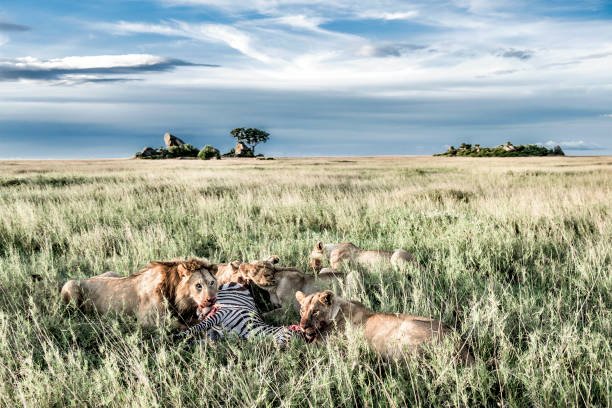
Migration Wildlife Hotspots 2026-2027
Migration Wildlife Hotspots 2026-2027 are the areas of the Serengeti ecosystem where travellers have the strongest seasonal opportunity to encounter large concentrations of wildebeest, zebras, gazelles and the predators that follow them.
The Great Migration is not located in one permanent place. The herds move continuously in response to rainfall, fresh grass and available water, creating different wildlife hotspots throughout the year.
Tanzania National Parks describes the Great Migration as a defining attraction of Serengeti National Park, involving enormous numbers of migratory wildebeest, zebras and gazelles moving through the ecosystem each year.
Understanding these seasonal hotspots is therefore one of the most important parts of planning a migration-focused Tanzania safari.
Migration Wildlife Hotspots at a Glance
- December-April: Ndutu and southeastern Serengeti
- January-March: Main calving concentrations
- April-May: Southern and Central Serengeti transitions
- May-July: Western Corridor and Grumeti region
- July-October: Northern Serengeti and Mara River region
- November-December: Herds generally begin returning south with new rains
- Year-round wildlife: Central Serengeti remains productive even when migration herds are elsewhere
What Are Migration Wildlife Hotspots?
Migration wildlife hotspots are areas where seasonal herd movements create especially high wildlife concentrations.
They are not fixed locations that remain equally productive throughout the entire year.
An area that contains thousands of wildebeest in February may contain far fewer migratory animals in August.
For this reason, migration safari planning should begin with the travel month before choosing accommodation.
How the Great Migration Moves Through Serengeti
The migration follows a broad annual cycle through the Serengeti-Mara ecosystem.
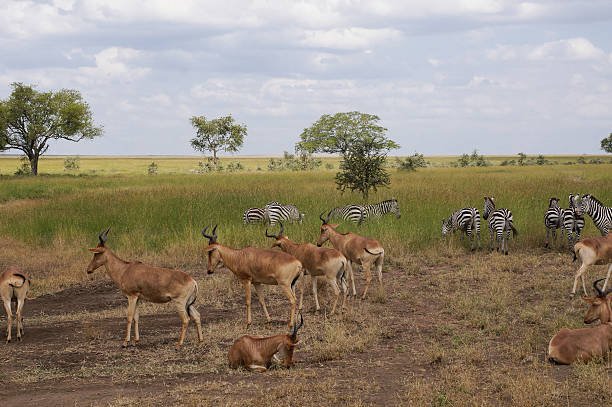
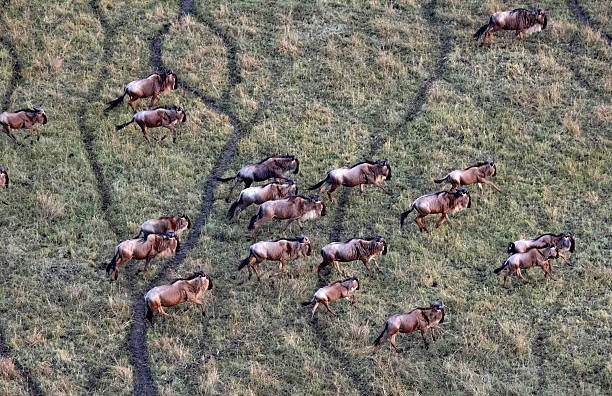
During the wet season, large herds gather across the nutritious short-grass plains of southern Serengeti and Ndutu.
As those plains begin drying, the animals gradually move through central and western Serengeti before continuing north.
The northern part of the ecosystem provides an important dry-season refuge before the rains eventually encourage movement back toward the south.
Typical Migration Movement
- Southern Serengeti and Ndutu
- Southeastern and Central Serengeti
- Western Corridor
- Grumeti region
- Northern Serengeti
- Mara River region
- Southward return as seasonal rains begin
Ndutu: One of the Best Migration Wildlife Hotspots
Ndutu is one of the most important Great Migration areas during the southern phase of the annual cycle.
The broader southeastern plains stretch between southern Serengeti and the western side of the Ngorongoro Conservation Area.
Seasonal rains produce nutrient-rich short grass that attracts large concentrations of wildebeest and zebra.
Wildlife density around Lake Ndutu and surrounding plains becomes especially high during the calving season.
Best Time for Ndutu Migration Safaris
The broader southern migration period commonly runs from approximately December through April.
February is particularly famous because large numbers of wildebeest calves are born during this period.
The exact arrival and departure of the herds varies according to rainfall.
Early or late rains can shift wildlife concentrations from one part of the southern plains to another.
Why Ndutu Is Excellent for Predators
Large concentrations of young wildebeest naturally attract predators.
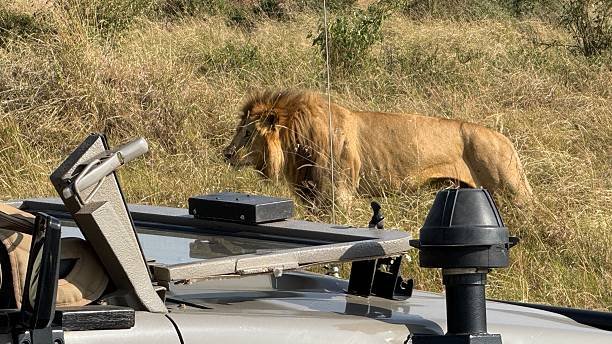
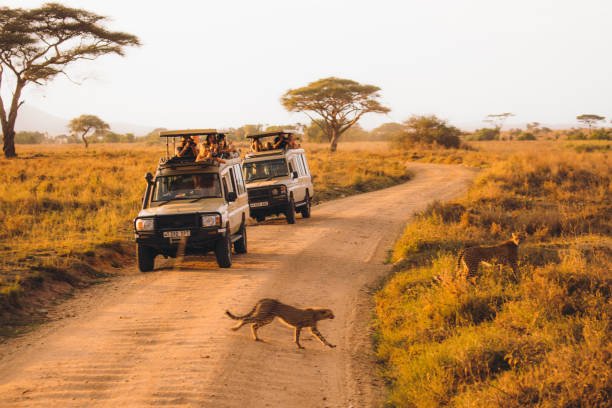
Lions, cheetahs, spotted hyenas and other carnivores take advantage of the temporary abundance of prey.
This makes the southern plains particularly interesting for travellers who want to combine migration viewing with predator behaviour.
However, hunts are natural events and can never be scheduled or guaranteed.
Why Choose Ndutu?
- Huge seasonal wildebeest concentrations
- Calving activity
- Excellent predator opportunities
- Wide open short-grass plains
- Strong wildlife photography conditions
- Useful for January, February and March safaris
Southern Serengeti Short-Grass Plains
The southern short-grass plains form one of the most visually spectacular migration landscapes.
During favorable wet-season conditions, wildebeest can spread across enormous areas rather than remaining in one tightly packed location.
This is why safari guides monitor rainfall and recent sightings rather than travelling to only one famous landmark.
A flexible private safari can move between different parts of the southern ecosystem as wildlife conditions change.
Central Serengeti and Seronera
Central Serengeti is one of the most reliable year-round wildlife areas in the park.
The Seronera Valley contains permanent water, riverine vegetation, open plains and kopjes that support substantial resident wildlife.
When migration herds move through the central region, this resident wildlife combines with migratory animals to create particularly active game viewing.
TANAPA identifies Seronera Valley as one of the important habitats within Serengeti National Park.
Seronera as a Year-Round Wildlife Hotspot
One of Seronera's greatest strengths is that a safari does not depend entirely on the Great Migration.
Lions, leopards, cheetahs, elephants, giraffes, hippos, buffaloes and numerous antelope species remain in the wider area throughout the year.
The surrounding kopjes are especially useful habitats for predators, while riverine areas can provide good leopard opportunities.
This makes Central Serengeti an excellent base for travellers whose exact travel dates fall between major migration concentrations.
Moru Kopjes
Moru Kopjes lie southwest of the main Seronera area and offer another important wildlife zone.
Rocky kopjes create elevated resting points for lions and other predators.
The surrounding plains can also be productive for cheetahs and grazing animals.
For photographers, the combination of granite formations, open grassland and wildlife can create some of Central Serengeti's most distinctive scenes.
Western Corridor Migration Hotspot
The Western Corridor becomes one of the most important migration wildlife hotspots as herds leave the southern and central plains and move west and north.
This region follows the Grumeti River system toward Lake Victoria.
It contains more woodland and riverine vegetation than the open southern plains.
Migration activity is commonly strongest in the Western Corridor between approximately May and July.
Western Corridor Wildlife Highlights
- Migrating wildebeest
- Large zebra herds
- Grumeti River
- Nile crocodiles
- Hippos
- Lions
- Cheetahs
- Elephants
- Giraffes
- Resident plains wildlife
Grumeti River Migration Crossings
The Grumeti River presents one of the major obstacles encountered by migrating herds moving through western Serengeti.
Crossings can involve wildebeest entering river sections inhabited by large Nile crocodiles.
However, Grumeti crossings should not be treated as an event that occurs at the same place and time every day.
Animals may gather, move away or cross rapidly without warning.
The Western Corridor's peak migration activity generally falls around May through July, though annual rainfall can shift timing.
Grumeti River vs Mara River Crossings
Both river systems can create dramatic migration viewing, but they are different safari experiences.
Grumeti is associated with the western migration phase and generally occurs earlier in the annual cycle.
Mara River activity takes place farther north and typically becomes important later in the dry-season movement.
The Grumeti region may also feel less crowded than the most famous Mara crossing locations during certain periods.
Kirawira and Western Serengeti
Kirawira and surrounding western Serengeti areas can provide useful access to the Western Corridor.
Travellers staying in this region during the appropriate season can spend more time close to migration concentrations rather than commuting from Central Serengeti every day.
This is one reason choosing accommodation according to migration season matters so much.
Northern Serengeti Wildlife Hotspot
As the dry season progresses, migration herds continue north toward northern Serengeti.
This region contains rolling grasslands, woodland and the Mara River system.
Resident wildlife remains important even when the main wildebeest concentrations move between different northern areas.
Northern Serengeti is particularly famous for seasonal river-crossing opportunities.
Mara River Migration Hotspot
The Mara River is one of the most famous Great Migration locations in Africa.
Large herds may gather near crossing points before entering the river, creating dramatic wildlife scenes.
Crossings are unpredictable and should never be guaranteed for a particular day.
TANAPA maintains specific Mara River migration-crossing guidelines designed to protect wildlife while allowing visitors to observe this major natural event.
Responsible Mara River Crossing Viewing
Vehicles should follow designated crossing-point procedures rather than approaching animals in ways that interrupt natural movement.
TANAPA's crossing guidelines require vehicles to remain stationary in designated viewing areas when migrants are gathering to cross.
Visitors should also avoid activities such as picnicking along the riverbanks.
A responsible safari guide will prioritize conservation rules over trying to force a closer photograph.
Mara River Safari Expectations
- A crossing cannot be scheduled
- Herds may wait for hours
- Animals may approach and then move away
- Several crossing points may be active
- Patience is essential
- Park rules must be respected
- Wildlife welfare comes before photographs
Kogatende Migration Area
Kogatende is one of the main safari areas associated with northern Serengeti migration travel.
Seasonal tented camps often operate in the wider northern region when migration concentrations move north.
Staying close to the northern ecosystem can reduce the driving required to reach potential river-crossing areas.
Travellers planning specifically for northern migration viewing should select accommodation according to their dates rather than automatically staying in Central Serengeti.
Lamai and Northern Plains
The northern Serengeti landscape includes open plains and rolling terrain beyond the main river-crossing areas.
Migration herds may spread widely after crossing rather than remaining permanently beside the Mara River.
This means some of the best wildlife viewing can occur away from crowded crossing points.
Migration Hotspots in November
November's short rains can trigger major changes in herd movement.
Animals that spent the dry season farther north may begin moving south toward fresh grazing.
The exact location can change rapidly during this transition.
Flexible accommodation or an itinerary covering more than one Serengeti region can be useful during this period.
Migration Hotspots in December
As fresh grass develops in southern areas, migration concentrations increasingly return toward the southeastern Serengeti and Ndutu ecosystem.
By late December, southern wildlife activity can become increasingly important if seasonal rains have arrived normally.
December therefore begins the transition toward the famous calving-season safari period.
Migration Hotspots in January
January is normally one of the strongest months for southern Serengeti and Ndutu.
Large concentrations of wildebeest and zebra can spread through the short-grass plains.
Predators become increasingly active as calving season approaches.
Migration Hotspots in February
February is particularly famous for wildebeest calving.
The Ndutu and southeastern plains can contain huge concentrations of grazing animals and newborn calves.
This abundance creates outstanding predator viewing opportunities.
Serengeti.com identifies February as the core calving period around Ndutu and the southeastern plains.
Migration Hotspots in March
Southern Serengeti and Ndutu can remain highly productive through March.
Young calves are increasingly mobile and predator-prey interactions remain important.
Rainfall distribution may begin influencing where the largest herd concentrations gather.
Migration Hotspots in April
April can become a transition month as some herds begin moving away from the far southern plains.
Rainfall can be significant, creating dramatic green landscapes but also slower road conditions.
Migration distribution can become more dispersed than during the concentrated calving period.
Migration Hotspots in May
May often marks stronger movement toward central and western Serengeti.
The Western Corridor begins becoming increasingly important.
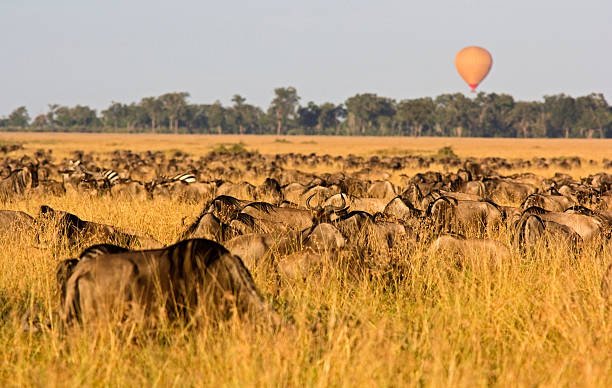
Large moving columns of wildebeest and zebra can be as impressive as a river crossing because herds may stretch across long sections of the landscape.
Migration Hotspots in June
June is commonly associated with Western Corridor and Grumeti migration activity.
Travellers may encounter large herds approaching or moving around the Grumeti river system.
Western Serengeti becomes one of the strongest places to base a migration-focused safari at this time.
Migration Hotspots in July
July can be highly transitional.
Some herds may remain around western and northwestern Serengeti while others continue farther north.
Travellers whose main goal is the migration should use current movement reports when deciding between western, central and northern accommodation.
Migration Hotspots in August
Northern Serengeti generally becomes one of the most important migration regions during August.
Large herds can gather throughout the broader northern ecosystem while Mara River crossing activity may occur.
However, crossing timing remains unpredictable.
Migration Hotspots in September
September remains a strong northern Serengeti month.
Migration herds can continue moving around the Mara River and northern grasslands.
Resident predators and other wildlife add value even on days when no crossing occurs.
Migration Hotspots in October
October can still provide excellent northern Serengeti wildlife, although conditions begin changing as the ecosystem approaches the short-rain transition.
Some herds may start moving southward while others remain farther north depending on rainfall.
Best Hotspot for Calving
For calving, Ndutu and the southeastern short-grass plains are the primary hotspot.
The strongest period normally falls around January through March, with February especially famous for births.
Best Hotspot for Grumeti Crossings
The Western Corridor around the Grumeti River is the main target.
May through July is the broad seasonal window most closely associated with migration activity in this area.
Best Hotspot for Mara River Crossings
Northern Serengeti is the main Tanzanian hotspot for Mara River migration viewing.
Travellers should stay close enough to the northern ecosystem to allow repeated game drives around potential crossing areas rather than trying to make long day trips from Seronera.
Even then, no operator can honestly guarantee a crossing.
Best Hotspot for Big Cats
Central Serengeti is one of the strongest choices for travellers particularly interested in big cats.
The Seronera region and nearby kopjes support resident lions, leopards and cheetahs throughout the year.
Southern migration areas can also provide exceptional predator activity during the calving season.
Best Hotspot for Photography
The best location depends on the kind of photographs you want.
Ndutu provides newborn calves, predators and wide plains.
Western Serengeti offers moving herds, woodland and the Grumeti River.
Northern Serengeti provides river-crossing potential, while Seronera offers reliable resident wildlife and dramatic kopje landscapes.
Best Hotspot by Safari Interest
- Calving: Ndutu and southern plains
- Predators: Ndutu and Central Serengeti
- Grumeti crossings: Western Corridor
- Mara crossings: Northern Serengeti
- Year-round safari: Central Serengeti
- Photography: Depends on season and target wildlife
Why You Should Stay Near the Migration
Serengeti is enormous.
Trying to reach northern Serengeti from a central lodge every morning can waste several hours that could have been spent watching wildlife.
The same problem occurs when travellers book Central Serengeti accommodation during the southern calving season but expect to spend every day around Ndutu.
Accommodation location should therefore follow your seasonal wildlife objective.
Mobile Camps and Migration Safaris
Seasonal or mobile tented camps are particularly useful for Great Migration itineraries because they can operate near important wildlife zones during specific periods.
This reduces driving time and allows travellers to begin game drives close to the expected herd concentrations.
Western Serengeti, for example, sees additional seasonal camp activity during its migration period.
Do Migration Hotspots Guarantee Wildlife?
No.
The term hotspot means the area has a strong seasonal probability based on normal migration patterns.
Wild animals remain free to move, and rainfall can alter their timing significantly.
A responsible safari itinerary uses seasonal knowledge while maintaining flexibility.
Can a Safari Guarantee a River Crossing?
No responsible safari company can guarantee a Grumeti or Mara River crossing.
Wildebeest may gather near a river for hours and then move away without crossing.
At other times, thousands can suddenly enter the water with very little warning.
Patience and multiple nights near the relevant region improve opportunities but never create certainty.
How Many Nights Should You Spend at a Migration Hotspot?
Two or three nights in a key migration region is usually far better than arriving for only a few hours.
This allows multiple morning and afternoon game drives and provides more opportunities if herds move or weather changes.
River-crossing focused itineraries especially benefit from having several days available.
Private Safari vs Group Safari for Migration Viewing
A private vehicle provides more flexibility when wildlife movements change.
The guide can spend longer with a herd, predator sighting or river-crossing area according to your interests.
Group joining safaris can be more economical but require all travellers to follow the shared itinerary.
Both can work well when accommodation is correctly positioned for the season.
Migration Wildlife Hotspot Safari Planning Checklist
Before Booking Your Migration Safari
- Choose your exact travel month
- Identify the likely migration region
- Stay close to the expected herds
- Allow at least two nights in key hotspots where possible
- Use recent wildlife information
- Avoid guaranteed crossing promises
- Keep the itinerary flexible
- Consider resident wildlife as well as migration
- Use a professional safari guide
- Respect park rules around river crossings
Frequently Asked Questions About Migration Wildlife Hotspots
Where are the best Great Migration wildlife hotspots?
The major seasonal hotspots are Ndutu and the southeastern plains, Central Serengeti and Seronera, the Western Corridor and Grumeti River, and northern Serengeti around the Mara River.
Where is the migration in January?
January generally favors the southern Serengeti and Ndutu short-grass plains as herds gather for the calving period.
Where is the migration in February?
Ndutu and the southeastern plains are normally the main February hotspot, with calving and high predator activity.
Where is the migration in June?
June commonly favors the Western Corridor and Grumeti region as migrating herds move west and north.
Where is the migration in August?
Northern Serengeti is generally one of the strongest August regions, with possible Mara River crossing activity.
What is the best migration hotspot for calving?
Ndutu and the surrounding southern short-grass plains are the key calving hotspot, particularly around January through March.
Where can I see Grumeti River crossings?
The Western Corridor is the target region, commonly during the May-July migration phase.
Where can I see Mara River crossings?
Northern Serengeti provides Tanzania's main access to seasonal Mara River migration crossings.
Can a safari company guarantee a river crossing?
No. River crossings are spontaneous wildlife events influenced by herd movement, weather and natural behaviour.
Is Central Serengeti good when the migration is elsewhere?
Yes. Seronera supports substantial resident wildlife throughout the year, including predators, elephants, hippos and many herbivores.
How many nights should I stay near the migration?
Two or three nights in the relevant migration region normally provide a better opportunity than trying to reach the herds during a single long day trip.
Does the migration follow exactly the same dates every year?
No. The broad annual pattern is reasonably predictable, but actual movement varies according to rainfall, fresh grass and water availability.
Which migration hotspot is best for predators?
Ndutu is excellent during calving season, while Central Serengeti provides strong year-round opportunities for lions, leopards and cheetahs.
How should I choose Migration Wildlife Hotspots for 2026-2027?
Choose the safari region according to your exact month, place accommodation near the expected herd location, allow several game-drive opportunities and keep the itinerary flexible because rainfall can shift migration movements from their normal seasonal pattern.
Plan Your Great Migration Safari for 2026-2027
Follow the Great Migration through Ndutu, Central Serengeti, the Western Corridor, Grumeti and northern Serengeti by choosing the wildlife hotspot that best matches your travel month and staying close enough to maximize your time with the herds.
Plan Your Migration Safari

 Kilimanjaro Climb