Hadzabe Tribe Visit Cost, Hunting, Food, History and Location 2026-2027
Hadzabe Tribe Visit Cost, Hunting, Food, History and Location 2026-2027 covers one of northern Tanzania's most distinctive cultural experiences: travelling to the Lake Eyasi region to meet members of the Hadza community and learn about hunting, gathering, food, language, history and life in the dry bush landscape south of the Ngorongoro Highlands.
The Hadza are an indigenous hunter-gatherer people associated with the Lake Eyasi region of north-central Tanzania. The Ngorongoro Lengai Geopark describes them as a community that has lived in the area for thousands of years and continues to maintain important hunting and gathering traditions.
A typical visit is not simply walking into a settlement independently. Cultural experiences are usually coordinated through local guides, translators, community contacts and safari operators who understand where particular Hadzabe camps are located at that time.
Because the Hadzabe lifestyle can involve seasonal movement and changing foraging patterns, the quality of the local guide is often more important than following a fixed tourist timetable.
Hadzabe Tribe Visit at a Glance
- Location: Lake Eyasi region, northern Tanzania
- Main experience: Cultural visit and bush walk
- Traditional livelihood: Hunting and gathering
- Typical hunting equipment: Handmade bows and arrows
- Traditional foods: Wild meat, honey, berries, baobab fruit and tubers
- Best visit time: Usually early morning
- Common combination: Hadzabe and Datoga visit
- Planning base: Lake Eyasi, Karatu or northern Tanzania safari circuit
Where Do the Hadzabe Live?
The Hadzabe are primarily associated with the Lake Eyasi region in northern Tanzania.
Lake Eyasi lies on the floor of the Great Rift Valley, southwest of the Ngorongoro Crater and south of the Serengeti ecosystem.
The surrounding landscape includes dry woodland, bush, baobab trees, rocky terrain and seasonal water sources.
It is this environment that provides many of the wild foods traditionally collected or hunted by Hadzabe families.
Where Is Lake Eyasi?
Lake Eyasi is a shallow seasonal salt lake within the Great Rift Valley system.
It lies immediately southwest of the Ngorongoro Highlands and forms a natural cultural extension for travellers visiting Karatu, Ngorongoro, Lake Manyara or the southern Serengeti area.
Unlike a national park safari, the main reason many travellers visit Lake Eyasi is cultural interaction rather than classic Big Five game viewing.
The wider region is also home to Datoga communities, making it possible to combine different cultural experiences in the same itinerary.
Common Lake Eyasi Trip Combinations
- Karatu + Hadzabe visit
- Ngorongoro + Lake Eyasi
- Lake Manyara + Lake Eyasi
- Hadzabe + Datoga cultural visit
- Tarangire + Eyasi + Ngorongoro
- Serengeti + Ngorongoro + Lake Eyasi
How Much Does a Hadzabe Tribe Visit Cost in 2026-2027?
There is no single fixed universal price for a Hadzabe visit because travellers often compare completely different products.
A community contribution or cultural access fee may cost only a fraction of a complete private day tour that includes a 4x4 safari vehicle, professional driver-guide, local translator, meals, fuel and transport from another town.
Current published 2025-2026 and 2026 information shows Hadzabe community-related fees ranging from roughly $30-$80 per person depending on the local arrangement, while organized cultural half-day experiences are advertised around approximately $100-$180 per person.
Full private day trips with long-distance transportation can reach approximately $150-$300 per person or more, depending on group size and starting location. Current market listings differ considerably, demonstrating why travellers should request a complete written quotation.
Hadzabe Visit Cost Breakdown
Typical Cost Components
- Community contribution: Paid for the cultural experience
- Local guide or translator: Important for communication
- Safari vehicle: Required when travelling from Karatu or Arusha
- Driver-guide: Usually included in a complete safari package
- Fuel: Can form a significant part of long-distance day-trip pricing
- Meals: Breakfast or picnic lunch depending on itinerary
- Accommodation: Additional when staying overnight at Lake Eyasi
- Datoga visit: Often priced as an additional cultural activity
Why Hadzabe Tour Prices Vary So Much
The biggest pricing difference is usually transportation.
A traveller already staying at Lake Eyasi needs much less vehicle time than somebody booking a private day trip from Arusha.
Group size also matters because vehicle and guide costs can be divided between several travellers.
Accommodation level, meals, private guiding and whether a Datoga cultural experience is added can all change the final price.
Is There a Lake Eyasi National Park Entrance Fee?
Lake Eyasi is not visited in the same way as Serengeti National Park or Tarangire National Park.
Current cultural-tour information commonly describes community and local-guide fees rather than a standard TANAPA national park entry fee for the Hadzabe visit itself.
Your safari quote should clearly state which cultural contributions, local-guide costs and transportation expenses are included.
What Is Included in a Hadzabe Visit?
A typical experience can begin before sunrise when a local guide or translator meets the visitors and travels to the Hadzabe camp.
The morning may include a bush walk with hunters, observation of bow-and-arrow techniques, learning about wild plants, seeing fire-making and discussing the foods gathered from the surrounding environment.
The exact program depends on what the community is actually doing that day.
A responsible experience should not force every visit into an identical performance simply because tourists expect the same photographs.
Hadzabe Hunting Experience
Hunting is one of the best-known aspects of traditional Hadzabe culture.
The Ngorongoro Lengai Geopark describes Hadza men as hunters and foragers who may return with wild game, honey or fruit depending on what they encounter.
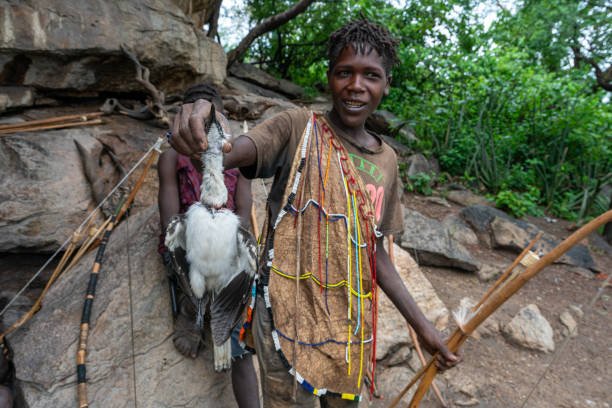
Traditional hunting commonly involves handmade bows and arrows and moving quietly through dry bush.
A visitor joining hunters should understand that this can be a genuine subsistence activity rather than only an archery demonstration created for tourists.
Can Tourists Join the Hadzabe Hunting?
Visitors may accompany Hadzabe hunters during an early-morning bush walk when arrangements allow.
The experience can involve walking quickly over uneven ground, through thorny vegetation and away from vehicle tracks.
Current Lake Eyasi visitor guidance notes that hunting walks can last several hours and can involve witnessing actual hunting and kills.
Travellers uncomfortable with hunting should tell their operator in advance and request a shorter cultural visit, gathering walk or archery-focused experience instead.
Before Joining a Hadzabe Hunting Walk
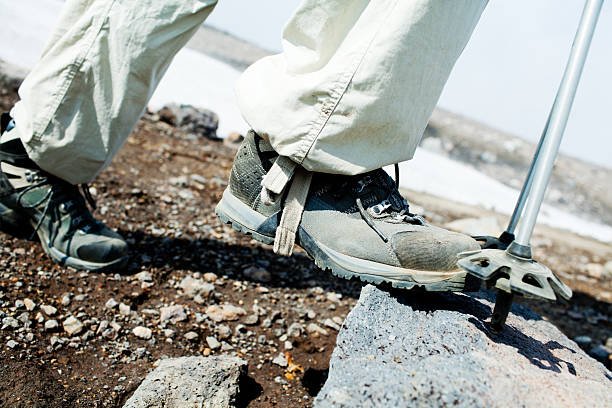
- Wear closed walking shoes
- Wear long trousers
- Expect thorny bush
- Carry drinking water
- Prepare for an early start
- Follow the local guide
- Do not interfere with hunting equipment
- Understand that an animal may be killed
What Animals Do the Hadzabe Hunt?
The exact animals encountered depend on season, location and opportunity.
Small game and birds can form part of hunting activity, while larger animals may also be pursued when circumstances allow.
The Ngorongoro Lengai Geopark notes that baboon meat has traditionally formed part of Hadzabe food culture.
Visitors should avoid treating wildlife kills as entertainment. Hunting should be understood within the context of subsistence and cultural tradition.
Hadzabe Bows and Arrows
Traditional hunting equipment is made using locally available materials and knowledge passed through generations.
Visitors are often shown how bows are prepared, how arrows differ according to intended use and how hunters practice accuracy.
Some cultural programs also allow visitors to try target archery under supervision.
Always wait for an invitation before touching a bow, arrow or other personal hunting equipment.
Do the Hadzabe Use Poisoned Arrows?
Traditional Hadzabe hunting knowledge includes different arrow types and the use of plant-derived poison for certain hunting situations.
These are functional hunting tools rather than tourist souvenirs.
Visitors should never handle unfamiliar arrows casually and should follow instructions from the hunters and guide.
What Food Do the Hadzabe Eat?
The traditional Hadzabe diet is built around wild foods gathered or hunted from the surrounding landscape.
The Ngorongoro Lengai Geopark describes Hadzabe women as commonly gathering berries, baobab fruit and tubers, while men may bring back honey, fruit or wild game.
The relative importance of different foods changes with seasons and availability.
This is an important reminder that hunter-gatherer diets are based on ecological knowledge and opportunity rather than a fixed daily menu.
Traditional Hadzabe Foods Can Include
- Wild honey
- Baobab fruit
- Wild berries
- Underground tubers
- Wild fruits
- Game meat when hunting is successful
Wild Honey and Hadzabe Life
Honey is one of the important wild foods associated with Hadzabe foraging.
Hunters and gatherers use detailed knowledge of trees, seasons and surrounding habitat to locate food resources.
Visitors may hear explanations about honey collection during a bush walk, although seeing an active honey harvest is never guaranteed.
Baobab Fruit
Baobab trees are visually prominent around parts of the Lake Eyasi landscape and provide useful food resources.
Baobab fruit is among the plant foods documented in the traditional Hadzabe diet.
A cultural guide may explain how local plants are recognized, gathered and prepared.
Tubers and Wild Plant Knowledge
Underground tubers are another important part of traditional gathering.
Locating them requires knowledge of plant signs that an inexperienced visitor would probably walk past without noticing.
This makes gathering walks particularly interesting because they demonstrate ecological knowledge that is less visually dramatic than hunting but equally important to everyday subsistence.
Can Visitors Eat Hadzabe Food?
Depending on circumstances, visitors may be offered or shown traditional foods.
This should be treated respectfully rather than expected as an automatic tourist service.
Food availability depends on what has been gathered or hunted and what the community chooses to share.
Travellers with dietary restrictions should still carry appropriate food through their safari operator rather than expecting the community to provide a special meal.
Hadzabe History
The Hadza have a long association with the Lake Eyasi landscape.
The Ngorongoro Lengai Geopark describes them as hunter-gatherers who have lived in the region for thousands of years.
Their history is closely connected to mobility, wild-resource knowledge and adaptation to a dry and highly seasonal environment.
Modern life has brought increasing interaction with neighbouring pastoralists, farmers, tourism and government institutions, so visitors should avoid imagining the Hadzabe as people frozen in the past.
Are the Hadzabe the Last Hunter-Gatherers in Tanzania?
The Hadzabe are widely described as Tanzania's remaining community maintaining a strongly hunter-gatherer way of life.
The Ngorongoro Lengai Geopark characterizes them as the country's remaining hunter-gatherer group still practicing traditional subsistence hunting.
However, not every Hadzabe person lives in exactly the same way.
Some families maintain more traditional subsistence patterns than others, and contemporary education, tourism, trade and changing land use affect communities differently.
How Many Hadzabe People Are There?
Population estimates vary depending on the source and on how communities are counted.
Recent travel and rights-based summaries commonly place the total Hadza population at roughly around one thousand to fifteen hundred people, with only a smaller proportion maintaining a highly traditional mobile hunting-and-gathering lifestyle.
Because figures can change and definitions differ, travellers should treat population numbers as estimates rather than exact counts.
The Hadzane Language and Click Sounds
The Hadzabe speak Hadzane, a language famous among visitors for its click consonants.
The presence of clicks does not mean the language should simply be classified as the same as southern African Khoisan languages.
The Ngorongoro Lengai Geopark notes that older theories linked the Hadza to Khoisan peoples largely because of linguistic features, while more recent research has complicated that picture.
During a cultural visit, listening carefully to conversation and translation can be one of the most interesting parts of the experience.
Traditional Hadzabe Homes
Traditional shelters are simple structures designed around mobility and available local materials.
The Ngorongoro Lengai Geopark describes small huts used during dry-season conditions and other natural shelter arrangements during wetter periods.
The simplicity of a structure should not be confused with a lack of environmental knowledge.
Mobility and lightweight shelter make sense within a livelihood based on moving in relation to wild foods, water and seasonal conditions.
What Happens During a Typical Hadzabe Visit?
Example Morning Experience
- Wake before sunrise
- Meet the local guide or translator
- Travel to the Hadzabe camp
- Receive an introduction and cultural briefing
- Join hunters or gatherers where appropriate
- Learn about bows, arrows and bush skills
- Observe fire-making or other daily activities
- Discuss food, language and family life
- Try supervised target archery where offered
- Continue to a Datoga visit or safari destination
Why Hadzabe Visits Start Early
Early morning offers cooler walking temperatures and aligns better with hunting and foraging activity.
Lake Eyasi can become very hot later in the day, making long bush walks less comfortable.
A sunrise departure also gives travellers enough time to continue toward Karatu, Ngorongoro or another safari destination afterwards.
Hadzabe and Datoga Visit
Many Lake Eyasi itineraries combine a Hadzabe experience with a visit to nearby Datoga communities.
The Datoga are traditionally pastoralist people and are well known in tourism itineraries for metalworking and blacksmithing demonstrations.
This combination allows travellers to see two very different cultural traditions within the same broader region.
Current published prices often list the Datoga visit as a separate community contribution or add-on.
Is a Hadzabe Visit Ethical?
A Hadzabe visit can be meaningful, but cultural tourism requires careful planning.
The strongest model is one where the community has control over access, local guides have established relationships and money reaches the people hosting visitors.
Recent responsible-tourism guidance recommends asking how community fees are distributed and avoiding large, intrusive groups or experiences that treat people primarily as a staged attraction.
Travellers should remember that they are visiting people's lives and homes, not entering an open-air museum.
Responsible Photography
Ask your guide before taking close portraits or photographing private moments.
Do not push cameras into people's faces or treat children as automatic photo subjects.
If somebody does not want to be photographed, respect the answer immediately.
The best photographs usually come after some communication and mutual comfort rather than immediately on arrival.
Should You Give Money Directly?
Ask your guide about the agreed community payment structure.
Unplanned individual cash gifts can create confusion or interfere with established community arrangements.
If you want to make an additional contribution, ask how it can be done fairly.
A responsible operator should be able to explain which part of the visit cost goes toward the community.
Can You Give Clothes, Food or Gifts?
Do not arrive with random gifts and begin distributing them without guidance.
Well-intentioned donations can create competition or may not match actual community priorities.
If you want to bring something, ask the local coordinator or operator in advance what is useful and how it should be distributed.
What to Wear for a Hadzabe Hunting Walk
Dress for bush walking rather than for a normal village sightseeing stop.
Closed shoes are useful because of thorns and rough terrain.
Long trousers can protect the legs from vegetation, while lightweight long sleeves provide sun and scratch protection.
Carry a hat, sunscreen and drinking water.
What to Bring to Lake Eyasi
- Closed walking shoes
- Long trousers
- Lightweight long-sleeved shirt
- Sun hat
- Sunscreen
- Drinking water
- Camera with permission
- Small daypack
- Respectful curiosity
Is the Hadzabe Hunting Walk Difficult?
The walking can be more demanding than travellers expect.
Hunters may move efficiently through uneven, thorny bush rather than following a prepared tourist trail.
Current Lake Eyasi visitor guidance describes hunting walks of approximately two to four hours in some arrangements.
Travellers with mobility limitations should request a shorter camp-based cultural experience instead of assuming they must join the entire hunt.
Can Children Visit the Hadzabe?
Families can visit, but parents should consider the nature of the experience carefully.
A real hunting walk may involve animal killing, blood, meat preparation and several hours of walking through rough terrain.
Some operators therefore recommend full hunting walks only for older children who understand what they may see, while younger children can participate in shorter cultural and archery activities.
Best Time to Visit the Hadzabe
Lake Eyasi can be visited throughout much of the year.
Drier months generally provide easier road access and more comfortable bush walking.
Current destination guidance commonly identifies June through October and January or February as practical periods, while heavy long rains around March to May can make some roads more difficult.
The exact cultural experience depends more on current community activity than on a traditional safari wildlife season.
Lake Eyasi in the Dry Season
The landscape can become dusty, open and extremely dry.
Road access is usually easier, and early-morning hunting walks can be comfortable before daytime heat increases.
Dry conditions also make the bush landscape very different from the green Ngorongoro Highlands nearby.
Lake Eyasi During the Rains
Rain changes vegetation, road conditions and lake levels.
Some camps and foraging patterns may also shift.
A capable 4x4 and knowledgeable local team become more important when roads are wet.
Ask your operator about current access conditions rather than relying only on a yearly average.
Day Trip or Overnight at Lake Eyasi?
An overnight stay is normally better for travellers who want the early-morning experience without beginning with a very long predawn drive.
You can arrive the previous afternoon, sleep near Lake Eyasi and meet the local guide early the following morning.
A day trip can work from Karatu, but the schedule becomes longer.
Travelling from Arusha and returning on the same day creates considerably more road time.
Hadzabe Visit from Karatu
Karatu is one of the most practical bases for adding Lake Eyasi to a northern Tanzania safari.
It is close enough to combine the cultural experience with Ngorongoro, Lake Manyara or onward safari travel.
For travellers already staying around Karatu, transport costs are usually lower than arranging a separate private trip from Arusha.
Hadzabe Visit from Arusha
A private visit from Arusha requires significantly more driving.
This is one reason published full-day prices from Arusha can be substantially higher than local community fees.
For a more relaxed itinerary, many travellers include Lake Eyasi within a multi-day northern circuit safari instead of making it a separate out-and-back day trip.
Combining Hadzabe with Ngorongoro
Lake Eyasi fits naturally before or after Ngorongoro because of its location southwest of the Crater Highlands.
A common itinerary places one night at Lake Eyasi followed by a cultural visit early in the morning and then continues toward Karatu or Ngorongoro.
This creates a strong contrast between cultural tourism and classic wildlife safari experiences.
Combining Hadzabe with Serengeti
Lake Eyasi can also be included in a larger Serengeti and Ngorongoro itinerary.
Instead of adding a separate cultural day after the safari, it can be incorporated into the route between northern Tanzania destinations.
The exact sequence should be planned carefully to avoid excessive driving.
Hadzabe vs Maasai Cultural Visit
The experiences are very different and should not be treated as interchangeable.
Maasai cultural visits normally focus on a pastoralist society built around livestock and village life.
Hadzabe experiences focus more heavily on hunting, gathering, wild foods and bush knowledge.
Travellers interested in Tanzania's cultural diversity may choose to include both.
Hadzabe vs Datoga Cultural Visit
The Datoga are traditionally pastoralists and skilled metalworkers, while Hadzabe identity is closely associated with hunting and gathering.
At Lake Eyasi, travellers may visit a Datoga blacksmith to see how metal is worked into tools or jewellery.
Combining the two visits creates a richer understanding of how different communities have adapted to the same wider landscape.
Common Mistake: Treating the Visit Like a Show
The Hadzabe are not actors performing an ancient lifestyle for tourists.
A respectful visit should leave room for the reality that daily activities change.
There may be no successful hunt, no honey collection and no perfect photographic moment.
The value of the visit comes from learning, communication and seeing how people use the landscape.
Common Mistake: Booking Only by Lowest Price
The cheapest cultural visit does not automatically provide the strongest community benefit.
Ask where your money goes and whether the guide has a genuine relationship with the people being visited.
Community-controlled access and transparent contributions are stronger indicators than the lowest advertised price.
Common Mistake: Expecting Guaranteed Hunting Success
Wild hunting is unpredictable.
A hunting walk may involve tracking, listening and moving through bush without producing a kill.
That does not make the experience unsuccessful.
It demonstrates the uncertainty that is naturally part of hunting and gathering.
Common Mistake: Arriving Too Late
Midday can be very hot around Lake Eyasi.
It can also miss the natural rhythm of early-morning hunting activity.
For travellers particularly interested in joining a bush walk, staying overnight nearby is often more practical than arriving late from a distant safari destination.
How to Choose a Responsible Hadzabe Tour
Questions to Ask Your Operator
- How are community fees paid?
- Who is the local guide or translator?
- How many visitors will be in the group?
- Is the hunting walk an actual subsistence activity?
- Can I choose not to witness a kill?
- Is photography discussed with the community?
- Is a Datoga visit included or extra?
- Does the price include transport and meals?
- How long is the bush walk?
Final Hadzabe Visit Planning Checklist 2026-2027
- Confirm your pickup location
- Ask for a complete written price
- Check whether community fees are included
- Confirm whether Datoga is included
- Plan an early-morning start
- Wear closed walking shoes
- Carry water and sun protection
- Understand what a real hunting walk may involve
- Ask before taking close photographs
- Keep the group small where possible
- Use a guide with established community relationships
- Treat the visit as cultural learning rather than entertainment
Frequently Asked Questions About Hadzabe Tribe Visits
How much does a Hadzabe tribe visit cost?
The cultural fee itself can be relatively modest, while complete guided experiences including transport can commonly cost around $100-$300 per person or more. The final amount depends strongly on starting location, group size, transport and inclusions.
Where do the Hadzabe live?
The Hadzabe are primarily associated with the Lake Eyasi region of northern Tanzania, southwest of Ngorongoro.
Can tourists hunt with the Hadzabe?
Visitors can sometimes accompany Hadzabe hunters on an early-morning bush walk. The experience may involve genuine hunting rather than a staged demonstration.
Will I see an animal being killed?
It is possible during a genuine hunting walk. Travellers uncomfortable with witnessing hunting should inform their operator before the visit.
What food do the Hadzabe eat?
Traditional foods include wild honey, berries, baobab fruit, underground tubers, other wild plants and game meat when hunting is successful.
What language do the Hadzabe speak?
They speak Hadzane, a distinctive language well known for its click consonants.
How long is a Hadzabe visit?
A shorter cultural interaction may take a few hours, while a full morning including a hunting walk can last considerably longer. Some hunting walks are described as roughly two to four hours.
What time does a Hadzabe tour start?
Early morning is normally preferred, especially when joining hunters, because conditions are cooler and activity begins before the heat of the day.
Can children visit the Hadzabe?
Yes, but families should decide whether children are comfortable with real hunting. Shorter camp visits and archery demonstrations can be more suitable than a full hunt for younger visitors.
Can I visit Hadzabe and Datoga on the same day?
Yes. Combining a morning Hadzabe experience with a Datoga cultural and blacksmith visit is one of the most common Lake Eyasi itineraries.
Is it better to stay overnight at Lake Eyasi?
An overnight stay is useful if you want an early-morning experience without a long predawn transfer from another destination.
Is a Hadzabe visit ethical?
It can be when community access is respected, local people benefit financially, photography is handled appropriately and the experience is not reduced to a staged performance. Ask your operator how community fees are distributed.
What should I wear for the hunting walk?
Wear closed walking shoes, long trousers and lightweight sun-protective clothing because the terrain can be dry, thorny and uneven.
Can I photograph the Hadzabe?
Photography can be part of the visit, but ask the local guide and obtain permission where appropriate rather than assuming every person wants to be photographed.
How should I plan a Hadzabe Tribe Visit in 2026-2027?
Include Lake Eyasi within a northern Tanzania safari where possible, stay overnight for an early start, use a local guide with established community relationships, confirm exactly what your price includes and approach hunting, food, photography and cultural interaction respectfully.
Plan a Responsible Hadzabe Tribe Visit in 2026-2027
Add Lake Eyasi to your Tanzania safari and experience Hadzabe hunting and gathering traditions, local food knowledge, distinctive language and the Great Rift Valley landscape through a respectful visit arranged with experienced local guides and community partners.
Plan Your Hadzabe Experience

 Kilimanjaro Climb