Southern Serengeti Ndutu Calving Safari
The Southern Serengeti Ndutu Calving Safari is a seasonal Tanzania wildlife experience designed around the early year concentration of wildebeest, zebra and other grazing animals across the southern Serengeti ecosystem and Ndutu plains.
This period is particularly famous for newborn wildebeest calves, large grazing herds, fresh green landscapes and increased opportunities to observe predators using the same ecosystem.
Unlike a July or August migration safari that may concentrate on northern Serengeti and river crossing areas, a calving safari focuses farther south where seasonal rainfall produces fresh short grass.
The exact distribution of animals changes naturally according to rainfall, grazing and water conditions, which means the daily game drive plan should remain flexible.
Travellers can choose camping, tented camp or lodge accommodation and combine the calving safari with Ngorongoro Crater or additional Serengeti regions.
Southern Serengeti Ndutu Calving Safari at a Glance
- Main period: January to March.
- Main wildlife area: Southern Serengeti and Ndutu plains.
- Main highlight: Wildebeest mothers and newborn calves.
- Other wildlife: Zebra, gazelles, lions, cheetahs, hyenas, jackals and many bird species.
- Landscape: Green short grass plains and seasonal wetlands.
- Starting point: Moshi or Arusha.
- Safari style: Private or group joining.
- Accommodation: Camping, tented camps or lodges.
What Makes Southern Serengeti and Ndutu Special?
Southern Serengeti and Ndutu become particularly important during the greener months when seasonal rainfall produces fresh grazing.
The short grass plains can support large concentrations of wildebeest and other herbivores during this stage of the migration.
For safari travellers, this creates an opportunity to observe not only large herds but also the relationships between mothers, calves, grazing animals and predators.
The open landscape is also excellent for wildlife photography because animals can often be viewed against wide plains and dramatic seasonal skies.
Why Choose Ndutu During Calving Season?
- Newborn wildebeest calves
- Large seasonal migration herds
- Excellent predator opportunities
- Green seasonal landscapes
- Open plains for wildlife photography
- Zebra and gazelle herds
- Interesting birdlife
- Easy combination with Ngorongoro Crater
When Is the Southern Serengeti Calving Season?
The main calving focused safari period is generally January through March.
The exact timing and concentration of wildebeest varies because the migration responds to rainfall, grass quality and water availability.
February receives particular attention from wildlife travellers, but January and March can also provide excellent southern Serengeti experiences.
Rather than selecting a safari solely around one predicted date, travellers should allow enough days for their driver guide to search different parts of the seasonal wildlife area.
January Ndutu Safari
January can bring large migration herds onto the southern plains as fresh seasonal grazing becomes available.
Pregnant females, newborn calves and large groups of wildebeest can form part of the wildlife experience depending on seasonal progress.
The landscape can be beautifully green, providing a dramatic contrast to the golden Serengeti seen during the main dry season.
January is therefore attractive for photographers as well as travellers interested in the beginning of the main calving period.
February Ndutu Calving Safari
February is especially popular for wildebeest calving safaris.
Large numbers of young calves may be present when migration conditions align across the southern plains.
The abundance of young animals can also attract predator activity, creating opportunities to observe lions, cheetahs, hyenas and other carnivores.
Wildlife encounters remain natural, so births, hunts and particular predator sightings can never be promised.
March Ndutu Calving Safari
March can continue to provide excellent opportunities to see mothers and young wildebeest across the southern ecosystem.
Calves born earlier in the season may already be stronger and more mobile.
The plains can remain green and productive while seasonal wildlife distribution begins changing according to rainfall and grazing.
Rain may become more frequent, so safari plans should remain flexible.
Ndutu Plains Wildlife
Although wildebeest calving is the main seasonal attraction, Ndutu supports a much broader wildlife experience.
- Wildebeest
- Zebras
- Gazelles
- Lions
- Cheetahs
- Hyenas
- Jackals
- Warthogs
- Giraffes in suitable habitats
- Elephants in parts of the wider ecosystem
- Many bird species
Wildebeest Mothers and Calves
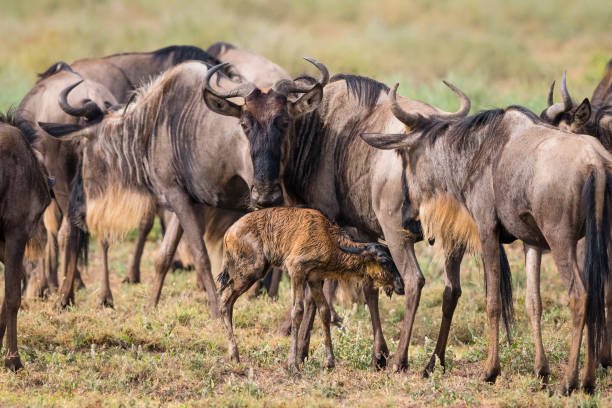
The relationship between wildebeest mothers and their young is one of the main reasons travellers choose a calving safari.
Young calves must quickly begin moving with their mothers in an ecosystem containing many predators.
Game drives may reveal calves feeding, resting, running through the short grass or moving within large herds.
The animals should always be observed without interfering with their movement or separating mothers from their young.
Can You Watch a Wildebeest Give Birth?
It is possible to witness a birth by chance, but this should never be treated as a guaranteed safari activity.
Births happen naturally across a large landscape and cannot be scheduled by guides or safari operators.
A rewarding calving safari should focus on the entire seasonal ecosystem rather than only one dramatic event.
Predators During Ndutu Calving Season
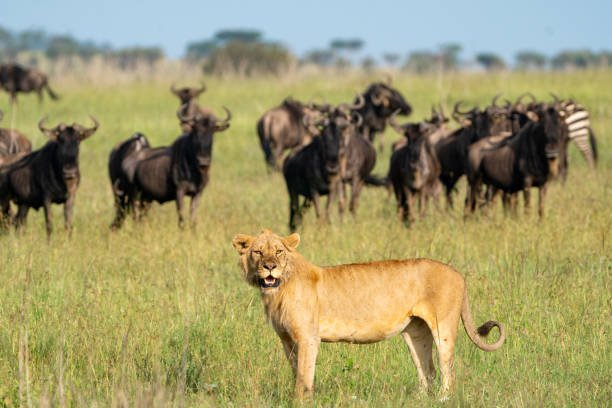
Large concentrations of grazing animals and newborn calves can create valuable feeding opportunities for predators.
This makes the southern Serengeti ecosystem particularly interesting for travellers hoping to understand predator and prey relationships.
Lions, cheetahs and hyenas may all be encountered during game drives.
Predation remains unpredictable, and no responsible itinerary should guarantee a hunt.
Lions in Southern Serengeti
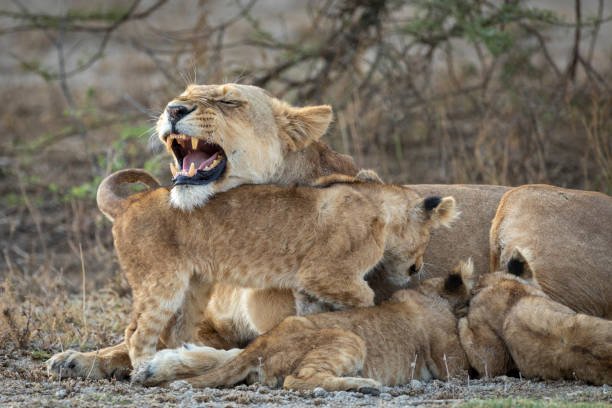
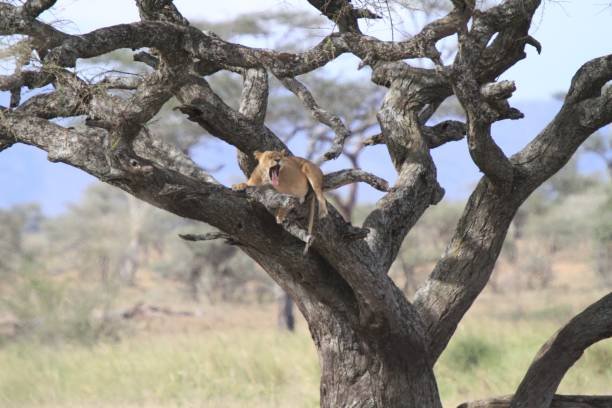
Lions may be found resting on the plains, walking between wildlife concentrations or remaining close to areas where prey is abundant.
Prides can sometimes spend long periods resting before becoming more active during cooler parts of the day.
An early morning game drive can therefore be particularly rewarding.
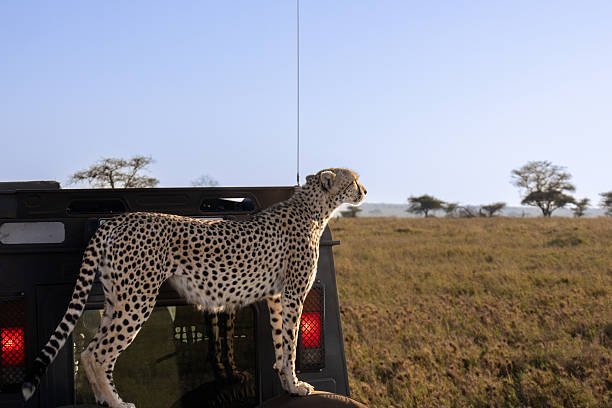
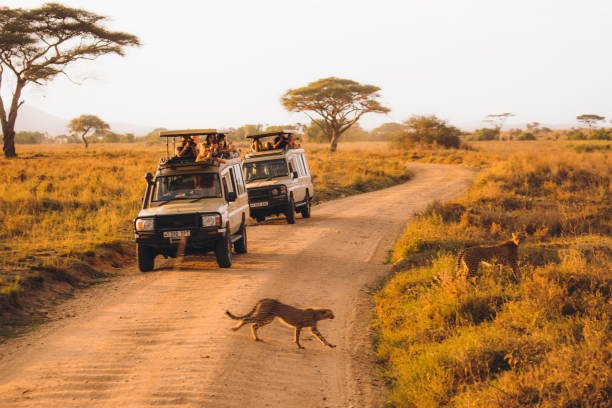
Cheetahs in Ndutu
The open short grass landscape is suitable habitat for cheetahs.
They use visibility and speed when searching for prey across open country.
Travellers may observe cheetahs resting, moving across the plains or scanning their surroundings.
Individual sightings remain unpredictable.
Hyenas During Calving Season
Hyenas are an important part of the southern Serengeti ecosystem.
They are skilled predators as well as scavengers and may be encountered around areas containing large concentrations of prey.
Observing hyenas during a calving safari can provide a deeper understanding of the ecological relationships between Serengeti predators.
Zebras and Wildebeest Together
Zebra often share migration landscapes with wildebeest.
Mixed herds can create impressive views across the plains and are particularly attractive for photography.
Different grazing strategies allow the species to use the grasslands in complementary ways.
Green Season Landscapes
January through March provides a very different Serengeti appearance from the traditional dry season.
Fresh grass can cover wide plains, while seasonal clouds and rain create dramatic skies.
The combination of green backgrounds, large herds and newborn animals makes the season particularly attractive to wildlife photographers.
Calving Season Photography Highlights
- Wildebeest mothers and calves
- Large herds on open plains
- Lions and other predators
- Cheetahs against short grass landscapes
- Zebra and wildebeest together
- Green seasonal scenery
- Dramatic clouds and changing light
- Birdlife
Best Time of Day for Photography
Morning and late afternoon often provide softer light than the middle of the day.
Early mornings can also provide cooler temperatures and increased predator activity.
A full day safari remains useful because migration herds can move and interesting wildlife behaviour can happen at any time.
Full Day Ndutu Game Drive
A full day game drive allows the driver guide to search a larger area for current herd concentrations.
Because migration locations can change, flexibility is valuable.
A packed lunch can be carried according to the safari program, allowing more time in the wildlife area instead of returning to accommodation during the middle of the day.
Does It Rain During Ndutu Calving Season?
Yes, seasonal rainfall can occur.
The rain is an important part of the ecological cycle because it supports the fresh grasses that attract grazing wildlife.
Game drives normally continue according to road and weather conditions.
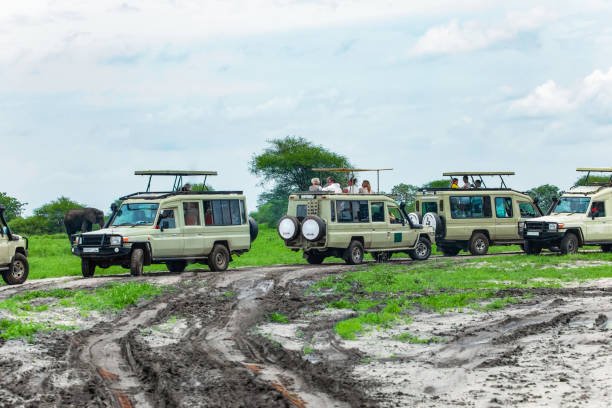
Heavy rain can make some routes muddy, which is another reason experienced guiding and suitable safari vehicles are important.
What Is the Weather Like?
Travellers can experience sunshine, cloud, showers and changing temperatures within the same safari period.
Mornings in an open safari vehicle can feel cool, while daytime temperatures may become warmer.
Layered clothing and lightweight rain protection are therefore useful.
Birdwatching in Ndutu
The greener period can provide interesting birdwatching in addition to mammal viewing.
Wetlands, grasslands and woodland support different species, while seasonal conditions can increase overall bird activity.
Binoculars are useful for both birds and distant mammals.
Ndutu or Central Serengeti?
The right choice depends on the purpose of the safari.
For a trip specifically targeting calving season, southern Serengeti and Ndutu normally deserve substantial time because that is where the seasonal short grass ecosystem becomes especially important.
Central Serengeti can then be added for broader resident wildlife and predator viewing.
Travellers with very limited time should avoid spending most of the itinerary far from the seasonal area if wildebeest calving is their primary objective.
Southern Serengeti and Central Serengeti Combination
A longer safari can combine both regions.
Southern Serengeti provides seasonal migration and calving opportunities, while central Serengeti adds riverine habitats, kopjes and strong resident predator populations.
This creates a broader Serengeti wildlife experience.
Ndutu and Ngorongoro Crater Safari
Ngorongoro Crater is one of the most practical destinations to combine with Ndutu.
The crater offers a very different wildlife environment and can be visited before or after the southern plains according to the route.
Combining the destinations works particularly well for travellers with four or more safari days.
3 Day Southern Serengeti Ndutu Calving Safari
A three day itinerary is suitable for travellers with limited time, although it requires an efficient route.
Sample 3 Day Itinerary
Day 1: Moshi or Arusha to Ndutu
Travel toward the southern migration area and begin wildlife viewing according to arrival time. Continue to the selected accommodation for dinner and overnight.
Day 2: Full Day Ndutu Calving Safari
Explore the wider short grass plains searching for wildebeest herds, newborn calves, zebra, predators and other seasonal wildlife.
Day 3: Morning Wildlife and Return
Enjoy additional wildlife viewing before the agreed transfer toward Arusha, Moshi or another destination.
4 Day Southern Serengeti Ndutu Calving Safari
Four days gives travellers additional time in the seasonal wildlife area and can include Ngorongoro Crater.
Sample 4 Day Calving Safari
Day 1: Moshi or Arusha to Ndutu
Drive toward the southern Serengeti ecosystem and begin afternoon wildlife viewing when time allows.
Day 2: Full Day Ndutu Calving Safari
Search for migration herds, wildebeest calves, cheetahs, lions, hyenas and other seasonal wildlife across the short grass plains.
Day 3: Southern Serengeti to Ngorongoro
Enjoy additional wildlife viewing before travelling toward the Ngorongoro highlands for overnight.
Day 4: Ngorongoro Crater and Return
Descend into Ngorongoro Crater for a wildlife game drive before returning toward Arusha or Moshi.
5 Day Ndutu Calving Safari
Five days provides additional flexibility to follow wildlife conditions rather than rushing between destinations.
Sample 5 Day Itinerary
Day 1: Moshi or Arusha to Ndutu or southern Serengeti.
Day 2: Full day calving season wildlife safari.
Day 3: Additional southern Serengeti and Ndutu wildlife game drive.
Day 4: Morning wildlife viewing and transfer toward Ngorongoro.
Day 5: Ngorongoro Crater game drive and return.
6 Day Southern Serengeti Calving Safari
A six day itinerary gives photographers, wildlife enthusiasts and families greater flexibility.
Several nights can be spent in Ndutu or southern Serengeti before adding central Serengeti and Ngorongoro.
This reduces pressure to leave productive wildlife areas simply because the itinerary requires a transfer every day.
Private Ndutu Calving Safari
A private safari provides your booking party with its own safari vehicle and professional driver guide.
This arrangement is particularly valuable for photographers because more time can be spent observing wildlife scenes that interest the group.
Families and couples may also appreciate the flexibility of having their own daily schedule.
Group Joining Ndutu Safari
A group joining safari can reduce the per person cost by sharing the vehicle and guide with other travellers.
Before booking, confirm that the itinerary genuinely includes the seasonal southern Serengeti or Ndutu area during the calving period.
A generic central Serengeti group safari is not automatically a calving focused itinerary.
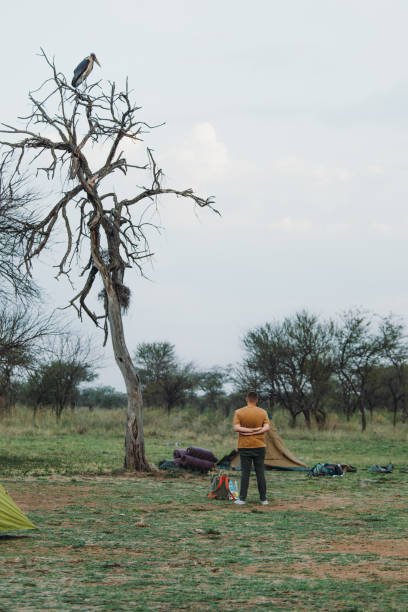
Camping Safari
Camping provides a more adventurous and budget conscious way to experience the calving season.
The confirmed package should explain the tent arrangement, sleeping equipment, campsite facilities and meal program.
Waterproof equipment becomes particularly important during the green season.
Seasonal Tented Camps
Seasonal tented camps can be especially useful for migration focused travel because they may be positioned closer to the wildlife area relevant to that season.
Depending on the camp category, accommodation can include proper beds, private bathrooms and dining facilities.
Popular camps can fill early during peak calving dates.
Lodge Safari
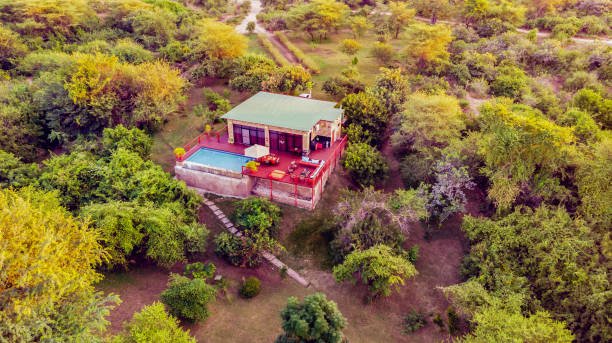
Lodge accommodation provides permanent rooms and additional comfort after game drive days.
The best property should be selected according to both comfort and geographic access to the seasonal wildlife area.
Staying far from the herds can mean spending unnecessary time driving every morning and evening.
Luxury Ndutu Calving Safari
A luxury itinerary can combine a private safari vehicle with premium seasonal camps or lodges.
Domestic flights may also be incorporated to reduce road travel.
For a migration focused trip, location and game drive time remain just as important as accommodation luxury.
Safari Vehicle
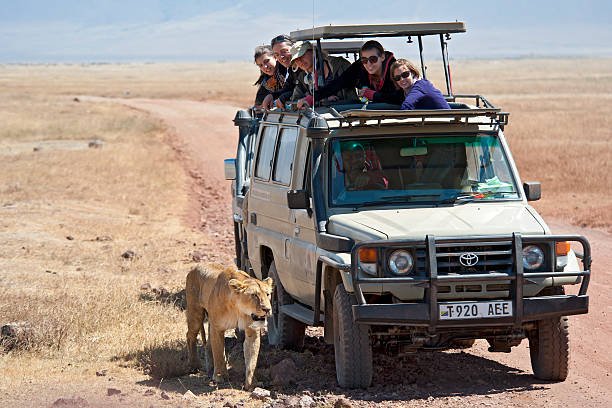
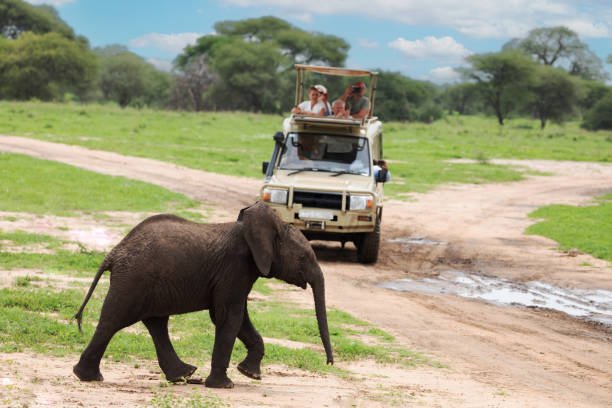
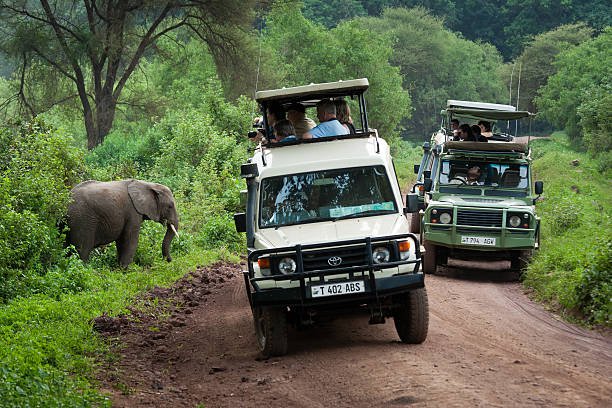
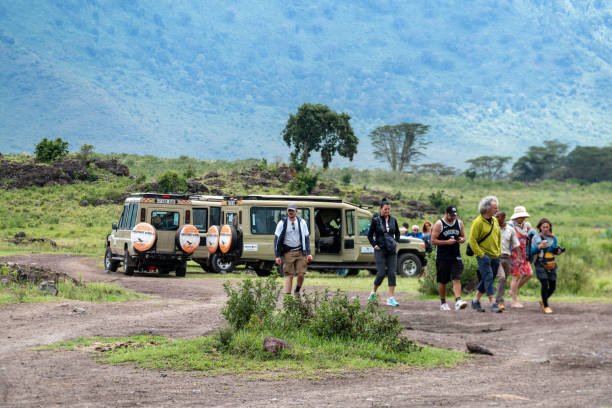
A suitable 4x4 safari vehicle is important during the calving season because road conditions can vary after rainfall.
The pop up viewing roof allows travellers to observe and photograph wildlife while remaining inside the vehicle.
Typical Safari Vehicle Features
- Safari adapted 4x4 vehicle
- Pop up viewing roof
- Passenger windows
- Safari luggage space
- Professional driver guide
- Seating according to vehicle configuration
Professional Driver Guide
Migration safaris require flexibility because animals do not remain at one fixed point.
An experienced driver guide searches current wildlife areas and adjusts game drives according to natural movement, road conditions and available time.
The guide also interprets wildlife behaviour and helps ensure that animals are observed responsibly.
Responsible Calving Season Wildlife Viewing
Newborn animals are particularly vulnerable, and safari activities should never interfere with natural behaviour.
Travellers must follow protected area rules and their guide's instructions.
Responsible Wildlife Guidelines
- Do not pressure wildlife for photographs.
- Never attempt to approach calves on foot.
- Do not interfere with predator and prey interactions.
- Follow official road and wildlife viewing rules.
- Remain inside approved safari arrangements.
- Follow the driver guide's instructions.
Southern Serengeti Ndutu Safari from Moshi
The calving safari can begin from your confirmed Moshi accommodation.
This works particularly well for travellers already in Moshi before or after climbing Kilimanjaro.
The road journey toward Ndutu is substantial, so the itinerary should allow enough time for transfers and meaningful wildlife viewing.
Ndutu Safari from Arusha
Arusha is another common departure point.
Road safaris can travel through the northern Tanzania circuit toward Ngorongoro and the southern plains.
The final route depends on the number of safari days and other destinations included.
Road Safari or Fly In Safari?
Road travel works well when combining Ndutu with Ngorongoro, Tarangire or Lake Manyara.
A fly in option can reduce road travel when available and practical for the itinerary.
Travellers using smaller safari aircraft should check baggage restrictions before departure.
Ndutu Calving Safari After Kilimanjaro
The safari can be combined with a Kilimanjaro climb.
After returning to Moshi, travellers can have a recovery night, reorganise their luggage and continue toward the southern Serengeti ecosystem.
Mountain equipment that is not required for safari can often remain at an agreed luggage storage location.
Add Tarangire
Tarangire can provide a contrasting wildlife environment with baobab landscapes and elephant viewing opportunities.
It is best added when enough safari days are available so the main calving area does not lose valuable game drive time.
Add Lake Manyara
Lake Manyara can add groundwater forest, Rift Valley scenery, birdlife and another wildlife habitat to the itinerary.
This can work well before continuing toward Ngorongoro and Ndutu.
Add Zanzibar
Zanzibar can be added after the safari for travellers wanting to combine wildlife with a beach stay.
Domestic flights, airport transfers and accommodation can be coordinated according to the final safari route.
What to Pack for Ndutu Calving Season
- Comfortable safari clothing
- Warm fleece for mornings
- Light rain jacket
- Comfortable trousers
- Sun hat
- Sunglasses
- Sunscreen
- Comfortable closed footwear
- Camera equipment
- Binoculars
- Personal medication
- Power bank
- Small day bag
Typical Safari Package Inclusions
Your Package Can Include
- Pickup from confirmed Moshi or Arusha accommodation
- Safari adapted 4x4 vehicle
- Professional driver guide
- Ndutu and southern Serengeti wildlife game drives according to itinerary
- Accommodation according to package
- Meals according to itinerary
- Drinking water according to safari arrangement
- Applicable protected area charges when stated
- Road transfers included in the confirmed itinerary
- Ngorongoro Crater game drive when included
Typical Exclusions
- International flights
- Visa expenses unless stated
- Travel insurance
- Personal expenses
- Alcoholic and selected additional drinks unless stated
- Optional activities not listed in the itinerary
- Additional hotel nights unless stated
- Domestic flights unless stated
- Driver guide gratuities unless specifically included
Frequently Asked Questions About Southern Serengeti Ndutu Calving Safari
When is the Ndutu calving season?
January through March is the main period for southern Serengeti and Ndutu calving focused safaris.
Which month is best for Ndutu calving?
February is especially popular, while January and March can also provide excellent calving and migration wildlife depending on seasonal conditions.
Is Ndutu part of the Serengeti ecosystem?
Yes. Ndutu forms part of the wider southern Serengeti ecosystem and is an important seasonal wildlife area.
Can I see newborn wildebeest?
Yes. Newborn calves are a major seasonal highlight, although individual births and exact herd locations cannot be guaranteed.
Can I see an actual wildebeest birth?
It can happen by chance, but births are natural events and cannot be scheduled or guaranteed.
Are there lions in Ndutu?
Lions occur within the wider ecosystem and may be encountered during calving season game drives.
Can I see cheetahs?
Yes. The open southern plains provide suitable cheetah habitat, although sightings remain unpredictable.
Can I see hyenas?
Yes. Hyenas are important predators and scavengers in the Serengeti ecosystem and may be encountered around migration areas.
Are predator hunts guaranteed?
No. Predator behaviour is natural and cannot be predicted or guaranteed.
Does it rain during calving season?
Seasonal rainfall is possible and helps produce the fresh grasses that support large grazing herds.
Does rain stop the safari?
Not automatically. Game drives continue according to weather and road conditions, although heavy rain can make some routes more difficult.
Is January a good month?
Yes. January can provide green landscapes, large migration herds and early calving activity depending on seasonal conditions.
Is February a good month?
Yes. February is particularly popular for travellers focused specifically on wildebeest calving.
Is March a good month?
Yes. March can continue to provide mothers, calves, predators and green migration landscapes.
Is Ndutu good for photographers?
Yes. Newborn calves, predators, large herds, open plains and green landscapes create excellent photography opportunities.
How many days should I spend in Ndutu?
Several game drive days provide greater flexibility because migration herds can move across a wide seasonal area.
Is three days enough?
Three days is possible, while four to six days provides more time for wildlife and additional destinations.
Can I combine Ndutu with Ngorongoro Crater?
Yes. Ngorongoro is one of the most practical and popular additions to a southern Serengeti calving safari.
Can I add central Serengeti?
Yes. Central Serengeti can add resident wildlife and different landscapes when the itinerary has enough days.
Can Tarangire be included?
Yes. Tarangire can be added for elephant viewing and baobab landscapes when sufficient travel time is available.
Can Lake Manyara be included?
Yes. Lake Manyara can add Rift Valley scenery, forest habitats and birdlife to a longer northern circuit safari.
Can I start from Moshi?
Yes. Pickup can be arranged from a confirmed Moshi hotel according to the safari package.
Can I start from Arusha?
Yes. Arusha is another common starting location for road safaris to Ngorongoro and Ndutu.
Can I book a private safari?
Yes. Private safaris provide your booking party with its own vehicle and guide.
Can I join a group safari?
Yes. Group joining can be available when a scheduled departure matches your dates and includes the seasonal calving area.
Can I choose camping?
Yes. Camping can provide an adventurous and budget conscious calving safari experience.
Are seasonal tented camps available?
Yes. Seasonal tented camps can be useful because they may place travellers closer to the seasonal migration area.
Can I stay in lodges?
Yes. Lodge options can be selected according to location, availability, comfort preference and budget.
Can families do a calving safari?
Yes. Family itineraries can be adjusted around children's ages, game drive tolerance and room requirements.
Can solo travellers join?
Yes. Solo travellers can join suitable departures or arrange a private safari.
Can I do the safari after Kilimanjaro?
Yes. The safari can begin after a Kilimanjaro climb, with a recovery night in Moshi often useful before departure.
Can Zanzibar be added afterwards?
Yes. Zanzibar can be added using suitable domestic flight, transfer and accommodation arrangements.
How do I book a Southern Serengeti Ndutu Calving Safari?
Provide your January, February or March travel dates, number of travellers, preferred duration and accommodation style, then confirm whether you want a private or group joining safari and any Ngorongoro, central Serengeti, Tarangire, Kilimanjaro or Zanzibar extension.
Plan Your Southern Serengeti Ndutu Calving Safari
Explore Ndutu and the southern Serengeti during the calving season with professional wildlife game drives, carefully selected accommodation and a safari focused on newborn wildebeest, migration herds, predators and green seasonal plains.
Plan Your Ndutu Calving Safari

 Serengeti Safari
.jpg "Tanzania Safari for Two People 2026-2027")
















