7 Day Lemosho Route Kilimanjaro 2026-2027
The 7 Day Lemosho Route Kilimanjaro is a scenic western approach to Uhuru Peak that combines rainforest trekking, Shira Plateau, Lava Tower, Barranco Wall, Karanga and Barafu before the final summit attempt.
The route is popular because it provides good acclimatization opportunities while keeping the mountain itinerary to seven trekking days.
It is suitable for climbers who want a more gradual alternative to shorter Kilimanjaro itineraries but do not have enough time for an eight or nine day expedition.
The climb normally finishes with a summit attempt from Barafu Camp toward Stella Point and then Uhuru Peak at 5,895 metres.
7 Day Lemosho Route at a Glance
- Route: Lemosho Route
- Mountain days: 7 days
- Highest point: Uhuru Peak, 5,895 metres
- Starting side: Western Kilimanjaro
- Accommodation: Camping tents
- Main highlights: Shira Plateau, Lava Tower, Barranco Wall and Uhuru Peak
- Best for: Climbers wanting a scenic seven day route with good acclimatization
- Main challenge: High altitude and summit night
Why Choose the 7 Day Lemosho Route?
The Lemosho Route is one of the most scenic Kilimanjaro approaches and is known for entering the mountain from the quieter western side.
The first days pass through forest and open onto the broad Shira Plateau before the route joins the southern circuit.
The itinerary includes useful altitude exposure at Lava Tower and continues through Barranco and Karanga before reaching Barafu Camp.
For travellers with exactly one week available on the mountain, the seven day version offers an attractive compromise between scenery, acclimatization and total trip duration.
Why Climbers Like Lemosho
- Scenic western approach
- Beautiful rainforest section
- Crossing of Shira Plateau
- Lava Tower acclimatization
- Barranco Wall experience
- Varied ecological zones
- Gradual approach toward summit night
7 Day Lemosho Route Itinerary
The exact camp sequence and walking times can vary slightly according to operator arrangements, trail conditions and individual pace, but the standard seven day itinerary generally follows the western approach before joining the southern circuit and Barafu summit route.
Day 1 – Lemosho Gate to Mti Mkubwa Camp
The first trekking day begins after transfer from Moshi toward the western side of Mount Kilimanjaro.
After registration and final preparations, climbers enter the rainforest and begin a steady walk toward Mti Mkubwa Camp.
The forest can be humid and muddy, especially during wetter periods.
The pace should remain comfortable because the goal of the first day is to settle into the trekking rhythm rather than move quickly.
Day 1 Highlights
- Western Kilimanjaro approach
- Rainforest trekking
- First mountain camp
- Gentle introduction to the expedition
- Possible wildlife and birdlife in the forest
Day 2 – Mti Mkubwa Camp to Shira 2 Camp
Day two leaves the rainforest and enters heath and moorland.
The landscape opens dramatically as climbers approach the Shira Plateau.
Depending on the exact itinerary, the day can be longer because the seven day Lemosho version generally compresses some of the western approach compared with the eight day itinerary.
The views become increasingly expansive, and the volcanic landscape begins to dominate the trek.
Why Shira Plateau Is Special
Shira Plateau is one of the major scenic highlights of the Lemosho Route.
It forms part of the remains of an ancient volcanic structure on Kilimanjaro's western side.
The broad open landscape provides excellent views when weather is clear.
Crossing Shira also gives climbers more exposure to altitude before the higher stages of the route.
Day 3 – Shira 2 to Lava Tower and Barranco Camp
This is one of the most important acclimatization days on the 7 Day Lemosho Route.
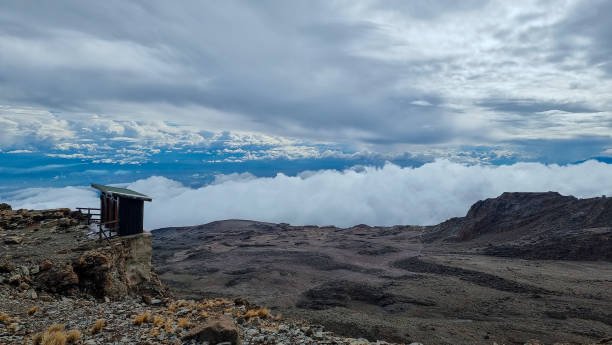
Climbers ascend toward Lava Tower at approximately 4,600 metres before descending toward Barranco Camp.
The day follows the principle often described as climbing high and sleeping lower.
Some climbers begin to feel stronger altitude effects around Lava Tower, making slow pacing and honest communication with guides especially important.
Why Lava Tower Matters
- High altitude exposure
- Important acclimatization stage
- Dramatic alpine desert scenery
- Higher daytime point followed by lower sleeping elevation
- Useful guide health-monitoring stage
Barranco Camp on the Lemosho Route
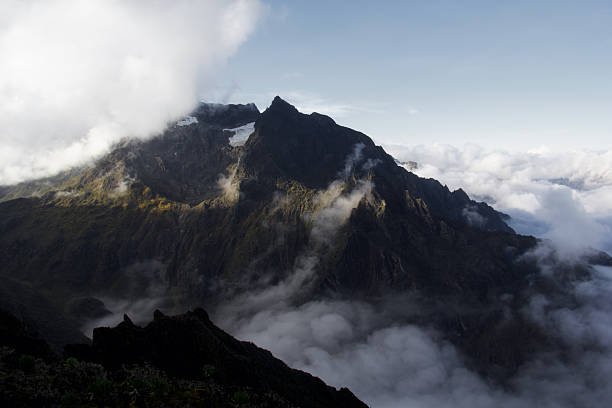
Barranco Camp sits below the famous Barranco Wall and provides one of the most dramatic settings on Kilimanjaro.
The surrounding terrain includes steep rock formations and views toward the upper mountain when skies are clear.
After the descent from Lava Tower, many climbers feel more comfortable at Barranco's lower sleeping elevation.
Day 4 – Barranco Camp to Karanga Camp
The day begins with the ascent of Barranco Wall.
The wall looks extremely steep from camp but is generally a non-technical scramble rather than a technical rock climb.
Guides assist climbers through sections where hands may be needed for balance.
After reaching the top, the trail continues across rolling terrain toward Karanga Camp.
Barranco Wall Tips
- Follow the guide's route
- Move slowly
- Use hands where required
- Temporarily store trekking poles if necessary
- Maintain space between climbers
- Do not rush because of other groups
Is Barranco Wall Difficult?
Barranco Wall can look intimidating, but it does not normally require ropes or technical climbing equipment on the standard route.
The main challenge is exposure, uneven terrain and occasional use of hands.
Guides manage the pace carefully and show climbers where to place hands and feet.
For many trekkers, the wall becomes one of the most memorable parts of the entire Lemosho climb.
Day 5 – Karanga Camp to Barafu Camp
Day five continues through increasingly dry and exposed alpine terrain toward Barafu Camp.
This is the final major camp before summit night.
The walking day is normally shorter than summit day, allowing time for rest, eating, equipment preparation and an early evening sleep.
Guides conduct health assessments and explain the summit plan before the nighttime departure.
At Barafu Camp
- Eat and drink adequately
- Prepare summit clothing
- Check headlamp and batteries
- Prepare water bottles
- Organize gloves and warm layers
- Attend the summit briefing
- Rest as much as possible
Day 6 – Barafu Camp to Uhuru Peak and Down to Mweka Camp
Summit day begins around midnight or during the early morning hours.
Climbers leave Barafu in darkness and follow a slow zigzagging trail upward.
The goal is to maintain a steady pace and conserve energy while climbing through increasingly cold and thin air.
The first major objective is Stella Point on the crater rim.
Climbers who remain strong enough continue around the rim toward Uhuru Peak at 5,895 metres.
Reaching Stella Point
Stella Point is located on the crater rim and represents a major milestone during the summit attempt.
The climb from Barafu to Stella is usually the steepest and most demanding part of the summit ascent.
After reaching the rim, the route toward Uhuru Peak becomes less steep but remains physically challenging because of the altitude.
Reaching Uhuru Peak at 5,895 Metres
Uhuru Peak is the highest point on Mount Kilimanjaro and the highest point in Africa.
Climbers normally spend a limited period at the summit for photographs and celebration before beginning the descent.
The high altitude and cold make it important not to remain at the summit longer than necessary.
The Long Summit Descent
After the summit, climbers descend back toward Barafu Camp.
There is normally time for a short rest and food before continuing farther down toward Mweka Camp.
This creates a very long trekking day.
Trekking poles become particularly useful during the descent because the legs are tired and the trail can contain loose volcanic material.
Summit Day Challenges
- Very high altitude
- Freezing temperatures
- Long walking hours
- Nighttime ascent
- Loose terrain
- Physical fatigue
- Long descent after reaching the summit
Day 7 – Mweka Camp to Mweka Gate
The final day descends through the rainforest toward Mweka Gate.
The trail can be muddy after rain, so trekking poles remain useful.
After completing the park exit procedures, climbers normally meet their transfer vehicle and return to Moshi.
The mountain crew tipping ceremony may take place near the end of the trek according to the operator's arrangements.
Kilimanjaro Summit Certificate After Lemosho
Successful climbers normally receive a Kilimanjaro summit certificate after completing the trek.
The certificate level can depend on the highest recognized summit point reached.
Your mountain team or operator explains the collection process after leaving the national park.
7 Day Lemosho Route Difficulty
The 7 Day Lemosho Route is physically demanding but does not normally require technical mountaineering skills.
The primary challenges are high altitude, repeated trekking days, Barranco Wall and the long summit day.
Good fitness helps, but acclimatization remains the most important limiting factor for many climbers.
Main Lemosho Challenges
- High altitude
- Seven consecutive trekking days
- Cold summit temperatures
- Barranco Wall
- Long summit night
- Significant descent after the summit
- Changing weather conditions
Can Beginners Do the 7 Day Lemosho Route?
Yes. The seven day Lemosho itinerary can be suitable for beginners who train appropriately before departure.
Many Kilimanjaro climbers have never completed a major high-altitude trek before.
Beginners should focus on hiking endurance, leg strength, proper equipment and slow pacing.
Those with additional time may still consider the eight day Lemosho itinerary for another acclimatization day.
7 Day vs 8 Day Lemosho Route
The main difference is the amount of time spent on the western approach and the total acclimatization schedule.
The 8 Day Lemosho Route provides one additional mountain day and therefore a more gradual itinerary.
The seven day version is attractive for climbers who have limited time but still want the advantages of Lemosho.
7 Day vs 8 Day Lemosho
- 7 Day Lemosho: Shorter overall trip
- 7 Day Lemosho: Good acclimatization profile
- 8 Day Lemosho: More gradual western approach
- 8 Day Lemosho: Additional acclimatization time
- Best choice: Depends on available time, budget and altitude experience
Lemosho vs Machame Route
Lemosho and Machame eventually share part of the southern circuit but begin from different sides of the mountain.
Lemosho starts farther west and offers additional scenery across Shira Plateau.
Machame generally reaches the southern circuit more directly.
For climbers choosing seven days, both are strong options, but Lemosho often appeals to travellers wanting the western approach and broader landscape variety.
7 Day Lemosho Acclimatization
The route provides useful altitude exposure across Shira Plateau and Lava Tower.
The ascent to Lava Tower followed by descent toward Barranco is particularly valuable for acclimatization.
However, no route eliminates altitude sickness.
Climbers should attend daily health checks, communicate symptoms honestly and follow guide instructions.
Altitude Sickness on the 7 Day Lemosho Route
Possible altitude symptoms include headache, nausea, unusual fatigue, dizziness and reduced appetite.
Symptoms can appear even in very fit climbers.
Moving slowly and allowing the guide to monitor your condition is essential.
Serious or worsening symptoms may require the ascent to stop or a descent to lower elevation.
Altitude Safety on Lemosho
- Walk slowly
- Drink adequately
- Eat regular meals
- Report headaches and nausea
- Attend health checks
- Do not hide symptoms
- Follow guide safety decisions
7 Day Lemosho Summit Success
Seven days provides a good acclimatization opportunity compared with shorter five or six day climbs.
However, no responsible operator can guarantee that every climber will reach Uhuru Peak.
Individual altitude response, illness, weather, fitness and other factors can influence the summit attempt.
The eight day Lemosho itinerary offers another acclimatization day for travellers able to extend their trip.
How Fit Do You Need to Be?
You do not need to be an elite athlete.
You should, however, be comfortable walking for several hours on consecutive days.
Summit day requires considerably more endurance than normal trekking days.
Training before departure makes the mountain more manageable and allows you to focus more effectively on altitude and recovery.
Training for 7 Day Lemosho
Many climbers benefit from approximately eight to twelve weeks of structured preparation.
Hiking should form the foundation of the training plan.
Add cardiovascular exercise, hill walking, stair climbing and leg strength work.
Practice several back-to-back hiking days before departure so your body becomes familiar with cumulative fatigue.
Recommended Lemosho Training
- Long hikes
- Hill walking
- Stair climbing
- Inclined treadmill walking
- Squats and lunges
- Step ups
- Core stability exercises
- Consecutive hiking days
Best Time for the 7 Day Lemosho Route
Lemosho can be climbed throughout the year, but January to February and June through October are generally among the most popular periods.
These months often provide relatively drier trekking conditions.
March to May and November can be wetter, especially in the rainforest.
Regardless of season, climbers need waterproof and cold-weather equipment.
Weather on the Lemosho Route
Weather changes significantly during the trek.
The rainforest can be warm and humid.
Shira Plateau can be sunny, windy and cool.
The alpine desert becomes colder and more exposed, while summit temperatures can fall far below freezing.
What to Pack for 7 Day Lemosho
A successful packing system should prepare you for both warm lower elevations and freezing summit conditions.
Essential 7 Day Lemosho Gear
- Broken-in trekking boots
- Warm sleeping bag
- Thermal base layers
- Fleece or mid layers
- Insulated jacket
- Waterproof jacket
- Waterproof trousers
- Warm gloves or mittens
- Warm hat
- Sun hat
- Sunglasses
- Trekking poles
- Headlamp
- Daypack
- Duffel bag
- Water bottles or hydration system
Can You Rent Gear in Moshi?
Yes. Selected Kilimanjaro gear can normally be rented in Moshi before the climb.
Common rental items include sleeping bags, trekking poles, duffel bags, gaiters and selected warm clothing.
Complete a full equipment check before leaving for Lemosho Gate so there is enough time to replace anything missing.
Accommodation on the 7 Day Lemosho Route
Lemosho is a camping route.
Climbers sleep in mountain tents at designated camps.
Porters transport the main camp equipment between locations.
A good sleeping bag and warm nighttime clothing are essential because temperatures drop significantly at higher camps.
Meals on the Lemosho Route
The mountain cook prepares meals throughout the expedition.
Meals are designed to provide energy for repeated trekking days and typically include a mix of carbohydrates, protein, vegetables, soups and other foods.
Appetite can decrease at high altitude, so climbers should still try to eat enough to maintain energy.
Drinking Water on the Route
Water is collected and treated by the mountain team according to the climbing operation's procedures.
Climbers should carry enough water in their daypack each day.
On summit night, insulated bottles can be helpful because hydration tubes may freeze in very cold conditions.
How Much Does Your Daypack Weigh?
Porters carry the main personal duffel, so climbers only need a smaller daypack while trekking.
The daypack normally contains water, rain gear, extra layers, snacks, personal medication, sunscreen, camera equipment and other items required before reaching the next camp.
Training with your daypack before travelling can improve comfort.
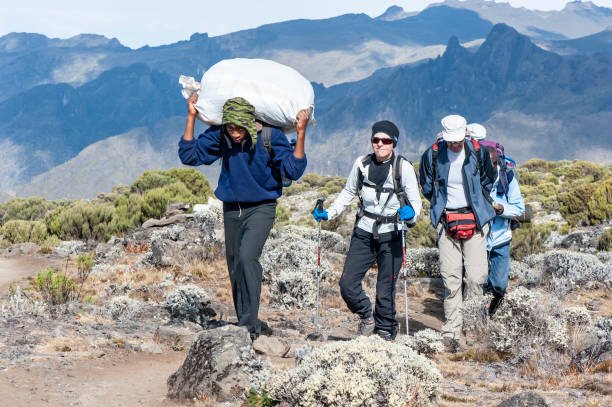
Porters on the 7 Day Lemosho Route
A Kilimanjaro mountain crew normally includes guides, assistant guides, cooks and porters.
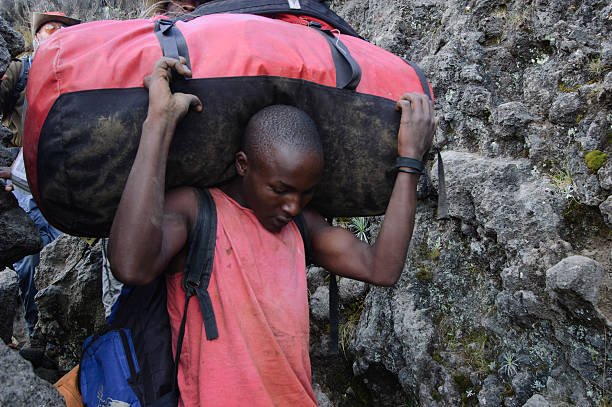
Porters carry expedition equipment and personal duffel bags between camps.
The exact crew size depends on the number of climbers and the amount of equipment required.
Kilimanjaro Porter Tips on 7 Day Lemosho
Mountain crew gratuities are normally provided at the end of the expedition.
The total depends on crew size and the operator's current tipping recommendations.
Because Lemosho is a seven day expedition, tipping should be budgeted according to seven crew working days.
Confirm current guidance before the climb rather than waiting until the final day.
Safety on the 7 Day Lemosho Route
Professional guide support is essential because altitude response can change throughout the trek.
Guides should monitor climbers daily and make conservative decisions when symptoms become concerning.
Typical Mountain Safety Support
- Professional guides
- Assistant guide support
- Daily health monitoring
- Pulse oximeter checks where used
- Emergency oxygen
- First aid equipment
- Emergency descent procedures
- Additional summit support when required
What Is Usually Included in a 7 Day Lemosho Package?
Exact inclusions vary between operators, but a complete climbing package normally covers the major mountain logistics required for the expedition.
Typical Package Inclusions
- Professional mountain guides
- Assistant guides according to group size
- Mountain cook and porters
- Kilimanjaro National Park fees
- Camping fees
- Mountain tents
- Dining tent, tables and chairs according to package
- Meals during the climb
- Drinking water on the mountain
- Emergency oxygen
- First aid equipment
- Transfers to and from the mountain
- Pre and post climb hotel accommodation when included
- Airport transfers when included
- Summit certificate
Typical 7 Day Lemosho Exclusions
- International flights
- Visa expenses
- Travel insurance
- Personal trekking equipment unless stated
- Gear rental unless included
- Mountain crew gratuities
- Personal expenses
- Alcoholic drinks
- Safari or Zanzibar extensions unless included
Who Is the 7 Day Lemosho Route Best For?
The route works well for travellers who want a scenic Kilimanjaro experience without committing to eight or nine mountain days.
It can suit first time trekkers, experienced hikers, couples, friends and solo travellers joining scheduled departures.
Climbers who are particularly concerned about acclimatization and have another day available may prefer the eight day Lemosho itinerary.
7 Day Lemosho for Solo Travellers
Solo travellers can book a private climb or join a scheduled Lemosho group.
Group departures can reduce the per person cost because some crew and logistics expenses are shared.
They can also provide a social mountain experience without requiring the traveller to organize companions in advance.
7 Day Lemosho for Couples
Couples can choose either private or group climbing arrangements.
A private Lemosho expedition gives more flexibility around departure dates and group atmosphere.
The mountain pace still needs to follow safe acclimatization principles rather than individual competition.
7 Day Lemosho for Private Groups
Friends, families and organizations can arrange private departures on their preferred dates.
The mountain crew size is adjusted according to the final number of climbers.
Private groups can also combine Kilimanjaro with a safari or Zanzibar extension after the trek.
Arrival Before the Lemosho Climb
Arriving at least one day before the mountain departure is recommended.
This provides time to recover from international travel, complete the climb briefing and check all equipment.
If anything is missing, selected gear can be rented or purchased in Moshi before departure.
Pre-Climb Gear Check in Moshi
Your guide should review essential clothing and equipment before the trek.
The check normally includes boots, sleeping bag, warm layers, waterproof clothing, gloves, headlamp and trekking poles.
This is also the best time to organize rental equipment.
Airport Transfer for the 7 Day Lemosho Route
International travellers commonly arrive through Kilimanjaro International Airport.
From the airport, a road transfer can take climbers toward Moshi for their pre-climb hotel stay.
After the expedition, travellers can return to the airport or continue with another Tanzania itinerary.
7 Day Lemosho and Tanzania Safari
Kilimanjaro can be combined easily with a northern Tanzania safari.
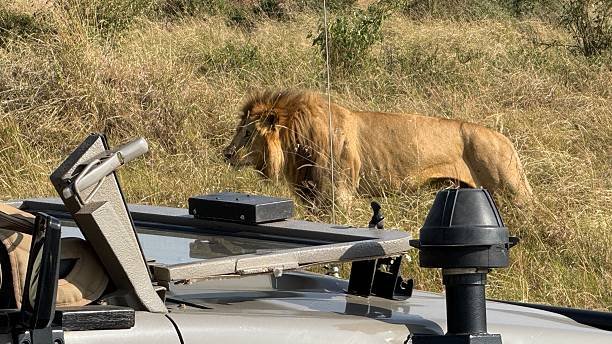
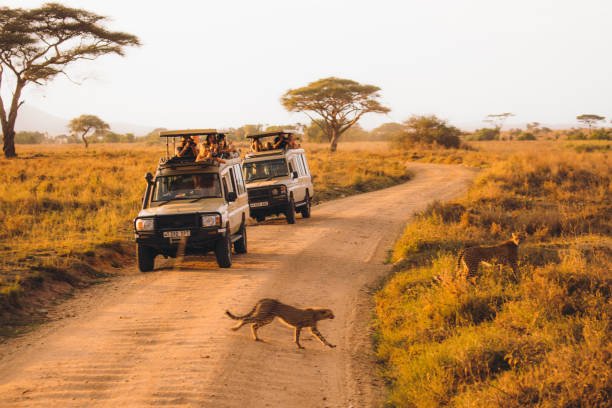
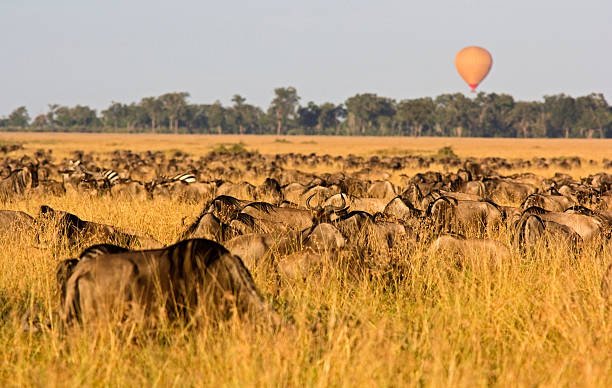
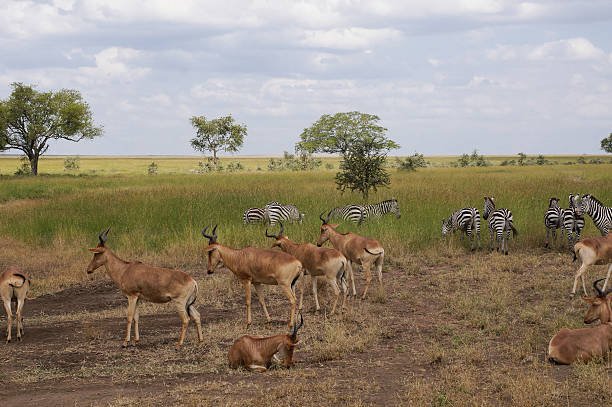
Many climbers prefer completing the mountain first and then travelling to destinations such as Tarangire, Ngorongoro and Serengeti.
A three to five day safari can create a balanced mountain and wildlife itinerary.
Popular Post-Kilimanjaro Safari Destinations
- Tarangire National Park
- Lake Manyara National Park
- Ngorongoro Crater
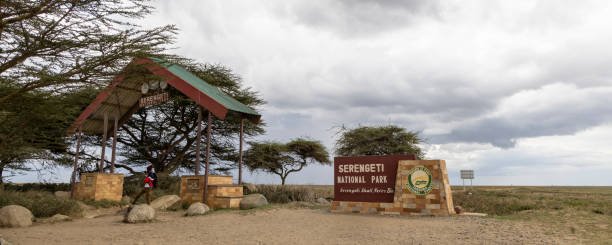
- Serengeti National Park
7 Day Lemosho and Zanzibar
Zanzibar can be added after the Kilimanjaro climb for several days of beach relaxation.
Travellers can also combine all three experiences by climbing Kilimanjaro, completing a Tanzania safari and then flying to Zanzibar.
The final itinerary depends on total travel time and budget.
How Many Total Days Do You Need for 7 Day Lemosho?
The mountain portion is seven days, but the complete Tanzania trip should include additional time.
At least one arrival day before the climb and one hotel night after descent are useful.
This means travellers should normally allow around nine to ten days for the Kilimanjaro-only portion including hotel nights and transfers.
Is 7 Day Lemosho Worth It?
For many climbers, yes.
The route combines excellent scenery, a western approach, major acclimatization landmarks and enough mountain time to create a well-balanced seven day climb.
If another day is available, eight day Lemosho remains worth considering, but the seven day itinerary is a strong option for travellers with tighter schedules.
Why Book a 7 Day Lemosho Route Kilimanjaro 2026-2027?
The seven day Lemosho itinerary combines many of Kilimanjaro's most memorable landscapes into a manageable mountain schedule.
You experience the western rainforest, Shira Plateau, Lava Tower, Barranco Wall, Karanga, Barafu and the final journey toward Uhuru Peak.
For travellers wanting a scenic route with a strong acclimatization profile without extending to eight days, it is one of the best Kilimanjaro options to consider.
Frequently Asked Questions About 7 Day Lemosho Route Kilimanjaro
Is 7 days enough for the Lemosho Route?
Yes. Seven days is a popular Lemosho itinerary and provides good acclimatization opportunities, although eight days offers one additional day for adaptation.
Can beginners climb 7 Day Lemosho?
Yes. Fit beginners can climb the route with proper training, good equipment, slow pacing and professional mountain support.
Is 7 Day Lemosho difficult?
It is physically demanding mainly because of altitude, repeated trekking days, Barranco Wall and the long summit attempt, but standard sections do not normally require technical climbing skills.
What is the highest point of 7 Day Lemosho?
The highest point is Uhuru Peak at 5,895 metres above sea level.
Does the 7 Day Lemosho Route include Lava Tower?
Yes. The route normally includes Lava Tower before descending toward Barranco Camp, creating an important acclimatization stage.
Does Lemosho include Barranco Wall?
Yes. Climbers normally ascend Barranco Wall before continuing toward Karanga Camp.
Is Barranco Wall technical climbing?
No. It is normally a steep non-technical scramble where climbers occasionally use their hands for balance.
Where does the 7 Day Lemosho summit attempt begin?
The standard summit attempt begins from Barafu Camp and climbs toward Stella Point before continuing to Uhuru Peak.
Is 7 Day Lemosho better than 6 Day Machame?
For many climbers, the additional day and western Lemosho approach provide a more gradual overall experience, although the best route depends on personal time and budget.
Which is better, 7 Day or 8 Day Lemosho?
Eight Day Lemosho provides an additional acclimatization day, while seven days is a strong option for travellers with less time.
What is the best time to climb Lemosho?
January to February and June through October are generally popular because they often provide relatively drier trekking conditions.
Do you camp on the Lemosho Route?
Yes. Lemosho is a camping route and climbers sleep in mountain tents throughout the trek.
Can I rent Kilimanjaro gear in Moshi?
Yes. Common rental items can include sleeping bags, trekking poles, duffel bags, gaiters and selected mountain clothing.
Do I need trekking poles for Lemosho?
They are not compulsory, but they can be very useful for balance and knee support, especially during long descents.
Can I combine 7 Day Lemosho with a safari?
Yes. A three to five day safari to Tarangire, Ngorongoro, Serengeti or Lake Manyara can be added after the climb.
Can I go to Zanzibar after Lemosho?
Yes. Zanzibar is a popular post-climb extension and can be combined directly with Kilimanjaro or added after a Tanzania safari.
Who should choose the 7 Day Lemosho Route Kilimanjaro 2026-2027?
It is a strong option for climbers who want a scenic western route, good acclimatization opportunities and a seven day mountain itinerary without extending to the full eight day Lemosho schedule.
Book Your 7 Day Lemosho Route Kilimanjaro 2026-2027
Climb Kilimanjaro through the scenic western Lemosho approach, cross Shira Plateau, acclimatize at Lava Tower, climb Barranco Wall and prepare for the final summit journey toward Uhuru Peak at 5,895 metres with professional mountain support.
Book 7 Day Lemosho Route

 Serengeti Safari