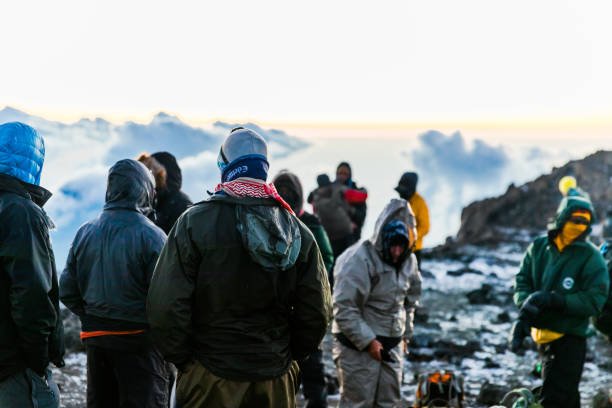
Kilimanjaro Kosovo Camp Summit
The Kilimanjaro Kosovo Camp Summit is a high camp summit strategy used on selected southern Kilimanjaro itineraries. Instead of spending the final pre summit night at the standard Barafu Camp, climbers continue higher to the camping area commonly known as Kosovo Camp or Upper Barafu.
The principal advantage is straightforward: you climb part of the normal Barafu summit route before resting. When the final summit attempt begins, less elevation remains between camp and Stella Point.
This can make the final summit ascent shorter, but Kosovo also introduces an important tradeoff. You are sleeping at a higher altitude, in a colder and more exposed environment, so good acclimatization becomes especially important.
Kosovo should therefore not be viewed as an automatic shortcut for every Kilimanjaro climber. It is a strategic high camp option that should be used only when the itinerary, park arrangements, mountain conditions and individual climber health make it appropriate.
Kosovo Camp Summit at a Glance
- Mountain: Mount Kilimanjaro
- Camp: Kosovo Camp / Upper Barafu area
- Approximate elevation: Around 4,800 m
- Position: Above standard Barafu Camp
- Common routes: Machame, Lemosho and Umbwe variations
- Accommodation: High altitude tent camping
- Summit direction: Stella Point to Uhuru Peak
- Main benefit: Shorter final summit ascent compared with starting at Barafu
- Main tradeoff: Sleeping higher before summit day
- Summit objective: Uhuru Peak at approximately 5,895 m
What Is Kosovo Camp on Kilimanjaro?
Kosovo Camp is the commonly used name for a high summit camping area above the normal Barafu summit camp.
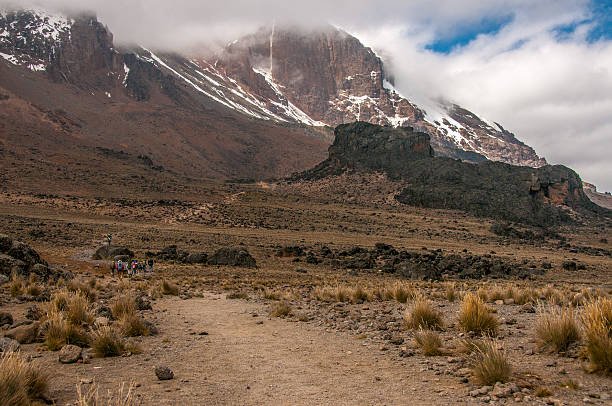
It sits on Kilimanjaro's upper southern slopes in rocky alpine terrain below the final ascent toward Stella Point.
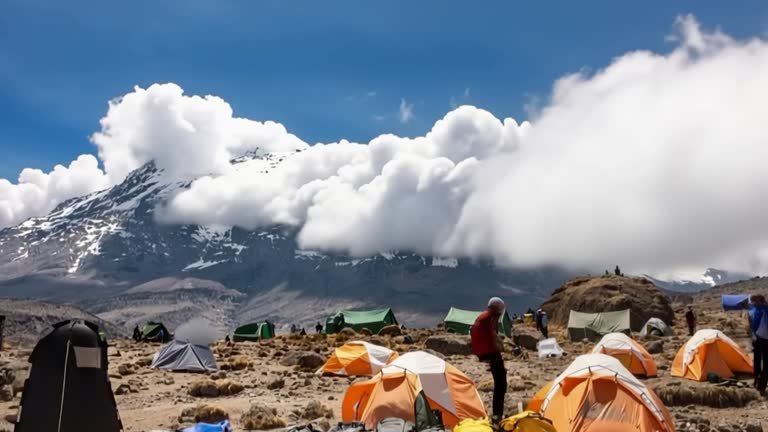
The camp is not a lodge or hut. Climbers sleep in expedition tents and rely completely on their mountain crew for tents, meals, water, sanitation arrangements and other camp logistics.
Because it sits higher than Barafu, the environment is colder, more exposed and more demanding on the body.
Kosovo Camp versus Upper Barafu
Travellers can encounter both names while researching Kilimanjaro.
Many operators refer to the high campsite above Barafu as Kosovo Camp, while official park tariff documents use the name Upper Barafu Camp.
For booking purposes, the operator should verify the current official park category and availability rather than relying only on informal naming.
Important Booking Point
Kosovo should be confirmed in advance as part of the planned Kilimanjaro itinerary.
Do not assume that a standard Machame or Lemosho package automatically includes the higher camp, because park charges, permits, water, porter logistics and itinerary arrangements can differ from normal Barafu camping.
How High Is Kosovo Camp?
Kosovo Camp is commonly described at approximately 4,800 metres above sea level, although specific maps and operators can quote slightly different elevations.
What matters practically is that the camp is clearly higher than Barafu.
At this elevation, simple activities can feel more demanding, appetite may decrease and restful sleep may be difficult.
Climbers should therefore arrive with several days of prior acclimatization rather than treating Kosovo as a place to compensate for an already compressed itinerary.
Where Is Kosovo Camp Located?
Kosovo is positioned above Barafu on the southern summit approach to Kilimanjaro's Kibo cone.
Climbers following Machame, Lemosho or Umbwe variations commonly arrive through the southern circuit, passing areas such as Barranco and Karanga before reaching Barafu.
Groups using Kosovo continue beyond Barafu and climb higher toward the final summit trail before establishing the high camp.
Kosovo Camp versus Barafu Camp
| Feature |
Barafu Camp |
Kosovo Camp |
| Approximate elevation |
Around 4,673 m |
Around 4,800 m, depending on reference |
| Use |
Standard southern summit camp |
Higher optional summit camp |
| Summit ascent |
Longer |
Shorter because part of the ascent is completed earlier |
| Sleeping altitude |
Lower |
Higher |
| Camp exposure |
Cold and exposed |
Potentially even colder and more exposed |
| Park charge |
Standard camping structure according to itinerary |
Upper Barafu is separately listed in TANAPA tariff references |
Why Choose Kosovo Camp?
The main reason is to shorten the final summit climb.
From Barafu, the traditional summit ascent begins with climbing through rocky high altitude terrain before reaching the area where Kosovo is located.
By completing this section during the previous afternoon, climbers begin their actual summit attempt from a higher position.
This can reduce some of the hours spent ascending in darkness and extreme pre dawn cold.
Does Kosovo Make Kilimanjaro Easy?
No.
Uhuru Peak remains at approximately 5,895 metres, and you must still climb through extreme altitude before completing a substantial descent.
Kosovo changes where the final summit stage begins. It does not remove the effects of altitude, cold, fatigue or weather.
It can make the final ascent more manageable for a well acclimatized climber, but sleeping higher can also make the pre summit rest more difficult.
The Acclimatization Tradeoff
This is the most important consideration when comparing Kosovo with Barafu.
Starting higher can reduce summit night climbing, but sleeping higher places additional altitude stress on the body before the summit attempt.
For this reason, climbers should not select Kosovo only because they want the shortest possible summit night.
The route leading to Kosovo should already provide suitable acclimatization time.
Kosovo Is More Appropriate When
- The climber has followed a suitable multi day acclimatization schedule.
- The climber remains in good condition at Karanga and Barafu.
- The guide considers the additional altitude appropriate.
- Park arrangements for the higher camp are confirmed.
- Weather and mountain conditions permit the plan.
- The expedition crew has planned the additional logistics.
Karanga to Kosovo Camp
On a common southern itinerary, climbers begin from Karanga and continue toward the Barafu area.
Groups using standard Barafu stop there for the final overnight preparation.
Groups using Kosovo continue above Barafu through rocky terrain toward the higher campsite.
The additional ascent should be completed slowly because climbers are already operating at very high altitude.
Passing Barafu before Kosovo
Barafu remains an important reference point even when the group is continuing higher.
The expedition may complete required procedures and reorganise before continuing upward according to the confirmed mountain plan.
Climbers should not rush the additional climb simply because Kosovo appears relatively close.
Arriving at Kosovo Camp
Once you reach Kosovo, unnecessary activity should stop.
The priorities are recovery, food, hydration, warmth, health assessment and summit preparation.
Because the camp is very high, some climbers may feel tired simply moving around the campsite.
Organise everything you will need before resting.
Prepare at Kosovo Camp
- Change into dry warm clothing.
- Prepare thermal summit layers.
- Prepare your insulated jacket.
- Prepare waterproof outer clothing.
- Organise warm gloves and hat.
- Test your headlamp.
- Check spare batteries.
- Prepare summit water.
- Prepare personal snacks.
- Adjust trekking poles.
- Keep personal medication accessible.
- Complete the guide health assessment honestly.
Sleeping at Kosovo Camp
Sleep can be difficult at approximately 4,800 metres.
Some climbers rest lightly, wake frequently or notice increased breathing while lying inside the tent.
Do not become anxious simply because sleep is limited. Quiet rest still has value before the summit attempt.
However, significant headache, nausea, confusion, difficulty walking or other concerning symptoms must be reported to the guide.
Camping Conditions
Kosovo is a functional high altitude expedition campsite rather than a comfortable lodge.
Expect rocky ground, low temperatures, wind and extremely limited facilities.
A suitable sleeping bag and warm camp clothing are essential.
Single tents can be arranged on selected expeditions subject to advance planning and availability.
Water Logistics at Kosovo
High camps have demanding water logistics because there is no convenient fresh water supply beside the tents.
The mountain team must plan water requirements as part of the expedition logistics.
Climbers should follow guide instructions regarding drinking water and summit hydration rather than wasting limited camp supplies.
Kosovo Camp Summit Departure
The exact departure time depends on the summit strategy.
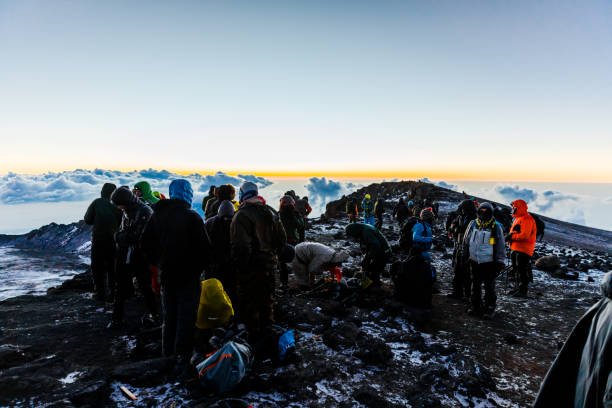
A traditional sunrise focused summit attempt may still leave during the night or early morning.
Because Kosovo begins higher than Barafu, the guide can plan the timing differently according to group pace, sunrise objectives, weather and desired descent schedule.
The departure time should be based on the actual group rather than automatically copying the schedule of climbers starting below at Barafu.
Kosovo to Stella Point
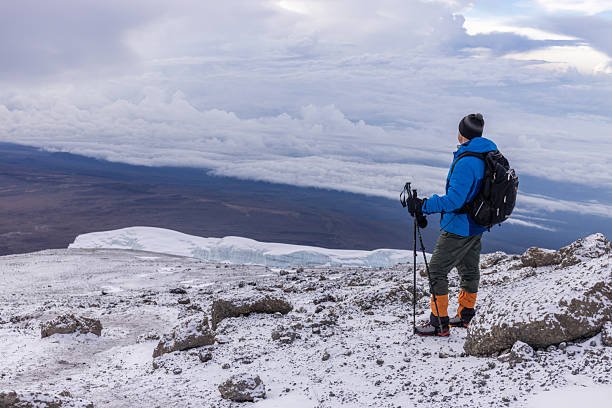
From Kosovo, the summit trail continues upward through high alpine and volcanic terrain toward Stella Point on the crater rim.
The elevation is extreme, so even though the route is shorter than starting from Barafu, progress remains slow.
Small guide controlled steps help conserve energy.
Cold conditions can remain severe before sunrise.
Stella Point
Stella Point marks the crater rim on the southern summit approach.
Reaching it is a major milestone, but Uhuru Peak still requires additional trekking around the crater rim.
Climbers should continue only when their health and the guide's assessment support proceeding higher.
Stella Point to Uhuru Peak
The trail from Stella Point toward Uhuru Peak is less dramatically steep than some sections below the crater rim, but it takes place at extreme altitude.
Climbers can be tired after several days on the mountain and the final summit ascent.
Continue slowly and avoid suddenly increasing your pace because the summit appears close.
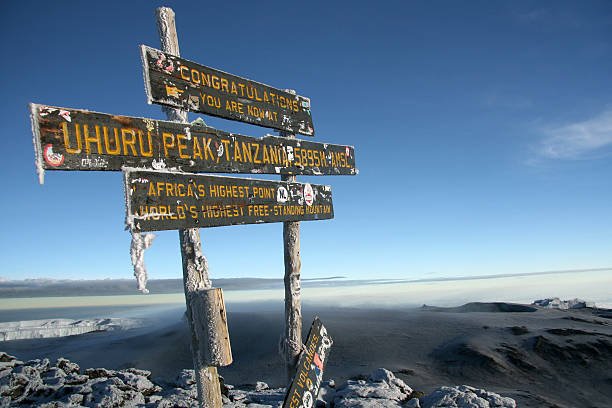
Uhuru Peak at 5,895 Metres
Uhuru Peak is the highest point on Mount Kilimanjaro and the highest point in Africa.
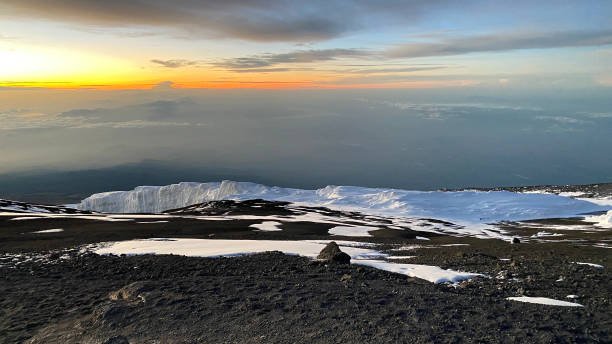
Those who reach the summit can take photographs and appreciate the surrounding high altitude landscape before beginning the descent.
Time at the summit should remain controlled because climbers are still exposed to extreme altitude, cold and weather.
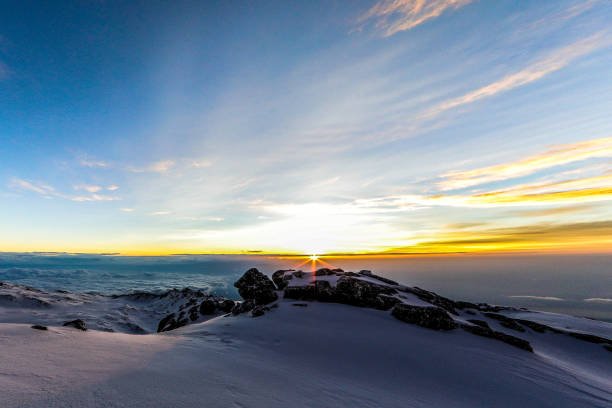
Sunrise from a Kosovo Summit
A Kosovo summit plan can be arranged around the traditional sunrise period.
Depending on departure time and walking pace, sunrise may occur below Stella Point, around the crater rim or while progressing toward Uhuru Peak.
There is no reason to force an unsafe pace simply to stand at one exact location when the sun appears.
The mountain and weather determine the final experience.
Can Kosovo Be Used for a Later Morning Summit?
Yes, certain specially designed itineraries can use a later summit departure.
Starting from a higher camp can provide additional flexibility because less ascent remains compared with Barafu.
However, departure timing affects the descent schedule, weather exposure and the total mountain day, so it must be planned professionally rather than changed casually at the last minute.
Kosovo Camp and Daytime Summit
A daytime summit strategy can also be considered on selected itineraries.
This is different from the traditional pre dawn summit and requires careful scheduling of the preceding and following mountain days.
Climbers considering this approach should discuss it before the expedition so camp bookings, crew movement and descent plans can be arranged correctly.
Descending after Uhuru Peak
After reaching the summit area, begin descending toward Stella Point and the southern summit trail.
The descent can feel easier from a breathing perspective as elevation decreases, but legs and knees are already tired.
Trekking poles can provide useful support on loose volcanic terrain.
Returning through Kosovo and Barafu
Depending on expedition logistics, climbers descend through the high camp area and toward Barafu before continuing lower.
The crew and main luggage arrangements follow the planned descent schedule.
A short break for food, hydration and equipment reorganisation can be included before the group continues farther down the mountain.
Continuing toward Mweka
The southern summit routes normally descend toward Mweka after the summit attempt.
This means climbers lose a substantial amount of altitude on the same day.
Although the summit ascent from Kosovo is shorter, summit day still includes a long descent and should not be treated as a short hiking day.
Kosovo Camp on the 7 Day Machame Route
Seven day Machame provides additional mountain time compared with the common six day itinerary because Karanga is normally used as a separate overnight camp.
This can provide a useful itinerary structure before progressing toward Barafu and, where appropriately planned, Kosovo.
The decision to use the higher camp should still depend on individual acclimatization and confirmed park arrangements.
Kosovo Camp on the 6 Day Machame Route
A six day Machame schedule is more compressed.
Using a higher sleeping camp should therefore be considered carefully because the climber has had less total mountain time before reaching summit elevation.
A shorter final summit climb does not automatically compensate for reduced acclimatization time.
Kosovo Camp on the 8 Day Lemosho Route
An eight day Lemosho itinerary provides several days of progressive altitude exposure before reaching the southern summit area.
For well acclimatized climbers, this can create a suitable framework for considering Kosovo as the final high camp.
However, health checks remain essential because even a long itinerary does not guarantee perfect acclimatization.
Kosovo Camp on the 7 Day Lemosho Route
Seven day Lemosho can also reach the southern summit approach through Barranco and Karanga.
Whether Kosovo is suitable depends on the precise camp sequence, climber condition, park booking and guide assessment.
Kosovo Camp on Umbwe
Umbwe joins the southern summit system after its steeper lower approach.
Selected itineraries can therefore progress through the Barranco and Karanga area before Barafu and the higher summit camp.
Because Umbwe can have a more aggressive altitude profile, itinerary length and acclimatization planning are especially important.
Is Kosovo Used on the Northern Circuit?
Not as the standard summit camp on the common Northern Circuit itinerary.
Northern Circuit normally travels around the northern side of Kilimanjaro and uses a high camp such as School Hut for its summit approach.
School Hut and Kosovo are different camps with different summit approaches.
Kosovo Camp versus School Hut
| Feature |
Kosovo Camp |
School Hut |
| Mountain side |
Southern summit side |
Eastern / northern approach to Kibo |
| Typical routes |
Machame, Lemosho, Umbwe variations |
Northern Circuit and selected variations |
| Crater rim approach |
Stella Point direction |
Gilman’s Point direction |
Kosovo Park Fees
The higher camping option should be budgeted separately from ordinary Barafu camping when the current park tariff requires it.
TANAPA's published tariff reference lists Upper Barafu Camp as a separate camping category.
Because government tariffs can change, the exact fee should be confirmed when the climb is booked rather than relying permanently on an older quotation.
Is Kosovo Included in the Normal Package Price?
Not necessarily.
A standard Machame or Lemosho quotation may be calculated using Barafu as the final summit camp.
If Kosovo or Upper Barafu is requested, the package may need adjustment for additional park charges, porter logistics and expedition requirements.
Always confirm this before paying the final balance.
Health Monitoring at Kosovo Camp
Sleeping at a higher altitude makes health assessment particularly important.
Our mountain procedures include regular checks of symptoms such as headache, nausea, appetite, breathing, energy, walking coordination and general condition.
Climbers should never hide symptoms simply because Kosovo was requested in advance.
Pulse Oximeter Monitoring
A pulse oximeter provides additional information during our mountain health assessments.
The reading is considered together with symptoms, behaviour and walking condition rather than treated as one universal summit permission number.
Kosovo Summit Safety Support
- Professional Kilimanjaro guides
- Controlled high altitude pace
- Regular individual health assessments
- Pulse oximeter monitoring
- Emergency oxygen
- First aid equipment
- Altitude symptom monitoring
- Summit assistance according to expedition requirements
- Descent support when required
Emergency Oxygen
Emergency oxygen forms part of our Kilimanjaro safety equipment.
It should not be viewed as a method for allowing a climber who is becoming seriously unwell at Kosovo to remain at altitude simply because the summit is closer.
If descent becomes necessary, safety takes priority.
What If a Climber Is Unwell at Kosovo?
The summit plan can be changed.
Moving to Kosovo does not create an obligation to remain there or attempt Uhuru Peak regardless of health.
A guide can organise descent when altitude symptoms or another safety concern makes continued exposure inappropriate.
Who Should Consider Kosovo Camp?
Kosovo can be suitable for experienced hikers and first time high altitude trekkers who have followed a well planned itinerary and are acclimatizing appropriately.
Previous mountaineering experience is not automatically required, but the climber should understand that this is an extremely high sleeping camp.
Health condition at the time of arrival matters more than simply wanting the shortest summit night.
Who Should Avoid Forcing the Kosovo Plan?
A climber already experiencing concerning altitude symptoms should not insist on moving higher simply because Kosovo was included in the original itinerary.
The guide may change the camp strategy according to the individual's condition and current mountain circumstances.
Flexible decision making is more important than following an itinerary exactly when health is involved.
Frequently Asked Questions
What is Kosovo Camp on Kilimanjaro?
Kosovo is the commonly used name for a high summit campsite above Barafu on Kilimanjaro's southern summit approach.
Is Kosovo Camp the same as Upper Barafu?
The names are commonly associated with the higher camping area above Barafu, while TANAPA's official tariff terminology uses Upper Barafu Camp. The exact park booking category should be confirmed for the departure.
How high is Kosovo Camp?
It is commonly placed at approximately 4,800 metres, although specific published elevations vary slightly.
Is Kosovo higher than Barafu?
Yes. Barafu is approximately 4,673 metres, while Kosovo sits higher on the summit approach.
Why stay at Kosovo Camp?
Its higher position shortens the final summit ascent because climbers complete part of the normal Barafu summit trail before resting.
Does Kosovo guarantee a higher summit success rate?
No. A shorter final ascent can be useful, but sleeping higher also increases altitude exposure. Individual acclimatization, health, weather and guide decisions remain important.
Is Kosovo included automatically on Machame?
No. Standard Machame itineraries commonly use Barafu. Kosovo should be specifically planned and confirmed.
Can 7 Day Machame use Kosovo?
Yes, selected seven day Machame itineraries can use the higher camp when park arrangements, acclimatization and guide assessment support the plan.
Can 8 Day Lemosho use Kosovo?
Yes. A properly planned eight day Lemosho itinerary can consider Kosovo after the climber has completed several acclimatization stages.
Does Northern Circuit use Kosovo?
The common Northern Circuit itinerary normally uses School Hut for its summit approach rather than Kosovo.
Is School Hut the same as Kosovo?
No. School Hut is on a different high altitude approach to Kibo, while Kosovo is above Barafu on the southern summit route.
Which crater rim point does Kosovo approach?
The southern summit trail from the Kosovo and Barafu side progresses toward Stella Point before continuing toward Uhuru Peak.
Can I watch sunrise from the Kosovo summit route?
Yes. Traditional early morning schedules can place climbers on the upper mountain around sunrise, but the exact sunrise location depends on departure time and individual pace.
Can I do a daytime summit from Kosovo?
Selected itineraries can be designed for a later or daytime summit, but the complete camp and descent schedule should be planned in advance.
Is Kosovo colder than Barafu?
Kosovo is higher and highly exposed, so climbers should prepare for very cold and potentially windy conditions.
Do we sleep in tents at Kosovo?
Yes. Kosovo is a tented high altitude campsite rather than a hut or lodge.
Can I request a single tent?
A single tent can be requested subject to availability, porter planning and your confirmed expedition arrangements.
Is there an extra fee for Kosovo?
The TANAPA tariff references Upper Barafu separately from ordinary camping, so the applicable high camp fee should be checked and included in the final quotation.
Are health checks performed at Kosovo?
Our mountain procedures include regular individual health assessments and pulse oximeter monitoring, with particular attention before the summit attempt.
Is emergency oxygen carried?
Yes. Emergency oxygen forms part of our Kilimanjaro mountain safety equipment.
What happens if I feel sick at Kosovo?
Tell your guide immediately. The summit plan can be changed and descent can be organised when continued altitude exposure is not appropriate.
Do we return through Barafu after the summit?
Southern summit itineraries normally descend through the Barafu side before continuing toward a substantially lower camp on the Mweka descent route.
Does a Kosovo summit guarantee Uhuru Peak?
No. Reaching Uhuru Peak always depends on individual altitude response, health, weather, mountain conditions and guide assessment.
How do I book a Kilimanjaro Kosovo Camp Summit?
Send your preferred Kilimanjaro route, departure date and number of climbers. We can plan an appropriate Machame, Lemosho or other suitable southern itinerary, check the current high camp arrangements and park fees, and include professional guides, porter support, meals, camping equipment, health monitoring, emergency oxygen and summit logistics in the confirmed package.
Plan Your Kilimanjaro Kosovo Camp Summit
Use the higher Kosovo summit camp on a carefully planned Kilimanjaro itinerary to reduce the final ascent from Barafu while maintaining acclimatization, professional health monitoring and a safety focused summit strategy.
Request a Kosovo Camp Summit Package

 Serengeti Safari
.jpg "Kilimanjaro Summit Night Start Time 2026-2027")