Kilimanjaro Uhuru Peak Sunrise Trek
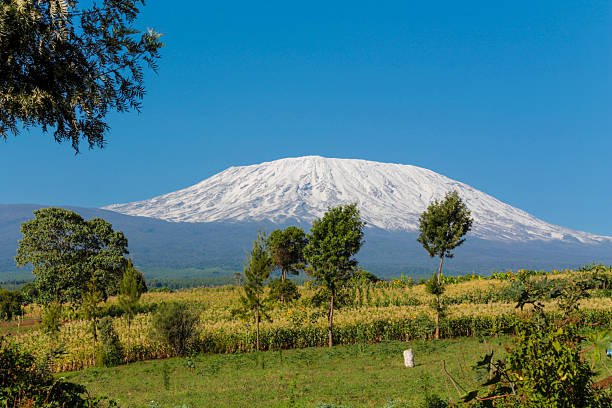
The Kilimanjaro Uhuru Peak Sunrise Trek is one of the most memorable stages of a Mount Kilimanjaro expedition. After several days of trekking and acclimatization, climbers leave their final high camp during the night and begin a slow ascent toward Kilimanjaro's crater rim.
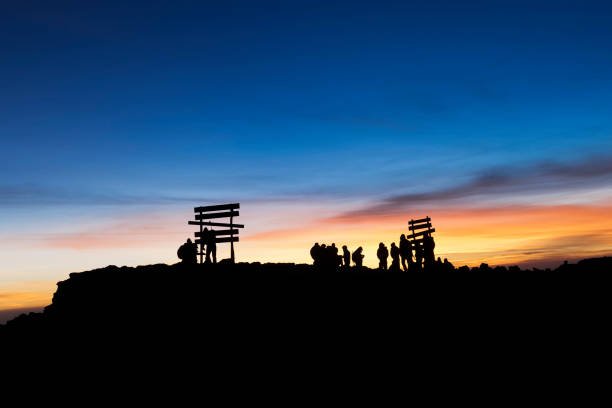
For many traditional itineraries, the climbing schedule is designed so that the upper part of the mountain is reached around the early morning period. As darkness begins to disappear, climbers may watch the sky change above Mawenzi, the surrounding plains and layers of cloud below Kilimanjaro.
Depending on the route, the crater rim is commonly reached through Stella Point or Gilman’s Point. Climbers who remain in suitable condition then continue toward Uhuru Peak at approximately 5,895 metres.
Sunrise is an extraordinary part of the experience, but it should never become more important than safety. Weather, altitude, pace and individual health determine exactly where each climber is when the sun appears.
Uhuru Peak Sunrise Trek at a Glance
- Mountain: Mount Kilimanjaro
- Summit: Uhuru Peak
- Elevation: Approximately 5,895 metres
- Traditional departure: Night or very early morning
- Lighting: Headlamp required for the night ascent
- Southern approach: Commonly through Stella Point
- Eastern approach: Commonly through Gilman’s Point
- Main challenges: Altitude, cold, darkness and fatigue
- After the summit: Long descent to a lower mountain camp
Why Climbers Aim for Sunrise on Kilimanjaro
The traditional night ascent creates the possibility of reaching the crater rim or upper summit area during the early morning.
As daylight begins, climbers can experience changing colours across the horizon while standing above a vast landscape of mountains, plains and cloud.
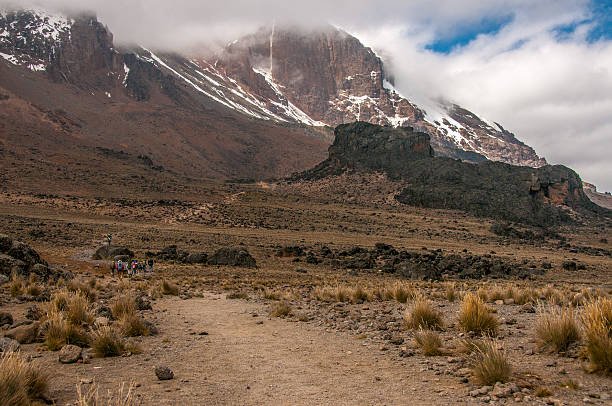
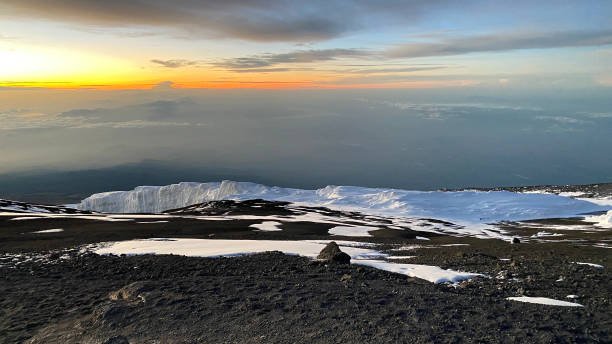
Mawenzi can appear dramatically against the morning sky, while glaciers and remaining ice formations around Kibo can become visible as daylight increases.
However, every expedition moves differently. A faster or slower pace can mean sunrise occurs before Stella Point, around the crater rim or while progressing toward Uhuru Peak.
Is Sunrise at Uhuru Peak Guaranteed?
No.
No responsible operator should guarantee that every climber will stand directly beside the Uhuru Peak sign at the exact moment of sunrise.
Departure time, route, season, walking speed, group movement, weather and individual health all influence the schedule.
The guide should establish a safe pace rather than forcing a climber to move unnaturally fast simply to match a particular sunrise minute.
The Correct Priority
- Climber health
- Safe guide controlled pace
- Altitude monitoring
- Weather and mountain conditions
- Reaching the appropriate summit point safely
- Enjoying sunrise wherever it occurs during the upper mountain trek
The Afternoon before the Sunrise Trek
Preparation normally begins several hours before you start walking.
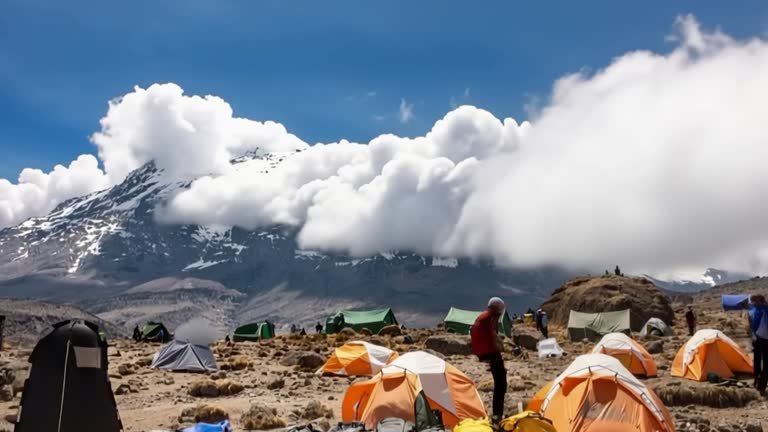
After reaching the final high camp, eat, drink and organise all summit equipment before attempting to rest.
This is not the time to unpack everything repeatedly or spend unnecessary energy walking around camp.
Your guide explains the planned wake up time, departure schedule, expected weather, clothing and summit procedure.
Health Check before the Summit Attempt
Our mountain procedures include individual health assessments throughout the expedition and before the summit attempt.
The guide considers headache, nausea, appetite, fatigue, breathing, walking condition and overall behaviour.
A climber who has reached summit camp can still develop altitude problems. Reaching the final camp does not automatically mean continuing upward is safe.
Report symptoms honestly rather than hiding them because you do not want to miss sunrise.
Preparing Your Sunrise Trek Equipment
- Thermal base layers
- Warm mid layers
- Insulated summit jacket
- Waterproof and wind resistant outer layers
- Warm summit gloves
- Warm hat
- Neck or face protection where required
- Tested hiking boots
- Warm trekking socks
- Headlamp
- Spare batteries
- Water
- Personal snacks
- Personal medication
- Trekking poles
- Sunglasses for after sunrise
- Sunscreen and lip protection
Wake Up for the Summit
Traditional summit itineraries generally provide only a short rest before climbers wake and prepare for the final ascent.
Your equipment should already be organised so that dressing is straightforward.
Eat or drink according to the camp routine and avoid rushing simply because other climbing groups may already be leaving.
Leaving Camp in Darkness
The first part of the Uhuru Peak sunrise trek takes place under headlamp light.
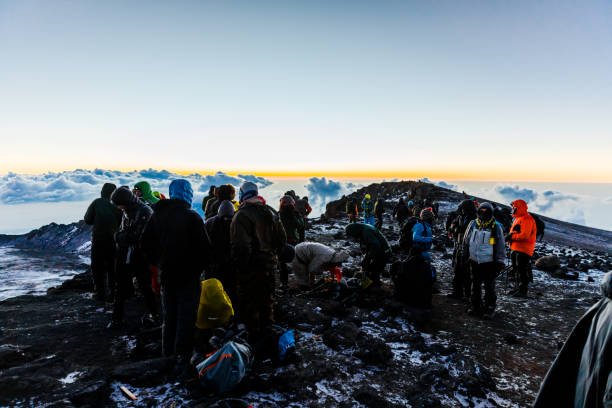
The mountain around you may appear almost completely dark except for the lights of climbers moving slowly upward.
Follow your guide, watch your footing and remain with the team.
The summit trail should not become a race between climbing groups.
Pole Pole toward the Summit
The Swahili expression pole pole, meaning slowly slowly, becomes especially important during the summit ascent.
At extreme altitude, fast movement can consume valuable energy.
Your guide may deliberately use small steps and a consistent rhythm through the steeper sections.
Maintain that pace even if it feels unusually slow compared with normal hiking at lower elevation.
The Coldest Part of the Trek
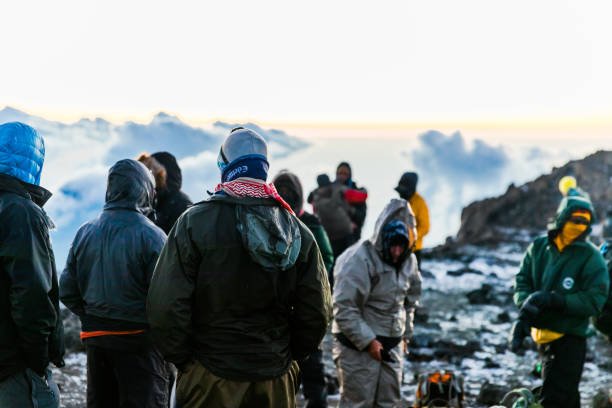
The hours before daylight can feel particularly cold.
Your body generates heat while walking, but exposed hands, feet and face can still become uncomfortable.
Long stops can also allow body temperature to fall quickly.
This is why summit breaks are generally controlled and why warm layers should remain easily accessible.
Watching the Horizon Begin to Change
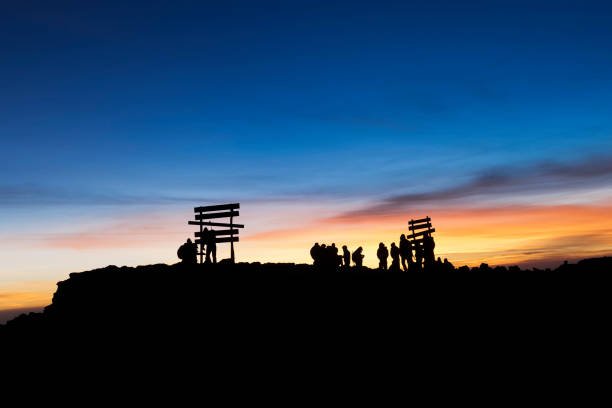
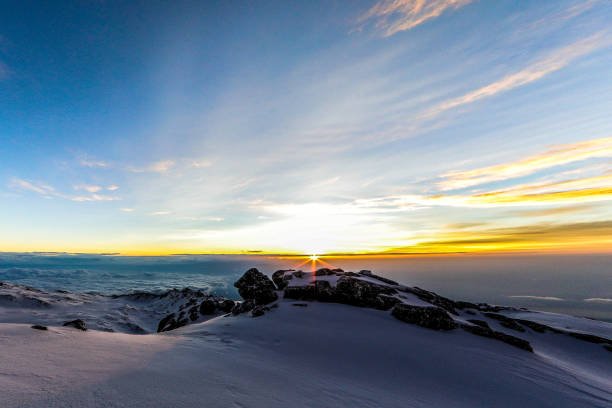
After several hours of darkness, one of the most memorable moments can be the first appearance of colour along the horizon.
The sky gradually changes from darkness into deeper blues, oranges, pinks and gold depending on clouds and atmospheric conditions.
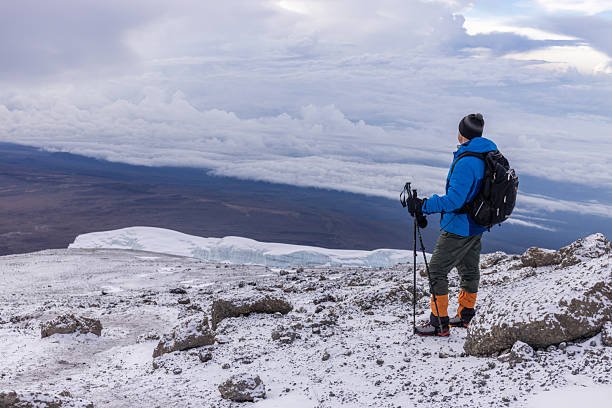
Because climbers are already at very high altitude, the view can extend across enormous distances when conditions are clear.
Sunrise above Mawenzi
Mawenzi is one of the most distinctive features visible from Kibo.
During clear sunrise conditions, its rugged profile can appear against the brightening eastern sky.
The exact view depends on your location along the summit route, cloud cover and weather.
Stella Point Sunrise Experience
Climbers approaching from Barafu commonly reach the crater rim at Stella Point.
Depending on the group's schedule and pace, this area can coincide with the sunrise period.
Reaching the crater rim is a significant achievement, but climbers aiming for the highest point still need to continue toward Uhuru Peak.
From Stella Point to Uhuru Peak
The journey from Stella Point follows the crater rim toward the highest point of Kilimanjaro.
The terrain may appear more gradual than the steep climb immediately below Stella Point, but this section still takes place at extreme altitude.
Continue slowly rather than accelerating because the summit sign is getting closer.
Remaining glaciers and ice formations can be visible from portions of the crater rim when weather allows.
Gilman’s Point Sunrise Experience
Marangu and Rongai climbers commonly approach the crater rim through Gilman’s Point.
Depending on departure time and individual pace, sunrise can occur during the approach to Gilman’s Point or during the continuation around the rim.
Those remaining in suitable condition continue toward Stella Point and Uhuru Peak.
The Final Trek to Uhuru Peak
The final section toward Uhuru Peak should not be underestimated.
By this point you have already been walking for several hours and are operating at the highest altitude of the expedition.
The correct strategy is to maintain steady progress and continue communicating with your guide.
Approaching Uhuru Peak
- Continue at the guide controlled pace.
- Keep warm layers on.
- Drink when appropriate.
- Eat small snacks when necessary.
- Report worsening symptoms immediately.
- Do not rush because the summit appears close.
Uhuru Peak at 5,895 Metres
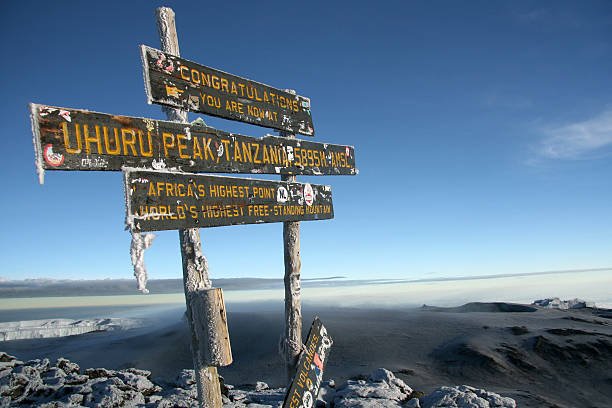
Uhuru Peak is the highest point on Mount Kilimanjaro and the objective of most standard summit expeditions.
Reaching the summit after climbing through the night can be an emotional moment, particularly as daylight reveals the surrounding high altitude landscape.
Take photographs and enjoy the achievement, but follow your guide's instructions regarding the length of time spent at the summit.
You are still at extreme altitude, so the expedition needs to begin descending rather than remaining at the sign for an unnecessarily long time.
Sunrise Photography at Uhuru Peak
Many climbers want photographs of the summit sign, glaciers and sunrise.
Keep your phone or camera protected from cold and make sure it is easy to access.
Cold can reduce battery performance, so keeping electronics close to warmer clothing before use can help.
Photography should remain secondary to listening to the guide and monitoring how you feel.
Do Not Spend Too Long at the Summit
It can be tempting to remain at Uhuru Peak for a long celebration.
However, you are standing at approximately 5,895 metres and still need to descend.
Your guide determines an appropriate summit stop according to your condition, weather, temperatures and the mountain schedule.
The Descent after Sunrise
After summit photographs, begin descending toward the crater rim route and the final high camp.
The descent can feel easier from a breathing perspective as altitude gradually decreases, but the legs may already be tired.
Loose volcanic terrain requires concentration, and trekking poles can be particularly useful.
Returning to Barafu
On traditional Machame and Lemosho summit schedules, climbers normally return toward Barafu after the Uhuru Peak attempt.
A short recovery period can allow time for food, water and reorganising equipment before continuing farther down the mountain.
The expedition does not normally finish at Barafu after the summit.
Continuing toward Mweka
Southern summit itineraries commonly continue substantially lower toward the Mweka side.
This creates a long summit day but allows the body to finish at a significantly lower sleeping elevation.
The final descent to Mweka Gate normally continues the following day.
Returning toward Horombo
Marangu and common Rongai summit schedules descend from the Kibo side after the summit attempt.
Climbers may stop around Kibo before continuing to a lower overnight elevation such as Horombo according to the confirmed itinerary.
Rongai then completes its descent through the Marangu side rather than returning along the northern ascent route.
Sunrise Trek on the Machame Route
Machame commonly approaches Uhuru Peak from Barafu.
The night ascent moves toward Stella Point, after which climbers continue along the crater rim toward Uhuru Peak.
A seven day Machame itinerary normally provides an additional mountain day compared with the common six day version before this summit stage.
Sunrise Trek on the Lemosho Route
Lemosho eventually joins the southern circuit and commonly approaches the summit from the Barafu side.
Seven and eight day itineraries provide several days of altitude exposure before the night ascent.
The summit stage commonly reaches Stella Point before continuing toward Uhuru Peak.
Sunrise Trek on the Marangu Route
Marangu climbers normally prepare at Kibo Hut before beginning the night ascent.
The route climbs toward Gilman’s Point and then follows the crater rim toward Uhuru Peak when the climber remains in suitable condition.
The use of huts does not make the summit stage easy. Cold and altitude remain significant challenges.
Sunrise Trek on the Rongai Route
Rongai approaches Kibo from northern Kilimanjaro before joining the eastern summit approach.
The night ascent commonly progresses toward Gilman’s Point and then toward Uhuru Peak.
The post summit descent continues through the Marangu side.
Sunrise Trek on the Northern Circuit
The Northern Circuit provides a longer approach around Kilimanjaro before the summit stage.
Exact high camp arrangements can vary between Northern Circuit itineraries, so climbers should check whether their confirmed schedule approaches the crater rim through the eastern or southern summit system.
Altitude during the Sunrise Trek
Sunrise can be beautiful, but altitude remains the central physical challenge.
A climber can feel relatively comfortable at the final high camp and begin experiencing stronger symptoms while ascending toward the crater rim.
The guide must therefore continue monitoring the group throughout the summit attempt.
Pulse Oximeter Monitoring
A pulse oximeter forms part of our health monitoring procedures.
The reading provides additional information but is not treated as one universal number that automatically determines whether someone can continue to Uhuru Peak.
Symptoms, walking ability, behaviour and overall condition remain important.
Sunrise Summit Safety Support
- Professional Kilimanjaro guides
- Controlled summit pace
- Regular health assessments
- Pulse oximeter monitoring
- Emergency oxygen
- First aid equipment
- Altitude symptom monitoring
- Additional summit support according to group requirements
- Descent support when required
Emergency Oxygen
Emergency oxygen forms part of our Kilimanjaro mountain safety equipment.
It is intended for emergency management rather than as a way to force an unwell climber toward Uhuru Peak.
If descent becomes necessary, reaching the sunrise or summit sign is no longer the priority.
Guide Support during the Sunrise Trek
Different climbers can move at substantially different speeds during summit night.
Our typical mountain planning uses approximately one guide for every two climbers, with additional summit assistance arranged according to expedition requirements.
Appropriate staffing can provide flexibility if one participant needs closer assistance or must begin descending.
What If You Miss Sunrise?
Missing the exact sunrise moment at Uhuru Peak does not mean the summit trek has failed.
You may experience sunrise below Stella Point, at Gilman’s Point, on the crater rim or while approaching Uhuru Peak.
The mountain experience should not become a race against a particular clock time.
Continue according to your guide's pace and health assessment.
Can You Start Later for a Daytime Summit?
Some specially designed itineraries can use a later or daytime summit approach.
This can change the experience of cold, darkness and sunrise, but it also changes camp timing and the overall itinerary.
A daytime summit should therefore be planned in advance with the operator and mountain guide rather than introduced casually after reaching the high camp.
Frequently Asked Questions
What is the Kilimanjaro Uhuru Peak Sunrise Trek?
It is the traditional final summit stage where climbers leave a high camp during the night and ascend toward the crater rim and Uhuru Peak during the early morning period.
Is sunrise at Uhuru Peak guaranteed?
No. Walking pace, departure time, weather, route and individual health determine where you are when sunrise occurs.
What time do we start?
Traditional summit schedules commonly depart around midnight or during the early morning. The exact time is set by the guide according to the itinerary and conditions.
How high is Uhuru Peak?
Uhuru Peak stands at approximately 5,895 metres above sea level.
Where is sunrise normally seen?
It can occur during the approach to the crater rim, around Stella Point or Gilman’s Point, along the rim or near Uhuru Peak depending on the group's pace and timing.
Which routes go through Stella Point?
Traditional summit approaches from the Barafu side, including common Machame and Lemosho itineraries, normally reach the crater rim at Stella Point before Uhuru Peak.
Which routes go through Gilman’s Point?
Marangu and common Rongai summit approaches from Kibo normally reach Gilman’s Point before continuing along the crater rim.
Do we need headlamps?
Yes. A reliable headlamp and spare batteries are essential for a traditional night summit ascent.
Is the sunrise trek cold?
Yes. The pre dawn hours at very high altitude can be extremely cold, so appropriate thermal, insulating and weather protective layers are essential.
Do I need sunglasses?
Yes. You will normally be high on the mountain after sunrise, so sunglasses should remain accessible in your daypack.
How long is summit day?
Traditional summit days can require roughly ten or more hours of combined ascent and descent, but actual duration varies considerably between routes, climbers and conditions.
Do we sleep at Uhuru Peak?
No. Standard summit itineraries spend only a limited period around the summit before beginning the descent.
Do we return to summit camp afterward?
Traditional itineraries normally return through the high camp area before continuing substantially lower for the overnight stop.
Do I carry my main duffel to Uhuru Peak?
No. The porter carried duffel remains within the expedition luggage system. You carry only your personal summit daypack.
Should I carry my sleeping bag?
No. Your sleeping bag remains with the expedition luggage rather than being carried during the active summit ascent.
Are trekking poles useful?
Yes. Trekking poles can provide stability during the ascent and are particularly useful during the long descent on tired legs.
Are health checks performed before the sunrise trek?
Our mountain procedures include regular health assessments throughout the expedition and before the summit attempt.
Do you use a pulse oximeter?
Yes. Pulse oximeter readings form part of our overall health monitoring and are interpreted together with symptoms and general condition.
Is emergency oxygen carried?
Yes. Emergency oxygen forms part of our Kilimanjaro mountain safety equipment.
Can beginners experience the Uhuru Peak sunrise trek?
Properly prepared beginners can attempt standard Kilimanjaro routes, but they should train beforehand and understand the demands of high altitude summit night.
Can I do a daytime summit instead?
A daytime summit can be planned on selected itineraries, but it changes the normal schedule and should be organised with the operator and guide team in advance.
Does sunrise make the summit easier?
Daylight can improve visibility and may feel psychologically encouraging, but the very high altitude and physical demands remain.
Is reaching Uhuru Peak guaranteed?
No. Summit success depends on altitude response, health, weather, trail conditions and guide assessment.
How should I prepare for the Kilimanjaro Uhuru Peak Sunrise Trek?
Choose a route with suitable acclimatization time, train before travelling, bring appropriate cold weather equipment, prepare your headlamp and summit daypack before resting, follow the guide controlled pace and communicate altitude symptoms honestly throughout the expedition.
Experience Sunrise on the Way to Uhuru Peak
Climb through Kilimanjaro's pre dawn darkness toward the crater rim, experience the changing morning sky and continue toward Uhuru Peak with professional guides, health monitoring and a safety focused summit plan.
Request a Kilimanjaro Sunrise Summit Package

 Serengeti Safari