Kilimanjaro Solo Group Joining Tour
A Kilimanjaro Solo Group Joining Tour allows an individual traveller to join other climbers following the same scheduled Mount Kilimanjaro route and departure date.
Instead of paying for a completely private expedition, the solo climber shares the guide team, cook, porters and other expedition logistics with the rest of the group.
This can make a Kilimanjaro climb more practical for travellers who are visiting Tanzania alone but still want the structure and support of an organized mountain expedition.
Group joining departures may be offered on different Kilimanjaro routes depending on the confirmed operating schedule.
Possible routes can include Lemosho, Machame, Marangu or Rongai.
The number of mountain days varies according to the selected route and departure.
Although climbers share the same itinerary, each person's health and altitude response remains individual.
A professional guide may slow a climber, monitor symptoms more closely or organize descent where necessary.
A group joining trek should therefore never mean that everyone is pressured to walk at exactly the same speed or continue higher regardless of condition.
For solo travellers, the important planning points include departure dates, route, trek duration, group size, sleeping arrangements, pre trek briefing, luggage storage, airport transfers and final inclusions.
Kilimanjaro Solo Group Joining Tour at a Glance
- Traveller type: Solo climbers joining a scheduled group
- Routes: According to confirmed group departures
- Typical options: Lemosho, Machame, Marangu or Rongai
- Guiding: Shared professional mountain guide team
- Crew: Shared cook and porters according to group size
- Schedule: Fixed group departure and route itinerary
- Health monitoring: Individual even within a shared group
- Accommodation: Tents or huts depending on route
- Single arrangements: Confirm before booking
How a Kilimanjaro Solo Group Joining Tour Works
A group joining departure brings individual travellers together on one confirmed Kilimanjaro itinerary.
Everyone starts on the same scheduled date and follows the same route.
The group shares the professional guide team and mountain crew.
Transport to and from the trailhead may also be shared according to the confirmed package.
This is different from a private climb, where the itinerary is organized only for one traveller or one private party.
Why Solo Travellers Join Kilimanjaro Groups
One of the main reasons is cost sharing.
Kilimanjaro requires guides, porters, food, transport and other logistics regardless of whether one person or several people are climbing.
When a solo traveller joins an existing group, those operational costs can be divided among more participants.
Group joining also provides a social environment for travellers who do not want to trek as a private solo guest.
Is a Group Joining Tour the Same as Climbing Alone?
No.
You may arrive in Tanzania as a solo traveller, but once the group trek begins you will normally walk with other climbers and the mountain crew.
You are still responsible for your own daypack, clothing, hydration and communication with the guides.
Your altitude response is also assessed individually.
Group Joining versus Private Solo Kilimanjaro Climb
Group Joining
- Shared departure date
- Shared route and daily schedule
- Shared guide and crew logistics
- Usually lower per person cost than private solo logistics
- Opportunity to trek with other travellers
Private Solo Climb
- Dedicated expedition for one traveller
- More flexibility within the confirmed itinerary
- Dedicated guide and crew arrangement
- Normally higher per person operational cost
- More private trekking environment
Which Kilimanjaro Routes Have Group Joining Tours?
Group joining departures may be organized on several established Kilimanjaro routes.
Availability depends on the operator's confirmed schedule.
Travellers should never assume that every route departs every day.
Ask for the actual upcoming departure calendar before booking flights.
Lemosho Group Joining for Solo Travellers
Lemosho is a popular option for travellers interested in a longer approach to Kilimanjaro.
It normally uses camping accommodation.
The route starts on the western side of the mountain and later joins the southern circuit.
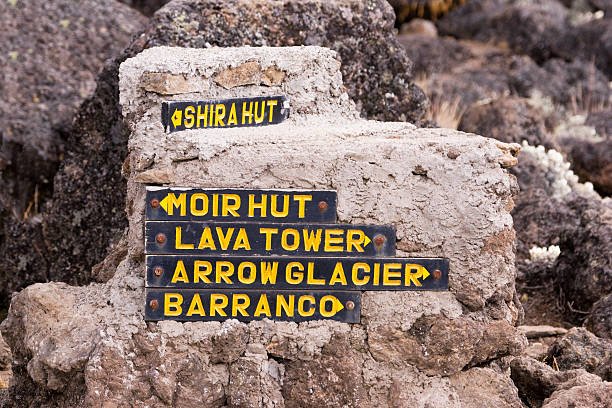
Depending on the schedule, Lemosho may include areas such as Mti Mkubwa, Shira, Lava Tower, Barranco, Karanga and Barafu.
The exact camps depend on whether the confirmed itinerary is seven, eight or another approved duration.
Machame Group Joining for Solo Travellers
Machame is another common camping route.
Six and seven day schedules may be available depending on the group calendar.
Machame generally includes varied terrain and can pass through Shira, Lava Tower, Barranco and Barafu.
The seven day version normally includes an overnight at Karanga, while a six day schedule can be more compressed.
Marangu Group Joining for Solo Travellers
Marangu differs from the camping routes because climbers sleep in mountain huts at the main overnight points.
Five and six day itineraries may be offered.
The six day schedule normally includes an additional acclimatization day around Horombo Hut.
Solo travellers who prefer huts rather than tents may consider Marangu where a suitable group departure is available.
Rongai Group Joining for Solo Travellers
Rongai approaches Mount Kilimanjaro from the northern side.
It uses camping during the ascent and normally descends through the Marangu side.
Group departures may be less frequent than on some other routes, so solo travellers should confirm availability before arranging flights.
Does a Solo Traveller Need to Wait for a Group?
This depends on confirmed departure availability.
If a group is already scheduled for your preferred dates, you may be able to join it.
If there is no compatible departure, you may need to adjust your travel dates or request a private climb.
Do not purchase restrictive flights based only on an assumed group date.
Confirm Your Departure before Booking Flights
Group joining tours operate on scheduled dates. Confirm the route, mountain start date and expected briefing time before finalizing international travel where possible.
When Should You Arrive before the Climb?
It is normally useful to arrive before the mountain start date rather than landing immediately before gate departure.
This provides time for a pre climb briefing, equipment check and recovery from international travel.
The exact recommended arrival date should be confirmed with the operator according to the scheduled group departure.
Pre Climb Briefing for Solo Group Joiners
The briefing is an important part of preparation.
Climbers can review the route, daily expectations, summit plan, baggage limits and equipment.
This may also be the first opportunity to meet other members of the group.
Any dietary requirements, allergies or equipment concerns should be discussed before leaving for the mountain.
Meeting Your Kilimanjaro Group
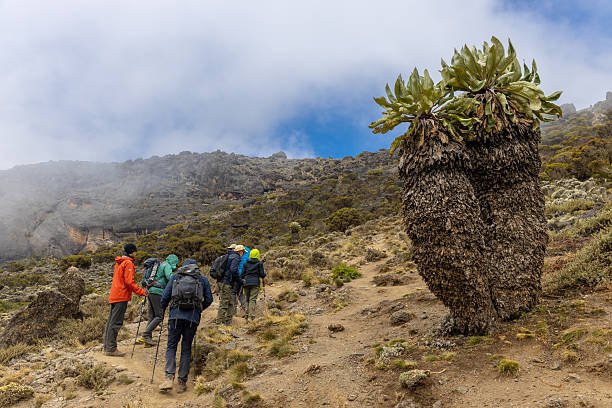
Group members may come from different countries and have different trekking backgrounds.
Some may be experienced hikers, while others may be attempting their first major high altitude trek.
The group should not become competitive.
Walking pace and altitude response vary between individuals.
Do All Group Members Walk at the Same Speed?
Not necessarily.
The guide team manages the group according to actual conditions.
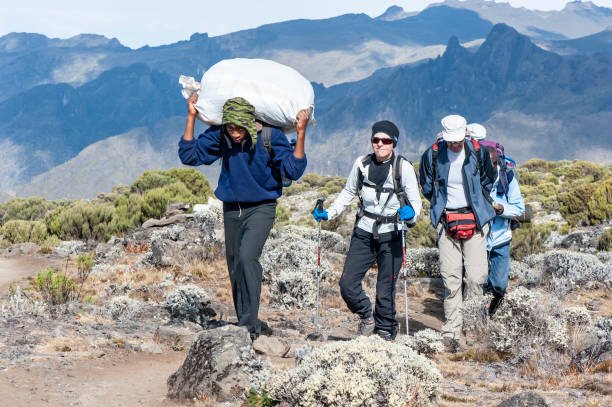
Assistant guides may support climbers moving at different speeds.
On summit night, the group may naturally separate into smaller sections according to pace and health.
No climber should feel pressured to match someone else's speed if doing so is inappropriate.
Guide Support on a Group Joining Tour
The number of guides depends on the number of climbers and confirmed mountain arrangement.
The lead guide manages the expedition while assistant guides provide additional support.
Health monitoring remains individual even though the expedition is shared.
Altitude Safety in a Group
Altitude affects different people differently.
A strong climber may develop symptoms while another group member feels comfortable.
This is why group pressure should never determine whether someone continues higher.
Report headache, nausea, dizziness, unusual fatigue or other concerning changes honestly to the guide.
Your Health Is Individual
Sharing a Kilimanjaro group does not mean everyone must summit together. Guides should make decisions based on each climber's condition rather than group pressure.
What Happens If One Group Member Needs to Descend?
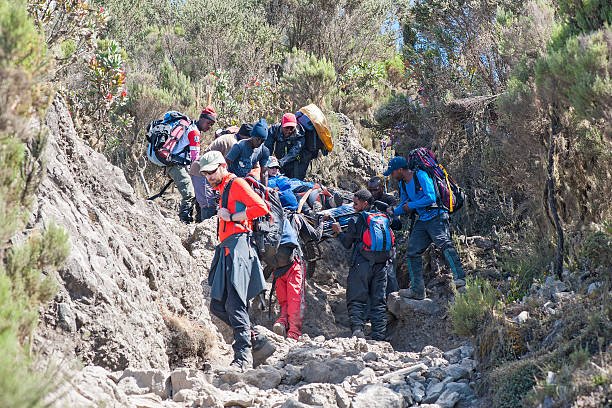
Where the guide team and conditions allow, one guide may accompany an unwell climber lower while other climbers continue according to the appropriate mountain plan.
The exact procedure depends on the group, route, staffing and nature of the problem.
This is one reason sufficient guide support is important on group departures.
Daily Health Monitoring
Guides may conduct daily health checks according to the confirmed trekking program.
They may ask about appetite, headache, sleep, nausea, fatigue and general condition.
A pulse oximeter may also be used as one part of the overall assessment where included.
Climbers should answer honestly rather than comparing their readings or symptoms competitively with the rest of the group.
Emergency Oxygen and Safety Equipment
Emergency oxygen, first aid equipment and other mountain safety resources may be carried according to the confirmed expedition arrangements.
Emergency equipment should not be interpreted as a guarantee that an unwell climber can continue higher.
Descent remains important when serious altitude related problems occur.
Accommodation on a Group Joining Climb
Accommodation depends on the route.
Lemosho, Machame and Rongai normally use camping on the mountain.
Marangu uses huts.
Pre and post climb hotel accommodation depends on the confirmed package.
Travellers should check whether hotel nights are included before booking.
Will a Solo Traveller Share a Tent?
Tent arrangements vary between group departures.
Some packages may provide single occupancy tents while others may use twin sharing arrangements.
A single tent may also be available according to the confirmed booking.
Solo travellers should ask specifically rather than assuming that joining a group means sharing a tent.
Will a Solo Traveller Share a Hotel Room?
This depends on the confirmed package.
Some group prices may be based on shared rooms while other arrangements include a single room or offer one with an additional supplement.
Clarify this before payment so the final cost is understood.
Can Women Join Kilimanjaro Groups Alone?
Solo women may join scheduled group departures according to availability.
As with any traveller, it is important to confirm pickup arrangements, accommodation, the mountain schedule and guide support before arrival.
Sleeping arrangements should also be discussed in advance if privacy is important.
Can Older Solo Travellers Join a Group?
Age alone does not determine whether someone can join a Kilimanjaro climb.
Fitness, mobility, health, recovery and altitude considerations matter more.
Travellers with relevant medical concerns should seek appropriate professional medical guidance before attempting high altitude trekking.
Can Beginners Join a Kilimanjaro Group?
Prepared beginners may join group departures.
Technical mountaineering skills are not normally required on standard trekking routes.
However, climbers should train for long walking days and understand that summit night and high altitude remain demanding.
Fitness for a Solo Group Joining Climb
You should be comfortable walking for several hours on consecutive days.
Training should include hiking, cardiovascular exercise and lower body strength work.
Hills, stairs or incline treadmill training can help prepare for sustained uphill walking.
Fitness helps with the workload but does not guarantee acclimatization.
Train with Your Daypack
Climbers normally carry their own daypack.
Use it during training so you understand the fit and realistic carrying weight.
The daypack may hold water, rain gear, warm clothing, snacks, medication and other daily essentials.
Main Duffel and Porter Support
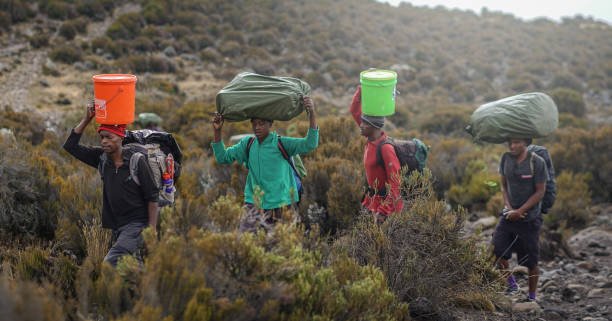
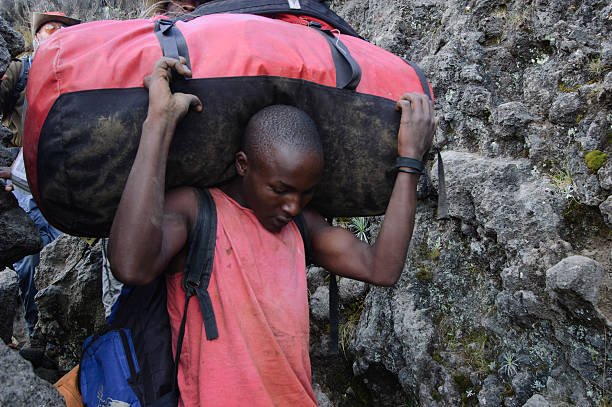
Porters carry the main mountain duffel within the applicable baggage allowance.
The exact allowance should be confirmed before packing.
Extra travel luggage can normally remain in suitable storage according to the confirmed arrangement.
Equipment Rental for Solo Travellers
Some trekking equipment may be available for rental according to the operator's arrangements.
Possible items can include sleeping bags, trekking poles, gaiters or duffel bags.
Availability, sizes and costs should be confirmed before the mountain departure.
Boots and other critical personal items should be tested carefully.
Meals on a Kilimanjaro Group Joining Tour
Mountain meals are normally prepared for the group according to the confirmed trekking program.
Breakfast, lunch and dinner arrangements depend on the route and day.
Vegetarian meals or other dietary requirements may be accommodated where arranged in advance.
Food allergies should always be declared before the trek.
Drinking Water on the Mountain
Drinking water arrangements are normally included as part of the mountain expedition according to the confirmed package.
Climbers should carry suitable bottles or a hydration system during the day.
At very cold elevations, discuss summit water management with the guides.
Airport Pickup for Solo Group Joiners
Airport transfer arrangements depend on the confirmed package.
Some Kilimanjaro packages include pickup from Kilimanjaro International Airport, while others quote transfers separately.
Provide the correct flight number, arrival date and arrival time before travel.
Hotel before the Kilimanjaro Climb
A pre trek hotel night may be included in some group packages.
This can be useful for resting after international travel and completing the briefing.
Always check whether the room is single or shared and whether the night is included in the quoted price.
Hotel after the Kilimanjaro Climb
A post trek hotel night may also be included according to the package.
This provides time to shower, rest and reorganize luggage before the next part of the trip.
Do not assume it is included unless stated in the final quotation.
Luggage Storage during the Trek
Travellers often arrive with more luggage than they need on the mountain.
Suitcases and non trekking items may be stored at the hotel or another arranged location during the climb.
Confirm luggage storage before departure and keep valuables according to the recommended security arrangements.
How Large Is a Kilimanjaro Group?
Group size varies by departure.
A group may remain small or become larger as additional climbers book the same date.
If group size is important to you, ask for the current confirmed number and whether more participants may still join.
International Group Members
Group joining departures often attract travellers from different countries.
This can create a social expedition environment.
Climbers should be respectful of different personalities, hiking experience and preferred pace.
The mountain team should manage the trek rather than allowing stronger personalities within the group to control important decisions.
Is a Kilimanjaro Group Joining Tour Social?
It can be.
Climbers often spend several days eating, walking and resting within the same expedition.
Friendships can develop naturally.
However, solo travellers should not feel obligated to socialize constantly.
Rest remains important, especially at higher elevations.
Can You Leave the Group during the Trek?
Climbers should remain with the guide team and follow the established mountain plan.
Do not leave the trail or walk independently without guide approval.
If you need to move slower or faster, communicate with the guide so suitable support can be arranged where possible.
Can the Itinerary Be Changed for One Person?
A group joining departure follows a shared route and schedule.
This means it normally has less itinerary flexibility than a private trek.
However, health and safety decisions remain individual.
If someone needs to descend, the guide team may manage this separately from the rest of the group according to circumstances.
Summit Night in a Group
Summit night normally begins late at night or in the early hours depending on the route.
The guide team organizes departure, checks clothing and manages pace.
Climbers may begin together but naturally separate as individual pace and condition change.
Do not try to race another group member toward the summit.
Is Uhuru Peak Guaranteed?
No.
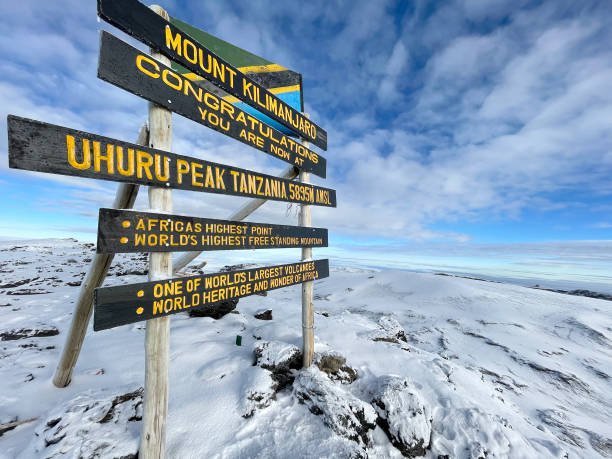
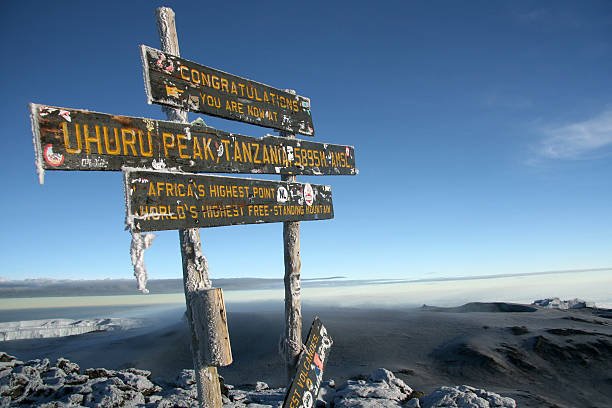
Uhuru Peak at 5,895 metres is the objective, but altitude response, weather, health, exhaustion and other factors can affect summit progress.
A guide may recommend stopping or descending when continuing becomes inappropriate.
Group Joining Does Not Mean Group Summit Pressure
Every climber responds differently to altitude. Reaching the highest safe point and descending safely is more important than forcing everyone in the group to reach Uhuru Peak together.
Travel Insurance for Solo Climbers
Travellers should arrange insurance suitable for the planned Kilimanjaro altitude and activities.
Review medical treatment and evacuation coverage carefully.
Keep insurance documents and emergency information accessible during the trip.
Tipping on a Group Joining Tour
Tipping is normally separate from the trekking package unless stated otherwise.
On a group climb, participants may combine their gratuities and distribute them among the guides, cook and porters.
The final amount depends on route length, group size, crew size and individual preference.
For a seven day group climb, approximately USD 350 to USD 450 per climber can be used as a practical budgeting guideline.
Why Group Tipping Can Be Easier
A combined group gratuity can be divided among the crew according to role.
This helps recognize not only the guide but also assistant guides, cooks and porters.
The group should confirm the actual crew numbers before calculating the final distribution.
Kilimanjaro Solo Group Joining Tour Price
The exact price depends on route, number of trekking days, group size and confirmed inclusions.
A group joining price may be lower than a private solo price because expedition logistics are shared.
Hotel accommodation, airport transfers, rental equipment, single room arrangements and optional services can affect the final cost.
Always review the complete quotation rather than comparing only the headline trek price.
What Affects the Solo Group Joining Price?
- Selected Kilimanjaro route
- Number of mountain days
- Current group size
- Park and route related charges
- Guide and crew requirements
- Camping or hut logistics
- Pre and post trek accommodation
- Single room or tent arrangements
- Airport and road transfers
- Rental equipment
What Is Normally Included?
- Confirmed Kilimanjaro route and scheduled group departure
- Applicable mountain park arrangements
- Professional mountain guides
- Assistant guides according to group requirements
- Cook and porters according to the confirmed crew structure
- Mountain accommodation according to the selected route
- Meals during the trek according to the program
- Drinking water arrangements on the mountain
- Transport to and from the trailhead where stated in the package
- First aid and mountain safety arrangements according to the confirmed program
- Applicable rescue related arrangements where stated
Possible Exclusions
- International flights
- Tanzania visa
- Travel insurance
- Tips for the mountain crew
- Personal trekking equipment
- Rental equipment unless specified
- Pre or post trek hotels unless specified
- Airport transfers unless specified
- Single room or tent supplements where applicable
- Personal expenses and optional activities
How to Choose a Solo Group Joining Departure
Start by deciding how many mountain days you have available.
Then compare routes and acclimatization profiles.
Ask which group dates are already confirmed or scheduled.
Review the current group size and package inclusions.
Finally, make sure your international arrival gives enough time for the briefing and equipment preparation.
Solo Kilimanjaro Group Joining Booking Checklist
Confirm before Paying
- Confirmed mountain start date
- Selected route
- Number of trekking days
- Current group size
- Whether the group is confirmed or still forming
- Arrival date required before the climb
- Pre climb briefing arrangements
- Single or shared tent arrangement
- Single or shared hotel room arrangement
- Airport transfer inclusion
- Pre and post trek hotel inclusion
- Equipment rental requirements
- Main duffel baggage allowance
- Full inclusions and exclusions
- Payment and cancellation conditions
Frequently Asked Questions
Can a solo traveller join a Kilimanjaro group?
Yes. Solo travellers can join scheduled Kilimanjaro group departures where a compatible route and date are available.
Is a group joining climb cheaper than a private solo climb?
It may be because guide, crew and expedition logistics are shared among several climbers rather than supported by one solo guest.
Which routes can solo travellers join?
Possible departures may include Lemosho, Machame, Marangu or Rongai depending on the confirmed group calendar.
Do I need to know the other climbers before joining?
No. Solo travellers commonly meet the other participants shortly before the expedition or during the pre climb briefing.
Do all group members have to walk at the same speed?
No. The guide team can manage different paces where staffing and conditions allow, and individual health remains more important than keeping everyone together at all times.
What if I am slower than the rest of the group?
Tell the guide. Kilimanjaro should be walked slowly, and assistant guide support may help manage different walking speeds according to the expedition arrangement.
What if I am faster than the group?
Follow the guide's pace. Walking faster is not necessarily beneficial at altitude, and unnecessary speed can waste energy.
Can I join if I am a beginner?
Prepared beginners may join suitable group departures after completing appropriate fitness preparation and understanding the challenges of high altitude trekking.
Can women join the group alone?
Yes. Solo women may join scheduled Kilimanjaro departures according to availability and the confirmed travel and accommodation arrangements.
Will I have my own tent?
Tent arrangements depend on the confirmed package. Single occupancy may be included or available on request, while some programs may use shared tents.
Will I have my own hotel room?
Hotel arrangements vary. Confirm whether the quoted price includes a single room, shared room or an additional single supplement.
Is airport pickup included?
Airport transfers should only be considered included where they are specifically stated in the confirmed quotation.
Are hotels before and after the climb included?
This depends on the package. Review the quotation carefully to see whether pre and post climb accommodation is included.
Can I store extra luggage during the trek?
Extra luggage may normally be stored at the hotel or another arranged location according to the confirmed program.
Can I rent Kilimanjaro equipment?
Selected trekking equipment may be available for rental according to the operator's stock and arrangements. Confirm required items and sizes before departure.
Are vegetarian meals possible?
Vegetarian and other dietary arrangements may be possible when declared in advance and confirmed with the trekking team.
What happens if I get altitude sickness?
Tell the guide immediately. Your condition may require additional monitoring, a slower pace, stopping the ascent or descent depending on severity.
Can the rest of the group continue if I descend?
Depending on guide staffing, route and circumstances, support may be arranged for an individual descent while other climbers continue according to the safe mountain plan.
Is summit success guaranteed on a group joining tour?
No. Altitude response, acclimatization, health, weather and physical condition mean no responsible operator can guarantee Uhuru Peak.
How much should I budget for tips?
The amount depends on trek duration, group and crew size. For a seven day group climb, approximately USD 350 to USD 450 per climber can be used as a practical planning guideline.
How early should I book?
Book early enough to confirm the departure, accommodation and travel logistics before purchasing restrictive flights, especially if your dates are not flexible.
Can I join a last minute Kilimanjaro group?
It may be possible when a compatible confirmed departure still has space and your travel arrangements allow enough time for briefing and equipment preparation.
What is the most important thing to confirm before joining?
Confirm the exact route, mountain start date, number of trekking days, current group status, accommodation arrangement, airport and hotel inclusions, equipment needs and complete final price before booking.
Join a Kilimanjaro Group as a Solo Traveller
Choose a suitable scheduled departure, share professional mountain logistics with other climbers and experience Kilimanjaro with guide support while your health and altitude response remain individually monitored.
Ask About Kilimanjaro Group Departures

 Kilimanjaro Climb