How Much to Tip on Kilimanjaro
How Much to Tip on Kilimanjaro is an important budgeting question because a Mount Kilimanjaro expedition is supported by an entire mountain crew rather than only the guide walking with the climbers.
The crew may include a lead guide, assistant guides, cooks, porters and additional summit support personnel depending on the group size and expedition structure.
For a typical seven day group climb, a useful planning guideline is approximately USD 350 to 450 per climber for the complete mountain crew.
This should be treated as a practical planning range rather than a fixed compulsory amount.
The actual total can vary according to route duration, number of climbers, crew size, private or group joining arrangements and the operator's current tipping recommendations.
A two person private climb, for example, can have a higher per person tipping responsibility because fewer travellers are sharing the gratuity for guides, cooks and porters.
A larger group can normally divide the overall crew tip among more climbers.
The best approach is to ask for the expected crew size and tipping guidance before beginning the trek, then confirm the final crew list before making the end of trek distribution.
How Much to Tip on Kilimanjaro at a Glance
- Typical seven day group planning guideline: Around USD 350 to 450 per climber for the full crew.
- Who normally receives tips: Guides, assistant guides, cooks and porters.
- When tips are given: Usually after the final mountain descent.
- Private climbs: Per person tipping can be higher because fewer climbers share the crew gratuity.
- Longer routes: More crew working days can increase the total tipping budget.
- Currency: Confirm the operator's preferred cash currency before departure.
- Distribution: Use a clear and transparent process.
How Much Should You Budget for Kilimanjaro Tips?
For many climbers joining a seven day group departure, budgeting approximately USD 350 to 450 per person provides a practical starting point.
This amount is intended for the mountain crew collectively rather than as a tip only for one porter or one guide.
The group normally combines its contributions and distributes the total among the different crew categories.
Typical Seven Day Group Tipping Budget
Practical planning range: Approximately USD 350 to 450 per climber.
This is a general group planning guideline. The final amount should reflect the actual crew size, trek duration and operator's current recommendation.
Why There Is No Single Kilimanjaro Tipping Amount
No single figure works for every expedition.
A Kilimanjaro crew is organised according to the number of climbers, length of the trek, route, camp logistics and equipment that must be transported.
Main Factors That Change the Tipping Total
- Number of climbers
- Number of mountain days
- Number of guides
- Number of assistant guides
- Number of cooks
- Number of porters
- Additional summit support crew
- Private or group joining itinerary
- Final crew structure
Who Receives Kilimanjaro Tips?
The answer to How Much to Tip on Kilimanjaro becomes easier to understand when you know how many different people support the expedition.
Mountain Crew Roles
- Lead Guide: Oversees route management, pacing, climber health and major safety decisions.
- Assistant Guides: Help manage climbers, pacing and mountain safety.
- Cook: Prepares meals and manages mountain kitchen logistics.
- Porters: Carry approved expedition equipment, food and allocated climber luggage.
- Summit Support Crew: Additional crew may assist climbers on summit night depending on group arrangements.
How the Kilimanjaro Tipping Calculation Works
STEP
01
Confirm Your Crew Size
Ask the operator approximately how many people will support the trekking group.
The crew size normally depends on the number of climbers and amount of expedition equipment.
- Lead guide
- Assistant guides
- Cook
- Porters
- Possible summit support personnel
STEP
02
Confirm Current Tipping Guidance
Ask the operator for the current tipping recommendation before the trek starts.
This is preferable to relying entirely on an old internet article because crew structures and recommended amounts can differ.
STEP
03
Calculate the Crew Total
Calculate the tip intended for each crew category and combine the amounts into one group total.
Simple method: Lead guide allocation + assistant guide allocations + cook allocation + porter allocations + any summit support allocation = total group gratuity.
STEP
04
Divide the Total Among Climbers
The group can then divide the overall gratuity among participating climbers.
This is why a seven day group climb may work out around USD 350 to 450 per person while a very small private expedition can produce a different per person figure.
STEP
05
Distribute the Tip Clearly
After the trek, distribute the money using the operator's agreed system.
The process should make it clear what amount is intended for each crew category.
How Much to Tip on a Seven Day Kilimanjaro Climb
A seven day itinerary is one of the most common Kilimanjaro trek lengths.
For a group climb, approximately USD 350 to 450 per climber is a practical overall crew tipping budget.
This can apply as a planning guideline for seven day routes such as Machame or Lemosho, although the actual crew and logistics should always be confirmed.
The amount is shared across the guide team, cook and porter crew rather than being paid to one individual.
Example Seven Day Group Budget
Per climber planning range: Approximately USD 350 to 450.
Multiply this by the number of climbers to estimate the overall group contribution, then compare it with the operator's crew based tipping calculation.
How Much to Tip on a Six Day Kilimanjaro Climb
A six day itinerary involves fewer working days than a seven day trek, but the exact crew structure may still be substantial.
Rather than simply subtracting a fixed dollar amount from a seven day guideline, ask the operator for the current six day crew calculation.
This produces a more accurate result because crew numbers can change with group size and route logistics.
How Much to Tip on an Eight Day Kilimanjaro Climb
An eight day trek requires additional crew working time compared with six or seven day itineraries.
Eight day Lemosho and longer routes may also require different food, camp and porter logistics.
Ask for the actual crew based recommendation rather than assuming that the seven day amount automatically applies.
Private Kilimanjaro Tipping
Private groups often misunderstand how tipping works.
A private climb with two people may still require two guides, a cook and several porters depending on the route and expedition structure.
Because only two climbers are sharing the overall gratuity, the per person amount can be higher than on a larger joining group.
Ask for an estimated private crew configuration at the time of booking so you can budget correctly.
Group Joining Kilimanjaro Tipping
A group joining climb allows the crew gratuity to be shared among several climbers.
This often makes the per person calculation more predictable.
Group members should discuss tipping before the final day so that everyone understands the intended contribution.
Solo Kilimanjaro Tipping
A solo climber joining an existing group can normally participate in the group tipping calculation.
A solo private climber may need to cover the gratuity for an expedition crew without other climbers sharing the total.
For this reason, solo private travellers should request a tipping estimate before confirming the climb.
How Much Do You Tip Kilimanjaro Porters?
Porters are normally one part of the overall tipping calculation.
Instead of choosing one random porter amount and multiplying it without knowing the expedition structure, ask the operator how many porters are expected and what current per role guidance is being used.
The number of porters can vary according to group size, route length, food requirements, camping equipment and luggage loads.
How Much Do You Tip Kilimanjaro Guides?
Lead guides normally receive a different gratuity allocation from porters because they carry responsibility for route management, pacing, health monitoring and safety decisions.
Assistant guides are normally calculated separately as well.
Follow the current role based guidance supplied by the operator rather than attempting to divide the whole tip equally.
How Much Do You Tip Kilimanjaro Cooks?
The cook should normally be included within the group gratuity calculation.
Preparing meals across several mountain days requires food organisation, kitchen equipment and adapting to increasingly difficult camp conditions.
Ask whether your crew has one cook or additional kitchen support before calculating the final distribution.
Should Summit Porters Be Included?
Some expeditions use additional support personnel during summit night.
If a summit porter or another crew member provides direct summit assistance, confirm whether that person is already included in the standard tipping plan.
If not, ask how their allocation should be added.
When Do You Tip on Kilimanjaro?
Tips are normally given after completing the mountain trek.
Depending on the route, this may take place around Mweka Gate, Marangu Gate or another agreed location after the final descent.
Many groups organise the gratuity before leaving the final camp so the money is ready when the trek finishes.
Do You Tip Every Day?
Normally no.
A single final distribution is easier to calculate and allows the group to recognise the entire crew after the expedition.
Daily tipping can make it difficult to determine whether everyone received the intended overall amount.
How Should Kilimanjaro Tips Be Distributed?
Transparency is one of the most important parts of the tipping process.
A Clear Distribution Process
- Confirm the final crew list.
- Calculate the intended amount for each crew role.
- Combine the travellers' contributions.
- Prepare envelopes or another clear distribution system.
- Make the intended allocations visible or clearly understood.
- Keep personal additional tips separate from the standard group amount.
Should You Give All Kilimanjaro Tips to the Lead Guide?
This can work when the operator has a transparent system and the full crew understands the distribution.
However, climbers should avoid handing over a large undifferentiated amount without understanding how it will be allocated.
Ask the operator to explain the process before the trek.
Kilimanjaro Tipping Ceremony
Many Kilimanjaro climbs end with a crew celebration or tipping ceremony.
The group may thank the mountain team, share songs and distribute gratuities.
The ceremony can be memorable, but the practical objective should remain clear and fair distribution.
Some groups announce the crew allocations openly so everyone understands the intended amounts.
What Currency Should You Use?
Ask the operator which currency is easiest for the crew and distribution process.
International travellers commonly arrive with US dollars, while Tanzanian shillings can also be practical for local use.
If the recommended budget is quoted in US dollars but you plan to tip in Tanzanian shillings, calculate the equivalent clearly before the final day.
Can You Tip in Tanzanian Shillings?
Yes.
Tanzanian shillings can be used for crew gratuities when appropriate.
Confirm the conversion and intended allocations before distribution so everyone understands the amounts.
Can You Tip in US Dollars?
US dollars can also be convenient for international travellers.
Use clean, usable notes and confirm the operator's current recommendation before departure.
It is better to organise cash before the climb than to search for money immediately after returning from the mountain.
Should You Bring Small Notes?
Small denominations are useful when preparing separate allocations.
If envelopes are being used, smaller notes can simplify the process considerably.
Discuss denominations with your group before entering the mountain.
Why Kilimanjaro Group Size Matters
Imagine that two expeditions each require professional guides, cooks and porter support.
One expedition has two climbers while another has eight.
The larger group's crew may be bigger, but the gratuity is also being divided among more clients.
This is why tipping should be calculated from the actual expedition rather than using one universal per person number for every booking.
Why Route Duration Matters
A crew working eight mountain days provides additional expedition days compared with a six day crew.
More days also require additional camp work, cooking and transport of supplies.
Route duration therefore forms part of the gratuity calculation.
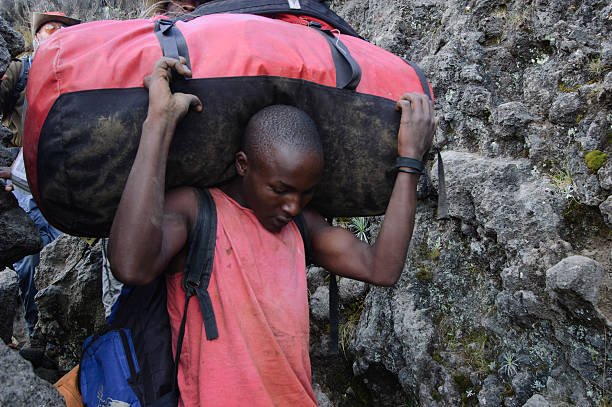
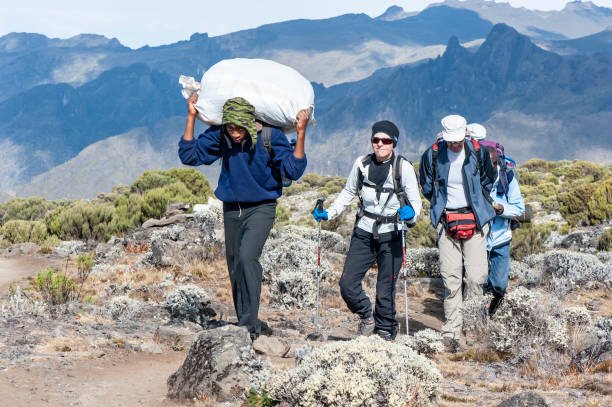
Why Porters Are Essential on Kilimanjaro
Most trekkers carry only their daypacks while porters move the expedition infrastructure between camps.
Porters May Carry
- Tents
- Kitchen equipment
- Food supplies
- Allocated climber duffels
- Camp equipment
- Other approved group equipment
The porter team may leave one camp after climbers and arrive at the next location early enough to organise the camp before the group arrives.
Respect Porter Weight Limits
Responsible tipping begins with responsible packing.
Do not overload your duffel and assume an additional tip makes excessive luggage acceptable.
Respect the weight limit explained during your pre trek briefing.
Keep unnecessary travel luggage at your hotel or approved storage location.
What Should Climbers Carry?
Climbers normally carry the items needed during the day's walk.
- Water
- Rain jacket
- Warm clothing
- Snacks
- Sunscreen
- Personal medication
- Camera or phone
- Other items needed before reaching camp
Should You Tip More for Exceptional Service?
You can choose to give more than the standard planning guideline when you feel the service was exceptional.
A suggested tipping range should be treated as guidance rather than a maximum.
Additional gratuities should be clearly allocated so the intended person or crew category receives them.
Can You Give an Extra Tip to One Crew Member?
Yes.
A guide, porter or other crew member may have provided additional personal assistance during the trek or summit night.
You can give that person an extra gratuity in addition to the normal crew distribution.
Keep it separate so the standard shares for other crew members remain unchanged.
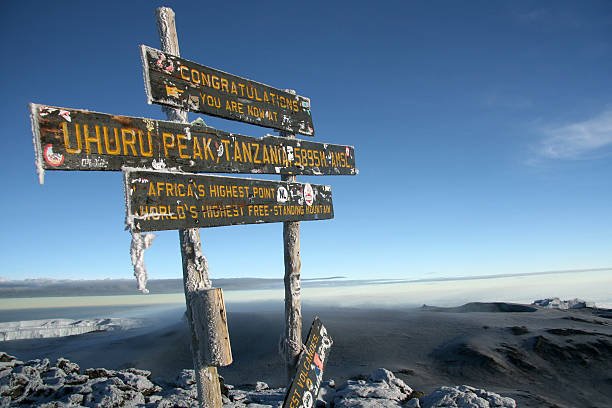
Should Tipping Depend on Reaching Uhuru Peak?
No.
The crew works throughout the expedition regardless of whether you reach Uhuru Peak.
Altitude affects every person differently and reaching 5,895 metres can never be guaranteed.
A guide may correctly decide that a climber needs to stop ascending or descend for safety.
A responsible decision to turn around should not be punished through withholding the crew's expected gratuity.
Tipping Is Not a Summit Bonus
- Porters work for the full trek.
- Cooks prepare meals throughout the expedition.
- Guides monitor climber health and safety.
- Safety decisions sometimes require turning around.
- Summit success cannot be guaranteed.
What if You Descend Early?
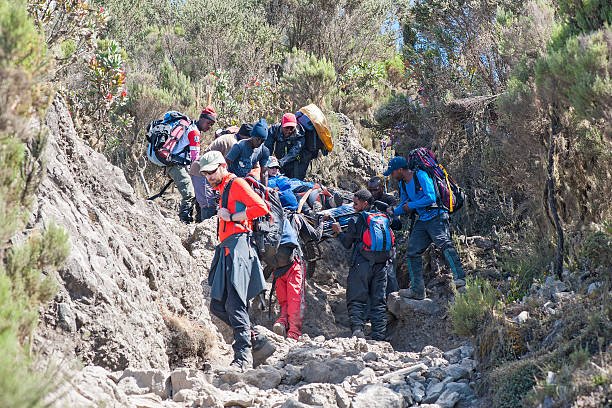
If you descend because of altitude sickness, injury or another problem, your crew has still provided expedition services.
Some crew members may also have completed additional work assisting your descent.
An early descent therefore does not automatically mean no tipping.
Discuss the final calculation with the operator if your trip changes significantly.
Can You Donate Equipment Instead of Tipping?
Some climbers choose to leave useful equipment with mountain crew members.
Warm clothing, trekking poles, headlamps or other useful items may be appreciated when they are in good condition.
However, equipment should usually be considered an additional gift rather than an automatic replacement for the planned cash gratuity.
Useful Equipment Donations
- Warm jackets
- Fleece layers
- Gloves
- Warm hats
- Rain jackets or trousers
- Trekking poles
- Headlamps
- Useful trekking accessories
Ask the intended recipient before assuming that an item is useful to them.
Kilimanjaro Tipping and Crew Respect
Money is only one part of respecting the mountain team.
Respectful Mountain Crew Etiquette
- Respect baggage weight limits.
- Speak respectfully to all crew members.
- Do not add hidden heavy equipment to your porter duffel.
- Keep camp equipment organised.
- Listen to guide instructions.
- Recognise cooks and porters as well as guides.
- Thank the entire crew at the end of the trek.
Budgeting for Kilimanjaro Before Departure
Do not wait until reaching Tanzania to discover that tipping is separate from the advertised trekking price.
Add the expected gratuity to your overall travel budget from the beginning.
Typical Kilimanjaro Budget Categories
- Kilimanjaro trekking package
- International flights
- Visa
- Travel insurance
- Equipment purchases
- Equipment rental
- Additional hotel nights
- Personal expenses
- Mountain crew tips
- Optional safari or Zanzibar extension
How Much Cash Should You Bring?
Bring enough cash to cover your expected share plus a small margin in case the final crew structure changes or you choose to give an additional personal gratuity.
Keep the tipping money separate from your normal spending cash.
Confirm the preferred currency before entering the mountain.
What if the Final Crew Size Changes?
Sometimes operational adjustments mean the actual mountain crew differs slightly from the original estimate.
If that happens, calculate the gratuity using the actual crew rather than blindly following an old estimate.
Ask for clarification before making the distribution.
Questions to Ask Your Kilimanjaro Operator About Tipping
- How many guides are expected?
- How many cooks are expected?
- How many porters are expected?
- Are summit support personnel included?
- What is the current tipping guideline?
- Is the guideline per climber or per crew role?
- Which currency is preferred?
- How are tips distributed?
- Can we receive the final crew list?
- When does the tipping ceremony normally take place?
Important Information About How Much to Tip on Kilimanjaro
How Much to Tip on Kilimanjaro depends on route duration, group size and the actual mountain crew.
For a typical seven day group climb, approximately USD 350 to 450 per climber is a practical overall crew tipping guideline.
The amount is intended for the wider mountain team rather than only porters.
Guides normally receive tips.
Assistant guides normally receive tips.
Cooks normally receive tips.
Porters normally receive tips.
Additional summit support crew should be included when applicable.
A private group may have a higher per person gratuity because fewer climbers share the total.
A group joining trek allows more people to divide the overall crew gratuity.
Longer routes involve more crew working days.
Six day, seven day and eight day tipping totals should not automatically be assumed to be identical.
Confirm your current tipping guidance before the climb.
Ask for the estimated crew size.
Confirm the final crew size before distribution.
Tips are normally given after the mountain trek.
A transparent distribution system is recommended.
Cash is commonly practical.
Confirm whether US dollars, Tanzanian shillings or another arrangement is preferred.
Small notes can make distribution easier.
Do not rely on obtaining the entire gratuity after returning from the mountain.
Do not base the tip only on whether you reached Uhuru Peak.
Altitude affects climbers differently.
A guide may correctly stop a climber from continuing for safety reasons.
Summit success cannot be guaranteed.
Turning around does not erase the work performed by the crew.
An emergency descent can require additional support from guides and porters.
Equipment gifts can be given but should not automatically replace the planned cash gratuity.
Additional personal tips can be given separately.
Respect porter weight limits throughout the expedition.
Do not overload the mountain crew.
Tipping is only one part of respectful treatment of the people supporting your climb.
Why Understanding How Much to Tip on Kilimanjaro Matters
Understanding How Much to Tip on Kilimanjaro before travelling allows you to build the gratuity into your total expedition budget.
For a typical seven day group climb, planning around USD 350 to 450 per climber gives travellers a useful starting point.
The exact calculation should then be confirmed using your final group and crew structure.
This avoids confusion at the end of the trek and helps ensure that guides, cooks and porters receive the intended gratuities.
A clear tipping plan also allows climbers to focus on the mountain rather than trying to organise unexpected financial arrangements during the final descent.
Frequently Asked Questions About How Much to Tip on Kilimanjaro
How Much to Tip on Kilimanjaro for a seven day trek?
For a typical seven day group climb, approximately USD 350 to 450 per climber is a practical planning guideline for the full mountain crew.
Is USD 350 to 450 only for porters?
No. The guideline is intended as an overall per climber budget for the mountain crew, including guides, cooks and porters.
Is the tip included in the Kilimanjaro package price?
Crew gratuities are commonly treated separately from the trek price, so confirm the inclusions with your operator.
Are tips mandatory?
Tipping is generally customary rather than a government park fee, but travellers should include it in their Kilimanjaro budget.
Why does group size affect the amount?
The group shares the overall crew gratuity, so fewer climbers generally means fewer people dividing the final total.
Does a private climb require more tipping per person?
It can, because a small private group still needs several crew roles while fewer climbers share the total gratuity.
How much should a solo climber tip?
A solo group joining climber can share the crew gratuity with other travellers, while a private solo climb should be calculated from its actual crew size.
Does a six day climb have the same tip as seven days?
Not necessarily. Six day expeditions have fewer working days, but exact crew numbers should be used for the calculation.
Does an eight day trek require a larger tip?
Longer routes normally involve additional crew working days, so the tipping budget can increase.
Who receives Kilimanjaro tips?
The mountain tipping plan normally includes lead guides, assistant guides, cooks and porters.
Do summit porters receive tips?
If additional summit support personnel are used, confirm whether their gratuity is included in the normal calculation.
When are tips given?
They are normally distributed after the final mountain descent.
Do I tip every day?
Normally no. One organised end of trek distribution is usually clearer.
Can I tip in cash?
Cash is commonly practical for the end of trek crew distribution.
Can I tip in Tanzanian shillings?
Yes. Confirm the intended conversion and distribution with the operator before the final day.
Can I tip in US dollars?
US dollars may be used when appropriate. Confirm the operator's preferred currency and use acceptable notes.
Should I carry the tip money onto the mountain?
Arrange the money before the trek so it is available for the final distribution according to the operator's recommended process.
Should I bring small notes?
Small denominations can simplify separate guide, cook and porter allocations.
Should everyone in the group contribute equally?
Many groups divide the overall crew gratuity among climbers, but travellers should agree on the method before the final day.
Should I hand the full amount to the guide?
Only when the operator uses a clear distribution system and the intended crew allocations are understood.
What is the Kilimanjaro tipping ceremony?
It is a final gathering where climbers may thank the mountain crew and distribute gratuities after completing the trek.
Should the tips be announced?
Some groups announce the allocations to increase transparency so the crew understands what the climbers intended.
Should I tip if I did not summit?
Yes. The crew has worked throughout the expedition regardless of whether altitude, weather or safety decisions prevented the summit.
Should I tip if I descend early?
Normally yes. The crew has already provided services and may have given additional assistance during the descent.
Can I tip more for exceptional service?
Yes. Additional gratuity can be given when you feel the service deserves it.
Can I give one porter an extra tip?
Yes. Keep any additional personal gratuity separate from the standard group distribution.
Can equipment replace the tip?
Useful equipment can be donated, but it should generally be treated as an additional gift rather than an automatic replacement for the cash gratuity.
Why should I respect porter weight limits?
Responsible packing prevents unnecessary load being transferred to the crew and is part of respectful mountain trekking.
Do I carry my own bag?
Climbers normally carry their own daypack while porters transport the approved main duffel and expedition equipment.
Can the crew size change?
Yes. Operational requirements can change, so confirm the final crew list before calculating the distribution.
Should tipping be included in my travel budget?
Yes. Plan for the gratuity before departure rather than treating it as an unexpected expense after the trek.
Is USD 350 to 450 always the correct amount?
No. It is a useful planning guideline for a typical seven day group climb. The exact total should be confirmed from the actual crew and itinerary.
Does reaching Uhuru Peak affect the tip?
The gratuity should recognise the crew's overall work rather than depend entirely on summit success, which cannot be guaranteed.
How can I make sure the tip is distributed fairly?
Confirm the crew list, use clear allocations and follow a transparent distribution process that the climbers and crew understand.
How do I know exactly How Much to Tip on Kilimanjaro?
Ask your operator for the current route specific guidance, confirm your final crew size and calculate the total according to your actual number of guides, cooks, porters and climbers.
Ask Us How Much to Tip on Kilimanjaro
Tell us your Kilimanjaro route, number of trekking days and group size, and we can explain the expected crew structure and tipping budget before you begin your climb.
Plan Your Kilimanjaro Climb