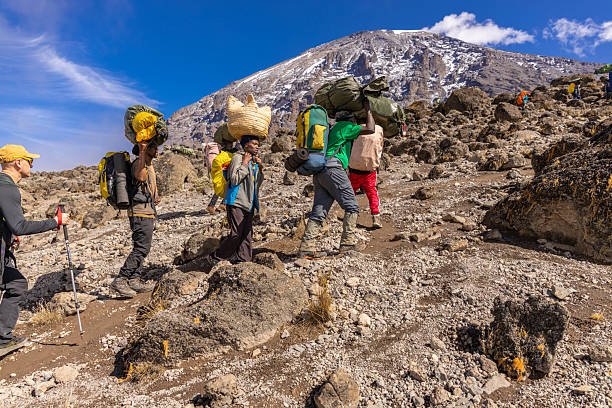
Rongai Route Kilimanjaro Success Rate
The Rongai Route Kilimanjaro Success Rate cannot be reduced to one guaranteed number that applies to every climber.
Summit outcomes depend on itinerary length, individual altitude response, physical condition, walking pace, weather, nutrition, hydration, equipment and professional guide decisions.
Rongai approaches Mount Kilimanjaro from the northern side and offers a different route profile from Machame and Lemosho.
The common six day version follows Simba Camp, Kikelewa, Mawenzi Tarn and Kibo before the summit attempt, while the seven day version normally includes a separate overnight at Second Cave before continuing to Kikelewa.
That additional day creates a more gradual progression and is an important factor when travellers compare six day and seven day Rongai itineraries.
Rongai Success Rate at a Glance
- Mountain: Mount Kilimanjaro, Tanzania.
- Route: Rongai Route.
- Common durations: 6 day and 7 day itineraries.
- Approach: Northern side of Kilimanjaro.
- Key camps: Simba, Second Cave, Kikelewa, Mawenzi Tarn and Kibo.
- Summit preparation: Kibo area.
- Summit objective: Uhuru Peak.
- Descent: Marangu side.
What Does Rongai Route Success Rate Mean?
When travellers search for a Rongai Route success rate, they usually want to understand how likely climbers are to reach Uhuru Peak.
However, published success figures are difficult to compare unless the itinerary and definition of success are clearly explained.
A statistic based on six day Rongai should not automatically be applied to the seven day version because the altitude progression is different.
Different operators may also record summit results differently and may work with climbers of different ages, fitness levels and trekking backgrounds.
For this reason, travellers should focus on the structure behind a percentage rather than treating the number as a guarantee.
No Rongai Summit Percentage Is Guaranteed
A longer itinerary and good mountain support can improve the structure of an expedition, but they cannot guarantee that a particular climber will reach Uhuru Peak.
Individual altitude response, health, weather and professional guide decisions remain important throughout the climb.
6 Day Versus 7 Day Rongai Success Rate
The most important itinerary difference is the additional mountain day included in the seven day version.
The common six day Rongai itinerary moves from Simba Camp toward Second Cave and continues to Kikelewa within the same trekking day.
The seven day itinerary normally stops at Second Cave for a separate overnight before continuing to Kikelewa the following day.
This extra overnight creates a slower progression during the early part of the route.
Main Rongai Itinerary Difference
6 Day Rongai: Simba Camp → Second Cave area → Kikelewa Camp within Day 2.
7 Day Rongai: Simba Camp → Second Cave overnight, then Second Cave → Kikelewa on the following day.
Why the 7 Day Rongai Schedule Can Support Acclimatization
The additional Second Cave overnight gives climbers more time before progressing toward Kikelewa and Mawenzi Tarn.
This does not guarantee successful acclimatization, but it creates a more gradual early route profile.
Professional guides also gain another mountain day to observe how each climber is responding to increasing elevation.
Travellers with sufficient time can therefore consider the seven day version when they prefer a slower Rongai itinerary.
More Time Can Help, But Altitude Remains Unpredictable
The seven day Rongai itinerary spreads the ascent across more mountain days.
Some climbers can still develop significant altitude symptoms despite using the longer itinerary.
6 Day Rongai Route Itinerary
- Day 1: Moshi → Rongai Gate → Simba Camp.
- Day 2: Simba Camp → Second Cave area → Kikelewa Camp.
- Day 3: Kikelewa Camp → Mawenzi Tarn.
- Day 4: Mawenzi Tarn → Kibo.
- Day 5: Kibo → Uhuru Peak → Horombo.
- Day 6: Horombo → Marangu Gate → Moshi.
7 Day Rongai Route Itinerary
- Day 1: Moshi → Rongai Gate → Simba Camp.
- Day 2: Simba Camp → Second Cave.
- Day 3: Second Cave → Kikelewa Camp.
- Day 4: Kikelewa → Mawenzi Tarn.
- Day 5: Mawenzi Tarn → Kibo.
- Day 6: Kibo → Uhuru Peak → Horombo.
- Day 7: Horombo → Marangu Gate → Moshi.
Day 1: Rongai Gate to Simba Camp
The Rongai expedition begins on the northern side of Kilimanjaro.
After completing the required entry procedures, climbers start toward Simba Camp under the guidance of the professional mountain team.
The first day should be approached slowly even when the elevation feels comfortable.
Beginning at a controlled pace helps preserve energy for the higher stages ahead.
Success Focus for the First Day
- Walk slowly from the beginning.
- Drink regularly.
- Eat consistently.
- Protect feet from blisters.
- Keep warm and waterproof layers accessible.
Second Cave and the 7 Day Advantage
Second Cave is especially important when comparing the two common Rongai itineraries.
On the seven day version, climbers normally sleep here before continuing toward Kikelewa.
This creates a separate early altitude stage rather than combining Second Cave and Kikelewa within one longer day.
The extra night can provide a more gradual progression and additional recovery time.
Kikelewa Camp and Altitude Progression
After Second Cave, the route continues toward Kikelewa Camp.
By this stage, climbers are spending more time at elevation and should pay close attention to appetite, headache, nausea, fatigue and sleep quality.
The professional guide can use daily observations to monitor how each participant is adapting.
Mawenzi Tarn and Acclimatization
Mawenzi Tarn is one of the most distinctive areas on the Rongai Route.
The dramatic Mawenzi landscape provides another important mountain stage before climbers continue toward Kibo.
The progression from Kikelewa to Mawenzi Tarn gives climbers time at increasing elevation before entering the high saddle toward Kibo.
Individual altitude responses remain different, so climbers should avoid comparing symptoms with other members of the group.
Mawenzi Tarn Is an Important Observation Stage
By the time climbers reach Mawenzi Tarn, the guide team has several days of information about pace, appetite, sleep, energy and symptoms.
This helps professional guides evaluate how each participant is progressing before the route moves toward Kibo.
Mawenzi Tarn to Kibo
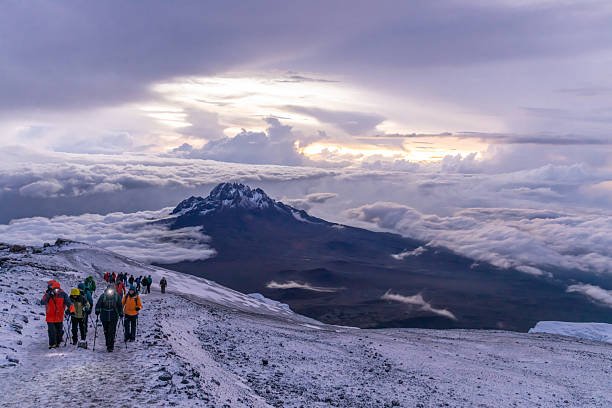
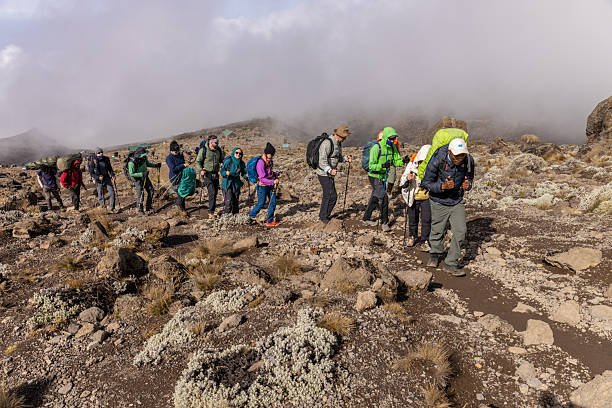
The route leaves Mawenzi Tarn and crosses the high saddle between Mawenzi and Kibo.
The landscape becomes increasingly open and exposed as climbers approach the final summit preparation area.
This stage should be completed at a controlled pace because conserving energy is especially important before summit night.
Arriving at Kibo exhausted can make the final ascent considerably more difficult.
Kibo and Summit Readiness
Kibo is the main summit preparation area on the Rongai Route.
The professional guide reviews each climber's condition and explains the summit plan.
Warm layers, gloves, headlamp, water and snacks should be organized before rest.
Climbers should also eat as well as possible because summit night requires substantial energy.
Summit Night Equipment
- Warm base layers
- Insulating mid layers
- Insulated outer jacket
- Wind and waterproof outer layers
- Warm gloves
- Warm hat
- Headlamp and batteries
- Suitable trekking boots
- Drinking water
- Easy to eat summit snacks
Summit Night and Rongai Success Rate
The summit attempt normally begins during the night or very early morning from the Kibo side.
Climbers move slowly through cold and increasingly thin air toward the crater rim.
This is generally the most physically and mentally demanding section of the Rongai Route.
The professional guide controls pace carefully because moving too fast early in summit night can waste energy needed higher on the mountain.
Summit Night Should Not Be Treated as a Race
Climbers should concentrate on maintaining a sustainable pace rather than trying to overtake other expeditions.
The guide continues monitoring each climber's condition as the group moves higher.
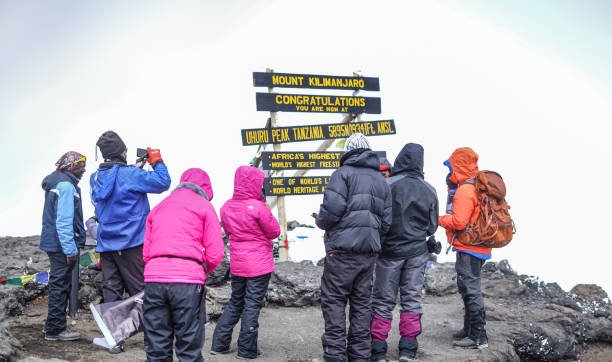
Crater Rim and Uhuru Peak
When travellers review success statistics, it is important to understand whether the reported figure refers to reaching the crater rim or reaching Uhuru Peak.
Those are not always presented consistently in marketing statistics.
For meaningful comparison, travellers should ask whether a claimed success rate specifically measures climbers who reached Uhuru Peak.
Why Altitude Is the Biggest Uncertainty
A climber can be physically strong and still develop altitude related problems.
Another climber may walk more slowly but adapt better to elevation.
Fitness helps with the workload of trekking but does not determine how the body will respond to reduced oxygen availability at high altitude.
This is why summit success cannot be predicted from physical fitness alone.
Does Fitness Improve Rongai Success?
Good physical preparation can help climbers manage consecutive trekking days and a demanding summit ascent.
Training can include hiking, brisk walking, stair climbing, cardiovascular exercise and lower body strengthening.
Long practice hikes while carrying a daypack can improve endurance and comfort.
However, physical fitness cannot guarantee successful acclimatization.
Slow Walking and Rongai Success
A slow pace is one of the most important habits on Kilimanjaro.
Moving too quickly can increase fatigue and reduce the energy available for higher stages.
The professional guide should establish a manageable pace early in the expedition rather than waiting until summit night.
Hydration and Summit Performance
Climbers should drink regularly throughout the route.
Cold weather and altitude can reduce thirst even when the body still requires fluids.
Hydration supports general trekking performance but does not prevent altitude illness by itself.
Travellers should follow professional guide advice and avoid both dehydration and unnecessary excessive fluid intake.
Nutrition and Energy
Eating consistently becomes increasingly important as climbers move higher.
Altitude can reduce appetite, making it harder to consume sufficient energy.
Mountain meals should support the expedition with foods climbers can continue eating during the higher stages.
Personal summit snacks can provide additional energy during the final ascent.
Professional Guide Experience
Professional guides play a central role in managing the Rongai expedition.
They establish pace, provide daily briefings, monitor altitude symptoms, coordinate the mountain crew and prepare climbers for summit night.
A responsible guide should prioritize the climber's condition over pressure to achieve a summit.
Guide Responsibilities That Affect the Expedition
- Managing walking pace
- Daily route briefings
- Altitude observations
- Health assessments
- Crew coordination
- Summit preparation
- Individual summit support
- Turnaround and descent decisions
Assistant Guides and Summit Support
Assistant guide support becomes especially important during summit night.
Different climbers within the same group may begin moving at different speeds or require different safety decisions.
Appropriate staffing can allow one participant to descend with support while other suitable climbers continue with another guide.
This prevents the entire expedition from depending on one person's condition.
Daily Health Monitoring
Professional guides can perform regular health assessments throughout the climb.
They consider headache, nausea, appetite, energy, breathing, behaviour and other signs that may indicate how the climber is adapting.
Where monitoring equipment is used, its readings can support assessment but should not replace evaluation of the climber's overall condition.
A single oxygen saturation reading should not be treated as a universal pass or automatic turnaround rule.
Safety Is More Important Than a Success Percentage
A responsible expedition should never pressure an unwell climber to continue simply to maintain a high summit statistic.
A safe descent can be the correct professional outcome even when Uhuru Peak is not reached.
Weather and Rongai Summit Success
Weather can influence every Kilimanjaro expedition.
Cold temperatures, wind, precipitation and trail conditions can increase the difficulty of summit night and other mountain stages.
Suitable waterproof and insulating clothing helps climbers remain functional when conditions change.
Equipment and Summit Performance
Inadequate equipment can create problems even when a climber is acclimatizing well.
Wet clothing, poor insulation, unsuitable boots or an unreliable headlamp can increase fatigue and discomfort.
A pre climb equipment check provides time to identify missing or unsuitable gear before travelling to Rongai Gate.
Rongai Route for Beginners
Some first time Kilimanjaro climbers choose Rongai because the route uses an established trekking trail and does not normally require technical mountaineering skills.
However, the expedition still involves high altitude, several consecutive trekking days, cold conditions and a demanding summit night.
Beginners should therefore train properly and understand that a non technical route is not the same as an easy route.
Rongai Success Rate for Solo Travellers
A solo traveller can climb Rongai privately or join a suitable scheduled group departure.
Solo status does not determine altitude response.
The more important factors are itinerary length, professional guide support, preparation, equipment and individual health.
Private Rongai and Summit Success
A private climb can provide more dedicated guide attention and simplify pacing around one booking party.
However, the mountain, altitude and summit challenge remain unchanged.
Private climbers should still follow the established itinerary and professional guide recommendations rather than trying to progress faster because they are not part of an open group.
Group Joining Rongai and Summit Success
A group joining expedition can include climbers with different natural speeds, fitness levels and altitude responses.
The professional guide should establish a controlled high altitude pace rather than allowing the fastest participant to dictate the rhythm.
Assistant guides can help support different participants, especially during summit night.
Does Age Determine Rongai Success?
Age alone does not determine whether someone will reach Uhuru Peak.
Overall health, fitness, high altitude suitability, preparation and individual response are more useful considerations.
Travellers with relevant medical concerns should seek appropriate medical advice before committing to a high altitude expedition.
Does Previous Altitude Experience Help?
Previous high altitude trekking experience can help climbers understand what altitude feels like and how they have responded before.
However, a previous successful high altitude trip does not guarantee the same result on Kilimanjaro.
Each expedition should still be approached carefully.
Can You Improve Your Chances Before Travelling?
- Train consistently before the expedition.
- Use trekking boots that are already broken in.
- Bring appropriate warm and waterproof clothing.
- Choose an itinerary with sufficient mountain time.
- Rest after international travel before starting.
- Attend the pre climb equipment and route briefing.
- Walk slowly throughout the mountain journey.
- Report symptoms honestly.
Why Advertised Success Rates Need Context
A high percentage can look reassuring, but travellers should understand how the figure was calculated.
Useful questions include whether the statistic refers to six day or seven day Rongai, whether it specifically measures Uhuru Peak and how many climbers were included.
Travellers should also ask what period the statistic covers and whether private and group joining expeditions are combined.
Questions to Ask About Any Rongai Success Rate
- Does the percentage refer specifically to Uhuru Peak?
- Is it based on 6 day or 7 day Rongai?
- How many climbers were included?
- What period does the data cover?
- Are private and group climbs combined?
- Are medical descents and turnarounds included?
Rongai Route with Professional Mountain Support
A well organized expedition should provide the staffing and logistics required for the confirmed number of climbers.
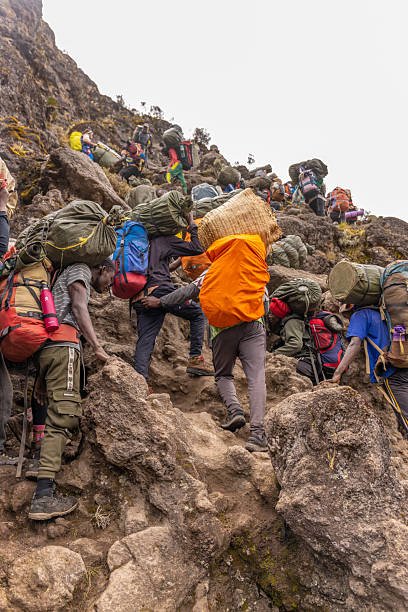
Professional guides, assistant guides where required, porters and a mountain cook work together to support the expedition.
Strong mountain support allows the guide team to focus on pace, health monitoring, equipment and summit preparation.
Camping and Mountain Accommodation
The Rongai ascent commonly uses camping arrangements before climbers reach the Kibo and Horombo side of the mountain.
Accommodation details can vary according to the exact itinerary and camp arrangements, so these should be confirmed within the selected package.
Suitable sleeping equipment remains important because high altitude nights can be cold.
Typical Rongai Route Inclusions
- Professional Kilimanjaro guides
- Assistant guides according to group requirements
- Mountain porters
- Mountain cook where required
- Transport between Moshi and the mountain
- Applicable mountain arrangements according to package
- Mountain accommodation according to itinerary
- Mountain meals
- Mountain water arrangements
- Rescue fee arrangements according to package
- Pre climb briefing
Frequently Asked Questions
What is the Rongai Route Kilimanjaro success rate?
There is no single universal percentage for every Rongai expedition. Outcomes vary according to itinerary length, climber population, guide practices, altitude response and how summit success is defined.
Is the 7 day Rongai itinerary more gradual than 6 days?
Yes. The seven day version normally includes a separate Second Cave overnight before climbers continue toward Kikelewa.
Does the 6 day Rongai Route sleep at Second Cave?
The common six day itinerary normally passes through the Second Cave area and continues toward Kikelewa without a separate overnight there.
Does the 7 day Rongai Route sleep at Second Cave?
Yes. A common seven day Rongai itinerary includes Second Cave as a separate overnight.
Does Rongai include Kikelewa Camp?
Yes. Kikelewa is a standard stage on common six day and seven day Rongai itineraries.
Does Rongai include Mawenzi Tarn?
Yes. Mawenzi Tarn is one of the distinctive overnight stages on the Rongai Route.
Where does Rongai summit night begin?
The common Rongai summit attempt begins from the Kibo side of Kilimanjaro.
Where does Rongai descend?
The route normally descends through the Marangu side after the summit section.
Does physical fitness guarantee the summit?
No. Fitness helps with trekking workload, but it cannot predict individual altitude response.
Can very fit climbers still experience altitude sickness?
Yes. Altitude can affect climbers with very different fitness levels.
Does walking slowly help?
A controlled pace helps climbers conserve energy and forms an important part of high altitude trekking management.
Does hydration guarantee acclimatization?
No. Appropriate hydration is important, but drinking water does not prevent altitude illness by itself.
Can beginners climb Rongai?
Some first time Kilimanjaro climbers choose Rongai, but appropriate physical preparation, equipment and altitude awareness remain important.
Can Rongai be climbed privately?
Yes. Private Rongai expeditions can be arranged for solo travellers, couples, families and groups.
Can solo travellers join a Rongai group?
Yes. Solo travellers can join suitable scheduled departures when dates and places are available.
Do assistant guides matter during summit night?
Yes. Additional guide support can help when different climbers require separate pacing or descent decisions.
Do oxygen saturation readings determine summit permission?
No single reading should be used alone as a universal rule. Professional guides consider symptoms and the climber's overall condition together with any monitoring information.
What happens if one climber needs to descend?
With appropriate guide staffing, one climber can descend with support while other suitable participants may continue according to professional assessment.
Does weather affect Rongai summit success?
Yes. Cold, wind, precipitation and trail conditions can affect comfort, pace and expedition difficulty.
Does equipment affect summit performance?
Appropriate equipment supports warmth, comfort and efficient movement, while poor equipment can create avoidable problems.
Is Uhuru Peak guaranteed on 7 day Rongai?
No. The longer itinerary provides additional mountain time but cannot guarantee individual summit success.
Should I choose Rongai only because of a claimed success rate?
No. Consider itinerary length, guide staffing, safety practices, mountain support and your own preparation alongside any published statistic.
Which Rongai itinerary gives more mountain time?
The seven day itinerary provides one additional mountain day and a separate Second Cave overnight compared with the common six day schedule.
What should I ask an operator about its success rate?
Ask whether the statistic refers to Uhuru Peak, which Rongai itinerary it covers, how many climbers are included and what period the data represents.
Plan Your Rongai Route Kilimanjaro Climb
Choose a carefully planned Rongai itinerary through Simba Camp, Second Cave, Kikelewa, Mawenzi Tarn and Kibo with professional guides, porters and organized summit support.
Compare the 6 day and 7 day itineraries, prepare properly for altitude and choose your climb based on complete mountain support rather than a headline summit percentage alone.
Plan Your Rongai Route Climb

 Kilimanjaro Climb