Kilimanjaro Climbing Boots 2026-2027
Kilimanjaro Climbing Boots 2026-2027 are one of the most important pieces of personal equipment for anyone preparing to climb Mount Kilimanjaro.
The trek involves several consecutive walking days through changing terrain and weather, so footwear must provide comfort, grip and support from the first trail day to the descent after summit night.
Standard Kilimanjaro routes do not normally require technical mountaineering boots. In most cases, a quality pair of well fitted hiking boots is more practical.
The most important rule is simple: do not arrive with brand new boots that have never been tested on longer walks.
Kilimanjaro Climbing Boots at a Glance
- Best type: Supportive hiking or trekking boots
- Technical mountaineering boots: Normally not required on standard routes
- Water protection: Waterproof or strongly water resistant recommended
- Ankle support: Recommended for uneven terrain
- Grip: Deep, reliable tread for mud, rock and loose ground
- Fit: Secure heel with enough toe room
- Preparation: Break boots in before travelling
- Rental: Possible, but personal boots are generally preferable
What Boots Do You Need for Kilimanjaro?
Most climbers need sturdy hiking boots rather than specialized technical climbing boots.
The footwear should be designed for multi day trekking and capable of handling mud, rock, gravel and long descent sections.
A medium weight hiking boot is often a practical choice because it can provide enough support without feeling excessively heavy.
The exact model matters less than proper fit and comfort.
Do You Need Mountaineering Boots for Kilimanjaro?
Normal Kilimanjaro trekking routes do not usually require rigid technical mountaineering boots.
Routes such as Machame, Lemosho, Marangu, Rongai and Northern Circuit are primarily hiking routes.
Heavy technical boots can feel unnecessarily stiff and tiring for several days of trekking if conditions do not require them.
A supportive hiking boot is generally more comfortable for the standard routes.
Most Important Features of Kilimanjaro Boots
What to Look for in Kilimanjaro Boots
- Comfortable fit
- Good ankle support
- Water resistance or waterproofing
- Strong outsole grip
- Enough room for trekking socks
- Enough toe space for long descents
- Secure heel fit
- Durable construction
- Comfort over several consecutive walking days
Why Fit Matters More Than Brand
A famous outdoor brand does not automatically make a boot suitable for your feet.
Foot shape varies significantly between climbers, so one model can feel perfect for one person and uncomfortable for another.
The best Kilimanjaro boot is the one that fits your heel, arch and forefoot properly while still leaving enough room at the toes.
Try boots with the same type of trekking socks you plan to use on the mountain.
How Should Kilimanjaro Boots Fit?
Your heel should remain secure without excessive movement inside the boot.
Your toes should not hit the front of the boot when walking downhill.
There should also be enough room for thicker socks without making the foot feel compressed.
Boots that feel slightly uncomfortable in the shop are unlikely to become comfortable after hours of trekking at altitude.
Toe Room for Kilimanjaro
Toe room becomes especially important during descents.
After summit night, climbers descend for a long period and repeated impact against the front of the boot can make toes painful.
Enough space at the front allows the foot to move naturally without sliding excessively.
Ankle Support
Kilimanjaro includes uneven trails, rocks, mud and long descents.
Boots with suitable ankle support can provide additional stability, particularly when carrying a daypack.
Support should not come at the expense of comfort or natural walking movement.
Do Kilimanjaro Boots Need to Be Waterproof?
Waterproof or highly water resistant boots are strongly recommended.
The lower mountain can be wet, especially through rainforest sections.
Wet feet can become uncomfortable and increase the risk of blisters.
However, waterproof footwear should still allow reasonable breathability so feet do not remain unnecessarily damp from perspiration.
Kilimanjaro Rainforest Conditions
Several routes begin through forest where rain and mud are possible.
Machame and Lemosho climbers in particular should be prepared for wet lower trails even when the upper mountain later becomes dry.
A good boot outsole and waterproof protection are therefore useful from the first trekking day.
Boot Grip and Outsole
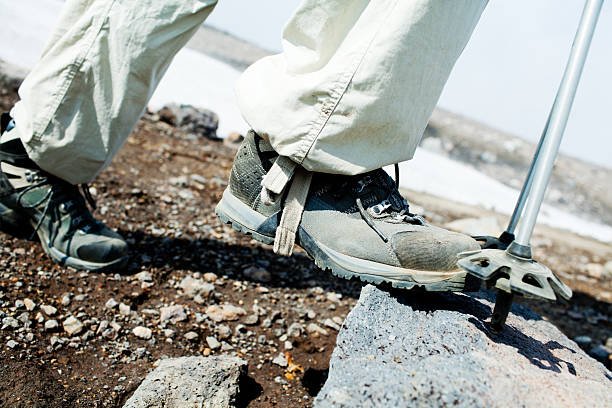
The outsole should provide reliable traction on loose gravel, wet soil and rocky ground.
Deep tread can improve confidence when conditions become slippery.
Worn smooth soles are not ideal for Kilimanjaro, especially during wet sections and long descents.
Good Boot Grip Should Handle
- Rainforest mud
- Rocky trail sections
- Loose volcanic ground
- Gravel
- Steep descents
- Cold high altitude terrain
Lightweight vs Heavy Kilimanjaro Boots
Extremely lightweight footwear may provide less support and protection, while very heavy boots can increase fatigue over several days.
A balanced trekking boot with good support and moderate weight is often the most practical choice.
Climbers should prioritize comfort over choosing the most technical looking footwear.
Can You Wear Trail Running Shoes on Kilimanjaro?
Some experienced hikers prefer lighter footwear for certain trekking conditions, but trail running shoes generally provide less ankle support and protection than hiking boots.
Kilimanjaro includes mud, rocky terrain, cold weather and long descent sections.
For most first time climbers, supportive hiking boots are the safer and more practical overall choice.
Boots for Summit Night
The same trekking boots are normally used on summit night.
The main difference is that climbers may wear warmer socks and use gaiters depending on conditions.
Boots should therefore have enough internal room to accommodate summit socks without becoming tight.
Tight footwear can make cold feet feel worse because circulation is restricted.
Keeping Feet Warm on Summit Night
Summit Footwear Tips
- Start with dry boots where possible
- Wear clean dry trekking socks
- Do not overtighten laces
- Make sure toes have room to move
- Use gaiters when conditions require them
- Keep spare socks dry inside the duffel
Best Socks for Kilimanjaro Boots
Socks work together with boots to keep feet comfortable.
Good trekking socks should manage moisture, provide cushioning and fit without creating folds inside the boot.
Bring several pairs, including warmer options for the higher sections of the mountain.
A clean dry pair should ideally be reserved for summit night.
Should You Wear Two Pairs of Socks?
Some climbers prefer a thin liner sock underneath a thicker trekking sock, while others are more comfortable with a single quality pair.
The correct system depends on the boot fit and personal preference.
It should be tested during training rather than tried for the first time on Kilimanjaro.
How to Prevent Blisters
Blisters can turn an otherwise manageable trek into a painful experience.
The best prevention begins before the mountain by choosing properly fitted boots and testing them on long walks.
Blister Prevention Tips
- Break boots in before travelling
- Wear properly fitted trekking socks
- Keep feet as dry as possible
- Adjust laces when pressure points appear
- Treat hot spots early
- Carry personal blister treatment
- Change wet socks when practical
How Long Should You Break In Kilimanjaro Boots?
There is no fixed number of days because different boots require different amounts of use.
The important point is to wear them repeatedly before the climb.
Use them on short walks first, then progress to longer hikes and hill training.
By the time you arrive in Tanzania, the boots should already feel familiar and comfortable.
Train in the Boots You Will Use
Training in your actual Kilimanjaro boots allows you to identify problems before the expedition.
You can test sock combinations, lacing techniques and how the boots feel on climbs and descents.
This also helps condition your feet for several hours inside the same footwear.
How to Lace Kilimanjaro Boots
Lacing should keep the heel secure without creating excessive pressure on the foot.
Climbers may need to adjust laces during the day as feet warm up or swell.
For descent sections, secure lacing can help prevent the foot from sliding forward.
On summit night, avoid tightening the boot so much that circulation becomes uncomfortable.
Foot Swelling at Altitude and During Trekking
Feet can change slightly after several hours of walking.
This is another reason to avoid boots that already feel extremely tight before the climb.
Try footwear later in the day when feet may be slightly larger, and always test the boots with realistic trekking socks.
Do You Need Gaiters?
Gaiters are optional but useful on Kilimanjaro.
They cover the upper boot area and can help reduce mud, dust, loose stones and moisture entering the footwear.
They can be especially helpful in wet rainforest conditions and loose alpine terrain.
Camp Shoes
After reaching camp, many climbers prefer to remove their trekking boots.
Lightweight camp shoes or sandals allow the feet to relax and give boots time to air out.
Camp footwear should be lightweight because it forms part of the porter carried luggage.
Machame Route Boot Requirements
Machame begins through rainforest and includes varied terrain throughout the trek.
Water resistance is valuable in the lower forest, while good grip becomes important around rocky and steeper sections.
The long descent after summit night also makes cushioning and toe room particularly important.
Lemosho Route Boot Requirements
Lemosho also begins through forest before crossing the Shira Plateau and joining higher alpine terrain.
Boots should provide enough comfort for seven or eight consecutive trekking days.
Water protection, grip and all day comfort are more important than selecting unnecessarily heavy footwear.
Marangu Route Boot Requirements
Marangu uses huts rather than tents, but the trail still requires proper trekking footwear.
Rain, mud, rock and high altitude conditions can still occur.
Comfortable supportive hiking boots remain the recommended choice.
Rongai Route Boot Requirements
Rongai approaches from the northern side and includes dry, dusty and rocky terrain as the route moves higher.
A reliable outsole and comfortable ankle support remain valuable throughout the trek.
Northern Circuit Boot Requirements
Northern Circuit involves more trekking days than most other Kilimanjaro routes.
Long term comfort becomes especially important because climbers spend more days using the same footwear.
Any minor fit problem can become more noticeable over a longer itinerary.
Can You Rent Kilimanjaro Boots in Moshi?
Selected trekking boots may be available for rental in Moshi depending on size and availability.
However, footwear is one piece of equipment that climbers should ideally bring themselves.
It is difficult to know how unfamiliar rental boots will feel after several consecutive trekking days.
Rental boots are therefore better considered as an emergency or last minute solution when personal footwear is unsuitable.
Why Personal Boots Are Better Than Rental Boots
Advantages of Bringing Your Own Boots
- Already tested during training
- Known fit and comfort
- Known sock combination
- Reduced risk of unexpected pressure points
- No dependence on rental size availability
- Can be broken in gradually before the climb
What If Your Boots Are Not Suitable?
If the guide identifies a serious footwear problem during the pre climb gear check, a replacement may be necessary before departure.
This is one reason climbers should arrive with enough time for equipment inspection rather than reaching Moshi immediately before leaving for the gate.
Pre Climb Boot Check in Moshi
The mountain briefing and gear check provide an opportunity to review footwear before the climb.
The guide can check whether the boots appear appropriate for trekking conditions and whether they work with the climber's socks and gaiters.
Any obvious damage should be addressed before leaving for Kilimanjaro.
Check Your Boots Before Departure
- Soles are firmly attached
- Tread still has good grip
- Laces are in good condition
- Waterproofing is working reasonably well
- No painful pressure points
- Enough room for trekking socks
- Toe space is comfortable on descent
What If Your Boots Get Wet on Kilimanjaro?
Wet boots should be allowed to air as much as possible at camp.
Do not rely on having access to powered drying equipment on the mountain.
Keeping spare socks dry is therefore particularly important.
Gaiters and waterproof trousers can also reduce the amount of water reaching the top of the boots.
Should You Bring Spare Boots?
Most climbers do not carry a second full pair of heavy trekking boots because of luggage weight.
Instead, bring one reliable pair that has been tested properly and a lighter pair of camp shoes.
The main boots should be inspected carefully before travelling to Tanzania.
Boot Care Before Kilimanjaro
Check the manufacturer's care recommendations before applying waterproofing or conditioning products.
Inspect the soles, seams and lace hooks before travel.
Older boots that have been stored for a long time should be tested on real hikes because materials can deteriorate even when the footwear looks acceptable.
New Boots vs Old Boots
Brand new boots can create problems because they have not yet been tested, while very old boots can fail if soles or adhesives have deteriorated.
The ideal pair is one that is still in good condition and has already been used successfully on longer hikes.
Kilimanjaro Boots for Beginners
Beginners should avoid choosing overly complicated footwear.
A supportive waterproof hiking boot from a reputable outdoor manufacturer is normally sufficient for standard Kilimanjaro routes.
Comfort, fit and testing matter more than whether the boot looks highly technical.
Kilimanjaro Boots for Women
Women should choose boots designed around their individual foot shape rather than relying only on a men's or women's label.
The same principles apply: correct heel fit, enough toe room, ankle support, waterproof protection and comfort during long walks.
Kilimanjaro Boots for Men
Men should also prioritize proper fit over boot weight or appearance.
Wide or narrow feet may require specific models, so trying several options can be worthwhile before purchasing.
Kilimanjaro Boots for Older Climbers
Older climbers may place additional value on cushioning, stability and comfortable ankle support.
Footwear should work together with trekking poles to create a stable and comfortable walking system during long descents.
Boots and Trekking Poles
Trekking poles can complement good footwear by improving balance and reducing stress on the knees during descent.
They are particularly useful when trails are uneven or slippery.
However, poles do not compensate for badly fitted or unsuitable boots.
Boots and Gaiters
Gaiters fit over the top section of the boot and lower trouser leg.
They help protect against mud, dust, loose stones and moisture.
Before travelling, check that your gaiters fit correctly around the selected trekking boots.
Boots and Your Daypack
Climbers carry a personal daypack throughout the trek.
Even though the pack is relatively light compared with the porter carried duffel, the extra weight makes stable footwear important.
Boots should remain comfortable while carrying water, waterproof clothing and daily essentials.
Final Kilimanjaro Boot Checklist
Before Packing Your Boots
- Boots have been used on several training hikes
- Heel feels secure
- Toes have enough space
- No painful pressure points
- Soles provide strong grip
- Boots provide adequate ankle support
- Water protection is adequate
- Trekking socks fit comfortably inside
- Gaiters fit if you plan to use them
- Laces are strong and undamaged
- Boots remain comfortable during descents
Other Essential Kilimanjaro Gear
Boots are only one part of the complete mountain equipment system.
- Warm insulated jacket
- Waterproof jacket and trousers
- Thermal base layers
- Warm gloves
- Warm hat
- Trekking socks
- Sleeping bag suitable for cold conditions
- Headlamp
- Trekking poles
- Water bottles or hydration system
- Sunglasses
- Sunscreen
- Daypack
- Duffel bag
Frequently Asked Questions About Kilimanjaro Climbing Boots
What boots should I wear for Kilimanjaro?
Wear supportive hiking boots with good grip, enough ankle support, water resistance and a comfortable fit for several consecutive trekking days.
Do I need mountaineering boots for Kilimanjaro?
Normally no. Standard Kilimanjaro routes are trekking routes, and quality hiking boots are generally more appropriate.
Do Kilimanjaro boots need to be waterproof?
Waterproof or strongly water resistant boots are recommended because rainforest sections can be wet and muddy.
Can I use trail running shoes?
Some experienced trekkers prefer lighter footwear, but supportive hiking boots are generally the safer all round choice for first time Kilimanjaro climbers.
Should I buy boots one size larger?
Do not choose a size only by number. The boot should secure the heel while leaving enough toe room for thicker socks and downhill walking.
How much toe room do I need?
Your toes should not hit the front of the boot during descent, but the foot should not slide excessively inside the footwear.
Should I break in my boots?
Yes. Use your boots during training hikes and longer walks before travelling to Tanzania.
Can I rent Kilimanjaro boots in Moshi?
Rental footwear may be available depending on size and availability, but climbers are generally better bringing boots they have already tested.
Why are rental boots less ideal?
You may not know how unfamiliar boots will feel after several long trekking days, and exact size or shape availability can be limited.
Can I use the same boots for summit night?
Yes. Climbers normally use the same trekking boots throughout the route, including summit night.
How do I keep my feet warm on summit night?
Use dry warm socks, avoid overly tight lacing and make sure the boots provide enough room for circulation and toe movement.
Do I need gaiters?
Gaiters are optional but useful for keeping mud, dust, small stones and moisture away from the top of the boots.
Should I bring camp shoes?
Yes. Lightweight camp shoes or sandals give your feet a break from trekking boots after reaching camp.
How can I prevent blisters?
Use well broken in boots, proper trekking socks, keep feet dry and treat hot spots before they become larger blisters.
What socks should I wear?
Use comfortable trekking socks that manage moisture and provide cushioning, with warmer dry socks reserved for high camps and summit night.
Should I bring spare trekking boots?
Most climbers bring one reliable pair of trekking boots and lightweight camp shoes rather than carrying a second heavy pair.
Can old hiking boots be used?
Yes, if they remain in good condition. Test older boots before travel because soles, adhesives and waterproofing can deteriorate with age.
When should I check my Kilimanjaro boots?
Test them throughout your training and complete a final equipment check in Moshi before travelling to the mountain gate.
Prepare Your Kilimanjaro Climbing Boots 2026-2027
Choose supportive, well fitted and properly broken in trekking boots before your Kilimanjaro climb, then test them during training and complete a final gear check before heading to the mountain.
Prepare for Your Kilimanjaro Climb

 Wildlife Safari