Kilimanjaro Oxygen Levels
Kilimanjaro Oxygen Levels are an important part of understanding why climbing Mount Kilimanjaro becomes increasingly difficult as elevation rises.
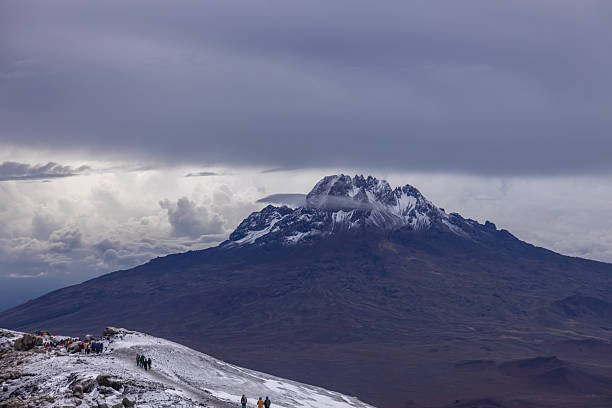
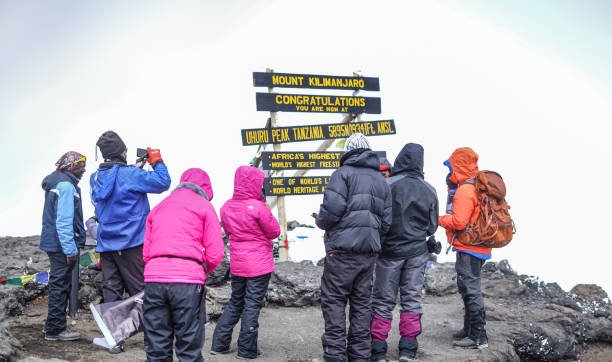
Uhuru Peak stands at 5,895 metres above sea level. At this height, the percentage of oxygen in the atmosphere is still approximately the same as at sea level, but atmospheric pressure is much lower.
This distinction is important. Kilimanjaro does not have air containing only half as much oxygen by percentage. Instead, lower atmospheric pressure means fewer oxygen molecules enter the lungs with each breath.
At sea level, atmospheric pressure is approximately 101 kilopascals under standard conditions. Near the summit of Kilimanjaro, pressure can be around 47 kilopascals, although actual pressure changes with weather and atmospheric conditions.
This means the pressure available to drive oxygen into the body near Uhuru Peak is roughly half the sea level value.
The body responds through acclimatization. Breathing rate increases, heart rate may change and other physiological adaptations begin as elevation rises.
These adaptations take time, which is why route duration, slow pacing and appropriate acclimatization are important on Mount Kilimanjaro.
Pulse oximeters are sometimes used during health checks, but an oxygen saturation number should never be interpreted by itself. Symptoms, coordination, breathing, general condition and how a climber is changing over time are equally important.
Kilimanjaro Oxygen Levels at a Glance
- Oxygen percentage: Remains close to 21 percent throughout the atmosphere.
- What changes: Atmospheric pressure decreases as elevation increases.
- Practical result: Each breath provides fewer oxygen molecules at higher altitude.
- Uhuru Peak: 5,895 metres above sea level.
- Summit pressure: Roughly 45 to 50 percent of sea level pressure depending on actual atmospheric conditions.
- Pulse oximeter: Useful as supporting information but not a stand alone diagnosis.
- Fitness: Does not prevent altitude sickness.
- Acclimatization: Requires time and varies between individuals.
Does Kilimanjaro Have Less Oxygen?
People often say there is less oxygen on Kilimanjaro.
That statement is useful in everyday conversation, but scientifically it needs clarification.
The proportion of oxygen in the atmosphere remains approximately 20.9 percent even at high altitude.
What decreases is atmospheric pressure.
Because air pressure is lower, every breath contains fewer oxygen molecules than the same volume of air would contain at sea level.
The Key Difference
- Sea level: Approximately 21 percent oxygen at high atmospheric pressure.
- Kilimanjaro summit: Still approximately 21 percent oxygen, but at much lower atmospheric pressure.
- Effect: Less oxygen pressure is available to move oxygen from the lungs into the bloodstream.
Approximate Oxygen Availability at Different Kilimanjaro Altitudes
The following comparison uses approximate atmospheric pressure relative to sea level. Values vary naturally according to temperature, weather and atmospheric conditions.
| Altitude |
Approximate Pressure Compared With Sea Level |
Practical Experience |
| Sea level |
About 100% |
Reference level |
| 3,000 metres |
About 70% |
Many trekkers begin noticing altitude effects |
| 4,000 metres |
About 60 to 65% |
Walking becomes noticeably more demanding |
| 5,000 metres |
About 50 to 55% |
Slow pacing becomes increasingly important |
| Uhuru Peak 5,895 metres |
Roughly 45 to 50% |
Extreme altitude with greatly reduced oxygen pressure |
These percentages describe approximate atmospheric pressure relative to sea level, not the percentage of oxygen in the air.
Why Breathing Feels Harder at High Altitude
As atmospheric pressure decreases, the body receives less oxygen with each breath.
The body responds by increasing ventilation, which is why climbers often notice deeper or faster breathing as they climb.
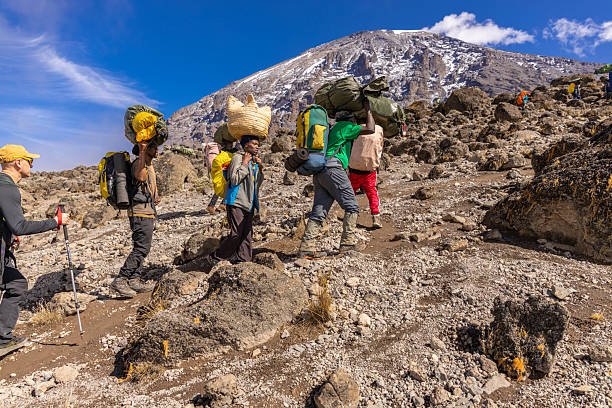
Walking that feels easy at 1,500 metres can feel substantially more demanding above 4,000 or 5,000 metres even when the terrain itself is not particularly technical.
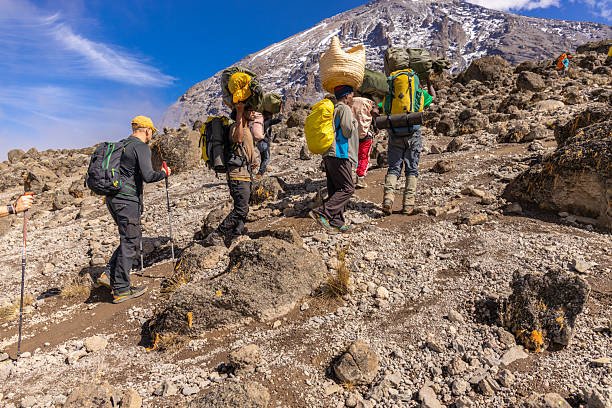
This is one reason experienced Kilimanjaro guides maintain a deliberately slow pace.
What Happens to Blood Oxygen Saturation?
Blood oxygen saturation is commonly described as SpO2 when measured by a fingertip pulse oximeter.
At sea level, healthy people commonly have relatively high oxygen saturation values.
At high altitude, lower readings are expected because the lungs are working with lower oxygen pressure.
However, there is no single Kilimanjaro oxygen saturation number that determines whether every climber is safe or unsafe.
Two people at the same camp can have different readings while feeling very different.
Trends, symptoms and guide assessment are more useful than treating one number as a pass or fail test.
What Is a Pulse Oximeter?
A pulse oximeter is a small device commonly placed on a fingertip to estimate blood oxygen saturation and pulse rate.
Some Kilimanjaro guide teams use pulse oximeters during routine health checks.
A Pulse Oximeter Can Provide
- Estimated blood oxygen saturation
- Pulse rate
- A useful trend when measurements are repeated consistently
- Supporting information for guide health assessments
It should not replace a conversation about symptoms or the guide's overall assessment of the climber.
Can Pulse Oximeter Readings Be Inaccurate?
Yes.
Pulse oximeters can be affected by several factors, particularly in cold mountain environments.
Factors That Can Affect a Pulse Oximeter Reading
- Cold fingers
- Poor circulation
- Movement during measurement
- Incorrect device positioning
- Device quality
- Nail products or other interference in some situations
- Taking a reading immediately after exertion
Guides may repeat a measurement after the climber has rested and warmed their hands.
Why One Oxygen Saturation Number Is Not Enough
A climber should never be judged solely by one SpO2 reading.
Someone can have a relatively low reading and still be walking, talking and functioning normally for that altitude.
Another person may have a different reading but be experiencing worsening headache, vomiting, confusion or difficulty walking.
Symptoms and clinical condition therefore remain extremely important.
Guide Assessment Should Consider More Than SpO2
- Headache
- Nausea or vomiting
- Appetite
- Energy level
- Dizziness
- Breathing
- Walking coordination
- Mental alertness
- Sleep
- How symptoms have changed since the previous check
Kilimanjaro Oxygen Levels at Machame Camp
Machame Camp is approximately 2,835 metres above sea level.
Atmospheric pressure is already noticeably lower than at sea level, although most climbers are still relatively early in the acclimatization process.
Some travellers may notice slightly faster breathing, mild headache or changes in sleep, while others feel little difference.
Symptoms should still be reported to the mountain guide.
Kilimanjaro Oxygen Levels at Shira Camp
Shira Camp is around 3,850 metres on many Machame itineraries.
At this elevation, atmospheric pressure is substantially lower than at sea level.
The body is working harder to deliver oxygen to tissues, and altitude symptoms may become more noticeable.
Slow walking, hydration, eating where possible and honest symptom reporting are important.
Kilimanjaro Oxygen Levels at Lava Tower
Lava Tower sits at approximately 4,600 metres.
Many Machame and Lemosho itineraries climb to Lava Tower before descending to a lower sleeping elevation at Barranco.
This gives climbers exposure to substantially reduced oxygen pressure during the day while allowing them to sleep lower afterward.
Some people experience noticeable headache, nausea or fatigue around Lava Tower.
Any symptoms should be reported to the guide team.
Kilimanjaro Oxygen Levels at Barranco Camp
Barranco Camp is approximately 3,900 metres above sea level.
Although lower than Lava Tower, oxygen pressure remains considerably reduced compared with sea level.
The descent from Lava Tower to Barranco is an example of the climb high and sleep lower strategy used within some Kilimanjaro itineraries.
Kilimanjaro Oxygen Levels at Karanga Camp
Karanga Camp is approximately 4,035 metres.
Seven day Machame normally includes a night here before moving to Barafu.
This gives climbers another night around the 4,000 metre level before reaching the higher summit camp.
The additional time may support acclimatization, although individual responses remain unpredictable.
Kilimanjaro Oxygen Levels at Barafu Camp
Barafu Camp is approximately 4,673 metres above sea level.
This is the standard summit base for many Machame and Lemosho itineraries.
At this elevation, atmospheric pressure is roughly around the mid 50 percent range compared with sea level, although actual values vary.
Climbers may notice reduced appetite, fatigue, interrupted sleep and increased breathing effort.
Because the summit attempt begins from this elevation, health assessment before departure is especially important.
Kilimanjaro Oxygen Levels at Stella Point
Stella Point is approximately 5,756 metres above sea level.
This is extreme altitude.
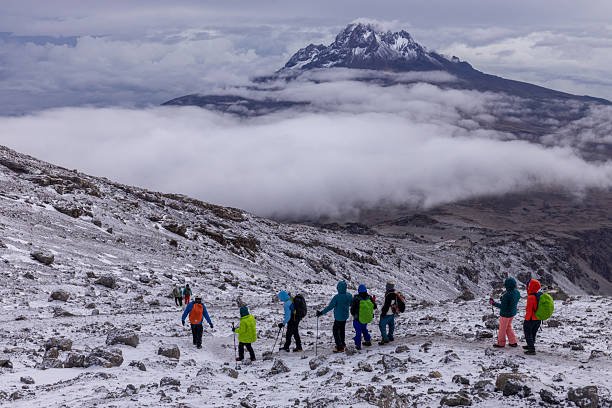
Climbers arriving here have normally already spent many hours ascending slowly from Barafu in cold nighttime conditions.
The combination of reduced oxygen pressure, fatigue and cold can make even relatively gentle walking feel difficult.
Continuation toward Uhuru Peak should depend on the climber's condition and guide assessment.
Kilimanjaro Oxygen Levels at Uhuru Peak
Uhuru Peak stands at 5,895 metres.
Atmospheric pressure near this altitude is roughly around 45 to 50 percent of standard sea level pressure.
The oxygen percentage remains close to 21 percent, but each breath delivers substantially fewer oxygen molecules than at sea level.
This is why walking only a short distance near the summit can feel disproportionately tiring.
Time at Uhuru Peak is usually limited before climbers begin descending to lower altitude.
Why Descending Makes a Difference
Descending increases atmospheric pressure and therefore increases the amount of oxygen available with each breath.
This is why descent is such an important response when a climber develops serious or worsening altitude illness.
Oxygen availability improves progressively as elevation decreases.
A climber should never resist descent when the guide considers continued ascent unsafe.
Acclimatization and Kilimanjaro Oxygen Levels
The body cannot change the mountain's oxygen pressure.
Instead, it gradually adapts to functioning with less available oxygen.
This process requires time.
Acclimatization Is Supported By
- A suitable route duration
- Gradual altitude gain
- Slow walking
- Appropriate rest
- Regular nutrition where possible
- Appropriate hydration
- Honest reporting of symptoms
- Following guide decisions
Why Longer Routes Can Help
Longer Kilimanjaro itineraries generally provide more time for the body to respond to reduced oxygen pressure.
This does not mean longer routes eliminate altitude sickness.
They simply provide additional acclimatization time compared with more compressed schedules.
Examples can include seven day Machame, longer Lemosho programs and Northern Circuit itineraries.
Six Day Versus Seven Day Machame Oxygen Exposure
Both itineraries ultimately climb to Uhuru Peak at 5,895 metres.
The difference is how quickly the itinerary progresses through intermediate camps.
Six Day Machame
Normally travels from Barranco through Karanga to Barafu in one longer day.
Seven Day Machame
Normally includes a separate overnight at Karanga before moving to Barafu.
The additional night provides more time before reaching the higher summit camp.
It does not guarantee successful acclimatization.
Lemosho Route and Oxygen Levels
Lemosho commonly uses seven or eight day itineraries.
The route generally provides a gradual approach from the western side and then joins the southern circuit.
Lava Tower, Barranco, Karanga and Barafu can form part of the progression toward the summit.
More days can provide additional acclimatization time while the body adjusts to progressively lower oxygen pressure.
Northern Circuit and Oxygen Levels
The Northern Circuit usually provides more days on Kilimanjaro than many shorter routes.
The additional time allows a gradual progression through high elevations.
However, summit altitude is still 5,895 metres, and climbers remain exposed to greatly reduced oxygen pressure near the top.
Marangu Route and Oxygen Levels
Marangu uses hut accommodation, but huts do not change atmospheric pressure.
The oxygen challenge at Kibo and the summit is still substantial.
Route comfort and altitude acclimatization should therefore be considered separately.
Rongai Route and Oxygen Levels
Rongai approaches from the northern side and progresses through increasingly high camps before reaching Kibo.
The body still needs sufficient time to adjust before the summit attempt.
Slow pacing and monitoring remain important regardless of route.
Does Fitness Improve Oxygen Levels?
Fitness improves cardiovascular efficiency and makes physical trekking easier.
It does not restore sea level oxygen pressure at altitude.
A highly trained athlete experiences the same lower atmospheric pressure as every other climber.
Strong fitness therefore helps with physical workload but does not provide immunity from altitude illness.
Can Fit Climbers Have Low Oxygen Saturation?
Yes.
Blood oxygen saturation commonly decreases at high altitude even in physically fit people.
This is why oxygen saturation should not be interpreted as a direct measurement of fitness.
The guide needs to consider how the climber feels and functions rather than assuming that strong athletes should have unusually high readings.
Does Walking Faster Increase Oxygen Levels?
No.
Walking faster increases physical demand and therefore increases the body's oxygen requirements.
At altitude, unnecessary speed can make breathing and fatigue more difficult.
A slow and sustainable pace is normally more appropriate on Kilimanjaro.
Does Drinking Water Increase Blood Oxygen?
Appropriate hydration supports normal body function during trekking but does not restore atmospheric oxygen pressure.
Drinking excessive water does not prevent altitude sickness and should not be treated as a method for increasing oxygen saturation.
Follow sensible hydration guidance from the mountain team.
Does Deep Breathing Help?
The body naturally increases ventilation at altitude.
Controlled breathing may help a climber maintain rhythm during walking, but deliberate deep breathing cannot recreate sea level atmospheric pressure.
The more important strategies remain gradual ascent, slow pacing and adequate acclimatization time.
Sleeping and Oxygen Levels
Some trekkers notice more disturbed sleep at high altitude.
Breathing patterns can change during sleep as the body responds to reduced oxygen pressure.
Sleep quality should be considered together with other symptoms rather than interpreted alone.
Tell the guide if sleep problems occur alongside significant headache, nausea, dizziness or deterioration in general condition.
Emergency Oxygen on Kilimanjaro
Professional mountain teams may carry emergency oxygen as part of their safety equipment.
Emergency oxygen can temporarily increase the amount of oxygen delivered to an unwell climber when medically appropriate.
However, oxygen should not be used simply to enable someone with serious altitude illness to continue ascending.
Emergency Oxygen Is Not a Substitute For
- Proper acclimatization
- Slow ascent
- Honest symptom reporting
- Guide assessment
- Descent when medically necessary
- Emergency evacuation when required
Can You Use Supplemental Oxygen to Summit?
Emergency oxygen and planned supplemental oxygen are different concepts.
For normal guided Kilimanjaro trekking, acclimatization rather than routine supplemental oxygen is generally the central approach.
If a climber becomes seriously unwell, oxygen may form part of emergency management, but continued ascent should not be prioritised over safety.
Individual medical questions about planned oxygen use should be discussed with the operator and an appropriate medical professional before the expedition.
Oxygen Levels and Altitude Sickness
Lower oxygen pressure is the environmental reason altitude illness becomes possible as elevation rises.
Possible early symptoms may include headache, nausea, reduced appetite, dizziness, unusual fatigue and disturbed sleep.
More serious symptoms can include confusion, severe loss of coordination or significant breathlessness at rest.
Serious deterioration requires urgent action and may require descent, oxygen or evacuation according to the situation.
When Oxygen Saturation and Symptoms Disagree
Climbers should not ignore symptoms simply because a pulse oximeter appears reassuring.
Likewise, an unexpectedly low pulse oximeter reading should normally be checked again under suitable measurement conditions rather than immediately interpreted without context.
The guide team considers both objective measurements and the climber's actual condition.
Serious Symptoms Matter More Than a Target Number
There is no universal summit oxygen saturation target that every Kilimanjaro climber must achieve.
The priority is whether the climber is functioning safely.
Urgent Warning Signs Can Include
- Confusion
- Major behavioural change
- Severe loss of coordination
- Inability to walk normally
- Breathlessness at rest
- Severe respiratory difficulty
- Rapid worsening of overall condition
These symptoms require urgent guide assessment and should never be hidden in order to continue toward the summit.
Why Descending Is So Effective
Descending increases atmospheric pressure.
As pressure rises, more oxygen molecules become available with each breath.
This is why descent is central to the management of serious altitude illness.
Emergency oxygen may provide temporary support, but it does not change the surrounding altitude.
Travel Insurance and Oxygen Related Emergencies
Climbers should have travel insurance suitable for high altitude trekking.
Check that the policy covers the maximum planned altitude and emergency evacuation.
Do not assume that every travel insurance policy automatically covers trekking near 6,000 metres.
Insurance Points to Confirm
- Maximum trekking altitude covered
- Emergency medical treatment
- Mountain evacuation
- Hospital treatment
- Trip interruption provisions
- Relevant high altitude exclusions
Preparing for Reduced Kilimanjaro Oxygen Levels
You cannot train your way into creating sea level oxygen pressure on Kilimanjaro.
However, good physical preparation reduces the amount of unnecessary effort required for normal trekking.
Useful Physical Preparation
- Long distance walking
- Hill hiking
- Stair training
- Cardiovascular conditioning
- Leg strengthening
- Core stability
- Back to back hiking days
- Training with hiking boots
- Training with your daypack
- Practicing with trekking poles
Important Information About Kilimanjaro Oxygen Levels
Kilimanjaro Oxygen Levels are best understood as decreasing oxygen availability caused by lower atmospheric pressure rather than a major change in the percentage of oxygen in the air.
The atmosphere remains approximately 21 percent oxygen.
Atmospheric pressure decreases as altitude increases.
Each breath therefore provides fewer oxygen molecules at high altitude.
Uhuru Peak stands at 5,895 metres.
Atmospheric pressure near Uhuru Peak is roughly around half the standard sea level value.
Actual atmospheric pressure varies with weather and environmental conditions.
Blood oxygen saturation usually decreases as climbers ascend.
There is no single SpO2 number that should be used alone to determine whether every climber is safe.
Pulse oximeter readings can be affected by cold hands, movement and measurement conditions.
A pulse oximeter should be considered supporting information rather than a complete diagnosis.
Symptoms and general condition are extremely important.
Fitness does not prevent reduced oxygen saturation at altitude.
Fitness does not prevent altitude sickness.
Younger age does not guarantee better acclimatization.
Previous altitude experience does not guarantee the same response on another climb.
Longer routes generally provide more acclimatization time.
No route guarantees successful acclimatization.
Seven day Machame includes an additional Karanga overnight compared with six day Machame.
Lava Tower can provide a climb high and sleep lower acclimatization profile.
Barafu Camp is approximately 4,673 metres.
Stella Point is approximately 5,756 metres.
Uhuru Peak is approximately 5,895 metres.
Slow walking is normal and appropriate on Kilimanjaro.
Walking faster does not increase environmental oxygen availability.
Appropriate hydration is important but does not prevent altitude illness by itself.
Emergency oxygen may be carried as part of mountain safety arrangements.
Emergency oxygen should not be treated as permission to continue ascending despite serious symptoms.
Descent increases atmospheric pressure and oxygen availability.
Confusion, severe loss of coordination and breathlessness at rest require urgent attention.
Guide safety decisions take priority over reaching the summit.
Summit success cannot be guaranteed.
Travellers with medical conditions, previous severe altitude illness or concerns about high altitude should discuss their plans with an appropriate medical professional before travelling.
Why Understanding Kilimanjaro Oxygen Levels Matters
Understanding Kilimanjaro Oxygen Levels helps climbers understand why a nontechnical mountain can still become extremely demanding.
The challenge does not come from a dramatic change in the percentage of oxygen in the atmosphere.
It comes from progressively lower atmospheric pressure as the route climbs from the lower slopes toward almost 5,900 metres.
A longer itinerary, slow pacing, appropriate physical preparation and honest health communication can support safer acclimatization.
Climbers should pay attention to how they feel rather than becoming fixated on achieving a specific pulse oximeter number.
The aim is to ascend safely, recognise deterioration early and accept descent whenever the guide determines that continuing higher is unsafe.
Frequently Asked Questions About Kilimanjaro Oxygen Levels
What are Kilimanjaro Oxygen Levels?
The phrase normally refers to the progressively reduced oxygen availability climbers experience as atmospheric pressure falls with altitude.
Is there less than 21 percent oxygen at the Kilimanjaro summit?
The proportion of oxygen remains close to 21 percent. The main change is much lower atmospheric pressure.
Why does it feel like there is less oxygen?
Lower atmospheric pressure means fewer oxygen molecules are available with each breath.
How much atmospheric pressure is available at Uhuru Peak?
Near 5,895 metres, atmospheric pressure is roughly around 45 to 50 percent of standard sea level pressure, with variation according to actual conditions.
Does this mean oxygen is approximately half of sea level?
Oxygen pressure is roughly around half the sea level value near the summit, but the atmospheric oxygen percentage remains close to 21 percent.
What is blood oxygen saturation?
It is an estimate of the percentage of haemoglobin carrying oxygen in the blood and is commonly displayed as SpO2.
Does blood oxygen saturation fall on Kilimanjaro?
It commonly decreases as elevation increases because of lower atmospheric oxygen pressure.
What should my oxygen saturation be on Kilimanjaro?
There is no single target value appropriate for every climber and every camp. Readings should be interpreted together with symptoms, altitude, trends and guide assessment.
Can I summit if my pulse oximeter reading is low?
A summit decision should not be based on one number alone. Your symptoms, coordination, breathing, general condition and guide assessment are all important.
Can a pulse oximeter be wrong?
Readings can be affected by cold fingers, movement, circulation, device placement and other measurement factors.
Why do guides repeat oxygen readings?
Repeating measurements after rest or warming the hands can help reduce the effect of poor measurement conditions and provide a more useful trend.
Does fitness improve my pulse oximeter number?
Fitness supports physical performance but does not prevent reduced oxygen saturation caused by high altitude.
Can an athlete have altitude sickness?
Yes. Excellent fitness does not provide immunity from altitude illness.
Why do we walk slowly on Kilimanjaro?
Slow walking reduces unnecessary physical demand while the body adjusts to progressively lower oxygen pressure.
Does walking faster increase oxygen intake?
Faster walking increases the body's oxygen demand and can increase fatigue rather than changing the environmental oxygen pressure.
Does drinking water increase oxygen saturation?
Appropriate hydration is important for trekking but does not recreate sea level oxygen pressure or guarantee higher saturation.
Does deep breathing increase oxygen levels?
The body naturally increases ventilation at altitude, but deliberate deep breathing cannot eliminate the effect of reduced atmospheric pressure.
How high is Machame Camp?
Machame Camp is approximately 2,835 metres above sea level.
How high is Shira Camp?
Shira Camp is approximately 3,850 metres on the standard Machame itinerary used here.
How high is Lava Tower?
Lava Tower is approximately 4,600 metres above sea level.
How high is Barranco Camp?
Barranco Camp is approximately 3,900 metres above sea level.
How high is Karanga Camp?
Karanga Camp is approximately 4,035 metres above sea level.
How high is Barafu Camp?
Barafu Camp is approximately 4,673 metres above sea level.
How high is Stella Point?
Stella Point is approximately 5,756 metres above sea level.
How high is Uhuru Peak?
Uhuru Peak stands at approximately 5,895 metres above sea level.
Why does Lava Tower help acclimatization?
Machame and Lemosho itineraries can climb to around 4,600 metres at Lava Tower before descending to sleep lower, creating a climb high and sleep lower profile.
Does seven day Machame provide more acclimatization time?
Yes. It normally includes a separate Karanga overnight before Barafu, providing more time than the six day itinerary.
Does more acclimatization time guarantee good oxygen saturation?
No. Longer itineraries provide more adjustment time, but individual responses still vary.
Do Kilimanjaro guides carry oxygen?
Professional operators may carry emergency oxygen according to their mountain safety procedures.
Can emergency oxygen help at altitude?
Emergency oxygen can increase oxygen delivery temporarily when medically appropriate, but it does not replace acclimatization or necessary descent.
Can oxygen be used so an unwell climber can continue upward?
Emergency oxygen should not be treated as permission to continue ascending when serious symptoms indicate that descent is necessary.
Why does descending help?
Atmospheric pressure increases as elevation decreases, so more oxygen becomes available with each breath.
What symptoms are more important than the oxygen number?
Confusion, severe loss of coordination, significant breathing difficulty, worsening illness and major changes in condition require urgent attention regardless of a single pulse oximeter reading.
Should I buy my own pulse oximeter?
You may choose to carry one, but readings should not replace professional guide assessment or encourage self diagnosis based on a single number.
Can cold weather affect my pulse oximeter reading?
Yes. Cold fingers and reduced peripheral circulation can interfere with reliable fingertip readings.
Does altitude medication raise oxygen levels?
Some prescription medicines may support acclimatization in appropriate circumstances, but medication decisions should be discussed with a qualified medical professional before the climb.
Can I prevent low oxygen levels completely?
No. Reduced atmospheric oxygen pressure is an unavoidable feature of climbing to high altitude.
Can training stop my oxygen saturation from falling?
Training improves trekking fitness but cannot prevent the environmental effects of reduced atmospheric pressure.
Does previous altitude experience guarantee good oxygen readings?
No. Previous experience may provide personal context, but each expedition and each altitude response can be different.
Can children or younger climbers have reduced oxygen saturation?
Yes. All climbers are exposed to lower atmospheric pressure at altitude, regardless of age.
Can older climbers have normal acclimatization?
Altitude response varies individually, and age alone does not determine how someone will acclimatize.
Do I need special insurance because of Kilimanjaro Oxygen Levels?
Climbers should confirm that their travel insurance covers trekking to the planned altitude and emergency evacuation rather than relying on ordinary low altitude travel coverage.
How should I prepare for Kilimanjaro Oxygen Levels?
Choose an itinerary with appropriate acclimatization time, train for the physical trek, walk slowly, report symptoms honestly, follow guide health checks and discuss personal medical concerns with an appropriate medical professional before travelling.
Plan Your Climb With Kilimanjaro Oxygen Levels in Mind
Choose a Kilimanjaro itinerary with enough acclimatization time, climb at a slow sustainable pace and use guide health checks, symptoms and oxygen readings together when assessing your condition on the mountain.
Plan Your Kilimanjaro Climb

 Kilimanjaro Climb