Best Kilimanjaro Route for First Time Climbers
Choosing the Best Kilimanjaro Route for First Time Climbers should begin with the amount of time available for acclimatisation rather than simply looking for the shortest or apparently easiest route.
Mount Kilimanjaro can be climbed by trekkers without technical mountaineering experience on the standard routes, but reaching high altitude safely requires preparation, patience and a well paced itinerary.
For many first time climbers, the eight day Lemosho Route provides a strong balance of gradual progression, varied scenery and sufficient mountain time.
Seven day Machame and seven day Rongai can also provide suitable alternatives, while travellers with more time can consider the longer Northern Circuit.
Marangu is distinctive because it uses mountain huts rather than tents, but first time climbers considering this route should pay particular attention to itinerary length and avoid treating hut accommodation as proof that the mountain itself is easier.
First Time Kilimanjaro Route Guide
- 8 Day Lemosho: Balanced longer itinerary with varied scenery
- 7 Day Machame: Popular scenic camping route with good mountain time
- 7 Day Rongai: Quieter northern approach with gradual progression
- Northern Circuit: Long itinerary with extensive time on the mountain
- 6 Day Marangu: Hut accommodation with an additional acclimatisation day
Which Kilimanjaro Route Is Good for a First Time Climber?
For many first time climbers, the most useful starting point is an itinerary lasting at least seven or eight mountain days where travel time permits.
More mountain days can provide additional opportunities for gradual altitude exposure before summit night.
This is particularly important because altitude rather than technical climbing is usually the main challenge on Kilimanjaro.
An eight day Lemosho itinerary can therefore be particularly attractive to a first time high altitude trekker who wants a balanced route without rushing the mountain.
What First Time Climbers Should Prioritise
- Enough mountain days
- Gradual altitude progression
- Professional guide support
- Appropriate training
- Suitable cold weather equipment
- Regular health monitoring
- Realistic summit expectations
- A comfortable walking pace
8 Day Lemosho for First Time Climbers
The eight day Lemosho Route is a strong option for travellers planning their first Kilimanjaro climb.
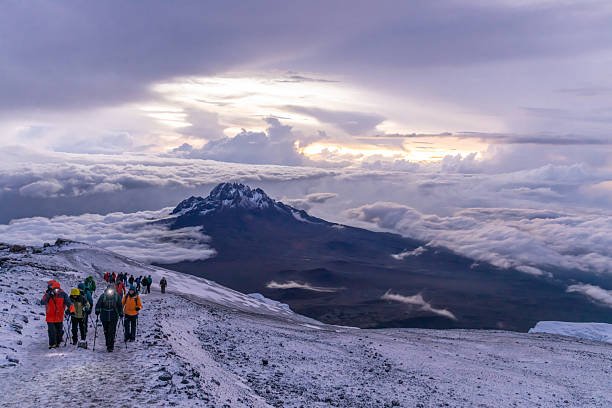
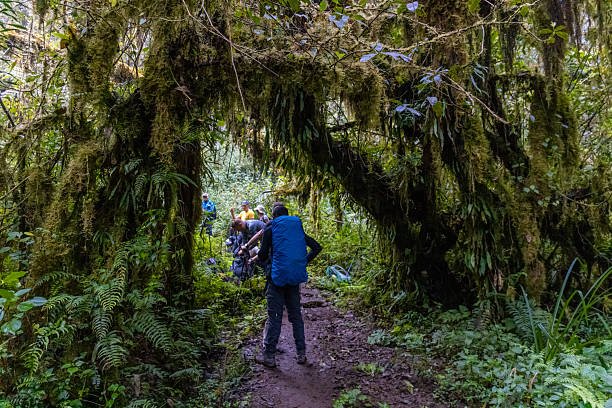
The route approaches from western Kilimanjaro and begins through rainforest before reaching the Shira Plateau.
It then crosses higher terrain toward Lava Tower and descends to Barranco before continuing through Karanga and Barafu.
The route provides a broad variety of scenery and several mountain stages before summit night.
The eight day version normally provides more time than shorter Lemosho variations and can include separate Shira 1, Shira 2 and Karanga overnights.
Typical 8 Day Lemosho Itinerary
- Day 1: Lemosho trailhead to Mti Mkubwa
- Day 2: Mti Mkubwa to Shira 1
- Day 3: Shira 1 to Shira 2
- Day 4: Shira 2 via Lava Tower to Barranco
- Day 5: Barranco to Karanga
- Day 6: Karanga to Barafu
- Day 7: Summit attempt and descend to Mweka
- Day 8: Mweka Gate and return to Moshi
Why Lemosho Works Well for Many First Timers
Lemosho does not begin with an immediate aggressive ascent to the highest camps.
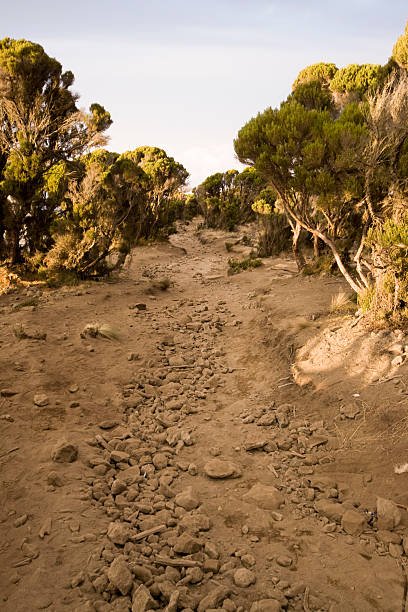
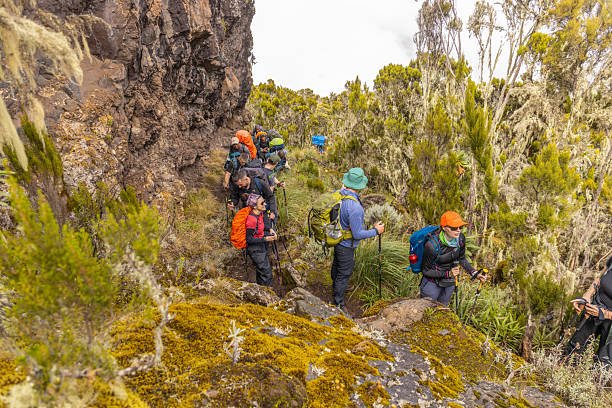
Climbers gradually move from rainforest through heath and moorland toward the Shira Plateau.
The itinerary later includes higher altitude exposure around Lava Tower before descending toward Barranco.
This route structure provides useful time for the guide to observe how each climber is responding before the summit stage.
Shira Plateau Experience
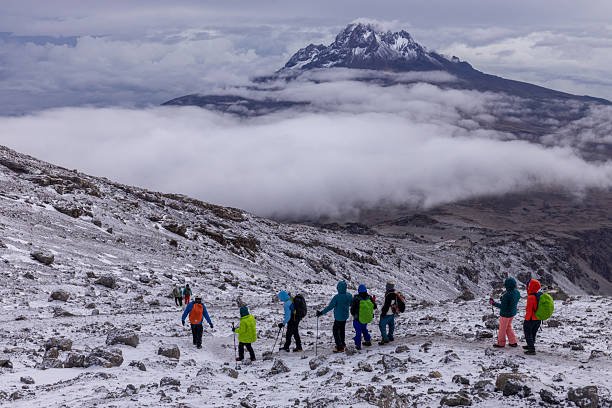
Shira Plateau is one of the defining features of the Lemosho Route.
First time climbers experience increasingly open mountain scenery as the route leaves the forest behind.
On the eight day itinerary, separate Shira stages can make this part of the climb feel less compressed.
Lava Tower and Acclimatisation
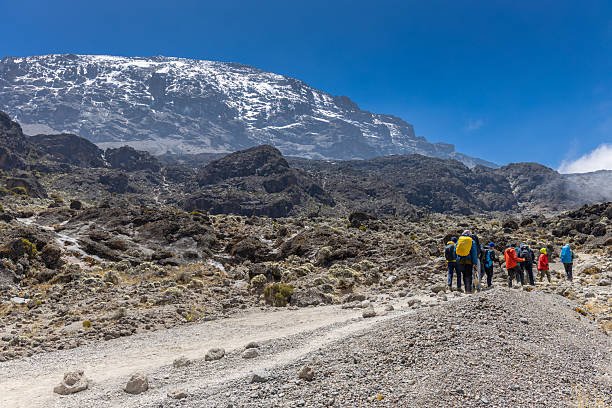
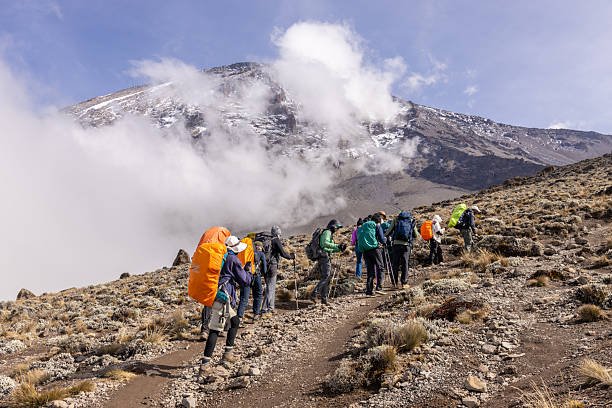
Lava Tower is an important high altitude stage on standard Lemosho and Machame itineraries.
Climbers reach higher elevation during the day and then descend toward Barranco for the night.
This creates useful altitude exposure before returning to a lower sleeping elevation.
First time trekkers should understand that feeling tired during this stage can be normal, but concerning symptoms should always be reported to the guide.
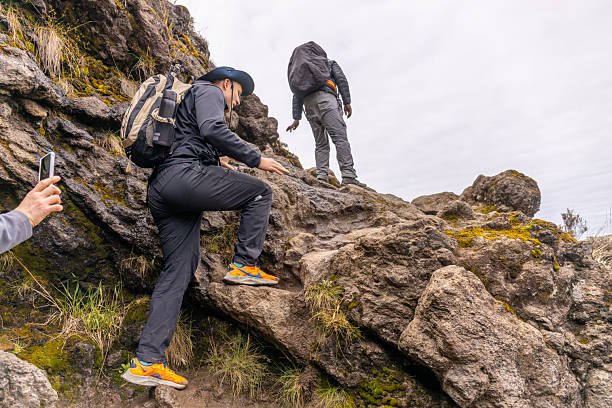
Barranco Wall for Beginners
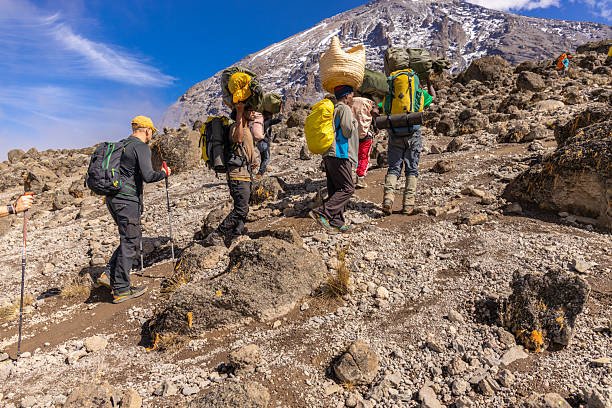
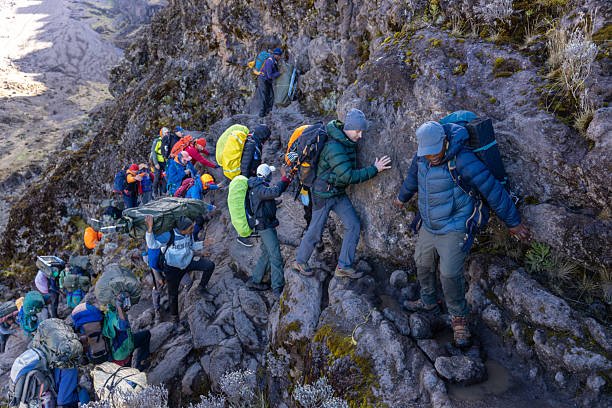
Barranco Wall can look intimidating when viewed from Barranco Camp.
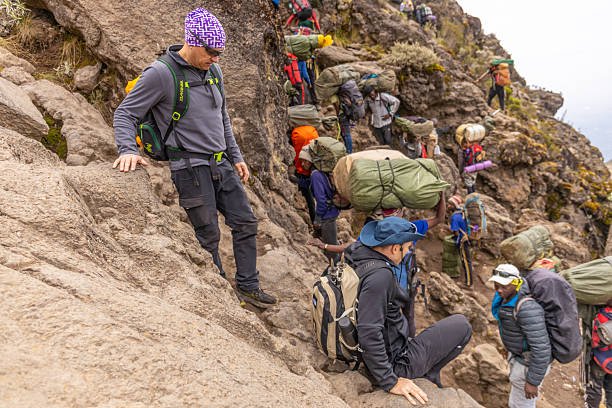
The established route involves steep trekking and sections where climbers use their hands for balance.
It is not normally treated as technical rock climbing.
The guide controls the pace and helps climbers move carefully through the busier or steeper sections.
Many first time climbers find that the wall is less intimidating once they begin moving through it.
Karanga Before Summit Camp
The eight day Lemosho itinerary normally uses Karanga as a separate overnight.
This separates the Barranco Wall stage from the final progression toward Barafu.
For a first time climber, having another mountain night before summit camp can make the itinerary feel less compressed.
7 Day Machame for First Time Climbers
Machame is another established option for first time Kilimanjaro climbers.
The route approaches from southern Kilimanjaro and passes through rainforest before reaching Shira.
It then continues via Lava Tower, Barranco, Karanga and Barafu.
The seven day version normally keeps Karanga as a separate overnight and provides more mountain time than the six day schedule.
Typical 7 Day Machame Itinerary
- Day 1: Machame Gate to Machame Camp
- Day 2: Machame Camp to Shira Camp
- Day 3: Shira via Lava Tower to Barranco
- Day 4: Barranco to Karanga
- Day 5: Karanga to Barafu
- Day 6: Summit and descend to Mweka
- Day 7: Mweka Gate and Moshi
Lemosho vs Machame for First Time Climbers
Lemosho and Machame eventually share much of the same southern circuit.
The principal difference is the early approach.
Lemosho begins farther west and usually provides a longer approach across Shira Plateau, while Machame climbs onto the plateau more directly from the south.
First time climbers with enough time can consider the eight day Lemosho itinerary, while seven day Machame can suit travellers with a slightly shorter schedule.
Lemosho vs Machame for Beginners
- Lemosho: Longer western approach
- Machame: Southern approach
- Lemosho: Common 7 day and 8 day options
- Machame: Common 6 day and 7 day options
- Both: Camping routes
- Both: Lava Tower and Barranco on standard itineraries
- Both: Summit preparation from Barafu on standard itineraries
7 Day Rongai for First Time Climbers
Rongai approaches Kilimanjaro from the northern side near the Kenya border.
The route generally experiences lower trail traffic during much of the ascent than the popular southern approaches.
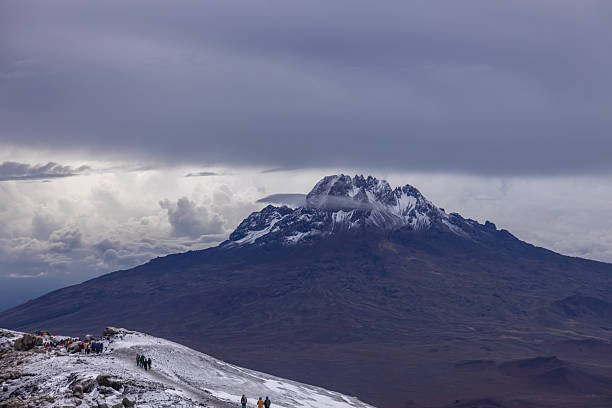
A seven day Rongai itinerary provides more mountain time than the six day version and can include additional acclimatisation around Mawenzi.
Rongai can therefore suit first time climbers who prefer a quieter ascent and different scenery from Lemosho or Machame.
Typical 7 Day Rongai Itinerary
- Day 1: Rongai trailhead to Simba Camp
- Day 2: Simba Camp to Second Cave
- Day 3: Second Cave to Kikelewa
- Day 4: Kikelewa to Mawenzi area
- Day 5: Mawenzi area to Kibo
- Day 6: Summit and descend toward Horombo
- Day 7: Horombo to Marangu Gate
Northern Circuit for First Time Climbers
The Northern Circuit is the longest commonly used Kilimanjaro route and provides extensive time on the mountain.
It begins from western Kilimanjaro before crossing the Shira area and turning onto the quieter northern slopes.
The route continues through areas such as Moir, Buffalo Camp and Third Cave before reaching the summit preparation area.
Its long itinerary can be attractive to first time climbers who have sufficient travel time and are comfortable with additional trekking distance.
The additional mountain days also increase the overall expedition cost.
Northern Circuit vs Lemosho for Beginners
Both routes begin from western Kilimanjaro and provide longer schedules than many alternatives.
Lemosho later turns toward the southern circuit and passes Barranco, Karanga and Barafu.
The Northern Circuit continues onto the quieter northern side through Moir, Buffalo Camp and Third Cave.
A first time climber wanting a balanced eight day itinerary can consider Lemosho, while someone with more time who wants a longer traverse can compare the Northern Circuit.
Marangu for First Time Climbers
Marangu is attractive to some first time climbers because it uses huts rather than tents.
The standard route travels through Mandara, Horombo and Kibo before the summit attempt.
However, the straightforward trail should not be confused with an easy altitude profile.
Travellers considering Marangu should compare the six day itinerary with the shorter five day version.
The six day program normally adds an acclimatisation day around Horombo before moving to Kibo.
Camping vs Huts for a First Kilimanjaro Climb
Accommodation preference can influence route choice.
Lemosho, Machame, Rongai and Northern Circuit use camping arrangements.
Marangu uses mountain huts.
Some first time climbers prefer the structure of a hut, while others enjoy the expedition atmosphere of camping.
Accommodation type does not determine how the body will respond to altitude.
Camping Routes
- Lemosho
- Machame
- Rongai
- Northern Circuit
Hut Route
Is Kilimanjaro Suitable for Beginners?
Many people climb Kilimanjaro without previous technical mountaineering experience.
The standard trekking routes do not normally require ropes, ice axes or technical rock climbing skills.
However, this does not mean Kilimanjaro is an easy trek.
The summit reaches very high altitude, and climbers must cope with cold conditions, fatigue, reduced oxygen and several consecutive trekking days.
Altitude Is the Main Challenge for First Timers
Many first time climbers worry about steep trails or physical fitness before considering altitude.
Fitness is important, but even very fit people can experience significant altitude symptoms.
The body requires time to adjust to reduced oxygen availability as elevation increases.
Choosing a longer itinerary can therefore be more valuable than simply choosing the route that appears shortest or easiest on a map.
Why More Mountain Days Can Help
Additional mountain days do not guarantee summit success, but they can create a less compressed altitude schedule.
The guide also has more time to observe how the climber is responding before the final ascent.
This is one reason first time climbers often compare longer Lemosho and Northern Circuit programs with shorter alternatives.
Walking Slowly Is Essential
First time climbers sometimes begin too quickly because the lower mountain feels comfortable.
Kilimanjaro is not a race.
A controlled pace helps conserve energy for later days and avoids unnecessary exertion while the body is adjusting to elevation.
Follow the pace established by the mountain guide even when you feel capable of walking faster.
First Time Climber Rules to Remember
- Do not race other climbers
- Follow your guide's pace
- Eat regularly
- Stay appropriately hydrated
- Keep warm and dry
- Report symptoms early
- Rest whenever possible
- Keep summit expectations flexible
How Fit Do First Time Climbers Need to Be?
You do not need to be an elite athlete to prepare for Kilimanjaro.
You should, however, be comfortable walking for several hours over consecutive days.
Good cardiovascular endurance, leg strength and general hiking fitness can make the expedition considerably more manageable.
The summit day is long, so endurance training is particularly useful.
Training for Your First Kilimanjaro Climb
Useful Training
- Regular hiking
- Long walks
- Hill training
- Stair training
- Leg strengthening
- Core stability
- Walking with your daypack
- Consecutive hiking days
Do First Time Climbers Need Previous Altitude Experience?
Previous high altitude trekking experience can be useful but is not automatically required for every Kilimanjaro climber.
Many travellers experience high altitude trekking for the first time on Kilimanjaro.
The route and itinerary should therefore provide sufficient time for gradual adjustment, and climbers should communicate openly with their guides throughout the trek.
Health Monitoring for Beginners
First time high altitude travellers may not immediately recognise how altitude is affecting them.
Guides may conduct regular health checks according to expedition procedures.
Headaches, nausea, dizziness, unusual fatigue, confusion or breathing problems should be reported promptly.
Trying to hide symptoms in order to reach the summit can create unnecessary risk.
Professional Guide Support
The quality of mountain guiding is important on every Kilimanjaro route.
The lead guide manages the daily pace, route briefings, health observations and summit decisions.
Assistant guides can be assigned according to group size and expedition requirements.
First time climbers should feel comfortable communicating honestly with the guide about fatigue, appetite, sleep and altitude symptoms.
Summit Night for First Time Climbers
The final ascent is usually the most demanding part of Kilimanjaro.
Depending on the route, summit preparation takes place at Barafu, Kibo, School Hut or another confirmed high camp.
The summit attempt involves cold temperatures, darkness or early morning conditions, steep uphill trekking and reduced oxygen availability.
Climbers should concentrate on maintaining a steady pace rather than thinking about the entire remaining distance.
Summit Night Preparation
- Warm base layers
- Insulating layers
- Insulated summit jacket
- Waterproof outer clothing
- Warm gloves
- Warm hat
- Headlamp
- Trekking poles
- Water
- Personal snacks where appropriate
What If You Cannot Reach the Summit?
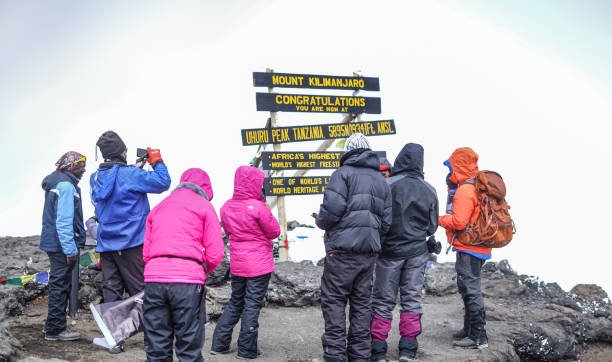
Reaching Uhuru Peak is an important goal, but it should never be considered more important than health.
If the guide determines that continued ascent is unsafe, descent may be required.
Turning around at altitude is a responsible safety decision when conditions require it.
A well managed Kilimanjaro expedition should prioritise safe ascent and descent rather than attempting to preserve an advertised success percentage.
Best Route for First Time Solo Climbers
Solo travellers can join scheduled Kilimanjaro groups or arrange private climbs.
Lemosho and Machame can have regular group joining departures, while Rongai and Northern Circuit groups may be available on selected dates.
The route should be chosen according to itinerary quality rather than simply based on which group is cheapest.
Best Route for First Time Couples
Couples can join an existing group or organise a private climb for two.
An eight day Lemosho itinerary can provide a longer shared trekking experience, while seven day Machame provides another established option.
Couples wanting quieter terrain can compare Rongai or Northern Circuit.
Best Route If You Prefer a Quieter Trail
Rongai and Northern Circuit can provide quieter sections than the popular southern routes.
The Northern Circuit moves around the northern side after crossing western Kilimanjaro, while Rongai begins directly from the northern approach.
Actual trail traffic changes according to season and departure date.
Best Route If Scenery Is Important
Lemosho provides extensive landscape variety, beginning with rainforest and continuing across Shira Plateau before reaching the southern circuit.
Machame also offers varied scenery through rainforest, Shira, Lava Tower and Barranco.
Northern Circuit provides a broader journey around the mountain, while Rongai offers distinctive Mawenzi scenery.
Best Route If You Do Not Want to Camp
Marangu is the main route for travellers who prefer mountain huts.
For a first time climber selecting Marangu, the six day schedule can provide more acclimatisation time than the five day version.
Hut accommodation should not be interpreted as making summit day easy.
Routes First Time Climbers Should Approach Carefully
Short, aggressive itineraries deserve careful consideration because they provide less time for acclimatisation.
Umbwe is a particularly steep and direct approach and is generally better suited to trekkers who understand the implications of rapid altitude gain.
Likewise, choosing the shortest possible variation of another route simply to reduce price or trip duration may not provide the itinerary a first time high altitude climber wants.
Kilimanjaro Success Rates for First Time Climbers
Success percentages published online should be treated carefully.
There is no universal percentage that predicts whether an individual first time climber will reach Uhuru Peak.
Longer itineraries are commonly associated with better acclimatisation opportunities, but results also depend on individual altitude response, health, guide management, weather and preparation.
Best Route Based on Available Time
If You Have Around 6 Mountain Days
Compare six day Marangu, Machame or Rongai schedules carefully, understanding that shorter itineraries provide less acclimatisation time than longer versions.
If You Have 7 Mountain Days
Seven day Machame, seven day Lemosho and seven day Rongai can provide suitable first time options depending on your preferred route style.
If You Have 8 Mountain Days
Eight day Lemosho provides a strong combination of additional mountain time, varied scenery and a well established itinerary.
If You Have 9 or More Mountain Days
Consider the Northern Circuit if you want extensive time on Kilimanjaro and are comfortable with a longer expedition.
Kilimanjaro Route Cost for First Time Climbers
Longer routes generally cost more because they require additional mountain crew days, food and camping logistics.
However, choosing the shortest option only to reduce price can also reduce the available acclimatisation time.
First time climbers should compare the complete itinerary and inclusions rather than choosing only according to the lowest advertised cost.
Equipment for Your First Kilimanjaro Climb
- Well fitted trekking boots
- Comfortable daypack
- Base layers
- Warm mid layers
- Insulated summit jacket
- Waterproof jacket and trousers
- Warm gloves
- Warm hat
- Headlamp
- Trekking poles
- Suitable sleeping bag for camping routes
- Water bottles or hydration system
- Sun protection
Equipment Rental in Moshi
Selected Kilimanjaro equipment can be rented in Moshi where available.
A pre climb equipment inspection helps first time climbers identify anything missing before leaving for the mountain.
Rental gear should be checked carefully for suitable sizing and condition.
Moshi Before Your First Kilimanjaro Climb
Moshi provides a practical base before climbing Mount Kilimanjaro.
Travellers can rest after international travel, meet the guide and complete the equipment check.
The guide briefing should explain the route, camping or hut arrangements, daily schedule and summit preparations.
Private First Time Kilimanjaro Climb
First time climbers can arrange a private expedition for one person, a couple, family or group of friends.
A private departure can provide flexibility when choosing dates and coordinating hotels, airport transfers and safari arrangements.
The mountain route itself still follows established trails and camps.
Group Joining Kilimanjaro for Beginners
A scheduled group departure allows travellers from separate bookings to climb together.
This can be particularly useful for solo first time climbers.
Participants should confirm the exact itinerary length before joining because two groups using the same route name can follow different numbers of mountain days.
First Kilimanjaro Climb and Safari
A Tanzania safari can be added after Kilimanjaro.
Many climbers prefer to complete the mountain first and then continue to wildlife areas where the itinerary is physically less demanding.
Popular Post Climb Safari Destinations
- Tarangire National Park
- Lake Manyara National Park
- Ngorongoro Crater
- Serengeti National Park
- Private safari
- Group joining safari
Kilimanjaro and Zanzibar for First Time Visitors
Zanzibar can be added after the climb or after a Kilimanjaro and safari combination.
This allows travellers to relax on the coast after completing their mountain expedition.
How to Choose Your First Kilimanjaro Route
First Time Route Selection Checklist
- How many mountain days can you allow?
- Do you prefer a longer acclimatisation schedule?
- Do you want camping or huts?
- Do you prefer quieter trails?
- Is varied scenery important?
- Do you want to experience Barranco Wall?
- Do you want private or group joining?
- What is your complete travel budget?
- Will you add safari or Zanzibar?
Frequently Asked Questions
What is the best Kilimanjaro route for first time climbers?
There is no universal route for every beginner, but eight day Lemosho provides a strong combination of mountain time, gradual progression and varied scenery for many first time climbers.
Is Lemosho good for beginners?
Yes. Longer Lemosho itineraries provide several mountain days before the summit and a gradual western approach.
Is Machame suitable for first time climbers?
Yes. Seven day Machame can suit first time climbers who are prepared for camping, Barranco Wall and several consecutive trekking days.
Is Rongai suitable for beginners?
Yes. A longer Rongai itinerary can suit first time climbers wanting a quieter northern approach and Mawenzi scenery.
Is Northern Circuit suitable for first time climbers?
Yes, especially for travellers with sufficient time who want a longer mountain itinerary and are comfortable with the additional trekking distance.
Is Marangu good for beginners?
Marangu can suit first time climbers who prefer huts, but the altitude schedule remains challenging. The six day itinerary provides more acclimatisation time than the five day version.
Do I need climbing experience?
Technical climbing experience is not normally required on standard Kilimanjaro trekking routes, but training and high altitude preparation remain important.
Do I need previous altitude experience?
Previous altitude experience can be useful but is not automatically required. Many climbers experience high altitude trekking for the first time on Kilimanjaro.
Which Kilimanjaro route is least technical?
The standard trekking routes do not normally require technical climbing. Route difficulty is influenced more by altitude, duration, steepness and daily trekking distance.
Which route has huts?
Marangu is the main Kilimanjaro route using hut accommodation.
Which routes use tents?
Lemosho, Machame, Rongai and Northern Circuit use camping arrangements on their ascent itineraries.
Should beginners choose the shortest route?
Not necessarily. Shorter schedules provide less mountain time, so first time climbers should consider acclimatisation as well as cost and total trip duration.
How many days should a first time climber spend on Kilimanjaro?
Seven or eight day itineraries provide useful longer options for many first time climbers, while longer Northern Circuit programs provide additional mountain time.
Can first time climbers join a group?
Yes. Scheduled group joining departures can be suitable for solo travellers, couples and friends climbing Kilimanjaro for the first time.
Can beginners book a private climb?
Yes. Private Kilimanjaro expeditions can be arranged for first time solo climbers, couples, families and groups.
Does choosing Lemosho guarantee reaching the summit?
No. No Kilimanjaro route can guarantee summit success because altitude response, health and mountain conditions vary between individuals.
Can I add safari after my first Kilimanjaro climb?
Yes. Tarangire, Lake Manyara, Ngorongoro and Serengeti can be combined with a Kilimanjaro itinerary.
Can I add Zanzibar after Kilimanjaro?
Yes. Zanzibar can be added after the climb or after a combined Kilimanjaro and safari itinerary.
Plan Your First Kilimanjaro Climb
Compare Lemosho, Machame, Rongai, Northern Circuit and Marangu according to acclimatisation time, scenery, accommodation and the number of mountain days available.
Choose a private or group joining climb and add Moshi hotels, airport transfers, equipment rental, safari or Zanzibar to create your complete first Kilimanjaro experience.
Plan Your First Kilimanjaro Climb

 Kilimanjaro Climb