Kilimanjaro Trekking Poles Rental 2026-2027
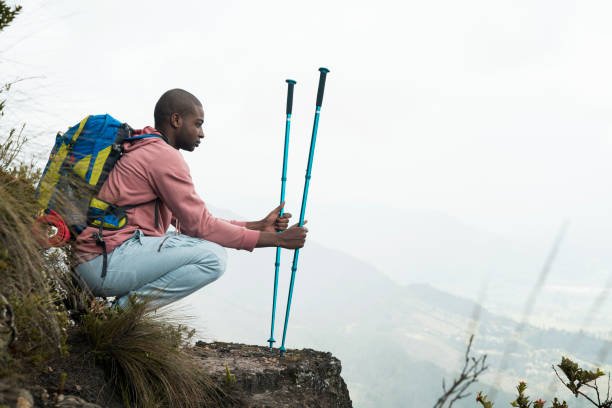
Kilimanjaro trekking poles can be rented before your climb and are highly useful for improving balance, supporting the knees and providing additional stability on steep, rocky and uneven mountain terrain.
Many climbers arrange trekking pole rental in Moshi during their pre climb equipment check.
Rental is especially convenient for international travellers who do not want to purchase hiking poles or transport them through airports.
The poles should be adjustable, comfortable and mechanically reliable before you begin the trek.
Kilimanjaro Trekking Poles Rental at a Glance
- Rental location: Commonly arranged in Moshi
- Main purpose: Balance and knee support
- Most useful: Steep ascents and long descents
- Especially useful: Summit descent
- Recommended type: Adjustable trekking poles
- Suitable routes: Lemosho, Machame, Marangu, Rongai and Northern Circuit
- Important check: Locking mechanism and pole length
- Best preparation: Practice using poles before the climb
Can You Rent Trekking Poles for Kilimanjaro?
Yes. Trekking poles can normally be rented before climbing Mount Kilimanjaro.
Moshi is one of the most convenient places to organize rental equipment because many climbers stay there before travelling to their mountain gate.
Poles can be included in your equipment request before arrival or arranged during the pre climb gear inspection.
It is still advisable to request them early during busy climbing seasons so suitable equipment is available.
Do You Need Trekking Poles for Kilimanjaro?
Trekking poles are not compulsory for standard Kilimanjaro routes, but they are highly recommended for many climbers.
The mountain includes long uphill and downhill sections where additional balance can be helpful.
Poles become especially useful when descending on tired legs.
They can also provide additional stability on loose scree, wet trails, rocky terrain and uneven surfaces.
Why Use Trekking Poles on Kilimanjaro?
- Improve balance on uneven terrain
- Provide extra stability during steep sections
- Reduce pressure on knees during descents
- Support tired legs after summit night
- Help establish a steady walking rhythm
- Provide confidence on slippery sections
- Useful on loose volcanic scree
Why Trekking Poles Are Useful on Kilimanjaro
Kilimanjaro is not technically difficult on its standard trekking routes, but the terrain changes significantly throughout the journey.
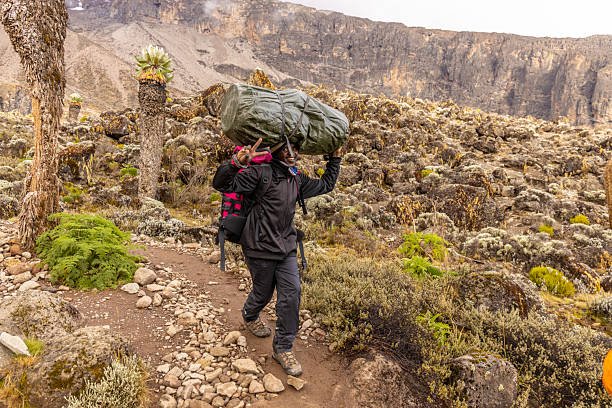
Climbers may walk through rainforest, moorland, rocky alpine desert and loose volcanic terrain during the same expedition.
A pair of trekking poles can provide two additional points of contact with the ground.
This can improve stability and make movement feel more controlled, particularly when fatigue increases.
Kilimanjaro Trekking Poles for Downhill Sections
Long descents are one of the main reasons trekking poles are recommended.
Descending repeatedly places stress on the quadriceps and knees.
Poles allow part of your body weight to be supported through the upper body while helping control the speed of descent.
They can be particularly valuable after reaching the summit because climbers still have several hours of downhill trekking before reaching camp.
When Trekking Poles Are Most Useful
- Steep uphill sections
- Long downhill trails
- Loose volcanic scree
- Wet rainforest trails
- Rocky terrain
- When legs become tired
- During the descent after summit night
Trekking Poles for Summit Night
Summit night is generally the longest and most demanding section of a Kilimanjaro climb.
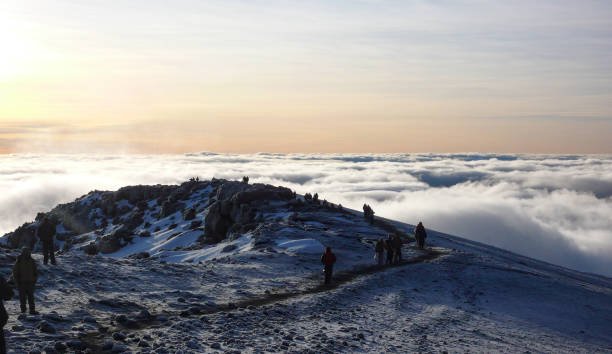
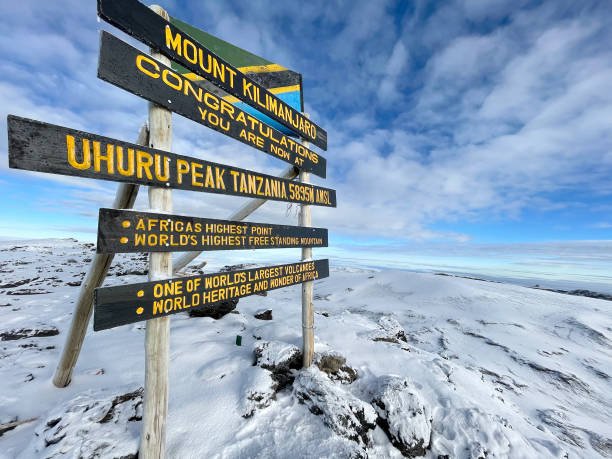
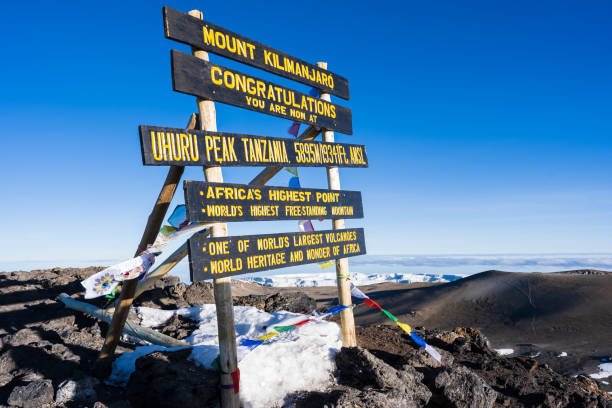
Climbers usually begin during the night and continue uphill for several hours before reaching the crater rim and Uhuru Peak.
Trekking poles can help maintain balance and rhythm during the climb.
They often become even more useful during the descent when the surface can be loose and the legs are already fatigued.
Kilimanjaro Trekking Poles Rental in Moshi
Moshi is one of the main centres for Kilimanjaro climbing preparation.
Many trekkers complete their mountain briefing, equipment inspection and rental arrangements after arriving in town.
Trekking poles can normally be added together with other rental equipment such as sleeping bags, gaiters or duffel bags.
Before leaving Moshi, test the poles and make sure they can be adjusted comfortably.
How Much Does Kilimanjaro Trekking Pole Rental Cost?
Rental prices vary depending on the equipment provider and current availability.
A common example price is approximately USD 10 per set for the trek.
The exact price should always be confirmed before departure because rental rates can change.
Example Trekking Pole Rental
- Trekking poles: Approximately USD 10 per set
- Rental period: Normally for the mountain trek
- Collection: Before departure from Moshi
- Return: After completing the climb
Should You Rent or Buy Trekking Poles?
Renting can be a good choice if Kilimanjaro is your first major trek or if you are unlikely to use trekking poles frequently after the trip.
Buying can make more sense for travellers who regularly hike and want to practice with the exact poles they will use on the mountain.
The main advantage of owning your poles is familiarity.
You can adjust them, train with them and learn how they behave on different terrain before travelling.
Rent Trekking Poles If You
- Do not hike regularly
- Do not want to buy specialist equipment
- Want to reduce airline luggage
- Are continuing to safari or Zanzibar afterward
- Forgot your poles at home
- Prefer collecting equipment in Moshi
Should You Bring Your Own Trekking Poles?
If you already own comfortable poles and use them regularly, bringing your own can be beneficial.
You already know how the adjustment system works and what height feels comfortable.
However, travelling with poles can create additional packing considerations because many airlines do not allow trekking poles in normal cabin baggage.
Renting in Moshi can therefore be simpler for some international travellers.
How to Check Rental Trekking Poles
Do not take rental trekking poles directly onto the mountain without checking them.
Extend and collapse each section several times.
Confirm that the locking system holds the pole securely under pressure.
Check the handles, wrist straps and tips.
Trekking Pole Rental Checklist
- Check both poles are the same general length
- Test every adjustment point
- Make sure locking mechanisms hold securely
- Inspect handles for damage
- Check wrist straps
- Inspect pole tips
- Adjust the poles to your height
- Walk with them briefly before departure
How High Should Trekking Poles Be?
The correct pole length depends on your height and the terrain.
On level ground, a commonly used starting position places the elbow at approximately a right angle when holding the grip.
The poles may be shortened slightly for steep uphill sections.
They can be lengthened slightly for long descents to provide better support.
Your mountain guide can help you make adjustments if you are unsure.
How to Use Trekking Poles Uphill
During uphill walking, trekking poles can support balance and help establish a slow, consistent rhythm.
Place the poles naturally ahead of you without reaching excessively far.
On steeper terrain, slightly shorter poles can make the movement more comfortable.
Do not attempt to pull your entire body uphill using your arms.
The poles should support your walking technique rather than replace normal leg movement.
How to Use Trekking Poles Downhill
During descent, poles can be placed slightly ahead of the body to provide support before each step.
This can help reduce impact and improve stability.
Lengthening the poles slightly may make steep downhill sections more comfortable.
Always place the pole tip securely before transferring significant weight onto it.
Should You Use One or Two Trekking Poles?
Two poles generally provide more balanced support than using only one.
They allow both sides of the body to participate and can provide more stability during descents.
Using one pole is still possible, but most Kilimanjaro climbers who choose trekking poles use a pair.
Two poles are especially useful when the surface becomes loose or uneven.
Do Trekking Poles Help Your Knees?
Trekking poles can reduce some of the load placed on the lower body during downhill walking by transferring part of the effort through the arms and upper body.
This can make long descents more comfortable for many climbers.
They do not eliminate all knee stress, and correct walking technique remains important.
Travellers with existing knee problems should prepare carefully and seek appropriate medical or physiotherapy advice before a demanding trek.
Ways to Reduce Knee Stress on Kilimanjaro
- Use trekking poles during descents
- Walk slowly rather than rushing downhill
- Train your legs before the climb
- Strengthen quadriceps and glutes
- Practice hiking on hills
- Wear supportive trekking boots
Trekking Poles on the Lemosho Route
Trekking poles are useful throughout the Lemosho Route.
The itinerary normally includes rainforest, Shira Plateau, Lava Tower, Barranco, Karanga, Barafu and summit day.
Some sections are relatively gradual while others involve significant ascent or descent.
Poles are particularly helpful during the descent after reaching Uhuru Peak.
Trekking Poles on the Machame Route
Machame includes varied terrain and several steep sections.
Trekking poles can support balance around rocky sections and provide valuable assistance during long descents.
The route normally passes through Shira, Lava Tower, Barranco, Karanga and Barafu before summit night.
For both six and seven day Machame itineraries, a pair of poles can be useful from the first days through to the final descent.
Do You Need Trekking Poles for Barranco Wall?
Barranco Wall is a steep section encountered on routes such as Machame and Lemosho.
There are areas where climbers need their hands for balance and may temporarily collapse or carry their trekking poles.
Your guide can advise when the poles should be stored or carried rather than actively used.
After completing the wall, the poles can again be useful on later trekking sections.
Trekking Poles on the Marangu Route
Marangu is often described as having a more established trail, but trekking poles can still be very useful.
The route includes gradual sections, rocky high altitude terrain and a long descent after the summit.
Poles can help support tired legs and knees during the return toward Horombo and Marangu Gate.
Trekking Poles on the Rongai Route
Rongai approaches Kilimanjaro from the northern side and eventually descends via Marangu.
The poles can provide stability throughout the ascent and become particularly useful on the descent.
Climbers renting equipment in Moshi can collect the poles before the longer transfer toward the Rongai starting point.
Trekking Poles on the Northern Circuit
The Northern Circuit involves more days of trekking than many other standard Kilimanjaro routes.
Because climbers spend longer on the trail, reducing unnecessary strain can become increasingly important.
Trekking poles can help maintain balance across the northern slopes and provide support on summit day and descent.
Trekking Poles for Beginner Kilimanjaro Climbers
Beginners can benefit greatly from trekking poles, especially if they have limited experience walking on steep or uneven terrain.
However, using poles effectively requires some practice.
Try using a pair during your training walks before travelling.
Learning how to place the poles naturally will make them feel much more comfortable on the mountain.
Beginner Trekking Pole Tips
- Practice before travelling
- Start on easy trails
- Keep movements natural
- Avoid gripping too tightly
- Adjust pole length for steep terrain
- Ask your guide for help when needed
Trekking Poles for Older Climbers
Older climbers often find trekking poles particularly useful for stability and downhill support.
They can also help maintain confidence when walking over loose or uneven ground.
Good physical preparation remains important, and poles should complement rather than replace appropriate leg strength and balance training.
Trekking Poles for Climbers with Knee Concerns
Climbers with a history of knee discomfort may appreciate the additional support provided by trekking poles.
Training should include leg strengthening and controlled downhill walking before departure.
Existing injuries or significant knee conditions should be discussed with an appropriate medical professional before undertaking a multi day high altitude trek.
Should You Train with Trekking Poles?
Yes. Training with trekking poles is strongly recommended if you plan to use them on Kilimanjaro.
Practice helps you develop coordination and learn how much support the poles provide.
Use them on both uphill and downhill training walks.
It is especially useful to practice on terrain similar to what you may encounter on the mountain.
Training with Rental Poles Before Kilimanjaro
If you plan to rent your actual poles in Moshi, you can still train with another pair at home.
The exact brand does not need to be identical.
The purpose is to learn general walking technique and become familiar with using two poles.
Once you receive the rental poles, adjust them to a similar height before beginning the trek.
How to Use Trekking Pole Wrist Straps
Wrist straps can help maintain control of the poles and reduce the need to grip the handles excessively tightly.
The exact technique depends on the strap design.
Make sure the straps are not so tight that they restrict movement.
If you are unsure, your guide can demonstrate a comfortable setup during the gear check or first trekking day.
Are Carbon or Aluminium Trekking Poles Better?
Both materials can work well for trekking.
Carbon poles are often lighter, while aluminium poles are widely used because they are durable and practical.
For Kilimanjaro rental, condition and reliability are generally more important than choosing a particular material.
A well maintained adjustable pole is more valuable than an expensive model with a damaged locking mechanism.
Folding vs Telescopic Trekking Poles
Different trekking pole designs are available.
Telescopic poles are common because their length can be easily adjusted for uphill and downhill sections.
Folding poles can be compact for travel but may offer different adjustment options depending on the model.
For rental, simple adjustable poles are often perfectly suitable for Kilimanjaro.
Can You Carry Trekking Poles on an Airplane?
Airline security policies can make travelling with trekking poles inconvenient.
They may need to be packed inside checked luggage rather than carried into the aircraft cabin.
Rules can vary by airport and airline.
This is one reason some climbers choose to rent trekking poles after reaching Moshi rather than transporting them internationally.
Renting Poles If Your Luggage Is Delayed
Rental equipment can also provide a useful backup if checked baggage does not arrive as planned.
If your trekking poles are inside delayed luggage, a rental pair may allow the climb to continue without waiting for the original equipment.
This is another reason to arrive in Tanzania before the actual mountain departure rather than scheduling an extremely tight connection.
Reserve Trekking Poles Before Arrival
If you already know that you want rental trekking poles, requesting them before arrival can simplify the gear check.
This is especially useful for larger climbing groups where several people may need equipment at the same time.
Advance requests can also help your operator prepare the correct number of pairs.
Information to Send Before Arrival
- Your climb date
- Route and trek duration
- Number of climbers needing poles
- Any other rental equipment required
- Arrival date in Moshi
Can Solo Climbers Rent Trekking Poles?
Yes. Solo climbers can rent trekking poles whether they are joining a scheduled group or climbing privately.
Rental is not normally dependent on group size.
Solo travellers often find rental particularly convenient because they may be travelling light before continuing to safari or Zanzibar.
Can Groups Rent Multiple Sets of Trekking Poles?
Yes, but larger groups should request equipment in advance.
A group of several climbers may require many pairs at the same time.
Advance planning helps reduce the possibility of limited stock immediately before departure.
Can Families Rent Kilimanjaro Trekking Poles?
Families can rent trekking poles, but the adjustment range should be checked carefully for shorter climbers.
The pole must be capable of shortening sufficiently for the individual using it.
Younger climbers should also practice with the poles to avoid awkward or unsafe use on steep terrain.
What Other Kilimanjaro Gear Can You Rent?
Trekking poles are only one of several pieces of personal equipment that can commonly be rented in Moshi.
Other Common Kilimanjaro Rental Gear
- Sleeping bags
- Duffel bags
- Gaiters
- Insulated jackets
- Waterproof clothing
- Selected backpacks
- Gloves and other mountain clothing where available
Trekking Poles and Your Kilimanjaro Daypack
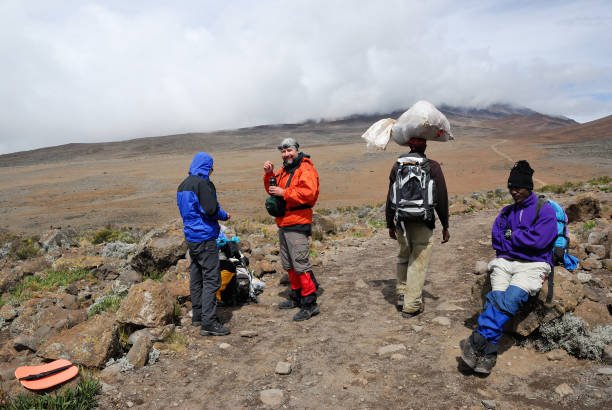
There may be sections where you do not want to use your poles.
Your daypack should therefore allow you to carry or attach them when necessary.
Some backpacks have external loops specifically designed for trekking poles.
Make sure the poles are attached securely so they do not swing around while walking.
When Should You Put Trekking Poles Away?
Trekking poles are not useful in every situation.
On some rocky sections, you may need your hands for balance.
Your guide may advise you to collapse and carry the poles temporarily.
They can then be extended again when the trail becomes suitable.
Trekking Poles in Rain and Mud
Rainforest trails can become wet and slippery.
Trekking poles can provide additional contact points and improve confidence on muddy sections.
However, always check that the pole tip is placed on stable ground before applying pressure.
A pole can slip if placed carelessly on smooth rock or unstable mud.
Trekking Poles on Loose Scree
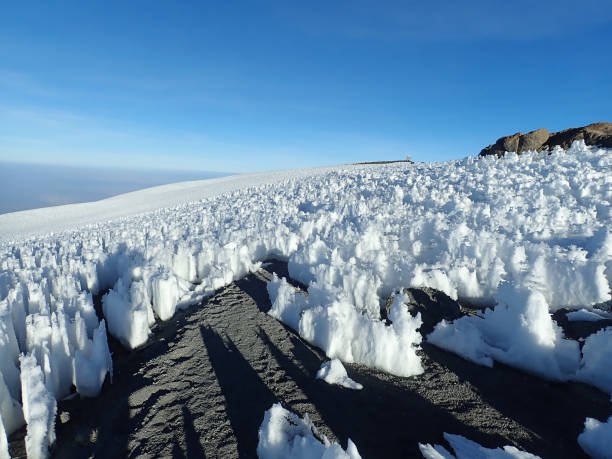
Loose volcanic scree is commonly encountered around the higher mountain and summit descent.
The surface can move underfoot, making balance more difficult.
Poles can provide additional stability when moving through this terrain.
Take controlled steps and avoid moving too quickly simply because you are descending.
Trekking Poles and Kilimanjaro Fitness
Using trekking poles does not remove the need to prepare physically.
You still need good walking endurance, strong legs and enough fitness for several consecutive trekking days.
Poles should be viewed as support equipment rather than a substitute for training.
Squats, lunges, step ups and hill walking can help strengthen the same muscles that will work during the climb.
Common Trekking Pole Mistakes on Kilimanjaro
Mistakes to Avoid
- Never practicing before the climb
- Using poles that are too long
- Using poles that are too short
- Gripping the handles too tightly
- Applying full weight before checking the pole is stable
- Failing to test rental locking mechanisms
- Trying to use poles where hands are needed for scrambling
- Rushing downhill because poles create extra confidence
Are Trekking Poles Included in Kilimanjaro Packages?
Trekking poles are personal equipment and may not automatically be included in a standard climb package.
They are often available separately for rental.
Always check your inclusions and equipment list before departure so you understand which personal items need to be brought or rented.
Typical Kilimanjaro Package Equipment
Shared mountain equipment is normally separate from personal trekking poles and clothing.
Typical Shared Mountain Equipment
- Mountain tents on camping routes
- Dining tent
- Tables and chairs
- Cooking equipment
- Emergency oxygen
- First aid equipment
- Pulse oximeter
When to Collect Rental Trekking Poles
Rental poles should ideally be collected during your pre climb preparation in Moshi.
This gives you time to inspect and adjust them.
Avoid waiting until the vehicle is already leaving for the mountain gate whenever possible.
The earlier check gives time to replace a pair if something does not work correctly.
When to Return Rental Trekking Poles
Rental poles are normally returned after you finish your Kilimanjaro trek.
They can generally be handed back after returning from the mountain gate to Moshi.
The exact arrangement depends on the provider, so confirm the return procedure before departure.
Trekking Pole Rental Before a Safari
Renting poles can be particularly convenient if you are continuing directly to a Tanzania safari after Kilimanjaro.
Once you complete the climb, you can return the poles instead of carrying them through Serengeti, Ngorongoro, Tarangire or Lake Manyara.
This reduces unnecessary luggage during the next part of your Tanzania trip.
Trekking Pole Rental Before Zanzibar
Travellers continuing to Zanzibar can also benefit from rental.
Trekking poles are not normally useful during a beach holiday.
Returning them in Moshi after Kilimanjaro means you can continue with lighter luggage.
Best Way to Arrange Kilimanjaro Trekking Poles Rental
Tell your climbing operator before arrival that you want to rent a pair of trekking poles.
Confirm the approximate price and whether the rental covers the whole trek.
When you reach Moshi, inspect the poles during your equipment check.
Adjust them to your height and walk with them briefly before beginning the mountain journey.
This simple preparation helps prevent equipment problems after entering Kilimanjaro National Park.
Frequently Asked Questions About Kilimanjaro Trekking Poles Rental
Can I rent trekking poles for Kilimanjaro?
Yes. Trekking poles can normally be rented in Moshi before beginning your Kilimanjaro climb.
How much does Kilimanjaro trekking pole rental cost?
A common example price is approximately USD 10 per set for the trek, although current rates should be confirmed before departure.
Do I really need trekking poles for Kilimanjaro?
They are not compulsory, but they are strongly recommended for additional balance and support, particularly during long descents.
Are trekking poles useful on summit night?
Yes. They can help with balance during the ascent and become especially useful during the long descent after the summit.
Do trekking poles help protect your knees?
They can reduce some of the load on the lower body during descents and provide additional stability, which many climbers find helpful for the knees.
Should I use one or two trekking poles?
Most climbers benefit from using two poles because they provide more balanced support on both sides of the body.
Can beginners use trekking poles on Kilimanjaro?
Yes. Beginners can benefit from trekking poles, but practicing before the climb makes them easier and more natural to use.
Can I use trekking poles on Barranco Wall?
Some sections of Barranco Wall require your hands for balance, so the poles may need to be collapsed or carried temporarily.
Are trekking poles useful on Lemosho?
Yes. They are useful on the varied terrain of Lemosho and particularly valuable during summit descent.
Are trekking poles useful on Machame?
Yes. Machame includes steep, rocky and downhill sections where trekking poles can provide additional support.
Can I rent trekking poles for Marangu?
Yes. Trekking poles can be rented for Marangu and are useful during the long descent from the high mountain.
Should I practice using trekking poles before Kilimanjaro?
Yes. Practicing on hills and during longer walks will help you develop comfortable and efficient technique.
Can trekking poles be carried in airline hand luggage?
Airline and airport security rules vary, and trekking poles may need to travel inside checked luggage. Renting in Moshi can avoid this inconvenience.
When should I reserve Kilimanjaro trekking poles?
Request them before arrival when possible, especially during busy climbing periods or when several people in your group need rental poles.
How do I arrange Kilimanjaro Trekking Poles Rental 2026-2027?
Tell your climbing operator that you need trekking poles, confirm the rental price, inspect and adjust the poles during your Moshi gear check and return them after completing the climb.
Arrange Kilimanjaro Trekking Poles Rental 2026-2027
Rent adjustable trekking poles in Moshi before your Kilimanjaro climb and use them for additional balance, knee support and stability on Lemosho, Machame, Marangu, Rongai or Northern Circuit. Check your poles during the pre climb briefing and start your trek with the right equipment.
Arrange Trekking Poles Rental

 Kilimanjaro Climb