Kilimanjaro Sleeping Bag Rental 2026-2027
Kilimanjaro Sleeping Bag Rental 2026-2027 is available for climbers who need suitable cold weather sleeping equipment before beginning their Mount Kilimanjaro trek.
A proper sleeping bag is one of the most important personal comfort items on the mountain because temperatures can become very cold at higher camps.
Travellers who do not already own a suitable sleeping bag can rent one in Moshi and include it with their porter carried mountain luggage.
Renting can be especially useful for international travellers who want to avoid purchasing expensive equipment that they may not use regularly after Kilimanjaro.
Kilimanjaro Sleeping Bag Rental at a Glance
- Rental location: Moshi, Tanzania
- Suitable for: Kilimanjaro camping and hut based routes
- Common use: Machame, Lemosho, Marangu, Rongai and Northern Circuit
- Typical rental reference: Around USD 35 per sleeping bag per trek
- Best time to check: During the pre climb gear inspection in Moshi
- Main purpose: Warmth and insulation during mountain nights
- Recommended addition: Warm thermal sleeping clothes
- Porter carried: Yes, normally inside the main duffel bag
Can You Rent a Sleeping Bag for Kilimanjaro?
Yes. Travellers can rent a sleeping bag in Moshi before beginning the Kilimanjaro climb.
This is a common option for visitors who do not own technical cold weather equipment or who prefer to travel with lighter international luggage.
The sleeping bag can be arranged before the mountain departure and checked during the equipment briefing.
Availability should ideally be confirmed before arrival, especially during busy climbing periods.
How Much Does Kilimanjaro Sleeping Bag Rental Cost?
A common rental reference for a Kilimanjaro sleeping bag is around USD 35 per sleeping bag per trek.
The final rental amount can depend on the supplier, bag type, availability and package arrangement.
Travellers should confirm the exact price before the climb rather than assuming that sleeping bag rental is automatically included in the trekking package.
Typical Rental Arrangement
- Sleeping bag reserved before the climb
- Collected or prepared in Moshi
- Checked during the mountain gear inspection
- Packed inside the climber's main duffel
- Carried between camps by porters
- Returned after completing the trek
Why You Need a Warm Sleeping Bag on Kilimanjaro
Mountain temperatures decrease significantly as elevation increases.
Even when daytime trekking conditions feel comfortable, nighttime temperatures at higher camps can become very cold.
A warm sleeping bag helps reduce heat loss during the night and can improve recovery between trekking days.
Getting enough rest is particularly important before demanding sections such as summit night.
How Cold Does Kilimanjaro Get at Night?
Temperatures vary according to altitude, season, wind and weather conditions.
Lower camps can feel relatively mild, while camps closer to the summit zone can become very cold after sunset.
Because mountain weather is variable, climbers should prepare for colder conditions rather than packing only for the average expected temperature.
What Sleeping Bag Rating Do You Need for Kilimanjaro?
A Kilimanjaro sleeping bag should be suitable for cold mountain conditions.
Instead of focusing only on a single temperature number, climbers should consider the overall insulation quality, personal cold tolerance, sleeping clothing and camp elevation.
Different manufacturers can also rate bags differently, so the practical condition of the sleeping bag matters just as much as the printed specification.
The bag should provide enough warmth for high camps and the colder nights before summit day.
What to Check Before Renting a Sleeping Bag
Every rented sleeping bag should be inspected before it is packed for the mountain.
Sleeping Bag Rental Checklist
- Correct size for the climber
- Clean interior
- Dry insulation
- Working zipper
- No major tears or damaged seams
- Good loft and insulation condition
- Suitable warmth for cold mountain nights
- Compression or storage sack available
Sleeping Bag Size
The sleeping bag should fit the climber comfortably without being excessively large.
A bag that is too tight can restrict movement, while an oversized bag may contain unnecessary air space that takes more body heat to warm.
Taller travellers should confirm that the rented sleeping bag provides enough length before leaving Moshi.
Sleeping Bag Cleanliness
Cleanliness is an important consideration when renting personal sleeping equipment.
The bag should be checked before the climb and should not feel damp or have obvious signs of poor storage.
A personal sleeping bag liner can provide an additional layer between the climber and the rented bag.
Should You Use a Sleeping Bag Liner?
A sleeping bag liner is not always essential, but many travellers find it useful.
It can improve personal comfort, help keep the sleeping bag cleaner and provide a small amount of additional warmth.
Liners are lightweight and take up little space in the duffel bag.
What Should You Wear Inside the Sleeping Bag?
Warm sleeping clothing becomes useful at higher elevations.
Climbers can sleep in dry thermal base layers, warm socks and a clean hat when conditions are cold.
Clothing used for sleeping should ideally remain dry and separate from wet trekking clothing.
Useful Sleeping Clothes
- Dry thermal top
- Thermal leggings
- Warm dry socks
- Warm hat
- Light fleece when necessary
Sleeping Bag for Machame Route
Machame is a camping route, so climbers sleep in tents throughout the mountain itinerary.
A warm sleeping bag is therefore essential from the first camp until the final mountain night.
As the route moves through Shira, Barranco, Karanga and Barafu, nighttime temperatures generally become colder.
Sleeping Bag for Lemosho Route
Lemosho also uses tented camping and normally involves seven or eight mountain days.
The longer duration means the sleeping bag is used repeatedly throughout the expedition.
It should therefore be comfortable, warm and in good condition before the trek begins.
Sleeping Bag for Marangu Route
Marangu uses mountain huts rather than tents, but climbers still need a sleeping bag.
Hut accommodation provides shelter from direct wind and rain, but temperatures at altitude can still become cold.
A suitable sleeping bag remains important even though climbers are not camping outside.
Sleeping Bag for Rongai Route
Rongai is a camping route approaching Kilimanjaro from the northern side.
As with Machame and Lemosho, a proper cold weather sleeping bag is required throughout the trek.
The bag should remain protected against moisture during porter transport between camps.
Sleeping Bag for Northern Circuit
Northern Circuit involves more nights on the mountain than many shorter routes.
Because the sleeping bag is used for an extended period, both warmth and comfort become especially important.
Travellers should make sure the bag is in good condition before beginning the longer itinerary.
Can the Sleeping Bag Get Wet?
Keeping the sleeping bag dry is extremely important.
Wet insulation loses much of its ability to trap warmth and can make mountain nights uncomfortable.
The sleeping bag should be protected inside the duffel using a waterproof liner, dry bag or another reliable waterproof layer.
How to Pack a Sleeping Bag in the Duffel
The sleeping bag should normally be packed inside the main porter carried duffel rather than the personal daypack.
Use a protective internal waterproof bag so it remains dry even if the outer duffel is exposed to rain.
It should be packed in a way that allows enough space for clothing and other mountain equipment while keeping the total porter luggage within the confirmed weight allowance.
Who Carries the Sleeping Bag?
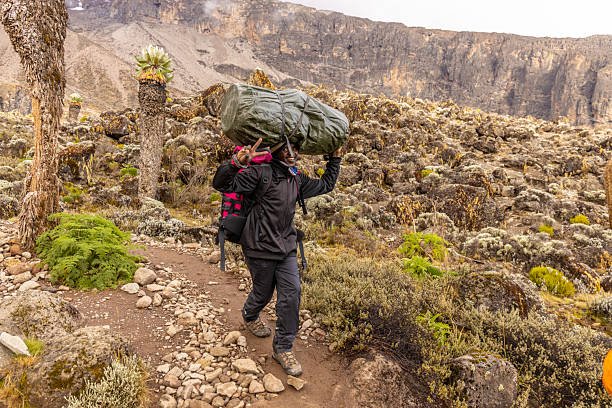
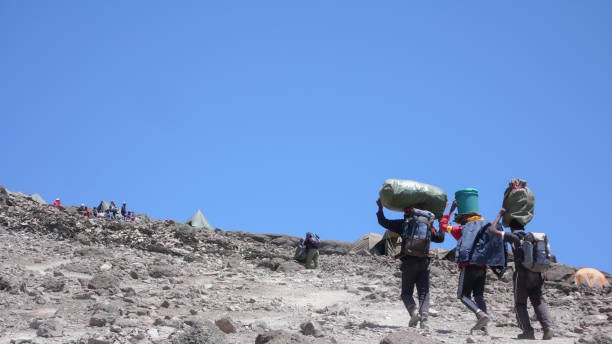
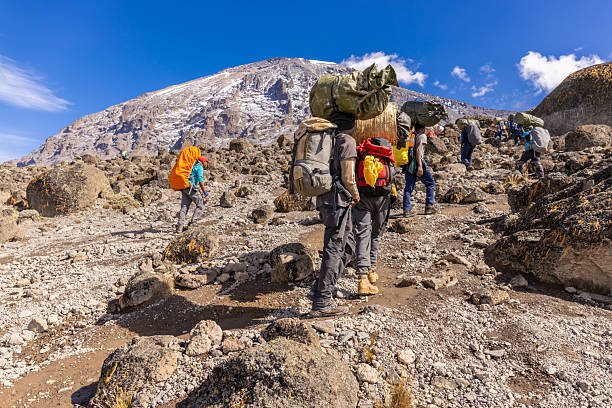
Porters normally carry the main duffel bag between camps.
The sleeping bag travels inside this duffel together with clothing and other equipment that the climber does not need during the walking day.
The climber normally carries only the personal daypack while trekking.
Kilimanjaro Porter Luggage Allowance
A common working allowance for a climber's porter carried duffel is around 15 kilograms.
The sleeping bag therefore forms part of the total luggage weight and should be considered when organizing the rest of the equipment.
Extra safari, city or Zanzibar clothing can normally remain at the hotel rather than being carried onto the mountain.
Sleeping Bag and Mountain Mattress
The sleeping bag provides insulation around the body, while the sleeping mat or mountain mattress reduces heat loss into the ground.
Both contribute to sleeping comfort on camping routes.
A basic mattress may be included in the climbing package depending on the arrangement.
Travellers should confirm what is provided before bringing or renting additional equipment.
Can You Rent a Sleeping Mat Too?
Additional camping equipment may be available for rent depending on the supplier and package.
Travellers who want extra sleeping comfort should ask during the pre climb equipment check.
However, it is important to confirm whether a standard mattress is already provided so unnecessary equipment is not added.
Renting vs Buying a Kilimanjaro Sleeping Bag
Both options can work well depending on how often the traveller expects to use cold weather camping equipment.
Buying can make sense for experienced hikers who plan to complete several future high altitude or cold weather trips.
Renting can be more practical for travellers who need the sleeping bag only for Kilimanjaro.
Why Rent a Kilimanjaro Sleeping Bag?
- Avoid buying expensive gear for one trip
- Reduce international luggage volume
- Useful for travellers continuing to safari or Zanzibar
- Equipment available locally in Moshi
- Can be checked before mountain departure
- No need to carry bulky sleeping equipment home afterwards
Advantages of Bringing Your Own Sleeping Bag
Bringing your own sleeping bag gives you more familiarity with the equipment.
You already know its size, warmth, cleanliness and comfort level.
It can also be useful if you plan to complete other camping or trekking trips in Tanzania.
The disadvantage is the additional luggage space required during international travel.
Sleeping Bag Rental for Solo Travellers
Solo travellers can rent individual sleeping equipment in Moshi before joining a group or beginning a private climb.
The sleeping bag remains part of the traveller's personal mountain equipment regardless of whether the climb is private or group joining.
Sleeping Bag Rental for Couples
Couples can reserve one sleeping bag per person before arrival.
Each bag should be checked individually for size and condition rather than assuming the same model will suit both climbers equally.
Two rented sleeping bags at a reference price of USD 35 each would total approximately USD 70 for the trek.
Sleeping Bag Rental for Groups
Group travellers should confirm sleeping bag requirements in advance so enough suitable bags can be reserved.
This is particularly important for larger departures when equipment demand may be higher.
Providing climber heights or special size requirements before arrival can also help with preparation.
Sleeping Bag Rental for Travellers from Zanzibar
Renting can be particularly convenient for travellers combining Zanzibar with Kilimanjaro.
Carrying bulky cold weather sleeping equipment through a beach holiday can be unnecessary when suitable gear can be arranged after arriving in Moshi.
Travellers can therefore keep their international luggage more practical and collect the mountain equipment before the climb.
Sleeping Bag Rental for Safari and Kilimanjaro Trips
A similar advantage applies to travellers combining Kilimanjaro with a Tanzania safari.
A large sleeping bag can take significant suitcase space but may not be needed during lodge based safari accommodation.
Renting only for the mountain can therefore simplify the complete trip.
When Should You Reserve a Sleeping Bag?
Sleeping bag rental should ideally be requested when confirming the climb or before arriving in Moshi.
Advance notice provides more time to prepare suitable equipment and reduces the risk of limited availability.
During busy Kilimanjaro periods, early reservation is particularly useful.
Pre Climb Gear Check in Moshi
The sleeping bag should be checked together with the rest of the trekking equipment before leaving for Kilimanjaro.
The climber and guide can review the main clothing, footwear, sleeping gear, daypack and summit equipment.
If a sleeping bag appears unsuitable, there is still an opportunity to change it before travelling to the gate.
Gear to Check Before Leaving Moshi
- Sleeping bag
- Trekking boots
- Warm summit jacket
- Waterproof clothing
- Thermal layers
- Warm gloves
- Headlamp
- Trekking poles
- Daypack
- Duffel bag
- Water bottles or hydration system
Other Kilimanjaro Gear Available for Rental
Travellers who need a sleeping bag may also need other mountain equipment.
Selected gear can be rented in Moshi depending on size and availability.
Common Kilimanjaro Rental Gear
- Sleeping bag
- Duffel bag
- Trekking poles
- Gaiters
- Warm jackets
- Waterproof trousers
- Selected trekking clothing
Should You Rent All Your Kilimanjaro Gear?
It is usually better to bring personal fit items such as trekking boots, base layers and socks whenever possible.
These items should be tested during training and should already feel comfortable before the mountain.
Bulky equipment such as sleeping bags can be more practical to rent because exact personal fit is less critical than it is with footwear.
How to Keep Warm at Night on Kilimanjaro
A good sleeping bag is only one part of staying warm.
Climbers should also change into dry clothing before sleeping, wear suitable thermal layers and protect the sleeping bag from moisture.
Eating properly and staying hydrated can also support overall comfort and recovery.
Tips for Warmer Mountain Nights
- Keep the sleeping bag completely dry
- Change out of damp trekking clothing
- Wear dry thermal layers
- Wear warm socks
- Use a warm hat when necessary
- Use a sleeping bag liner if desired
- Make sure the sleeping mat provides insulation from the ground
Can You Use an Ordinary Camping Sleeping Bag?
An ordinary warm weather camping bag may not provide enough insulation for high altitude Kilimanjaro conditions.
The mountain sleeping bag should be selected for cold environments rather than ordinary low altitude camping.
If there is uncertainty about a personal sleeping bag, it should be reviewed during the equipment check before the climb.
Is a Sleeping Bag Included in Kilimanjaro Packages?
Sleeping bags are often treated as personal trekking equipment rather than standard group camping equipment.
Some packages may include one, while others offer rental separately.
Travellers should check the final inclusion list carefully before arrival.
What Mountain Equipment Is Normally Provided?
A complete Kilimanjaro package can include the main camp and safety equipment while climbers provide or rent personal gear.
- Mountain tents on camping routes
- Dining tent according to package
- Tables and chairs according to package
- Basic sleeping mattress according to package
- Mountain meals
- Prepared drinking water
- Emergency oxygen
- Pulse oximeter
- Basic first aid equipment
- Professional guide and porter support
Is Renting a Sleeping Bag Worth It?
For many travellers, yes.
A quality cold weather sleeping bag can be expensive and bulky to transport internationally.
Renting provides access to suitable equipment only for the period when it is actually needed.
It can be particularly practical for travellers who do not regularly camp in cold conditions at home.
Booking Kilimanjaro Sleeping Bag Rental 2026-2027
To reserve a sleeping bag, provide your climbing date, route, number of travellers and number of sleeping bags required.
If the climber is particularly tall or has another size requirement, this should be communicated in advance.
The equipment can then be prepared for inspection before the mountain departure.
Frequently Asked Questions About Kilimanjaro Sleeping Bag Rental
Can I rent a sleeping bag for Kilimanjaro?
Yes. Suitable sleeping bags can be rented in Moshi before the mountain departure, subject to availability.
How much does Kilimanjaro sleeping bag rental cost?
A common reference price is around USD 35 per sleeping bag per trek, although the final rate should be confirmed before booking.
Do I really need a sleeping bag on Kilimanjaro?
Yes. Mountain nights can become very cold, and a suitable cold weather sleeping bag is essential for both camping and hut based routes.
Do I need a sleeping bag on Marangu?
Yes. Marangu provides mountain huts, but climbers still need their own suitable sleeping bag.
Is the sleeping bag carried by a porter?
Yes. It is normally packed inside the main duffel bag carried between camps by the porter team.
Should I bring a sleeping bag liner?
A liner is optional but can provide additional comfort, cleanliness and a small amount of extra warmth.
Can I rent two sleeping bags for a couple?
Yes. Each climber should have an individual sleeping bag. At a reference rental price of USD 35 each, two bags would be approximately USD 70 for the trek.
Should I reserve my sleeping bag in advance?
Yes. Advance reservation is recommended, particularly during popular Kilimanjaro climbing periods.
Can I check the sleeping bag before the climb?
Yes. It should be inspected during the pre climb gear check in Moshi before travelling to the mountain gate.
What should I check on a rented sleeping bag?
Check the size, cleanliness, zipper, insulation condition, dryness and overall warmth suitability before departure.
Should I bring my own sleeping bag instead?
Bring your own if you already have suitable cold weather equipment and prefer familiar gear. Renting is practical if you do not regularly use a technical sleeping bag.
Can a normal summer sleeping bag be used?
A lightweight warm weather sleeping bag may not provide enough insulation for cold high altitude nights on Kilimanjaro.
How do I keep my sleeping bag dry?
Pack it inside a waterproof liner or dry bag within the main duffel so that rain cannot reach the insulation.
What clothes should I wear inside the sleeping bag?
Dry thermal layers, warm socks and a warm hat can help during colder mountain nights.
Is a mattress included?
A basic mountain mattress may be included depending on the climbing package. Confirm the exact arrangement before renting extra sleeping equipment.
Can I rent other Kilimanjaro gear at the same time?
Yes. Items such as trekking poles, gaiters, duffel bags, jackets and selected trekking clothing can also be available for rental.
Is sleeping bag rental useful for Zanzibar travellers?
Yes. Renting in Moshi avoids carrying a bulky cold weather sleeping bag throughout a Zanzibar beach holiday.
How do I book Kilimanjaro sleeping bag rental for 2026-2027?
Provide your climbing date, route, number of travellers and number of sleeping bags required. The rental equipment can then be prepared for inspection in Moshi before your mountain departure.
Reserve Your Kilimanjaro Sleeping Bag 2026-2027
Arrange a suitable cold weather sleeping bag in Moshi before your Kilimanjaro climb and complete your gear check before travelling to the mountain gate.
Reserve Your Sleeping Bag

 Wildlife Safari