Kilimanjaro Gear Rental Moshi 2026-2027
Kilimanjaro gear rental in Moshi allows climbers to rent important mountain equipment before starting their trek, including sleeping bags, trekking poles, duffel bags, gaiters, jackets and other essential items.
Moshi is one of the most convenient places to organize equipment because most Kilimanjaro climbers stay in or pass through the town before travelling to the mountain gates.
Renting gear can be particularly useful for travellers who want to reduce airline baggage, avoid purchasing expensive specialist equipment or replace items that are missing during the pre climb gear check.
The most important consideration is not simply whether an item is available, but whether it fits correctly, is in good condition and is suitable for high altitude mountain conditions.
Kilimanjaro Gear Rental Moshi at a Glance
- Main location: Moshi, Tanzania
- Most commonly rented: Sleeping bags and trekking poles
- Also available: Duffel bags, gaiters, jackets and selected clothing
- Best time to organize: Before the pre climb briefing or during gear check
- Important check: Size, condition and warmth rating
- Useful for: Lemosho, Machame, Marangu, Rongai and Northern Circuit
- Main advantage: Less luggage and lower equipment cost
Can You Rent Kilimanjaro Gear in Moshi?
Yes. Kilimanjaro climbing equipment can be rented in Moshi before beginning the trek.
The town serves as one of the main preparation centres for Mount Kilimanjaro because it is close to several mountain gates and is widely used for pre climb accommodation and briefing.
Most climbers who require rental equipment arrange it during the day before the climb.
A gear check allows the guide or operator to identify any missing items before departure.
Why Rent Kilimanjaro Gear in Moshi?
Travelling internationally with bulky mountain equipment can be inconvenient and expensive.
A large sleeping bag, trekking poles, down jacket and duffel bag can take considerable luggage space.
Renting selected equipment after arriving in Moshi can therefore simplify travel.
Advantages of Renting Kilimanjaro Gear
- Reduce airline baggage weight
- Avoid buying expensive equipment for one trip
- Replace forgotten equipment after arrival
- Rent bulky items such as sleeping bags
- Test equipment during the pre climb check
- Avoid transporting trekking poles through airports
- Save luggage space for personal clothing
What Kilimanjaro Gear Can You Rent in Moshi?
The exact equipment available depends on the rental provider, but many common Kilimanjaro items can be found locally.
Sleeping bags, trekking poles, duffel bags and gaiters are among the most commonly rented items.
Some providers may also have jackets, backpacks, rain clothing, gloves, hats and other mountain equipment.
Common Kilimanjaro Rental Equipment
- Sleeping bags
- Trekking poles
- Duffel bags
- Gaiters
- Down or insulated jackets
- Waterproof jackets
- Waterproof trousers
- Daypacks
- Gloves
- Warm hats
- Headlamps where available
- Selected trekking clothing
Kilimanjaro Sleeping Bag Rental Moshi
A sleeping bag is one of the most common items rented by Kilimanjaro climbers.
Mountain nights can become very cold, especially at higher camps such as Barafu, School Hut and Kibo.
The sleeping bag should therefore be suitable for cold mountain conditions.
Before accepting a rental sleeping bag, check its general condition, cleanliness and whether it provides enough warmth for your route and season.
Sleeping Bag Rental Checklist
- Check the sleeping bag condition
- Confirm it is suitable for cold temperatures
- Check the zipper works correctly
- Confirm the size is comfortable
- Ask whether a liner is recommended
- Check that the bag is dry and clean
Kilimanjaro Trekking Pole Rental Moshi
Trekking poles are extremely useful on Kilimanjaro.
They provide additional stability on uneven ground and can reduce pressure on the knees during long descents.
They are particularly useful after summit night when climbers descend several thousand metres in a relatively short period.
Before renting trekking poles, confirm that the adjustment mechanism works correctly and that the poles can be set to a comfortable height.
Kilimanjaro Duffel Bag Rental Moshi
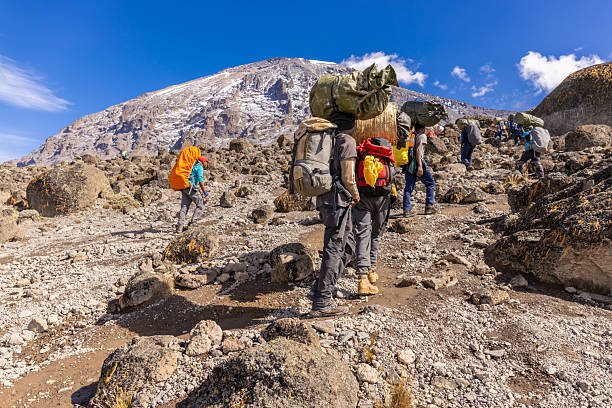
A duffel bag is used to carry the majority of your mountain equipment during the trek.
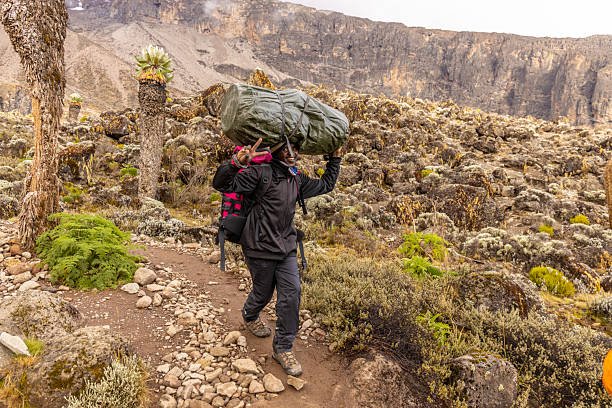
Porters normally transport the main duffel between camps while the climber carries a smaller personal daypack.
A durable waterproof or water resistant duffel is therefore highly useful.
The bag should be strong enough to handle repeated transport between camps and large enough to hold your sleeping bag, spare clothing and other personal mountain equipment.
What Goes in Your Kilimanjaro Duffel Bag?
- Sleeping bag
- Spare trekking clothes
- Thermal layers
- Camp clothing
- Personal toiletries
- Extra socks and underwear
- Other equipment not needed while walking
Kilimanjaro Gaiter Rental Moshi
Gaiters cover the upper part of the trekking boot and lower leg.
They can help prevent dust, loose gravel, mud and small stones from entering your boots.
They are particularly useful on dusty sections and during summit descent.
Gaiters are lightweight and relatively simple to use, making them a convenient item to rent if you do not already own a pair.
Kilimanjaro Jacket Rental Moshi
Warm insulation is essential on Kilimanjaro, especially during summit night.
Some climbers choose to rent an insulated or down jacket rather than purchasing one specifically for the trip.
A rental jacket should fit comfortably over your base and mid layers.
It should also allow enough movement for trekking while providing adequate insulation.
Waterproof Jacket and Trouser Rental
Waterproof protection is important because weather can change quickly on Kilimanjaro.
Rain is particularly possible in the rainforest sections, while wind and snow can occur at higher elevations.
A waterproof outer shell should be large enough to fit comfortably over your warmer clothing.
Waterproof trousers should also allow easy movement and ideally fit over trekking trousers.
Can You Rent Kilimanjaro Boots in Moshi?
Trekking boots may be available for rental in Moshi, but footwear deserves extra consideration.
Boot fit is extremely personal, and badly fitting boots can cause blisters, pressure points and discomfort during several consecutive trekking days.
For this reason, many climbers prefer bringing their own properly fitted and already broken in trekking boots.
Why Bringing Your Own Boots Is Usually Better
- You already know the fit
- They can be broken in before the climb
- Lower risk of unexpected pressure points
- You can test them during training
- More confidence during long trekking days
Can You Rent a Kilimanjaro Daypack?
Daypacks may be available for rental, but many climbers prefer bringing their own.
Your daypack stays with you throughout the day, so comfort is important.
It usually carries water, snacks, rain gear, warm layers, sunscreen, camera equipment and other personal essentials.
If renting a daypack, test the shoulder straps, waist belt and overall fit before the climb.
Kilimanjaro Gear Rental Prices in Moshi
Rental prices depend on the equipment type, rental provider and duration of the climb.
Some items are charged once for the entire trek, while others may be priced differently depending on the provider.
Always confirm whether the quoted amount covers the full climb before accepting the equipment.
Example Kilimanjaro Gear Rental Prices
- Sleeping bag: approximately USD 35 per trek
- Duffel bag: approximately USD 30 per trek
- Gaiters: approximately USD 10
- Trekking poles: approximately USD 10 per set
- Other clothing and equipment: Price varies according to the item
Rental prices should always be confirmed before the climb because availability and rates can change.
Should You Rent or Buy Kilimanjaro Gear?
The right choice depends on how frequently you expect to use the equipment after Kilimanjaro.
Buying personal items such as boots, base layers, socks and gloves often makes sense because fit and comfort are important.
Bulky specialist items such as sleeping bags, trekking poles or duffel bags may be more convenient to rent if you are unlikely to use them frequently after the climb.
Rent or Bring From Home?
- Usually bring: Trekking boots
- Usually bring: Base layers and personal socks
- Easy to rent: Sleeping bag
- Easy to rent: Trekking poles
- Easy to rent: Duffel bag
- Easy to rent: Gaiters
- Can be rented: Selected jackets and waterproof layers
What Kilimanjaro Gear Should You Bring From Home?
Personal clothing and footwear should generally be organized before travelling whenever possible.
This gives you time to test everything during training.
Items Worth Bringing From Home
- Broken in trekking boots
- Trekking socks
- Base layers
- Underwear
- Personal gloves when possible
- Warm hat
- Sun hat
- Sunglasses
- Personal medication
- Headlamp if you already own one
- Personal hydration bottles or bladder
Pre Climb Kilimanjaro Gear Check in Moshi
A gear check before departure is one of the most useful parts of Kilimanjaro preparation.
Your mountain guide can review your equipment and identify missing or unsuitable items.
This is much easier to correct in Moshi than after entering Kilimanjaro National Park.
During the check, organize all clothing and equipment so each important item can be reviewed individually.
What Happens During a Kilimanjaro Gear Check?
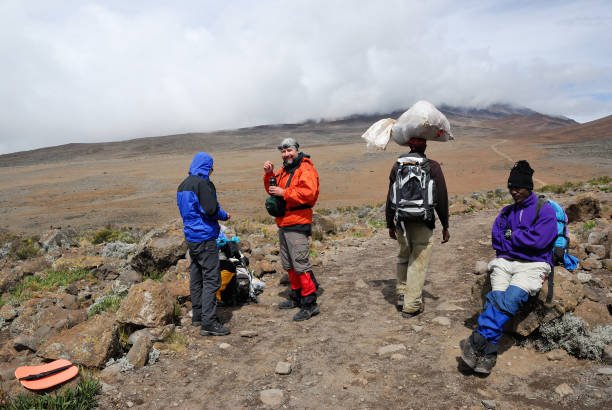
The guide normally checks whether you have enough clothing for different altitude zones and whether your summit equipment is appropriate.
Footwear, waterproof layers, insulation, sleeping equipment and daypack essentials are particularly important.
Typical Gear Check Items
- Trekking boots
- Sleeping bag
- Insulated jacket
- Waterproof jacket
- Waterproof trousers
- Base layers
- Warm gloves
- Warm hat
- Headlamp
- Trekking poles
- Daypack
- Duffel bag
- Water bottles or hydration system
Kilimanjaro Gear Rental for Lemosho Route
Lemosho normally involves seven or eight trekking days, so equipment must remain comfortable across several consecutive days.
A warm sleeping bag, trekking poles and reliable waterproof layers are particularly important.
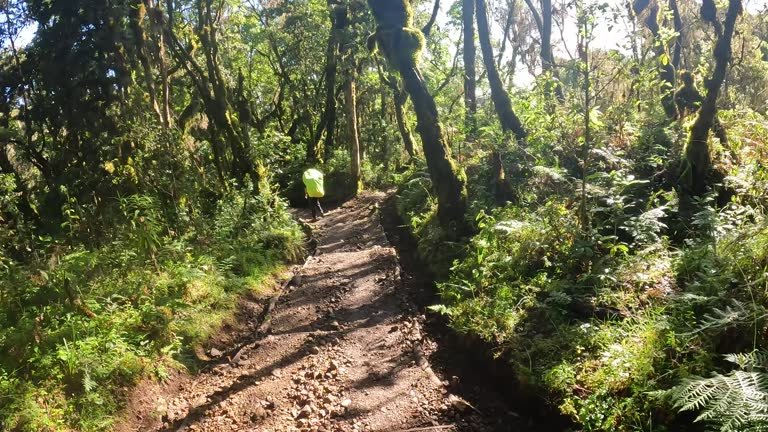
The route crosses rainforest, Shira Plateau, alpine desert and high altitude terrain before reaching the summit.
Climbers should therefore prepare for both warm daytime conditions and very cold high camps.
Kilimanjaro Gear Rental for Machame Route
Machame includes varied terrain, steep sections and famous landmarks such as Barranco Wall.
Trekking poles can be particularly useful during long descents.
Waterproof clothing is important during the lower rainforest stages, while insulated summit clothing becomes essential at higher camps.
Six and seven day Machame climbers can rent selected missing equipment in Moshi before travelling to Machame Gate.
Kilimanjaro Gear Rental for Marangu Route
Marangu differs from camping routes because climbers sleep in mountain huts.
However, a warm sleeping bag is still required.
The same principles apply for footwear, warm layers, waterproof clothing, gloves, headlamp and trekking poles.
The presence of huts does not remove the need for proper high altitude equipment.
Kilimanjaro Gear Rental for Rongai Route
Rongai approaches Kilimanjaro from the northern side.
Climbers should prepare for changing temperatures and high altitude conditions in the same way as on other routes.
A quality sleeping bag, warm summit clothing and trekking poles remain useful.
Rental gear can be collected in Moshi before travelling toward the Rongai starting point.
Kilimanjaro Gear Rental for Northern Circuit
The Northern Circuit is one of the longest standard Kilimanjaro routes.
Because climbers spend more days on the mountain, comfortable and reliable equipment becomes especially important.
Your sleeping bag, boots, waterproof clothing and insulation should all be carefully checked before departure.
Renting selected items in Moshi can help complete your equipment list without carrying every piece internationally.
What Clothing Do You Need for Kilimanjaro?
Kilimanjaro requires layered clothing because temperatures change significantly between the lower slopes and the summit.
The layering system allows clothing to be added or removed as conditions change.
Kilimanjaro Clothing Layers
- Base layer: Helps manage moisture next to the skin
- Mid layer: Adds warmth during cool conditions
- Insulated layer: Provides warmth at high altitude
- Waterproof shell: Protects against rain, wind and snow
Essential Kilimanjaro Summit Gear
Summit night is normally the coldest and most demanding part of the climb.
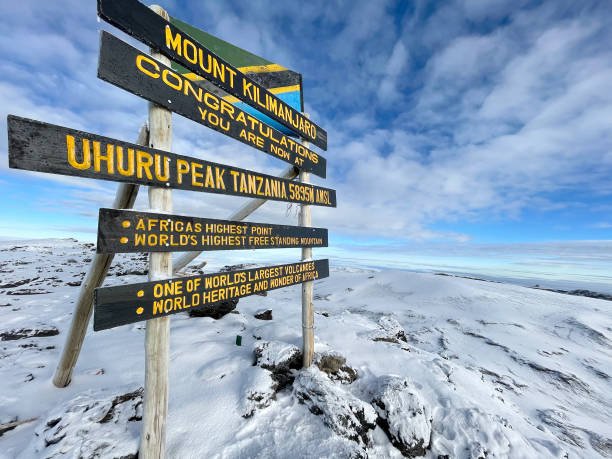
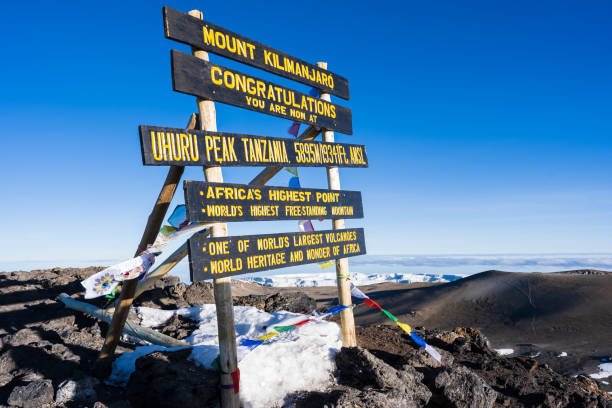
Climbers leave the high camp during the night and continue toward the crater rim and Uhuru Peak.
Proper layering becomes essential because temperatures can fall well below freezing.
Summit Night Equipment
- Warm thermal base layers
- Fleece or warm mid layer
- Insulated down or synthetic jacket
- Waterproof and windproof outer jacket
- Warm trekking trousers and thermal leggings
- Warm gloves or mittens
- Warm hat or balaclava
- Trekking boots
- Warm socks
- Headlamp
- Trekking poles
- Sunglasses for daylight descent
How Much Luggage Can a Kilimanjaro Porter Carry for You?
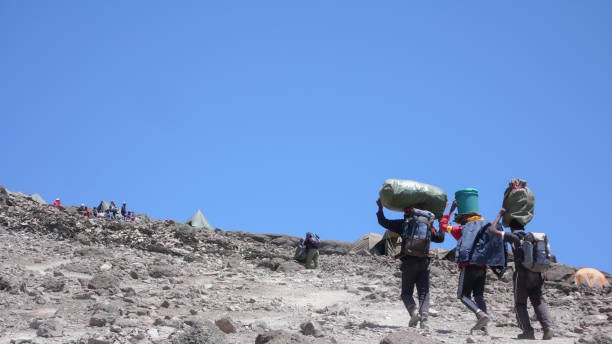
Your main mountain luggage is normally packed inside a duffel bag and carried between camps by the porter team.
A common personal luggage allowance for porter carried equipment is around 15 kilograms.
Anything you need while walking should remain in your personal daypack.
Keeping unnecessary items at the hotel can help you remain within the luggage allowance.
What Should Stay in Your Daypack?
Your daypack contains everything you may need between leaving camp in the morning and reaching the next camp.
Typical Daypack Items
- Drinking water
- Snacks
- Waterproof jacket
- Waterproof trousers
- Warm layer
- Gloves
- Sun hat
- Sunscreen
- Sunglasses
- Personal medication
- Camera or phone
- Headlamp when required
Check Rental Gear Before Leaving Moshi
Never accept rental equipment without inspecting it.
Try on clothing and confirm that zippers, buckles, straps and adjustment mechanisms work properly.
Open the sleeping bag and examine its general condition.
Adjust trekking poles to your height and confirm they lock securely.
Small equipment problems are easy to solve in Moshi but considerably harder once you are already on the mountain.
Should You Reserve Rental Gear Before Arrival?
If you already know that you need specific equipment, reserving it before arriving can be helpful.
This is particularly important during busy Kilimanjaro climbing periods when many travellers may request similar sizes and items.
Sleeping bags, large jackets and specific footwear sizes can have limited availability.
Provide your size and requested equipment list early whenever possible.
Can You Rent Gear After Arriving at Kilimanjaro Airport?
Most climbers organize rental equipment after reaching Moshi rather than at the airport.
The airport is primarily a transport hub, while Moshi is the main climbing preparation centre.
After airport transfer to your hotel, you can complete your briefing and equipment check before collecting any missing items.
Kilimanjaro Gear Rental for Last Minute Climbers
Last minute rental is often possible, but availability cannot always be guaranteed.
Travellers arriving immediately before their climb should communicate their equipment needs before departure.
Allowing at least some preparation time in Moshi makes it easier to find alternative equipment if the first option does not fit correctly.
Can Solo Travellers Rent Kilimanjaro Gear?
Yes. Rental equipment is available whether you are climbing privately or joining a group.
Solo travellers often choose to rent bulky equipment because carrying specialist gear internationally can be inconvenient.
Machame and Lemosho group joining climbs are especially popular among solo travellers, and rental arrangements can normally be completed before the scheduled departure.
Kilimanjaro Gear Rental for Beginners
First time trekkers sometimes prefer renting selected items because they are unsure whether they will use specialist mountain equipment again.
This can be cost effective for items such as sleeping bags, trekking poles and duffel bags.
However, personal equipment such as footwear should be tested carefully before the climb.
Beginners should complete a detailed gear check with the guide rather than relying only on a generic packing list.
Kilimanjaro Gear Rental for Families
Families can also rent mountain equipment in Moshi.
Size availability becomes especially important when younger climbers are involved.
Children and smaller adults should try every clothing item before departure to confirm that insulation and waterproof layers fit correctly.
Equipment should never be excessively large simply because another size is unavailable.
Rental Gear and Kilimanjaro Training
Whenever possible, use your personal boots, daypack and trekking poles during training before departure.
If you plan to rent trekking poles in Moshi, practicing with another pair at home can still help you learn proper technique.
Training with similar equipment reduces the amount of adjustment required on the mountain.
Kilimanjaro Gear and Weather Conditions
Mount Kilimanjaro crosses several climate zones during the climb.
Lower elevations can be warm and humid, while high altitude camps can be extremely cold.
Rain, wind, dust, strong sunshine and freezing temperatures are all possible during a single expedition.
This is why layering and waterproof protection are essential even when the weather forecast initially appears favourable.
Do You Need Crampons for Kilimanjaro?
Standard Kilimanjaro trekking routes generally do not require technical mountaineering equipment such as traditional climbing crampons under normal trail conditions.
Conditions can vary, however, especially around the summit zone.
Your guide or operator should advise you if unusual weather conditions create additional equipment requirements.
Do You Need an Ice Axe for Kilimanjaro?
An ice axe is not normally required for standard Kilimanjaro trekking routes.
Lemosho, Machame, Marangu, Rongai and Northern Circuit are trekking routes rather than technical climbing routes under normal conditions.
Special technical routes are different and may require specialist mountaineering equipment and experience.
Kilimanjaro Gear for Rainy Conditions
Rain protection becomes especially important during wetter periods.
A quality waterproof jacket and waterproof trousers should always be carried regardless of the season.
Pack clothing inside waterproof dry bags or plastic liners inside your duffel and daypack.
Keeping sleeping clothes and summit layers dry is particularly important.
Keep Important Gear Dry
- Use waterproof pack liners
- Place clothing inside dry bags
- Protect electronics separately
- Keep summit gloves dry
- Protect sleeping clothes from rain
- Carry rain gear in your daypack rather than the porter duffel
What Equipment Is Usually Provided by a Kilimanjaro Operator?
The exact inclusions depend on the package, but climbers should distinguish between personal rental equipment and group mountain equipment.
A complete climbing operation usually supplies shared expedition equipment separately from the personal clothing and gear brought or rented by each climber.
Typical Group Mountain Equipment
- Mountain sleeping tents on camping routes
- Dining tent
- Tables and chairs
- Cooking equipment
- First aid equipment
- Emergency oxygen
- Pulse oximeter
- Other expedition support equipment
What Personal Gear Is Usually Not Included?
Personal mountain clothing and equipment are normally the responsibility of the climber unless specifically stated otherwise.
This is why rental services are useful for travellers who do not already own all necessary items.
Typical Personal Equipment
- Trekking boots
- Sleeping bag unless included
- Personal clothing
- Waterproof jacket and trousers
- Insulated jacket
- Trekking poles
- Gloves
- Hat
- Headlamp
- Personal daypack
- Water bottles or hydration system
How to Choose Good Kilimanjaro Rental Gear
Price should not be the only consideration.
The equipment needs to perform correctly in cold, wet and high altitude conditions.
Inspect the item carefully and prioritize fit, condition and functionality.
Before Accepting Rental Gear
- Try clothing on
- Check zippers
- Check buckles and straps
- Inspect for significant damage
- Confirm waterproof items are appropriate
- Confirm sleeping bag warmth
- Adjust trekking poles
- Make sure the equipment is comfortable
When Should You Return Kilimanjaro Rental Gear?
Rental equipment is normally returned after completing the mountain trek.
The exact return arrangement depends on the provider.
In many cases, equipment can be returned after arriving back in Moshi from the mountain gate.
Confirm the procedure before departure so you know whether anything needs to be returned directly or can be left with the operator.
Can You Rent Kilimanjaro Gear and Continue to Safari?
Yes. Climbers combining Kilimanjaro with safari can return their rental mountain equipment after completing the trek.
This prevents unnecessary mountain gear from taking up luggage space during the safari.
After Kilimanjaro, travellers can continue toward Tarangire, Lake Manyara, Ngorongoro and Serengeti with only their normal travel luggage.
Kilimanjaro Gear Rental Before Zanzibar
Renting equipment can be especially convenient for travellers continuing to Zanzibar after the climb.
Heavy jackets, sleeping bags and trekking poles are not normally useful during a beach holiday.
Returning rented mountain equipment in Moshi before flying to Zanzibar helps reduce unnecessary luggage.
Complete Kilimanjaro Packing List
Your exact packing list may vary slightly according to the route and season, but all climbers should prepare for changing mountain conditions.
Essential Kilimanjaro Packing List
- Trekking boots
- Trekking socks
- Base layers
- Fleece or mid layers
- Insulated jacket
- Waterproof jacket
- Waterproof trousers
- Trekking trousers
- Warm gloves
- Warm hat
- Sun hat
- Sunglasses
- Sleeping bag
- Trekking poles
- Daypack
- Duffel bag
- Headlamp
- Water bottles or hydration bladder
- Personal toiletries
- Sunscreen
- Personal medication
Common Kilimanjaro Gear Rental Mistakes
Rental Mistakes to Avoid
- Waiting until the morning of departure to request all equipment
- Accepting clothing without trying it on
- Choosing boots only because they are available
- Not checking the sleeping bag condition
- Ignoring waterproof clothing
- Renting an unnecessarily heavy daypack
- Assuming all equipment is automatically included in the climb price
- Failing to confirm rental costs in advance
Best Way to Organize Kilimanjaro Gear Rental in Moshi
Prepare a packing list before travelling and mark which items you already own.
Identify anything you want to rent before arrival.
Send your equipment request early if specific sizes are needed.
After reaching Moshi, complete a full gear check with your guide and rent any remaining missing items.
This approach reduces unnecessary purchases while making sure you are properly prepared before entering the national park.
Frequently Asked Questions About Kilimanjaro Gear Rental Moshi
Can I rent Kilimanjaro gear in Moshi?
Yes. Moshi is one of the main places where climbers can rent sleeping bags, trekking poles, duffel bags, gaiters and selected mountain clothing before their climb.
How much does a Kilimanjaro sleeping bag rental cost?
A common example price is around USD 35 per sleeping bag for the trek, although rates should be confirmed before departure.
Can I rent trekking poles in Moshi?
Yes. Trekking poles are commonly available and are particularly useful for stability and long downhill sections.
How much does trekking pole rental cost?
A common example price is approximately USD 10 per set, depending on the provider and current availability.
Can I rent a duffel bag for Kilimanjaro?
Yes. Duffel bags can be rented in Moshi and are used to hold personal mountain equipment carried between camps by porters.
Can I rent Kilimanjaro gaiters?
Yes. Gaiters are commonly available and can help keep dust, mud and small stones out of trekking boots.
Can I rent a down jacket in Moshi?
Selected insulated jackets may be available. Always confirm size, condition and availability before depending on a rental jacket.
Can I rent hiking boots for Kilimanjaro?
Boot rental may be possible, but bringing your own properly fitted and broken in trekking boots is generally preferable because footwear fit is extremely important.
Should I reserve rental gear before arriving?
It is recommended when you already know which items and sizes you need, especially during busy climbing periods.
Is Kilimanjaro gear included in the climbing price?
Shared expedition equipment may be included, but personal trekking clothing and rental equipment are normally separate unless specifically stated in the package.
How much luggage can the porter carry?
A common personal porter luggage allowance is around 15 kilograms, while the climber carries essential daytime items in a personal daypack.
Do I need technical climbing gear for Kilimanjaro?
Standard trekking routes such as Lemosho, Machame, Marangu, Rongai and Northern Circuit generally do not require technical mountaineering equipment under normal conditions.
Can I rent gear if I am joining a group climb?
Yes. Rental equipment can be arranged for both private and group joining Kilimanjaro climbs.
Can I return rental gear before going on safari or Zanzibar?
Yes. Rental equipment can normally be returned after the climb so you do not need to carry unnecessary mountain gear during your safari or Zanzibar holiday.
How do I arrange Kilimanjaro Gear Rental Moshi 2026-2027?
Prepare your packing list, identify the items you need to rent, provide sizes in advance where possible and complete a full equipment check in Moshi before travelling to the Kilimanjaro gate.
Arrange Your Kilimanjaro Gear Rental in Moshi 2026-2027
Complete your Kilimanjaro gear check in Moshi and arrange any missing sleeping bags, trekking poles, duffel bags, gaiters or mountain clothing before departure. Prepare the right equipment for Lemosho, Machame, Marangu, Rongai or Northern Circuit and begin your climb fully equipped.
Arrange Kilimanjaro Gear Rental

 Kilimanjaro Climb