Kilimanjaro Training Plan 2026-2027
The best Kilimanjaro training plan combines hiking, cardiovascular endurance, leg strength, core stability and consecutive long walking days over approximately eight to twelve weeks before your climb.
You do not need to be a professional athlete to climb Mount Kilimanjaro, but you should be comfortable walking for several hours at a steady pace on multiple consecutive days.
Training should gradually increase in difficulty so your body adapts without unnecessary overtraining or injury.
The most valuable preparation is hiking because it closely matches the activity you will perform every day on Kilimanjaro.
Kilimanjaro Training Plan at a Glance
- Ideal preparation time: Approximately 8 to 12 weeks
- Main activity: Hiking and long walking
- Cardio sessions: Around 2 to 4 times per week
- Strength sessions: Around 2 times per week
- Weekend training: Longer hikes with elevation
- Important muscles: Legs, glutes, calves and core
- Practice equipment: Trekking boots, daypack and trekking poles
- Final week: Reduce training and focus on recovery
How Fit Do You Need to Be for Kilimanjaro?
You do not need exceptional athletic ability to climb Kilimanjaro.
However, you should have enough cardiovascular endurance and leg strength to walk for several hours each day while carrying a small daypack.
Normal trekking days may involve several hours of steady walking, while summit day is significantly longer and more demanding.
The challenge comes from combining physical effort with altitude, cold temperatures, reduced oxygen availability and multiple consecutive trekking days.
Good fitness helps you conserve energy so your body can focus more effectively on adapting to the mountain environment.
When Should You Start Training for Kilimanjaro?
Most climbers should ideally begin structured training around eight to twelve weeks before departure.
Travellers who are already regularly active may need less preparation, while people who currently exercise very little may benefit from beginning three to six months earlier.
The most important factor is consistency.
Training steadily over several months is usually more effective than suddenly exercising intensely during the final two weeks.
Start Earlier If You Currently
- Exercise less than twice per week
- Rarely walk long distances
- Have limited hill hiking experience
- Spend most working days sitting
- Have never completed a multi day trek
- Want extra time to lose unnecessary body weight gradually
- Need time to strengthen knees, ankles or legs
12 Week Kilimanjaro Training Plan
A twelve week preparation period provides enough time to increase training gradually without forcing the body too quickly.
The plan should begin with building consistency before progressing toward longer hikes and consecutive trekking days.
The final week should be considerably lighter so you arrive in Tanzania rested rather than exhausted.
Weeks 1 to 2 – Build the Foundation
The first two weeks should establish a consistent exercise routine.
Focus on comfortable walking, moderate cardiovascular exercise and basic strength movements.
You do not need to train extremely hard during this stage.
Example Week 1 to 2 Schedule
- Monday: Rest or gentle stretching
- Tuesday: 30 to 45 minutes brisk walking or cardio
- Wednesday: Basic leg and core strength session
- Thursday: 30 to 45 minutes walking, cycling or swimming
- Friday: Rest
- Saturday: 1.5 to 2 hour walk or easy hike
- Sunday: Easy recovery walk
Weeks 3 to 4 – Increase Endurance
During weeks three and four, begin increasing the duration of your cardiovascular sessions and weekend hikes.
Try to include hills, stairs or inclined treadmill walking.
Your body should gradually become comfortable spending several hours on your feet.
Continue strength training approximately twice per week.
Example Week 3 to 4 Schedule
- Monday: Rest
- Tuesday: 45 to 60 minutes cardiovascular training
- Wednesday: Leg and core strength training
- Thursday: Hill walking or stair climbing for 45 minutes
- Friday: Strength training or light recovery
- Saturday: 2 to 3 hour hike
- Sunday: 45 to 60 minute recovery walk
Weeks 5 to 6 – Add Hills and Daypack Training
By weeks five and six, your training should begin resembling mountain trekking more closely.
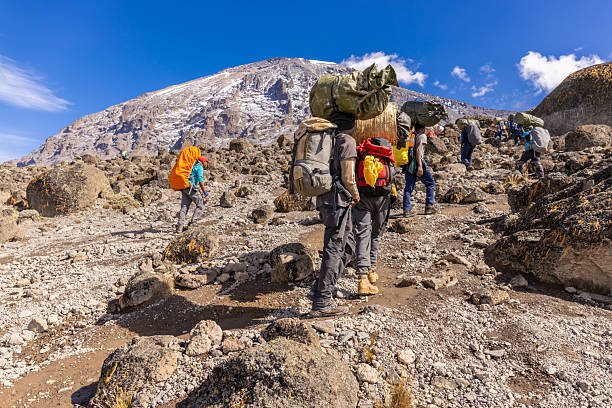
Start carrying a small daypack during longer walks.
The pack should not be excessively heavy because your Kilimanjaro daypack normally carries only personal items such as water, clothing, snacks and camera equipment.
Use hills whenever possible.
If you live in a flat area, stair machines, staircases and inclined treadmills can provide useful alternatives.
Weeks 7 to 8 – Build Long Hiking Days
Weeks seven and eight are an important stage of Kilimanjaro preparation.
Your weekend hike should gradually become longer.
Aim to become comfortable walking for approximately four to six hours depending on your starting fitness level.
You should wear the same trekking boots you intend to use on Kilimanjaro.
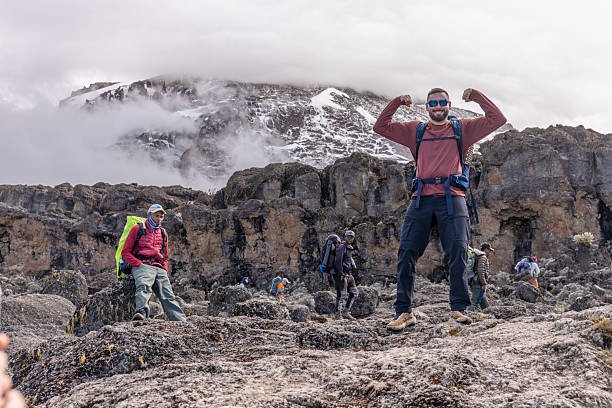
This period is also a good time to practice hiking with trekking poles.
Training Priorities During Weeks 7 to 8
- Four to six hour hikes
- Walking on hills and uneven terrain
- Using trekking boots
- Carrying your daypack
- Practicing with trekking poles
- Maintaining a slow and steady pace
- Practicing hydration while walking
Weeks 9 to 10 – Practice Consecutive Hiking Days
Kilimanjaro is not a one day hiking challenge.
You will walk for several consecutive days, which means your body must become comfortable exercising before it has fully recovered from the previous day.
During weeks nine and ten, try completing a long hike on Saturday followed by another moderate hike on Sunday.
This is one of the most useful ways to simulate the cumulative fatigue of a Kilimanjaro expedition.
Example Peak Training Weekend
- Saturday: 5 to 7 hour hike with hills
- Sunday: 2 to 4 hour moderate hike or long walk
- Equipment: Trekking boots, daypack and trekking poles
- Pace: Slow and sustainable rather than fast
Week 11 – Final Strong Training Week
Week eleven can be your final substantial training week.
Complete one of your longest hikes and maintain your normal cardiovascular routine.
However, avoid suddenly doubling your training volume or attempting extreme workouts.
The purpose is to confirm your endurance rather than test your physical limits immediately before travel.
Week 12 – Taper and Recover
The final week before travelling to Tanzania should be significantly lighter.
Your fitness will not improve dramatically during the last few days, but excessive training can leave you tired or injured.
Reduce long workouts and focus on light walking, stretching, hydration, good nutrition and adequate sleep.
The goal is to arrive for your Kilimanjaro climb feeling rested and healthy.
Final Week Before Kilimanjaro
- Reduce workout intensity
- Take short comfortable walks
- Stretch gently
- Sleep well
- Stay hydrated
- Prepare and check equipment
- Avoid unnecessary injury risks
Best Cardio Training for Kilimanjaro
Cardiovascular endurance helps you continue walking efficiently for long periods.
Hiking remains the most specific form of training, but several other exercises can support your preparation.
Brisk walking, cycling, swimming, jogging, elliptical training and stair climbing are all useful options.
Choose activities that you can perform consistently rather than forcing yourself to run if running causes discomfort or injury.
Useful Cardiovascular Exercises
- Outdoor hiking
- Fast walking
- Inclined treadmill walking
- Stair climbing
- Cycling
- Swimming
- Elliptical training
- Light running if already accustomed to running
Why Hiking Is the Best Kilimanjaro Training
Hiking closely reproduces what you will actually do on Mount Kilimanjaro.
It strengthens your legs while simultaneously developing cardiovascular endurance, balance and foot conditioning.
Long hikes also help you learn how your body responds after several hours of continuous movement.
Training outdoors gives you the opportunity to test boots, socks, trekking poles, rain clothing, hydration systems and daypacks.
This reduces the number of equipment surprises you experience after reaching Tanzania.
Hill Training for Kilimanjaro
Hill training is extremely valuable because Kilimanjaro involves both long ascents and descents.
Walking uphill strengthens the quadriceps, calves and cardiovascular system.
Descending helps condition muscles that stabilize the knees and legs.
If possible, select hiking trails with meaningful elevation gain rather than training only on flat roads.
If hills are unavailable, use stairs or increase the incline on a treadmill.
Stair Training for Kilimanjaro
Stairs can be one of the best alternatives for travellers who live in cities or flat regions.
Walking repeatedly up and down stairs strengthens the legs while increasing cardiovascular demand.
A stair machine can also be useful.
Begin with shorter sessions and gradually increase the duration rather than immediately attempting very long stair workouts.
Strength Training for Kilimanjaro
Strength training should support your hiking rather than replace it.
The most important areas are the quadriceps, hamstrings, glutes, calves and core.
Strong legs help with long ascents and descents, while core stability helps maintain balance on uneven terrain.
Useful Strength Exercises for Kilimanjaro
- Squats
- Walking lunges
- Step ups
- Calf raises
- Glute bridges
- Romanian deadlifts with appropriate technique
- Planks
- Side planks
- Core stability exercises
Squats for Kilimanjaro Training
Squats strengthen many of the muscles used during uphill and downhill trekking.
Bodyweight squats are sufficient for many climbers, especially when beginning a training program.
More experienced people can gradually add resistance if they already understand proper technique.
The objective is functional leg endurance rather than maximizing the amount of weight lifted.
Lunges for Kilimanjaro Training
Lunges strengthen each leg individually and can improve stability.
Walking lunges, reverse lunges and stationary lunges can all be incorporated into a strength routine.
Begin conservatively because lunges can create significant muscle soreness when introduced too aggressively.
Step Ups for Kilimanjaro
Step ups are particularly useful because the movement resembles ascending uneven mountain terrain.
Use a stable platform and maintain controlled technique.
As your fitness improves, you can practice step ups while wearing a light daypack.
Do not make the pack unnecessarily heavy simply to make training more difficult.
Core Training for Kilimanjaro
A strong core supports posture, balance and stability during long trekking days.
Core exercises such as planks, side planks and controlled stability movements can be added two or three times per week.
You do not need an extreme abdominal workout program.
The objective is stability and endurance rather than appearance.
Should You Run to Train for Kilimanjaro?
Running can improve cardiovascular fitness but is not compulsory.
If you already enjoy running and have no injury problems, it can form part of your training program.
If you are not currently a runner, you do not need to begin long distance running specifically for Kilimanjaro.
Brisk walking, hiking, cycling and incline training can provide excellent preparation with less impact on the joints.
Should You Train with a Backpack?
Yes. Training with your daypack is recommended.
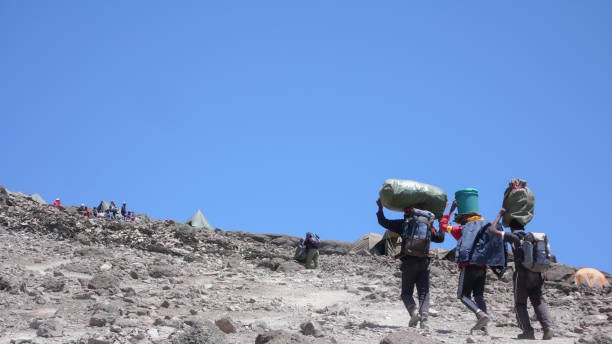
On Kilimanjaro, porters normally transport your main mountain luggage while you carry personal items in a smaller daypack.
Your daypack may contain water, snacks, rain clothing, warm layers, sunscreen, camera equipment and other essentials.
Practice with approximately the amount of weight you expect to carry rather than deliberately loading the pack excessively.
What to Practice Carrying in Your Daypack
- Water
- Rain jacket
- Warm layer
- Snacks
- Sunscreen
- Personal medication
- Camera or phone
- Small personal items
Train in Your Kilimanjaro Boots
Do not arrive in Tanzania with completely new trekking boots.
Your boots should be properly broken in before the climb.
Wear them during longer training hikes so you understand how they feel after several hours.
This also allows you to test your preferred socks and identify potential blister areas before the expedition.
Practice Using Trekking Poles
Trekking poles can provide useful support during both ascents and descents.
They are especially valuable during long downhill sections when the legs are already tired.
If you plan to use trekking poles on Kilimanjaro, practice with them before departure.
Learn how to adjust their length and establish a comfortable walking rhythm.
Train on Consecutive Days
One of the biggest training mistakes is completing one difficult hike each week without practicing again the following day.
Kilimanjaro involves repeated trekking days.
Training on consecutive days teaches your body to continue moving while carrying some residual fatigue.
For example, complete a long Saturday hike followed by a shorter Sunday hike several times during the final month of training.
How Long Should Your Training Hikes Be?
Begin according to your current fitness level.
A beginner may start with one or two hour hikes before gradually progressing to longer days.
During the final month, completing several hikes of approximately four to six hours can provide useful preparation.
You do not need to simulate summit night by walking for twelve hours every weekend.
The goal is to build endurance without causing injury or excessive fatigue.
Altitude Training for Kilimanjaro
Many climbers do not have access to high altitude environments before travelling to Tanzania.
This does not prevent you from preparing successfully.
Physical training at sea level can improve endurance and strength, although it cannot perfectly reproduce the physiological effects of high altitude.
If you live near mountains, occasional hikes at elevation may provide useful experience, but they are not compulsory for every climber.
Do Altitude Masks Prepare You for Kilimanjaro?
Training masks should not be treated as a replacement for genuine altitude acclimatization.
They may make breathing during exercise feel more difficult, but Kilimanjaro altitude involves reduced oxygen pressure rather than simply restricted airflow.
A good physical training program and a gradual mountain itinerary remain more important.
Can You Train for Altitude Sickness?
Fitness training cannot guarantee that you will avoid altitude sickness.
Very fit people can still experience altitude related symptoms.
The most important protection is allowing enough time for acclimatization and following a gradual climbing schedule.
Walking slowly, drinking adequately, eating regularly and reporting symptoms honestly are also important during the climb.
Training Cannot Replace Acclimatization
- Fitness does not guarantee altitude tolerance
- Longer routes provide more acclimatization time
- Walk slowly on the mountain
- Attend daily health checks
- Report symptoms honestly
- Follow your guide's instructions
Training for 8 Day Lemosho Route
The 8 Day Lemosho Route provides a gradual mountain schedule, but physical preparation remains important.
Training should focus on endurance because you will trek for several consecutive days before summit night.
Long weekend hikes, hill walking and consecutive day training are particularly useful.
The route includes rainforest, Shira Plateau, Lava Tower, Barranco, Karanga and Barafu before the summit attempt.
Training for 7 Day Machame Route
The 7 Day Machame Route includes varied terrain and several sustained ascents and descents.
Strong legs are particularly useful for sections such as the approach toward Lava Tower and the climb around Barranco.
Practice hill walking, stair climbing, step ups and long hiking days.
The seven day schedule provides more acclimatization time than the shorter six day Machame itinerary, but good physical conditioning still makes the trek more comfortable.
Training for 6 Day Machame Route
The 6 Day Machame Route follows a faster mountain schedule than the seven day option.
You should arrive with good endurance and be comfortable hiking several hours on consecutive days.
Because the itinerary is more compressed, physical fatigue and altitude can occur simultaneously.
Consistent preparation is therefore particularly valuable.
Training for Marangu Route
Marangu uses mountain huts but should not be considered physically effortless.
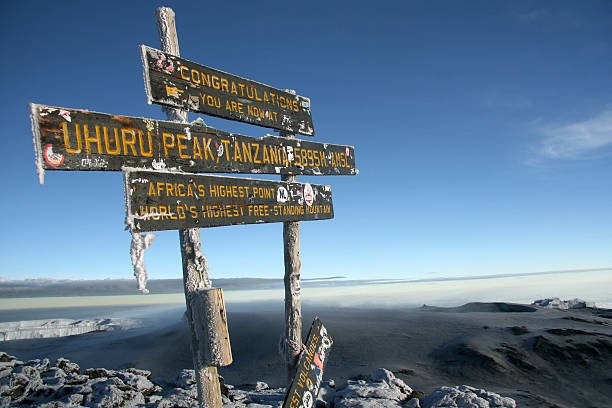
Climbers still walk for several days and eventually ascend toward almost 5,900 metres.
Cardiovascular training, long walking, leg strength and hill practice are all important.
The six day version generally provides a more gradual acclimatization schedule than the five day option.
Training for Northern Circuit
The Northern Circuit is one of the longest Kilimanjaro itineraries.
Its longer duration provides strong acclimatization opportunities but also means spending more consecutive days trekking.
Endurance and recovery become particularly important.
Practice multiple days of moderate exercise rather than focusing only on single intense workouts.
Training for Kilimanjaro if You Are a Beginner
Beginners should start gradually and avoid comparing themselves with experienced runners or hikers.
Begin with regular walking and slowly increase distance.
Add basic strength training before progressing to hills and longer weekend hikes.
Consistency over several months can produce significant improvement.
A beginner who trains steadily can be better prepared than an experienced athlete who does very little hiking specific preparation.
Kilimanjaro Training Plan for Older Climbers
Older travellers can successfully prepare for Kilimanjaro with a gradual and consistent program.
Recovery time becomes especially important.
Training should emphasize hiking endurance, balance, leg strength and joint stability while avoiding unnecessary high impact exercise.
Anyone with existing health concerns should discuss their planned high altitude trek and exercise program with an appropriate medical professional.
Training for Kilimanjaro Without Mountains Nearby
You can train effectively even if you live in a flat city.
Use staircases, stair machines, inclined treadmills and long urban walks.
Walking for several hours remains useful even without significant elevation.
You can also combine cardio sessions with leg strength exercises to compensate for limited access to hills.
Training Without Mountains
- Inclined treadmill walking
- Stair climbing
- Stair machine workouts
- Long city walks
- Step ups
- Squats and lunges
- Cycling
- Back to back walking days
Nutrition During Kilimanjaro Training
Your training period is not the ideal time for extreme dieting.
Your body requires sufficient energy and nutrients to recover from repeated exercise.
Eat a balanced diet containing carbohydrates, protein, healthy fats, fruits and vegetables.
Protein supports muscle repair, while carbohydrates provide useful energy for longer training sessions.
Practice eating during long hikes so you understand which snacks work well for you.
Hydration During Training
Long hikes provide an excellent opportunity to practice hydration habits.
Carry water and drink regularly rather than waiting until you feel extremely thirsty.
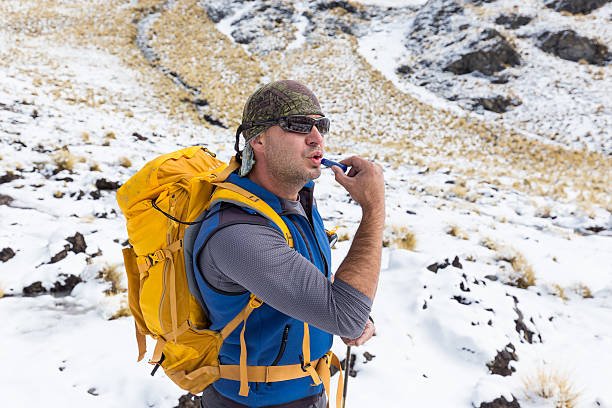
This also gives you the chance to decide whether you prefer water bottles or a hydration bladder.
During longer training sessions or hot conditions, your fluid and electrolyte needs may increase.
Sleep and Recovery During Training
Recovery is part of the training plan rather than wasted time.
Muscles adapt and rebuild between workouts.
Avoid completing difficult sessions every day simply because your climb is approaching.
Include rest days and maintain good sleep habits.
If persistent pain develops, reducing training temporarily can be wiser than pushing through an injury.
Stretching and Mobility
Gentle mobility work can help maintain comfortable movement during your training period.
Pay attention to calves, hamstrings, quadriceps, hips and ankles.
Stretching should not replace strength and hiking training, but it can form part of your recovery routine.
Avoid aggressive stretching immediately before demanding exercise.
Common Kilimanjaro Training Mistakes
Training Mistakes to Avoid
- Starting serious training only one or two weeks before departure
- Training too hard too quickly
- Doing only gym workouts and no walking
- Doing only running and no hiking
- Ignoring hill and stair training
- Never training on consecutive days
- Wearing new boots for the first time on Kilimanjaro
- Carrying an excessively heavy training backpack
- Ignoring rest and recovery
- Assuming fitness prevents altitude sickness
Do You Need a Gym to Train for Kilimanjaro?
No. A gym can be useful but it is not essential.
Walking, hiking, stairs, bodyweight squats, lunges and step ups can all be performed without gym membership.
The most important part of preparation is developing consistent hiking endurance.
A gym simply provides additional training options, particularly during bad weather or when outdoor hills are unavailable.
Can You Climb Kilimanjaro Without Training?
Some people may reach the summit with limited preparation, but relying on this is not recommended.
Poor conditioning can make normal trekking days unnecessarily exhausting and make summit night considerably harder.
Training also reduces the chance that simple muscular fatigue becomes the reason you stop climbing.
Arriving well prepared allows you to enjoy the journey more rather than struggling physically from the first days.
How to Know If You Are Ready for Kilimanjaro
You should ideally be comfortable completing a long hike while carrying your daypack and then remaining active again the following day.
You should also be comfortable using your trekking boots for several hours without significant foot problems.
Your training pace does not need to be fast.
On Kilimanjaro, slow and steady walking is generally more useful than speed.
Good Signs You Are Physically Prepared
- You can hike for several hours comfortably
- You recover reasonably well after long walks
- You can walk again the following day
- Your boots are comfortable and broken in
- You are accustomed to carrying a daypack
- You can walk steadily uphill without rushing
- You have practiced trekking with poles
Kilimanjaro Training and Acclimatization
Physical preparation and altitude acclimatization are different things.
Training prepares your muscles, cardiovascular system and endurance for sustained activity.
Acclimatization happens as your body adjusts to reduced oxygen availability at higher elevations.
A strong climber can still develop altitude symptoms.
This is why choosing an appropriate route and number of trekking days remains essential even after excellent physical preparation.
Best Kilimanjaro Routes After Training
Your training does not necessarily determine which route you should choose.
For many first time climbers, 8 Day Lemosho provides an excellent combination of scenery, gradual altitude progression and acclimatization opportunities.
Seven Day Machame is another strong option for travellers with slightly less time.
The Northern Circuit can appeal to travellers who want an even longer itinerary.
Fitness should not be used as a reason to automatically choose the shortest route.
What to Pack After Completing Your Kilimanjaro Training
Good fitness should be supported by appropriate mountain equipment.
Essential Kilimanjaro Equipment
- Broken in trekking boots
- Warm sleeping bag
- Waterproof jacket and trousers
- Insulated jacket
- Thermal base layers
- Warm gloves
- Warm hat
- Sun hat
- Sunglasses
- Headlamp and spare batteries
- Trekking poles
- Daypack
- Water bottles or hydration system
Training Before a Kilimanjaro and Safari Trip
If your Tanzania itinerary includes both Kilimanjaro and safari, complete your main physical preparation before travelling.
A safari after the climb can provide a welcome change of pace following several days on the mountain.
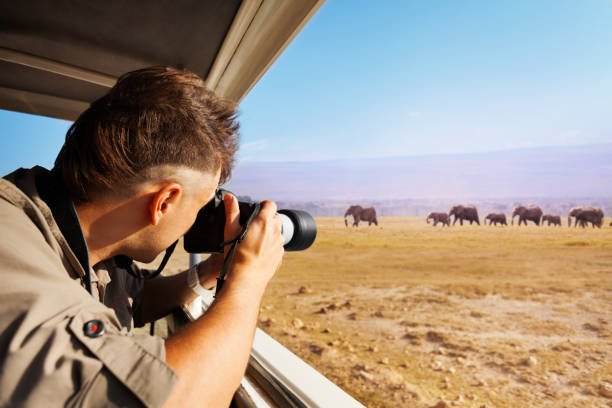
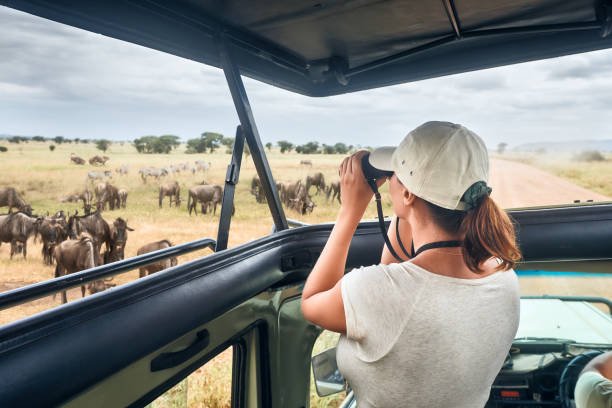
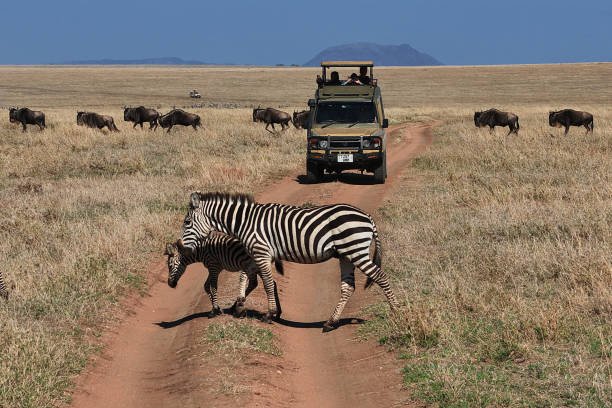
Popular post climb destinations include Tarangire, Serengeti, Ngorongoro and Lake Manyara.
Many travellers prefer completing Kilimanjaro first and taking the safari afterward.
Training Before Kilimanjaro and Zanzibar
Zanzibar can also be added after Kilimanjaro.
The mountain should remain the physically demanding part of your trip, so complete your structured training before arriving in Tanzania.
After the climb, Zanzibar can provide several days for rest and relaxation.
A safari can also be included between Kilimanjaro and Zanzibar.
Final Kilimanjaro Training Advice for 2026-2027
Start early enough that you can build fitness gradually.
Prioritize hiking because it is the closest training activity to the actual Kilimanjaro experience.
Add cardiovascular conditioning, leg strength and core exercises to create a balanced program.
Practice with your trekking boots, daypack and poles.
Complete several back to back hiking days during the final month and then reduce training during the final week.
Most importantly, remember that excellent physical conditioning does not replace acclimatization. Choose an appropriate Kilimanjaro route, walk slowly and follow the guidance of your mountain team.
Frequently Asked Questions About the Kilimanjaro Training Plan
How long should I train for Kilimanjaro?
Around eight to twelve weeks of structured training works well for many climbers, although beginners may benefit from starting several months earlier.
What is the best exercise for Kilimanjaro?
Hiking is one of the best exercises because it develops cardiovascular endurance, leg strength and familiarity with long periods of walking.
Do I need to run to climb Kilimanjaro?
No. Running can improve cardiovascular fitness, but hiking, brisk walking, cycling, stairs and inclined treadmill training are excellent alternatives.
Can a beginner train for Kilimanjaro?
Yes. Beginners can prepare successfully by starting gradually and consistently increasing walking distance, hill training and strength work.
How many days per week should I train?
Many climbers train approximately four to five days per week using a combination of cardio, strength, hiking and recovery, depending on their current fitness.
Should I train with my Kilimanjaro boots?
Yes. Use your trekking boots during longer training hikes so they are properly broken in before you arrive in Tanzania.
Should I train with a backpack?
Yes. Practice with the daypack you plan to use, carrying approximately the weight you expect to carry during the climb.
Do I need altitude training?
No. Many successful climbers live at low elevation. A gradual Kilimanjaro itinerary remains more important than having access to high altitude training before the trip.
Can fitness prevent altitude sickness?
No. Excellent fitness does not guarantee altitude tolerance. Acclimatization and a gradual ascent remain essential.
How long should my training hikes be?
Gradually progress toward several hikes lasting approximately four to six hours during your final weeks of preparation.
Should I train on consecutive days?
Yes. Back to back hiking days can help prepare your body for the cumulative fatigue of a multi day Kilimanjaro trek.
Can I train for Kilimanjaro without hills?
Yes. Use staircases, stair machines, incline treadmills, step ups and long walks if you do not have access to hills.
What should I do during the final week before Kilimanjaro?
Reduce training intensity, take comfortable walks, sleep well, stay hydrated and focus on arriving rested rather than trying to gain additional fitness.
Can I climb Kilimanjaro without training?
It may be possible for some travellers, but arriving without preparation can make the trek significantly harder and is not recommended.
What is the best Kilimanjaro Training Plan 2026-2027?
A strong plan combines eight to twelve weeks of progressive hiking, cardiovascular exercise, leg and core strength, hill or stair training, consecutive hiking days and a lighter recovery week before departure.
Prepare for Kilimanjaro 2026-2027
Build your Kilimanjaro fitness gradually with hiking, endurance training, leg strength and consecutive walking days. Combine good physical preparation with a longer acclimatization focused route such as 8 Day Lemosho or 7 Day Machame for a well prepared mountain experience.
Plan Your Kilimanjaro Climb

 Kilimanjaro Climb