Lemosho Route Camping Experience
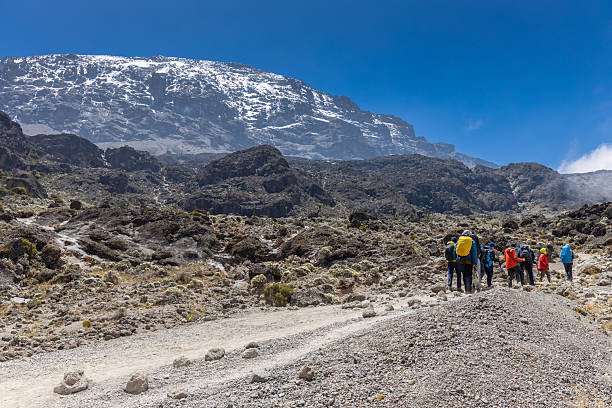
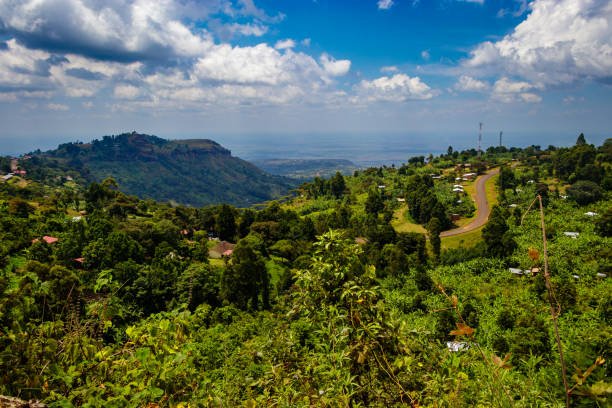
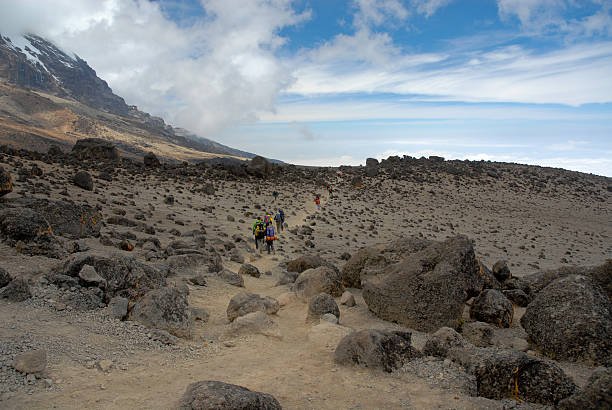
The Lemosho Route Camping Experience is an important part of climbing Mount Kilimanjaro through its scenic western approach. Instead of staying in permanent mountain huts, climbers spend each night in tents at designated camps while progressing through rainforest, heath, moorland and high alpine terrain.
For many travellers, camping is one of the memorable parts of the Lemosho expedition. You finish each trekking day at a mountain camp, change into warm clothing, eat a prepared meal, complete your health assessment and sleep surrounded by Kilimanjaro's changing landscapes.
As the route climbs higher, camps become colder and more exposed. The comfortable habits you establish during the first nights become increasingly important when the expedition reaches Barranco, Karanga and Barafu.
Lemosho Camping Experience at a Glance
- Accommodation: Mountain tents
- Route: Lemosho Route
- Typical duration: 7 or 8 mountain days
- Sleeping setup: Tent and mountain mattress
- Sleeping bag: Required
- Meals: Prepared by a mountain cook
- Porter support: Camping gear and permitted duffel luggage transported between camps
- Main challenge: Cold, altitude and basic mountain living
Is the Lemosho Route Camping or Huts?
Lemosho is a camping route.
Climbers sleep in tents at designated Kilimanjaro camps rather than staying in permanent sleeping huts.
The Marangu Route is the standard Kilimanjaro route associated with hut accommodation, while Lemosho, Machame and most other major routes use tented sleeping arrangements.
What Are the Sleeping Tents Like?
Sleeping tents are designed for mountain use and provide protection from wind and changing weather.
Our standard Lemosho camping arrangements include sleeping tents and mattresses.
Travellers normally organise their sleeping bags and personal equipment inside the tent each afternoon after reaching camp.
Keep your tent organised because searching through clothing becomes increasingly difficult when temperatures fall after sunset.
Inside Your Sleeping Tent
- Mountain sleeping mattress
- Your sleeping bag
- Dry sleeping clothes
- Warm layers for the night
- Headlamp
- Small personal items
- Next day's clothing arranged for easy access
Do You Need a Sleeping Bag?
Yes. A sleeping bag is essential even though the tent and mattress are provided.
Nights become cold as the route reaches higher elevations, and a suitable sleeping bag is one of the most important pieces of equipment for rest and recovery.
Travellers who do not own an appropriate sleeping bag can request rental equipment in Moshi subject to size and availability.
Can I Have My Own Tent?
A single mountain tent can be requested according to availability and the package selected.
Solo travellers sometimes prefer having their own sleeping space, while couples and friends may choose to share.
Request a single tent before departure because every additional tent affects mountain equipment and porter planning.
What Is a Typical Lemosho Camp Like?
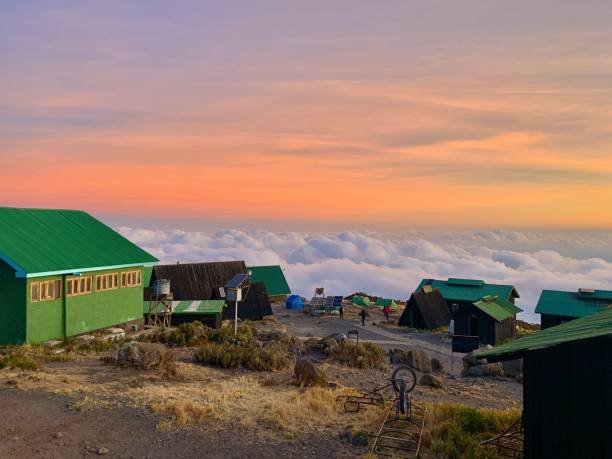
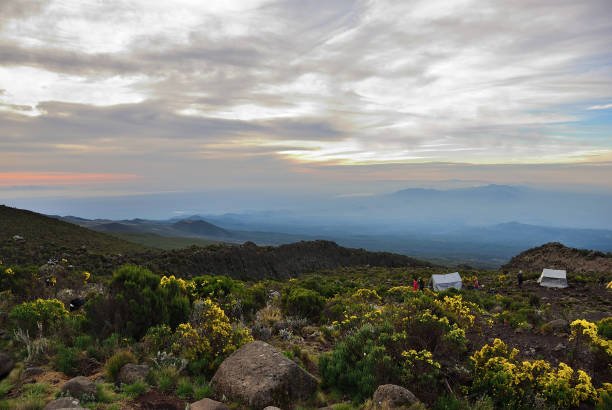
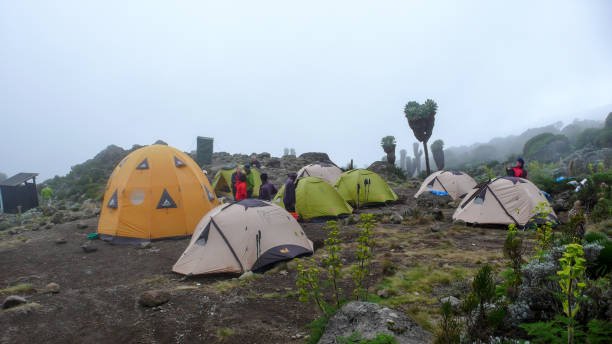
A Lemosho campsite contains sleeping tents, crew tents, cooking areas and designated park facilities.
Depending on the number of groups using the route, some camps can feel quiet while major camps such as Barranco and Barafu may have considerably more activity.
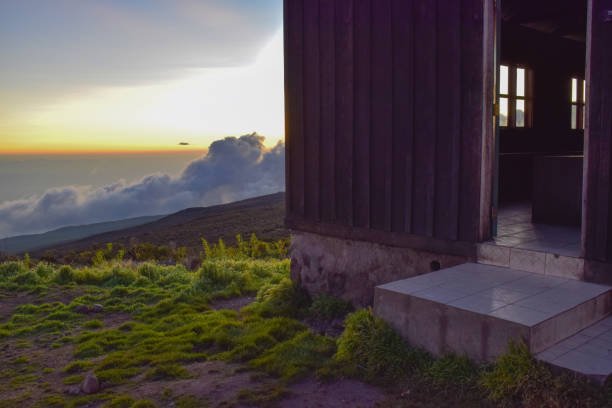
Mountain camps are functional expedition spaces rather than luxury camps. Uneven ground, dust, rocks, rain, cold and limited facilities are all normal parts of the experience.
A Typical Afternoon at Camp
- Arrive at the designated camp.
- Register according to camp procedures.
- Locate your sleeping tent.
- Change into dry and warm clothing.
- Organise your sleeping bag and equipment.
- Drink and eat according to the camp schedule.
- Rest after the trekking stage.
- Complete the guide health assessment.
- Eat dinner.
- Prepare clothing and equipment for the following morning.
Mti Mkubwa Camping Experience
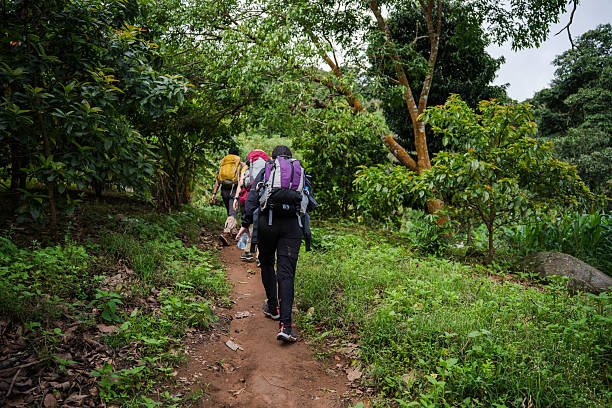
Mti Mkubwa is commonly one of the first camps used after entering through the western Lemosho side.
The camp sits within or close to the forest environment, where conditions can be comparatively humid and rain is possible.
The first evening provides an opportunity to become familiar with tent organisation, meal routines and mountain sleeping before progressing into colder terrain.
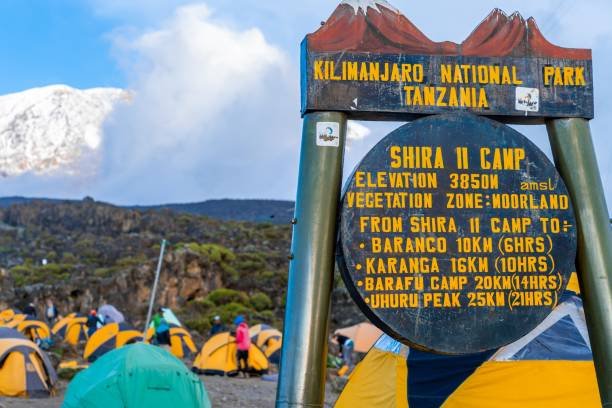
Camping at Shira
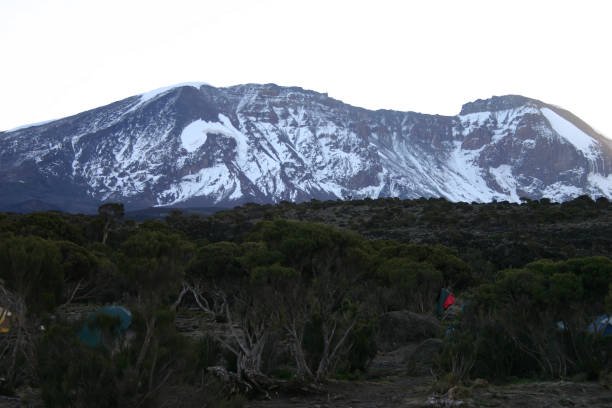
The camping experience changes significantly as climbers reach the open Shira landscape.
Vegetation becomes shorter and the surroundings are more exposed, creating broad views across the plateau and toward Kibo when the weather is clear.
Temperatures can drop quickly after sunset, so change into warm dry layers rather than waiting until you already feel cold.
Camping around Moir on Longer Lemosho Itineraries
Some longer Lemosho schedules use the Moir area during the western part of the trek.
This provides an additional high altitude camping experience and can create opportunities for extra acclimatization walking before the expedition continues toward Lava Tower.
Not every Lemosho itinerary uses exactly the same camp sequence, so check your confirmed day by day schedule before travelling.
Barranco Camp Experience
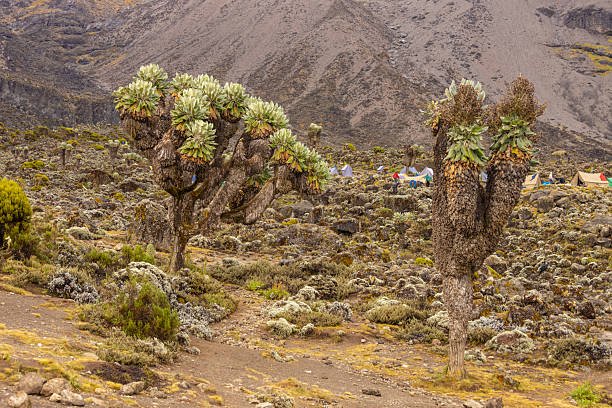
Barranco is one of the most visually dramatic camps on Kilimanjaro.
The towering Barranco Wall rises close to camp while the surrounding landscape contains distinctive high altitude vegetation and rugged mountain terrain.
This is also a more established junction area where climbers from different routes can meet.
After reaching Barranco from the Lava Tower direction, focus on eating, drinking, changing into warm clothing and recovering before the following morning's Barranco Wall climb.
Karanga Camp Experience
Karanga is another high altitude tented camp and an important stage on common seven and eight day Lemosho itineraries.
The shorter trekking stage into Karanga can provide useful time for recovery before continuing toward Barafu.
By this point, camp temperatures are colder and climbers should already have an efficient routine for managing their equipment and sleeping system.
Barafu Camp Experience
Barafu is commonly used as the final camp before the standard Lemosho summit attempt.
The terrain is rocky, exposed and considerably colder than the lower camps.
Once you reach Barafu, the priority changes from normal camp relaxation to summit preparation.
Prepare Your Tent Before Summit Night
- Prepare all summit clothing before resting.
- Place your headlamp where it is easy to reach.
- Check spare batteries.
- Prepare warm gloves.
- Prepare your warm hat.
- Organise water according to guide advice.
- Keep summit snacks accessible.
- Prepare trekking poles.
- Complete your health assessment honestly.
- Try to rest even if sleep is limited.
Mweka Camp after the Summit
After the summit attempt, climbers normally descend substantially toward the Mweka side.
Lower elevation can make breathing and resting feel easier, although the body will normally be tired after the long summit day.
Mweka provides the final mountain camping experience before descending to the gate and returning toward Moshi.
Camping Meals on the Lemosho Route
A mountain cook prepares meals throughout the expedition according to the confirmed package.
Food is organised around the demands of multi day trekking and changing altitude.
Breakfast, lunch and dinner are normally provided, while personal snacks can be carried in your daypack for walking stages and summit night.
Vegetarian and other dietary requirements should be communicated before the expedition so supplies can be planned in advance.
Eating at High Altitude
Appetite can decrease as elevation increases.
Even when you do not feel particularly hungry, maintaining food intake remains important because the expedition requires substantial energy.
Report significant nausea or inability to eat because appetite changes can also form part of the guide's altitude assessment.
Drinking Water at Camp
Water arrangements are organised as part of the mountain operation according to your package.
Bring suitable reusable bottles or a hydration system and follow guide instructions for daily water management.
At higher elevations, water can become very cold, making insulated bottles useful, particularly around summit preparation.
Toilets on the Lemosho Route
Designated mountain camps have basic sanitation arrangements.
Travellers should expect mountain facilities rather than hotel bathrooms.
A private portable toilet can also be arranged as an optional expedition service when requested.
If privacy and additional convenience are important to you, confirm this service before the trek so it can be incorporated into the porter and equipment plan.
Can You Shower while Camping on Lemosho?
Do not expect normal hot showers at the designated mountain camps.
Personal hygiene is therefore managed differently from a lodge or hotel stay.
Many climbers use a small wash routine, personal wipes and clean sleeping clothes while conserving water and following camp rules.
A full shower is normally available again once you return to your hotel after the trek.
Keeping Dry inside Your Tent
Keeping dry clothing separate from wet trekking equipment is one of the most useful camping habits on Kilimanjaro.
Use waterproof packing bags or dry bags inside your main duffel.
Your sleeping clothes and sleeping bag should remain as dry as possible throughout the expedition.
Never assume the absence of rain in the morning means the rest of the trekking day will remain dry.
Cold Nights on Kilimanjaro
Camp temperatures become progressively colder as you climb higher.
The difference between walking temperature during the afternoon and resting temperature after sunset can feel significant.
Change into warm clothing soon after arriving at camp instead of waiting until you become chilled.
Useful Night Clothing
- Dry base layer
- Warm fleece or insulated layer
- Warm socks
- Warm hat
- Insulated jacket when needed
- Dry sleeping clothes reserved for camp
Sleeping at Altitude
Sleep can feel different at high elevation.
Some climbers sleep lightly, wake frequently or notice faster breathing during the night.
Use camp time for recovery and communicate concerning symptoms to your guide rather than assuming every uncomfortable feeling should simply be ignored.
Daily Health Checks at Camp
Our mountain procedures include regular health assessments during the expedition.
The guide considers symptoms such as headache, nausea, appetite, sleep quality, breathing, fatigue and general walking condition.
Pulse oximeter readings can provide additional information but are considered together with symptoms and overall condition rather than treated as one universal pass or fail number.
Safety Support during Your Camping Trek
- Professional Kilimanjaro guides
- Regular health assessments
- Pulse oximeter monitoring
- Emergency oxygen
- First aid equipment
- Controlled trekking pace
- Altitude symptom monitoring
- Summit assistance according to expedition requirements
- Descent support when required
Emergency Oxygen at Camp
Emergency oxygen forms part of our Kilimanjaro safety equipment.
It is intended for emergency management rather than as a substitute for acclimatization or descent.
If a climber develops a significant altitude problem and descent is necessary, remaining in camp simply because oxygen is available is not a replacement for appropriate mountain action.
Porter Support and Camp Setup
Porters are essential to the Lemosho camping system.
They transport tents, food supplies, kitchen equipment, shared expedition equipment and permitted client duffel luggage between camps.
Our standard client duffel allowance for porter carried personal luggage is approximately 15 kg per climber.
You walk with your own daypack while the porter team manages the heavier camp logistics.
What You Carry Yourself
- Drinking water
- Waterproof jacket
- Waterproof trousers
- Warm layer
- Hat and gloves
- Sunglasses
- Sunscreen
- Personal snacks
- Personal medication
- Phone or camera
- Headlamp when required
Does the Porter Carry Your Sleeping Bag?
Your sleeping bag can normally travel inside your permitted porter carried duffel luggage according to the packing arrangement.
Make sure it is protected from moisture using an internal waterproof bag.
You normally do not need to carry your sleeping bag in the personal daypack while trekking.
Group Camping Experience
On a group joining departure, you share the broader campsite and expedition routine with other booked climbers.
Participants may have different international backgrounds, fitness levels and trekking experience.
Group joining can provide a social mountain experience while allowing expedition costs and logistics to be shared.
Private Lemosho Camping Experience
A private expedition can be organised for solo travellers, couples, families or friends.
The climbing team is arranged specifically for your party, although the designated Kilimanjaro camps themselves can still contain other trekking groups.
Private therefore means your expedition is private, not that the entire mountain campsite is reserved exclusively for you.
Is Lemosho Camping Comfortable?
Comfort is relative on a high altitude expedition.
Tents and mattresses provide practical mountain accommodation, and having porters transport camp equipment greatly reduces the load each climber carries.
However, travellers should expect cold nights, basic toilets, uneven ground, limited washing facilities and shared mountain camps.
Approaching the trek with realistic expectations usually makes the camping experience much more enjoyable.
Lemosho Camping versus Marangu Huts
| Feature |
Lemosho |
Marangu |
| Accommodation |
Tents |
Mountain huts |
| Sleeping bag |
Required |
Required |
| Privacy |
Shared or single tent possible |
Shared dormitory style hut space |
| Typical feel |
Outdoor expedition camping |
Permanent mountain shelter |
Respecting Kilimanjaro Camps
Mountain camps exist within a protected national park.
Stay within designated areas, follow guide and ranger instructions and avoid leaving litter behind.
Personal rubbish should be managed responsibly, and climbers should never treat campsites as ordinary recreational picnic areas.
A responsible camping experience protects the mountain for future climbers.
Frequently Asked Questions
Is the Lemosho Route a camping route?
Yes. Lemosho uses designated tented mountain camps rather than permanent sleeping huts.
Are sleeping tents provided?
Yes. Sleeping tents are provided under our standard Lemosho camping arrangements.
Are sleeping mattresses provided?
Yes. Mountain sleeping mattresses are included under our standard camping arrangements.
Do I need my own sleeping bag?
Yes. Bring a suitable warm sleeping bag or arrange rental in Moshi subject to availability.
Can I have a single tent?
Yes. A single mountain tent can be requested subject to availability and the confirmed package.
Are the camps private?
No. The designated Kilimanjaro camps can contain several trekking groups even when your own expedition is booked privately.
Are there toilets at camp?
Basic mountain sanitation facilities are available at designated camps, and a private portable toilet can also be arranged when requested.
Can I shower on the Lemosho Route?
Normal hotel style showers should not be expected at mountain camps. Climbers use basic personal hygiene routines until returning to accommodation after the trek.
Are meals prepared at camp?
Yes. A mountain cook prepares meals according to the confirmed expedition package.
Can vegetarian meals be prepared?
Yes. Vegetarian and other dietary requirements should be communicated before departure.
Does the porter carry my tent?
The porter team transports sleeping tents and other shared expedition equipment between designated camps.
Does the porter carry my personal duffel?
Yes. Our standard porter carried client duffel allowance is approximately 15 kg per climber.
What do I carry while walking?
You carry a personal daypack containing water, rain clothing, warm layers, snacks, medication and items you need before reaching the next camp.
Is camping cold?
Temperatures become colder with elevation, particularly around the higher camps, so warm clothing and an appropriate sleeping bag are essential.
Which Lemosho camp has the best views?
Views depend on weather, but Shira and Barranco are particularly memorable because of their open landscapes and dramatic perspectives toward Kilimanjaro's upper mountain.
Where do we camp before the summit?
Barafu is commonly used as the final high camp before the standard Lemosho summit attempt.
Do health checks happen at camp?
Our mountain procedures include regular health assessments and pulse oximeter monitoring during the expedition.
Is emergency oxygen available?
Yes. Emergency oxygen forms part of our mountain safety equipment.
Is Lemosho suitable for someone who has never camped?
Yes. First time campers can complete Lemosho, but understanding the basic mountain sleeping conditions before travelling helps create realistic expectations.
Can I join a group camping departure?
Yes. Solo travellers can join available scheduled Lemosho group departures according to dates and availability.
Can I book a private Lemosho camping trek?
Yes. Private departures can be arranged for solo travellers, couples, families and groups.
Can airport pickup and Moshi hotels be included?
Yes. Kilimanjaro International Airport transfers and pre or post climb Moshi accommodation can be included according to the selected package.
How do I book the Lemosho Route Camping Experience?
Send your preferred dates, number of climbers and whether you prefer a 7 day or 8 day itinerary, group joining or private departure. You can also request airport pickup, Moshi hotels, sleeping bag rental, a single tent, private portable toilet, safari or Zanzibar extension.
Experience Kilimanjaro Camping on the Lemosho Route
Sleep beneath Kilimanjaro's changing landscapes while your mountain team manages tents, meals and expedition logistics from the western forest through Shira, Barranco and Barafu toward the summit attempt.
Request the Lemosho Camping Package

 Kilimanjaro Climb